
Connect with us

News

Reps deny alleged planned showdown with Speaker

Published

on

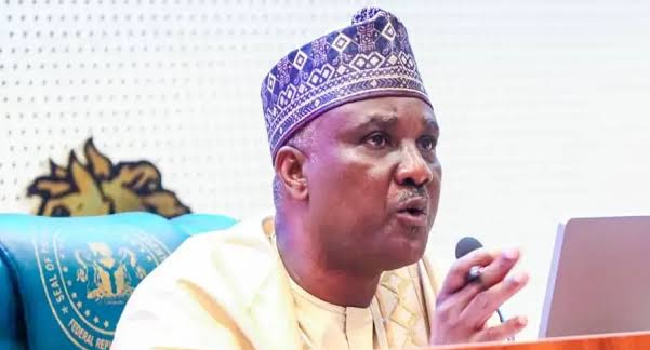
The House of Representatives on Monday denied an alleged plot against the Speaker, Abbas Tajudeen, over delays in constituency project funding, describing the claims as misleading and based on informal conversations taken out of context.

In a statement on Sunday by its spokesman, Akin Rotimi Jr., the House faulted a media report, which suggested that discontent over unpaid constituency projects was threatening to trigger a showdown against the Speaker.

Rotimi fumed that the report “elevates isolated remarks and informal conversations from House WhatsApp groups as if they represent the official position of any House caucus or the House itself.”

According to him, the 10th Assembly remained united under Abbas despite its diversity of political, ethnic, and religious affiliations.

While acknowledging delayed contractor payments, Rotimi said the issue was not peculiar to constituency projects by lawmakers but was part of wider fiscal challenges across the federation.

“Delayed contractor payments are a national challenge and not peculiar to the constituency projects nominated by honourable Members,” the statement noted. “For many weeks, the House leadership, through the Appropriations Committees, has engaged the Honourable Minister of Finance. Payments have commenced, and the leadership is committed to ensuring all outstanding 2024 obligations are settled expeditiously.”

Rotimi also acknowledged that lawmakers were under pressure from constituents to deliver nominated projects, but cautioned against misinterpreting these concerns.

“Honourable members face pressure from constituents expecting nominated projects to be implemented in line with participatory development,” he explained. “While these agitations are valid, they must be understood within current fiscal realities and not misrepresented.”

See also  LASG champions youth-led innovation in agric

On the controversy surrounding recruitment into the National Assembly bureaucracy, he distanced the House’s leadership from the process, insisting that it is the exclusive responsibility of the National Assembly Service Commission.

Rotimi said, “The House Leadership neither conducted nor controlled the exercise. The process follows principles of Federal Character, inclusiveness, and merit, ensuring fair representation of Nigerians across states and geopolitical zones.”

He said the Speaker had ordered a probe into the recruitment exercise to ensure transparency.

“In line with its oversight mandate, the Speaker has directed the House Committee on Public Service Matters, which oversees the National Assembly Commission, to conduct a thorough investigation of the recruitment exercise and report back to the House,” he said.

The House also dismissed suggestions that projects or development benefits were being skewed in favour of certain regions.

“Suggestions that development is unfairly concentrated in any one region are false, divisive, and unhelpful. The House operates on principles of equity, justice, and fairness,” the statement stressed.

The House leadership reiterated its commitment to “upholding transparency, inclusiveness, and fairness in its constitutional mandate of lawmaking, oversight, and representation,” urging members and the public to ignore insinuations of a rift.

FOLLOW US ON:

FACEBOOK

TWITTER

PINTEREST

TIKTOK

YOUTUBE

LINKEDIN

TUMBLR

INSTAGRAM

Continue Reading
Click to comment

Leave a Reply

Your email address will not be published. Required fields are marked *

News

Step-by-step guide for contactless passport renewal for Nigerians abroad

Published

on

The Nigeria Immigration Service has released an updated step-by-step guide for Nigerians living abroad to renew their passports through its Contactless Passport Application System.

The Service announced the update in a post on its official X handle on Tuesday, encouraging Nigerians in the diaspora to take advantage of the digital platform.

According to the Service, the application process involves the following steps:

1. Visit the official NIS Passport Application portal.
2. Select Continue from the pop-up window.
3. Click Apply for Renewal/Re-issue.
4. Create an account and verify your identity using your National Identification Number and date of birth.
5. Complete the application form and choose your preferred processing embassy or high commission.
6. Upload the required documents.
7. Pay the passport fee for your selected booklet.
8. Obtain your Application ID and Reference Number.
9. Select the Contactless option under the Application Status/Book Appointment section.
10. Review the contactless instructions and click “I Understand and Opt In.”
11. Download the NIS Mobile App.
12. Log in or create a profile on the app.
13. Select Passport Application Services.
14. Click Passport Biometrics Enrolment, enter your Application ID and Reference Number, and check your eligibility.
15. Capture your facial image and fingerprints.
16. Complete the liveness verification.
17. Pay the contactless service fee.
18. Submit your biometrics.

The Service, however, noted that not all applicants would qualify for the contactless process.

“If response is INELIGIBLE, then it means applicant should return to the landing page of the portal to book physical appointment at the Embassy/High Commission,” it stated.

See also  Nigerian Army opens applications for direct short service commission course

For applicants who successfully complete the contactless biometric enrolment, the NIS said additional documents must be forwarded to the selected processing mission.

“Upon successful completion of biometrics via Contactless App, applicant should print-out the Application form, passport booklet payment, biometric payment, current Passport and enclose all in a self-addressed return envelope to the processing embassy selected during the application process,” the Service said.

It added that applicants would be able to monitor the progress of their applications after submission.

“Applicant may track successful application two weeks after submission via https://track.immigration.gov.ng or on the NIS Mobile App,” the Service added.

punch.ng

FOLLOW US ON:

FACEBOOK

TWITTER

PINTEREST

TIKTOK

YOUTUBE

LINKEDIN

Continue Reading

News

PFIPC scandal: Ex-SGF Babachir Lawal suspects ‘big racket’ behind ‘fake’ agency’s budget code

Published

on

A former Secretary to the Government of the Federation, Babachir Lawal, has called for a judicial inquiry into the controversy surrounding the alleged fake Presidential Fiscal and Infrastructure Projects Council (PFIPC), arguing that the scandal points to deep institutional failures rather than a simple administrative error.

Speaking in an interview with ARISE NEWS on Monday, Lawal said the circumstances surrounding the alleged agency suggested the existence of a wider network that enabled it to function within government processes despite questions over its legal status.

He insisted that an administrative investigation alone would be insufficient. “I don’t think it should even be administrative alone; it should be a judicial inquiry”, the former SGF clearly stated.

Lawal questioned claims surrounding an alleged ₦27.5bn take-off grant reportedly linked to the agency, asking how such funds could have been approved and released if the organisation had no legal basis.

“Nigerians are talking about how N1.3bn was inserted into the budget. The man himself first said the quarrel came about because he refused to part with 48% of the 27-point-something billion Naira take-off grant. That money has been spent before this budget office was looking for the budget.

“Who gave him the money? It was not appropriated for; it’s not in any budget, that N27.5bn Naira for which he says somebody demanded 48%. Who gave him the money? How did the process of generating the request for the release come up? How did it go through?

“We are just talking about the tip of the iceberg here. Down there, before we got to here, N27.5bn had already been disbursed, according to him, as a take-off grant. How did that money get to him? It was not in the budget. So this is what should frighten us. If such money can go to a fictitious organisation, we only now begin to see it when we are quarrelling about how it got into the budget. How did that money get to them?”, Babachir queried.

See also  Concerns mount over 25% paternity fraud report

The former SGF argued that the controversy only became public because of disagreements over the sharing of funds rather than because government oversight mechanisms functioned effectively.

He continued,… “So you see, that’s how we got to know this to start with. That is the reason why we got to know this on his side of the coin. It’s about the sharing of the N27.5bn. That’s why the thing came up. So it didn’t work. It should have worked before that money left the government coffers into the account of the agency.”

Lawal also alleged that the scandal reflected broader institutional weaknesses within the current administration, arguing that the Office of the SGF should have detected any irregularities before the matter progressed through official channels.

He maintained that the SGF’s office bears responsibility for identifying and flagging agencies without legal backing before their requests or budgets proceed through government.

He said, “It’s institutional compromise, because in this, I sense there’s quite a big racket going on somewhere along the line. If the agency was created by maybe one big man alone, and then he wants to go through the budget process, the budget office assigns the budget code according to the chart of accounts in GIFMIS. So, how did they manage to assign the budget code for this agency that does not exist? Who inserted it?

“Because first of all, the budget office issues a budget call circular to MDAs, and everybody starts to prepare his budget according to the budget line. They give you ceilings, and you prepare your budget and forward it to the budget office as an agency or ministry. Now, the Ministry of Budget and Planning would, in our time, call every MDA to come and defend its budget. Now, if you don’t exist, how did they recognise that you are a genuine entity? Who gave out the budget code and allowed their budget to pass?

See also  Nigerian Army opens applications for direct short service commission course

“That’s what oversight is. The SGF should be able to know, because before it gets to the National Assembly, that budget goes through the SGF. Unless there’s a dereliction of duty by the SGF’s office, the responsibility to flag that this is a fake agency would have come from them.”

Lawal further criticised the National Assembly, accusing lawmakers of failing to thoroughly scrutinise budget proposals.

“It is a legislative oversight. This government—this National Assembly—has no interest in scrutinising the budget that comes before them. Most of the legislators just go in there to earn their salaries and collect allowances and go. They don’t scrutinise the budget line by line. We all know how this particular government works. There are some people that when they talk, nobody else has the authority to contravene.”

He also suggested that public attention should focus not only on the agency’s legal status but on the individuals who allegedly enabled its operations.

“Why are you interested in N27.5bn that had already been collected and spent? We are talking about an agency that we are claiming doesn’t exist. Maybe it exists, but it doesn’t have a legal framework for its existence. But it exists. And there are a lot of powerful people that make sure it exists in that form.

“Those are the people we need to expose. The Chief of Staff, in particular, is so powerful. The SGF is there, just reneging on his responsibilities. And nothing has happened now”, he concluded.

punch.ng

FOLLOW US ON:

FACEBOOK

TWITTER

PINTEREST

TIKTOK

YOUTUBE

LINKEDIN


See also  Wiretapping: El-Rufai pleads not guilty, faces fresh charges

Continue Reading

News

Fake Agency Scandal: Gbajabiamila threatens Adeyemi with N10bn defamation suit

Published

on

Chief of Staff to the President, Femi Gbajabiamila, ha threatened to initiate legal steps against Prince Adeniyi Adeyemi, and demand N10 billion in damages over allegations linking him to murder, bribery and other criminal activities.

The move was conveyed in a letter dated July 6, 2026, signed by Senior Advocate of Nigeria, Kemi Pinheiro, on behalf of Pinheiro LP, the Chief of Staff’s legal representatives.

The dispute stems from a press conference held by Adeyemi on June 25, during which he accused Gbajabiamila of seeking a share of the alleged take-off funds of the Presidential Foreign Intervention Promotion Council (PFIPC), receiving money through intermediaries, abusing his office and participating in efforts to conceal wrongdoing.Death & Tragedy

During the briefing, Adeyemi also referred to the Chief of Staff as “a murderer” and “an assassin”.

The Presidency has consistently maintained that the PFIPC is a fictitious organisation, despite its appearance in the 2026 Appropriation Act.

Gbajabiamila’s lawyers dismissed all the allegations as entirely false and defamatory, saying they were intended to damage his reputation.

The letter stated: “not only false but gravely defamatory,” adding that the allegations were “designed to portray our client as corrupt, dishonest, criminally culpable, morally bankrupt, administratively incompetent, a murderer and unfit to occupy public office.”

According to the legal team, Adeyemi is already standing trial before the Federal High Court in Abuja in Charge No. FHC/ABJ/CR/652/2026, FRN v. Prince Adeniyi Adeyemi Matthew & Ors, over allegations including forgery of an appointment letter bearing Gbajabiamila’s purported signature and the alleged counterfeiting of Presidential letter-headed papers to present himself as a government official.Nigeria Investment Guide

See also  LASG champions youth-led innovation in agric

The lawyers further rejected Adeyemi’s claims that Gbajabiamila demanded 48 per cent of a purported N27.4 billion take-off grant for the council, amounting to about N12.5 billion, or that he received N400 million through proxies connected to appointments within the organisation.

Other allegations dismissed in the letter included claims that the Chief of Staff intimidated individuals and media organisations, manipulated budget processes, attempted to misuse security agencies and performed official duties while under the influence of intoxicating substances.Trending News Feed

Gbajabiamila also denied ever having any relationship with Adeyemi.

“You have never at any time met, interacted with, communicated with, or had any form of personal or official dealing whatsoever with him,” the lawyers wrote, adding that the decision to “fabricate and publish allegations against a person with whom you have had absolutely no relationship or interaction underscores the reckless, baseless and malicious nature of your publication.”

The legal team also criticised the timing of the allegations, noting that they were made after criminal proceedings had already been instituted against Adeyemi.

“It is even more disturbing to our client that you resorted to defaming him through your press statements after a criminal Charge had been filed against you,” the letter stated.

It added, “Trial by media remains unknown to Nigerian law and cannot be a substitute for due process.”Nigeria Investment Guide

Gbajabiamila’s lawyers demanded that Adeyemi immediately stop making further defamatory statements, remove all related videos, recordings and transcripts from every platform, issue a full retraction and apology in at least five national newspapers and across all social media platforms used to circulate the claims, and provide a written undertaking that he would refrain from making further allegations.

See also  Concerns mount over 25% paternity fraud report

The letter warned that failure to comply would result in both criminal defamation proceedings under the laws of the Federal Capital Territory and a civil lawsuit seeking N10 billion in aggravated and exemplary damages. The damages, it said, would be donated to a charity chosen by Gbajabiamila. The legal action would also seek a perpetual injunction and a court order compelling the publication of an apology.

The controversy centres on the PFIPC, which was listed in the 2026 Appropriation Act under the title Presidential Economic Advisory Council/Presidential Foreign Intervention Promotion Council and received more than N1.3 billion in budgetary allocations, including about N803 million for personnel, N200 million for overhead and N300 million for capital expenditure.

Adeyemi had argued during his June 25 press conference that an agency included in a budget signed by the President could not be regarded as non-existent.

However, the Presidency insists the council is fraudulent and has no legal existence.

Meanwhile, human rights lawyer Femi Falana has argued that the Presidency lacks the constitutional authority to clear anyone involved in the dispute and has called for an independent investigation into the allegations against both Gbajabiamila and Adeyemi.

Adeyemi is scheduled to appear before the Federal High Court on July 27, 2026.

FOLLOW US ON:

FACEBOOK

TWITTER

PINTEREST

TIKTOK

YOUTUBE

LINKEDIN

INSTAGRAM

Continue Reading

Trending