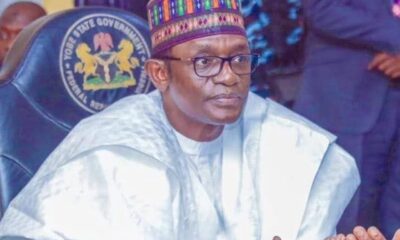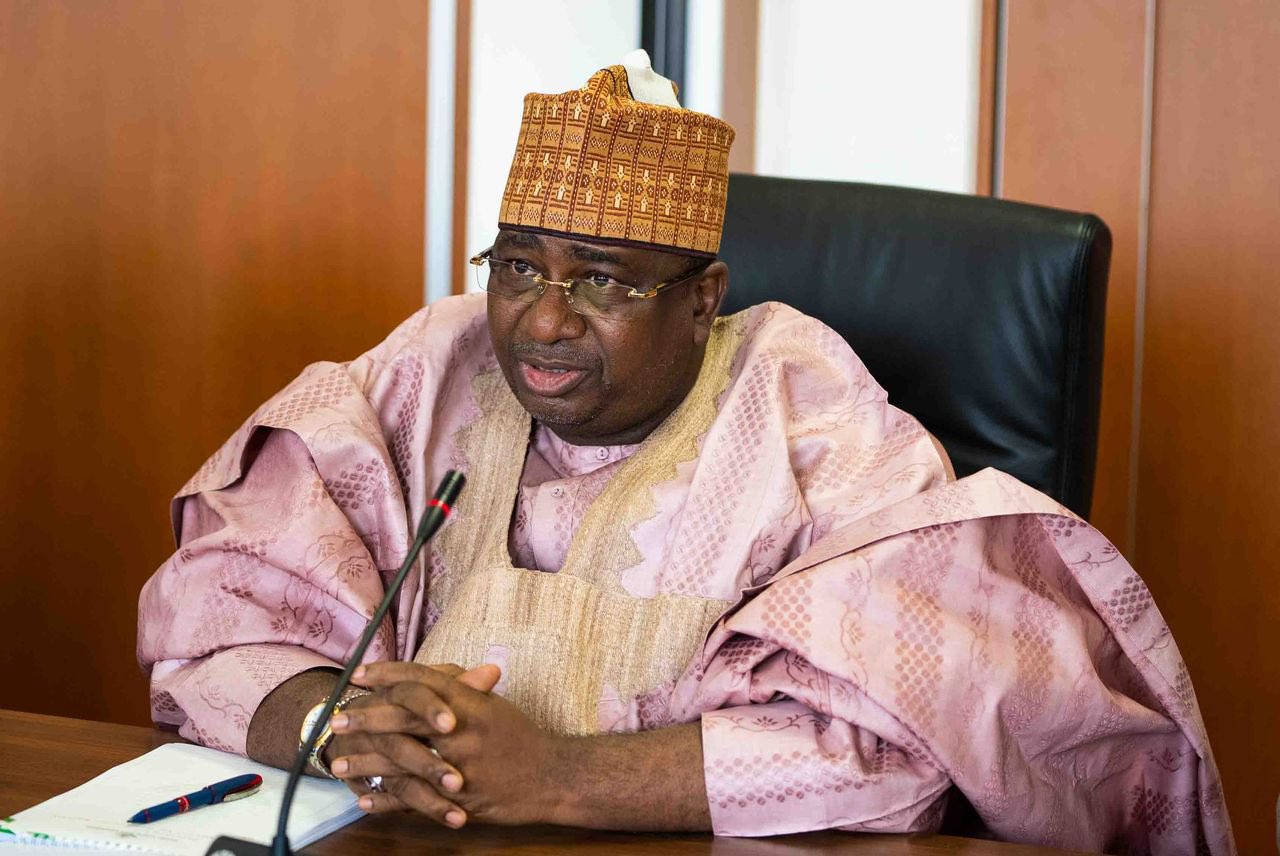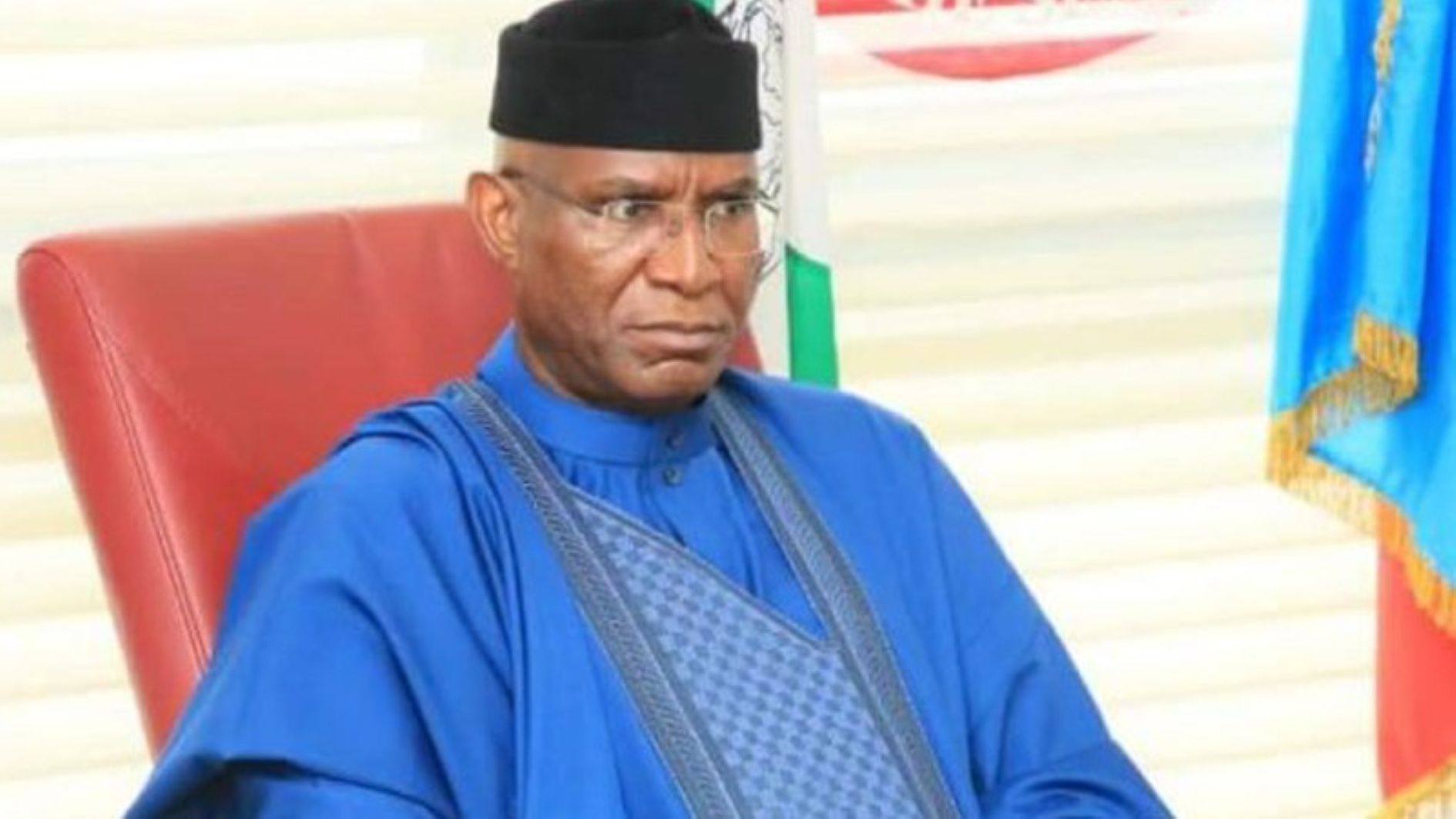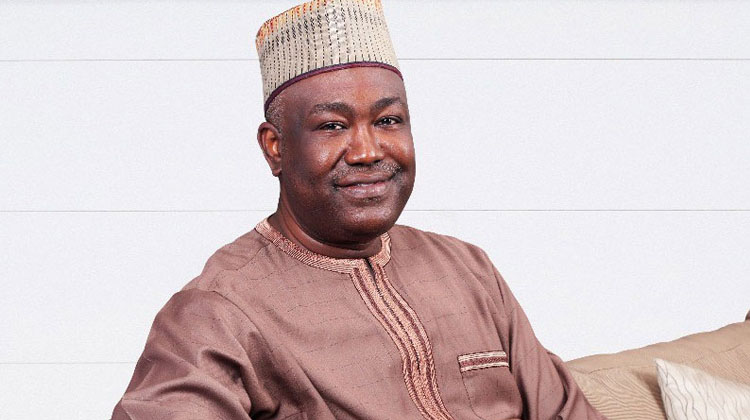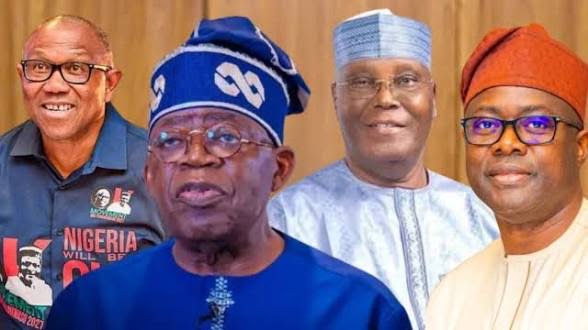
The January 17, 2027 presidential race gathered momentum on Wednesday as President Bola Tinubu and opposition candidates Atiku Abubakar, Seyi Makinde and Peter Obi intensified their campaigns, unveiling competing promises on security, economic recovery, national unity and improved living conditions.
While Tinubu sought another four-year mandate on the strength of his administration’s policies and promised continuity, the opposition candidates criticised the state of the country and offered alternative plans to tackle mounting economic and security challenges.
The African Democratic Congress presidential candidate, former Vice-President Atiku and that of the Allied People’s Movement, Oyo State Governor Makinde stepped up their campaigns against President Tinubu, with both opposition figures outlining their plans to address the country’s challenges.
Atiku, who took his presidential campaign to Sokoto, pledged to tackle insecurity and restore fuel subsidy if elected in 2027.
Similarly, Makinde unveiled his Reset Nigeria manifesto in Abuja, promising to ease the economic burden on Nigerians and improve their living conditions if elected president.
The presidential candidate of the Nigeria Democratic Congress, Peter Obi, also pledged to promote national unity, tackle insecurity and fight corruption if elected in the 2027 general election.
He condemned political violence ahead of the elections following an attack on his campaign convoy by suspected thugs in Calabar, Cross River State, on Wednesday.
While Tinubu is seeking re-election for a second term, Atiku, Makinde and Obi, who are contesting on the platforms of the ADC, APM and NDC, respectively, are among the major opposition figures challenging his bid.
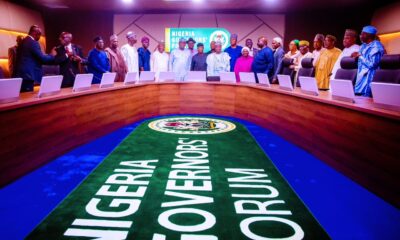
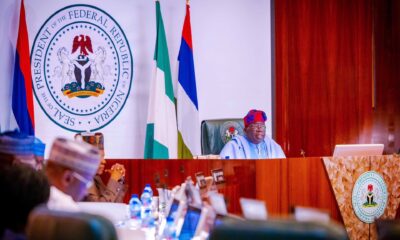
Tinubu has urged voters in Nasarawa State’s 13 local government areas to support candidates of the All Progressives Congress in the 2027 general elections.
He made the appeal on Wednesday through Vice-President Kashim Shettima at the APC presidential campaign rally in Lafia, the state capital.
Tinubu said voting for APC candidates at all levels would guarantee the continuation of his administration’s Renewed Hope Agenda.
He also cited road construction and rehabilitation, alongside improvements in healthcare facilities and schools, as some of the achievements recorded in Nasarawa State under his administration.
He urged residents to renew his mandate for another four years in 2027, promising to deliver more dividends of democracy if re-elected.
Tinubu stated, “We want to assure you that, if God wills and we win the upcoming elections, we will ensure that we support you for maximum safety. We call on you to vote for all our party’s candidates. The biggest message from the leader of the country is: APC from top to bottom, APC from bottom to top.
“We do not want a situation where they say, vote for the President and not the governor, or vote for the governor and not the President, or the senator, or the House of Assembly.
“We want APC straight! APC straight! APC from top to bottom and bottom to top. May God give us peace and understanding. May God grant us peace of mind. We thank you very much.”
He also commended Nasarawa State Governor, Abdullahi Sule, for executing projects aimed at improving residents’ living conditions.
Similarly, the Chairman of the Progressive Governors Forum and Imo State Governor, Hope Uzodimma, highlighted the benefits of Tinubu’s economic policies and urged Nigerians to re-elect the President for another four-year term to enable him to deliver more dividends of democracy.
He said, “It is our decision to continue the deliberate trajectory of Nigeria through the architect of modern Nigeria, President Bola Ahmed Tinubu.
“We have come to Nasarawa State, and we have seen the developments. We have seen that, through the Renewed Hope Agenda, the hope of Nasarawa State has been renewed.
“And we are here to affirm once more that Nigeria is in good hands. All of you should vote for President Bola Ahmed Tinubu.
“We have worked so hard. We have 31 governors. The party is a family. We plead for peace and harmony, and we pray for a peaceful Nigeria. Support our President, support our governorship candidate, and support Nigeria. May God bless all of us as we support the All Progressives Congress,” he said.
The APC National Chairman, Professor Nentawe Yilwatda; Speaker of the House of Representatives, Tajudeen Abbas; and Director-General of the party’s Presidential Campaign Council, Senator Abdulaziz Yari, expressed confidence that Nasarawa State would deliver massive support for the APC in the 2027 elections.
Earlier, Governor Sule, who expressed delight at the large turnout of APC supporters from Nasarawa and neighbouring North-Central states, assured Tinubu that the presidential and state campaign councils were committed to securing victory for all the party’s candidates.
Meanwhile, the APC Presidential Campaign Council has said the education reforms introduced by Tinubu’s administration have led to the disbursement of N372.62bn in student loans and the training of 156,446 beneficiaries under the Technical and Vocational Education and Training programme.
The council, in a statement by its spokesperson and Minister of Solid Minerals, Dele Alake, on Wednesday, said the reforms had also expanded access to basic education, improved teachers’ welfare and stabilised the academic calendar in tertiary institutions across the country.
However, the administration’s education policies and reported achievements have faced criticism from opposition parties as the January 16, 2027 presidential election approaches.
While some opposition figures have faulted the reforms, others have questioned their impact on Nigerians.
In response, the APC PCC said the administration had introduced free technical education covering tuition, boarding, textbooks and uniforms to strengthen vocational skills and expand employment opportunities.
The statement read, “President Bola Tinubu’s reforms in the education sector since assuming office have expanded access to learning, improved teachers’ welfare and stabilised the academic calendar across higher institutions in the country.
“According to the Federal Ministry of Education’s 2026 report on the Nigerian Education Sector Renewal Initiative, the government’s interventions cover basic and secondary education, technical and vocational training, and tertiary education.
“The reforms focus on six priority areas: technical and vocational education, science and medical sciences, out-of-school children, girl-child education, digitalisation and education quality assurance.
“According to the NESRI report, the Federal Government allocated a record N3.52tn to education in the 2026 budget and secured $552m for the HOPE-EDU programme, which targets 29 million children, over 500,000 teachers and 65,000 public schools.”
The APC PCC stated that the BESDA programme had returned more than one million out-of-school children to classrooms, trained 1,400 Tsangaya teachers and established 200 bilingual centres in 17 northern states.
It added that the AGILE programme had reached 7.19 million girls, including 3.7 million enrolled in secondary schools, while more than 10,000 schools had received facility upgrades.
Alake said the Tinubu administration had introduced a revised national curriculum to reintroduce Nigerian History and strengthen Civic and Heritage Studies. He added that the National Learning Assessment had also been restored to monitor pupils’ performance and identify learning gaps.
The statement further read, “Under EduRevamp, 53,553 teachers have registered, while 51,794 joined the first cohort of the Accelerated Teacher Professionalisation Pathway (ATPP), a six-month programme offering professional qualifications, certification and licensing.
“Backed by N2bn, the programme targets 250,000 teachers by 2027. Also, the Inspire Live initiative provides online lessons from Primary One to Senior Secondary School Three, supported by certified teachers and AI-assisted learning.
“Under President Tinubu’s administration, the TVET scheme has attracted over 2.8 million applications, with 156,446 verified trainees receiving free training, monthly stipends and start-up support.
“More than N65.7bn has already been disbursed to trainees, while another N30.2bn has gone to training centres. The government has also rehabilitated 38 technical colleges and introduced free technical education covering tuition, boarding, textbooks and uniforms.”
The APC PCC spokesperson also disclosed that the Federal Government was investing N110bn in the rehabilitation of 18 federal medical schools across the six geopolitical zones.
He added that nursing enrolment rose from 81,480 in 2023 to 114,300 in 2025, while 20 STEM-focused tertiary institutions had been approved and 12 engineering and technology faculties earmarked for rehabilitation.
On student financing, the APC PCC said, “NELFUND, a flagship programme of the Tinubu administration in the education sector, has processed 1,659,853 student loan applications and disbursed N372.62bn, comprising N192.89bn for tuition and N179.73bn for upkeep allowances across 319 tertiary institutions.
“The administration has resolved the age-long dispute between the Academic Staff Union of Universities (ASUU) and implemented the agreement providing for a 40 per cent increase in academic staff remuneration and improved welfare benefits.
“Additionally, the Tertiary Institutions Staff Support Fund has disbursed N28bn to 15,000 workers across 153 public institutions, offering eligible staff loans of up to N10m for housing, healthcare, transportation and education.
“Equally, the Federal Government has provided N365m annually for research and innovation through the National Laureate Prize, while the Student Venture Capital Grant has disbursed over N2.5bn to 45 student entrepreneurs. Each beneficiary can access up to N50m in equity-free funding.”
The campaign council also disclosed that entrepreneurship certification was ongoing in 14 federal universities, while the Diaspora BRIDGE initiative had registered 1,141 Nigerian professionals abroad and reached 16,675 students in 107 tertiary institutions.
Meanwhile, Atiku made his campaign promises while formally launching his presidential bid in Sokoto, where thousands of supporters reportedly turned out despite alleged attempts to frustrate the rally.
He said his administration, if elected, would prioritise tackling insecurity, reviving the economy and expanding regional trade, particularly in Northern Nigeria, where many communities depend on cross-border commerce.
“I will open all the land borders for our people to do legitimate business with our brothers across the border. We will restore subsidy back into our fuel and do everything humanly possible to bring an end to insecurity so as to ensure our people can go back to their farms,” he said.
The former Vice-President urged Nigerians to participate massively in the 2027 elections, vote for the ADC and protect their votes against manipulation.
He also vowed that the party would resist any attempt to repeat what he described as electoral irregularities in previous elections.
“We should all come out, vote massively, protect our votes and make sure our votes are counted and announced. We will not allow what happened in the last elections to happen anymore,” Atiku said.
Atiku highlighted Sokoto’s historical and political significance, describing it as a major centre of influence in Northern Nigeria and West Africa because it is the seat of the Sokoto Caliphate.
He commended the state chapter of the party for organising the campaign flag-off but alleged that the ruling party in Sokoto had attempted to frustrate the event.
Earlier, ADC National Chairman, Senator David Mark, said the large turnout at the rally showed that residents of the state were eager for political change.
He cited the delegation’s journey from the airport to the rally venue, which reportedly lasted more than three hours despite covering less than 10 kilometres, as evidence of the party’s growing support in the state.
Mark described the Atiku-Amaechi ticket as the leadership combination needed to address Nigeria’s security and economic challenges.
Atiku unveils plan
According to the ADC, Atiku’s motorcade took three and a half hours to travel from Sultan Muhammad III International Airport to the party’s state secretariat, with thousands of residents lining the route to welcome the former Vice-President.
The party said the crowd comprised men, women, youths and elderly residents, many of whom abandoned their daily activities to join the procession.
In a statement on Wednesday, the Director of Strategic Communication of the ADC Presidential Campaign Council, Phrank Shaibu, said the reception reflected Nigerians’ frustration with rising food, transportation and fuel costs.
“This was not a crowd assembled by inducement. It was a spontaneous turnout by Nigerians who are struggling with the cost of food, transport, fuel and other basic necessities,” Shaibu said.
The party also accused the Sokoto State Government of denying it access to public facilities requested for the campaign flag-off, alleging that the authorities had placed obstacles in the way of its activities.
It said the restrictions failed to discourage supporters, insisting that the turnout demonstrated residents’ determination to freely express their political choices.
“Denying people a venue cannot suppress their political choices. In Sokoto, those efforts backfired: the people came out in even greater numbers and made their voices heard,” the statement said.
At the rally, Atiku reiterated his commitment to addressing the cost-of-living crisis, while the ADC highlighted a proposed targeted, production-based subsidy for qualifying petroleum products refined locally as a key component of his economic agenda.
The party said the proposed policy would tie government support to domestic refining, with the aim of lowering fuel prices and reducing transportation and energy costs for households and businesses.
“By tying support to domestic production, the policy will help bring down the cost of fuel and ease the pressure that high transport and energy costs place on food prices and family budgets,” the statement said.
The ADC said its economic agenda centred on affordability, local production and a government responsive to the daily challenges facing Nigerians.
“When you have a message that connects with the people, you do not need to rent a crowd. The people show up on their own,” Shaibu added.
Meanwhile, Makinde unveiled his Reset Agenda manifesto, promising reforms in the economy, education, security and the socio-political system to improve Nigerians’ living conditions.
Speaking on Wednesday at Transcorp Hilton, Abuja, during the presentation of the manifesto to Nigerians from different walks of life, Makinde said his presidential ambition was driven by the need to address the country’s challenges and restore the vision of its founding fathers.
The APM presidential candidate is among the opposition figures seeking to challenge Tinubu in the 2027 general election.
Makinde is the second presidential hopeful, after the Social Democratic Party candidate, to unveil his manifesto ahead of the election.
He said the government must move beyond making promises to delivering measurable results, stressing that every commitment should be backed by responsible institutions, clear implementation plans and verifiable targets.
He stated, “My simple proposition is that government must make life easier for the people. We must develop people’s abilities and expand their access to opportunities. We must also have institutions that work.
“Concrete promises alone are not enough. Every promise must be linked to a responsible institution, a delivery plan and measurable results that citizens can verify. It is not enough to say we have this or that and then engage in arguments. What matters is that citizens can verify the results. That is the standard behind our Reset Agenda.
“There are four major concerns that have shaped my decision to seek the presidency. And they form the basis of the Reset Agenda. The first concern is the emphasis on macroeconomic reforms to the detriment of broad-based economic growth.
“For us, macroeconomic reforms must translate into improvements in people’s lives. What does macroeconomic stability mean if it does not improve the living conditions of ordinary Nigerians? Macroeconomic stability must have a direct impact on the people through job creation, improved incomes and a lower cost of living. These are issues we cannot shy away from.”
Makinde said his administration would prioritise accountability and ensure that the government took responsibility for its performance. He lamented that despite Nigeria’s abundant human and natural resources, poor leadership ideas had hindered the country’s development.
He also pledged to strengthen national institutions to promote unity and ensure that political affiliations and personal connections did not undermine national development or efforts to improve citizens’ welfare.
The APM candidate continued, “Yes, there has been a lot of political debate about petroleum subsidy, but under our Reset Agenda, we have a clear pathway to deliver value to Nigerians.
“Today, Nigerians do not have a clear understanding of the projects being implemented and the actual performance of the budget. If you examine the budget, you will see the benchmark price at which it was prepared. Most times, the benchmark is around $50 per barrel.
“So, what happens when crude oil rises to $100 per barrel? Must Nigerians continue to pay through their noses, or should we have a system in which the government establishes a benchmark and returns the additional value to the Nigerian people? We will create a system that ensures that Nigerians benefit from increased oil revenues.
“Our administration will be measurable, and within three years, beginning with the first 100 days, we will establish clear targets against which our performance will be assessed. All of us must be held accountable.”
Makinde urged Nigerians to hold the Federal Government accountable for its promises, particularly its commitment to providing reliable electricity. He recalled the government’s pledge that Nigerians should not re-elect it if it failed to fix the power sector.
He criticised the government for shifting responsibility to state governments under the electricity autonomy law, insisting that it must remain accountable for challenges in national power generation and distribution.
On the country’s political system, the Oyo State governor said successive administrations had experimented with different arrangements in an attempt to address Nigeria’s challenges.
He stated, “On the social and political front, I can tell you that successive administrations have attempted to address the challenges confronting our political system.
“We started with the parliamentary system, which was developed along the Westminster model. Then we moved to the presidential system. We later experimented with a modified presidential system during General Ibrahim Babangida’s regime. At that time, we had a two-party system. Subsequently, we moved through different political arrangements before eventually adopting the multi-party system.
“My personal opinion, which is something we will have a conversation about, is that our diversity should become a source of strength and unity for Nigeria rather than a source of division. Ideally, the presidential system works best with a two-party structure. However, we currently operate a multi-party system, and people may want the opportunity to pursue their political ambitions independently.”
Makinde said his proposed transitional government of national unity under the Reset Agenda would not be designed to serve his personal interests. He declared that he would not seek any position under whatever constitutional and political arrangements might emerge.
He continued, “Therefore, I am not going to interfere with the multi-party arrangement we currently have. However, I believe that anyone aspiring to become President of Nigeria should not emerge with less than 33 per cent (like the current President) of the votes in a system where the remaining voters may have voted against them.
“When someone emerges under such circumstances, they may enter government and begin compromising the political system itself. They may start asking other political actors to bring the mandates they received from their supporters into the government. Where those political actors resist, they may be subjected to pressure. They did that to Governor Bala and me. Rather, we insist on standing on the side of the Nigerian people.
“What we are proposing is that, to become President of Nigeria, a candidate must secure at least 51 per cent vote. That way, candidates and political parties will have to engage in discussions across party lines and other divisions to secure the support needed to form a government that commands the respect of the majority of Nigerians.”
Meanwhile, his running mate, Lawal Musa Daura, condemned the alleged suppression of opposition parties, warning that denying political opponents a level playing field posed a threat to democracy.
He stated, “Through resilience, commitment and sustained efforts, Nigerians have continued to work towards ensuring that democracy not only survives but also takes the country closer to its desired destination.
“Unfortunately, a situation in which governments suppress opposition is something that should concern everyone. Everybody knows that suppression is wrong. But how does a government suppress itself? It does so by refusing to allow a level playing field, failing to respect the rules and denying people the opportunity to participate and exercise their democratic rights.
“When this happens, the entire population is threatened. The first victim is the nation itself, followed by those at the helm of affairs and, ultimately, the rest of the citizens.
“I would like to say that whenever people attempt to use their privileged positions to muzzle the opposition, they are doing themselves a disservice. The quality of opposition determines the extent to which the political temperature of society can be reduced.”
Daura said a vibrant opposition was essential to democracy, arguing that it complemented the government rather than serving as its enemy and helped reduce political tensions.
He added that their proposed transitional government would convene a national conference involving all segments of society to discuss the country’s challenges and agree on a common direction.
The APM vice-presidential candidate identified education, the economy, security and the socio-political system as the four pillars of the Reset Agenda, promising to place national interests above personal gains.
Also speaking, the National Chairman of the Social Democratic Party, Professor Sadiq Gombe, described Makinde as the opposition’s shining star and confirmed that discussions were ongoing among political parties to build a common platform.
He expressed optimism about the efforts to unite opposition parties, highlighting Makinde’s role in the emerging political discussions.
He stated, “Today, Governor Seyi Makinde is a shining light of the opposition. He contested the election under the PDP and won despite all odds, under a Federal Government controlled by the APC, while all the other states in the region were also controlled by the APC.
“Yet, Governor Seyi Makinde broke through to emerge as the governor of Oyo State, the headquarters of the South-West. I think that is a great political achievement. Secondly, you cannot overlook the fact that Today, Governor Seyi Makinde and my dear brother, Governor Bala Mohammed of Bauchi State, have truly rekindled the aspirations and light of our democracy.
“When other governors had left the room in the past, these gentlemen remained steadfast and continued to do whatever they could to sustain what we call democracy in Nigeria Today. Governor Makinde hosted the first initiative through which opposition political parties in Nigeria came together, and that initiative is still ongoing.
“Today, opposition political parties are reaching out to one another. Presidential candidates are meeting one another, and we are sharing love and building relationships together. We are discussing ways to unite ourselves.”
Obi promises action
In another development, the presidential candidate of the NDC, Peter Obi, said his administration would prioritise national unity, security, education, healthcare and citizens’ welfare.
Speaking at a town hall meeting with party stakeholders and supporters in Calabar on Wednesday, Obi said national unity was necessary to tackle insecurity and other challenges confronting the country.
He stated, “Nigeria is currently divided. We will work to unite this country because uniting the nation would provide the strength needed to confront insecurity and other national challenges.
“Our commitment is to unite Nigeria. Nigeria Today is not united. If we unite Nigeria today, we will have the strength to fight insecurity.”
The former Anambra State governor vowed that his administration would not tolerate kidnapping and attacks on schoolchildren, promising to pursue abductors to their hideouts.
“Anybody who kidnaps schoolchildren and goes into the bush, we will be in that bush with him, wherever it is. We are not scared of him,” he said.
On corruption, Obi pledged to tackle the menace decisively, insisting that public funds must be used for the benefit and welfare of Nigerians.
“We will fight corruption head-on. We want people to stop stealing public money. Public money must be used for the public good and the welfare of the people,” he said.
He also promised to increase investment in education and healthcare, describing both sectors as critical to national development.
Obi said his political partnership represented a new approach to governance, anchored on shared responsibility and a commitment to transforming the country.
“We represent a new Nigeria that is possible. We represent a governance that people have not seen in Nigeria before,” he said.
Obi’s convoy attacked in Calabar
Meanwhile, a viral 30-second video of the attack on Obi’s convoy showed some of the assailants, many of them dressed in black shirts, fez caps and face coverings, using machetes to damage vehicles.
The incident reportedly caused panic as passersby and roadside traders fled the scene.
One of Obi’s media aides, Esther Umoh, had raised the alarm in a post on her official X handle.
“Thugs are trying to attack our convoy,” she wrote.
Shortly afterwards, Umoh shared another five-second video showing a victim with a gunshot injury to the leg being evacuated from the scene. She attributed the injury to a stray bullet.
Recounting the incident at the town hall meeting, Obi said he witnessed the attack but was advised by his security team to take another route after the assailants allegedly armed themselves with machetes and other weapons.
He said, “They were throwing stones, and I saw people running back. And my security people said we should find another way because they have machetes and other things.
“I asked, ‘In Nigeria? I am coming down to go and meet them.’ By the time they saw what was happening, they left. All these things happened because Nigerians allow it. We are not going to allow it in 2027.”
The former Anambra State governor arrived in Calabar alongside his wife, Margaret, and his running mate, Rabiu Kwankwaso, for the town hall meeting.
Efforts to reach the spokesperson for the NDC Presidential Campaign Council, Constance Ikokwu, and Obi’s spokesman, Idris Zekeri, for further comments were unsuccessful.
The Calabar incident is the latest reported security challenge involving Obi’s campaign, coming about two months after his convoy was blocked and confronted by youths in Benue State.
During the visit, Obi’s convoy was blocked by angry youths along the Makurdi-Gboko Federal Highway as he travelled to the state for political engagements ahead of the 2027 presidential election and to commiserate with victims of the June 2025 attacks in Yelewata.
Trouble reportedly started a few metres from the airport when the convoy encountered a roadblock mounted by the youths, who prevented motorists from using the two-lane highway.
The blockade caused traffic congestion, while the police were criticised for failing to disperse the youths promptly.
The Benue State Commissioner of Police, Cletus Nwadiogbu, subsequently disclosed that at least 46 suspects had been arrested in connection with the incident.
He said investigations were ongoing and security operatives were tracking key leaders of the youths.
Source: punchng.com
FOLLOW US ON: