Connect with us

Lifestyle

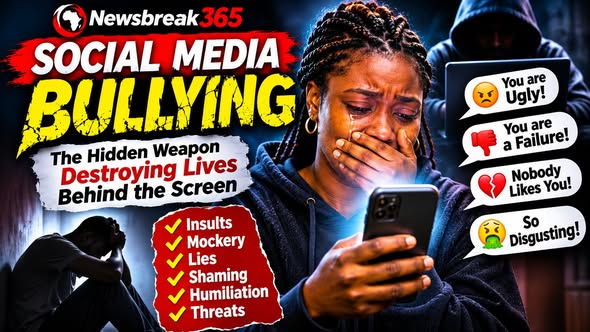
SOCIAL MEDIA BULLYING: THE HIDDEN WEAPON DESTROYING LIVES BEHIND THE SCREEN

Published

on

Behind the likes, comments, shares and smiling profile pictures lies a growing digital nightmare. Social media has given everyone a voice, but some people are using that voice to humiliate, intimidate, emotionally destroy and silence others.**

Social media was created to connect people, share ideas, exchange information and bring communities together. Unfortunately, what was supposed to be a powerful communication tool has increasingly become a platform where some individuals find pleasure in destroying the dignity and happiness of others.

Welcome to the disturbing world of social media bullying.

Today, you do not need a gun, a knife or any physical weapon to hurt someone. Sometimes, all you need is a smartphone, an internet connection and an audience willing to participate in cruelty.

A single insulting comment can trigger hundreds of abusive responses. A photograph can become an opportunity for public humiliation. A personal disagreement can turn into an organised campaign of online harassment.

And the frightening part? Some people celebrate it.

## THE KEYBOARD HAS BECOME A WEAPON

Some social media bullies would never have the courage to say certain things to someone’s face. Yet, behind a screen, they suddenly become fearless.

They hide behind fake accounts, anonymous profiles and borrowed identities. They attack people’s appearance, family background, financial situation, education, relationships and personal struggles.

They spread rumours, manipulate information, encourage others to attack their targets and turn private disagreements into public entertainment.

They may eventually close their phones and go to sleep peacefully, forgetting that the person they attacked might spend the entire night crying.

This is the cruelty of cyberbullying: the person causing the pain may never witness the damage.

See also  YOU ARE NOT AS IMPORTANT AS YOU THINK YOU ARE!

## THE PSYCHOLOGICAL DAMAGE NOBODY SEES

One of the biggest mistakes society makes is assuming that online bullying is harmless because it does not involve physical violence.

That assumption is dangerous.

Victims of cyberbullying may experience:
– Anxiety, emotional distress and persistent fear.
– Depression and loss of self-confidence.
– Social isolation and withdrawal from friends and family.
– Difficulty concentrating at school or work.
– Fear of expressing themselves publicly.
– Serious psychological consequences, including suicidal thoughts.

Not everyone who is being bullied online will speak about it. Some people hide their suffering because they are embarrassed, afraid of being judged or worried that reporting the abuse will make things worse.

Behind a smiling photograph may be someone fighting an emotional battle.

## WHY DO PEOPLE ENJOY HUMILIATING OTHERS?

What motivates someone to spend hours insulting, mocking and attacking another human being?

For some, it is jealousy. For others, it is insecurity, anger, the desire for attention or the excitement of having an audience.

Some people use social media bullying to feel powerful. They believe that humiliating another person makes them superior.

Others participate simply because everyone else is doing it.

But there is something deeply troubling about a society where public humiliation has become entertainment and cruelty attracts applause.

When did making another person miserable become a source of entertainment?

## FREEDOM OF SPEECH IS NOT FREEDOM TO ABUSE

People have the right to disagree, criticise public figures, challenge opinions and expose wrongdoing.

However, criticism and bullying are not the same thing.

See also  PHOTOS: Chiefs of Defence Staff of Nigeria (1980 – Present)

You can disagree with someone’s political opinion without attacking their family. You can challenge someone’s religious beliefs without threatening them. You can expose wrongdoing without spreading false allegations or encouraging harassment.

Freedom of expression should never become an excuse for cruelty.

Social media platforms must also take their responsibilities seriously by responding to harassment reports, addressing abusive behaviour and protecting vulnerable users.

## THE SILENT AUDIENCE IS PART OF THE PROBLEM

Online bullying does not always involve the person writing the abusive comment.

Sometimes, the audience makes the situation worse.

People share humiliating videos, laugh at abusive comments, spread private information and encourage others to join the attack.

Some even record someone’s emotional breakdown and circulate it for entertainment.

When you share abusive content, you may be helping the bully reach thousands of additional people.

Ignoring bullying does not always make you responsible for it, but deliberately promoting it makes you part of the problem.

## WHAT CAN WE DO TO STOP SOCIAL MEDIA BULLYING?

The fight against cyberbullying requires responsibility from individuals, parents, schools, communities and social media companies.

Here are some important steps:

1. **Think before posting:** Ask yourself whether your words are necessary, truthful and respectful.
2. **Stop sharing humiliating content:** Do not help abusive material spread.
3. **Report abusive behaviour:** Use platform reporting tools when you encounter harassment or threats.
4. **Preserve evidence:** Keep screenshots and records of serious harassment.
5. **Support victims:** Listen without judgment and encourage them to seek appropriate help.
6. **Teach children digital responsibility:** Parents must teach children that online behaviour has real-world consequences.
7. **Hold perpetrators accountable:** Serious threats, stalking and harassment should not be dismissed as jokes.

See also  BLOOD MONEY / MONEY RITUAL: WHEN THE LOVE OF MONEY BECOMES A DANGEROUS TRAP

## CONCLUSION: YOUR WORDS MAY DISAPPEAR, BUT THE SCARS CAN REMAIN

The internet may be virtual, but the pain it causes is real.

The person you are mocking today could be someone’s child, parent, brother, sister, husband, wife or best friend.

They have feelings. They have dreams. They have struggles. They have a life beyond the screen.

You may receive hundreds of likes for an insulting comment, but those likes do not make your cruelty acceptable.

A society that celebrates humiliation while ignoring human suffering is gradually losing its sense of compassion.

**Remember: You do not have to destroy someone’s confidence to prove that you are powerful. You do not have to humiliate someone to demonstrate that you are intelligent. And you do not have to make another person cry to make yourself feel important.**

The next time you pick up your phone to insult, mock or humiliate someone, pause for a moment.

Ask yourself:

**WHAT IF THE PERSON BEHIND THAT SCREEN WERE SOMEONE YOU LOVE?**

Stop cyberbullying. Stop normalising cruelty. Start treating people with dignity.

*Your keyboard is in your hands. Choose whether to use it to build people up or tear them down.*

—

**NEWSBREAK365 EDITORIAL**

*Newsbreak365 believes that social media should be a platform for communication, education, constructive criticism and positive engagement—not a weapon for destroying human dignity.*

FOLLOW US ON:

FACEBOOK

WHATSAPP CHANNEL

TWITTER

PINTEREST

TIKTOK

YOUTUBE

LINKEDIN

INSTAGRAM

Continue Reading
Click to comment

Leave a Reply

Your email address will not be published. Required fields are marked *

Lifestyle

They Don’t Need Guns or Knives to Destroy You: The Deadly Power of a Wicked Tongue

Published

on

Gossip, lies, rumours, jealousy and character assassination are weapons that can destroy reputations, poison relationships, divide families and leave emotional scars that may last a lifetime.**

There are people who do not need guns, knives or any physical weapons to inflict serious damage on another person’s life. They have something they consider far more convenient: their tongues.

They use words as weapons, gossip as ammunition and lies as bullets. Their targets are not always strangers. Sometimes, they are their own family members, friends, neighbours, colleagues and people who once trusted them.

Welcome to the dangerous world of malicious gossip, where a single rumour can destroy years of friendship, a false accusation can damage an innocent person’s reputation, and a carefully manipulated story can turn an entire community against someone.

## The silent assassins of human dignity

One of the most disturbing things about malicious gossip is that its perpetrators often operate behind the scenes.

They may smile with you, celebrate with you and pretend to care about your happiness. But behind closed doors, they are busy discussing your weaknesses, exaggerating your mistakes, questioning your character and spreading stories they cannot prove.

They rarely consider the consequences of their actions.

They do not see the sleepless nights of their victims. They do not witness the tears, embarrassment, family conflicts or emotional suffering their words may cause.

For them, it is entertainment. For their victims, it can become a painful experience that affects their confidence, relationships and peace of mind.

## How gossip destroys lives

Gossip is not always harmless conversation. When it is deliberately used to humiliate, manipulate, intimidate or damage another person, it becomes a serious form of social cruelty.

Consider the damage it can cause:

**1. It destroys reputations.**

See also  See Celebrity boxing fights fans want to watch

An innocent person can become the subject of public suspicion because someone decided to spread an unverified story. Before the truth has an opportunity to emerge, people’s opinions may already have changed.

**2. It poisons family relationships.**

Some families have become battlefields because of rumours, jealousy, accusations and unnecessary interference. Brothers stop speaking to sisters, relatives become enemies, and people who should protect one another begin treating one another with suspicion.

**3. It destroys friendships.**

A friendship built over many years can collapse because someone carries a distorted story from one friend to another. Instead of encouraging direct communication, gossip creates suspicion and mistrust.

**4. It damages emotional well-being.**

Being constantly talked about, falsely accused or publicly humiliated can cause serious emotional distress. Some people silently struggle with the consequences long after the gossip has moved on to another target.

**5. It creates division in society.**

Communities cannot develop meaningful unity when people spend more time spreading rumours, fighting over personal differences and destroying one another’s reputations than working together.

## The dangerous people who hide behind friendship

Perhaps the most painful form of gossip comes from people who are supposed to love and protect you.

It is one thing to be criticised by an enemy. It is another thing to discover that someone you trusted has been secretly working to damage your reputation.

Some people are uncomfortable when others succeed. They struggle to celebrate another person’s progress and may use rumours, insults and character assassination to undermine those they envy.

They cannot always compete with your achievements, so they attempt to destroy your image.

But here is an important question: What kind of satisfaction does anyone gain from watching another person’s reputation collapse?

Why should someone’s happiness depend on another person’s humiliation?

See also  Rumour Peddlers: When Gossip Becomes a Weapon That Destroys Lives

## Why do people believe rumours so easily?

Another dangerous aspect of gossip is the audience that encourages it.

People who spread malicious stories would have less influence if others refused to entertain them.

Unfortunately, some people are quick to believe the worst about others without asking questions, checking facts or hearing the other side.

They forward messages, repeat allegations and pass information from one person to another without considering whether it is true.

In this way, gossip becomes a chain reaction. One person starts the rumour, another person adds a new version, and several others spread it until an unverified story begins to look like the truth.

The person being discussed may not even know that their reputation is being destroyed.

**Not everything you hear deserves to be repeated, and not everything you are told deserves to be believed.**

## Words have consequences

Freedom of speech should never become an excuse for cruelty, dishonesty or deliberate character assassination.

There is a difference between offering constructive criticism and deliberately destroying someone with malicious words.

There is a difference between discussing a genuine concern and spreading rumours to create hatred.

There is also a difference between exposing wrongdoing with credible evidence and inventing stories to settle personal scores.

Society must learn to recognise these differences.

Parents must teach their children the importance of responsible communication. Religious leaders must discourage destructive gossip and promote honesty. Political leaders must understand that inflammatory language can deepen divisions. Ordinary citizens must also accept responsibility for the stories they spread.

Unity cannot survive where malicious gossip is celebrated.

## A wicked tongue can be more destructive than a loaded gun

A gun can cause physical injury, but malicious words can leave invisible wounds that are difficult to heal.

A person may recover from public humiliation, rebuild a damaged reputation and restore broken relationships, but the experience can leave lasting scars.

See also  Omoyele Sowore is a Nigerian human rights activist, pro-democracy campaigner, journalist, and politician

Before spreading a rumour, ask yourself: Would I be comfortable if someone spread the same story about me?

Before repeating an accusation, ask whether you know it to be true.

Before joining a conversation designed to destroy someone’s reputation, ask yourself whether you are contributing to a solution or becoming part of the problem.

Sometimes, the most powerful thing you can do is refuse to participate.

**You do not need to destroy another person’s name to make your own name shine. You do not need to spread hatred to gain attention, and you do not need to pull someone down to prove that you are better than them.**

A society that celebrates gossip will eventually become a society where nobody feels safe trusting anybody.

The question is not whether people will talk. People will always talk.

The real question is whether we will continue to give malicious gossip the power to destroy our families, friendships and communities.

—

## THE BIG DEBATE: LET’S HEAR YOUR OPINION!

1. Is malicious gossip as destructive as physical violence?
2. Why do some people take pleasure in destroying the reputations of their friends and family members?
3. Who is more responsible for spreading gossip: the person who starts it or the people who keep repeating it?
4. Can a family or community truly experience unity when its members constantly engage in backbiting, jealousy and character assassination?

**What is your experience? Have you ever been a victim of malicious gossip, or witnessed it destroy a relationship?**

Share your thoughts in the comment section.

*Newsbreak365 — Raising conversations that matter.*

FOLLOW US ON:

FACEBOOK

WHATSAPP CHANNEL

TWITTER

PINTEREST

TIKTOK

YOUTUBE

LINKEDIN

INSTAGRAM

Continue Reading

Lifestyle

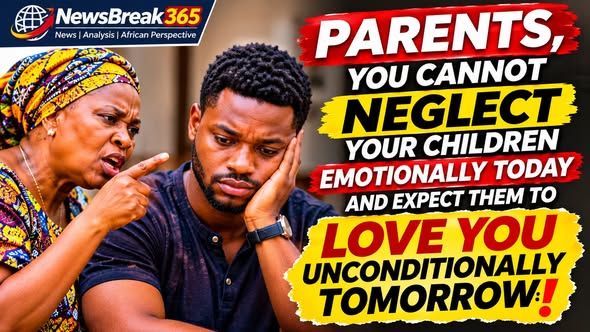
Parents, You Cannot Neglect Your Children Emotionally Today and Expect Them to Love You Unconditionally Tomorrow

Published

on

Some parents spend years neglecting their children’s emotional needs, yet expect unlimited love, respect and attention when they grow old. But have we forgotten that family relationships are built through years of actions, not simply blood connections?**

There is an uncomfortable conversation many families avoid: the emotional responsibility of parents towards their children.

In many African households, parents expect unquestionable respect, obedience, loyalty and lifelong support from their children. Children are often reminded that their parents brought them into the world, paid their school fees, provided food and shelter, and made sacrifices to give them a better future.

But there is another side of parenting that rarely receives enough attention.

**What happens when parents provide everything materially but fail to provide the emotional love their children desperately need?**

What happens when a child grows up in a home where affection is absent, encouragement is replaced with criticism, and emotional expression is treated as weakness or disrespect?

And what happens when that child becomes an adult and begins to distance themselves from the very parents who raised them?

## Providing for Children Is Not the Same as Loving Them

Some parents believe that providing food, clothing, education and shelter is sufficient proof of love.

While financial provision is an important parental responsibility, children need much more than material things.

They need parents who listen when they speak, comfort them when they are hurting, encourage them when they fail and celebrate their achievements without jealousy or unnecessary comparison.

A child needs to feel safe enough to express emotions without being insulted, humiliated or constantly reminded that they are worthless.

Unfortunately, some parents spend more time correcting their children’s mistakes than recognising their achievements.

Some constantly compare their children with their neighbours’ children. Others use insults, threats, intimidation and emotional manipulation as methods of discipline.

See also  PHOTOS: List Of Vice Presidents Of Nigeria (1966-Present)

Over time, these experiences can damage the emotional connection between parents and children.

## The Emotional Wounds Children Carry Into Adulthood

Not every wound is visible.

A child may grow up with a roof over their head and enough food to eat while silently struggling with emotional neglect.

Some adults still remember being rejected by their parents, never receiving a genuine compliment, being constantly criticised or feeling that nothing they did was ever good enough.

Others remember how their parents treated them differently from their siblings.

Some children grow up believing that they must achieve something extraordinary before they deserve their parents’ affection.

These experiences can affect how people develop relationships, express emotions and build confidence as adults.

And when they eventually become financially independent, some choose to create emotional distance from their parents.

This does not automatically mean they hate their parents. Sometimes, it means they are trying to protect themselves from relationships that have caused them years of emotional pain.

## Why Do Some Parents Demand Love They Never Demonstrated?

One of the biggest contradictions in some family relationships is that parents who rarely demonstrated affection while raising their children later expect constant attention and devotion.

They expect their children to call every day, visit frequently, provide financial assistance and make personal sacrifices for them.

But they rarely stop to ask themselves whether they built the emotional foundation for that relationship.

Some parents believe that age automatically guarantees respect and affection.

Others interpret every disagreement as disrespect, forgetting that children eventually become independent adults with their own opinions, boundaries and experiences.

Being a parent deserves respect, but parenthood does not make anyone immune to criticism or accountability.

See also  PHOTOS: Chiefs of Defence Staff of Nigeria (1980 – Present)

**You cannot demand an emotional connection while refusing to acknowledge the emotional damage that may have weakened it.**

## The African Parenting Culture: Is It Time for a Change?

In many African societies, questioning parental behaviour is often considered disrespectful.

Children are frequently told that parents are always right, regardless of how they behave.

Phrases such as “I am your father,” “I am your mother,” and “You must never question me” are sometimes used to shut down conversations about emotional pain.

Respect for parents is an important cultural value. However, respect should not become an excuse for emotional cruelty, intimidation or the refusal to accept responsibility.

African parents must understand that modern parenting requires more than authority and discipline.

Children need guidance, boundaries, affection, emotional security and understanding.

A healthy family should be a place where children feel loved, not a place where they constantly fear making mistakes.

We must also recognise that many parents were raised in difficult environments themselves. Some never experienced affection from their own parents and therefore struggle to demonstrate it.

Understanding their background may help explain their behaviour, but it does not mean harmful patterns should continue into another generation.

## Children Also Have Responsibilities

This conversation should not be interpreted as permission for adult children to mistreat their parents.

Children also have responsibilities to treat their parents with kindness, dignity and respect.

Not every parent-child disagreement is evidence of emotional neglect, and not every distant relationship is entirely the parent’s fault.

There are parents who genuinely sacrificed everything for their children and still experience rejection or abandonment.

There are also children who behave unfairly towards loving parents.

Every family situation is different.

However, parents and children must understand that meaningful relationships require effort from both sides.

See also  Jimoh Ibrahim: Nigerian Businessman Lawyer Politician and Senator for Ondo South

Love cannot thrive where there is constant humiliation, resentment, manipulation and a refusal to communicate.

## The Lesson Every Parent Must Understand

If you want your children to remember you with affection, give them reasons to remember you with affection.

Be present in their lives. Listen to them. Encourage them. Apologise when you are wrong. Celebrate their successes and support them through their failures.

Do not make your children feel that they must earn your love.

And when they become adults, understand that your relationship with them must evolve. They are no longer little children who must obey every instruction without question.

**The truth is simple: You cannot spend years planting emotional pain and expect to harvest unconditional affection without addressing the damage.**

Parenting is not just about bringing children into the world. It is also about creating an environment where they feel valued, protected, respected and loved.

Because one day, your children will grow up, build their own lives and make their own choices.

The question is: When they look back at their childhood, will they remember a home filled with love or a place they spent their adult lives trying to recover from?

—

## LET’S HEAR YOUR OPINION

Do you believe parents who emotionally neglect their children while growing up should expect unconditional love, attention and financial support from them in old age?

Should children always forgive their parents, regardless of how they were treated?

**Share your thoughts in the comment section. This is a conversation African families need to have.**

*NewsBreak365 — Bringing important conversations to the forefront.*

FOLLOW US ON:

FACEBOOK

WHATSAPP CHANNEL

TWITTER

PINTEREST

TIKTOK

YOUTUBE

LINKEDIN

INSTAGRAM

Continue Reading

Lifestyle

Money, Titles and Positions Should Never Make You Feel Superior to the Poor

Published

on

Wealth is not a licence to humiliate others. Having power does not make you a god, and occupying a position of authority does not give you the right to treat less privileged people as though they are beneath you.**

There is something deeply disturbing about people who acquire money, political influence, professional titles or positions of authority and suddenly begin to behave as though they are more human than everyone else.

Give some people money, and their attitude changes overnight. Give them a political appointment, and they begin to treat ordinary citizens with contempt. Give them a powerful position, and they forget that the people they look down on deserve the same dignity and respect as they do.

But when did financial success become a measure of human worth?

## When Money Becomes an Instrument of Arrogance

In many societies, particularly across Africa, wealth and social status are sometimes treated as measures of importance.

People are judged by the cars they drive, the houses they own, the clothes they wear and the political connections they have.

Unfortunately, this mentality has created an environment where some wealthy individuals believe they have the right to intimidate, insult, embarrass and disrespect those who have less.

Some people cannot even speak politely to a security guard, cleaner, domestic worker, market trader or ordinary employee because they believe their financial position makes them superior.

But the truth is simple: **Being wealthy does not automatically make you respectable. Your character determines how much respect you deserve.**

## Your Position Today Is Not Guaranteed Forever

See also  Rumour Peddlers: When Gossip Becomes a Weapon That Destroys Lives

One of the greatest lessons people should understand is that life is unpredictable.

The person enjoying enormous wealth today could face financial difficulties tomorrow. The politician occupying a powerful office today may become an ordinary citizen after leaving office.

The boss giving instructions today may one day need help from someone who previously worked under them.

Positions change. Wealth fluctuates. Influence fades.

That is why humility should never be sacrificed for temporary achievements.

You should never use your present circumstances to humiliate someone whose struggles you do not understand.

## The Poor Are Not Less Human

Being poor is not a crime, a character defect or a reason to be treated without dignity.

Some people are struggling financially despite working extremely hard. Others have experienced circumstances beyond their control.

A person’s bank balance does not determine their intelligence, kindness, integrity or value as a human being.

The security guard deserves respect. The cleaner deserves respect. The labourer deserves respect. The unemployed person deserves respect.

Respect should not be reserved for people who can afford expensive clothes, luxury cars and impressive titles.

If you can only respect people who have money, then perhaps you do not understand the true meaning of respect.

## True Greatness Is Found in Humility

Real greatness is not demonstrated by how many people fear you, how many people bow before you or how many people depend on your financial assistance.

It is demonstrated by how you treat people who have absolutely nothing to offer you.

A truly influential person does not need to humiliate others to prove their importance.

See also  Omoyele Sowore is a Nigerian human rights activist, pro-democracy campaigner, journalist, and politician

You can be a billionaire and still be humble. You can occupy the highest political office and still treat ordinary citizens with dignity.

You can have everything money can buy without losing the humanity that makes you who you are.

**Never become so wealthy that you forget the poor. Never become so powerful that you begin to see yourself as a god.**

After all, no amount of money can purchase genuine humanity.

## Final Thoughts: Have We Confused Wealth With Human Worth?

Perhaps the biggest problem in our society is that we have started measuring people by what they possess rather than who they are.

We celebrate expensive lifestyles but sometimes ignore good character. We admire powerful people even when they mistreat others, simply because of their influence.

It is time to rethink our definition of success.

Money should improve your life, not destroy your character. Position should give you an opportunity to serve, not an excuse to oppress. A title should represent responsibility, not superiority.

**Remember this: You may be richer than someone, more educated than someone or more powerful than someone, but you are not more human than them.**

—

### NEWSBREAK365 DISCUSSION

Do you think money, political power and social status have made some people arrogant and disrespectful towards the poor?

Why do some people suddenly change their attitude towards others immediately after becoming wealthy or occupying positions of authority?

Is humility becoming a rare quality in our society?

Share your thoughts in the comment section.

**Newsbreak365 — Bringing Issues That Matter to the Conversation.**

FOLLOW US ON:

FACEBOOK

WHATSAPP CHANNEL

TWITTER

PINTEREST

TIKTOK

YOUTUBE

LINKEDIN

INSTAGRAM

Continue Reading

Trending