
Connect with us

Education

Osun offers residents, students free Wi-Fi

Published

on

The Osun State Government launched Imole Wi-Fi, a free public internet service designed to expand digital access for residents, students, businesses and communities across the state.

The Government disclosed this in a statement issued on Monday by the State Commissioner for Information and Enlightenment, Kolapo Alimi.

According to Alimi, Imole Wi-Fi is intended to facilitate digital access and increase opportunities across various sectors throughout the state.

The initial connection will be available in government buildings, including the Osun State Library, Alphastart Hub, Osun Mall, Salvation Army Middle School, Osogbo Grammar School and sites within the Ministry of Innovation, Science, Technology and Digital Economy.

The Commissioner added that the service is part of the administration’s push to deepen digital inclusion and stimulate growth in education, health, agriculture and commerce.

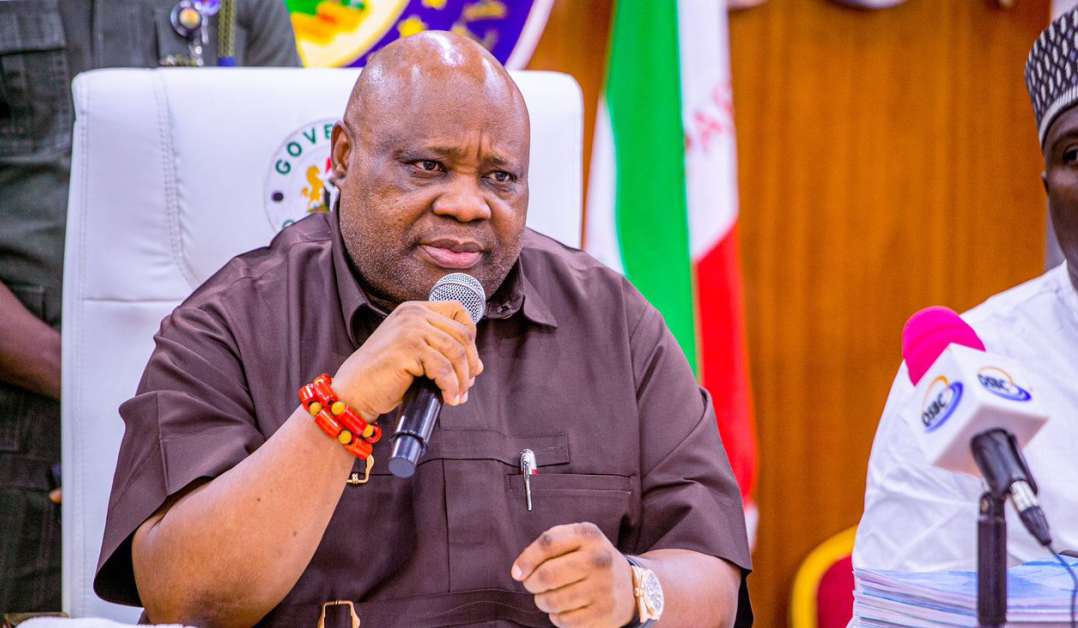
“Imole Wi-Fi is a gateway to opportunity. With this public digital infrastructure, we are cutting barriers, connecting people, and driving growth across every sector of Osun’s economy,” Governor Ademola Adeleke said, announcing the rollout.

The Special Adviser overseeing the initiative, Azeez Badmus, described the launch as an initial phase that will be expanded.

“This is just the first step. As we expand Imole Wi-Fi, more government services and sector-specific tools will follow, ensuring that every resident benefits from Osun’s digital future,” he said.

The statement added that Imole Wi-Fi is expected to be rolled out to additional locations over time.

FOLLOW US ON:

FACEBOOK

TWITTER

PINTEREST

TIKTOK

YOUTUBE

LINKEDIN

TUMBLR

INSTAGRAM

See also  Law student Ayomiposi Ojajuni kills self over failure to write final exam
Continue Reading
Click to comment

Leave a Reply

Your email address will not be published. Required fields are marked *

Education

WASSCE result verification fee now N4,000

Published

on

Candidates seeking admission into Nigerian tertiary institutions will now pay N4,000 only once to verify their West African Senior School Certificate Examination O’Level results, the Joint Admissions and Matriculation Board and the West African Examinations Council have said.

The clarification was contained in a joint press statement issued by JAMB and WAEC on Tuesday, following consultations on the recently introduced system allowing candidates to upload and verify their O’Level results remotely.

Under the new arrangement, candidates whose admissions are regulated and coordinated by JAMB are required to verify their WAEC results once through JAMB, after which the outcome will be made available to the tertiary institution where they are seeking admission.

The two examination bodies stressed that candidates would not be required to pay another verification fee to their chosen institutions.

The joint statement said, “Candidates are to pay N4,000 only, once, for the verification of their WASSCE O’ Level results on the specified platform and not through their desired institutions.”

JAMB and WAEC further directed tertiary institutions to utilise the verified results transmitted by JAMB for admission screening, processing and other administrative purposes.

According to the statement, “Tertiary institutions are to utilise the verified results shared by JAMB for screening, processing candidate admission and other administrative purposes. Candidates shall not be required to pay for another verification.”

The development followed JAMB’s recent introduction of a system that enables candidates to upload and verify their O’Level results from home or any internet-enabled location, eliminating the need to routinely visit JAMB-approved Computer-Based Test centres solely for the exercise.

See also  Six female double first-class law graduates share their story of trials and triumphs

JAMB had explained that the new arrangement initially commenced with WAEC results and was designed to enable the board to verify candidates’ results directly with the examination bodies.

The initiative was presented as part of efforts to make admission-related services easier, faster, safer and more convenient for candidates.

With Tuesday’s clarification, however, the two bodies have now established that the verification conducted through JAMB will be a one-off exercise, with the verified result available for subsequent use by the relevant institution.

WAEC has also authorised JAMB to share the outcome of the verification with the tertiary institutions concerned.

The joint statement said, “WAEC has agreed to permit JAMB to share the outcome of the verification exercise with the relevant tertiary institutions” for admission and related administrative purposes.

The agencies said the arrangement was intended to prevent candidates from being subjected to multiple verification exercises by different institutions after completing the process through JAMB.

They added that the policy would also reduce the financial and logistical burden associated with repeated verification.

“Candidates who have successfully verified their WASSCE O’ Level result through the Verification Service platform will not be required to repeat the same verification exercise,” the statement said.

The bodies urged candidates to take advantage of the arrangement by completing their WASSCE O’Level verification through the JAMB-provided platform once, noting that the verified result would subsequently be utilised by the relevant institution.

The latest development comes as thousands of Nigerian youths continue to navigate the 2026/2027 tertiary admission process, with O’Level results remaining a critical component of admission screening and eligibility.

See also  Oyo teachers celebrate safe return of abducted colleagues, pupils

In the past, candidates have had to upload their O’Level results through approved channels and, in some cases, undertake additional verification processes required by individual institutions. JAMB’s new technology-driven approach is aimed at reducing such repeated processes and limiting visits to CBT centres.

The two examination bodies said the collaboration was also intended to strengthen the integrity of academic records and reduce opportunities for the presentation of fake or altered certificates during the admission process.

They stated, “This collaboration underscores the commitment of both JAMB and WAEC to putting the interests of candidates first, reducing unnecessary costs and simplifying the admission process while maintaining the integrity and security of candidates’ academic records.”

The agencies therefore advised candidates to ensure that they complete the verification through the designated JAMB platform and retain their verification information for the admission process.

The clarification effectively means that the N4,000 payment is not an annual or institution-by-institution charge, but a one-time payment for candidates covered by the JAMB admission process.
Before the new arrangement, O’Level result verification was largely fragmented, with candidates required to upload their WAEC, NECO or other O’Level results to the JAMB platform as part of the admission process, while individual tertiary institutions could impose additional screening and document-verification requirements.

WAEC also operated a separate result-verification system, meaning candidates could face further verification of academic credentials already submitted during the admission process.

This created additional costs, movement between institutions and JAMB-approved Computer-Based Test centres, and the possibility of repeated checks of the same result.

See also  Law student Ayomiposi Ojajuni kills self over failure to write final exam

The new arrangement is designed to centralise the process, as candidates will pay N4,000 once to verify their WASSCE O’Level results through JAMB, after which the verification outcome will be made available to the relevant tertiary institution.

The institutions are expected to rely on the verified result and will not be permitted to demand another verification payment from candidates.

The two examination bodies said the “one verification, multiple uses” system would reduce costs, ease the admission process and spare candidates the stress of repeatedly visiting institutions or CBT centres.

Source: punchng.com

FOLLOW US ON:

FACEBOOK

TWITTER

PINTEREST

TIKTOK

YOUTUBE

LINKEDIN

INSTAGRAM

Continue Reading

Education

FG makes tertiary institution ranking compulsory for varsities, polytechnics

Published

on

The Federal Government has made participation in Nigeria’s national tertiary education ranking exercise compulsory for all universities, polytechnics and colleges of education, expanding the scheme beyond universities.

The Minister of Education, Dr Tunji Alausa, announced this on Tuesday in Abuja at a meeting with the Nigerian Universities Ranking Advisory Committee, which has now been expanded and renamed the Nigerian Tertiary Education Ranking Advisory Committee.

Alausa said the expanded ranking framework was designed to strengthen “quality, accountability, institutional performance and global competitiveness” across the country’s tertiary education system.

He said the ranking would provide institutions with “clear benchmarks for assessing their performance, identifying areas requiring improvement and measuring progress,” while encouraging healthy competition among institutions.

Under the new arrangement, universities, polytechnics and colleges of education will come under a unified national ranking framework, with the Federal Government expected to fund the exercise through the Tertiary Education Trust Fund.

Alausa said, “The 2026/2027 ranking exercise for universities would commence in September, while the committee would determine the appropriate timeline for extending the exercise to polytechnics and colleges of education.”

He added that “the government would develop guidelines to institutionalise the exercise and formally communicate to vice-chancellancellors and heads of other tertiary institutions that participation was compulsory.”

The minister said the policy was part of President Bola Tinubu’s education reforms under the Renewed Hope Agenda, being implemented through the Nigeria Education Sector Renewal Initiative.

He also pledged that the Federal Ministry of Education would provide the “policy direction, funding and capacity-building support” required to make the ranking exercise credible, sustainable and impactful.

See also  Student loan applicants hit one million – NELFUND

According to him, the ministry would work with the committee to facilitate “in-service training and institutional capacity-building programmes across tertiary institutions,” with the expectation that more Nigerian institutions would gain global recognition.

The Minister of State for Education, Professor Suwaiba Ahmad, described the initiative as “a significant step towards strengthening accountability and quality across Nigeria’s tertiary education system.”

She said healthy competition was essential to making institutions assess their performance and address shortcomings.

“Healthy competition is essential to encouraging institutions to assess their performance, address identified gaps and consistently improve the quality of education they provide,” she said.

Suwaiba also insisted that the ranking should cover both public and private institutions, saying the exercise would provide a mechanism for establishing and maintaining minimum standards across the sector.

She said it would help institutions understand their “strengths and weaknesses” and drive measurable improvements as the tertiary education system continues to expand.

Emeritus Professor Peter Okebukola, chairman of the ranking advisory committee and former Executive Secretary of the National Universities Commission, said the committee’s engagement with Alausa followed a memorandum congratulating the Tinubu administration over the increasing number of Nigerian universities gaining global recognition.

The committee had also called for greater investment in university education to accelerate the progress, according to Okebukola.

He said, however, that Alausa’s response went beyond the committee’s initial proposal by expanding NURAC’s mandate to cover polytechnics and colleges of education.

The development resulted in the transformation of NURAC into the Nigerian Tertiary Education Ranking Advisory Committee.

Okebukola expressed optimism that “sustained investment, stronger institutional capacity and the new national ranking framework” would enable more Nigerian institutions to make significant progress in international rankings.

See also  School owners fear 700,000 Ogun students may miss WASSCE, see reason

He said the framework would help Nigerian institutions “compete confidently with leading institutions globally.”

The latest policy comes as Nigerian tertiary institutions face pressure to improve their performance in global university rankings, where factors such as research output, academic reputation, citations, international outlook and institutional resources influence their positions.

Although a growing number of Nigerian universities have secured places in international rankings, concerns remain over inadequate funding, research capacity, infrastructure, staffing and the ability of institutions to compete with better-funded universities globally.

The government’s decision to extend the national ranking framework to polytechnics and colleges of education is expected to broaden performance measurement beyond universities and establish a more coordinated system for tracking the quality and competitiveness of Nigeria’s tertiary institutions.

The compulsory nature of the exercise also marks a shift from voluntary participation towards a system in which institutions will be expected to provide data and engage with nationally defined performance benchmarks.

Source: punchng.com

FOLLOW US ON:

FACEBOOK

TWITTER

PINTEREST

TIKTOK

YOUTUBE

LINKEDIN

INSTAGRAM

Continue Reading

Education

Czech Embassy debunks scholarship eligibility claim for Nigerian students

Published

on

The Embassy of the Czech Republic in Nigeria has debunked information circulating online claiming that Nigerian students are eligible for the Czech Government Scholarship programme for the 2027/2028 academic year.

The embassy, in a statement on Monday, said Nigeria was not among the countries eligible for the scholarship programme for the 2027/2028 academic year.

The clarification followed the circulation of information online about the scholarship, including claims that Nigerian students could apply.

The embassy said, “For the 2027/2028 academic year, Nigeria is not among the countries eligible for the Czech Government Scholarship programme.”

It urged Nigerian students to disregard information published on unofficial websites listing Nigeria among the eligible countries.

“We have seen some information circulating online about Czech Government Scholarships for the 2027/2028 academic year, including information stating that applicants from Nigeria are eligible. Please note that this information is NOT accurate,” the statement said.

The embassy acknowledged the interest of Nigerian students in studying in the Czech Republic, but said the government scholarship would not be available to Nigerian applicants for the 2027/2028 academic year.

“We know that many Nigerian students are interested in studying in the Czech Republic, and we understand that this may be disappointing news,” it stated.

“Unfortunately, the Czech Government Scholarship is not available to applicants from Nigeria this year.”

The embassy consequently advised prospective Nigerian applicants not to rely on information published by unofficial websites concerning the scholarship programme.

It directed students seeking accurate information to the Czech Ministry of Education, Youth and Sports and the Dům zahraniční spolupráce, which provides information on study opportunities for foreign students.

See also  Student loan applicants hit one million – NELFUND

The embassy said, “Please do not rely on information published on unofficial websites stating that Nigeria is eligible for the 2027/2028 Czech Government Scholarship.”

The clarification is expected to prevent prospective Nigerian applicants from acting on the inaccurate information or making preparations based on an eligibility claim that does not apply to them.

The embassy thanked Nigerian students for their understanding and wished prospective students success in their academic pursuits.

Source: punchng.com

FOLLOW US ON:

FACEBOOK

TWITTER

PINTEREST

TIKTOK

YOUTUBE

LINKEDIN

INSTAGRAM

Continue Reading

Trending