

Connect with us

Lifestyle

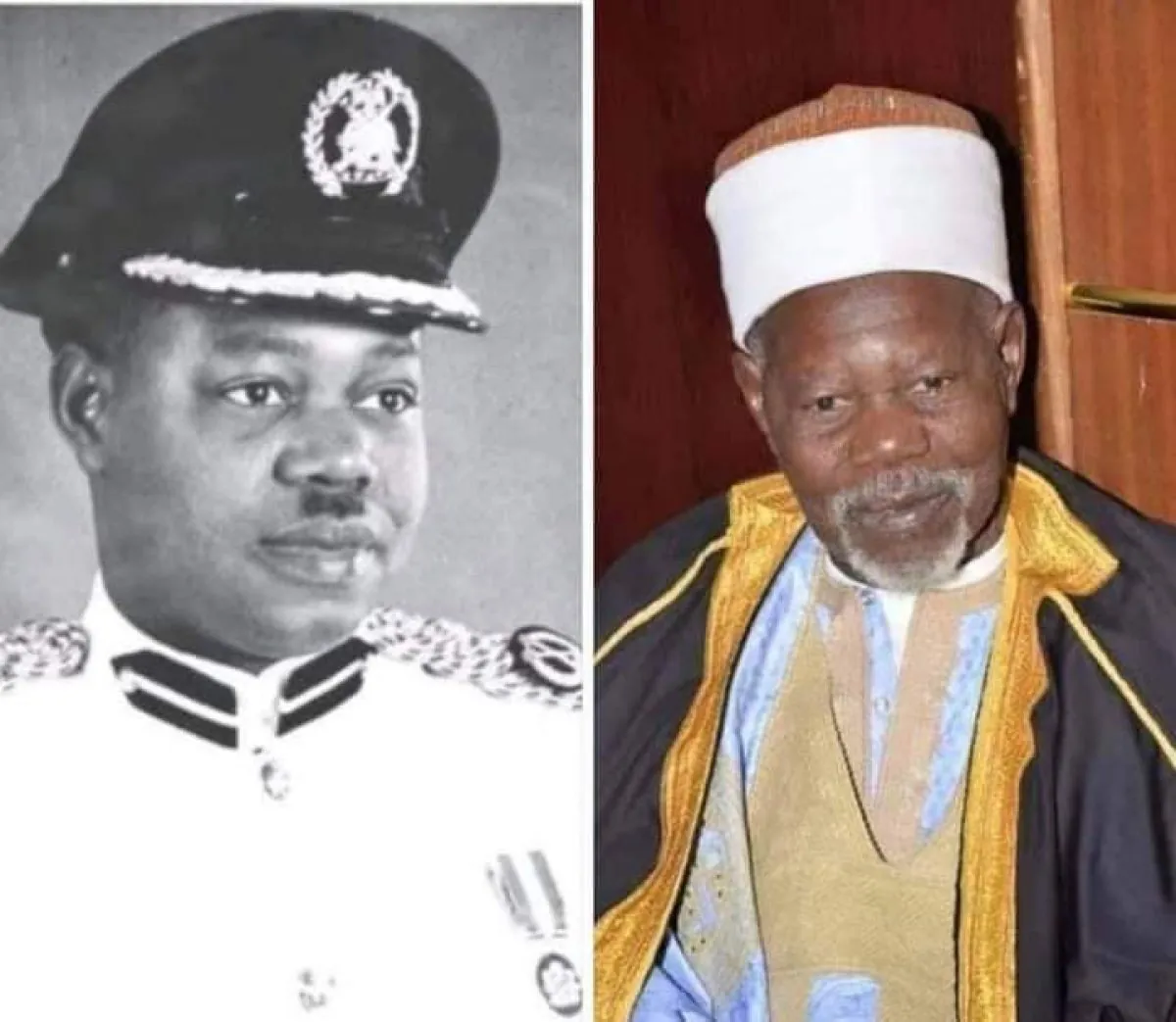
Alhaji Usman Faruk: First Military Governor of North-Western State

Published

on

Alhaji Usman Faruk (1932 – December 18, 2020) was a prominent Nigerian military officer, police chief, and statesman who played a defining role in governance during the formative years of Nigeria’s state creation. He was the first Military Governor of North-Western State, serving from 1967 to 1975 under the regime of General Yakubu Gowon. His tenure coincided with the Nigerian Civil War and the broader restructuring of the federation, making him one of the key figures in Nigeria’s post-independence history.

Early Life and Background

Born in 1932 in Gombe, Usman Faruk would later be honored with the traditional title of Jarman Gombe, a recognition of his standing in society. He joined the Nigerian Army during the early post-independence period, a time when the military was expanding in influence as the young nation grappled with political instability.

Faruk eventually transferred to the Nigeria Police Force, where he rose through the ranks to become a Commissioner of Police, one of the highest offices in law enforcement. His dual background in the army and the police reflected the fluidity of Nigeria’s security institutions during this era.

Appointment as Military Governor

In 1967, General Yakubu Gowon announced a sweeping restructuring of Nigeria’s political map, breaking up the four large regions into twelve new states. The old Northern Region was divided, and North-Western State was created—comprising what is today Sokoto State and parts of Niger State.
Faruk was appointed the first Military Governor of North-Western State, placing him at the forefront of building governance structures in a new administrative unit at a time of war and uncertainty.

See also  Actress Georgina Onuoha calls for Blessing CEO’s arrest over claims she has cancer

Governance and Achievements

As governor (1967–1975), Faruk laid the institutional foundations of the new state government. His administration emphasized:

Institution-building: Setting up ministries, administrative units, and civil service structures for effective governance.

Education: Supporting the development of schools and technical institutions. He played a role in the establishment of Sokoto State Polytechnic (later renamed Umaru Ali Shinkafi Polytechnic).

Agriculture and Infrastructure: Initiating early agricultural development schemes to support the largely rural economy, while investing in roads and state infrastructure.

Security and Stability: Maintaining peace in a state bordering the conflict zones of the Civil War (1967–1970).

Faruk remained in office until July 1975, when General Gowon’s government was overthrown in a coup led by General Murtala Muhammed, which brought an end to his governorship.

Later Life and Public Engagement

After his retirement from service, Faruk continued to play a significant role as a public elder statesman. He was often consulted on political matters, security issues, and questions of Nigeria’s unity.

In interviews and public statements, he stressed the importance of stability, good governance, and cohesion in a diverse federation like Nigeria.

As Jarman Gombe, he also embodied the link between Nigeria’s modern political institutions and traditional authority, serving as a cultural custodian in his home state.

Death and Legacy

Alhaji Usman Faruk passed away on December 18, 2020, at the age of 88. His death marked the passing of one of the last surviving military governors from the Gowon era.

Faruk’s legacy rests on his pioneering role in laying the administrative foundations of North-Western State, his contributions to education and public service, and his continued engagement in national debates long after leaving office.

See also  Join street-begging instead of dating for money – Emeka Ike advises ladies

Sources
Vanguard News, “First Military Governor of North-Western State, Usman Faruk, dies at 88,” December 18, 2020.

FOLLOW US ON:

FACEBOOK

TWITTER

PINTEREST

TIKTOK

YOUTUBE

LINKEDIN

TUMBLR

INSTAGRAM

Continue Reading
Click to comment

Leave a Reply

Your email address will not be published. Required fields are marked *

Lifestyle

He Has Not Seen Food To Eat – Ibiyeomie Reveals Why Hell Message No Longer Works

Published

on

Founder and presiding Pastor of Salvation Ministries, David Ibiyeomie, has stated that Nigerians are no longer afraid of the message of hell due to economic hardship.

According to him, they should preach a message of love and compassion instead.

It was reports that the clergyman made the remarks while addressing his congregants.

Ibiyeomie said many Nigerians are already struggling with severe economic challenges, making messages focused solely on the consequences of hell less effective in winning them to Christ.

“Just tell them God loves you; He can change your story. Come to Jesus. But if you say, ‘You’ll go to hell,’ the man will say, ‘The suffering wey I dey suffer now, na wetin e be?’

“That kind of message can’t convert one soul. You go there and say, ‘If you don’t convert to Jesus, you are going to hell.’ The man will say he has not even seen food to eat, he has not bought petrol; already, he is in hell,” he said.

Ibiyeomie said compassion should motivate Christians to tell people that Jesus loves them regardless of what they are going through and that God can show them mercy.

“Compassion will make you tell them Jesus loves you. In spite of what you’re going through, He will show you His mercy. Compassion is the greatest tool that brings people to Christ. It is from your heart,” he said.

The pastor said God himself is compassionate and urged Christians to extend the same quality to others.

See also  Actress Georgina Onuoha calls for Blessing CEO’s arrest over claims she has cancer

Citing Psalm 103:8, he said: “The Lord is compassionate and gracious, slow to anger, abounding in loving devotion.”

He added that God does not treat people according to their past mistakes and failures, saying those who have received God’s compassion should also show compassion to others.

Ibiyeomie, who cited Ephesians 4:32, said: “Be kind and compassionate to one another, forgiving each other, just as in Christ God forgave you.”

He described compassion as one of the most powerful expressions of God’s nature, stressing that it goes beyond merely feeling sorry for another person.

FOLLOW US ON:

FACEBOOK

TWITTER

PINTEREST

TIKTOK

YOUTUBE

LINKEDIN

INSTAGRAM

Continue Reading

Lifestyle

Igbos built Nollywood, but Yorubas have become dominant” — Francis Duru

Published

on

Veteran actor Francis Duru has sparked debate after saying Igbos played a major role in building modern Nollywood, but Yoruba filmmakers have become more dominant.

Speaking in an interview on Gbam, Duru said Igbo entrepreneurs helped build the home-video industry but argued that the Yoruba community has been more successful at supporting and promoting its own people.

“We [Igbos] created Nollywood, but if you go to Netflix today, you hardly see one movie that speaks of Igbo heritage,” he said.

Duru urged Igbos to learn from the Yoruba community’s ability to protect and project its culture, stressing that his comments were not an attack on Yoruba filmmakers.

FOLLOW US ON:

FACEBOOK

TWITTER

PINTEREST

TIKTOK

YOUTUBE

LINKEDIN

INSTAGRAM

See also  Beko Ransome-Kuti: Human Rights Activist and Physician
Continue Reading

Lifestyle

🔥 A HARD QUESTION FOR CHRISTIAN WIVES: WHY DO YOU RESPECT YOUR PASTOR MORE THAN YOUR HUSBAND?

Published

on

Some wives can stand before their pastor with a gentle voice, a respectful attitude, and complete attention. They will never speak to their pastor the way they speak to their husband at home.

But when they get home, the respect disappears.

Is that really the kind of Christian character God wants?

Before you get angry with this question, examine yourself.

📖 Ephesians 5:33 (KJV) says:

“…and the wife see that she reverence her husband.”

The Bible does not tell a wife to reverence her pastor while treating her husband with contempt.

But let us also be fair: God did not command husbands to demand respect while refusing to love their wives.

📖 Ephesians 5:25 (KJV):

“Husbands, love your wives, even as Christ also loved the church, and gave himself for it.”

Marriage is not a competition between husband and pastor.

Your pastor may preach to you, counsel you, and pray for you—but your husband is the person you chose to build a life with.

If you can speak politely to your pastor, why can’t you speak politely to your husband?

If you can listen patiently to your pastor, why can’t you listen patiently to your husband?

If you can honor your pastor publicly, why must your husband receive disrespect privately?

And husbands, this message is for you too:

You cannot demand the respect you refuse to give.

📖 1 Peter 3:7 (KJV):

“Likewise, ye husbands, dwell with them according to knowledge, giving honour unto the wife…”

A Christian home should not be a place where one person demands submission while the other refuses to show love.

See also  Actress Georgina Onuoha calls for Blessing CEO’s arrest over claims she has cancer

Respect should go both ways. Love should go both ways. Honor should go both ways.

📖 1 Corinthians 16:14 (KJV):

“Let all your things be done with charity.”

🔥 THE REAL QUESTION IS THIS:

If your pastor saw the way you speak to your husband at home, would he recognize the same Christian character you display in church?

👇 BE HONEST:

Do you think some Christians give their pastor more respect than they give their spouse?

YES or NO? Tell us why in the comments.

And if this message challenged you, share it with someone who needs to hear it.

FOLLOW US ON:

FACEBOOK

TWITTER

PINTEREST

TIKTOK

YOUTUBE

LINKEDIN

INSTAGRAM

Continue Reading

Trending