Connect with us

Lifestyle

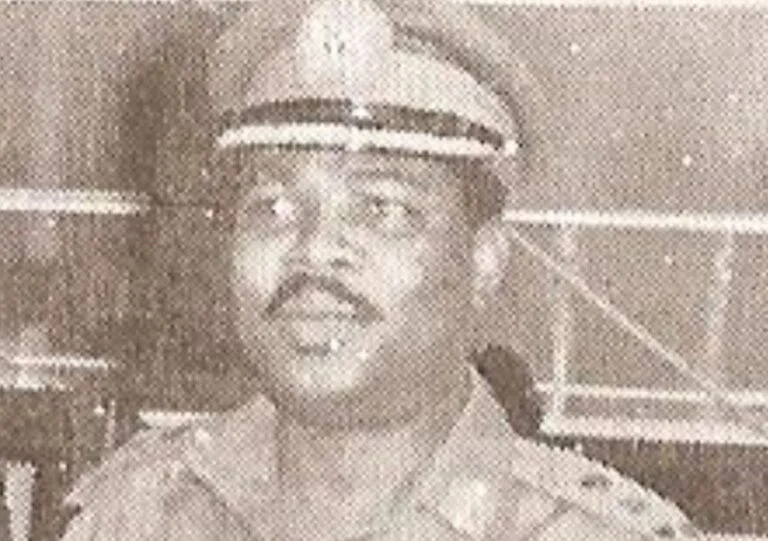
Brigadier Babafemi Ogundipe: The Unseen Statesman Who Chose Unity Over Power

Published

on

How Nigeria’s forgotten “Vice President” under Aguiyi-Ironsi sacrificed ambition to preserve a fragile nation in 1966

Early Life and Education

Babafemi Louis Ogundipe was born on 6 September 1924 in Ago-Iwoye, a town in present-day Ogun State, Nigeria. He hailed from a Yoruba family known for discipline, modesty, and service.

Little is recorded about his early formal education, but historical accounts suggest he received military training consistent with the standards of colonial Nigeria’s officer corps, which prioritised British military discipline and international exposure. His early upbringing prepared him for a life of loyalty, order, and national duty—qualities that defined his legacy.

Military Career and Rise Through the Ranks

Ogundipe joined the Royal West African Frontier Force (RWAFF) in 1941 during the Second World War. The RWAFF was a key British colonial military unit made up of soldiers from British West African colonies.

He served bravely in the Burma Campaign between 1942 and 1945, a major theatre of the war in Asia where many African soldiers fought under harsh tropical conditions. After the war, he re-enlisted in the Nigerian Army and steadily rose through the ranks.

By May 1964, Ogundipe had become one of Nigeria’s most senior officers, attaining the rank of Brigadier, a rare position for an African officer in the early post-independence era.

Chief of Staff and the Ironsi Government

In January 1966, Nigeria experienced its first military coup, which brought Major General Johnson Thomas Umunnakwe Aguiyi-Ironsi to power as Head of State. Brigadier Ogundipe, respected for his professionalism and calm disposition, was appointed Chief of Staff, Supreme Headquarters—a position equivalent to Vice President in today’s political structure.

See also  See Funke Akindele’s ‘fake butt’ that's sparking buzz ahead of new movie

The administration, which lasted from January to July 1966, was short-lived but significant. Ogundipe worked closely with Ironsi to stabilise a nation torn apart by political assassinations, ethnic mistrust, and military unrest. His role was largely behind the scenes, providing advice, coordination, and institutional balance.

The 1966 Counter-Coup and Ogundipe’s Defining Decision

On 29 July 1966, a second coup, led primarily by northern military officers, resulted in the assassination of General Aguiyi-Ironsi and the Governor of the Western Region, Colonel Adekunle Fajuyi, in Ibadan.

In the aftermath, Brigadier Ogundipe became the most senior surviving officer in the Nigerian Army. Many expected him to take control as the next Head of State. However, the reality on the ground was far more dangerous and complex.

The coup had left the army divided along ethnic lines. Most of the soldiers under Ogundipe’s command in Lagos were northern and refused to take orders from a southern Christian officer. Recognising that any attempt to assert power could plunge the country into a full-scale civil war, Ogundipe chose restraint over ambition.

He instead endorsed Lt. Colonel Yakubu Gowon, a much younger northern officer, as Head of State—a move that many saw as an act of national sacrifice.

Historians such as Max Siollun, in Oil, Politics and Violence: Nigeria’s Military Coup Culture (1966–1976), describe Ogundipe’s decision as “a moment of quiet heroism—one that may have prevented the total disintegration of the Nigerian federation.”

Diplomatic Service and Later Career

Following the leadership transition, Ogundipe remained loyal to the new administration. He represented Nigeria at the 1966 Commonwealth Heads of Government Meeting in London as the country’s official envoy.

See also  The Tragic Death of “Africa” — A Life Cut Short by Cult Violence at OAU

Soon after, he was appointed Nigeria’s High Commissioner to the United Kingdom, serving from 1966 to 1970. In this role, he worked to mend Nigeria’s international image and manage diplomatic relations during the Nigerian Civil War (1967–1970).

Despite being far from home, his service continued to reflect quiet patriotism and a desire for unity rather than personal gain.

Criticism and Historical Reflection

Ogundipe’s refusal to seize power was met with mixed reactions. Some critics argued that his inaction allowed chaos and pogroms against eastern Nigerians to worsen. However, most historical analyses recognise that his decision was a pragmatic one.

With no loyal troops at his disposal and widespread ethnic tension in the barracks, any attempt to claim power could have led to his assassination and possibly a complete military breakdown.

Ogundipe’s conduct revealed his deep understanding of Nigeria’s fragile balance. He was not driven by ambition but by the conviction that the country’s survival required compromise.

Death and Legacy

Brigadier Babafemi Ogundipe died in London on 20 November 1971, aged 47. His death was relatively quiet, much like his life.

Today, he remains one of Nigeria’s least celebrated heroes, despite being central to a pivotal moment in the country’s post-independence history. His choice not to take power when he could have is widely viewed as an act of discipline, integrity, and foresight—rare virtues in Nigeria’s coup-prone era.

Though often overshadowed by his contemporaries, Ogundipe’s life story serves as a lesson in leadership restraint and the moral courage to prioritise national unity over personal ambition.

Personal Life and Family

See also  Actress Eniola Badmus threatens lawsuit over prostitution allegation, see details

Details of Ogundipe’s family life are scarce, as he maintained a low public profile throughout his career. Reports indicate he was married and had children, though his family remained largely outside public discourse after his death.

His descendants continue to honour his memory quietly, preserving his reputation as a disciplined soldier and a man of conscience.

Legacy in Nigerian History

A Symbol of Ethical Leadership: Ogundipe’s story contrasts sharply with the power struggles that characterised Nigeria’s early coups. His restraint remains a benchmark for moral leadership.

An Architect of Military Professionalism: He represented the last of the colonial-trained officers whose ethos prioritised duty over politics.

A Forgotten Founding Figure: His role as de facto Vice President under Ironsi is seldom acknowledged in public commemorations but remains crucial to Nigeria’s military and political evolution.

Sources:

1. Max Siollun – Oil, Politics and Violence: Nigeria’s Military Coup Culture (1966–1976) (2009)

2. The Guardian Nigeria – “Babafemi Ogundipe: The Forgotten Soldier Who Chose Unity Over Power”

FOLLOW US ON:

FACEBOOK

TWITTER

PINTEREST

TIKTOK

YOUTUBE

LINKEDIN

TUMBLR

INSTAGRAM

Continue Reading
Click to comment

Leave a Reply

Your email address will not be published. Required fields are marked *

Lifestyle

‘I have cancer,’ Nollywood actress Cynthia Anijekwu cries, calls for support

Published

on

Nollywood actress Cynthia Anijekwu has made an emotional appeal to Nigerians for financial assistance after revealing that she is battling cancer for the second time.

In a video circulating on social media on Tuesday, the actress disclosed that she was first diagnosed with cancer in 2023, when she underwent surgery followed by chemotherapy in a bid to halt the disease.

She maintained that doctors initially managed the condition after the treatment, but the cancer later returned and has since spread to her bones, requiring more intensive care, including radiation therapy and another surgery.

According to Anijekwu, recent medical examinations revealed that the cancer has spread to her bones, significantly increasing the cost and complexity of her treatment up to N600,000 every month.

The actress said doctors have recommended radiation therapy and another surgery as part of her ongoing care.

“I have cancer in 2023 (sic). I did my surgery and took chemotherapy, but later it came back again. I’ve been in and out of the hospital. The doctor recently told me it has reached my bones, and the treatment is now much more expensive,” she said.

“I need to live. I need to survive. I’m asking Nigerians to please help me. Anyone that can help, please, I need help. Even my hands have swollen. The cancer has affected both breasts. I need to live. Please help me. I need to survive.

“Your one naira, your two naira can add up to something reasonable for me to get the proper treatment for this cancer. I’m begging you, please help me,” she pleaded.

See also  Why Chief Obafemi Awolowo picked an Igbo man as running mate in 1979 presidential election

Before her health challenge became public, Anijekwu built her career in Nollywood, featuring in several English- and Igbo-language productions.

However, there is no publicly verifiable record identifying a major blockbuster film or comprehensive filmography associated with the actress, as public attention has largely shifted to her battle with cancer in recent years.

The actress said the financial burden has become overwhelming for her family, prompting her to seek help from members of the public.

punch.ng

FOLLOW US ON:

FACEBOOK

TWITTER

PINTEREST

TIKTOK

YOUTUBE

LINKEDIN

Continue Reading

Lifestyle

It’s not easy, surrogate mother shares emotional journey

Published

on

A masked Nigerian surrogate mother has opened up about how financial hardship and what she described as an irresponsible partner led her to become a surrogate, saying the decision came after the loss of her second child.

The woman disclosed this during a new episode on Cruise TV published on YouTube on Sunday, where she recounted the emotional, financial and psychological realities of carrying children for other families.

She said becoming a surrogate was one of the hardest decisions she had ever made, describing the emotional attachment that develops during pregnancy despite knowing the child does not belong to her.

“Emotionally it’s not easy. Even when I started the journey, when the pregnancy was three months, I called my nurse that I don’t think I can cope again because it’s not easy to carry what is not yours.

“When you start having the emotional attachment, you keep reminding yourself that this is not mine. I tell myself it is a job, and that helps me cope, but the emotions still come and go.”

The woman explained that she became a gestational surrogate through IVF, meaning she had no biological connection to the babies she carried.

Speaking on what pushed her into surrogacy, she said her partner failed to provide for the family despite her efforts to support them.

“I had my first child. Unfortunately, my husband is not the person that is hardworking and he doesn’t take responsibility. I do work. There is no work I cannot do.

“When I became pregnant the second time, I could no longer work. We couldn’t even afford hospital bills.”

See also  The Tragic Death of “Africa” — A Life Cut Short by Cult Violence at OAU

She said complications during the pregnancy eventually led to the death of the baby, an experience that changed her outlook.

“That baby died, and that was the reason I made that decision. Instead of giving him another baby, I would rather help people who have the money to take care of me.

“If you don’t have the money to care for my health, I won’t do it for you.”

She disclosed that she initially declined financial compensation beyond medical care, accommodation and allowances, a decision she now regrets.

“I told them I didn’t want any compensation aside from the process, monthly allowance, wardrobe allowance and accommodation fee, but that was a mistake.

“I won’t do it again,” she said.

The surrogate mother also said she would not encourage her daughter to follow the same path because of the emotional and health risks involved.

“I cannot advise my daughter to be a surrogate.”

She added that she relocated during one of her pregnancies to avoid stigma and often told people the baby had died whenever they asked questions.

According to her, surrogate mothers also face psychological challenges after delivery despite undergoing counselling before and after childbirth.

While acknowledging that surrogacy has helped many couples struggling with infertility, she maintained that the process is far more demanding than many people realise.

“Surrogacy is not as simple as people think.”

She called for stronger regulation of the practice to protect surrogate mothers from exploitation and ensure adequate emotional and financial support.

punch.ng

FOLLOW US ON:

FACEBOOK

TWITTER

PINTEREST

TIKTOK

YOUTUBE

LINKEDIN

Continue Reading

Lifestyle

I waited 18 years before welcoming twins – Nollywood star Ricardo Agbor

Published

on

Veteran Nollywood actor, Ricardo Agbor, has opened up about his 18-year journey to parenthood, revealing that he and his wife waited nearly two decades before welcoming their twins.

The actor disclosed this during an interview with AfricanAList published on Sunday, where he reflected on his marriage, faith and the challenges he faced before becoming a father.

Agbor said he remained committed to his wife throughout the period, despite the long wait for children.

“I wanted to get married to a particular lady; I married her regardless of where she is from. She is not from my tribe. So ordinarily, we were supposed to have strife; no, it was very fair,” he said.

Speaking about the couple’s struggle with childlessness, the actor said he specifically prayed for twins and refused to give up despite waiting for 18 years.

“It took 18 years for me to have the twins. And I waited. God knows, 18 years and they are 14 now, so I told God I wanted twins.

“So while that wait was on, if it were someone else, he would cross. But at the end of the day, I have twins. I have a boy and a girl. I asked God what I wanted,” he added.

Agbor also recounted what he described as the most painful experience of his life — the death of his mother.

According to him, she had been receiving treatment for about three weeks without any improvement before doctors advised that she should be flown to South Africa for further medical care.

The actor said his mother requested to be moved to another private hospital in Surulere, but she died in his arms while he was helping her into the car.

See also  Remi Lagos: The Legacy of a Nigerian Fashion Icon

“My mom died right in my arms. At the hospital, they were bringing almost 10 doctors to do tests… the sickness was not improving after almost three weeks.

“It was after three weeks that they told me to come and carry my mom and take her to South Africa. I took my mom away and took her to another private hospital within Surulere. It was my mom that told me to take her away from that place. As I was carrying her into the car, she gave up,” he said.

Agbor said the loss left him devastated, noting that it was the first time he had cried outside acting.

“I think that was the first time I cried in my life. I don’t cry. If I cry, maybe it is in a movie and it is a role. So I cried. It was painful,” he added.

punch.ng

FOLLOW US ON:

FACEBOOK

TWITTER

PINTEREST

TIKTOK

YOUTUBE

LINKEDIN

Continue Reading

Trending