Lifestyle
Nigeria’s Independence in Print: The Daily Times, October 1, 1960

A Nation Awakens
On 1 October 1960, Nigeria formally ceased to be a British colony and became an independent nation within the Commonwealth. From Lagos to Kaduna, parades filled the streets, traditional rulers hosted dignitaries, and the new green-white-green flag rose for the first time.
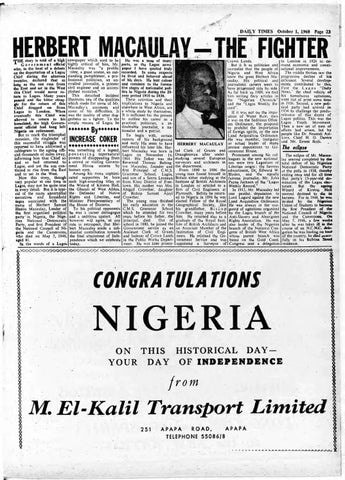
Among the most vivid records of that morning was the Independence Day edition of the Daily Times—then the country’s most widely circulated English-language newspaper. Its pages captured both the jubilation of the hour and the long struggle that made it possible.
“HERBERT MACAULAY—THE FIGHTER”
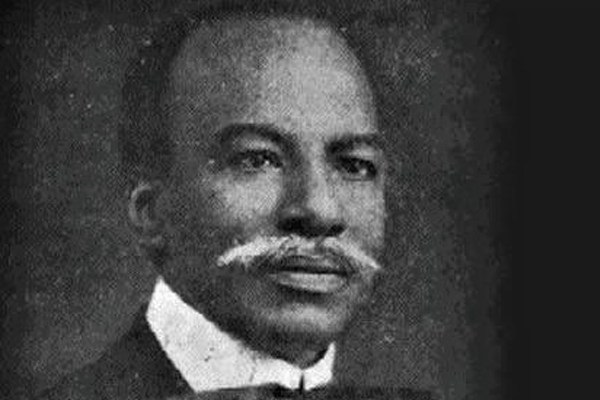
Dominating the front page was a tribute headlined “HERBERT MACAULAY—THE FIGHTER.”
Herbert Samuel Heelas Macaulay (1864–1946) is often described as the father of Nigerian nationalism.
A London-trained civil engineer, Macaulay became one of the earliest and most persistent critics of colonial policy in Lagos.
In 1923, he co-founded the Nigerian National Democratic Party (NNDP), the country’s first political party, which repeatedly won Lagos municipal elections.
He organized campaigns against unfair taxation and pushed for African participation in colonial governance.
Macaulay mentored a younger generation of activists—most famously Nnamdi Azikiwe, who would become Nigeria’s first Governor-General and later its first President.
By placing Macaulay’s story on the front page, the Daily Times linked Nigeria’s new status to decades of nationalist agitation, underscoring that independence was the fruit of a long, deliberate struggle.
Other Front-Page Highlights
The independence edition also carried:
Prime Minister Abubakar Tafawa Balewa’s broadcast—a call for unity and service in the young nation.
Reports on the arrival of Princess Alexandra of Kent, representing Queen Elizabeth II, who formally handed over constitutional instruments at the Race Course in Lagos.
Photographs of crowds celebrating in Lagos, Kaduna, Enugu and other cities, reflecting a nationwide sense of pride.
These articles framed independence not only as a political event but as a moment of collective joy across Nigeria’s diverse regions.
Celebratory Advertisements
Lower on the page were congratulatory messages from Nigerian businesses eager to associate themselves with the new nation’s birth. Among them was a large advertisement from M. El-Kalil Transport Limited, saluting Nigeria on its independence. Such notices captured the optimism of a business community anticipating fresh economic opportunities in a self-governing country.
Beyond Politics: A Cultural Milestone
The Daily Times also described traditional music, masquerades and cultural displays staged in towns and villages. Independence celebrations blended modern statecraft with centuries-old customs, affirming Nigeria’s identity as a federation of diverse peoples united under a single flag.
The Value of the Independence Edition
Today, original copies of the 1 October 1960 Daily Times are prized as historical artifacts. Libraries such as the Nigerian National Library and a few private collectors preserve these papers as primary sources. For historians, journalists and students, they remain a tangible link to the moment Nigeria took its place among the world’s sovereign nations.
Legacy
This single newspaper page crystallizes both hope and history. It celebrates the political victory of independence and pays homage to those—like Herbert Macaulay—whose decades of activism made the dream a reality. Sixty-plus years on, the Daily Times independence edition stands not just as reportage but as a symbol of Nigeria’s coming of age.
Sources:
Daily Times (Lagos), Independence Day Edition, 1 October 1960.
Nnamdi Azikiwe, My Odyssey: An Autobiography (1970).
Toyin Falola, The History of Nigeria (1999).
Tekena N. Tamuno, Nigeria and the First Republic (1966).
FOLLOW US ON:





“I MADE THIS PERSON WHO THEY ARE TODAY!” — REALLY?

SOME PEOPLE WILL DO ANYTHING — EVEN EVIL — JUST TO MAKE MONEY!

Belgian parliament to legislate to allow police to enter homes to facilitate undocumented migrant removals

‘Sleeping Prince’ of Saudi Arabia dies after 20 years in coma

2027: Atiku delays ADC membership card collection amid rumoured Jonathan comeback

How A Class Of 24 Students Produced 2 Presidents, 4 Governors, 2 Ministers, 4 Emirs, 3 Justices, 4 Ambassadors and Other Influential Leaders


-

 News18 hours ago
Air chief pleads for patience as investigation begins on Ondo crash
-
News17 hours ago
Dapo Abiodun reveals that Nigeria needs 554,353 personnel for state police, read details
-
News17 hours ago
INEC displays voter register, begins PVC distribution ahead of 2027 elections
-
Business18 hours ago
FG’s 30-day petrol discount sparks opposition backlash
-
Sports17 hours ago
Adeniyi lauds Nigeria’s Veterans World Wrestling Champs medal
-
News16 hours ago
Trump rules out new Iran attack before US midterm elections
-
Business17 hours ago
Report reveals Nigeria leaves N40tn manufacturing opportunities untapped
-
Education17 hours ago
Lagos targets 2,500 medical varsity intake, expands capacity