
Connect with us

Business

PENGASSAN and NUPENG reject govt’s plan to sell assets

Published

on

Two of Nigeria’s influential oil sector unions have strongly opposed the Federal Government’s reported plans to divest significant stakes in joint venture assets managed by the Nigerian National Petroleum Company Limited.

The Petroleum and Natural Gas Senior Staff Association of Nigeria and the Nigeria Union of Petroleum and Natural Gas Workers on Tuesday warned that such moves could destabilise the economy, weaken the oil industry, and jeopardise the welfare of workers.

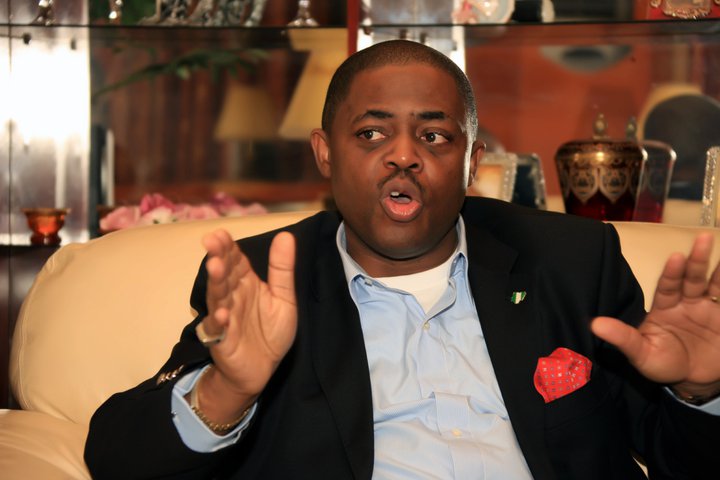
At a joint press briefing in Abuja, PENGASSAN President, Festus Osifo, and his NUPENG counterpart, Williams Akporeha, rejected the proposal to cut government stakes in JV assets by as much as 30–35 per cent. Currently, the Federal Government holds between 55 and 60 per cent of such assets through NNPCL.

According to the unions, the planned sale would generate quick cash but at the expense of Nigeria’s long-term economic security. They cautioned that reducing government holdings in critical oil assets could bankrupt NNPC, impair its ability to meet obligations such as salaries and welfare packages, and shrink its contributions to the national budget.

“The government wants to reduce its stake in these assets. In some cases, they are talking of selling up to 35 per cent. But we say no.

You cannot mortgage the future of Nigerians for temporary gains,” Osifo declared.

The controversy follows President Bola Tinubu’s directive last month for a reassessment of the NNPC’s 30 per cent management fee and 30 per cent frontier exploration deduction under the Petroleum Industry Act.

Tinubu, in charging the Economic Management Team led by Finance Minister Wale Edun, stressed the need to optimise government savings, streamline deductions from the Federation Account, and enhance fiscal discipline in a time of global financial strain.

See also  Shettima pushes for proactive disaster preparedness over costly relief

But oil unions said the administration’s latest policy moves, including talk of amending the PIA, could create more uncertainty in a sector that only recently secured a comprehensive reform law after decades of delays.

Osifo warned that further divestment would cripple NNPC’s ability to sustain its operations. He recalled previous divestments by international oil companies, including ENI’s Agip subsidiary, ExxonMobil, and Shell, whose Nigerian assets were acquired by domestic firms such as Oando and Seplat.

“The NNPCL manages JV assets on behalf of the Federation. Every oil well belongs to the Nigerian people collectively, not just the Federal Government. If these stakes are sold, the federation loses, and the national oil company will be too weak to deliver,” he argued.

The unions also accused the Ministry of Finance of attempting to remove the Ministry of Petroleum from joint ownership of NNPC—an act they described as a backdoor hijack of the company. They argued that the proposed amendments would strip NNPC of its core national role, scare away investors, and send negative signals about Nigeria’s policy consistency.

“The PIA was passed after years of struggle. Investors are just beginning to adapt to it. Now, the government wants to amend it again? That is a dangerous signal,” Akporeha said. According to him, every serious oil-producing nation protects its national oil company. “Here, we are doing the opposite, stripping ours of its strength,” he added.

The unions demanded that President Tinubu personally halt the divestment plan and rein in officials pushing for changes. They specifically urged him to call the Minister of Finance, the NNPCL Board Chairman, and the Group Chief Executive Officer of NNPCL to order.

See also  Nigeria’s Non-Oil Exports Hit $3.225bn In H1 2025

“If these proposals succeed, Nigeria will struggle to generate the revenue required to fund its budget. This is a recipe for crisis, and we will resist it,” Osifo maintained.

While the unions stopped short of announcing a strike, they issued a strong warning that they would “fight with everything” to prevent the sale.

“Whoever mooted this idea, whether from the Ministry of Petroleum, Ministry of Finance, NNPCL, or even the Presidency itself, we reject it 100 per cent. It will make NNPCL bankrupt in a few years. We will not allow that to happen,” Osifo insisted.

Akporeha further criticised the government’s inconsistency, noting that the PIA, enacted barely three years ago, had not been given enough time to stabilise before fresh amendments were being considered.

“When laws are inconsistent, they scare away investment. The investors are just beginning to understand the PIA, and suddenly government wants to change it again,” he said.

The oil unions’ rejection adds another layer of tension to the government’s economic reform drive. While the administration seeks quick fixes to address fiscal pressures, organised labour insists that selling off critical national oil assets would mortgage the country’s future.

Both PENGASSAN and NUPENG have urged President Tinubu to prioritise national interest over short-term gains, warning that any move to weaken NNPCL could erode Nigeria’s economic foundation and trigger industrial unrest.

punch.ng

FOLLOW US ON:

FACEBOOK

TWITTER

PINTEREST

TIKTOK

YOUTUBE

LINKEDIN

TUMBLR

INSTAGRAM

Continue Reading
Click to comment

Leave a Reply

Your email address will not be published. Required fields are marked *

Business

Rivers oil tragedy: 37 die from toxic fumes

Published

on

About 37 persons have reportedly died after inhaling fumes from a petroleum product at a jetty in Okrika Local Government Area of Rivers State.

The incident occurred on Thursday at the Okari Jetty in the Okrika Mainland area, where youths from Okrika and neighbouring communities had reportedly gathered to load a petroleum product from an illegal tapping point.

Many others were said to be missing following the incident, which occurred in the mainly coastal community.

A source in the community told our reporter that more than 100 persons had stormed the jetty with locally made boats while a vessel was anchored at the riverside to load petroleum products.

The source said trouble started while the youths were loading the product, as a strong smell suddenly saturated the air, causing several of them to collapse.

“Many of them collapsed into the river, while others who managed to escape the scene had serious respiratory disorders and were being treated at the hospital.

“As I speak to you, over 37 bodies were identified as Okrika people, while six others were yet to be identified and many are still missing,” the source, who pleaded anonymity, said.

The Youths and Environmental Advocacy Centre also confirmed the incident, saying its network of youth volunteers and human rights defenders in the Niger Delta had reported that no fewer than 37 persons suspected of involvement in illegal oil activities died after inhaling what was locally referred to as “Indorama fuel.”

The Executive Director of YEAC-Nigeria, Dr Fyneface Dumnamene, said in a statement that the incident occurred at about midnight on Thursday at the Okari Jetty.

See also  FG cancels $717m World Bank power loan amid blackouts; read details

“According to the report, no fewer than 37 persons suspected to be oil thieves died after inhaling what is locally called ‘Indorama Fuel.’

“Many others are still missing. The incident occurred during the illegal loading of the product into a ship at a tapping point,” he said.

Dumnamene said the victims had connected a pipe to a tapping point on a pipeline that transported petroleum products from the Indorama Eleme Petrochemical through the Port Harcourt Refinery to vessels that reportedly came every two weeks to load products for export.

He added that the youths inhaled the product while a vessel was loading and they were simultaneously loading it into their waiting boats from the illegal tapping point.

“This led to the death of not fewer than 37 persons. Many are still missing, and some corpses have been seen floating on the river but have not yet been recovered,” he stated.

Dumnamene called on the National Oil Spill Detection and Response Agency to immediately conduct a joint investigation visit to the site of the incident.

He also urged the company that owned the vandalised facilities to provide adequate security for its pipelines to prevent a recurrence.

The YEAC-Nigeria boss condemned the alleged sabotage, warning youths to stay away from oil and gas infrastructure because of the dangers associated with high-pressure pipelines.

He also called for alternative livelihood opportunities for youths in the Niger Delta, including the establishment of modular refineries and the legalisation of artisanal refining.

When contacted, the spokesperson for the Rivers State Police Command, Blessing Agabe, confirmed the incident and said the victims were reportedly attempting to steal crude oil.

See also  Shettima pushes for proactive disaster preparedness over costly relief

Agabe, an Assistant Superintendent of Police, said no official complaint had been lodged with the command but added that an investigation had commenced.

“The suspects reportedly died in the process of attempting to steal crude oil. However, no official complaint has been received in connection with the incident at this time.

“Investigation is ongoing to establish the circumstances surrounding the incident and ascertain the facts,” the police spokesperson stated.

However, the Commander of the Civilian JTF in Okrika LGA, Igwe Godswill, gave a different account of the incident, saying the victims had gone to scoop petroleum products that had spilled into the river when they were allegedly overwhelmed by fumes from a vessel loading products at the jetty.

Godswill described the incident as tragic, saying most of the victims were youths searching for means of livelihood amid a lack of employment opportunities.

“It is so pathetic that this incident is happening in our community. These are young guys who have gone to search for their daily bread, only for the fumes from the fuel that was pumped to kill so many of our youths under the bridge.

“Many of them were choked to death. These are not criminals or anything, but they went out in search of their daily meal. I am advising the community, the leaders and every other person that we need legitimate jobs in the community.

“These things are risky, but when you cannot feed your children, most times, those risky jobs become the only option,” Godswill stated.

He explained that the victims had gone to scoop petroleum products floating on the water when they were overcome by fumes from a vessel loading petroleum products at the jetty.

See also  EU Provides N320.5B Credit Line to Boost Nigeria’s Agricultural Sector

Godswill, however, said about 10 bodies had been recovered, adding that only some of the victims could be identified because of the condition of their remains.

He said, “We saw about 10 of them. Four were still unrecognisable, while four persons were identified. The rest could not be identified because their bodies were badly damaged and their faces were severely affected.”

The Civilian JTF commander called on the Rivers State Government, community leaders and other relevant authorities to create employment opportunities for youths in the area to discourage them from engaging in dangerous activities.

“I am calling on the relevant authorities, community leaders, the chairman and every other person to look into this. It is not enough to stop them because, yes, it is a risky job, but they should create jobs for the youths so that everybody will have something to eat.

“Something that can put food on the tables of these young men, the youths and every other person. I can tell you for free that it will not just stop because when that source is the only livelihood, people will still go there.

“Even as of yesterday, people still went there, despite the fact that we had confirmed that people had died from the same activity. So, we are calling on the leaders to look into it and see how they can create job opportunities, especially for the youths,” Godswill added.

Source: punchng.com

FOLLOW US ON:

FACEBOOK

TWITTER

PINTEREST

TIKTOK

YOUTUBE

LINKEDIN

INSTAGRAM

Continue Reading

Business

Uber exit: Drivers brace for car loan defaults

Published

on

Drivers who obtained or deployed vehicles through financing arrangements to operate on Uber’s platform in Nigeria now face uncertainty after the ride-hailing company exited the country, the drivers’ association said on Thursday.

Uber Technologies Inc. discontinued its Nigerian operations on Wednesday, September 2, ending a 12-year presence in the country as it shifts investment towards markets where it believes it can create the most value.

Uber and Moove have a partnership under which vehicles financed by Moove for drivers were deployed for use on Uber’s platform. Uber is also one of Moove’s major investors.

The arrangement meant that drivers using Moove-financed vehicles for Uber’s UberGo service had previously been required to operate exclusively on the Uber platform.

Uber’s withdrawal from Nigeria therefore left affected drivers uncertain about the use of their vehicles and how they would continue earning from ride-hailing while meeting their financing obligations.

The Amalgamated Union of App-Based Transport Workers of Nigeria told The PUNCH that Uber’s departure would require drivers who depended on the platform to migrate to competing services, particularly Bolt and inDrive. “Now they have to migrate officially to Bolt and inDrive,” the union’s Public Relations Officer, Steven Iwindoye, stated.

The union also raised concerns about vehicles financed through mobility company Moove, asking what would happen to cars acquired or deployed specifically for Uber operations now that the platform had ceased operating in Nigeria.

However, the union said the migration would take place against the backdrop of existing financial pressures on drivers, who have repeatedly complained about the cost of fuel, vehicle maintenance and other operating expenses.

The union said many drivers were struggling to maintain their vehicles. “Look at the condition of our car; many of us don’t even have money to maintain, to take care of our car,” the executive stated.

The union also argued that ride-hailing companies could not sustain their businesses by focusing primarily on market dominance without ensuring adequate returns for the platforms and viable earnings for drivers. “What is the essence of you dominating the market when you are not making profit?” Iwindoye asked.

See also  FG cancels $717m World Bank power loan amid blackouts; read details

Drivers said they had repeatedly attempted to engage Uber on issues affecting them but received little attention from the company, while describing Bolt and inDrive as more receptive to discussions and interactive sessions with drivers and their representatives.

“Bolt, inDrive, sometimes they reach out to us; we do interactive sessions,” Iwindoye said, adding that attempts to establish similar engagement with Uber had yielded little response. But on the aspect of Uber, nothing, nothing,” he said.

For Bolt and inDrive, Uber’s departure presents an opportunity to attract some of the riders and drivers who previously used the platform. But the union warned that market dominance would not necessarily address the underlying economic challenges facing the industry.

The organisation said drivers were already facing difficulties maintaining their vehicles and argued that ride-hailing platforms needed to ensure that the economics of the sector worked for both operators and drivers.


Nigeria’s ride-hailing and mobility platforms market was valued at $450m in 2025 and is projected to reach $982m by 2032, representing a compound annual growth rate of 11.8 per cent, according to Ken Research.

The market’s size and projected growth contrast with Uber’s decision to withdraw, underscoring the increasingly selective approach global technology companies are taking to capital allocation.

An Uber spokesperson disclosed the withdrawal in an email to The PUNCH on Wednesday, saying that the withdrawal was specific to Nigeria and Uganda and would not affect its other African operations.

It reiterated its commitment to sub-Saharan Africa, where it said it continued to see “robust growth and long-term opportunity”.

Uber revealed it was shifting investment towards markets where it believed it could create the most value for drivers by providing earning opportunities at scale and enabling riders to travel seamlessly.

The company said its immediate priority was to support drivers, riders and employees affected by the withdrawal, adding that it had begun communicating with active drivers and would provide them with a token of appreciation during the transition.

The Nigerian withdrawal comes as Uber undergoes a major restructuring that will cut about 3,300 jobs, representing roughly 10 per cent of its global workforce.

See also  Petrol exports hit N371bn amid heavy import reliance

Chief Executive Officer Dara Khosrowshahi said the restructuring was intended to make Uber simpler and faster, with the company reducing management layers and reorganising teams to operate more efficiently at its current scale.

The restructuring also reflects Uber’s focus on areas of future growth, including autonomous transportation and robotaxis, as the mobility industry prepares for the possibility of driverless vehicles altering the economics of conventional ride-hailing.

Before its exit, Uber had been less visible in its engagement with drivers than Bolt, its biggest rival. The company did not have a public relations officer in Nigeria, with its communications handled through a third-party PR firm, and also operated without a country manager.

It is unclear how many employees Uber had in Nigeria. Globally, the company has about 34,000 employees and operates in more than 70 countries, according to a recent filing with the US Securities and Exchange Commission.

Uber’s Nigerian exit follows a series of changes to its African operations. In January, the company withdrew from Tanzania following years of regulatory tensions involving fares, commissions and regulatory control.

The company also left Côte d’Ivoire in September 2025 after six years of operations. In South Africa, Uber discontinued UberX, its lower-cost service, on September 1, although it continues to operate other services in the country.

Nigeria had been an important part of Uber’s African expansion since the company entered Lagos in 2014 before expanding to Abuja in 2016.


The market has since developed into a broader mobility ecosystem involving ride-hailing platforms, drivers, fleet operators, vehicle-financing companies and businesses that use digital platforms to arrange transportation.

The union is also seeking a greater role in discussions over the future regulation of app-based transportation.

It stated that it was participating in policy discussions in Abuja involving transport commissioners, the Minister of Transportation, Vice-President Kashim Shettima, government agencies and other stakeholders.

See also  FX inflows, reserves boost naira to N1,497 per dollar

The organisation said it had presented its proposals to policymakers and believed that the resulting policies would apply across Nigeria’s transportation sector, including ride-hailing platforms.

Uber, however, rejected any suggestion that its Nigerian withdrawal was linked to a recent directive by the Federal Airports Authority of Nigeria concerning e-hailing operations at Nigerian airports. The company said the decision followed its own review of business priorities and investment focus.

Economist reacts

In an interview with The PUNCH, Chief Executive Officer of Economic Associates, Dr Ayo Teriba, described Uber’s exit from Nigeria as a sector-specific regulatory issue that should not reflect on the country’s overall investment attractiveness.

Teriba criticised the government’s handling of Uber’s operations at the Murtala Muhammed International Airport, Lagos, arguing that restrictions and charges affecting its airport business could have contributed to its decision to leave.

“The airport or no airport issue definitely must be one of the factors. When they are in the country, but cannot do airport business, what other business will they be doing? We do not have to create a jungle-like situation and make life difficult for people,” he stressed.

The economist also questioned the impact of airport charges and the protection of designated taxi operators on Uber’s business model, saying, “And if Uber must be paying exorbitant parking fees at airports, what business will they have?”

Teriba, however, rejected suggestions that the exit represented a broader deterioration in Nigeria’s investment climate, stressing that the development remained specific to the transport sector. “This is sector-specific. And exceptions don’t prove the rule. This is exceptional,” he said.

He said authorities should investigate whether Uber’s exit could have been prevented and improve the operating environment for companies still active in the sector. “This is about those who manage that sector. The transport sector, in particular, the interface between air transport and road transport. We should not generalise it,” he cautioned.

Source: punchng.com

FOLLOW US ON:

FACEBOOK

TWITTER

PINTEREST

TIKTOK

YOUTUBE

LINKEDIN

INSTAGRAM

Continue Reading

Business

N11.3tn petrol bill hits Nigerians in seven months

Published

on

Amid lamentations over rising energy costs, Nigerians spent about N11.3 trillion on Premium Motor Spirit (petrol) between January and July 2026 to power their vehicles and electricity generators, according to data from the Nigerian Midstream and Downstream Petroleum Regulatory Authority.

The NMDPRA July 2026 midstream and downstream statistics showed that approximately 10.37 billion litres of petrol were trucked into the domestic market during the seven months.

An analysis of the monthly volumes against average prevailing petrol prices showed that Nigerians spent N11.3tn on the commodity between January and July this year.

Once subsidised, petrol is the most-used fuel in Nigeria for cars, buses, bikes, tricycles and power generators. Diesel is mainly used by trucks and industries. The removal of petrol subsidies by President Bola Tinubu in 2023 triggered a sharp rise in petrol prices from N175 to the current N1,310 per litre.

According to the NMDPRA report, spending remained above N1tn in each of the seven months, with the monthly bill rising sharply as petrol prices increased from March.

Petrol sold for an average of N830/litre in January and February, before the price rose to N1,100/litre in March, N1,250/litre in April and N1,300/litre in May. The price subsequently moderated to N1,200/litre in June and July.

The price increases, which occurred amid heightened geopolitical tensions involving the United States and Iran, meant that Nigerians continued to spend heavily on petrol even as demand weakened.

In January, about 1.87 billion litres of petrol were consumed, resulting in expenditure of approximately N1.55tn. Consumption fell to 1.59 billion litres in February, with Nigerians spending N1.32tn on the product. However, despite lower volumes, monthly spending increased significantly from March as petrol prices climbed.

About 1.47 billion litres were consumed in March, costing consumers about N1.61tn. The April bill climbed to N1.92tn, despite consumption of about 1.53 billion litres, while May expenditure stood at N1.87tn on 1.44 billion litres.

See also  Nigeria’s Non-Oil Exports Hit $3.225bn In H1 2025

In June, Nigerians spent N1.71tn on about 1.42 billion litres, while July recorded the lowest monthly volume of the seven-month period at approximately 1.11 billion litres, with expenditure still reaching N1.33tn.

The figures highlight the impact of higher petrol prices on household and business expenditure, with the country’s total fuel bill remaining above N11tn despite consumption falling considerably from the levels recorded at the beginning of the year.

The decline in demand became particularly pronounced in July, when average daily petrol consumption fell to 35.7 million litres. This was 24.7 per cent lower than the 47.4 million litres consumed daily in June and 24.4 per cent below the 47.2 million litres recorded in July 2025.

July’s consumption was also 44 per cent below the 63.7 million litres per day recorded at the peak in December 2025. The 35.7 million litres per day recorded in July was 28.6 per cent below the 50 million litres per day benchmark for petrol demand in Nigeria.

It was also about 29.4 per cent below the 50.6 million litres per day average recorded over the 13-month period covered by the July statistics. The report shows that the sharp contraction in petrol consumption contrasted with the performance of some other petroleum products.

Diesel consumption stood at 14.7 million litres per day in July, slightly above the 14 million litres per day benchmark. This represented a five per cent increase over the stated daily demand benchmark.

Liquefied Petroleum Gas, popularly known as cooking gas, also recorded consumption above its benchmark, reaching 4.4 kilotonnes per day, compared with a benchmark of 3.9 kilotonnes per day, representing a 12.8 per cent increase.

Aviation fuel, however, recorded a substantial shortfall, with consumption standing at 1.7 million litres per day, 43.3 per cent below its three million-litre daily benchmark.

See also  PHOTOS: FAAN Launches Nigeria’s First Fully Electric Airport Shuttle

The figures point to a divergence in the downstream market, with petrol and aviation fuel consumption significantly below their stated benchmarks, while diesel and LPG remained above theirs.

For petrol, the July decline also represented the lowest daily consumption recorded on the July 2025-July 2026 chart. The development came as consumers faced substantially higher petrol prices than at the beginning of the year, increasing the amount paid for every litre even as the quantity purchased declined.

Overall, the January-July figures show that the country’s petrol expenditure remained exceptionally high, with Nigerians spending N11.3tn on 10.37 billion litres in seven months, while daily consumption had fallen well below both the 50-million-litre benchmark and the average recorded over the preceding 13 months.

Recently, energy experts and economists backed the proposal by former Vice President Atiku Abubakar for a review of the Federal Government’s petrol subsidy policy, urging President Bola Tinubu to introduce targeted measures to cushion the hardship caused by the removal of the subsidy.

The experts, who spoke separately on the development, however, warned against a blanket return to the old subsidy regime, stressing the need for transparency, accountability and proper implementation of any intervention.

They argued that while the removal of the subsidy was necessary, the Federal Government had not adequately managed its consequences, particularly the rising cost of petrol, transportation, food and other essential goods.

The Chief Executive Officer of Petroleumprice.ng Olatide Jeremiah argued that the current petrol price was too high for a country where a large proportion of the population is struggling with extreme poverty and hunger.

“It is quite unfortunate that in a country like Nigeria where 80 per cent of its citizens are poor, you allow the masses to pay N1,300 for petrol at the pump. So, you need to understand that without any government intervention, the citizens will not be able to survive N1300 at the pump.

See also  Petrol exports hit N371bn amid heavy import reliance

The Petroleumprice.ng boss said the government could consider directing part of the revenue from crude oil sales towards intervention in the prices of petroleum products.

“All over the world, during this crisis between Iran and the US, most countries of the world intervened in the prices of petroleum products. Some have adopted Atiku’s model, and that helps the countries to cap and control prices, pending when it will be resolved,” he added.

Meanwhile, an energy economist, Prof. Adeola Adenikinju, said production subsidy was preferable in principle to consumption subsidy but warned that Nigeria’s history of special interests could undermine such a system.

Adenikinju also advocated improved mass transportation, saying the government should do more to reduce the burden of transportation on households.

“Another thing that I thought would be very important is the issue of mass transit. And one of the major ways through which, first of all, we provide paths for the economy is through transportation.”

He criticised the government’s CNG intervention as insufficient, particularly because of the limited availability of CNG facilities. “The CNG the government is promoting. In a lot of places, we don’t even see those CNG buses. They aren’t there; they are very insufficient to be able to cushion the effects on the poor people,” he stated.

The renewed debate over subsidy comes as the Federal Government faces increasing pressure to demonstrate how savings from the policy have benefited ordinary Nigerians.

Source: punchng.com

FOLLOW US ON:

FACEBOOK

TWITTER

PINTEREST

TIKTOK

YOUTUBE

LINKEDIN

INSTAGRAM

Continue Reading

Trending