Connect with us

Lifestyle

The History of the Awori Clan – First Settlers in Lagos

Published

on

The Awori are a sub-group of the Yoruba people, speaking their own distinct dialect of the Yoruba language. They are widely regarded as the earliest settlers of Lagos and its surrounding areas.

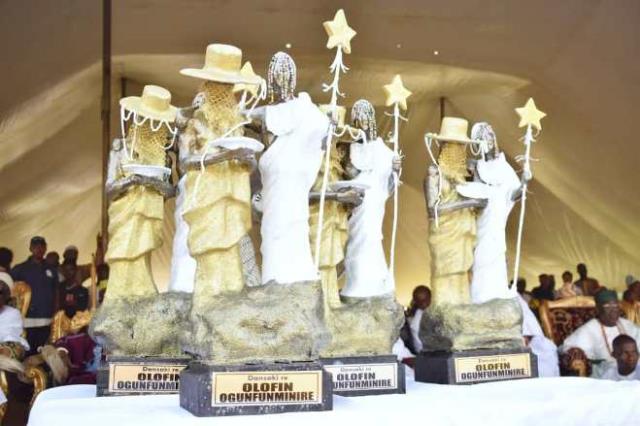
According to oral history, the Awori trace their origin to Olofin Ogunfunminire, a prince and descendant of Oduduwa, the progenitor of the Yoruba race. When Olofin and his followers left Ile-Ife, Oduduwa gave him a mud plate (awo), instructing him to place it on the river and follow it until it sank. This mystical plate was to guide them to their destined settlement.

The journey southward unfolded in stages:

The plate first stopped near Olokemeji, close to present-day Abeokuta, for 17 days.

It then moved to Oke-Ata, where it stayed another 17 days.

At the southern outskirts of Abeokuta, the plate rested again for 17 days. Here, some of Olofin’s followers, led by Osho Aro-bi-ologbo-egan, chose to remain permanently.

The plate continued downriver and eventually halted at Isheri, where it stayed for a much longer period—289 days. Olofin instructed his people to begin building a permanent settlement there. However, when the plate resumed its journey, Olofin followed with a smaller group, leaving others behind at Isheri.

After two days, the plate stopped briefly at Iddo (Lagos Island) and finally sank at Idumota, in the heart of present-day Lagos. When Olofin returned to his people, they asked where the plate was. He replied: “Awo ti ri” (“the plate has sunk”), which is believed to be the origin of the name Awori.

See also  PHOTOS: Hilda Baci’s Historic Guinness World Record Cook-a-Thon

In keeping with Yoruba custom, Olofin and his descendants carried their crown from Ile-Ife. One of his sons, Osolo, settled in the Osi quarters, while others moved further south. The Awori eventually spread across Lagos, Ogun, and parts of Osun.

The first crowned king of the Awori in Ota, Ogun State, was Oba Akinsewa Ogbolu, son of Osolo, who ascended the throne as the Olota of Ota in 1621.

Thus, the Awori established themselves as one of the most influential Yoruba sub-groups, laying the foundation for Lagos as we know it today.

FOLLOW US ON:

FACEBOOK

TWITTER

PINTEREST

TIKTOK

YOUTUBE

LINKEDIN

TUMBLR

INSTAGRAM

Continue Reading
Click to comment

Leave a Reply

Your email address will not be published. Required fields are marked *

Lifestyle

Plateau gov apologises to Igbo over civil war role

Published

on

Plateau State Governor, Caleb Mutfwang, has apologised to the Igbo community for the role the state played during the Nigerian Civil War, saying the people of Plateau were “deceived” into participating in the conflict.

Speaking during an interactive session with Igbo leaders from the 17 local government areas of the state at the Government House, Little Rayfield, Jos, Mutfwang urged both sides to put the painful chapter behind them and strengthen the bonds of unity.

According to a report by The Guardian on Monday, the governor commended the Igbo community for its contributions to Plateau State’s socio-economic development, describing them as an integral part of the state’s growth and prosperity.

He noted that Plateau had remained one of the most accommodating states for the Igbo people since the end of the civil war and recalled that compensation had been paid for some of the losses suffered during the conflict.

“I apologise to the Igbos so that we can put the past behind us and continue to foster unity. We have become one family because our people were deceived into going to war, and we regret it. We must close that chapter and move forward.

“We must unite. We want the Igbos to regard us as their brothers and sisters, and together we must create an enabling environment where everyone can prosper,” Mutfwang said.

The governor also appealed to Igbo entrepreneurs in Plateau State to support indigenous businesses by creating opportunities for young people through mentorship and investment.

See also  Ways to manage low back pain after childbirth

“Nigeria is a great country, and no ethnic group has demonstrated the entrepreneurial spirit more than the Igbo. I encourage you to replicate that same spirit in Plateau. I also appeal to Igbo business owners to employ and train young Plateau indigenes,” he said.

During the meeting, leaders of the Igbo community endorsed Mutfwang for a second term ahead of the 2027 governorship election, citing what they described as his inclusive leadership, prudent management of resources and commitment to peaceful coexistence.

The endorsement was announced by the President-General of the Igbo Community in Plateau State, Chief Chidi Onah, who described the governor as a leader committed to equity and development.

“We hereby endorse Governor Caleb Mutfwang as the consensus candidate of the Igbo community for the 2027 governorship election. This endorsement is based on his competence, integrity, proven leadership and commitment to equity.

“He has promoted peaceful coexistence and created a business-friendly environment. He stood by us during the demise of our traditional ruler and has consistently engaged stakeholders to promote unity among the diverse ethnic groups in Plateau State,” Onah said.

Onah also praised the governor’s developmental efforts, saying the state had become more conducive for business and investment.

“Igbo people have lived in Plateau since before Nigeria’s independence. We appreciate the governor for compensating some of our members over disputed properties and urge Nigerians across ethnic and religious divides to support his administration,” he added.

Also speaking, former President-General of the Igbo Community Association, Mike Okunonke, described the Igbo as peace-loving people committed to the economic development of Plateau State.

See also  She Visits My Home – Nollywood Actor Speaks On Impregnating Late Actress, Aunty Ajara

He said the community’s support for Mutfwang was based on his performance rather than political affiliation.

“We will vote for personalities, not political parties. Governor Mutfwang has demonstrated capacity by creating opportunities and reducing unemployment. We will mobilise our members across the 17 local government areas to support him,” Okunonke said.

He added that the endorsement reflected the cordial relationship the governor had built with the Igbo community through genuine partnership and inclusiveness.

The governor’s Special Adviser on Igbo Affairs, Barr. Jonah Okechukwu Ezekweme, commended Mutfwang for creating an enabling environment for the Igbo community to thrive in the state.

He urged members of the community to support the governor’s second-term bid while continuing to partner with the state government in creating employment and business opportunities for young people.

Earlier, High Chief Felix O. Akpunku welcomed members of the Igbo community on behalf of the governor and praised Mutfwang’s developmental projects across the state, describing his administration as one committed to inclusive governance and sustainable development.

The meeting also featured the formal presentation of the new President-General of the Igbo Community Association, Chief Chidi Onah, by the immediate past President-General, Chief Mike Ifeanyi Okunonke.

Other speakers, including Chief Dr. Nelson Mkparu and Hon. Maureen Odilimuo, also lauded the governor for his inclusive leadership and support for the Igbo community, pledging continued cooperation with his administration.

The meeting ended with both the Plateau State Government and the Igbo community reaffirming their commitment to peaceful coexistence, deeper collaboration and sustainable development across the state.

See also  ‘Pete Edochie alive, healthy’ – Family reacts to death rumours

punch.ng

FOLLOW US ON:

FACEBOOK

TWITTER

PINTEREST

TIKTOK

YOUTUBE

LINKEDIN

Continue Reading

Lifestyle

Eight die, nine missing in Jigawa boat tragedy

Published

on

Twenty-three persons have been rescued, while eight bodies have been recovered from Sunday’s boat accident that claimed 40 passengers in Jigawa State.

The incident occurred at Malamawar-Yan Dutse in Ringim Local Government Area, where a wooden boat conveying about 40 passengers, mostly female farmers and labourers, capsized while crossing a waterway.

Boat accidents have remained a recurring tragedy in riverine communities across northern Nigeria, particularly during the rainy season, often attributed to overloading, failure to use life jackets and strong water currents.

The Police Public Relations Officer of the Jigawa State Police Command, SP Shi’isu Adam, confirmed the latest casualty figure to The PUNCH on Monday.

He said search and rescue operations continued for the remaining nine passengers.

“At the moment, we have successfully rescued 23 victims alive. Unfortunately, we have also recovered eight corpses from the river,” Adam said.

He explained that local divers, emergency responders and security personnel had been at the scene since the incident occurred to rescue survivors and recover bodies.

According to him, all the rescued victims received medical attention and were subsequently discharged.

“Those rescued are now safe at their homes as they were discharged to reunite with their families,” he said.

Adam added that the search for the remaining nine passengers would continue on Tuesday.

“We are not relenting. Our teams are combing the river and adjoining communities to ensure we find the remaining nine persons,” he said.

He appealed to residents of riverine communities to assist security agencies with useful information that could aid the rescue operation.

See also  Osogbo War: The Yoruba Victory That Stopped Fulani’s Deeper Advance

The police spokesman also urged boat operators to avoid overloading and ensure that all passengers wear life jackets before embarking on any journey.

punch.ng

FOLLOW US ON:

FACEBOOK

TWITTER

PINTEREST

TIKTOK

YOUTUBE

LINKEDIN

Continue Reading

Lifestyle

Northern Christians query N1.9bn church share in N8bn religious budget

Published

on

The Northern Christian Association has asked the Federal Government to explain what it described as a wide disparity in the allocation of about N8.05bn for church and mosque projects in the 2026 Appropriation Bill, warning that the imbalance raises concerns over equity and equal treatment of citizens.

The association said it was not opposed to government support for religious projects but insisted that such interventions must be guided by the constitutional principles of fairness, transparency and justice.

In a statement issued on Monday by its Chairman, Rev Joseph Hayab, the NCA said reports indicated that about N1.91bn was earmarked for seven church-related projects, while approximately N6.14bn was allocated to 52 mosque-related projects in the 2026 budget.

According to the association, the disparity had reinforced concerns among many Christians over what it described as a persistent pattern of unequal treatment and selective implementation of government policies.

Hayab said, “How long will Nigerians continue to read stories that expose the hypocrisy of our leaders?

“The partiality, lack of equity and unequal treatment of citizens by government and political leaders are among the major factors responsible for division, distrust, segregation and the absence of genuine unity and love among Nigerians.”

He added that while Christians had continued to exercise restraint in the interest of national peace and unity, successive governments had often mistaken such patience for weakness.

The NCA argued that Nigerians had repeatedly witnessed actions exposing inconsistencies in governance, warning that perceived discrimination and double standards were eroding public trust and national cohesion.

“Our constitution recognises every Nigerian as equal before the law, while the teachings of all religions discourage unfair treatment of children, women, family members and fellow human beings.

See also  She Visits My Home – Nollywood Actor Speaks On Impregnating Late Actress, Aunty Ajara

“Government should, therefore, not be seen to promote policies that suggest preferential treatment for one religious group over another,” Hayab said.

The association stressed that its position should not be interpreted as opposition to Islam, Christianity or government collaboration with faith-based organisations, but rather as a call for fairness in the distribution of public resources.

It maintained that if public funds were to be allocated for religious projects, such allocations should be transparent, balanced and devoid of any perception that one faith enjoyed greater recognition than another.

“NCA is challenging the Federal Government to explain these abnormalities. Government should not establish a system that creates division among citizens or gives the impression that one religious community is more important than another.

“Instead, it should initiate programmes and policies that unite Nigerians and strengthen our collective national identity,” the statement added.

The association further urged the Federal Government to review the allocations in line with the constitutional principles of fairness, equity and equal treatment, insisting that budgetary decisions should promote national unity and strengthen public confidence in the impartiality of government.

punch.ng

FOLLOW US ON:

FACEBOOK

TWITTER

PINTEREST

TIKTOK

YOUTUBE

LINKEDIN

Continue Reading

Trending