Connect with us

News

Tinubu axes two N’Assembly bills over policy clash

Published

on

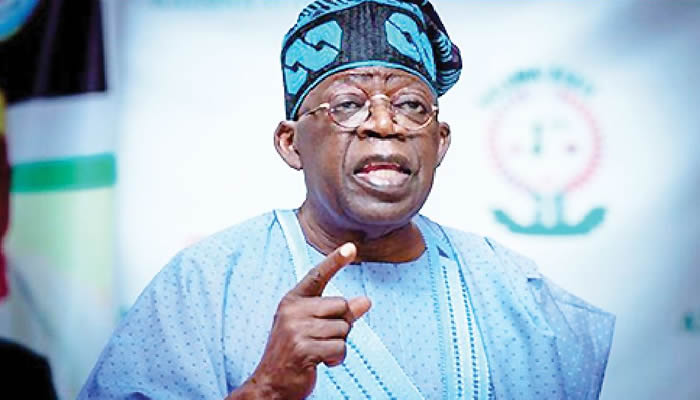
President Bola Tinubu has withheld assent to two recently passed bills from the National Assembly, warning that certain provisions could weaken fiscal discipline, conflict with existing laws, and create dangerous precedents in public finance management.

This was disclosed in the President’s letters read by the Senate President, Godswill Akpabio, at Tuesday’s plenary.

The rejected bills are the Nigerian Institute of Transport Technology (Establishment) Bill, 2025; and the National Library Trust Fund (Establishment, etc.) Amendment Bill, 2025.

While acknowledging their broad objectives, Tinubu said several clauses were inconsistent with federal fiscal and administrative principles.

On the Transport Technology Bill, the President faulted provisions introducing new levies, unregulated borrowing, and investment of public funds in securities, moves he said could create opaque revenue channels and open avenues for misuse.

He particularly cited Section 18(4a), which proposed that the institute be funded through “one per cent of the freight on every import and export,” warning that the levy, introduced without Federal Executive Council approval, would overburden trade and sidestep the national budgetary process.

Tinubu also objected to Section 20, which empowered the institute to borrow up to N50m without presidential consent, describing it as “a loophole that could enable repeated borrowing below the threshold to evade oversight.”

Sections 21 and 23, which allowed the institute to invest government-appropriated funds, were equally criticised as “fiscally dangerous.”

“These provisions, if allowed, would not only undermine fiscal discipline but also create opportunities for financial abuse.”

For these reasons, I withhold my assent to the bill,” Tinubu wrote.

See also  Peter Obi would win northern states if he returns to PDP – Jerry Gana

In a separate letter rejecting the National Library Trust Fund Amendment Bill, the President said that though the bill’s intentions were laudable, several sections clashed with existing federal laws and policy frameworks.

He cited provisions on agency funding, taxation of national entities, staff remuneration, and tenure or age limits as potentially “unsustainable and against the public interest.”

“For these reasons, I cannot grant presidential assent to the bill in its present form. I urge the Senate to revisit and address the identified issues,” the letter read.

After reading both correspondences, Akpabio commended Tinubu’s “diligence in reviewing every legislation” and directed relevant committees to rework the affected bills for further legislative action.”

“This demonstrates the seriousness with which Mr. President is reviewing every legislation we pass. It is now our responsibility to carefully address the issues he has raised,” Akpabio said.

The Senate subsequently referred the Transport Technology Bill to the Committee of the Whole and the Library Trust Fund Amendment Bill to the Committees on Special Duties and Establishment and Public Service Matters for further scrutiny.

The withholding of assent to the proposed legislations signalled yet another instance of the executive’s closer scrutiny of legislative outputs under the current dispensation.

The rejection underscores Tinubu’s insistence on tightening fiscal control and aligning legislative proposals with broader economic reform priorities under his Renewed Hope administration.

punch.ng

FOLLOW US ON:

FACEBOOK

TWITTER

PINTEREST

TIKTOK

YOUTUBE

LINKEDIN

TUMBLR

INSTAGRAM

Continue Reading
Click to comment

Leave a Reply

Your email address will not be published. Required fields are marked *

News

Tinubu receives outgoing ECOWAS commission president

Published

on

President Bola Tinubu on Thursday received the outgoing President of the ECOWAS Commission, Dr Omar Touray, at the State House, Abuja.

According to photographs released by the State House media office, Touray visited the Presidential Villa in the company of the Minister of State for Foreign Affairs, Ambassador Sola Enikanolaiye.

Although details of the closed-door meeting were not immediately made public, Thursday’s meeting came weeks before the Gambian diplomat formally hands over the leadership of the executive arm of the regional bloc.

A career diplomat, Touray assumed office as President of the ECOWAS Commission on July 3, 2022, following his unanimous nomination by the Government of The Gambia and endorsement by the ECOWAS Authority of Heads of State and Government for the 2022–2026 term.

He succeeded Ivorian diplomat Jean-Claude Kassi Brou, who led the Commission from 2018.

Before his appointment at ECOWAS, Touray served as The Gambia’s Permanent Representative to the United Nations and later as Secretary of State for Foreign Affairs under former President Yahya Jammeh, a position from which he was dismissed in September 2009.

He subsequently worked with the Islamic Development Bank before returning to diplomatic service.

punch.ng

FOLLOW US ON:

FACEBOOK

TWITTER

PINTEREST

TIKTOK

YOUTUBE

LINKEDIN

See also  Ex-AGF Malami, Others To Know Fate On Bail Application January 7
Continue Reading

News

Ukraine pushes AI combat robots despite defence minister’s dismissal

Published

on

Zigzagging between robots, weapons and computers in his garage workshop, Ukrainian engineer Eduard Trotsenko was bubbling with excitement as he showed off his latest prototypes and dreamed of sci-fi-inspired futuristic ideas.

Top of his ideas list are “mechanical birds” that can land on high-voltage power lines and recharge themselves, and “robot dogs” that can be sent into battle.

“In order to save human lives, to save soldiers, there must be robots,” Trotsenko told AFP.

Autonomous weapons have come to dominate the war with Russia.

Aerial drones are used on the front lines for reconnaissance and to drop explosives, while down below ground robots support logistics operations.

Ukraine has built a sprawling drone industry from scratch, hailed by President Volodymyr Zelensky as the best in the world.

But the dismissal last month of popular defence minister Mykhailo Fedorov — one of the most ardent backers of drones — raised some concerns over the future of the sector.

“I don’t understand why they sacked Fedorov,” Trotsenko, the founder and CEO of robot manufacturer Temerland, said.

Despite his removal, industry players and military personnel AFP spoke to said there was no going back now.

“The young people there won’t let it go. There’ll definitely be drones,” Trotsenko said.

When Russia invaded, 55-year-old Trotsenko — who was born in Soviet Kazakhstan — switched from making car charging stations to military robots.

His speciality is ground drones: autonomous vehicles that crawl the “kill zone” — the kilometres-deep stretch of territory where Russian and Ukrainian drones lurk in the skies, posing a constant danger to anybody below.

See also  US Embassy warns citizens ahead of #FreeNnamdiKanuNow protest in Abuja

For now, they mainly help evacuate wounded soldiers from the battlefield or ferry supplies — reducing the need to send more men into the kill zone.

But Trotsenko is looking at combat prototypes: one equipped with an RPG rocket launcher, the other with a heavy machine gun, controlled by onboard artificial intelligence (AI).

“They’re currently being tested in some brigades,” said Trotsenko, who is awaiting a green light for further rollout by the General Staff.

Fedorov had been crucial to pushing the technological shift within Ukraine’s army.

He created the Defence AI Center A1 — a hub dedicated to embedding AI in the military and using live feedback from the front to speed up the deployment of new technology.

Fedorov also pushed to bring private companies into the military system, putting competition at the heart of the army’s innovation.

“In a private company, you can take risks more quickly,” said Trotsenko, explaining how small companies were incentivised to modify and adapt at speed to win contracts.

Hundreds of kilometres away, a 45-year-old military commander who goes by the call sign “Jason”, was just back from a mission.

He heads a unit that operates the kind of ground drones that Trotsenko develops in his garage.

“You can afford to lose a drone, but not a person. The probability of human losses there is reduced,” he told AFP.

That kind of mantra — using drones to save lives — was precisely what Fedorov had been pushing at the defence ministry.

After he was sacked, protestors forced out the Soviet-style commander-in-chief, Oleksandr Syrsky, who had clashed with Fedorov’s reform drive — criticising him for not embracing drones and being too careless with soldiers’ lives.

See also  Attack scare: Police deploy officers to top Lagos schools

Asked whether Fedorov’s removal could upset Ukraine’s drone development, Jason brushes it off.

“It’s not that simple … the technological initiative was not flowing from the top down. It wasn’t a government order,” he said.

After Russia invaded, “there was an explosion of bottom-up initiative”.

Young engineers began to create new products, showed them to the military, who took what they wanted and then started their own development, he said.

Now, programmers, telecoms specialists and engineers are fully integrated into the army.

Jason said “the shortage of professionally trained people” is the biggest challenge he faces.

Back in Trotsenko’s workshop, his engineers are already working to redefine the technological and geographical limits of war.

On a whiteboard, he sketched out his vision of the future: conflicts fought by “humanoid robots”, controlled by operators in another country, or wounded soldiers lying in hospital beds.

“Things have really taken off,” he said confidently.

AFP

punch.ng

FOLLOW US ON:

FACEBOOK

TWITTER

PINTEREST

TIKTOK

YOUTUBE

LINKEDIN

Continue Reading

News

SEE FULL LIST: IG deploys new CPs to eight states, other police formations

Published

on

The Inspector-General of Police, Olatunji Disu, has approved the deployment of Commissioners of Police to eight state commands and several strategic formations across the country.

The deployment, announced in a statement on Thursday by the Force Public Relations Officer, CSP Ani Iniedu, followed the approval of the Police Service Commission and is aimed at strengthening operational effectiveness, enhancing leadership across commands and consolidating ongoing police reforms.

According to the statement, the newly deployed Commissioners of Police for state commands are Afolabi Wilfred Olutokunbo (Abia), Ayodeji Faniyan (Plateau), Saka Adewale Ajao (Bayelsa), Ajo Geoffrey Ordue (Cross River), Nanna Oji Ama (Anambra), Patrick Daaor (Edo), Tani Murtala (Jigawa) and Samuel Erale (Delta).

The IGP also approved the deployment of several commissioners to strategic formations, including the Force Intelligence Department, Force Criminal Investigation Department, Department of Finance and Administration, Department of Training and Development, Police Academy and the Police Staff College.

The statement read, “Other approved deployments are as follows; CP Intelligence & Training, Force Intelligence Department (FID), Abuja; CP Yemi John Oyeniyi, CP INTERPOL, Force Criminal Investigation Department (FCID), Abuja; CP Charles Ezekwesiri Dike, CP Department of Finance and Administration (DFA), Department of Training and Development (DTD), Force Headquarters (FHQ), Abuja; CP Aina Adesola.CP Anti-Human Trafficking (AHT), Force Criminal Investigation Department (FCID) Annex, Alagbon, Lagos; CP Uduak Ita Otu.

“CP General Investigation (G.I), Force Criminal Investigation Department (FCID), Abuja; CP Abdullateef Ajape Yusuf, CP Counter Terrorism Unit (CTU), Force Headquarters, Abuja; CP Taiwo A. Adedeji, CP Anti-Human Trafficking (AHT), Force Criminal Investigation Department (FCID), Abuja; CP Ajayi Oluyemi, CP Department of Finance and Administration (DFA), Force Headquarters, Abuja; CP Bolanle Aremu.

“CP Inspectorate, Department of Training and Development (DTD), Force Headquarters, Abuja; CP Ibrahim Lukunche Usman, Deputy Commandant, Police Staff College (PSC), Jos; CP Mohammed Hassan Ahmed, CP Department of Finance and Administration (DFA), Force Headquarters Annex, Lagos; CP Rita Oyintare Oki, CP Administration, Force Criminal Investigation Department (FCID) Annex, Kaduna; CP Ibrahim Umar D. Zungura.”

See also  Defence minister rates Tinubu govt 70% on security

Others affected by the deployment include CP Nelson Nwamana, who was posted to the Police Academy, Kano; CP Mohammed Hassan Ahmed, Deputy Commandant of the Police Staff College, Jos; CP Rita Oyintare Oki to the Department of Finance and Administration, Force Headquarters Annex, Lagos; and CP Danbaba Mohammed Labbo to the Force Criminal Investigation Department Annex, Gombe.

The statement said Disu charged the senior officers to bring their wealth of experience to bear in their new assignments by strengthening intelligence-led policing, enhancing operational effectiveness, promoting professionalism and deepening community engagement.

“He urged them to remain steadfast in safeguarding lives and property while upholding the highest standards of discipline, accountability, and service delivery,” the statement added.

The police said the redeployment forms part of ongoing reforms aimed at enhancing operational efficiency, strengthening internal capacity and improving policing services nationwide.

punch.ng

FOLLOW US ON:

FACEBOOK

TWITTER

PINTEREST

TIKTOK

YOUTUBE

LINKEDIN

Continue Reading

Trending