
Connect with us

News

Certificate Scandal: How Tinubu Invited Ex-Minister, Nnaji To Aso Rock, Asked Him To Resign

Published

on

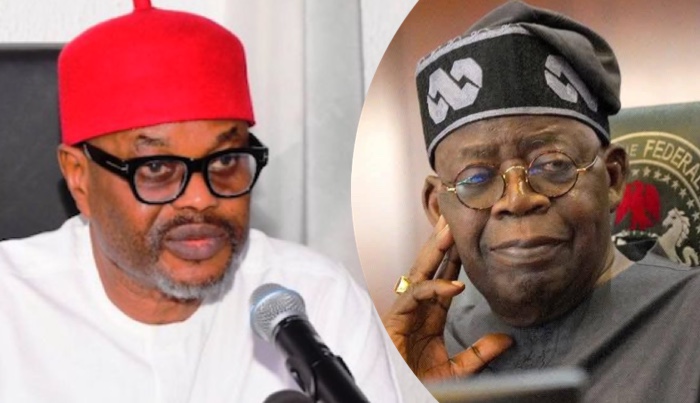
Fresh revelations have shown that former Minister of Innovation, Science and Technology, Uche Nnaji, was compelled to resign following allegations of certificate forgery hanging over him.

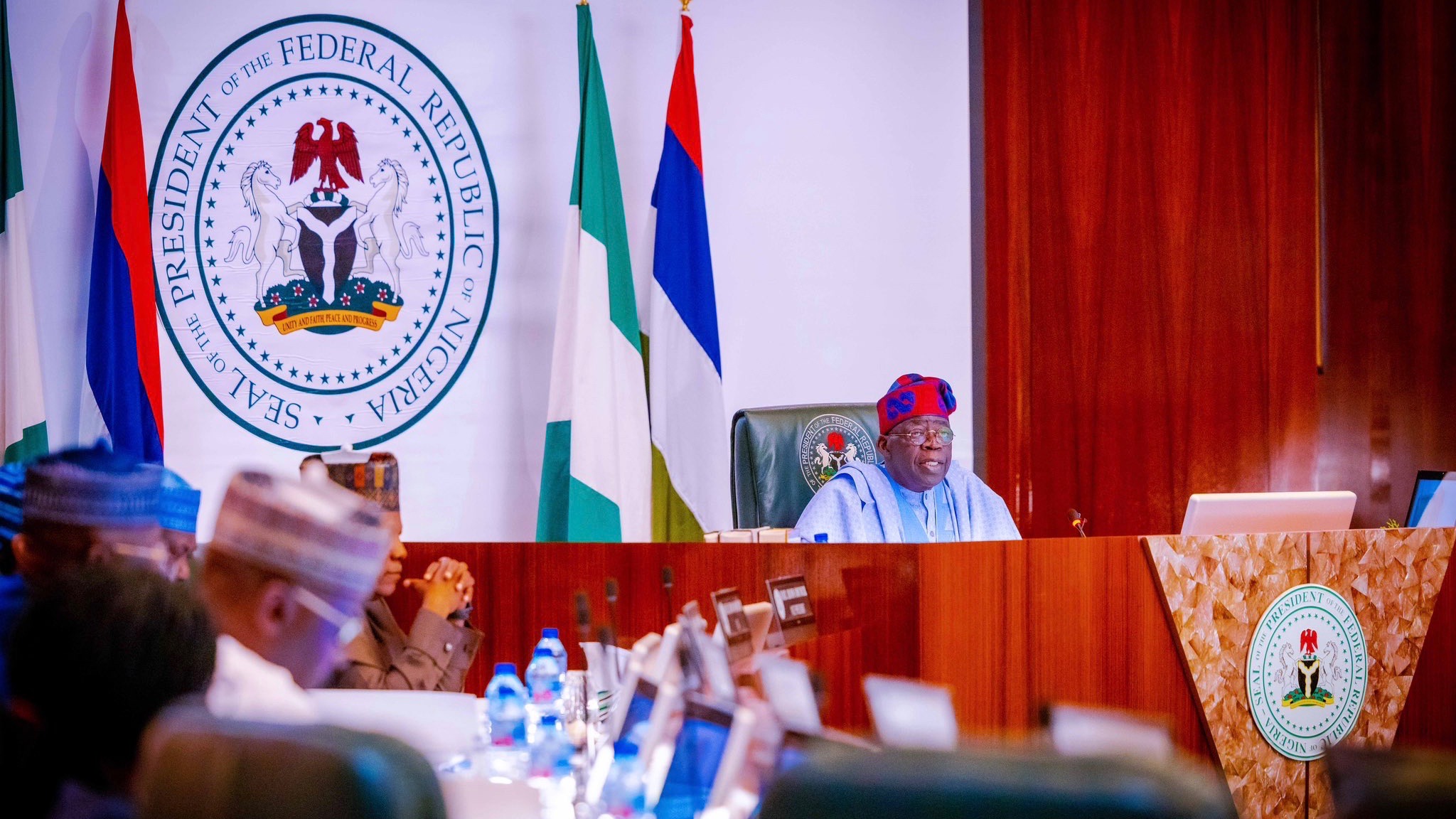
Presidential aides told Saturday Punch that President Bola Tinubu personally invited Nnaji to the Presidential Villa, where he was directed to tender his resignation in the wake of the scandal.

Nnaji’s ordeal began after an investigation by Premium Times alleged that he forged both his Bachelor of Science degree and National Youth Service Corps (NYSC) certificate.

The report revealed that while the former minister claimed to have graduated from the University of Nigeria, Nsukka (UNN) in 1985, the university denied issuing him a certificate.

In a Freedom of Information request, UNN was asked to release Nnaji’s academic records. Responding in a letter dated October 2, 2025, Vice-Chancellor Prof Simon Ortuanya stated that the university did not award Nnaji the degree he claimed, as he never completed his studies.

In a desperate attempt to shield his records, Nnaji approached the Federal High Court, Abuja, with an ex parte motion marked FHC/ABJ/CS/1909/2025, seeking to restrain UNN from releasing or tampering with his academic files.

However, Justice Hausa Yilwa dismissed the application on September 22. Court filings also revealed that Nnaji himself admitted he had not collected his degree certificate—contradicting the certificate he earlier submitted during his Senate screening in 2023.

‘My Resignation Is Not Admission Of Guilt’

Following the damning revelations, Nnaji announced his resignation on Monday. In a statement, he said his decision was taken after “deep reflection and consultations” to protect his integrity and prevent distractions to the Federal Government’s Renewed Hope Agenda.

See also  Retirement Benefits: Service Chiefs To Go Home With Bulletproof SUVs, Prado Jeeps, $60,000 For Medicals (PHOTOS)

“These unfounded allegations and media distortions have not only caused personal distress but have also begun to distract from the vital work of the ministry and the Renewed Hope Agenda of Mr President,” he said.

He stressed that stepping down was not an admission of guilt but “a principled decision to respect the sanctity of due process and ongoing judicial proceedings.”

The ex-minister, who joined Tinubu’s cabinet in August 2023, said his reputation was built over five decades of “hard work, honour, and service to humanity.”

How President Tinubu Called For His Resignation

Meanwhile, a credible source in the Presidency told Saturday PUNCH that the ex-minister was forced to resign.

He said, “The President invited him over to the Villa and asked him to resign. He was not threatened with a sack; the President didn’t have to do that because he appointed him, and he could ask him to resign. So, Nnaji had no option but to do that.”

When asked whether the President would take action against the Department of State Services for allowing Nnaji’s alleged certificate forgery to slip through the vetting process, the source said, “We cannot place the blame solely on the DSS. What about the Senate that screened him? They were also expected to scrutinise the certificates he presented.”

Another senior presidential aide noted that Nnaji had to resign to save the government from further embarrassment.

He said, “The President asked him (Nnaji) to resign. Of course, he had become an embarrassment and a distraction to the government and the longer you drag it, the more damaging it becomes. Some ministers and presidential aides felt that the earlier the President offloaded him (Nnaji), the better. He was becoming a liability to the government. It is not an allegation that can be swept under the carpet, so the best thing was for him to leave. Give him a soft landing, so the President told him to resign.”

See also  EFCC recovered N500bn, secured 7,000 convictions under my watch – Tinubu

He accused UNN of complicity for allowing the matter to drag on for so long.

The university’s registrar, Celine Nnebedum, had told People’s Gazette on December 21, 2023, that Nnaji had graduated. Nnebedum recanted the claim in May and October 2025.

“It took that long (for Nnaji’s resignation) because the university wrote a letter that he (Nnaji) graduated; they claimed that he graduated, but they are now saying that he did not graduate,” the source added.

He also exonerated the DSS, arguing that the university might have misled the security agency.

“I know that the DSS has the resources to do a good job and they have always done a good job, maybe this one slipped or maybe they got the letter from the school that he graduated from there,” he said.

A DSS official, who spoke on condition of anonymity, said people blaming the security agency did not know what played out behind the scenes.

The source insisted that the agency played its role with due diligence.

FOLLOW US ON:

FACEBOOK

TWITTER

PINTEREST

TIKTOK

YOUTUBE

LINKEDIN

TUMBLR

INSTAGRAM

Continue Reading
Click to comment

Leave a Reply

Your email address will not be published. Required fields are marked *

News

Reps order IG to produce fake, PFIPC agency DG Adeyemi within 48 hours

Published

on

The House of Representatives Committee investigating the operations of the controversial Presidential Foreign Investment Promotion Council has directed the Inspector-General of Police, Olatunji Disu, to produce the self-acclaimed Director-General of the organisation, Adeyemi Adeniyi, before it on Wednesday.

The directive was issued on Monday during the resumed investigative hearing at the National Assembly Complex, Abuja.

Representing the IG, Assistant Commissioner of Police, Bashir Abdullahi, appeared before the committee and was instructed to ensure Adeyemi’s appearance by noon on Wednesday to assist lawmakers in their ongoing investigation into the activities of the organisation.

The committee is probing the circumstances under which the PFIPC, despite not being legally established, allegedly secured office accommodation in Phase III of the Federal Secretariat Complex in Abuja and received a budgetary allocation of ₦1.32bn in the 2026 Appropriation Act.

The directive followed the Nigeria Police Force’s confirmation of key aspects of its criminal investigation, including petitions from the Office of the Chief of Staff to the President alleging that Adeyemi fraudulently presented himself as the Director-General of both the Presidential Economic Advisory Council and the Presidential Foreign Investment Promotion Council.

The Committee Chairman, Yusuf Gagdi, said Adeyemi’s appearance had become imperative given the seriousness of the allegations and the institutions implicated in the matter.

“This committee clearly needs the suspected DG to appear before this committee. People’s names are involved. People’s integrity are involved. Institutional names are involved. Institutional integrity is involved.

“It is not an option now. We will need him here to confirm some documents to us in such a way that will not undermine our investigation to enable us to submit our report on time,” Gagdi said.

See also  Retirement Benefits: Service Chiefs To Go Home With Bulletproof SUVs, Prado Jeeps, $60,000 For Medicals (PHOTOS)

The committee subsequently directed its clerk to formally communicate its resolution to the Inspector-General of Police.

“The committee hereby resolves that the Inspector-General of Police of the Federal Republic of Nigeria do kindly present Mr Adeyemi on Wednesday by 12 noon. That is the ruling of the committee,” Gagdi declared.

Earlier, ACP Abdullahi informed lawmakers that although investigations were ongoing, the police had already filed an eight-count charge against Adeyemi before the Federal High Court.

“The Nigerian Police Force investigated part of this case late last year and filed eight-count charges before a Federal High Court. The case is ongoing,” he said.

He disclosed that the suspect had been arrested and arraigned, but cautioned against making public disclosures that could prejudice the ongoing investigation or judicial proceedings.

“We don’t want to say things that are under investigation. It is definitely going to prejudice the ongoing investigation and make people have opinions that may prejudge the outcome of an investigation or judicial decision,” Abdullahi stated.

Despite the police’s reservations, the committee sought confirmation of documentary evidence already in its possession.

The police confirmed that on October 17, 2025, the Office of the Chief of Staff to the President petitioned security agencies over allegations against Adeyemi, prompting investigations that culminated in criminal charges bordering on conspiracy and fraud.

Investigators also confirmed receiving another petition alleging that Adeyemi falsely presented himself as the Director-General of both the Presidential Economic Advisory Council and the Presidential Foreign Investment Promotion Council.

According to the police, the petition alleged that Adeyemi used the purported office to obtain accommodation within the Federal Secretariat, sought approval to recruit about 300 personnel, attempted to secure a $1.3 billion allocation in the 2026 Appropriation Act for the non-existent agency, and planned to organise a World Investment Summit under the platform of the purported council.

See also  Bystanders stole Anthony Joshua’s phone at accident scene – Uncle

One of the highlights of the hearing came when the committee compared signatures on documents allegedly issued from the Office of the Chief of Staff to the President with signatures on authentic official correspondence obtained by the police.

When asked whether the signatures matched, the police witness responded unequivocally,”They are not the same.”

The committee said the discrepancy reinforced concerns that official State House documents may have been forged.

Gagdi further asked, “So, it is not only a letter that was suspected to be forged? We are dealing with documents that include what is said to be a forged Act of the National Assembly in an attempt to establish a fake agency,” he added.

Gagdi disclosed that investigators had identified about 29 allegedly forged documents, including purported approvals from the State House, the Office of the Head of the Civil Service of the Federation, the Office of the Secretary to the Government of the Federation, the Ministry of Finance and several other government institutions.

According to him, representatives of many of the affected agencies had already appeared before the committee and disowned the documents attributed to their offices.

Gagdi, however, stressed that the committee had deliberately avoided compelling the police to disclose information that could compromise ongoing criminal investigations.

“We are avoiding a situation whereby they will be pushed to make statements that will undermine their ongoing investigation,” he added.

He assured that the House investigation would continue independently and that its final report could recommend further action by relevant security agencies.

punch.ng

FOLLOW US ON:

FACEBOOK

TWITTER

PINTEREST

TIKTOK

YOUTUBE

LINKEDIN

See also  Over 100,000 policemen assigned to VIPs — EU report

Continue Reading

News

Forged state house letter used to create fake PFIPC agency, Acct-General reveals

Published

on

The House of Representatives’ investigation into the operations of the controversial Presidential Foreign Investment Promotion Council took a dramatic turn on Monday after the Accountant-General of the Federation, Shamseldeen Ogunjimi, revealed that a forged State House letter was used to obtain official government recognition for the ‘fake’ agency.

Appearing before the House Ad Hoc Committee probing the circumstances surrounding the establishment and operations of the council, Ogunjimi disclosed that the Office of the Accountant-General acted on what appeared to be an authentic correspondence from the presidency requesting the creation of an administrative code for the PIFPC, only for investigations to later establish that the letter did not originate from the State House.

The revelation is the latest in a series of disclosures before the committee, which is investigating how a non-existent presidential agency allegedly secured office accommodation in the Federal Secretariat, sought budgetary allocations, recruited personnel and obtained official government recognition through what investigators believe were forged documents.

Presenting his report, Ogunjimi said the Office of the Accountant-General first interacted with the purported council in November 2024.

According to him, “a letter dated November 7, 2024, bearing a State House reference number, requested the creation of an administrative code for the Presidential Economic Advisory Council to facilitate budgeting, accounting and financial reporting.”

He explained that, in line with established procedures, “the Office of the Accountant-General processed the request, created the administrative code and communicated its approval to the State House,” with a copy sent to the Office of the Auditor-General for the Federation.

See also  Mali Releases Update On The Fate Of Detained Nine Nigerian Military Personnel, Two Pilots

Following that approval, the office received additional requests from the purported council, including applications for self-accounting status, deployment of personnel, opening of Treasury Single Account and domiciliary accounts, as well as funding approvals.

Ogunjimi, however, stressed that although some administrative processes were carried out, no public funds were ever released to the council.

“It is important to note that no funds were released under salaries, overhead, capital, or any form of intervention or special allocation to the council,” Ogunjimi told the committee.

He further disclosed that while the council requested an establishment grant of ₦27.4bn, the application was rejected because there was no budgetary provision for such expenditure.

The Accountant-General also explained that although the Central Bank of Nigeria opened two domiciliary accounts for the organisation to receive inflows, the accounts never became operational because the council failed to satisfy the regulatory conditions required for their activation.

Lawmakers expressed concern over how the purported agency was able to navigate several layers of government bureaucracy without raising suspicion.

Responding, Ogunjimi made what committee members described as one of the most significant revelations of the hearing.

“The letter that was received by the Treasury was respectfully addressed as coming from the State House. That letter was never issued by the State House”, he said

The disclosure prompted members of the committee to conclude that a “hijacked” State House letter had allegedly been used to mislead government institutions into processing official requests for an agency that had no legal existence.

The committee also questioned how civil servants originally posted to the Office of the Chief Economic Adviser to the President eventually became attached to the purported council without the knowledge of the Office of the Accountant-General.

See also  Oriire abduction: Inside operation that freed pupils, teachers after 56 days in captivity

Ogunjimi explained that two officers deployed to the Office of the Chief Economic Adviser in 2010 and 2013 remained in the office after it was allegedly taken over by the new council, but no formal communication was sent to the treasury notifying it of any change.

“It was never assumed or written to us that those two officers were being taken over. The staff also never reported to the office to say that another council had taken over the office and the name had changed. As far as I was concerned, we were dealing with a new agency, not the Office of the Chief Economic Adviser,” he said.

He further disclosed that when the purported council later requested the deployment of five additional officers, the treasury approved only three after determining that the organisation’s size did not justify the number requested.

“It was when all this matter came to light that I got to know that two of our staff were actually working or being absorbed by the agency. We never knew. We believed, based on the records available to us, that those officers were still with the Office of the Chief Economic Adviser,” he added.

The ongoing House investigation centres on allegations that forged presidential approvals, counterfeit State House correspondence, fake Acts of the National Assembly and other falsified government documents were used to create and operate the purported Presidential Foreign Investment Promotion Council and the Presidential Economic Advisory Council.

The committee has already heard evidence from the Nigeria Police Force, which confirmed that criminal charges bordering on conspiracy and fraud have been filed against the prime suspect, Adeyemi Adeniyi, at the Federal High Court.

See also  FCTA begins promotion exams for 8,000 workers Tuesday

At its sitting on Monday, the committee also directed the Inspector-General of Police to produce Adeyemi before lawmakers by noon on Wednesday to answer questions relating to the alleged forgery of official government documents and the operations of the purported presidential agency.

The committee is expected to conclude its investigation with recommendations on possible administrative, legislative and criminal actions against those found culpable.

punch.ng

FOLLOW US ON:

FACEBOOK

TWITTER

PINTEREST

TIKTOK

YOUTUBE

LINKEDIN

Continue Reading

News

See full list of African countries that do not need proof of funds for UK’s student visa

Published

on

The United Kingdom on Monday updated its financial requirements for applicants seeking Student and Child Student visas, retaining stricter evidence rules while exempting nationals of only three African countries from submitting proof of funds at the point of application.

The updated guidance, published by the UK government on its website, listed Botswana, Mauritius and Tunisia as the only African countries whose nationals will not be required to provide financial evidence upfront unless requested during the visa decision-making process.

Other countries on the exemption list include Australia, Canada, China, Japan, New Zealand, Singapore, the United States, France, Germany, Italy, Spain, the United Arab Emirates and Qatar, among others.

Despite the exemption, the UK clarified that applicants from the listed countries must still meet all financial requirements and could be asked to provide evidence during the application process.

The guidance stated, “You must meet the financial requirements for this route when you apply; however, you may not need to submit evidence upfront as part of your application. In these circumstances, the decision maker may still request the evidence from you during the application process to prove you meet the financial requirements.”

The development means applicants from major African source countries for UK education, including Nigeria, Ghana, Kenya, South Africa, Egypt and others not listed, will continue to submit financial documents as part of their visa applications.

Under the revised rules, applicants for a Student visa must demonstrate they have sufficient funds to cover tuition fees as stated on their Confirmation of Acceptance for Studies and living expenses.

See also  Over 100,000 policemen assigned to VIPs — EU report

Students studying outside London are required to show they have £1,171 for each month of their course, up to a maximum of nine months, while those studying in London must show £1,529 per month for the same period.

Applicants travelling with dependants must also show additional funds. Those studying outside London must have £680 per month for each dependant, while applicants studying in London must show £845 monthly for each dependant, both for up to nine months.

For Child Student visa applicants, the required maintenance funds vary depending on their living arrangements, including boarding school accommodation, foster care, residence with parents or legal guardians, or independent living for eligible 16 and 17-year-olds.

The UK government also outlined acceptable sources of funds, including government-backed student loans, official financial sponsorship, personal savings and money belonging to parents or eligible partners.

However, it said applicants cannot rely on overdrafts, cryptocurrency holdings, stocks and shares, pensions or funds kept in unregulated financial institutions.

The guidance further requires applicants using personal or family funds to show that the required amount has been held for at least 28 consecutive days before the application, with financial evidence dated no more than 31 days before submission.

The UK also maintained exemptions from providing financial evidence for certain categories of applicants, including those applying to extend their stay after spending at least 12 months in the country on a valid visa, Student Union Sabbatical Officers, doctors and dentists in training, and applicants whose nationality qualifies for the reduced documentary requirement.

The latest update comes as the UK continues to tighten oversight of its international student visa system while maintaining financial eligibility requirements for prospective students seeking to study in the country.

See also  EFCC recovered N500bn, secured 7,000 convictions under my watch – Tinubu

punch.ng

FOLLOW US ON:

FACEBOOK

TWITTER

PINTEREST

TIKTOK

YOUTUBE

LINKEDIN

Continue Reading

Trending