


Connect with us

News

Terrorists Shifting To South-West – Ex-DSS Director

Published

on

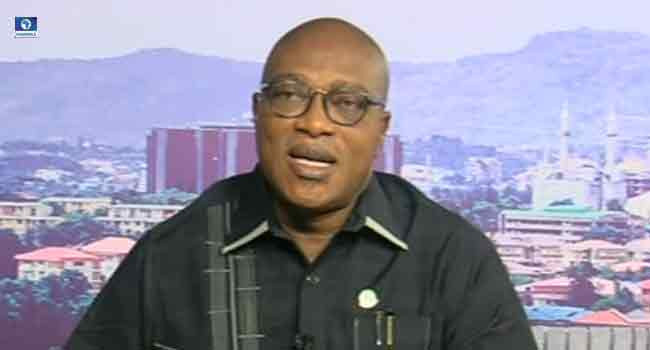
A former Director of the Department of State Services (DSS), Mike Ejiofor, has said the failure to establish state police remains a major hindrance to the fight against terrorism, kidnapping and other security threats in the country.

It was reports that Ejiofor said local security forces would better understand the terrain, languages and community dynamics needed to combat criminals effectively.

He stated this in an interview with Vanguard, while reacting to the rising wave of insecurity, especially in the South-West.

The former DSS director dismissed claims that the upsurge in attacks was caused by intelligence failure.

According to him, intelligence may be available, but action agencies often lack the equipment, funding and manpower to act swiftly.

Ejiofor said, “I wouldn’t say it’s an intelligence failure. I have always maintained that even when intelligence is provided, the action agencies may lack the capacity to act, not through any fault of their own, but because they are ill-equipped, underfunded, and understaffed.

“All these factors create the appearance that security agencies are not working, but they are.”

Ejiofor cited the conviction of suspects linked to the Owo attack as evidence that intelligence gathering was still active.

“You saw the conviction of the Owo suspects, that was due to good intelligence, even though the incident happened in 2022; they were traced and arrested,” he added.

‘Security Failure Means Collective Failure’

Ejiofor said if Nigerians concluded that security had failed, then the failure should not be blamed on security agencies alone.

He said, “If they say security has failed, that means all of us have failed.

See also  Oriire abduction: Inside operation that freed pupils, teachers after 56 days in captivity

“Government is primarily responsible for the welfare and security of citizens, but people must also contribute by supporting security agencies.”

He said the first line of defence remained the people, adding that citizens must provide support and credible information to security agencies.

Ejiofor said the absence of state police was one of the biggest weaknesses in Nigeria’s security architecture.

He noted that major stakeholders, including state governments, the Federal Government and the National Assembly, had agreed in principle on state police, but implementation had stalled.

Ejifor further stated, “Establishing state police is one of the surest and fastest ways to check this menace.

“State forces would be drawn from local communities, know the terrain, and work in collaboration with the federal police. They would increase manpower and be better equipped.”

He added that vigilante groups could not effectively confront heavily armed criminals.

“Vigilante groups lack sophisticated weapons and cannot confront marauders who possess prohibited firearms,” he said.

‘Terrorists Dhifting South’

On the growing security threat in the South-West, Ejiofor said terrorist activity had shifted geographically because of pressure from security operations in the North.

“It began in the North-East, and when pressure increased there, they relocated to the North-West, and now they are moving South, concentrating on the South-West, which has a larger concentration of Muslims than the South-South or South-East,” he said.

He clarified that he was not saying the South-West was predominantly Muslim, but that it had a larger Muslim population than the South-East and South-South.

“They aim to instil fear. Beheading or abducting people is meant to terrorise the population; that is the core of terrorism, and to discredit the government,” he added.

See also  EFCC reveals why Osun govt accounts were frozen

Ejiofor said Nigeria must address poor funding, inadequate training, insufficient personnel and weak welfare in the security sector.

He insisted that state police would help address local security problems more effectively.

“What is the current strength of the Nigerian police? Most importantly, we need state police to man localities. These problems are local, and the solutions must be local,” he said.

‘Police Lack Local Knowledge’

The security expert said the current policing structure often sends officers to areas where they do not understand the language, culture or terrain.

He said such officers are sometimes transferred again before they become familiar with the environment.

Ejifor added, “I don’t see why state police cannot be established immediately; that is a major step in checking this menace.

“The Nigerian Police Force is not well equipped in many respects. Officers are posted to areas they don’t know, lacking language skills and cultural familiarity, and are transferred again before they learn the terrain.”

FOLLOW US ON:

FACEBOOK

TWITTER

PINTEREST

TIKTOK

YOUTUBE

LINKEDIN

INSTAGRAM

Continue Reading
Click to comment

Leave a Reply

Your email address will not be published. Required fields are marked *

News

PHOTOS: Two children k!lled, others injured as building collapses in Nasarawa

Published

on

Tragedy struck Tudun Amba area of Lafia in Nasarawa State as a building collapsed, k!lling two children from the same family.

The incident, which occurred in the early hours of Friday, August 28, 2026, also left other members of the family injured and hospitalized.

Details surrounding the cause of the collapse were not immediately available as authorities are expected to commence an assessment of the incident.

FOLLOW US ON:

FACEBOOK

TWITTER

PINTEREST

TIKTOK

YOUTUBE

LINKEDIN

INSTAGRAM

See also  India deports over 2,356 Nigerians in five years
Continue Reading

News

PHOTOS: Two d!e as refuse dump collapses on building in Cross River

Published

on

Two persons have been confirmed d3ad following the collapse of a refuse dump at Ikot Effanga, along Old Odukpani Road in Calabar, Cross River State.

The spokesperson for the Cross River State Police Command, ASP Sunday Eitokpah, who disclosed this in a statement said the incident occurred in the early hours of Friday, August 28, 2026, when the collapsed refuse impacted a building reportedly constructed within a valley.

“The Cross River State Police Command is aware of a reported incident involving the collapse of a refuse dump at Ikot Effanga, along the Old Odukpani Road, Calabar, in the early hours of Friday, 28th August 2026, the statement read.

“Police personnel responded promptly to the scene, where it was discovered that the collapsed refuse had impacted a building reportedly constructed within a valley, resulting in the death of two occupants.”

The statement identified the victims as Nfon Imé, male, and an unidentified female, who were said to have been in the building at the time of the incident.

The bodies were recovered and deposited at the mortuary.

“The deceased, identified as Nfon Imé ‘m’, and a yet-to-be-identified female, believed to have been in the building at the time of the incident, have been recovered and deposited at the mortuary,” the statement said.

The police spokesperson said an assessment of the circumstances surrounding the incident was ongoing, while further investigation had commenced.

“The Command is currently conducting an assessment of the circumstances surrounding the incident, while further investigation is ongoing,” ASP Eitokpah said.

The command urged members of the public to remain calm and avoid speculation as efforts continued to establish the full facts surrounding the incident.

See also  Trump adding $100k fee to H-1B visa application in latest crackdown on foreign workers

“Further details will be communicated as soon as they are verified and available,” the statement added.

FOLLOW US ON:

FACEBOOK

TWITTER

PINTEREST

TIKTOK

YOUTUBE

LINKEDIN

INSTAGRAM

Continue Reading

News

Togo, Niger, Benin owe Nigeria $11m for electricity supplied in 2025 – NERC

Published

on

Togo, Benin and Niger owed Nigeria $11.16 million for electricity supplied by Nigerian power generation companies under bilateral arrangements in 2025, according to the Nigerian Electricity Regulatory Commission (NERC).

NERC disclosed this in its 2025 annual report, saying the Market Operator (MO) issued invoices totalling $73.91 million to the three international electricity customers during the year. However, only $62.75 million was paid, leaving an outstanding balance of $11.16 million and representing an 84.90 percent remittance performance.

The international customers identified by NERC are Société Nigérienne d’Électricité (NIGELEC) of Niger, Société Béninoise d’Énergie Électrique (SBEE) of Benin and Compagnie Énergie Électrique du Togo (CEET). “The international bilateral customers … received a total invoice of $73.91 million for ancillary services provided by the MO and made a total payment of $62.75 million, corresponding to a remittance performance of 84.90%,” NERC said.

The commission also reported that domestic bilateral customers paid N12.75 trillion out of N13.20 trillion invoiced by the Market Operator for services provided in 2025. According to NERC, the payments represented a 96.60 percent remittance performance. However, Ajaokuta Steel Company Limited and its host community, classified as a special customer, made no payments against invoices issued during the period.

NERC said the company had an outstanding N4.96 billion invoice from Nigerian Bulk Electricity Trading Plc (NBET) and another N500 million invoice from the Market Operator. “The Commission has escalated the issue of continual non-payment of electricity bills by Ajaokuta to the relevant federal ministries to find a lasting solution,” the report said.

See also  Tinubu approves ₦3.3trn payment plan to restore reliable power

NERC warned that continued failure to settle the obligations could put the Ajaokuta complex at risk of disconnection from its electricity service providers. “Failure to settle the obligations may put the Ajaokuta complex at risk of being disconnected from its service providers (NBET and MO) on the grounds of gross indebtedness,” it added.

NERC also said electricity distribution companies (DisCos) collectively took off 31,251.77 gigawatt-hours (GWh) of electricity in 2025, while 25,867.86GWh was billed to customers. This resulted in a market energy accounting efficiency (EAE) of 82.77 percent.

The commission explained that EAE measures how effectively DisCos account for electricity received at their trading points. It is calculated by comparing the energy billed to customers, including metered and unmetered consumers, with the total electricity supplied to an area over a given period.

Ibadan DisCo recorded the highest energy accounting efficiency at 88.84 percent, while Enugu DisCo recorded the lowest at 72.18 percent. “The disaggregated performance of the DisCos shows that Ibadan DisCo recorded the highest energy accounting efficiency of 88.84%, while Enugu DisCo recorded the lowest efficiency of 72.18%,” NERC said.

The commission said DisCos were responsible for developing strategies to improve their energy accounting performance. “DisCos have the responsibility of developing strategies to improve their energy accounting efficiencies,” NERC said.

It identified improved distribution infrastructure, reduced technical losses, better customer enumeration and customer service, increased metering and the deployment of technology to combat electricity theft as measures that could help improve the sector’s performance.

FOLLOW US ON:

FACEBOOK

TWITTER

PINTEREST

TIKTOK

YOUTUBE

LINKEDIN

INSTAGRAM

Continue Reading

Trending