Connect with us

Business

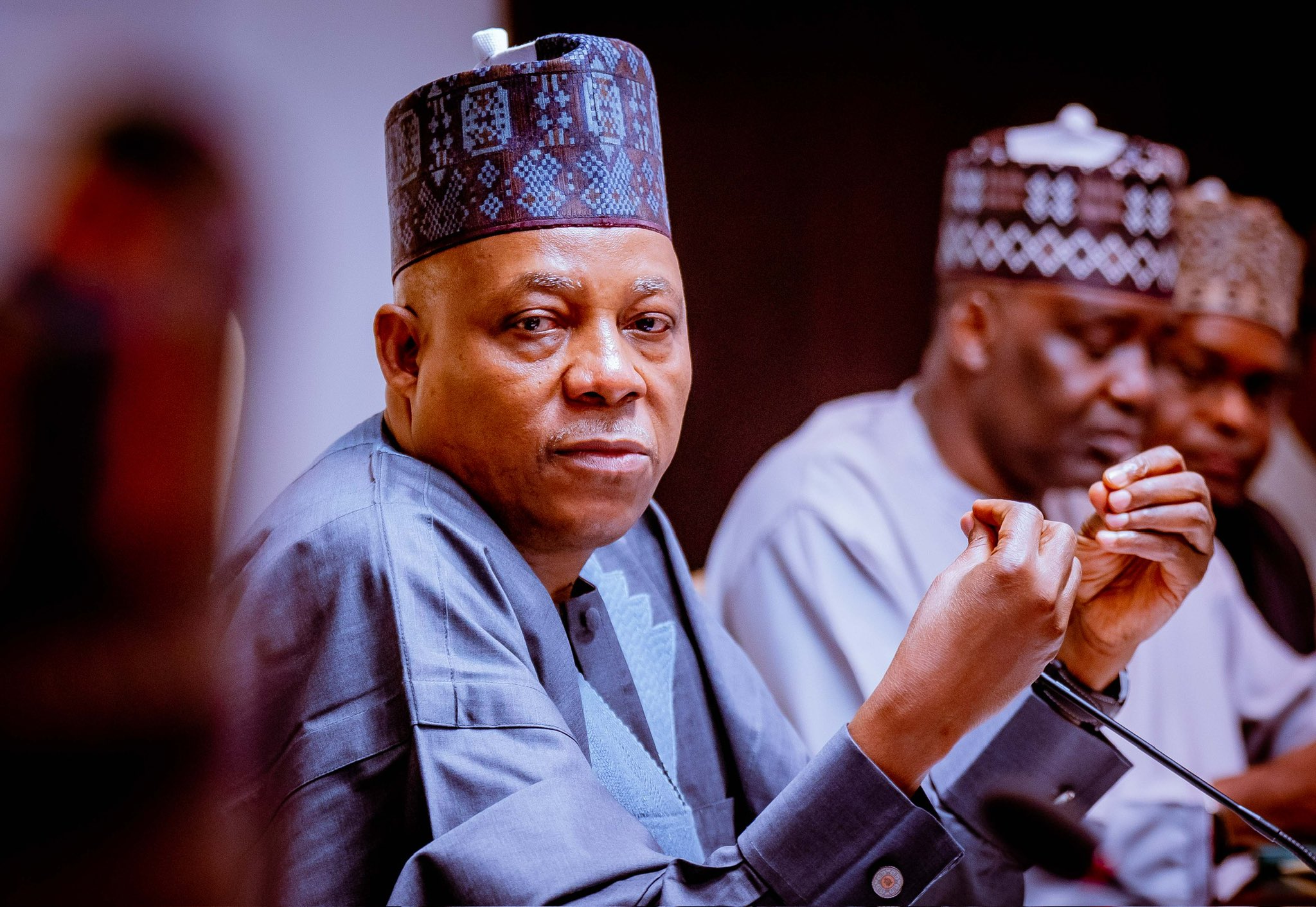
Shettima pushes for proactive disaster preparedness over costly relief

Published

on

The Federal Government has called for increased investment in disaster preparedness and resilience mechanisms to reduce the impact of disasters in the country.

The government made the call on Monday at the 2025 International Day for Disaster Risk Reduction in Abuja, themed “Fund resilience, not disaster.”

The event also featured the unveiling of the National Emergency Management Agency Strategic Plan (2025–2029) and the National Disaster Risk Reduction Strategy (2025–2030).

The NEMA Strategic Plan and NDRRS are anchored on risk-informed development, innovation in financing, and stronger institutional collaboration, ensuring that disaster risk management becomes an integral part of planning across all sectors.

Over the years, Nigeria has continued to experience recurring floods, erosion, drought, and other climate-related emergencies that have destroyed farmlands, displaced thousands, and strained public resources. This growing vulnerability underscores the need for proactive measures and sustainable financing mechanisms to strengthen preparedness and build national resilience.

Speaking at the event, Vice President Kashim Shettima noted that it is wiser, cheaper, and more humane to prepare for disasters before they strike than to rebuild after they destroy.

Shettima said, “Every naira we spend today on preparedness saves many more tomorrow on response and recovery. Every investment in resilience is, in truth, an investment in the lives and futures of our people.

“We do not have to look far to understand this message. In recent years, we have seen floods wash away farmlands, erosion swallow roads, and fires raze markets that took years to build. These tragedies happen not in distant lands but in our own communities—to people we know, to families just like ours. Each of these disasters reminds us that if we fail to invest in resilience, we will continue to spend our scarce resources cleaning up after crises instead of building lasting prosperity.

See also  GenCos deny NLC’s ‘extortion’ claims, warn of looming power crisis

“His Excellency, President Bola Tinubu, emphasises this need to treat resilience as a national policy. We are integrating disaster risk reduction into every sector—from agriculture and infrastructure to education and health—while expanding early warning systems to ensure that communities receive timely alerts before floods, droughts, or disease outbreaks occur.”

He stated that the government is strengthening state and local emergency management agencies through training, technology, and coordination support.

“We are developing a National Disaster Risk Financing Framework to guarantee that funding for prevention and preparedness is available when and where it is needed. And we are deepening partnerships with development partners, the private sector, and research institutions to drive innovation and resilience building at all levels.

“Commitment alone is not enough. We must match our words with action and our policies with funding. To fund resilience is to invest in drainage systems, not relief camps; to build stronger schools and hospitals, not temporary shelters; to support farmers with climate-smart tools, not just food aid after floods; and to train and equip our first responders before the sirens start to wail. This is the shift we must make—from reacting to crises to anticipating and preventing them.

“Yet resilience cannot be guaranteed by government alone. It is built by all of us. It is reflected in how we plan our cities, in how businesses protect their workers, and in how communities share information and look out for one another. This is why our private sector must see itself as a partner in prevention, embedding risk reduction into corporate planning and investment decisions,” he stated.

See also  NNPC, NUPRC fear financial squeeze after Tinubu’s order

The VP also urged academia and research institutions to provide data-driven research for informed decision-making, and civil society to raise awareness and hold institutions accountable.

In her opening address, the Director-General of the National Emergency Management Agency, Mrs Zubaida Umar, called for a decisive shift from reactive disaster response to proactive resilience funding.

Umar said Nigeria, like many nations, continues to experience increasing frequency and intensity of disasters driven by climate change, conflicts, pandemics, and technological risks.

“These events are testing the limits of traditional emergency response systems and demanding a more proactive, preventive, and well-financed disaster risk management framework.

“This is why today’s dialogue is critical—to collectively rethink how we fund resilience; to move from reactive, ad-hoc funding of disasters to a multi-stakeholder financing architecture that supports prevention, preparedness, and sustainable recovery,” she said.

She highlighted that the focus is beyond emergency management institutions.

“Resilience must be mainstreamed across sectors—from agriculture, water resources, energy, and infrastructure to finance, education, and health.

“In this regard, NEMA is already working with key stakeholders to develop a National Risk Monitoring and Information Platform that will serve as a cross-sectoral system for early warning, vulnerability mapping, and risk-informed investment decisions. Equally important is the dialogue around innovative financing, exploring instruments such as catastrophe bonds, insurance pools, climate funds, and blended finance models that can sustain risk reduction efforts at scale,” she said.

In his remarks, Governor Dauda Lawal of Zamfara State emphasized the need for sustainable funding mechanisms and highlighted the interconnection between peace, preparedness, and resilience.

See also  FG to end fish importation

“For stability in funding during this catastrophic disaster, disaster management is not in a cube or box. Mechanisms for funding must be available, and it is an economic necessity.

“Therefore, preparedness and resilience must be funded deliberately,” Lawal said.

punch.ng

FOLLOW US ON:

FACEBOOK

TWITTER

PINTEREST

TIKTOK

YOUTUBE

LINKEDIN

TUMBLR

INSTAGRAM

Continue Reading
Click to comment

Leave a Reply

Your email address will not be published. Required fields are marked *

Business

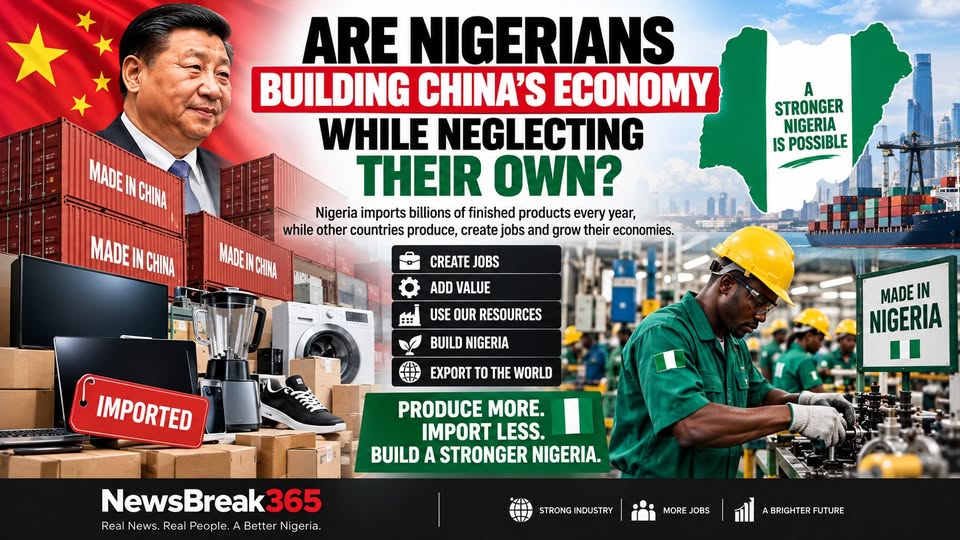
ARE NIGERIANS BUILDING CHINA’S ECONOMY WHILE NEGLECTING THEIR OWN?

Published

on

While other nations are busy producing, manufacturing and exporting, Nigeria must ask itself a difficult question: Are we building our own economy, or simply creating a bigger market for other countries?

Nigeria has a huge population, abundant natural resources and a massive consumer market. Yet the country continues to depend heavily on imported finished products—from electronics and clothing to machinery, household goods and other consumer items.

The issue is not simply about Chinese businesses or businesses from any other foreign country operating in Nigeria. Foreign investment can bring capital, technology, jobs and expertise.

The bigger issue is whether **Nigerian businesses are being given the opportunity and support to manufacture competitively at home.

Instead of remaining primarily a consumer of finished products, Nigeria needs to strengthen its manufacturing sector and move further up the value chain.

Nigeria needs to produce, not just consume.

A stronger manufacturing economy could help Nigeria:

* Create more jobs for Nigerians
* Add value to locally available raw materials
* Develop industrial skills and technology
* Reduce excessive dependence on imported finished goods
* Build competitive Nigerian companies
* Increase the country’s ability to export

The goal should not be to drive legitimate foreign businesses out of Nigeria. The goal should be to build an economy where **Nigerian manufacturers can compete, grow and eventually take Nigerian-made products to markets around the world.

The question Nigerians should be asking is simple:

**Why should Nigeria remain one of the world’s biggest markets for finished products when we have the potential to manufacture many of them ourselves?

See also  IMF Ranks Nigeria Among World’s Top Growth Drivers, Places Country Sixth for 2026 GDP Impact

🇳🇬 **Nigeria must move from being predominantly a consumer nation to becoming a stronger producer, manufacturer and exporter.

What do you think?

Which products should Nigeria prioritize for local manufacturing instead of relying heavily on imports?

Share your thoughts in the comments.

FOLLOW US ON:

FACEBOOK

TWITTER

PINTEREST

TIKTOK

YOUTUBE

LINKEDIN

INSTAGRAM

Continue Reading

Business

ICRC defends toll pricing on highways

Published

on

The Infrastructure Concession Regulatory Commission has defended the toll pricing structure under the Highway Development and Management Initiative, saying charges are evaluated against the quality and benefits of the upgraded roads.

In a statement made available to PUNCH Online on Thursday, the Director-General, Dr. Jobson Ewalefoh, cited the 227-kilometre Akwanga–Makurdi road corridor as an example.

He said the route has four toll gates, and motorists pay as they travel along it.

He argued that toll payments should be viewed against the previous costs imposed by the poor condition of the road, including lost man-hours, vehicle damage and accident risks.

Feedback from road users, he said, shows many motorists are willing to pay tolls where they see clear improvements in road quality.

Some drivers have expressed support for similar arrangements on other major corridors if the roads are upgraded to the same standard.

“That, to me, is the beauty of a well-structured PPP,” Ewalefoh said.

He explained that negotiators carefully consider toll pricing to keep charges fair. A portion of the revenue is set aside specifically for road maintenance. Under the concession agreements, the government does not bear additional maintenance costs for the duration of the contract.

The government must repair potholes within 48 hours, and it funds major routine repairs from the dedicated toll revenue.

Source: punchng.com

FOLLOW US ON:

FACEBOOK

TWITTER

PINTEREST

TIKTOK

YOUTUBE

LINKEDIN

INSTAGRAM

See also  Jigawa butchers plan hike in slaughter fees ahead of Eid-el-Kabir celebration
Continue Reading

Business

Nigeria raises N748.6bn from FGN bonds as rates ease

Published

on

The Federal Government raised N748.64bn from its September 2026 domestic bond auction, with investors showing strong demand for both the newly issued 10-year instrument and the reopened 15-year bond.

The Debt Management Office allotted N288.83bn from the N400bn offered on the 10-year FGN bond at a marginal rate of 16.79 per cent.

Investors submitted bids worth N546.90bn for the 10-year paper, pushing demand 36.7 per cent above the amount offered.

The stronger demand for the new 10-year instrument came alongside a moderation in the yield compared with recent borrowing levels, suggesting some improvement in investor appetite for longer-dated government securities.

For the 15-year FGN bond, which was offered as a N600bn reopening, investors submitted N947.83bn in bids.

The DMO allotted N460.01bn from the reopening at a marginal rate of 16.85 per cent, significantly below the 17.79 per cent rate recorded at the previous auction.

Overall, investors sought N1.49tn across the two securities, representing about 49.5 per cent more than the N1tn offered by the DMO.

However, the debt office allotted N748.64bn, leaving about N746.59bn of the bids unaccepted.

The auction results indicate that while demand for Nigerian government securities remained strong, the DMO was selective in determining the volume of debt to issue.

The decline in the marginal rate on the 15-year bond also points to a gradual easing in investors’ required returns on longer-term government debt, although borrowing costs remain elevated.

The latest auction comes as the Federal Government continues to rely heavily on the domestic debt market to finance its fiscal requirements and manage its debt portfolio.

See also  Electricity tariff hike imminent as Gencos step up pressure

The outcome of the auction will also be closely watched by investors in the secondary bond market, where movements in government bond yields influence pricing across fixed-income assets, including treasury bills, corporate bonds and other debt instruments.

Source: punchng.com

FOLLOW US ON:

FACEBOOK

TWITTER

PINTEREST

TIKTOK

YOUTUBE

LINKEDIN

INSTAGRAM

Continue Reading

Trending