Connect with us

Business

Blackouts: N300bn electricity power lifeline for hospitals, varsities hits snag

Published

on

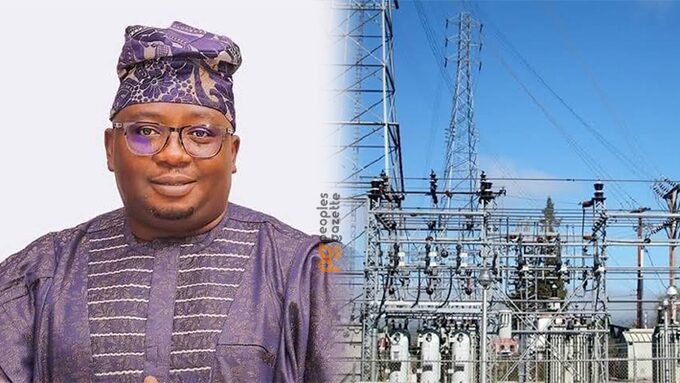
The Federal Government’s ambitious plan to provide stable electricity to federal universities and tertiary hospitals has suffered a major setback following the non-release of funds allocated in the 2025 budget, The PUNCH reports.

Although over N300bn was earmarked in the 2025 Appropriation Act for the special energy intervention, no funds have been released, resulting in zero implementation progress on the project announced last year.

Confirming the development, the Special Adviser on Media to the Minister of Power, Bolaji Tunji, said the initiative had stalled due to the absence of budgetary releases.

When asked about the status of the proposed special energy project for teaching hospitals and universities, Tunji said, “Zero funding has been released for the 2025 budget for the project, so there has been no progress on the project.”

The intervention was conceived to address persistent power shortages in critical public institutions, particularly teaching hospitals and universities, many of which depend heavily on diesel generators to sustain operations.

The PUNCH recalls that the Federal Government had set aside about N300bn in the 2025 budget to deliver stable and sustainable electricity to these institutions, largely through solar hybrid and renewable energy solutions.

The allocation was earlier announced by the Chairman, House Committee on Appropriation, and member representing Bichi Federal Constituency, Abubakar Bichi, during the inauguration of a solar hybrid intervention project at the Aminu Kano Teaching Hospital, Kano.

Bichi said the initiative formed part of the President Bola Tinubu administration’s efforts to end recurring power outages in critical sectors, especially healthcare and tertiary education.

According to him, “This intervention is designed to guarantee uninterrupted power for hospitals and universities so that doctors can save lives and students can study without disruption.”

He explained that the allocation would support the installation of renewable energy systems, with priority given to institutions delivering essential services to Nigerians.

See also  Health minister, manufacturers clash over sugary drink levy

Bichi added that beyond improving power stability, the projects were expected to cut high electricity costs, enhance operational efficiency, and promote clean and sustainable energy use in public institutions.

He also commended the Minister of Innovation, Science and Technology, Uche Nnaji, for what he described as leadership in translating the government’s vision into actionable projects, noting that the Energy Commission of Nigeria would work with relevant agencies to ensure timely delivery.

The lawmaker further praised President Tinubu for approving special budgetary provisions aimed at addressing long-standing electricity challenges in tertiary hospitals and universities nationwide.

Providing background, Bichi said the proposal gained momentum during deliberations on the 2025 appropriation bill after Chief Medical Directors of teaching hospitals across the country raised concerns.

He recalled that in November 2024, the CMD of the University of Maiduguri Teaching Hospital, among others, highlighted the crippling cost of electricity and diesel, with some facilities spending up to N200m monthly to power critical equipment.

“The issue was discussed with the leadership of the National Assembly and subsequently escalated to Mr President, who directed that funds for solar hybrid projects be included in the 2025 budget,” Bichi said.

He disclosed that about N300bn was eventually provided in the budget to support electricity supply in all federal universities and tertiary hospitals, listing Aminu Kano Teaching Hospital, Bayero University Kano, Murtala Muhammad Specialist Hospital, and Nasarawa Hospital among beneficiaries.

However, with no releases made so far, stakeholders fear the ambitious intervention may remain on paper, as hospitals and universities continue to struggle with unstable electricity supply and rising energy costs.

Budget implementation under the current administration has been constrained by funding shortfalls, delayed cash releases, and competing fiscal pressures, leading to four separate budgets running concurrently.

Although the Federal Government has consistently passed large budgets since 2023, including the 2025 Appropriation Act, execution has often trailed projections, largely due to weak revenue inflows, rising debt servicing obligations, and liquidity constraints.

See also  NBS announces 4.23% economic growth, labour disagrees

Official data show that a significant share of annual budgets is consumed by debt servicing and recurrent expenditure, leaving limited fiscal space for capital releases. Consequently, many Ministries, Departments, and Agencies have recorded partial or zero releases for capital projects, even where funds were duly appropriated by the National Assembly.

In several cases, projects captured in the budget remain at the planning or announcement stage, with implementation dependent on subsequent cash backing by the Ministry of Finance and the Budget Office of the Federation.

Budget analysts note that while appropriation signals policy intent, actual execution depends on cash availability, making projects in sectors such as power, health, education, and infrastructure vulnerable to delays when revenues fall short.

The slow pace of implementation heightens the risk of rolling over unexecuted projects into subsequent fiscal years.

Beneficiaries await projects

One year after the N300bn allocation, the Federal Government’s solar mini-grid project for hospitals and tertiary institutions has yet to commence. Findings from listed beneficiaries reveal the absence of mini-grids at their facilities, showing a return to the status quo of paying high electricity bills.

In 2024, following the upgrade and movement of institutions and hospitals to Band A feeders, the removal of subsidies in areas under Band A feeders, and the consequent rise in electricity tariffs, bills for many health and academic institutions tripled, making it difficult for them to meet obligations.

The PUNCH reported that some tertiary hospitals paid as much as N300m per month to cover electricity bills, up from less than N100m before the tariff review. Following outcry from the management of teaching hospitals and universities grappling with high electricity costs, the Federal Government approved a 50 per cent subsidy in August 2024.

Yet, in 2025, public hospitals and educational institutions continued to face high electricity tariffs, with the promise of relief largely unfulfilled. While there appears to be silence on the implementation of the electricity subsidy, the government announced the solarisation of hospitals and tertiary institutions projects.

See also  IMPI projects Nigeria’s GDP to hit 5.5%

Listed beneficiaries of the solar mini-grids include University College Hospital, Ibadan, University of Ibadan, University of Lagos, Obafemi Awolowo University, Ile-Ife, University of Nigeria, Nsukka, and Ahmadu Bello University, Zaria.

According to the Chief Medical Director at the Lagos University Teaching Hospital, Idi-Araba, Mushin, Prof Wasiu Adeyemo, there are 84 Federal Tertiary Hospitals in the country.

Findings reveal that University College Hospital, Ibadan, a listed beneficiary, has yet to benefit from the project. The Public Relations Officer at the university, Funmi Adetuyibi, said, “We are on the list, but the mini grid is not yet on the ground.”

Also, LUTH’s CMD confirmed that the initiative was budgeted for in 2025 but has yet to begin at the hospital. “They came for some assessments, but up until now, nothing has…I guess the process is still on. That’s how far,” Adeyemo said.

It is unclear what the situation is at Obafemi Awolowo University, Ile-Ife, as calls to the Public Relations Officer were unanswered as of press time.

Responding to enquiries, the spokesperson of the Federal Ministry of Health and Social Welfare, Alaba Balogun, advised that queries be redirected to the Rural Electrification Agency, a parastatal under the Federal Ministry of Power. He noted that the ministry has neither initiated nor launched any power-related project.

With the delays, hospitals and universities continue to grapple with unstable electricity supply and rising operational costs, leaving many reliant on expensive diesel generators and exposed to recurring blackouts, underscoring the urgent need for the government to release the funds and fast-track the solar mini-grid initiative.

Continue Reading
Click to comment

Leave a Reply

Your email address will not be published. Required fields are marked *

Business

CBN introduces overnight rate to deepen money market, read details

Published

on

The Central Bank of Nigeria (CBN) on Friday announced the introduction of the Nigerian Overnight Financing Rate as a new benchmark for the country’s money market, aimed at improving transparency and strengthening monetary policy transmission.

The disclosure was contained in a press statement issued by the CBN’s Acting Director of Corporate Communications, Hakama Sidi-Ali.

According to the statement, the initiative was developed in collaboration with the Financial Markets Dealers Association to deepen the financial system.

“The Central Bank of Nigeria, in collaboration with the Financial Markets Dealers Association, today announced the introduction of the Nigerian Overnight Financing Rate, a standardised benchmark aimed at enhancing transparency, strengthening monetary policy transmission, and deepening Nigeria’s money market,” the statement partly read.

The bank explained that the new rate aligns Nigeria with global standards for short-term interest rate benchmarks and is expected to improve pricing efficiency in the money market.

“NOFR was developed to align Nigeria with global best practices in short-term interest rate benchmarks. It is expected to improve price discovery and transparency while promoting consistent pricing of money market instruments,” it added.

The CBN noted that the benchmark would enhance the effectiveness of monetary policy, support financial innovation, boost investor confidence, and strengthen risk management across the financial system.

It further stated that the introduction of NOFR positions Nigeria alongside global benchmarks such as SOFR in the United States, SONIA in the United Kingdom, €STR in the Eurozone, and TONA in Japan, while also complementing Africa’s JIBAR benchmark in South Africa.

See also  N1.8tn debt: Reps signal imminent contractor payments

The apex bank disclosed that the benchmark was set following a stakeholder engagement held on February 27, 2026, during which market participants adopted the rate, along with regulatory approval.

It added that the rate is now operational, with the CBN serving as the benchmark administrator responsible for governance, transparency, and regular publication.

“Following a stakeholder engagement session held on February 27, 2026, where market participants formally adopted the benchmark and subsequent regulatory approval, NOFR is now in use, with the CBN serving as the benchmark administrator. The Bank will ensure governance, transparency, and regular publication of the rate,” the statement noted.

Additional details contained in a set of Frequently Asked Questions released alongside the press statement showed that the Nigerian Overnight Financing Rate is designed as a risk-free benchmark that reflects the cost of overnight secured funding in the interbank market, based strictly on actual transactions rather than estimates.

The framework clarifies that the rate is not a monetary policy tool and is distinct from key policy indicators such as the Monetary Policy Rate, but instead serves as a reference point for pricing financial instruments and contracts across the system.

The document further indicates that the benchmark is published daily at 10:00 a.m. on the next business day after transactions are recorded, reinforcing transparency and consistency in market pricing.

For financial institutions, only naira-denominated overnight secured transactions in the interbank market that meet defined thresholds are eligible for inclusion, with the rate computed using a volume-weighted trimmed mean methodology to remove extreme values and ensure accuracy.

See also  IMPI projects Nigeria’s GDP to hit 5.5%

It also states that in cases where there is insufficient transaction data, the previous day’s rate is retained and clearly disclosed, a safeguard aimed at maintaining continuity in the benchmark.

The FAQs noted that while the new rate may serve as a reference for certain corporate and structured loans, it does not directly determine borrowing costs, which remain influenced by credit risk, tenor, and contractual terms agreed between lenders and borrowers.

For investors, the rate is expected to play a key role in pricing, valuation, discounting, and risk management of naira-denominated financial instruments, further deepening activity in the domestic money market.

Retail customers, however, will not see direct changes to savings or loan rates, as these continue to be determined by banks based on broader cost and risk considerations, although the improved transparency is expected to strengthen overall confidence in the financial system.

On governance, the document states that any correction to the benchmark would only occur in cases of material error and must be fully disclosed, while the methodology underpinning the rate will be reviewed at least annually by the CBN to ensure it remains robust and aligned with market realities.

punch.ng

FOLLOW US ON:

FACEBOOK

TWITTER

PINTEREST

TIKTOK

YOUTUBE

LINKEDIN

Continue Reading

Business

Olumo Rock revenue jumps from N3m yearly to N40m monthly – Ogun gov

Published

on

Ogun State Governor, Dapo Abiodun, says the Olumo Rock Tourist Centre in Abeokuta was shut down and refurbished to reposition it for improved tourism value and revenue generation.

Abiodun said the iconic site, which he described as one of Nigeria’s top tourist destinations, has since recorded a major increase in earnings following its rehabilitation.

The governor spoke on Thursday, at the commissioning of the 5.5-kilometre Elega–Miliki–Saje–Bode-Olude–Alhaji Sugar Road in Abeokuta, which spans Abeokuta North and Abeokuta South Local Government Areas.

He explained that the site’s revenue performance before the intervention was low, but improved significantly after the refurbishment.

Abiodun said that the site was underperforming before the upgrade, adding that the revenue figures at the time reflected its poor condition before rehabilitation.

“When I shut it down and I did the refurbishment of Olumo, Olumo began to generate about 10 million a week as about 40 million a month compared to 3 million a year.”

He also said the tourist centre has grown in prominence and now ranks among the country’s most visited attractions.

“I restored Olumo Rock that has become probably number one or number two tourist site in Nigeria.

“If you Google tourist sites in Nigeria, Olumo Rock will be the first to appear.

“When I assumed office, Olumo Rock was generating probably about 3–4 million naira annually.

“That 3–4 million naira annually was the revenue generated by Olumo Rock when I became governor.

“When I shut it down and carried out the refurbishment of Olumo Rock, it began to generate about 10 million a week, about 40 million a month, compared to 3 million a year,” he said.

See also  N1.8tn debt: Reps signal imminent contractor payments

The development comes months after the state government first reopened the facility following renovation and introduced a temporary free-entry policy to encourage visitation and promote cultural tourism.

According to earlier government statements, the initiative was also aimed at allowing the public to rediscover the historical significance of the site and boost local commerce around the tourist centre before normal access procedures resumed.

The government later announced the end of the free-entry window due to overcrowding and safety concerns, saying the surge of visitors had created risks that required stricter access management.

Subsequently, the state moved to concession the tourist centre to a private operator to ensure improved management and sustained revenue generation.

Olumo Rock, one of Nigeria’s most visited cultural landmarks, has since remained a key focus of the state’s tourism drive.

punch.ng

FOLLOW US ON:

FACEBOOK

TWITTER

PINTEREST

TIKTOK

YOUTUBE

LINKEDIN

Continue Reading

Business

No plan to borrow from IMF’s $50bn fund – FG

Published

on

The Federal Government on Thursday declared that it has no plan to approach the International Monetary Fund to borrow from the estimated $50bn, which the IMF had earlier announced on Wednesday that it plans to use and support struggling economies in Africa.

The Minister of Finance and Coordinating Minister for the Economy, Wale Edun, disclosed this at a press briefing during the ongoing Spring Meetings of the World Bank/IMF in Washington DC, United States.

The PUNCH earlier reported that the Managing Director, IMF, Kristalina Georgieva, had advised countries facing economic pressures to act swiftly in seeking financial support when necessary, warning that delays could worsen economic conditions.

“My advice is that when you need help financially, don’t hesitate to move fast, because the sooner we act, the more we protect the economy,” she said.

Georgieva also revealed that the institution was committed to financially supporting member countries through the current challenges, adding that about $20bn to $50bn was being planned by the IMF for this exercise.

“We anticipate financial demand for IMF support to range between $20bn and $50bn, which represents augmentation of some existing problems and prospective demands from new problems from at least a dozen countries, a number of them in Sub-Saharan Africa,” she said.

But while responding to a question on Thursday, whether the Federal Government would approach the IMF to borrow from the fund, Nigeria’s finance minister, Edun, responded negatively.

“Nigeria has no plan at the moment to approach the IMF for any other such burden,” Edun declared.

See also  NBS announces 4.23% economic growth, labour disagrees

The minister also told the meeting on Thursday that African nations need “extra help” at this moment.

He noted that the Middle East crisis is one that affects African countries and economies disproportionately, stressing that while nations in this region “are not creators in any way of this situation, they stand to command greater pressure than perhaps any other region.”

The minister added, “This is in terms of the threat to macroeconomic stability, growth trajectories, and their ability to create jobs and reduce poverty in their countries.

And I think that is a clear statement, particularly to those identified as the most vulnerable oil-importing countries. They need and deserve extra help at this time.”

Recall that Georgieva earlier observed that many of the countries most affected by the Middle East crisis are located in Sub-Saharan Africa, adding that the IMF was working to identify those in urgent need of assistance. “We are very determined to use this week to identify which of the countries must get our support,” she stated.

She emphasised the importance of strong fiscal and economic policies, urging governments to build buffers during periods of economic stability to better withstand future shocks. According to her, prudent economic management in good times remains critical for resilience during downturns.

The IMF chief also disclosed that during a meeting with central bank governors and finance ministers from Africa held the previous day, officials did not request immediate financial assistance but instead sought policy guidance.

“But, of course, there could be a need for financial support. And my advice is that when you need help financially, don’t hesitate to move fast, because the sooner we act, the more we protect the economy,” she said.

See also  NNPC, NUPRC, NMDPRA shut as PENGASSAN begins strike

Georgieva highlighted the broader global implications of the Middle East conflict, noting that it has already inflicted significant economic damage. “We have been watching developments in the Middle East. A war that causes significant pain to people and economies in the region and around the world. The impact on the global economy is already large,” she said.

She explained that supply chain disruptions and damage to infrastructure are driving up prices and slowing global economic growth. According to her, global growth is projected to decline from 3.4 per cent last year to 2.1 per cent in 2026. She warned that if the conflict persists and oil prices remain elevated for a prolonged period, global economic conditions could deteriorate further.

“But if the conflict persists, and oil prices stay high for an extended period, we must brace for tough times ahead,” she added.

On the IMF’s global outlook, Georgieva cautioned that in a worst-case scenario, global growth could fall to two per cent, stressing that the impact would be widespread. She noted that countries that depend on energy imports are particularly vulnerable, many of which are low-income or fragile economies.

“In the most adverse case, growth could fall to two per cent, and the shock is global,” she said, adding that the highest negative impact is being felt by energy-importing nations.

punch.ng

FOLLOW US ON:

FACEBOOK

TWITTER

PINTEREST

TIKTOK

YOUTUBE

LINKEDIN

Continue Reading

Trending