


Connect with us

News

PHOTOS & VIDEOS: National strike by Belgium’s big unions hits public transport, airports and ships

Published

on

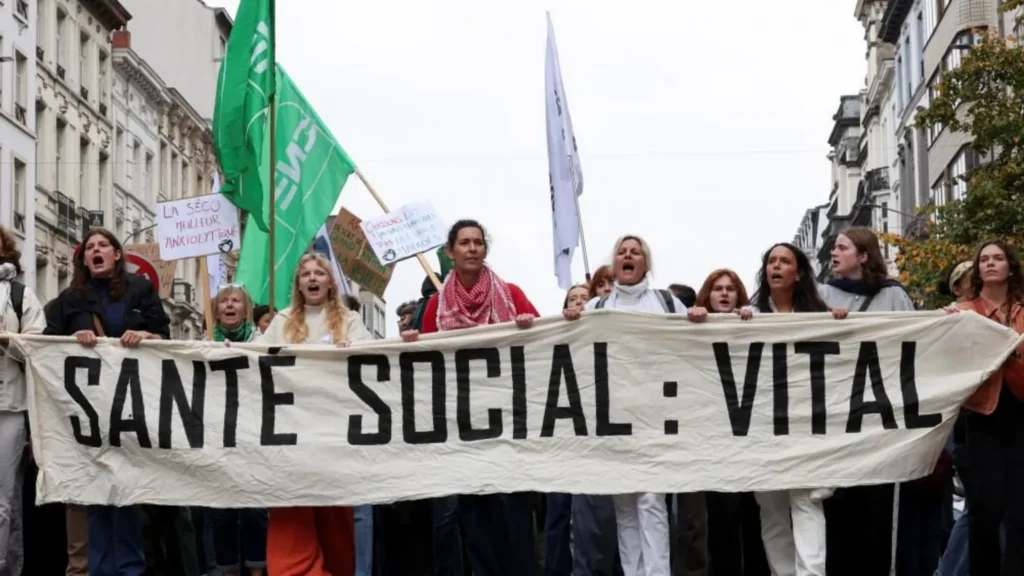
Tens of thousands of people have taken to the streets in Brussels as part of a national strike over government reforms and spending cuts that has brought flights to a halt and severely disrupted public transport.

Belgium’s three big unions are protesting over pensions and other measures by Prime Minister Bart de Wever’s centre-right government aimed at cutting the budget deficit.

There were no services at Belgium’s second biggest airport at Charleroi, and all departures and many of the arrivals were cancelled at Brussels Airport.

Although trains were running, most buses, trams and underground trains in the capital ground to a halt.

Shipping at Europe’s second biggest port Antwerp was suspended until Wednesday because of understaffing, and more than 100 ships waited in the North Sea for permission to dock at three ports, according to Belgium’s MDK maritime and coastal services.

Belgium has been hit by several strikes since Flemish nationalist Bart de Wever came to office last February.

By midday, police said 80,0000 protesters had joined the demonstration in the Belgian capital.

Public sector workers were protesting against austerity measures and a government increasingly perceived as leaning right.

They wound through the streets of central Brussels, many wearing the red or green colours of the main unions.

A key issue for the unions is the government’s plan to increase the number of days Belgians work per year before they can receive their pensions, as well as the end of special schemes for several sectors including military and railway workers.

See also  Senate confirms Amupitan as INEC chairman

De Wever’s government has also announced measures including a maximum two-year limit on claiming unemployment benefit. Further cuts are planned for next year’s budget, and some proposals such as reducing child benefit or raising VAT have already been floated.

“It’s about time we came together,” said Anaïs, 29. “It’s always the same part of the population that has to tighten their belts.”

Holding a placard showing the number 67 with a red line through it, she objected to the pension age going up: “65 is enough. 67 is too late. We are asked to work more, to work longer hours. It’s not fair.”

The rise in pension age was adopted 10 years ago, well before De Wever’s government came to office, but it remains deeply unpopular and the government is aiming to ringfence it and make it more expensive to retire earlier.

Thierry Bodson of the ABVV union told demonstrators that “the fight against the De Wever government is not just the fight of a day or a year – it’s for a whole generation”, Belga news agency reported.

“We need to fight for our rights,” said mother-of-two Vanessa, who had travelled from Charleroi.

“I’m worried about the measures that will be taken. What sort of future will my children have?” she told the BBC.

It is not just the federal government under pressure to cut spending. Belgium’s complex multi-level governance means regional authorities are also imposing austerity measures.

The ruling coalition in Belgium’s largely French-speaking Walloon region has announced that teachers in the higher tiers of secondary schools will have to work an extra two hours per week.

See also  Iconic actor, Robert Redford dies at 89

Many of them joined the protests today.

“Nothing is clear, and it’s really worrying, but if higher-level teachers have to work more, many jobs will be cut,” said Sandrine, 48, who works in education.

Although the protests were largely peaceful, there were several incidents of vandalism and arson early in the morning and some people in masks clashed with police later on.

VIDEOS:

PHOTOS:

FOLLOW US ON:

FACEBOOK

TWITTER

PINTEREST

TIKTOK

YOUTUBE

LINKEDIN

TUMBLR

INSTAGRAM

Continue Reading
Click to comment

Leave a Reply

Your email address will not be published. Required fields are marked *

News

Reps quiz DMO, TCN over N54.57tn borrowing, N446.7bn debt

Published

on

The House of Representatives Public Accounts Committee will question senior officials of the Debt Management Office and the Transmission Company of Nigeria on Monday and Tuesday over queries raised in the 2024 Auditor-General for the Federation’s report.

The invitations form part of the committee’s ongoing efforts to enforce financial accountability among Ministries, Departments and Agencies of the Federal Government and ensure that public institutions comply with established financial regulations.

The committee, chaired by Bamidele Salam, who represents Ede North/Ede South/Ejigbo/Egbedore Federal Constituency of Osun State, is expected to examine alleged irregularities involving government borrowing and the recovery of outstanding debts owed to the Federal Government.

A notice of invitation dated September 29, 2026, cited by The PUNCH, directed the two agencies to submit “all requested documents to the committee’s secretariat in Hearing Room 4, White House, House of Representatives, at least 72 hours before their scheduled appearances.”

The notice also required “the accounting officers and relevant subject matter experts of both agencies to attend the hearings at 1 pm in Hearing Room 446.”

The DMO is expected to explain its alleged failure to comply with borrowing estimates contained in five Appropriation Acts covering the 2020 to 2024 fiscal years.

According to the Auditor-General for the Federation’s Annual Report on Non-compliance and Internal Control Weaknesses in MDAs for the year ended December 31, 2024, the agency allegedly exceeded approved borrowing limits by N54.57tn during the five years.

The report stated that the DMO contracted fresh domestic and foreign loans totalling N88.67tn, against N34.89tn provided for debt financing in the Federal Government’s approved budgets over the same period.

See also  Bear kills man in Japan

The difference between the reported borrowing figure and the budgeted amount raises questions about compliance with legislative approvals and the procedures governing government borrowing.

The committee is expected to seek explanations from the agency on the circumstances surrounding the reported discrepancy and the measures taken to ensure that borrowing activities comply with approved fiscal plans.

The DMO is responsible for managing Nigeria’s public debt, including domestic and external borrowing, debt servicing and the implementation of government debt-management policies. Its activities are central to the Federal Government’s financing arrangements and the management of the country’s debt obligations.

The Transmission Company of Nigeria, on its part, is expected to account for its alleged failure to recover N446.70bn out of N882.75bn owed to the Federal Government by various public agencies and institutions.

The amount in question represents outstanding obligations reportedly owed by public entities, with the committee expected to seek clarification on the recovery efforts made by TCN and the reasons for the unpaid balance.

The hearing comes amid continuing concerns over the management of public resources, compliance with financial regulations and the recovery of government funds tied up in outstanding debts.

Salam, an Accord chieftain, has repeatedly cautioned public institutions against treating legislative summons with levity, warning that the National Assembly has constitutional powers to investigate matters relating to public expenditure and the management of government funds.

Sections 88 and 89 of the 1999 Constitution, as amended, empower the National Assembly and its committees to conduct investigations within their constitutional mandate and summon persons to provide evidence or produce relevant documents.

See also  Tinubu mourns fallen Air Force personnel, says sacrifice won’t be forgotten

The Public Accounts Committee examines reports submitted by the Auditor-General for the Federation, scrutinising public accounts and investigating cases of alleged financial irregularities, non-compliance with regulations and weaknesses in internal controls.

Its work is intended to strengthen oversight of public spending, ensure that government agencies account for the use of public funds and recommend appropriate action where breaches are established.

The committee has also recorded financial recoveries for the Federal Government from oil companies, MDAs and government-owned enterprises over the past two years.

However, its oversight activities have occasionally been complicated by the failure of some institutions to honour invitations.

Last week, the Nigerian National Petroleum Company Limited and the Independent National Electoral Commission reportedly failed to honour the committee’s summons, prompting speculation about possible legislative measures to compel their appearance at a later date.

The scheduled hearings involving the DMO and TCN will provide the committee an opportunity to obtain explanations from the agencies and determine what further action may be necessary in response to the audit findings.

Source: punchng.com

FOLLOW US ON:
FACEBOOK

TWITTER

PINTEREST

TIKTOK

YOUTUBE

LINKEDIN

INSTAGRAM

Continue Reading

News

Xenophobia: 111 more Nigerians return from South Africa

Published

on

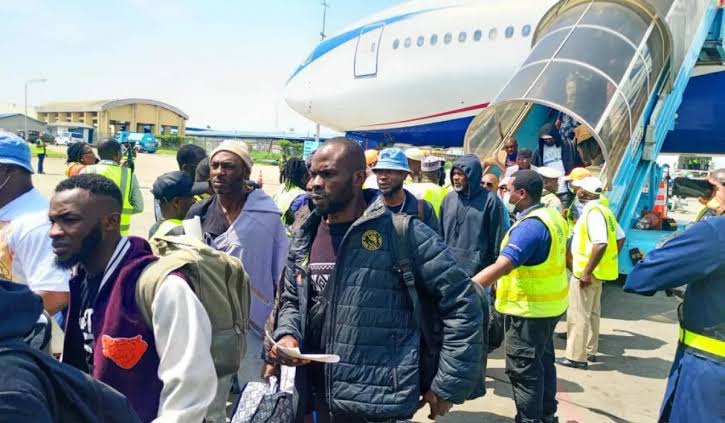
The Federal Government has evacuated another batch of 111 distressed Nigerians from South Africa amid concerns over xenophobic and Afrophobic attacks in the country.

The returnees, comprising 44 men, 23 women and 44 children, arrived in Lagos aboard South African Airways Flight SA060 on Thursday, October 8, 2026.

The Ministry of Foreign Affairs disclosed this in a statement signed by its spokesperson, Oluwafemi Adeniyi, on Sunday.

The ministry said the returnees were received by officials of the ministry, the Nigerians in Diaspora Commission, the National Agency for the Prohibition of Trafficking in Persons, the National Emergency Management Agency and other relevant Federal Government agencies.

According to the statement, the evacuation was fully funded by the $265,854 donation made by the Redeemed Christian Church of God to support the evacuation of 500 distressed Nigerians from South Africa.

“The arrival of the returnees brings the total number of consular evacuations conducted from South Africa to 15 since the commencement of the ongoing evacuation exercise on 10th June, 2026,” the statement said.

It added that the latest evacuation brought the cumulative number of Nigerians evacuated from South Africa to 2,037, including 1,388 whose repatriation costs were fully covered by the Federal Government.

The ministry disclosed that 318 Nigerians had so far benefited from the RCCG-funded evacuation, leaving 182 more to be repatriated under the church’s commitment.

It said, “With the successful evacuation of this RCCG-funded batch, a total of 318 Nigerian nationals have had their one-way tickets funded by the church. Therefore, 182 more nationals are expected to be repatriated under RCCG’s commitment to fund 500 one-way tickets.”

See also  EU chief hails US-Iran deal to end war, reopen Hormuz

The Federal Government expressed appreciation to the RCCG, under the leadership of its General Overseer, Pastor Enoch Adeboye, for its financial support towards the evacuation of distressed Nigerians.

It also reaffirmed its commitment to engaging the South African authorities and other stakeholders to address xenophobia and Afrophobia in the country.

“The Federal Government remains committed to engaging relevant stakeholders, including authorities of South Africa, to address Xenophobia and Afrophobia in the country, and promote the welfare, safety and dignity of Nigerians residing there,” the statement added.

The ministry advised Nigerians living in South Africa to comply with local laws, remain vigilant and prioritise their safety.

It urged them to maintain contact with the Nigerian High Commission in Pretoria and the Consulate General in Johannesburg for consular assistance whenever necessary.


“The Federal Government remains steadfast in its commitment to providing timely consular support to Nigerians in the diaspora and safeguarding their welfare and well-being,” the statement said.

Source: punchng.com

FOLLOW US ON:

FACEBOOK

TWITTER

PINTEREST

TIKTOK

YOUTUBE

LINKEDIN

INSTAGRAM

Continue Reading

News

Edo: Midnight Fire Destroys 7 Shops, Goods Lost

Published

on

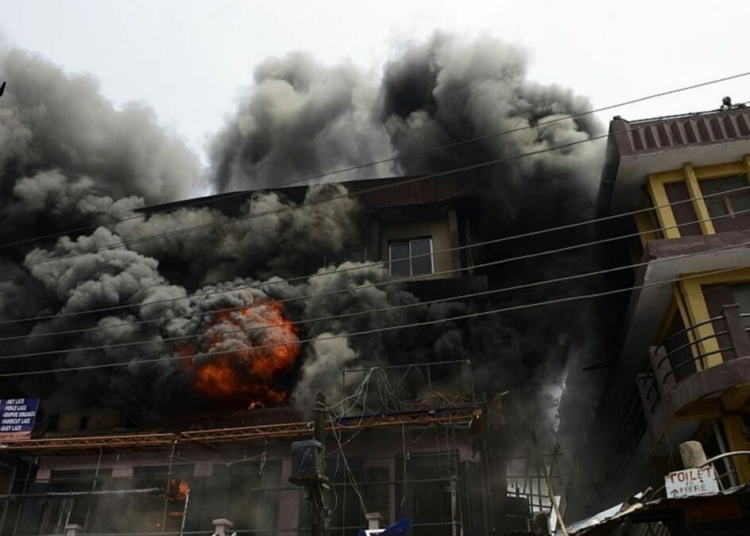
A midnight fire has destroyed seven shops and an undisclosed quantity of goods along Amen Owie Street, opposite Delano Hotels, off Second Ugbor Road, Abuja Quarters, in Benin City, Edo State.

The fire reportedly broke out at about 3am on Sunday, leaving shop owners with significant losses. No lives were lost.

Some of the affected traders, who confirmed the incident in interviews, said they were alerted by neighbours who called them after the fire started.

The traders suspected that the fire might have been caused by an electrical appliance allegedly left on in one of the shops after the owner closed late for the day.

They also said the incident occurred after the Benin Electricity Distribution Company (BEDC) restored electricity to the area.

However, the cause of the fire has yet to be officially established.

Residents reportedly rushed to the scene and forced open the doors of some shops to evacuate valuables in an effort to minimise losses.

Their intervention also helped prevent the fire from spreading to other parts of the neighbourhood, although seven shops were affected.

The shop owners said attempts to get the Edo State Fire Service to the scene proved difficult because of the time the incident occurred.

The quantity and value of the goods destroyed have yet to be determined.

FOLLOW US ON:

FACEBOOK

TWITTER

PINTEREST

TIKTOK

YOUTUBE

LINKEDIN

INSTAGRAM

See also  Police, NCoS, SON strengthen partnership in Jigawa
Continue Reading

Trending