Connect with us

News

Electoral Act Amendment: Opposition protests as senators back manual results transmission

Published

on

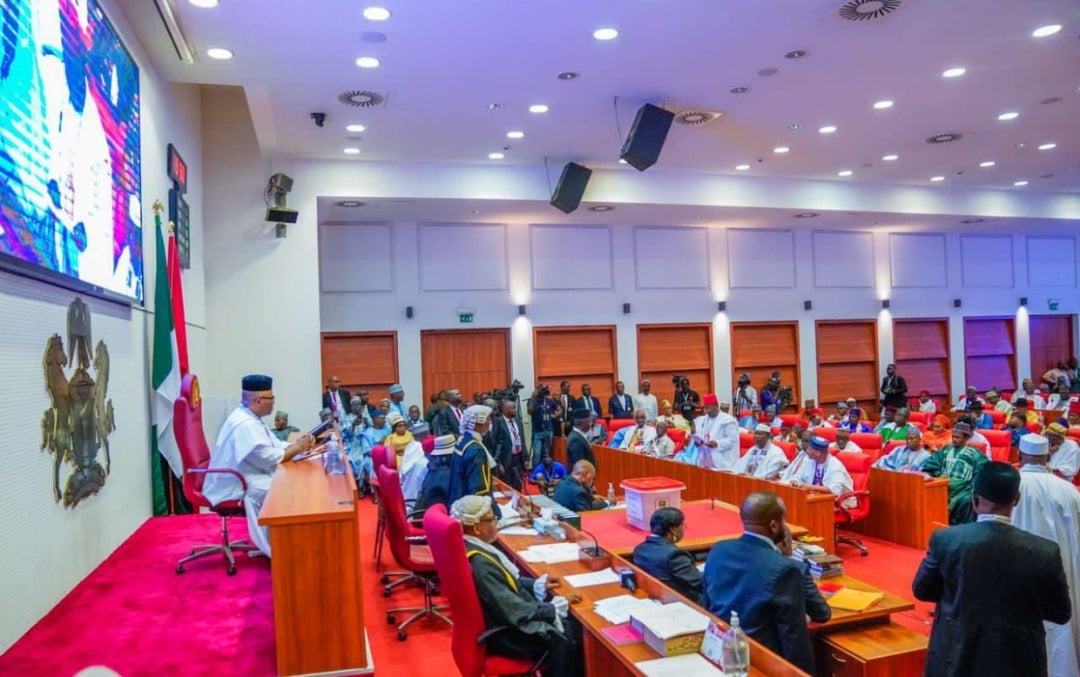
The Senate on Tuesday bowed to intense public pressure and approved the electronic transmission of election results to the Independent National Electoral Commission’s Result Viewing Portal, IReV, while permitting manual collation to serve as a backup where technology fails.

The decision followed an emergency reconsideration of a disputed clause in the Electoral Act (Repeal and Re-enactment) Amendment Bill, 2026, after days of nationwide outrage, street protests, and sustained criticism from opposition figures, civil society organisations and youth movements.

However, the Upper Chamber stopped short of making electronic transmission compulsory and rejected calls for the explicit inclusion of real-time upload of results, a key demand by protesters who accused lawmakers of attempting to weaken electoral safeguards ahead of the 2027 general elections.

Under the reviewed provision, presiding officers at polling units are required to electronically transmit results to the IReV portal after voting and documentation have been completed.

The amendment, however, provides that where electronic transmission cannot be carried out due to communication or network challenges, the manual result sheet, Form EC8A, shall become the primary basis for collation and declaration.

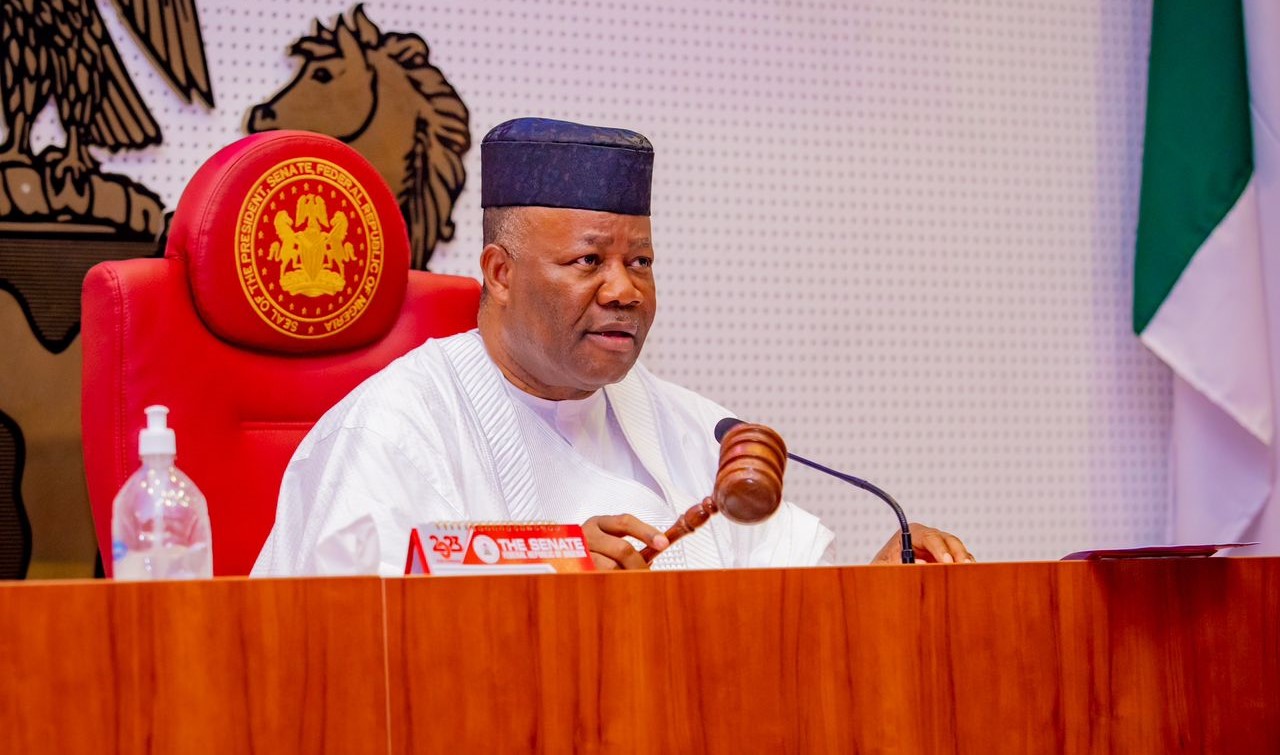
While putting the motion to a voice vote, Senate President Godswill Akpabio urged senators who opposed the amendment to formally challenge it on the floor.

“It’s very simple. If you disagree with him, move your counter motion. So, if you agree with him, you agree with me when I put the votes,” Akpabio said.

He explained that the motion before the chamber sought to reverse an earlier Senate decision on Section 60, Subsection 3 of the Electoral Act, which had triggered public backlash.

“When I ask for the votes, when I ask for your consent, let me read the motion. His earlier motion, which passed in our last sitting, he has sought to rescind that. That is in respect of Section 60, Subsection 3. And this is what he said,” Akpabio stated.

Reading the amended clause, the Senate President said, “That the presiding officer shall electronically transmit the results from each polling unit to the IReV portal.

“And such transmission shall be done after the prescribed Form EC8A has been signed and stamped by the presiding officer and/or countersigned by the candidates or polling agents, where available at the polling units, because sometimes you don’t see any polling agent.”

Akpabio added that the law now accommodates situations where electronic transmission becomes impossible.

“Provided that if the electronic transmission of the results fails as a result of communication failure — in other words, maybe network or otherwise — and it becomes impossible to transmit the results electronically in Form EC8A signed and stamped by the presiding officer and/or countersigned by the candidates or polling agents where available at the polling units, the Form EC8A shall in such a case be the primary source of collation and declaration of results,” he said.

Despite the Senate’s clarification, the amendment has continued to raise concerns among opposition parties and civil society groups, who argue that allowing manual results to override electronically transmitted ones could weaken transparency and reopen the door to manipulation, particularly in areas with poor network coverage.

Dramatic reversal

The emergency plenary followed chaotic scenes in the Senate chamber earlier, after the Senate Chief Whip, Senator Tahir Monguno (APC, Borno North), raised a point of order seeking the rescission of the chamber’s earlier approval of Clause 60(3) of the bill.

Monguno anchored his motion on Orders 1(b) and 52(6) of the Senate Standing Orders, 2023 (as amended), and was seconded by Senator Abdul Ningi (PDP, Bauchi Central).

The move immediately sparked tension, with several senators raising points of order and shouting across the aisle.

Trouble escalated when Monguno read the revised Clause 60(3) without the phrase “real-time,” replacing the word “transmission” with “transfer.”

Senator Enyinnaya Abaribe (APGA, Abia South) objected strongly, repeatedly raising points of order as the chamber descended into uproar.

According to page 45 of the report of the Senate Committee on Electoral Matters, Clause 60(3) states: “The Presiding Officer shall electronically transmit the results from each polling unit to IREV portal in real time and such transmission shall be done after the prescribed Form EC8A has been signed and stamped by the Presiding Officer and/or countersigned by the candidates or polling agents available at the polling unit.”

At the height of the disagreement, Abaribe invoked Order 72 of the Standing Orders, calling for a formal division of the chamber.

Senate appoints committee

Amid mounting pressure, the Senate also appointed a 12-member conference committee to harmonise differences between its version of the Electoral Amendment Bill and that passed by the House of Representatives.

See also  Kwara massacre: Survivors traumatised after deadly attack in Woro, soldiers occupy deserted community

Akpabio announced the names during the emergency plenary.

The committee is chaired by Senator Simon Lalong, with Senator Orji Uzor Kalu, Senator Tahir Monguno, Senator Adamu Aliero, Senator Abba Moro, Senator Asuquo Ekpenyong, Senator Aminu Iya Abbas, Senator Tokunbo Abiru, Senator Niyi Adegbonmire (SAN), Senator Jibrin Isah, Senator Ipalibo Banigo and Senator Onyekachi Nwebonyi as members.

Akpabio said, “After consultation with the leadership, we have moved the number from nine to 12. I will now read out the names of the conference committee members from the Senate.

“When you meet, you should recognise that this is a matter of urgency. I believe that if you are able to conclude within the next few days or one week, the President should be able to sign the amended Electoral Bill into law within the month of February.”

He added that the harmonised bill would be transmitted to President Bola Tinubu for assent before the end of the month.

Reacting to the development, Senator Orji Uzor Kalu, representing Abia North, defended the Senate’s position, describing it as a balanced approach.

In a statement shared on his Facebook page, Kalu said, “Today (Tuesday) at emergency plenary, I supported and added my voice to the Senate’s new position approving the electronic transmission of election results from polling units across Nigeria.”

He said the amendment makes electronic transmission the primary method when technology is available.

“This means electronic transmission becomes the primary method where the technology is available and functional.

“However, where it fails or becomes impossible, the duly signed Form EC8A remains the valid and primary source of results,” he added.

Kalu said the approach ensures inclusivity for communities with network challenges.

“This balanced approach strengthens transparency, fairness, and credibility in our electoral process, while ensuring that voters in network-challenged communities are not disenfranchised.

“Our democracy must work for every Nigerian, everywhere,” he said.

However, Senator Natasha Akpoti-Uduaghan (PDP, Kogi Central) publicly dissented, backing calls for the retention of real-time electronic transmission.

In a Facebook post ahead of the decisive sitting, she said Nigerians deserved elections that inspire trust.

“As I step into the Senate chamber today, I carry with me the hopes and expectations of millions of Nigerians who yearn for stronger democratic safeguards enshrined in our laws,” she wrote.

“Real-time electronic transmission of election results is a critical step toward deepening transparency, preserving the sanctity of the people’s mandate, and restoring public confidence in our electoral process.

“Our democracy must continue to evolve with systems that ensure every vote truly counts and every voice is faithfully represented.

“Nigeria deserves elections that inspire trust, strengthen unity, and reflect the genuine will of the people.”

Her intervention followed mass protests at the National Assembly Complex, where demonstrators under the banner Occupy the National Assembly accused lawmakers of rolling back reforms ahead of 2027.

Atiku, Amaechi, El-Rufai

Former Vice President Atiku Abubakar also slammed the Senate over the manual transmission clause.

At a press briefing in Minna, Niger State, following a closed-door meeting with former Military President General Ibrahim Babangida, Atiku said the current mixture of electronic and manual transmission could create challenges for voters and electoral officials.

“The expectations of Nigerians, Nigerians who are expecting real-time electronic transfer to the various levels of the elections, but what we got is a mixture of electronic and manual transmission, which is going to cause more confusion or chaos than if we had a single-tier, you know, electoral transmission system, which is real-time electronic.

“That would be our preference. And I think there is a need for all the opposition political parties to come together to pursue this issue,” he said.

He described the Senate’s recent adoption of the amended Clause 60(3) of the Electoral Act—which allows electronic transmission of results while keeping manual collation as a backup—as a compromise that falls short of full transparency.

“I mean, we shouldn’t allow it to rest where they wanted it to rest today. Absolutely not. I don’t support that,” he added.

Former Rivers State Governor Rotimi Amaechi joined protesters at the National Assembly, warning that real-time transmission could save lives.

Amaechi joined protesters on Tuesday at the National Assembly Complex in Abuja, demanding that the proposed amendment to the Electoral Act explicitly require the Independent National Electoral Commission to transmit results electronically in real time from polling units.

“The advantage is that very few people will die on the election field, very few Nigerians. You are saving the lives of Nigerians,” Amaechi told the crowd, warning that every election season sees citizens killed in large numbers while officials shield themselves behind security forces.

“If you think they won’t rig, you’re wasting time. To stop them from rigging, we must come out in large numbers. We must mobilise to march police for the police. When they see the number of people who have come out, they will join,” he added.

See also  Tension mounts over NHIA office relocation in Edo

Amaechi expressed frustration with what he described as indifference from government authorities.

“The problem is not even Ribadu. Even the President doesn’t think the citizens matter,” he said, referencing previous election-related violence.

“The only way to save Nigerians from electoral violence is to allow transmission, re-transmission.”

Former Kaduna State Governor, Nasir El-Rufai, has said he would have joined the protest led by former Labour Party presidential candidate, Peter Obi, against the National Assembly if he had been in the country.

Speaking during an interview on Trust TV on Monday, El-Rufai criticised the Senate for altering provisions on the electronic transmission of election results in the proposed Electoral Act amendments, stressing that real-time transmission is critical to preventing manipulation.

He added that the delays and resistance surrounding the reform are politically motivated and designed to preserve electoral advantages.

“It’s unfortunate I have not been able to return to Nigeria, I would have joined Mr Peter Obi and other party leaders in protesting to the National Assembly to restore the real-time and mandatory transmission of results from the polling unit,” El-Rufai said.

He argued that adopting real-time electronic transmission would significantly reduce rigging and improve the credibility of elections, accusing the ruling party of opposing the measure for survival reasons.

The former governor also noted that while the House of Representatives had aligned with the reform, the Senate had yet to fully embrace it.

Former presidential candidate and activist Omoyele Sowore also stormed the National Assembly complex in Abuja to join protesters demanding electoral reforms.

Sowore, who addressed supporters shortly after his arrival, said Nigeria’s political class could not reform itself, accusing elected officials of betraying the electorate once they assume office.

“Prepare to see the end of this political class. Nobody can reform them. Some of the people who voted for the removal of this particular section of the electorate were people who were with you, deceptively, in 2022 and 2023.

“The moment they entered that evil chamber, they switched seats. They forget you,” he said.

The activist urged Nigerians to remain united, insisting that the protest was part of preparations for future actions rather than a one-off demonstration.

“We are doing this when you see us. It’s not for the sake of protesting alone that I’m here. We are here to prepare for the near future,” he said.

Sowore further declared that sustained mass action would be necessary to achieve meaningful change in the country.

He argued that elections alone could not resolve Nigeria’s challenges, calling instead for what he described as an “electoral revolution.”

“I don’t believe that elections by themselves can resolve Nigeria’s problems. It has to be an electoral revolution, or a revolution that brings about an election,” Sowore said.

Opposition, CSOs

Opposition parties also kicked against the retention of the manual transmission of electoral results.

The Peoples Democratic Party criticised the Senate’s decision, describing the inclusion of a manual transmission clause as a “backdoor move” that could weaken electoral reforms.

In a statement by its National Publicity Secretary, Ini Ememobong, the PDP said the Senate’s decision fell short of public expectations.

“We have taken note of the Senate’s reconsideration, which introduced an addendum permitting manual transmission where technology is said to fail,” the party said.

“We hold the firm view that this addendum is a backdoor attempt to achieve the same objective as the earlier outright rejection of electronic transmission.”

The party also questioned claims that technology would fail, noting that the Bimodal Voter Accreditation System had consistently functioned during elections.

The PDP urged the conference committee of the National Assembly to adopt the version of the bill passed by the House of Representatives as the harmonised position ahead of the 2027 general elections.

The New Nigeria People’s Party also expressed reservations over the Senate’s proviso.

Its National Publicity Secretary, Ladipo Johnson, said the clause created room for manipulation.

He said, “The Senate and the APC generally have proved themselves to be unwilling participants in the process of ensuring that our democracy becomes more transparent and efficient. Therefore, it is difficult to trust them.

See also  Port Harcourt-Aba train service to resume operation Tuesday

“They have left a proviso. And that proviso means that if they do instigate the rigging that Nigerians are so afraid of, nothing stops polling units officers in areas that are determinants to the nation from beginning to say, ‘my network is not going, and I have to take it by hand.’

“So, Nigerians should still be wary and should remember that this party is the one that failed and has shown itself to be reluctant to push democracy and elections to where we want them to be.”

The African Democratic Congress commended Nigerians for forcing the 10th Senate to reverse controversial provisions in the Electoral Act Amendment Bill, describing the development as a victory for democracy and people-driven civic action.

In a statement on Tuesday by its National Publicity Secretary, Bolaji Abdullahi, the party urged Nigerians to remain vigilant and sustain pressure until the amended bill is assented to by the President, gazetted and fully implemented.

“The decision of the 10th Senate to urgently reverse the contentious provisions of the Electoral Amendment Bill is a significant victory for the Nigerian people,” the party said.

“It demonstrates that when citizens act with unity, clarity of purpose and resolve, they can move mountains. This is not just a legislative U-turn but a testament to the vigilance and resilience of Nigerians.”

Abdullahi warned that the Senate’s action marked only a step forward, urging citizens to ensure the process is not undermined at later stages.

“We must remain vigilant to ensure there are no last-minute betrayals or technical ambiguities that could undermine the will of the people,” he added.

Similarly, the National Coordinator of the Obidient Movement Worldwide, Dr Yunusa Tanko, described the Senate’s decision as inconclusive.

According to him, allowing manual transmission could lead to chaos and manipulation at polling units.

He said, “The truth about it is that the pressure that was put on the Senate actually led to this particular inconclusive decision. I call it an inconclusive decision because it’s going to lead to a chaotic situation at each of the polling units. It is going to give more room for people to manipulate the system.

“They need to be decisive on this particular matter. It’s not as if one is pushing it beyond the boundary, but there must be more clarity into it. I’ll give you an example. If you go to an area where you assume that the place does not have a network, that can be said by any agent of the party, even though there is a network there.

‘How do we ensure that their particular result will get even the transmission that we need? So, it’s a chaotic situation, and it’s embarrassing that one senator will say that his area does not have a network. That senator should be recalled because he did not serve the people.

“In the 21st century, we are talking about no network in certain areas. It’s quite embarrassing. India alone would mean that billions of people can transmit results in one day during their general election. And they have more population and landmass. It is not rocket science,” he fumed.

Civil society organisations also criticised the Senate’s decision, warning that it could weaken electoral transparency.

The Executive Director of the Civil Society Legislative Advocacy Centre, Auwal Musa, also known as Rafsanjani, described the action as contradictory.

“What they have done is to give Nigerians something with one hand and take it back with the other,” he said.

Musa warned that retaining manual collation created excuses for manipulation and undermined public trust.

“Election rigging starts from the legal framework,” he said, urging Nigerians to sustain pressure until credible reforms are achieved.

The Coordinator, Nigeria Civil Society Situation Room, Agianpe Onyema, said civil society groups would focus on engaging the conference committee of both chambers.

She urged lawmakers to adopt the House of Representatives’ version of the bill, insisting on mandatory real-time electronic transmission of results to the IReV portal.

“What we are asking for is simple — real-time, mandatory electronic transmission of results, no more, no less,” Onyema said.

As pressure mounts, attention has shifted to the conference committee and President Bola Tinubu’s eventual assent.

With the 2027 general elections approaching, analysts say the final outcome of the Electoral Act amendment may shape not only the credibility of future polls but also public trust in Nigeria’s democratic institutions.

Continue Reading
Click to comment

Leave a Reply

Your email address will not be published. Required fields are marked *

News

State police: Federal force can intervene over electoral intimidation — Senate

Published

on

The Senate on Sunday said the proposed State Police Bill contains constitutional safeguards that would allow the federal police to intervene in cases of electoral intimidation, serious human rights violations and threats to national security, dismissing concerns that governors could abuse the proposed policing system for political purposes.

The upper chamber also defended the passage of the Constitution of the Federal Republic of Nigeria (Alteration) (State Police) Bill, 2026, revealing that 84 of the 109 senators voted in support of the legislation during its clause-by-clause consideration, describing the outcome as evidence of broad bipartisan backing.

The clarification comes amid growing debate over the proposed decentralisation of policing, with supporters arguing that state police would strengthen security at the grassroots, while critics fear governors could exploit the outfit to intimidate political opponents ahead of elections.

Defending the Senate’s position in a statement issued by his media office on Sunday, the Senate Leader, Opeyemi Bamidele, said the proposed amendment clearly delineates the constitutional responsibilities of the federal and state police to minimise operational conflicts and improve security coordination.

He explained that the federal police would continue to handle the protection of federal institutions, policing of the Federal Capital Territory, counter-terrorism, organised crime, cybercrime, border security, arms trafficking, interstate criminal activities and other national security matters, while state police would be responsible for enforcing state laws, maintaining public order and protecting lives and property within their jurisdictions.

Bamidele said the bill equally contains several safeguards designed to prevent governors from abusing state police.

See also  Trump cuts India tariffs, says Modi will halt Russian oil imports

He explained that although governors may nominate commissioners of police, such appointments would require recommendations by the National Police Council and approval by a two-thirds majority of the relevant state House of Assembly.

The Senate Leader added that the National Police Council would oversee overall policy, funding and appointments, while an independent State Police Service Commission would regulate state police operations without the control of state governors.

Explaining the circumstances under which the federal police may intervene, Bamidele said such action would only be permissible in exceptional situations.

He said, “The intervention can only be granted when there is an outright breakdown of public order; where a state police service is incapable of functioning; where there are serious abuses of fundamental rights; where there is partisan or electoral intimidation; and when national security is heavily strained and threatened.

“To avoid any form of abuse, the bill creates the State Police Service Commission. In design, the commission will serve as the regulatory authority of the state police system.

“Under this arrangement, the commission will be authorised ‘to, without the approval or control of the governor, make rules regulating its own procedure or conferring powers and imposing duties on any officer or authority for the purpose of discharging its functions under the 1999 Constitution.’”

Continuing, Bamidele dismissed claims that the proposal was politically motivated, insisting that it emerged from extensive consultations with the executive, the Nigeria Governors’ Forum, the Conference of Speakers of State Legislatures and the leadership of the Nigeria Police.

The Ekiti senator added that public hearings conducted across the six geopolitical zones in July 2025 produced overwhelming support for the establishment of state police.

See also  Tinubu reinstates Fubara after Emergency Rule

He said, “The state police bill was subjected to intense debates at the Senate and House of Representatives. Even though the All Progressives Congress is the majority party, opposition legislators actively took part in the process that approved the state police initiative.

“They exercised their discretion in favour of the proposal, mainly in the national interest and not on a parochial basis. In the Senate, for instance, 84 out of 109 members voted clause by clause in support of the Bill. This accounted for 77.06 per cent approval at the Senate alone.”

He maintained that the proposed constitutional amendment was designed to strengthen accountability and ensure that the creation of a state police enhances national security without undermining democratic governance or citizens’ fundamental rights.

punch.ng

FOLLOW US ON:

FACEBOOK

TWITTER

PINTEREST

TIKTOK

YOUTUBE

LINKEDIN

Continue Reading

News

FG warns South Africa, threatens tough action over Xenophobia killings

Published

on

The Federal Government has warned that Nigeria may consider additional measures if attacks on its citizens in South Africa persist.

This is as the country condemned the killing of two Nigerian nationals in South Africa and demanded immediate investigations, warning that the continued targeting of foreigners, particularly Nigerians, raises serious concerns about their safety and the resurgence of xenophobic violence in the country.

The victims, Emeka Charles Iroegbu and Musa Yunana Joe, popularly known as Big Joe, were both killed on June 28, 2026.

While Iroegbu was allegedly tortured to death by officers of the Tshwane Metro Police in Sunnyside, Pretoria, Joe was reportedly shot dead by unidentified criminals outside his shop in Witbank, Mpumalanga.

In separate statements issued on Sunday by the Ministry of Foreign Affairs, the Nigerian Consulate General in Johannesburg and the Nigerian Union South Africa, authorities called for prompt, transparent and exhaustive investigations to ensure that those responsible were apprehended and prosecuted without delay.

“We wish to place the Government of South Africa on notice that if the situation continues to persist, all options remain on the table, some of which will be activated if the uncultured and provocative trend of intolerance and apartheid-style behaviour of South Africa against foreigners is not addressed,” the statement from the Ministry of Foreign Affairs stated.

The government described the incidents as part of a disturbing pattern of violence against Nigerians in South Africa, noting that the same Tshwane Metro Police officers allegedly implicated in the killing of another Nigerian, Nnaemeka Mathew Andrew Ekpenyong, on April 20, have yet to be arrested despite being known to the South African Police Service.

See also  PHOTOS: Ogun govt shuts down Ijebu-Imushin market over dirty environment, indiscriminate dumping of refuse

In the statement issued on Sunday by the spokesperson of the Ministry of Foreign Affairs, Kimiebi Ebienfa, the government expressed outrage over the deaths.

The statement said, “One victim, Emeka Charles Iroegbu, was reportedly killed by Tshwane Metro Police officers on 28th June 2026, in Sunnyside, Pretoria, using gruesome interrogation techniques.”

The government further recalled that the same officers were allegedly involved in the extrajudicial killing of another Nigerian, Nnaemeka Mathew Andrew Ekpenyong, on April 20, 2026.

“His case is still pending; no arrests have been made, even though the four officers involved are known to the South African Police Service,” the statement added.

The ministry noted that the killings occurred amid rising xenophobic tensions and increasing attacks on foreigners in South Africa, warning against attempts to stereotype Nigerians as criminals.

“These two killings come at a time when foreigners are being unduly targeted in South Africa. This raises questions about a deliberate attempt by some elements to wrongfully generalise and tag well-meaning, hard-working, and respectable Nigerians as criminals,” it stated.

The Federal Government also accused some South African security operatives, particularly officers of the Tshwane Metro Police, of complicity in the attacks.

Nigeria further expressed concern over remarks reportedly made by a spokesperson of the South African government, who allegedly challenged Nigerians leaving the country because of xenophobic protests to reveal where illegal drugs were hidden.

The government described the comments as inflammatory and unacceptable.

“The unguarded public statements are unacceptable and are strongly condemned. Such derogatory, unprofessional and uncensored generalised public statements by highly placed government officials constitute hate speech that influences and incites negative and criminal actions against members of the Nigerian community,” the statement said.

See also  Nigeria condemns G’Bissau coup, Jonathan evacuated by special flight

The Federal Government called on South African authorities to launch immediate investigations into the killings and other unresolved cases involving Nigerian nationals.

“The Government of Nigeria, therefore, calls on the South African authorities to conduct urgent investigations into the two killings and several other pending cases of extrajudicial killings of Nigerian nationals in South Africa, and ensure that the perpetrators of the heinous crimes are brought to justice without further delay,” the ministry stated.

While sympathising with the families of the deceased, the government said it would continue engaging South African authorities at the highest levels until justice is achieved.

The ministry also advised Nigerians residing in South Africa to remain calm, law-abiding and vigilant, urging them to relocate to safer areas and avoid locations prone to violence amid ongoing xenophobic and Afrophobic demonstrations.

The ministry, however, appealed to Nigerians not to engage in retaliatory actions, stressing that the government would continue to pursue dialogue and negotiations in the spirit of African unity, brotherhood and solidarity.

It added that the evacuation process for registered Nigerians willing to leave South Africa remained ongoing.

Another statement signed by the Nigerian Consul General in Johannesburg, Amb Ninikanwa Okey-Uche, revealed that the officers of the Tshwane Metro Police killed Iroegbu, while Joe was murdered by some criminals.

“We continue to call on the South African authorities to investigate the cases and bring the perpetrators of the gruesome acts to justice without further delay,” the statement affirmed.

Also, the Nigerian Union South Africa “demands prompt, transparent and exhaustive investigation to ensure that the perpetrators are apprehended and face the full wrath of the law.”

See also  Marwa fights for second term as five rivals close in

The statement by the union’s spokesperson, Akindele Olunloyo, said the community was working with the Nigerian High Commission in Pretoria and the Consulate General of the Federal Republic of Nigeria in Johannesburg to monitor the situation.

“In light of these tragic killings, we urge all Nigerians in South Africa to remain calm, law-abiding and vigilant. Please exercise extreme caution in your daily activities, know your surroundings, and report any suspicious activities to the local police,” it added.

punch.ng

FOLLOW US ON:

FACEBOOK

TWITTER

PINTEREST

TIKTOK

YOUTUBE

LINKEDIN

Continue Reading

News

FG secures $11.4bn World Bank loans in three years

Published

on

President Bola Tinubu’s administration has secured $11.40bn in loan approvals from the World Bank in just about three years, putting it on course to surpass the total amount approved under former President Muhammadu Buhari’s eight-year administration, an analysis of data obtained by The PUNCH from the World Bank has shown.

The analysis showed that the World Bank approved loans worth $11.40bn for Nigeria between June 2023 and June 2026, compared with $14.59bn approved during Buhari’s presidency from May 2015 to May 2023.

The latest figure means Tinubu’s administration has already secured about 78.2 per cent of the total World Bank financing approved during Buhari’s two terms in office and requires another $3.19bn in approvals to exceed that record.

The data further showed that World Bank loans approved under Tinubu have already surpassed those listed under Buhari’s first term by more than $5.8bn. According to the World Bank data, projects approved under Buhari’s first term amounted to about $5.56bn.

Using the figures contained in the World Bank database, Tinubu’s current approvals exceed the Buhari first-term total by about 105 per cent.

However, of the $11.4bn approved under Tinubu, only $2.32bn had been disbursed as of the latest update on the World Bank website, leaving $8.41bn available for disbursement. This represents a disbursement rate of about 20.3 per cent.

By comparison, projects approved during Buhari’s administration have recorded much higher implementation levels. Out of the $14.59bn approved during his presidency, $11.94bn had been disbursed, while $1.53bn remained available.

The figures translate to a disbursement rate of about 81.8 per cent, reflecting the fact that many of the projects have either been completed, are in repayment or are approaching completion.

The World Bank portfolio under Tinubu has been concentrated largely in economic reforms, education, healthcare, agriculture, energy, digital infrastructure, financial inclusion and social protection.

The single largest approval came in June 2024, when the World Bank approved a $2.25bn financing package comprising the $1.5bn Nigeria Reforms for Economic Stabilisation to Enable Transformation Development Policy Financing and the $750m Nigeria Accelerating Resource Mobilisation Reforms Programme-for-Results.

According to the World Bank, the financing was designed to support Nigeria’s economic reform programme, strengthen macroeconomic stability, improve domestic revenue mobilisation and protect poor and vulnerable households during the implementation of reforms.

The World Bank said the package was intended to support the Federal Government’s ongoing reforms, including exchange rate reforms, fiscal consolidation, and measures aimed at strengthening public finances.

The World Bank data showed that the RESET programme has been fully disbursed, while the ARMOR programme had recorded disbursements of $280.55m, leaving $469.45m available.

The reform package attracted public attention because it coincided with the implementation of major economic reforms, including the removal of the petrol subsidy and the liberalisation of the foreign exchange market, both of which contributed to sharp increases in inflation and the cost of living.

The World Bank has consistently maintained that the reforms are necessary to restore macroeconomic stability and place public finances on a more sustainable path, although several labour unions, civil society groups and opposition politicians have criticised the pace of the reforms and their impact on households.

Another major addition to Tinubu’s World Bank portfolio came on June 29, 2026, when the bank approved the Nigeria Actions for Investment and Jobs Acceleration programme. The programme consists of two facilities worth $500m and $750m respectively, bringing total financing under the initiative to $1.25bn.

Announcing the approval, the World Bank said the financing formed part of its new Country Partnership Framework for Nigeria covering 2026 to 2032. According to the bank, the framework aims to support private sector-led growth, improve job creation, expand energy access, strengthen digital infrastructure, and improve agricultural productivity.

Agriculture also accounts for a significant share of the approvals under Tinubu. In March 2026, the World Bank approved a $500m credit for the Nigeria Sustainable Agricultural Value-Chains for Growth project.

See also  PHOTOS: Ogun govt shuts down Ijebu-Imushin market over dirty environment, indiscriminate dumping of refuse

The bank said the project is expected to improve agricultural productivity, strengthen value chains, increase market access for smallholder farmers and create employment opportunities across participating states. The facility had yet to record any disbursement, according to the World Bank data.

In December 2024, the bank also approved three separate credits worth $357m, $57m and $86m for the Rural Access and Agricultural Marketing Project Scale-Up, bringing total financing under the programme to $500m. The facilities were still awaiting disbursement.

The power sector has also remained one of the largest recipients of World Bank financing under Tinubu. In June 2023, shortly after the inauguration of the administration, the World Bank approved $750m for the Power Sector Recovery Performance-Based Operation through separate facilities of $301m and $449m.

The World Bank data showed that the facilities had disbursed $28.10m and $41.24m, respectively. In December 2023, the bank approved another $750m for the Nigeria Distributed Access through Renewable Energy Scale-up Project. The project comprises three facilities worth $350m, $250m, and $150m.

The World Bank said the programme is expected to provide new or improved electricity access to about 17.5 million Nigerians through distributed renewable energy solutions. The data showed that only the $350m facility had recorded disbursement, amounting to $97.71m, while the remaining two facilities had yet to record any drawdown.

In September 2024, the World Bank approved another $500m for the Sustainable Power and Irrigation for Nigeria Project. According to the World Bank, the project is designed to improve dam safety, strengthen irrigation infrastructure, and increase hydropower generation in selected locations across the country.

The World Bank data showed that $33m had been disbursed under the project, leaving $467m available. Nigeria’s power sector has remained one of the most heavily financed sectors by the World Bank over the past decade. However, implementation challenges have also persisted.

The PUNCH earlier reported that the Federal Government and the World Bank agreed to cancel about $717m in undisbursed financing under the Power Sector Recovery Operation following changes in implementation arrangements and unmet programme conditions, including reforms linked to electricity tariffs and sector financing.

Education and healthcare also account for a substantial portion of Tinubu’s World Bank borrowing. In September 2023, the World Bank approved the $700m Adolescent Girls Initiative for Learning and Empowerment project. The project had recorded a disbursement of $148.35m, while $558.22m remained available.

The Nigeria for Women Programme Scale-Up Project, approved in June 2023, received $500m. The World Bank data showed that $109.62m had been disbursed, while $393.67m remained available.

The World Bank expanded its support for Nigeria’s human capital development in September 2024 with the approval of three major projects valued at $1.5bn. The projects comprised the $500m Nigeria Human Capital Opportunities for Prosperity and Equity Governance programme, the $500m Primary Healthcare Provision Strengthening Programme and the $500m Sustainable Power and Irrigation for Nigeria Project.

According to the World Bank, the HOPE programmes are expected to improve access to quality basic education and primary healthcare services while strengthening governance and accountability in the delivery of public services. An analysis of the World Bank data showed that implementation of the projects remains at an early stage.

The HOPE Governance project had recorded disbursement of $3m out of the approved $500m, leaving $497m available. The Primary Healthcare Provision Strengthening Programme had disbursed $75.35m, while $424.65m remained available. The Sustainable Power and Irrigation Project had drawn $33m, leaving $467m yet to be disbursed.

Combined, the three projects had received disbursements of $111.35m, representing about 7.4 per cent of the approved financing.

The World Bank also approved another package of projects in March 2025 covering education, community resilience and nutrition. The package included the $500m HOPE for Quality Basic Education for All project, the $500m Community Action for Resilience and Economic Stimulus Programme, and the $80m Accelerating Nutrition Results in Nigeria 2.0 project.

The financing was intended to improve education quality, support vulnerable households, and address malnutrition among women and children. The World Bank data showed that none of the projects had recorded any disbursement as of the latest update.

See also  NSCDC unveils Agro Rangers base to secure Gombe’s agricultural assets

Financial inclusion and digital infrastructure also featured prominently in the Tinubu administration’s World Bank portfolio. In December 2025, the World Bank approved the Fostering Inclusive Finance for MSMEs in Nigeria project comprising a $400m International Bank for Reconstruction and Development facility and a $100m International Development Association credit.

The bank said the project is expected to expand access to finance for micro, small and medium enterprises, strengthen financial institutions and mobilise private capital. Neither component had recorded any disbursement.

In October 2025, the World Bank approved the $500m Building Resilient Digital Infrastructure for Growth project to improve broadband connectivity and digital infrastructure across Nigeria.

The bank said the project would help increase broadband penetration, improve digital public infrastructure and support digital inclusion. The project remained at the effective stage with no disbursement recorded.

The World Bank also approved $250m for the Health Security Programme in Western and Central Africa, Nigeria Phase II, in September 2025 to strengthen disease surveillance and emergency preparedness following lessons from the COVID-19 pandemic. The facility was listed as signed and had yet to record any disbursement.

A sectoral analysis of the Tinubu administration’s World Bank portfolio showed that economic reforms, power, agriculture, education, healthcare and social protection account for the bulk of the financing approved since June 2023.

By comparison, Buhari’s World Bank borrowing was spread across fiscal reforms, electricity, agriculture, social investment, education, health, erosion control, mining, water resources, livestock development, business reforms, and COVID-19 response.

An analysis of annual approval trends showed that Tinubu’s administration has averaged about $3.7bn in World Bank approvals per year since assuming office in May 2023. By comparison, Buhari’s administration averaged about $1.82bn annually over eight years.

The figures indicate that World Bank financing approvals have accelerated under the current administration, although implementation remains at an earlier stage than projects approved during the previous administration.

The PUNCH recently reported that Nigeria’s debt to the World Bank rose by $2.08bn in one year to $19.89bn as of December 31, 2025, according to an analysis of external debt stock data released by the Debt Management Office.

The figure represents an 11.7 per cent increase from the $17.81bn owed to the global lender as of December 31, 2024. The World Bank debt comprises loans from the International Development Association and the International Bank for Reconstruction and Development.

The IDA provides concessional grants and loans to low-income countries, while the IBRD provides financial products and policy advice mainly to middle-income and creditworthy developing countries.

DMO data showed that Nigeria’s IDA debt rose from $16.56bn in 2024 to $18.51bn in 2025, an increase of $1.94bn or 11.73 per cent. IBRD exposure also increased from $1.24bn to $1.38bn, representing an increase of $141.84m or 11.41 per cent.

The increase means World Bank loans accounted for 38.36 per cent of Nigeria’s total external debt stock of $51.86bn as of the end of 2025.

Reacting to the rising World Bank commitments to Nigeria, Lagos-based economist Adewale Abimbola said loans from multilateral institutions such as the World Bank are largely concessionary, with interest rates typically below market levels and longer repayment tenors.

He noted that the critical question is not whether Nigeria should be borrowing, but whether the loans are structured and deployed effectively. “If it’s concessionary and tied to viable projects with medium-term revenue prospects, I don’t think it’s a bad idea,” Abimbola explained. “Borrowing isn’t bad; what matters is utilisation.”

See also  Marwa fights for second term as five rivals close in

He stressed that the economic impact of such loans depends on how well they are channelled into projects that can generate sustainable growth, strengthen revenue, and improve public services over time.

Development economist and CEO of CSA Advisory, Dr Aliyu Ilias, expressed strong reservations about Nigeria’s rising debt profile in light of the World Bank’s fresh commitments.

While acknowledging that borrowing is not inherently bad for an economy, he questioned the rationale for taking on more debt at a time when the government claims to have higher revenues.

According to him, the impact of the current borrowing spree is being felt in reduced public service delivery, particularly in capital expenditure, as debt servicing now consumes a significant portion of available revenue.

He warned that this crowding-out effect limits job creation, fuels inflation, and worsens Nigeria’s foreign-exchange imbalance, with the naira trading at historically low levels.

He argued that given the claimed revenue surpluses, the Tinubu administration should not have needed to borrow within its first two years in office, let alone at the scale currently being witnessed.

Economist and CEO of the Centre for the Promotion of Private Enterprise, Dr Muda Yusuf, said that borrowing should always be backed by sound economic reasoning and clear development priorities. Yusuf emphasised that the key issue is debt sustainability, which depends primarily on the country’s revenue capacity to service its obligations.

Without strong cash flow to meet repayment schedules, he warned, Nigeria risks falling into a vicious cycle of borrowing to service existing loans, thereby perpetuating fiscal vulnerability. He said it is essential that projects funded by loans directly support the economy’s capacity to repay.

According to him, Nigeria should be cautious with foreign loans due to the exchange rate risks they pose, noting that domestic debt is generally easier to manage. He stressed that a disciplined approach to debt sustainability will be crucial for Nigeria to avoid long-term fiscal distress.

Responding to an enquiry by The PUNCH recently on the delay in loan disbursements, the Senior External Affairs Officer at the World Bank, Mansir Nasir, noted that funds for projects financed by the institution were not disbursed at once but in instalments, depending on the nature of the project and financing instruments.

“Projects financed by the World Bank run for a certain time, which varies depending on the specific project. The total amount of the project is not disbursed as a one-off, but rather in instalments depending on the financing instruments—e.g., IPF or PforR—which require certain milestones for specific disbursement values.

“If you look at the portal, you will see the specific disbursement timelines and values,” Nasir added. He further stated that before a new project can begin disbursement, it must meet certain agreed conditions between the Federal Government and the World Bank.

The Minister of Finance and Coordinating Minister of the Economy, Taiwo Oyedele, recently faulted Nigerians, especially analysts and commentators, for criticising government borrowing without considering the purpose, cost and expected returns of such debt.

Oyedele said, “When analysts go on TV and join the populist view to accuse the government of borrowing, you are doing a disservice. The relevant question is never simply how much debt.

“It is always debt for what and at what cost, against what return, and repaid on what terms. A nation, a state, or a business that borrows to finance a productive asset generating returns above the cost of that capital is not behaving recklessly; it is behaving rationally.”

punch.ng

FOLLOW US ON:

FACEBOOK

TWITTER

PINTEREST

TIKTOK

YOUTUBE

LINKEDIN

Continue Reading

Trending