Connect with us

Business

Tinubu credits multi-agency collaboration for Nigeria’s grey list exit

Published

on

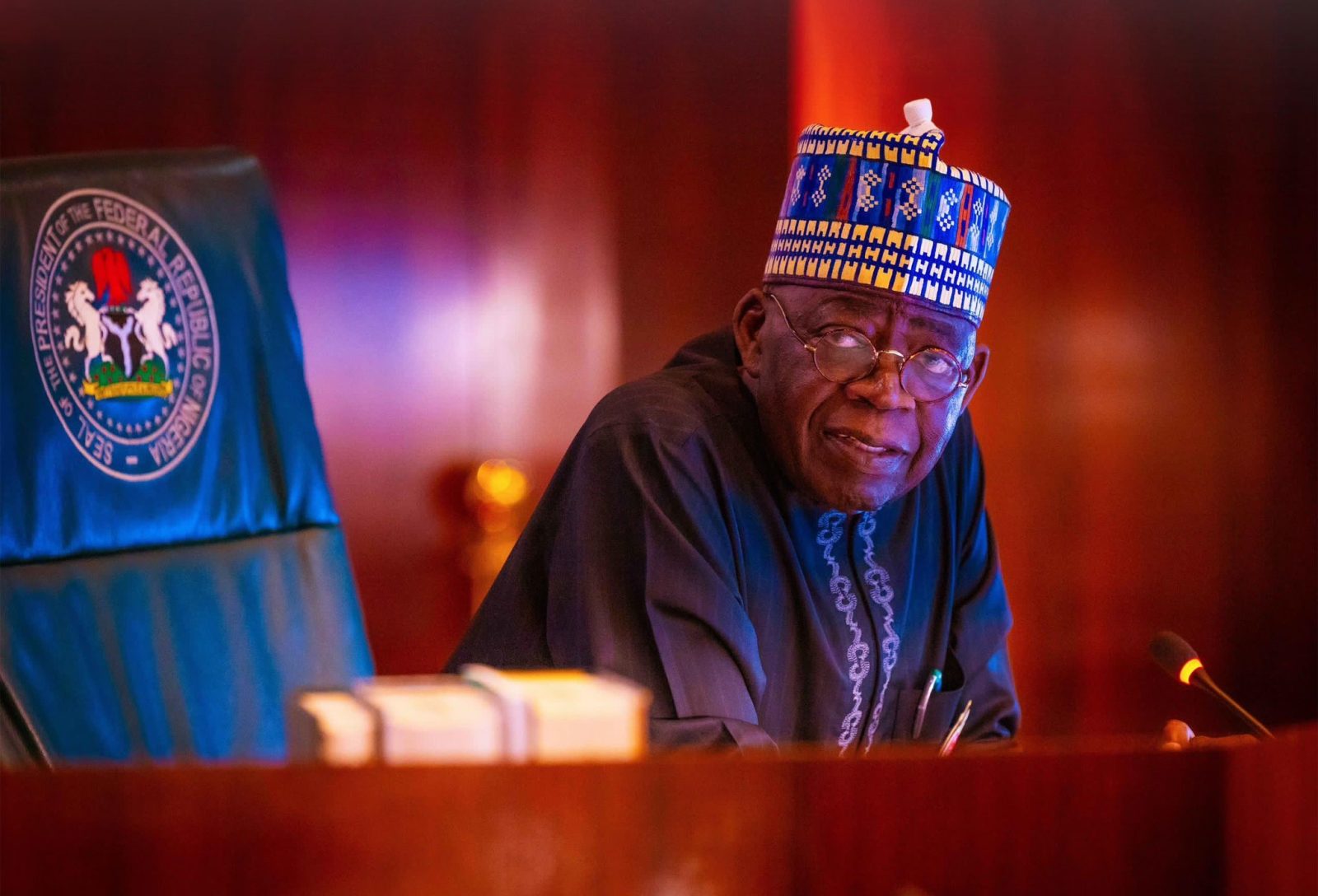
President Bola Tinubu on Wednesday welcomed Nigeria’s removal from the Financial Action Task Force “grey list.”

This came as the FATF announced the delisting at its Plenary in Paris, France, on Friday.

He described the move as a major milestone in the country’s ongoing economic and institutional reforms.

“This is not just a technical accomplishment. It is a strategic victory for our economy and a renewed vote of confidence in Nigeria’s financial governance,” a statement by Tinubu’s Special Adviser on Information and Strategy, Bayo Onanuga, quoted the president as saying.

The FATF is the world’s foremost standard-setting body for combating money laundering, terrorist financing, and proliferation financing.

The announcement formally removed Nigeria from the list of jurisdictions under increased monitoring, commonly referred to as the “grey list”.

Tinubu said the delisting is evidence of the country’s commitment to global financial transparency and institutional integrity.

Nigeria was placed on the FATF grey list in February 2023, following concerns over weak enforcement, poor inter-agency coordination, and opaque financial practices.

“Rather than treat this as a setback, Nigeria viewed it as a call to action,” Onanuga stated.

Under the President’s directive and in alignment with his broader economic transformation agenda, Nigeria completed the FATF Action Plan through sweeping legal, institutional, and operational reforms.

The process was coordinated by the Nigerian Financial Intelligence Unit in conjunction with the Office of the Attorney-General, the Ministries of Finance, Justice, Interior, and other key institutions.

The President specifically praised the Director/CEO of the NFIU, Ms. Hafsat Bakari, and her team for what he called “diligent and timely implementation” of Nigeria’s commitments, saying their work earned international recognition for progress in tackling serious financial crimes.

See also  Elon Musk could be the world’s first trillionaire in weeks

President Tinubu credited the delisting to wide-ranging collaboration across the federal executive, legislature, judiciary, and private sector.

Among those acknowledged were the Central Bank of Nigeria, Corporate Affairs Commission, EFCC, ICPC, DSS, Nigeria Customs Service, Securities and Exchange Commission, and the National Drug Law Enforcement Agency.

“President Tinubu applauded the vital support from the Secretary to the Government of the Federation, the Minister of Aviation, the Minister for Budget and Economic Planning, the Minister for Defence, the Minister for Foreign Affairs, the Minister for Solid Minerals, the Minister of State for Finance, the National Security Adviser as well as the leadership of the National Assembly and the Judiciary, in the attainment of the laudable achievement,” the statement read.

“Without their dedication and sacrifice, today’s success could not have been achieved.

“I thank them for their efforts and urged other stakeholders to emulate their standards”, President Tinubu said.

He also commended Nigeria’s development partners, particularly the governments of France, Germany, the United Kingdom, the United States, the United Nations, and the European Commission for their technical support throughout the reform process.

According to President Tinubu, Nigeria’s removal from the FATF grey list is “not just a technical accomplishment, it is a strategic victory for our economy and a renewed vote of confidence in Nigeria’s financial governance.

“The exit from the FATF grey list marks the beginning of a new chapter in the nation’s financial reform agenda as Nigeria will sustain the already institutionalised reforms, deepen institutional collaboration and continue to build a financial system that Nigerians and the world can trust,” he stated.


Continue Reading
Click to comment

Leave a Reply

Your email address will not be published. Required fields are marked *

Business

NNPC remits N7.9tn to Federation Account in seven months

Published

on

The Nigerian National Petroleum Company Limited remitted N7.91tn to the Federation Account between January and July 2026, even as its crude oil and condensate production fell to 1.68 million barrels per day in July.

The figures were contained in the NNPC’s July 2026 operational and financial performance report released on Wednesday.

The company said it recorded N3.09tn in revenue and N279bn in profit after tax during the period under review.

However, crude oil and condensate production declined from 1.73 million barrels per day in May to 1.72 million barrels per day in June and further to 1.68 million barrels per day in July.

NNPC attributed the July decline to operational disruptions across several assets.

“July crude oil production was affected by a combination of operational disruptions across several assets, including facility outages, equipment unavailability, pipeline incidents, and production constraints,” the company stated.

The decline in output also reflected lower crude oil and condensate sales, which stood at 22.53 million barrels in July, comprising 21.53 million barrels of crude and one million barrels of condensate, compared with 28.23 million barrels in June.

The company said it was implementing measures to reverse the decline and improve production.

“Production improvement efforts will focus on sustaining high facility uptime through effective preventive maintenance programmes and minimizing unplanned downtime,” NNPC stated.
It said the measures would include optimising export operations at FEPL and Nembe EP, developing incremental production opportunities and strengthening operational reliability across key facilities.

“Additional measures include the activation of tandem offloading operations at Akpo and Erha to enhance export flexibility and the restoration of barging operations at Obodo to improve production evacuation and sustain output,” the company added.

See also  Dangote official revealed that Nigeria’s petrol, diesel are subsidised

On gas infrastructure, NNPC reported 100 per cent availability of its upstream pipeline network.

It also said pre-commissioning activities had been completed on the River Niger Crossing section of the Obiafu-Obrikom-Oben gas pipeline, with first gas initially targeted for August 2026.

For the Ajaokuta-Kaduna-Kano gas pipeline, NNPC said construction and installation works were at an advanced stage to facilitate early gas delivery to Abuja in 2026.

The company put AKK pipeline availability at 95 per cent, while NNPC Retail’s petrol stations recorded 52 per cent availability, with distribution varying across regions.

NNPC also disclosed that natural gas production stood at 7.49 billion standard cubic feet per day, while gas sales were 4.6bscf/d.

The company cautioned that the reported figures remained subject to reconciliation.

“All production, sales and financial figures are provisional and subject to reconciliation with relevant stakeholders,” it stated.

Source: punchng.com

FOLLOW US ON:

FACEBOOK

TWITTER

PINTEREST

TIKTOK

YOUTUBE

LINKEDIN

INSTAGRAM

Continue Reading

Business

Manufacturers invest N6.8tn as weak customer demand bites

Published

on

Investors pumped about N6.8tn into Nigeria’s manufacturing sector over the past decade, but the increase in capital coincided with an erosion in consumers’ purchasing power, limiting demand for locally produced goods.

Exclusive data obtained from the Manufacturers Association of Nigeria showed that annual manufacturing investment rose from N489.6bn in 2015 to N1.33tn in 2025, reflecting increased capital commitments to the sector despite a challenging operating environment.

The data showed that investors put N489.44bn into manufacturing in 2016, N508.98bn in 2017, N552.64bn in 2018 and N496.11bn in 2019. Investment dropped dramatically to N118.52bn in 2020 as the COVID-19 pandemic disrupted economic activities, supply chains and business operations. The sector recovered to N217.22bn in 2021 before rising to N427.18bn in 2022.

The recovery gathered pace in 2023, with manufacturing investment climbing to N658.81bn as economic activities strengthened. By 2025, annual investment had more than doubled from the 2023 level to N1.33tn.

However, the increase in investment has not translated into a corresponding expansion in consumer demand, as high inflation, currency depreciation and rising production costs have squeezed household incomes.

Inflation rose from 13.22 per cent in 2020 to 28.92 per cent in 2023 following the removal of the petrol subsidy and foreign exchange reforms. Headline inflation subsequently reached a 28-year high of 34.19 per cent in June 2024 and remained above 30 per cent for much of the year before easing to 15.15 per cent by December 2025.

Despite the decline in inflation, manufacturers continued to face weak consumer demand and elevated operating costs. Manufacturers’ inventory increased to N1.07tn in the second half of 2025 from N1.04tn in the first half, suggesting that businesses continued to contend with the challenge of converting production into sales.

See also  Tinubu shifts 15% fuel import duty to Q1 2026

Inventory in manufacturing represents finished goods, raw materials and other items held by companies for production or future sales.

The Chief Executive Officer of the Centre for the Promotion of Private Enterprise, Muda Yusuf, said Nigeria’s industrialisation drive remained critical to economic transformation but warned that the country had yet to achieve the level of industrial development required to significantly reduce its dependence on primary commodities and imports.

“Industrialisation is the engine room of economic transformation. It creates quality jobs, deepens value addition, strengthens export competitiveness and reduces vulnerability to external shocks,” Yusuf said.
He, however, noted that Nigeria had delivered only modest industrial outcomes despite years of investment.

Although the N6.8tn invested in Nigerian manufacturing over 10 years appears substantial in naira terms, currency depreciation significantly reduces its value when measured in dollars.

The total investment is equivalent to roughly $5.2bn at the current exchange rate, highlighting the relatively small scale of capital formation in Nigeria’s manufacturing sector compared with larger industrial economies.

For instance, South African manufacturers recorded about $59.3bn in capital formation in 2025 alone, according to data from the South African Reserve Bank.

Rising costs

More than 100 manufacturing companies have shut down over the past decade, with firms such as Surest Foam Limited, Mufex, Framan Industries, MZM Continental, Nipol Industries, Moak Industries and Stone Industries among those that have ceased operations.

Manufacturers have blamed a combination of unreliable electricity, limited access to credit, poor infrastructure, weak consumer demand, high production costs and frequent policy changes. For some investors, energy costs have proved particularly damaging.

The General Manager of Louis Carter Industries, a plastics manufacturing company that has since become moribund, Ndubuisi Okoli, said inadequate electricity supply contributed significantly to the company’s collapse.

See also  FG cancels $717m World Bank power loan amid blackouts; read details

“The Enugu Electricity Distribution Company was not providing us with adequate power. That was our major reason for going under,” he said.

Similarly, the Chief Executive Officer of Moak Enterprises, Olatunde Akintunde, said the high raw material costs contributed to the closure of his bottled-water business in 2021. According to him, the cost of raw materials increased fourfold, pushing production costs beyond sustainable levels.

“It was difficult for us because the cost of our raw materials increased fourfold, leading to high cost of production. The business was no longer sustainable, so we had to go,” Akintunde said.

Credit squeeze

Despite improvements in the foreign exchange market following reforms by the Central Bank of Nigeria, manufacturers continue to grapple with other structural constraints.

MAN data showed that manufacturers’ bank loans fell by 23 per cent to N6.6tn in 2025, limiting access to the long-term financing required to expand productive capacity.

At the same time, manufacturers spent N1.34tn on alternative electricity in 2025, up from N1.1tn a year earlier.

The Director-General of MAN, Segun Ajayi-Kadir, also identified taxation as an emerging concern for manufacturers, particularly following the implementation of four new tax laws from January 2026.

He said the reforms had intensified discussions between the government and private sector over whether taxation should support productivity or add to the burden on businesses.

Ajayi-Kadir had previously highlighted high energy costs, poor access to credit and infrastructure deficiencies as major constraints on manufacturing.

What investors need

Yusuf said Nigeria must move beyond attracting capital into manufacturing and create conditions that allow investors to operate profitably and competitively.

See also  NCAA suspends no-pay, no-service airline enforcement order

He called for power sector reforms capable of delivering reliable and affordable electricity, alongside faster investment in rail infrastructure to reduce logistics costs.

He also urged the government to strengthen development finance institutions so they can provide long-term industrial financing at concessionary rates.

According to him, government procurement should give greater priority to locally manufactured goods, while executive orders on local content should be backed by enforceable measures.

He further called for urgent action on insecurity, warning that attacks and disruptions were limiting access to raw materials, restricting market expansion and undermining investors’ confidence across manufacturing value chains.

Source: punchng.com

FOLLOW US ON:

FACEBOOK

TWITTER

PINTEREST

TIKTOK

YOUTUBE

LINKEDIN

INSTAGRAM

Continue Reading

Business

NLC rejects petrol price hike, demands more crude for refineries

Published

on

The Nigeria Labour Congress has condemned the latest increase in the price of Premium Motor Spirit, popularly known as petrol, describing it as “avoidable and unacceptable” and questioning why the Federal Government has not done more to ensure that the Dangote Petroleum Refinery gets adequate supplies of Nigerian crude.

The acting General Secretary of the NLC, Benson Upah, stated this in an interview with our correspondent on Tuesday, while reacting to the latest increase in petrol prices.

Upah warned that the development would further compound the economic difficulties confronting ordinary Nigerians, particularly workers and low-income households already struggling with high transportation, food and other living costs.

He said, “This adds to the increasing difficulties of the average Nigerian for whom life has been Hobbesian.”

The labour leader argued that the latest increase was difficult to justify, particularly against the backdrop of developments in the international oil market and Nigeria’s growing domestic refining capacity.

According to him, “The latest increase is avoidable and unacceptable in light of falling prices in the international market and our local capacity to sell more crude oil to Dangote. Why are we not doing so?”

The NLC’s reaction came against the backdrop of another increase in the price of petrol by the Dangote Petroleum Refinery, which has triggered fresh concerns among motorists, transport operators and businesses already grappling with high operating costs.

The refinery raised its petrol gantry price by N65 per litre on Saturday, moving it from N1,200 to N1,265 per litre. The latest adjustment came only three days after the company increased the price from N1,185 to N1,200 per litre.

It was the third price adjustment by the refinery in eight days. On August 21, the company had raised its gantry price from N1,165 to N1,185 per litre. In all, the three adjustments have added N100 to the price of petrol at the refinery’s gantry, representing an 8.6 per cent increase within just eight days.

See also  Elon Musk could be the world’s first trillionaire in weeks

The latest increase has since begun to reverberate across the downstream market, with petrol prices varying from one location to another as marketers factor in transportation, logistics and other distribution costs.

In some parts of Lagos and Ogun, petrol has been reported at about N1,310 per litre, while prices in some northern states and areas farther from the refinery have climbed to N1,350 and above. In some locations, the product is approaching N1,400 per litre.

The renewed price increase is coming at a particularly sensitive time for Nigerians, many of whom are still struggling with the impact of the removal of the petrol subsidy in 2023.

The subsidy removal fundamentally altered the petroleum pricing regime, exposing consumers to movements in crude oil prices, foreign exchange rates and other market costs. Petrol prices, which were previously heavily regulated by the government, have since undergone several increases, with each adjustment feeding into the cost of transportation and other essential goods and services.

The latest development has also revived an old but unresolved question in Nigeria’s petroleum sector: why does a crude-producing country with a major new refinery still face persistent pressure on petrol prices?

The question has become more prominent with the emergence of the Dangote refinery, which has a capacity to process about 650,000 barrels of crude oil daily and was expected to reduce Nigeria’s dependence on imported refined petroleum products.

But while the refinery has ramped up production, securing adequate quantities of Nigerian crude has remained a contentious issue.

Reuters reported recently that between 30 and 40 per cent of the crude processed by the Dangote refinery is imported, despite Nigeria being a major crude oil producer. The refinery has continued to push for greater access to domestic crude at competitive prices as it seeks to increase production. The crude supply challenge has also been reflected in official industry data.

See also  FG, states target cheaper transport fares with CNG bus rollout

Figures from the Nigerian Upstream Petroleum Regulatory Commission showed that oil producers offered 68.1 million barrels of crude to Dangote Refinery in the second quarter of 2026, against the refinery’s requirement of 63 million barrels. However, the refinery accepted 52.6 million barrels, meaning that the volume actually taken was below both the amount offered and the refinery’s stated requirement.

The figures highlight the complexity of the domestic crude supply debate, with the issue extending beyond the quantity of crude produced to questions around pricing, commercial terms, quality, transportation and delivery arrangements.

The Federal Government and petroleum regulators have consequently been under pressure to reform the framework governing the supply of crude to domestic refineries.

The debate is particularly important because the promise of domestic refining was not simply to change where petrol is produced, but to create a more resilient petroleum market in which Nigeria’s crude resources can be converted into refined products locally, reducing exposure to international supply shocks and pressure on foreign exchange.

For consumers, however, the benefits of that transition remain difficult to feel when petrol prices continue to rise.

The latest increase comes despite the fact that Nigeria’s crude oil production has also been improving. Official figures showed that the country’s crude production averaged 1.72 million barrels per day in the second quarter of 2026, compared with 1.55 million barrels per day in the first quarter.

The paradox is therefore becoming increasingly difficult to ignore: Nigeria is producing more crude, has a refinery capable of processing 650,000 barrels daily, and has substantially reduced its dependence on imported petrol, yet consumers remain vulnerable to sharp increases in the price of the commodity.

For households, the consequences go far beyond the filling station. Petrol is a major component of Nigeria’s transportation and distribution system. Higher petrol prices raise the cost of commuting, increase the expense of transporting agricultural produce and manufactured goods, and push up the operating costs of businesses that depend on petrol-powered generators.

See also  We’re Ready For Nigeria-Ghana Flight — United Nigeria Airlines

The resulting increases are often passed on to consumers through higher prices for food, transport and other essential goods. This has made every petrol price adjustment a matter of wider economic concern, particularly for workers whose incomes have struggled to keep pace with the cost of living.

It is against this background that the NLC has questioned the rationale for the latest increase and challenged the government to ensure that Nigeria’s crude resources are better deployed to support domestic refining.

Upah’s intervention also places the spotlight on the government’s responsibility to ensure that the benefits of increased crude production and expanded domestic refining capacity are not confined to refiners and other players in the petroleum industry but extend to ordinary Nigerians.

While market forces remain important in determining petrol prices under the post-subsidy regime, labour is insisting that the government can still influence some of the structural factors driving costs, particularly crude supply arrangements, refinery utilisation and domestic energy policy.

For the NLC, the latest increase is therefore not just another adjustment in the price of petrol. It is a fresh test of whether Nigeria’s petroleum reforms are delivering the economic relief and energy security that Nigerians were promised.

And as motorists and businesses brace for the impact of the latest increase, the labour movement is demanding an answer to a fundamental question: if Nigeria has the crude and the refining capacity, why are Nigerians still paying increasingly higher prices for petrol?

Source: punchng.com

FOLLOW US ON:

FACEBOOK

TWITTER

PINTEREST

TIKTOK

YOUTUBE

LINKEDIN

INSTAGRAM

Continue Reading

Trending