Connect with us

Lifestyle

St. Anne’s School, Ibadan: The First Girls’ Secondary School in Nigeria

Published

on

A legacy of education, empowerment, and excellence in shaping Nigeria’s first generation of female leaders.

Historical Background

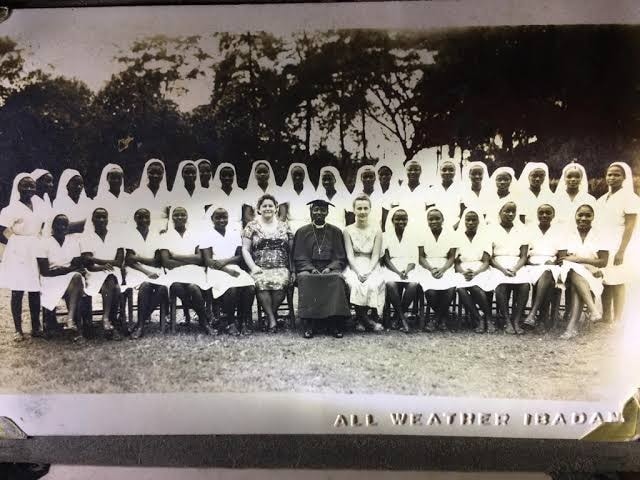
St. Anne’s School, Ibadan, stands as one of Nigeria’s most enduring symbols of female education and empowerment. Its foundation is deeply rooted in the Christian missionary movement of the 19th century, particularly the efforts of the Church Missionary Society (CMS).

The school as it exists today was born in 1950, following the merger of two pioneering institutions — CMS Girls’ Seminary, Lagos (1869) and Kudeti Girls’ School, Ibadan (1899). This unification created the first secondary school in Nigeria established exclusively for the education of girls, marking a transformative chapter in Nigeria’s educational history.

Origins: CMS Girls’ Seminary, Lagos (Founded 1869)

The CMS Girls’ Seminary was established in 1869 by the Anglican Church Missionary Society in Lagos. It was Nigeria’s first school to provide formal secondary education for girls, a revolutionary concept at the time when Western education was largely reserved for boys.

The seminary’s mission was clear — to train Christian girls as teachers, mothers, and community leaders. The curriculum balanced religious instruction with academic and domestic education, preparing young women to contribute meaningfully to society.

Many of its early students were daughters of freed slaves and early Christian converts, reflecting the CMS’s commitment to social reform and moral education.

Expansion: Kudeti Girls’ School, Ibadan (Founded 1899)

By the late 19th century, the need for similar institutions outside Lagos led to the establishment of Kudeti Girls’ School in Ibadan in 1899. The school was founded by Anglican missionaries who recognised Ibadan’s growing importance as a major Yoruba city and an educational hub.

See also  Malcolm X’s Visit to Nigeria: The Homecoming of “Omowale”

Kudeti Girls’ School continued the CMS tradition of offering sound academic and moral training, nurturing young women who would later become teachers, nurses, and administrators during the colonial period.

The 1950 Merger: Birth of St. Anne’s School, Ibadan

In 1950, the Anglican Church decided to merge the two schools — CMS Girls’ Seminary, Lagos, and Kudeti Girls’ School, Ibadan — into one unified institution. The new school was named St. Anne’s School, Ibadan, and it was located on the Kudeti site.

The merger symbolised the Anglican mission’s dedication to consolidating female education under a single, well-equipped institution. St. Anne’s quickly gained a reputation for academic excellence, discipline, and moral integrity, producing graduates who went on to break barriers in various fields.

Academic Excellence and Alumni Achievements

St. Anne’s School became a leading light in West African education. Its alumnae include some of Nigeria’s first female pioneers in various professions:

Nigeria’s first female science graduate

Nigeria’s first female Chief Judge of Lagos State

Nigeria’s first female novelist

These remarkable achievements underscore the school’s vision — to raise women who are both intellectually and morally upright. The institution’s rigorous academic curriculum, combined with a focus on leadership and social responsibility, continues to distinguish its students.

Cultural and Religious Influence

Beyond academics, St. Anne’s School has played a central role in promoting moral and spiritual education. Rooted in the Anglican ethos, the school emphasises Christian values, discipline, and community service. Over the decades, it has hosted generations of students who have upheld these principles, contributing to Nigeria’s socio-cultural and religious landscape.

See also  PHOTOS: The Food Can’t Waste, Come With Your Coolers – Hilda Baci Begs Lagosians To Eat Jollof Rice After Breaking Record

Present Day and Legacy

Today, St. Anne’s School, Ibadan, remains one of Nigeria’s most prestigious girls’ schools. It continues to operate under the Anglican Church’s supervision and maintains strong alumni associations both locally and internationally.

The school’s historic architecture, serene environment, and consistent academic record serve as living testaments to its enduring mission — educating women for service, leadership, and faith.

As Nigeria advances in education and gender equality, St. Anne’s School stands as a proud reminder of the country’s earliest efforts to empower women through learning.

References

1. St. Anne’s School, Ibadan – Official School Records and Alumni Association Archives

2. Oduyoye, Modupe. The Church Missionary Society and the Development of Female Education in Nigeria (1869–1950), Ibadan University Press, 1988.

3. Ajayi, J. F. Ade. Christian Missions in Nigeria 1841–1891: The Making of a New Elite, Longman, 1965.

FOLLOW US ON:

FACEBOOK

TWITTER

PINTEREST

TIKTOK

YOUTUBE

LINKEDIN

TUMBLR

INSTAGRAM

Continue Reading
Click to comment

Leave a Reply

Your email address will not be published. Required fields are marked *

Lifestyle

‘I have cancer,’ Nollywood actress Cynthia Anijekwu cries, calls for support

Published

on

Nollywood actress Cynthia Anijekwu has made an emotional appeal to Nigerians for financial assistance after revealing that she is battling cancer for the second time.

In a video circulating on social media on Tuesday, the actress disclosed that she was first diagnosed with cancer in 2023, when she underwent surgery followed by chemotherapy in a bid to halt the disease.

She maintained that doctors initially managed the condition after the treatment, but the cancer later returned and has since spread to her bones, requiring more intensive care, including radiation therapy and another surgery.

According to Anijekwu, recent medical examinations revealed that the cancer has spread to her bones, significantly increasing the cost and complexity of her treatment up to N600,000 every month.

The actress said doctors have recommended radiation therapy and another surgery as part of her ongoing care.

“I have cancer in 2023 (sic). I did my surgery and took chemotherapy, but later it came back again. I’ve been in and out of the hospital. The doctor recently told me it has reached my bones, and the treatment is now much more expensive,” she said.

“I need to live. I need to survive. I’m asking Nigerians to please help me. Anyone that can help, please, I need help. Even my hands have swollen. The cancer has affected both breasts. I need to live. Please help me. I need to survive.

“Your one naira, your two naira can add up to something reasonable for me to get the proper treatment for this cancer. I’m begging you, please help me,” she pleaded.

See also  Sir Mobolaji Bank-Anthony: Nigeria’s Pioneer Industrialist and Philanthropist (PHOTOS)

Before her health challenge became public, Anijekwu built her career in Nollywood, featuring in several English- and Igbo-language productions.

However, there is no publicly verifiable record identifying a major blockbuster film or comprehensive filmography associated with the actress, as public attention has largely shifted to her battle with cancer in recent years.

The actress said the financial burden has become overwhelming for her family, prompting her to seek help from members of the public.

punch.ng

FOLLOW US ON:

FACEBOOK

TWITTER

PINTEREST

TIKTOK

YOUTUBE

LINKEDIN

Continue Reading

Lifestyle

It’s not easy, surrogate mother shares emotional journey

Published

on

A masked Nigerian surrogate mother has opened up about how financial hardship and what she described as an irresponsible partner led her to become a surrogate, saying the decision came after the loss of her second child.

The woman disclosed this during a new episode on Cruise TV published on YouTube on Sunday, where she recounted the emotional, financial and psychological realities of carrying children for other families.

She said becoming a surrogate was one of the hardest decisions she had ever made, describing the emotional attachment that develops during pregnancy despite knowing the child does not belong to her.

“Emotionally it’s not easy. Even when I started the journey, when the pregnancy was three months, I called my nurse that I don’t think I can cope again because it’s not easy to carry what is not yours.

“When you start having the emotional attachment, you keep reminding yourself that this is not mine. I tell myself it is a job, and that helps me cope, but the emotions still come and go.”

The woman explained that she became a gestational surrogate through IVF, meaning she had no biological connection to the babies she carried.

Speaking on what pushed her into surrogacy, she said her partner failed to provide for the family despite her efforts to support them.

“I had my first child. Unfortunately, my husband is not the person that is hardworking and he doesn’t take responsibility. I do work. There is no work I cannot do.

“When I became pregnant the second time, I could no longer work. We couldn’t even afford hospital bills.”

See also  BIOGRAPHY OF LERE OLAYINKA

She said complications during the pregnancy eventually led to the death of the baby, an experience that changed her outlook.

“That baby died, and that was the reason I made that decision. Instead of giving him another baby, I would rather help people who have the money to take care of me.

“If you don’t have the money to care for my health, I won’t do it for you.”

She disclosed that she initially declined financial compensation beyond medical care, accommodation and allowances, a decision she now regrets.

“I told them I didn’t want any compensation aside from the process, monthly allowance, wardrobe allowance and accommodation fee, but that was a mistake.

“I won’t do it again,” she said.

The surrogate mother also said she would not encourage her daughter to follow the same path because of the emotional and health risks involved.

“I cannot advise my daughter to be a surrogate.”

She added that she relocated during one of her pregnancies to avoid stigma and often told people the baby had died whenever they asked questions.

According to her, surrogate mothers also face psychological challenges after delivery despite undergoing counselling before and after childbirth.

While acknowledging that surrogacy has helped many couples struggling with infertility, she maintained that the process is far more demanding than many people realise.

“Surrogacy is not as simple as people think.”

She called for stronger regulation of the practice to protect surrogate mothers from exploitation and ensure adequate emotional and financial support.

punch.ng

FOLLOW US ON:

FACEBOOK

TWITTER

PINTEREST

TIKTOK

YOUTUBE

LINKEDIN

Continue Reading

Lifestyle

I waited 18 years before welcoming twins – Nollywood star Ricardo Agbor

Published

on

Veteran Nollywood actor, Ricardo Agbor, has opened up about his 18-year journey to parenthood, revealing that he and his wife waited nearly two decades before welcoming their twins.

The actor disclosed this during an interview with AfricanAList published on Sunday, where he reflected on his marriage, faith and the challenges he faced before becoming a father.

Agbor said he remained committed to his wife throughout the period, despite the long wait for children.

“I wanted to get married to a particular lady; I married her regardless of where she is from. She is not from my tribe. So ordinarily, we were supposed to have strife; no, it was very fair,” he said.

Speaking about the couple’s struggle with childlessness, the actor said he specifically prayed for twins and refused to give up despite waiting for 18 years.

“It took 18 years for me to have the twins. And I waited. God knows, 18 years and they are 14 now, so I told God I wanted twins.

“So while that wait was on, if it were someone else, he would cross. But at the end of the day, I have twins. I have a boy and a girl. I asked God what I wanted,” he added.

Agbor also recounted what he described as the most painful experience of his life — the death of his mother.

According to him, she had been receiving treatment for about three weeks without any improvement before doctors advised that she should be flown to South Africa for further medical care.

The actor said his mother requested to be moved to another private hospital in Surulere, but she died in his arms while he was helping her into the car.

See also  Malcolm X’s Visit to Nigeria: The Homecoming of “Omowale”

“My mom died right in my arms. At the hospital, they were bringing almost 10 doctors to do tests… the sickness was not improving after almost three weeks.

“It was after three weeks that they told me to come and carry my mom and take her to South Africa. I took my mom away and took her to another private hospital within Surulere. It was my mom that told me to take her away from that place. As I was carrying her into the car, she gave up,” he said.

Agbor said the loss left him devastated, noting that it was the first time he had cried outside acting.

“I think that was the first time I cried in my life. I don’t cry. If I cry, maybe it is in a movie and it is a role. So I cried. It was painful,” he added.

punch.ng

FOLLOW US ON:

FACEBOOK

TWITTER

PINTEREST

TIKTOK

YOUTUBE

LINKEDIN

Continue Reading

Trending