Lifestyle
St. Anne’s School, Ibadan: The First Girls’ Secondary School in Nigeria

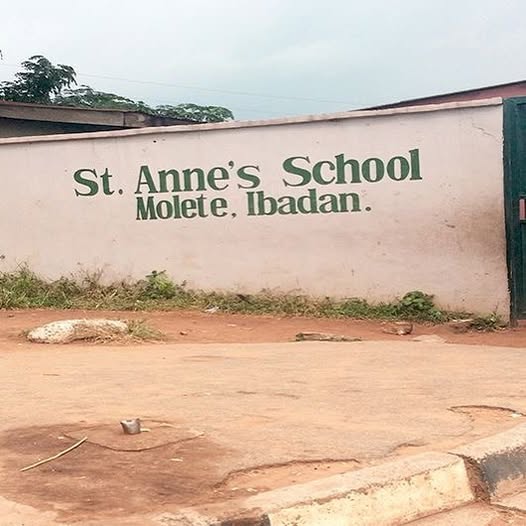
A legacy of education, empowerment, and excellence in shaping Nigeria’s first generation of female leaders.
Historical Background
St. Anne’s School, Ibadan, stands as one of Nigeria’s most enduring symbols of female education and empowerment. Its foundation is deeply rooted in the Christian missionary movement of the 19th century, particularly the efforts of the Church Missionary Society (CMS).
The school as it exists today was born in 1950, following the merger of two pioneering institutions — CMS Girls’ Seminary, Lagos (1869) and Kudeti Girls’ School, Ibadan (1899). This unification created the first secondary school in Nigeria established exclusively for the education of girls, marking a transformative chapter in Nigeria’s educational history.
Origins: CMS Girls’ Seminary, Lagos (Founded 1869)
The CMS Girls’ Seminary was established in 1869 by the Anglican Church Missionary Society in Lagos. It was Nigeria’s first school to provide formal secondary education for girls, a revolutionary concept at the time when Western education was largely reserved for boys.
The seminary’s mission was clear — to train Christian girls as teachers, mothers, and community leaders. The curriculum balanced religious instruction with academic and domestic education, preparing young women to contribute meaningfully to society.
Many of its early students were daughters of freed slaves and early Christian converts, reflecting the CMS’s commitment to social reform and moral education.
Expansion: Kudeti Girls’ School, Ibadan (Founded 1899)
By the late 19th century, the need for similar institutions outside Lagos led to the establishment of Kudeti Girls’ School in Ibadan in 1899. The school was founded by Anglican missionaries who recognised Ibadan’s growing importance as a major Yoruba city and an educational hub.
Kudeti Girls’ School continued the CMS tradition of offering sound academic and moral training, nurturing young women who would later become teachers, nurses, and administrators during the colonial period.
The 1950 Merger: Birth of St. Anne’s School, Ibadan
In 1950, the Anglican Church decided to merge the two schools — CMS Girls’ Seminary, Lagos, and Kudeti Girls’ School, Ibadan — into one unified institution. The new school was named St. Anne’s School, Ibadan, and it was located on the Kudeti site.
The merger symbolised the Anglican mission’s dedication to consolidating female education under a single, well-equipped institution. St. Anne’s quickly gained a reputation for academic excellence, discipline, and moral integrity, producing graduates who went on to break barriers in various fields.
Academic Excellence and Alumni Achievements
St. Anne’s School became a leading light in West African education. Its alumnae include some of Nigeria’s first female pioneers in various professions:
Nigeria’s first female science graduate
Nigeria’s first female Chief Judge of Lagos State
Nigeria’s first female novelist
These remarkable achievements underscore the school’s vision — to raise women who are both intellectually and morally upright. The institution’s rigorous academic curriculum, combined with a focus on leadership and social responsibility, continues to distinguish its students.
Cultural and Religious Influence
Beyond academics, St. Anne’s School has played a central role in promoting moral and spiritual education. Rooted in the Anglican ethos, the school emphasises Christian values, discipline, and community service. Over the decades, it has hosted generations of students who have upheld these principles, contributing to Nigeria’s socio-cultural and religious landscape.
Present Day and Legacy
Today, St. Anne’s School, Ibadan, remains one of Nigeria’s most prestigious girls’ schools. It continues to operate under the Anglican Church’s supervision and maintains strong alumni associations both locally and internationally.
The school’s historic architecture, serene environment, and consistent academic record serve as living testaments to its enduring mission — educating women for service, leadership, and faith.
As Nigeria advances in education and gender equality, St. Anne’s School stands as a proud reminder of the country’s earliest efforts to empower women through learning.
References
1. St. Anne’s School, Ibadan – Official School Records and Alumni Association Archives
2. Oduyoye, Modupe. The Church Missionary Society and the Development of Female Education in Nigeria (1869–1950), Ibadan University Press, 1988.
3. Ajayi, J. F. Ade. Christian Missions in Nigeria 1841–1891: The Making of a New Elite, Longman, 1965.


FOLLOW US ON:






ARE SOME PARENTS CHOOSING MONEY OVER THEIR OWN CHILDREN?

A WORD OF WARNING: NEVER LET YOUR SUCCESS MAKE YOU LOOK DOWN ON PEOPLE.

BEING EDUCATED SHOULD NEVER MAKE YOU LOOK DOWN ON AN UNEDUCATED PERSON.

‘Sleeping Prince’ of Saudi Arabia dies after 20 years in coma

2027: Atiku delays ADC membership card collection amid rumoured Jonathan comeback

How A Class Of 24 Students Produced 2 Presidents, 4 Governors, 2 Ministers, 4 Emirs, 3 Justices, 4 Ambassadors and Other Influential Leaders


-

 Politics13 hours ago
I’ll never abuse Tinubu, he has my respect – Peter Obi
-
News12 hours ago
Court rejects suit seeking fresh police investigation into late singer Mohbad’s death
-
Crime12 hours ago
PHOTOS: Police arrest suspect over de@th of Delta Education Director; launch manhunt for fleeing suspects
-
Lifestyle24 hours ago
Many Parents Nowadays Are Failing to Give Their Children Proper Home Training — Why?
-
Politics11 hours ago
PHOTOS: Full List Of Children Of Ex-Presidents, Govs, Lawmaker Seeking NASS Seat
-
Politics10 hours ago
Tinubu Makes Demands From Nigerians Over 2027 Election
-
News12 hours ago
VIDEO: Police identify officer in viral video saying Obi can never be President
-
Crime12 hours ago
PHOTOS: Police arrest suspected child trafficker, rescue two-month-old baby in Niger State