Connect with us

Business

Only 44% of social benefits reach poor Nigerians – World Bank

Published

on

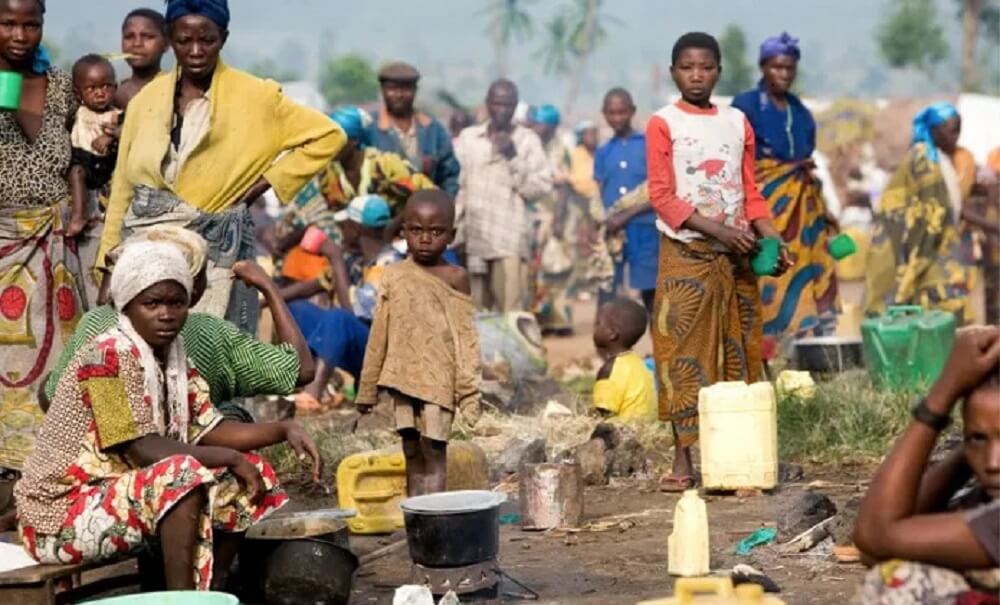
Despite billions of naira spent yearly to cushion hardship, a new World Bank report says Nigeria’s social safety-net programmes are failing to reach those who need them the most.

In the new report titled “The State of Social Safety Nets in Nigeria”, obtained on Tuesday, the bank revealed that only 44 per cent of total benefits from government-funded safety-net schemes actually reach poor Nigerians.

The November 2025 report examines Nigeria’s spending on social safety nets, assessing their coverage and efficiency, and reveals how poor targeting, weak funding, and fragmented implementation have left millions of vulnerable citizens without meaningful relief despite the government’s lofty poverty-reduction promises.

Recently, the Minister of Finance and Coordinating Minister of the Economy, Wale Edun, announced that the federal government is targeting 15 million households, covering some 70 million people via the digital cash-grant scheme.

He disclosed that about 8.5 million households have already received at least one tranche of the N25,000 payment, while the remaining 6.5 million households are expected to be paid before year-end.

Despite this, the World Bank described Nigeria’s social safety-net spending as inefficient, saying a smaller portion of benefits goes to the poor despite their dominance among beneficiaries.

According to the bank, while about 56 per cent of the recipients of safety-net programmes are poor, they receive only 44 per cent of the total benefits. It explained that this imbalance stems from the way most programmes, including the National Social Safety Nets Programme, allocate a fixed amount per household rather than per person.

As a result, poor families, often larger in size, end up sharing limited benefits among more members. The report noted that initiatives such as the National Home-Grown School Feeding Programme, which focus on individuals rather than households, are less affected by this problem.

However, it added that the school feeding scheme currently targets only pupils in grades one to three and lacks full national coverage, restricting the number of children who can benefit.

See also  FCCPC probes fare fixing by local airlines

“Safety nets expenditure is inefficient, with a smaller share of benefits going to the poor. While 56 per cent of the beneficiaries are poor, only 44 per cent of the total safety net benefits go to the poor. For each programme category, the share of benefits going to the poor is lower than the share of beneficiaries who are poor. This inefficiency arises because benefit levels for most programmes, including the NASSP cash transfer programme, are determined at the household level, but poor people tend to live in larger households.

“That is, even for well-targeted programs, the same benefit amount is divided over a larger number of people living in poorer households. Programs such as the NHGSFP, which target individuals and not households, should be less affected by these issues. But NHGSFP only benefits children in grades 1 to 3, and does not yet have full coverage, which limits the number of children per household that can benefit from the program,” the report declared.

According to the bank, Nigeria spends barely 0.14 per cent of its Gross Domestic Product on social protection, far below the global average of 1.5 per cent and the Sub-Saharan African average of 1.1 per cent. That tiny allocation, the report warns, has had “almost no impact” on poverty. The combined effect of all existing social protection programmes in the country has reduced the national poverty headcount by just 0.4 percentage points.

To put it simply, despite government claims of multiple intervention schemes, from conditional cash transfers to school feeding programmes, the needle on poverty has barely moved. The report blames the weak impact on poor design and benefit dilution.

While some programmes, like the National Social Safety Nets Programme, disburse a flat amount per household, poorer households are typically larger, meaning the money is stretched among more mouths.

See also  Lagos bans movement of goods on public buses

For instance, a family of eight in a rural village and a family of three in a semi-urban area may receive the same transfer, even though the former faces deeper hardship.

Other schemes, like the National Home-Grown School Feeding Programme, which feeds primary school pupils, target individuals instead of households. Yet, they reach only children in grades one to three and cover a limited number of schools.

The World Bank also expressed concern over Nigeria’s heavy dependence on foreign donors to finance its social safety nets. Between 2015 and 2021, official development assistance accounted for about 60 per cent of federal spending on safety-net programmes, with the World Bank providing over 90 per cent of that support.

The report cautioned that this dependence puts Nigeria at risk of funding gaps whenever donor support declines. “There is an urgent need for Nigeria to find fiscal space for sustainable social safety-net programming,” the bank warned.

“At the existing level of social protection expenditure, there is almost no impact on the overall poverty headcount rate, gap, or depth. The impact on the poverty headcount rate of all social safety net expenditure combined is just 0.4 percentage points. The minimal impact is explained, first and foremost, by the low coverage of and low expenditures on safety net programmes.

“In addition, the inadequacy of benefit levels, particularly of the programs with the largest coverage, limits the ability of these programs to lift many out of poverty. Many programs implemented by the federal, state, and local levels, as well as safety net programs implemented by religious bodies, fail to reach the neediest. The low coverage, together with low benefit size and poor targeting, contribute to the negligible impacts of extant safety nets on the overall poverty headcount rate in Nigeria.

“It is, therefore, not surprising that the poverty impacts of safety net programs in Nigeria are much lower than in most other LMICs. The range of poverty impacts in Nigeria is even lower than the average among not just the LMICs, but also low-income countries with lower incomes and a higher extent

See also  PENGASSAN and NUPENG reject govt’s plan to sell assets

of poverty.

“Likewise, the overall impact on inequality among the poor also remains low. The extant safety net programmes lower the poverty gap, the income needed to lift everyone to the poverty line (expressed as a percentage of the poverty line), by 0.2 percentage points and the overall depth of poverty by 0.15 percentage points.”

Furthermore, the bank stated that the poorest households in Nigeria are larger, which leads to the benefit being spread thinly among many family members. This further contributes to the negligible impacts on reducing inequality among the poor, as measured by the gap and severity of poverty.

“That being said, if well-targeted programmes are scaled up, then the poverty impacts can be significantly higher. For instance, the NASSP cash transfer programme has a much larger effect on poverty and inequality of its beneficiaries,” it stated.

The bank, however, acknowledged that the National Social Safety Nets Programme, which uses the National Social Registry to identify and reach poor households, has shown encouraging results.

Among its beneficiaries, the programme reduced poverty by 4.3 percentage points and the poverty gap by 4.2 percentage points, nearly 10 times more effective than the combined impact of all other social safety-net initiatives.

With more than 85 million individuals already captured in the NSR, the database, now the largest in Sub-Saharan Africa, offers what the bank calls “a ready-made platform” for more accurate and transparent delivery of social assistance.

Continue Reading
Click to comment

Leave a Reply

Your email address will not be published. Required fields are marked *

Business

SEE FULL LIST: Trump’s tariffs on Nigeria, 59 other countries over forced labour claims

Published

on

The United States has announced new tariffs on imports from 60 economies, including Nigeria, over what it described as their failure to prohibit the importation of goods produced with forced labour.

The measures, announced by the Office of the United States Trade Representative on Thursday, impose tariffs of either 10 per cent or 12.5 per cent, depending on each country’s forced labour import policies.

According to the USTR, the decision followed investigations launched in May 2026 under Section 301 of the Trade Act into 60 of the United States’ largest trading partners.

The agency said it received more than 1,600 public submissions, held hearings involving over 100 witnesses, and consulted more than 45 governments before announcing the tariffs.

Nigeria is among the countries that will face a 12.5 per cent tariff, while some that USTR deems have adopted or committed to implement bans on imports linked to forced labour will attract a lower 10 per cent rate.

Below is the full list of countries and territories affected by the new US tariffs:

Country/Territory Tariff (%)
Algeria 12.5
Angola 12.5
Argentina 10
Australia 12.5
Bahrain 12.5
Bangladesh 10
Brazil 12.5
Cambodia 10
Canada 10
Chile 12.5
China 12.5
Colombia 12.5
Costa Rica 12.5
Dominican Republic 12.5
Ecuador 10
Egypt 12.5
El Salvador 10
European Union* 10
Guatemala 10
Guyana 12.5
Honduras 10
Hong Kong 12.5
India 10
Indonesia 10
Iraq 12.5
Israel 12.5
Japan* 12.5
Jordan 10
Kazakhstan 12.5
Kuwait 12.5
Libya 12.5
Malaysia 10
Mexico 10
Morocco 12.5
New Zealand 12.5
Nicaragua 12.5
Nigeria 12.5
Norway 12.5
Oman 12.5
Pakistan 10
Peru 12.5
Philippines 12.5
Qatar 12.5
Russia 12.5
Saudi Arabia 12.5
Singapore 12.5
South Africa 12.5
South Korea* 12.5
Sri Lanka 10
Switzerland* 12.5
Taiwan* 10
Thailand 12.5
The Bahamas 12.5
Trinidad and Tobago 10
Turkey 12.5
United Arab Emirates 12.5
United Kingdom 10
Uruguay 12.5
Venezuela 12.5
Vietnam 12.5
See also  Trump urges Turkey to stop buying Russian oil as Erdogan chases deal on F-35s

For the European Union, Japan, South Korea, Switzerland and Taiwan, the tariffs are applied net of the Most-Favoured-Nation (MFN) rate, according to the USTR.

PUNCH Online reports that some products are exempted from the tariffs.

punch.ng

FOLLOW US ON:

FACEBOOK

TWITTER

PINTEREST

TIKTOK

YOUTUBE

LINKEDIN

Continue Reading

Business

World Bank loans drive Tinubu’s social spending agenda

Published

on

As Nigeria leans more on World Bank financing to support social programmes, the President Bola Tinubu administration aims to ease reform pains, with success hinging on accountability, institutional capacity and effective implementation, writes SAMI TUNJI

When President Tinubu unveiled a group of World Bank-backed programmes at the State House Banquet Hall in Abuja on  16 July, the ceremony was presented as the social-policy answer to the economic reforms that have defined his administration.

The programmes span livelihood support, food security, basic education, primary healthcare, public-sector governance and assistance for communities affected by displacement. Collectively, they reveal how the administration is increasingly relying on concessional financing and results-based World Bank programmes to extend social spending beyond the limits of the federal budget.

At the centre of the package are the $500m additional financing for the Nigeria Community Action for Resilience and Economic Stimulus programme, the $300m Solutions for the Internally Displaced and Host Communities project and the Human Capital Opportunities for Prosperity and Equity programmes covering governance, primary healthcare and education.

Although Tinubu’s address described NG-CARES as a $1.25bn programme, the figure includes the original $750m operation and $500m in fresh additional financing. The new financing being launched across NG-CARES, SOLID and the HOPE components is therefore distinct from the cumulative value of the programmes.

The Minister of State for Budget and Economic Planning, Dr Doris Uzoka-Anite, put the fresh package at about $2.42bn in her remarks at the event. That figure broadly reflects $500m for NG-CARES additional financing, $300m for SOLID, $500m for HOPE-Governance, $570m for HOPE-Primary Healthcare and about $552m for HOPE-Education, including support from the Global Partnership for Education.

Behind the numbers is a policy shift. Rather than relying solely on annual appropriations to fund health centres, schools, social registers, cash transfers and livelihood schemes, the government is embedding these interventions in multiyear programmes financed largely through the World Bank’s International Development Association.

The arrangement gives Nigeria access to longer-term and generally cheaper development financing than commercial borrowing. It also brings external performance conditions, independent verification and institutional reform requirements. But it adds to the country’s external obligations and raises a familiar question: whether borrowed money will create services and institutions durable enough to justify the repayment burden.

Reforms meet welfare

Tinubu assumed office in May 2023 and immediately removed the petrol subsidy before allowing a major adjustment in the foreign exchange market. The measures were intended to correct fiscal and monetary distortions, but they also increased transport, energy, food and production costs, leaving households to absorb much of the initial impact.

The administration has consequently faced pressure to show that macroeconomic stabilisation can produce improvements beyond government revenue, foreign reserves and investor sentiment. At the Abuja launch, Tinubu acknowledged that the political and economic sustainability of the reforms would depend on how ordinary Nigerians experienced them.

“Positive results are emerging from our reforms. Robust growth is returning. Confidence is rising. But that progress must be felt in every household, not just in national statistics,” he said in an address delivered on his behalf by the Minister of Finance and Coordinating Minister of the Economy, Mr Taiwo Oyedele.

Tinubu described NG-CARES, SOLID and HOPE as instruments for converting macroeconomic stability into “better livelihoods, in every ward, for every family.”

His remarks captured the tension in the government’s policy direction. The administration argues that subsidy removal, exchange-rate reform and revenue changes have created fiscal space, yet it is turning to the World Bank to finance a sizeable share of the programmes expected to cushion vulnerable people and rebuild essential services.

The Minister of Budget and Economic Planning, Abubakar Bagudu, admitted that the resources produced by the reforms remained insufficient for the scale of the social challenge.

“The macroeconomic reforms have released remarkable resources, some significant amount of resources for government investment in this area, but that investment is not enough, particularly in the short run,” he said.

See also  Technology key to implementing new tax laws – Adedeji

Bagudu added that this explained the need for support from the World Bank and other development finance institutions.

The scale of poverty helps explain the urgency. The World Bank’s April 2026 Nigeria Development Update projected that poverty had risen from 40 per cent, representing 81 million people, in 2019 to about 61 per cent, or 139 million people, in 2025. It said much of the increase predated the current reforms, but the subsequent cost-of-living crisis deepened pressure on vulnerable households.

The World Bank’s new Nigeria Country Partnership Framework for the 2026–2032 fiscal period similarly said more than 60 per cent of Nigerians were estimated to have lived below the national poverty line in 2025. Poor households spend as much as 70 per cent of their income on food, making them particularly exposed to food-price increases.

Against that background, the loans have become more than additional project funding. They are part of the political architecture through which the government hopes to make its reforms socially tolerable.

Results-based financing

The World Bank’s expanding role is also changing how Nigeria designs and delivers social programmes. Much of the financing is structured around measurable results rather than simply releasing funds for government expenditure.

Under such arrangements, participating states and agencies are expected to satisfy agreed conditions, document outcomes and undergo verification before receiving reimbursements or further disbursements. In principle, this reduces the likelihood that funds will be released solely on the strength of budgetary promises.

NG-CARES illustrates the model. The original programme was a $750m operation designed to help households, farmers, communities and small businesses recover from the COVID-19 shock. According to Bagudu, it reached 17.6 million direct beneficiaries between 2021 and 2025.

The World Bank approved another $500m to continue and expand the programme, taking its cumulative financing envelope to $1.25bn. Official project documents show that the additional financing was requested collectively by state governors through the National Economic Council and is intended to expand livelihood assistance, food security services and grants to vulnerable households and firms.

The programme contains safeguards intended to reduce misuse. Participating states are expected to submit audited financial statements, audit beneficiary lists and payments, report fraud and corruption allegations, and establish adequately staffed coordinating units. It also provides for independent verification, third-party monitoring and periodic reporting on environmental and social compliance.

HOPE applies a similar logic to public services. The governance component provides $500m to address institutional weaknesses that constrain education and healthcare delivery, while the primary healthcare programme received $570m in World Bank financing.

Rather than treating weak school and health outcomes only as shortages of buildings or equipment, HOPE links them to budgeting, personnel management, transparency and accountability. States may be expected to improve financial reporting, protect sectoral funding, manage teachers and health workers more effectively, and produce verified evidence of service delivery.

The Coordinating Minister of Health and Social Welfare, Prof Muhammad Pate, said the health reforms were anchored on “one plan, one budget and one report,” bringing together federal, state, local government and development-partner resources.

He said more than 3,000 primary healthcare centres had been revitalised, with another 1,900 projects expected to be completed. According to him, more than 43,000 women and newborns had been transported through the emergency medical system, 78,000 health workers had been retrained and quarterly visits to primary healthcare facilities had risen to 45.5 million from fewer than 10 million in 2023.

Those figures suggest increased activity, but the quality and sustainability of the services remain important. A renovated facility may still lack medicines, electricity, qualified workers or reliable financing after a project closes.

The World Bank’s appraisal framework recognises that risk. HOPE-PHC is designed partly to ensure that domestic resources are provided in budgets for essential medicines, vaccines, diagnostics and other lifesaving commodities, while tracking stock availability in supported facilities.

See also  Lagos bans movement of goods on public buses

The challenge is to prevent World Bank financing from becoming a substitute for domestic responsibility. External loans may help create systems and reward reforms, but salaries, medicines, maintenance and recurrent school expenses must eventually be sustained by Nigerian revenues.

Borrowed human-capital

The most visible change in Tinubu’s social spending agenda is the attempt to treat education, healthcare and social resilience as connected investments rather than separate ministerial projects.

HOPE is the clearest expression of that approach. Its three components address governance, primary healthcare and education, based on the argument that money spent on classrooms and clinics will produce limited results where institutions cannot manage workers, budgets and data.

The Minister of Education, Dr Maruf Alausa, said the HOPE-Education programme represented a $552m investment backed by the World Bank and the Global Partnership for Education. He said it would reach nearly 30 million children, support more than 500,000 teachers and cover tens of thousands of public schools and non-formal learning centres.

The programme is intended to improve foundational learning, expand access and encourage states to carry out institutional reforms. The World Bank has argued that investing in basic skills is essential because Nigeria’s young population cannot become an economic advantage without functional education.

Yet the reliance on credit to fund these basic functions reflects weaknesses in Nigeria’s fiscal structure. Education and healthcare are permanent constitutional responsibilities, not temporary emergency interventions. Funding them through loans can be justified where the financing builds durable systems, expands access or corrects long-standing institutional failures. It becomes harder to justify when borrowed funds repeatedly pay for activities that should be covered through predictable domestic budgets.

SOLID expands the same debate to displacement. The $300m project was approved by the World Bank in August 2025 to improve essential services and economic opportunities for internally displaced people and their host communities in selected local government areas in northern Nigeria. It is expected to benefit up to 7.4 million people, including about 1.3 million displaced persons.

The project marks a shift from short-term humanitarian assistance towards development financing. Roads, water systems, schools, clinics, livelihoods and local institutions are intended to help communities absorb displaced populations while enabling affected households to become more self-reliant.

The Minister of Humanitarian Affairs and Poverty Reduction, Dr Bernard Doro, described the older approach as episodic: “A blanket today, a pack of grain tomorrow.”

He said the government’s emerging system was designed to move households “from emergency relief to resilience, to self-reliance and productivity.”

“For me, these are not merely programmes; they are statements of national intent that no Nigerian, however remote or displaced, is beyond the reach of this government’s care,” Doro said.

That policy direction is consistent with the World Bank’s position that forced displacement should be treated as a development problem, not only as a humanitarian emergency.

For Nigeria, however, loans cannot resolve the causes of displacement. Infrastructure and livelihood support may ease pressure on communities, but insecurity, conflict, banditry, flooding and climate shocks will continue to generate new needs unless addressed directly.

This creates a risk that the state borrows to manage the consequences of failures it has not prevented. If insecurity persists, facilities built under SOLID could become overstretched, abandoned or inaccessible. If displaced people cannot safely return home or integrate into host communities, the programme may provide temporary stability without resolving the underlying crisis.

The same applies to education and health. Credit can rehabilitate schools and clinics, but cannot by itself guarantee teacher attendance, health-worker retention, safe communities, competent local administration or sustained domestic financing.

Debt, delivery test

The attraction of World Bank financing is understandable. Nigeria faces large social needs, weak revenue mobilisation and high domestic borrowing costs. Concessional external credit can provide longer repayment periods, technical support and access to global experience.

See also  Customs seize N4.3bn drugs in Tin Can

But the growing use of World Bank loans also adds to a rising debt stock.

Data from the Debt Management Office showed that Nigeria’s total public debt reached N159.28tn at the end of December 2025. Domestic debt accounted for N84.84tn, while external debt stood at N74.42tn, equivalent to about $51.85bn.

Nigeria’s obligations to the World Bank rose to about $19.89bn by the end of 2025, from $17.81bn a year earlier. The International Development Association accounted for approximately $18.51bn, while exposure to the International Bank for Reconstruction and Development made up the balance.

The World Bank is consequently not only a development adviser but also one of Nigeria’s most important external creditors.

This relationship is likely to deepen under the Bank’s Country Partnership Framework for Nigeria covering 2026 to 2032. The framework seeks to promote private-sector-led growth, job creation and improved access to energy, digital and agricultural services. The Bank approved an initial $1.25bn financing operation alongside the new strategy in June 2026.

Nigeria’s broader World Bank portfolio has been described as comprising about 30 projects with more than $16.9bn in IBRD and IDA commitments, the greater share coming from IDA.

The debt burden does not automatically make the social-sector loans undesirable. Borrowing for projects that increase productivity, reduce preventable deaths, improve learning and enable households to earn stable incomes can generate economic and social returns greater than their cost.

The danger lies in weak implementation, delayed disbursement, duplicated programmes and projects that end without functioning institutions.

The Chairman of the Nigeria Governors’ Forum and Kwara State Governor, AbdulRahman AbdulRazaq, represented by Ondo State Governor Lucky Aiyedatiwa, said the 36 states were committed to working with the Federal Government and development partners.

He argued that NG-CARES had shown what was possible when the Federal Government, states and partners held themselves to common accountability standards.

That commitment will be tested when states are required to provide counterpart resources, publish results, maintain facilities and submit to independent assessments. Programmes for results can encourage reform, but they may also favour states with stronger institutions, leaving poorer and conflict-affected states struggling to meet conditions despite having greater needs.

The National Assembly also has a role. Senate President Godswill Akpabio, represented by the Chairman of the Senate Committee on Finance, Mohammed Musa, pledged legislative support and oversight.

“We understand that appropriations must produce deliverable outcomes of impact and oversight must strengthen implementation rather than obstruction,” he said.

For that pledge to matter, lawmakers must scrutinise loan terms, disbursement conditions, implementation reports and measurable outcomes rather than treating approval as the end of the process.

The wider accountability question is whether Nigerians can trace funds from federal agreements to state budgets, local institutions and individual communities. Beneficiary registers, procurement awards, independent verification reports and state-by-state disbursements should be publicly accessible.

World Bank Country Director for Nigeria, Matthew Verghis, said the success of such programmes depended on leadership commitment and collaboration among the tiers of government.

“The World Bank is proud to partner with the Government of Nigeria, working with the other development partners in advancing this vision, and we look forward to working together to deliver tangible results that will improve the lives of millions of Nigerians,” he said.

Ultimately, the programmes will not be judged by the size of the loans, the number of launch speeches or the volume of intended beneficiaries. Their value will depend on whether a farmer receives useful support, a displaced family builds a sustainable livelihood, a child learns in a functioning school and a pregnant woman can obtain safe care at a properly staffed health centre.

punch.ng

FOLLOW US ON:

FACEBOOK

TWITTER

PINTEREST

TIKTOK

YOUTUBE

LINKEDIN

Continue Reading

Business

Senate pushes bill for Facebook, TikTok offices in Nigeria

Published

on

The Senate on Thursday advanced legislative efforts to compel global social media companies operating in Nigeria to establish physical offices in the country, as stakeholders overwhelmingly backed the proposal during a public hearing in Abuja.

The public hearing, organised by the Senate Committee on Information and Communications Technology and Cyber Security, also received broad support for a separate bill seeking to establish an Artificial Intelligence Academy in Omuo-Ekiti, Ekiti State.

The proposed legislation on social media platforms, sponsored by Ned Nwoko (Delta North), seeks to amend the Nigeria Data Protection Act, 2023, to mandate social media companies operating in Nigeria to maintain physical offices within the country’s territorial boundaries.

The AI Academy bill is sponsored by the Chairman of the Senate Committee on Media and Publicity, Yemi Adaramodu (Ekiti South).

Declaring the hearing open, Chairman of the Senate Committee on ICT and Cyber Security, Shuaib Salisu (Ogun Central), said the two bills were aimed at strengthening Nigeria’s digital economy and technological advancement.

According to him, while the social media bill seeks to improve the regulation and protection of Nigeria’s cyberspace, the proposed AI Academy is intended to serve as a centre of excellence for artificial intelligence education, research and innovation.

President of the Senate, Godswill Akpabio, represented by the Deputy Senate Leader, Lola Ashiru (Kwara South), described both proposals as forward-looking and nationally significant.

Akpabio said the bill requiring social media companies to establish physical offices in Nigeria was not intended to stifle their operations but to promote greater accountability and engagement with the country.

See also  Lagos bans movement of goods on public buses

Also defending the bill, Nwoko dismissed concerns that the legislation could discourage investment or target technology companies.

He said, “This Bill is neither punitive nor hostile to innovation. It is not designed to frustrate investment or discourage technology companies from operating in Nigeria.

“On the contrary, it seeks to deepen their engagement with Nigeria by encouraging them to become true corporate citizens of our country.”

The lawmaker argued that many countries with smaller populations and digital markets than Nigeria had successfully attracted global technology firms to establish local operations.

“Around the world, major technology companies have established headquarters, regional offices, engineering centres and operational hubs in countries such as the United Kingdom, the Netherlands, Spain, Singapore, India, the United Arab Emirates, South Africa, Brazil, Australia, and Japan,” he said.

Nwoko dismissed concerns that the proposed legislation was aimed at targeting or discouraging global technology companies, insisting that it was intended to strengthen their presence and engagement in Nigeria.

He said many countries, including the United Kingdom, India, the United Arab Emirates, South Africa and Brazil, had attracted global technology firms to establish local offices that support engineering, artificial intelligence research, regulatory compliance, customer support and other operations.

“These offices perform diverse functions ranging from engineering and artificial intelligence research to legal and regulatory compliance, public policy, advertising, trust and safety, cloud services, sales, customer support and product development.

“These countries did not attract such investments by accident. They recognised early that the digital economy is now as important as the traditional economy.

See also  ‘Pilots, Biologists’ — UK Removes Over 100 Occupations From Skilled Worker Visa List (See Full List)

“By encouraging global technology companies to establish local operations, they have created employment, expanded tax revenues, strengthened regulatory engagement, promoted innovation and encouraged technology transfer to their citizens,” he stated.

Citing Ireland as an example, Nwoko said the presence of companies such as Meta, Google, LinkedIn, TikTok and X had transformed the country into one of Europe’s leading technology hubs through job creation, innovation and increased foreign investment.

He argued that Nigeria, as Africa’s largest digital market, should enjoy similar economic and technological benefits.

“The question therefore is simple: if countries with significantly smaller populations and digital markets than Nigeria have secured these investments and benefits, why should Nigeria continue to stand on the sidelines? Why should Africa’s largest digital market not enjoy the same opportunities?”

The committee is expected to consider memoranda submitted by stakeholders before presenting its report to the Senate for further legislative action.

punch.ng

FOLLOW US ON:

FACEBOOK

TWITTER

PINTEREST

TIKTOK

YOUTUBE

LINKEDIN

Continue Reading

Trending