Connect with us

Business

FG allays fears over tax reforms

Published

on

The Federal Government says the newly enacted tax reforms were crafted to ease the burden on Nigerians, not worsen it, insisting that widespread misinformation is fueling needless fear and anger across the country.

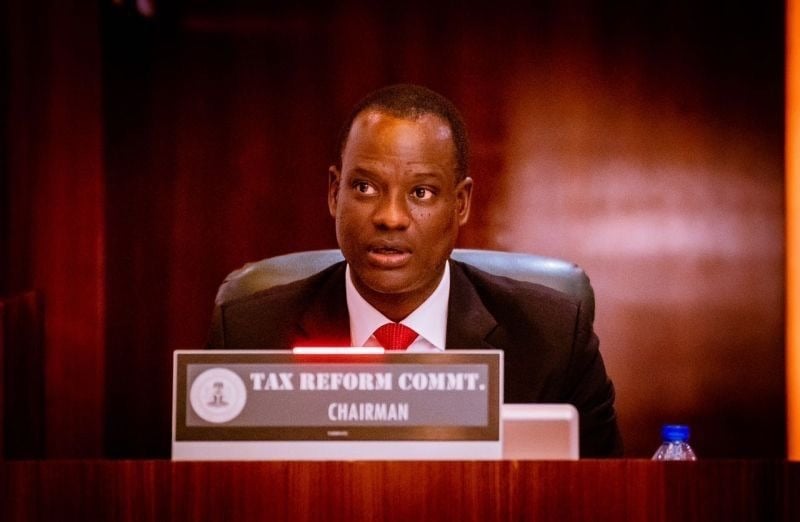
Chairman of the Presidential Fiscal Policy and Tax Reforms Committee, Taiwo Oyedele, made the clarification during a courtesy visit to the National Orientation Agency in Abuja on Friday.

Oyedele said the purpose of the visit was to seek NOA’s support in educating citizens about the tax policies, noting that misinformation threatened to derail a reform package he described as “the most consequential and beneficial” of his career.

“You can say subsidy removal came with some amount of pain and sacrifice. Naira floatation also means people have to pay more… But this tax reform is coming with benefits. “Exemption for small businesses, exemption for workers, low-income earners, middle class; reduce their taxes, big companies reduce their taxes, harmonise taxes,” he said.

The tax reform laws were signed by President Bola Tinubu in October 2024 as part of a sweeping overhaul aimed at simplifying Nigeria’s complex tax system.

With implementation set to begin on January 1, 2026, the reforms introduce exemptions for small businesses, reduced tax burdens for workers and the middle class, lower corporate taxes, and harmonisation of multiple taxes across federal, state and local governments.

They also streamline compliance procedures and eliminate nuisance taxes to boost investment.

Oyedele explained that the committee had compiled “50 tax exemptions and reliefs” that would benefit Nigerians but lamented that many citizens, misled by online falsehoods, believed the reforms would impose new burdens.

“Sadly, as good as the reform is, if you go on the streets and ask people about the tax reform, there are people who say they can’t wait to protest on the 1st of January.

See also  Reps probes tax deductions, multiple charges by banks

“Unfortunately, in our environment, if you have good news, it doesn’t go viral… but misinformation goes viral very quickly.”

He cited a false rumour circulating among farmers in the North that the government planned to seize one out of every four baskets of produce, describing it as a deliberate distortion.

He added that misinformation had also taken ethnic and religious dimensions, stressing the need for NOA’s involvement in communicating the reform’s benefits in local languages and through relatable characters—farmers, students and CEOs—so that “people do not translate this good intention of the government… into a chaotic situation.”

Responding, NOA Director-General Lanre Issa-Onilu described the reforms as “the first comprehensive, far-reaching response in the fiscal and tax space we have seen,” noting that the agency fully understood its responsibility.

“I must understand beyond the level of an average Nigerian to communicate to them. We’ve done a lot of publications, but as you understand more, you realise there is a lot more to say.”

He pledged the deployment of NOA’s extensive nationwide network to disseminate accurate information about the reforms.

Issa-Onilu noted that the agency works with nearly 200 radio stations broadcasting in 72 local languages, 36 television channels, and maintains partnerships with major networks including NTA, Channels, AIT, TVC, Arise and News Central.

punch.ng

FOLLOW US ON:

FACEBOOK

TWITTER

PINTEREST

TIKTOK

YOUTUBE

LINKEDIN

TUMBLR

INSTAGRAM

Continue Reading
Click to comment

Leave a Reply

Your email address will not be published. Required fields are marked *

Business

Uber reports N6.1bn annual driver earnings amid Lagos strike

Published

on

Uber Technologies Inc. has highlighted that its platform supports N6.1bn in collective annual earnings for drivers in Nigeria, as app-based transport operators staged a strike in Lagos, the country’s most populous city and commercial hub. The walkout, which began on Monday, continued on Tuesday, and remained ongoing on Wednesday, has affected ride-hailing platforms including Uber, Bolt, and inDrive.

According to union statements, the strike was triggered by rising operational costs, low fares, and challenging working conditions. Drivers logged off their apps, temporarily reducing ride availability across the city and underscoring tensions in Lagos’s fast-growing ride-hailing sector.

The company stressed that drivers are central to the platform’s operations. “Drivers are at the heart of our business, and we remain committed to engaging constructively with them through regular roundtable discussions.”

The N6.1bn figure represents the total additional income generated for drivers using the Uber platform nationwide, according to Uber’s 2023 Economic Impact Report for Nigeria. It does not reflect individual earnings, which vary based on trips completed, hours worked, and operating costs.

“Uber’s 2023 Economic Impact Report for Nigeria revealed that the platform continues to play a meaningful role in supporting earning opportunities. In total, drivers are estimated to earn an additional N6.1bn annually in higher income through their use of the Uber app.”

Uber began operations in Nigeria in 2014, starting in Lagos before expanding to Abuja, Port Harcourt, and Ibadan. The company has become one of the leading ride-hailing platforms in the country alongside Bolt and inDrive.

See also  Technology key to implementing new tax laws – Adedeji

This is not the first strike by Lagos drivers, who have previously walked off the job over low fares, high commission charges, and rising operational costs. The recurrence highlights the ongoing friction between platforms and drivers, despite the substantial earnings generated.

Uber said it is committed to dialogue with drivers, signalling a preference for negotiation over confrontation. The outcome of discussions could influence fare structures, commissions, and operational practices across Lagos’s ride-hailing market.

punch.ng

FOLLOW US ON:

FACEBOOK

TWITTER

PINTEREST

TIKTOK

YOUTUBE

LINKEDIN

Continue Reading

Business

Nigeria spends N9tn importing petrol

Published

on

Nigeria’s dependence on imported petrol persisted in 2025, with oil marketers spending N8.96tn on Premium Motor Spirit (petrol) imports between January and December, despite increased investments in domestic refining capacity.

An analysis of the latest foreign trade data released by the National Bureau of Statistics on Thursday showed that petrol, code-named “Motor spirit ordinary,” remained one of the most imported commodities throughout the year, reflecting ongoing supply gaps in the downstream sector.

The NBS said petrol import costs were N8.96tn in 2025, but represented a decline of N6.46tn or about 41.9 per cent from the N15.42tn recorded in 2024, but still stood N1.45tn or roughly 19.3 per cent higher than the N7.51tn posted in 2023 when fuel subsidy was eliminated by the current administration.

This latest development comes days after The PUNCH exclusively reported that Domestic refineries imported crude oil worth N5.734tn between January and December 2025, exposing a deepening supply paradox in the country’s oil sector and an obsession for imports.

The fuel import expenditure came at a time when expectations were high for a decline in reliance on foreign supply following significant investments in local refining.

This trend persisted despite the commencement of operations, steady ramp-up in production and distribution of petrol by domestic refineries, notably the Dangote Petroleum Refinery, alongside state-owned refineries and several modular facilities.

Data from the Nigerian Midstream and Downstream Petroleum Regulatory Authority published recently revealed that total petrol consumption stood at 18.97 billion litres in 2025, with 11.85 billion litres, representing 62.47 per cent, supplied through imports.

While domestic refineries contributed about 7.54 billion litres, accounting for 37.53 per cent of total consumption.

But in the new NBS document, which focuses on the value of products, the data showed a fluctuating but sustained petrol import pattern, with expenditure rising by N0.62tn, or about 35.2 per cent, from N1.76tn in the first quarter to N2.38tn in the second quarter, before dropping sharply by N1.09tn, or roughly 45.8 per cent, to N1.29tn in the third quarter.

See also  Gucci owner sells beauty division to L’Oreal for $4.6b

However, imports rebounded strongly in the fourth quarter, surging by N2.25tn, or about 174.4 per cent, to N3.54tn, the highest quarterly expenditure recorded in the year.

Overall, the fourth-quarter spike accounted for nearly 40 per cent of total annual imports, underscoring persistent supply pressures and seasonal demand fluctuations. The statistics agency didn’t provide a breakdown of the value imported monthly.

Breakdown of the figures showed that petrol was the second most imported product in the first quarter at N1.76tn, and also ranked as the second highest import from African countries, with N89.18bn largely sourced from Togo within the ECOWAS sub-region.

By the second quarter, petrol had risen to become Nigeria’s top imported product at N2.38tn, maintaining its dominance across African, West African, and ECOWAS trade corridors, where imports stood at N208.76bn.

However, the trend shifted in the third quarter, when import value dropped to N1.29tn, making petrol the third most imported product globally during the period. Notably, no imports were recorded from African or ECOWAS countries in that quarter, indicating a shift towards alternative international suppliers.

In the fourth quarter, petrol imports rebounded strongly to N3.54tn, reclaiming its position as the most imported commodity. Within Africa, it ranked as the second-highest import at N84.69bn, with Togo again featuring prominently among regional suppliers.

In the fourth quarter, petrol imports from Brazil were valued at N221.15bn, while the Netherlands emerged as one of Nigeria’s largest suppliers with shipments worth N1.22tn in the same period.

Overall, the product’s share of total trade reflected a fluctuating but rising trend, accounting for 11.42 per cent in the first quarter, increasing to 15.54 per cent in the second quarter, before dropping to 7.98 per cent in the third quarter and rebounding sharply to 20.52 per cent in the fourth quarter.

See also  Technology key to implementing new tax laws – Adedeji

Further analysis showed that Nigeria sourced petrol from a diverse mix of countries, including the Netherlands, the United States, Belgium, Brazil, and Togo, highlighting the global nature of its fuel supply chain.

Despite the operational take-off of the Dangote Refinery and ongoing rehabilitation of state-owned refineries, import dependence remains deeply entrenched.

Over the past five years, Nigeria’s petrol import bill has steadily risen. In 2020, the country spent N2.01tn on fuel imports, more than doubling to N4.56tn in 2021.

By 2022, the figure further increased to N7.71tn before slightly declining to N7.51tn in 2023. However, in 2024, fuel import expenditure surged to an all-time high of N15.42tn, marking the largest petrol import bill in Nigeria’s history.

The figures highlight a structural imbalance between refining capacity and actual output, noting that while installed capacity has improved, feedstock constraints, logistics challenges, and market dynamics continue to limit performance.

Energy analysts warn that the continued reliance on imports, despite increased refining capacity, raises concerns about energy security, foreign exchange pressure, and the sustainability of the downstream market.

Commenting, the Managing Partner at Energy Consulting Practice, Kelvin Emmanuel, accused the Presidency of maintaining tight control over licensing decisions in Nigeria’s oil and gas sector, in what he described as a violation of the provisions of the Petroleum Industry Act.

Speaking in a telephone interview on Thursday, Emmanuel said, “The State House has refused to hand off its control in dictating to the authority who gets a licence or not, and has ignored calls consistently to comply with Sections 317, and 7 to 11 of the PIA.”

See also  PHOTOS: Price Of Bag Of Rice, Beans, Tomatoes, Other Food Commodities This Week

He further raised concerns over crude supply challenges facing the Dangote Refinery, noting that the facility was still heavily reliant on imports despite its scale.

“Dangote is currently importing about 10 million barrels out of the 18 million barrels he processes monthly. The one fortunate part of this crisis is that Lagos sits on the Atlantic Basin, so he can easily ship in crude from Houston or Brazil,” he said.

Emmanuel criticised the Federal Government’s much-publicised naira-for-crude initiative, arguing that structural issues within the oil market were undermining its effectiveness.

“The government keeps touting the naira-for-crude initiative, when in reality it’s either the NNPC is not giving him crude because most of it is locked in forwards that have been pre-sold, or commercial operators are routing their feedstock at extra commissions outside the fiscal oil price,” he stated.

He added that Nigeria must take deliberate steps to safeguard domestic refining by establishing a national buffer stock. “The Nigerian Government needs to develop a strategic petroleum reserve that is codified through an Act of Parliament, to serve domestic refiners,” Emmanuel said.

The sustained reliance on foreign petrol supply underscores the challenges facing Nigeria’s energy transition, as the country grapples with aligning its upstream resources with downstream capacity.

As Africa’s largest oil producer, the paradox of importing a majority of its refined fuel needs continues to define Nigeria’s petroleum sector, a trend that policymakers say must be urgently reversed to achieve true energy independence.

punch.ng

FOLLOW US ON:

FACEBOOK

TWITTER

PINTEREST

TIKTOK

YOUTUBE

LINKEDIN

Continue Reading

Business

Starmer pushes strategic UK-Nigeria alliance with N1.4tn fresh deal

Published

on

The United Kingdom and Nigeria have sealed new export agreements as both countries committed to taking their economic partnership to another level, UK Prime Minister Keir Starmer said on Thursday.

Starmer made the disclosure during a bilateral meeting with President Bola Tinubu at 10 Downing Street on the second day of the Nigerian leader’s historic state visit to Britain.

“Today is the opportunity to take that to another level with the agreements that we’ve been able to reach on exports, and I think that shows we can go even further than we’ve already gone,” the British Prime Minister stated.

Tinubu, in his remarks, revealed that Nigeria is currently undergoing “very strong reform of the economy” and linked the terrorism challenges facing West Africa to climate change conflict.

“We need more trade agreements and economic relationships that we build between nations. Nigeria is currently going through a very strong reform of the economy,” Tinubu said during the meeting at 10 Downing Street.

The President described Nigeria as facing significant challenges, stating, “The largest country in West Africa, and on the continent, is challenged by terrorism coming from the conflict of climate change.”

Tinubu emphasised that both countries face global economic challenges, noting, “Currently, the entire world is challenged. Nigeria is not immune. Britain is not immune.”

He said the discussions focused on the “economic welfare of the people and how we can work together to improve livelihood” amid economic volatility.

The President affirmed that Thursday’s bilateral discussions would address what Britain can do to “accelerate the friendship, partnership and collaboration” between both nations.

See also  NAFDAC destroys 491,000 tramadol tablets worth N91m in Kano

On his part, Prime Minister Starmer described the visit as historic, noting it was the first inward state visit for 37 years by a Nigerian leader.

“The long and shared history between our countries is obvious and much valued, as is the people-to-people contact and engagement that enriches lives here in the United Kingdom,” Starmer said.

He noted that both countries already collaborate on economy, defence, and security matters but expressed determination to deepen the partnership.

“Today is the opportunity to take that to another level with the agreements that we’ve been able to reach on exports,” the Prime Minister stated.

Nigeria became the United Kingdom’s biggest export market in Africa in January 2026, with bilateral trade continuing to expand.

King Charles III had disclosed on Wednesday night at a state banquet that visitors from Nigeria spent £178m in Britain in 2024, while 251,000 people from Britain travelled to Nigeria and spent just as much in return.

The state visit, which began on Wednesday, March 18, saw the signing of several memoranda of understanding and agreements covering trade, investment, defence, and cultural cooperation.

A major outcome already announced is a £746m financing deal involving UK Export Finance, the Nigerian Ports Authority, and the Ministry of Finance for the refurbishment of Lagos Port Complex (Apapa) and Tin Can Island Port.

The bilateral meeting at Downing Street followed Wednesday night’s state banquet at Windsor Castle, where King Charles III acknowledged “painful marks” in the shared history between both nations while praising Nigeria’s transformation and the contributions of the Nigerian diaspora to British society.

See also  Petrol to hover around N905/litre this year – CBN

The state visit, the first by a Nigerian president since 1989 when former military leader Ibrahim Babangida was hosted by Queen Elizabeth II, concludes on Thursday with President Tinubu expected to return to Nigeria.

punch.ng

FOLLOW US ON:

FACEBOOK

TWITTER

PINTEREST

TIKTOK

YOUTUBE

LINKEDIN

Continue Reading

Trending