Connect with us

Business

Bank recapitalisation: Local investors provide 72% of N4.6tn

Published

on

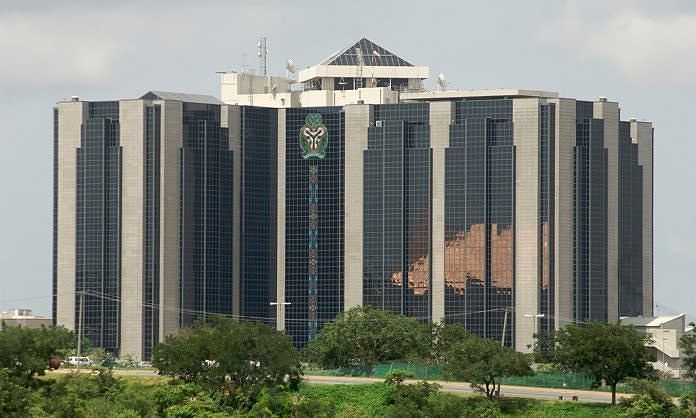
The Central Bank of Nigeria (CBN) on Wednesday said domestic investors accounted for the bulk of funds raised under its banking sector recapitalisation programme, contributing 72.55 per cent of the N4.65tn total capital secured by lenders.

The apex bank disclosed this in a statement marking the conclusion of the exercise, which began in March 2024 and saw 33 banks meet the new minimum capital requirements.

The statement was jointly signed by the Director of Banking Supervision, Olubukola Akinwunmi, and the Acting Director of Corporate Communications, Hakama Sidi-Ali.

According to the CBN, Nigerian investors provided about N3.37tn of the total capital raised, underscoring strong domestic confidence in the banking sector, while foreign investors accounted for the remaining 27.45 per cent.

“Over the 24-month period, Nigerian banks raised a total of N4.65tn in new capital, strengthening the resilience of the financial system and enhancing its capacity to support the economy,” the statement said.

Commenting on the outcome, the CBN Governor, Olayemi Cardoso, said, “The recapitalisation programme has strengthened the capital base of Nigerian banks, reinforcing the resilience of the financial system and ensuring it is well-positioned to support economic growth and withstand domestic and external shocks.”

The bank confirmed that 33 lenders had met the revised capital thresholds, while a few others were still undergoing regulatory and judicial processes.

“The CBN confirms that 33 banks have met the revised minimum capital requirements established under the programme,” it stated.

“A limited number of institutions remain subject to ongoing regulatory and judicial processes, which are being addressed through established supervisory and legal frameworks.

“All banks remain fully operational, ensuring continued access to banking services for customers.”

See also  Retired federal workers to receive additional N32,000 monthly

The regulator stressed that the recapitalisation exercise was completed without disrupting banking operations nationwide, noting that key prudential indicators, particularly capital adequacy ratios, had improved and remained above global Basel benchmarks.

Minimum capital adequacy ratios were pegged at 10 per cent for regional and national banks and 15 per cent for banks with international licences.

The CBN added that the exercise coincided with a gradual exit from regulatory forbearance, a move it said improved asset quality, strengthened balance sheet transparency, and enhanced overall system stability.

To sustain the gains, the apex bank said it had strengthened its risk-based supervision framework, including periodic stress tests and requirements for adequate capital buffers.

It added that supervisory and prudential guidelines would be reviewed regularly to improve governance, risk management, and resilience across the sector.

“The successful completion of the programme establishes a stronger and more resilient banking system, better positioned to support lending, mobilise savings, and withstand domestic and global shocks,” the statement added.

Meanwhile, data from the National Bureau of Statistics showed that foreign capital inflows into the banking sector rose by 93.25 per cent year-on-year to $13.53bn in 2025 from $7.00bn in 2024, reflecting strong investor interest during the recapitalisation drive.

However, the Centre for the Promotion of Private Enterprise has cautioned that despite the strengthened banking system, credit to small businesses remains weak, warning that the benefits of the reforms are yet to fully impact the real economy.

punch.ng

FOLLOW US ON:

FACEBOOK

TWITTER

PINTEREST

TIKTOK

YOUTUBE

LINKEDIN

Continue Reading
Click to comment

Leave a Reply

Your email address will not be published. Required fields are marked *

Business

Lagos bans petroleum tankers from transporting edible oil

Published

on

The Lagos State Government has banned the use of petroleum tankers in the transportation and distribution of edible oil as part of efforts to strengthen food safety, hygiene, and compliance standards across the sector.

The restriction forms part of a broader regulatory framework introduced through a Memorandum of Understanding (MoU) signed between the Lagos State Consumer Protection Agency (LASCOPA) and major stakeholders in the edible oil transportation chain.

The agreement involves the Marketers and Sellers of Edible Oil Association of Nigeria (MASEON), the Nigerian Association of Road Transport Owners (NARTO), and the Association of Edible Oil Tanker Drivers of Nigeria under the National Union of Edible Oil Tanker Drivers of Nigeria (ETD/NUEOTDN).

In a statement issued on Friday, LASCOPA said the move was aimed at stopping the use of tankers previously deployed for petroleum and hazardous substances in the transportation of edible oil.

The agency warned that the practice exposes consumers to serious health risks caused by possible contamination from chemical residues left in fuel tankers.

“The key objectives of the agreement include ensuring that tankers designated for edible oil transportation are used exclusively for that purpose; preventing the use of edible oil tankers for petroleum products and hazardous substances,” the statement read.

According to the agency, the MoU introduces a strict compliance framework mandating the exclusive use of food-grade certified tankers for edible oil transportation.

LASCOPA said the framework would also strengthen hygiene standards, improve traceability, and enhance operational monitoring within the edible oil distribution chain.

The agency added that stakeholders have committed to implementing tanker registration and identification systems, periodic inspections, random spot checks, laboratory testing of edible oil samples, and joint enforcement operations to ensure full compliance.

See also  FG launches E-fiscal platform to crack down on tax evasion

It further stated that enforcement activities would be intensified under the Lagos State Consumer Protection Agency Law, 2025.

“Stakeholders are committed to tanker registration, identification systems, periodic inspections, random spot checks, laboratory testing of edible oil samples, and joint enforcement operations to ensure compliance,” the statement added.

LASCOPA also said it would step up monitoring activities and investigate consumer complaints as part of efforts to protect public health and improve consumer confidence in food transportation standards across Lagos State.

punch.ng

FOLLOW US ON:

FACEBOOK

TWITTER

PINTEREST

TIKTOK

YOUTUBE

LINKEDIN

INSTAGRAM

Continue Reading

Business

NNPC urged to revive refineries after Dangote snub

Published

on

The National Publicity Secretary of the Independent Petroleum Marketers Association of Nigeria, Chinedu Ukadike, has tackled the Nigerian National Petroleum Company Limited (NNPC) over its attempt to increase its stake in the Dangote Petroleum Refinery despite the poor state of government-owned refineries.

Ukadike stated this while reacting to comments by the President of the Dangote Group, Aliko Dangote, that the refinery rejected requests by the NNPC to increase its 7.25 per cent stake in the $20bn facility.

Dangote had disclosed this during an interview with the Chief Executive Officer of the Norwegian Sovereign Wealth Fund, Nicolai Tangen, monitored by our correspondents on Wednesday.

Reacting to the development, Ukadike questioned why the national oil company was seeking to invest more funds in the privately-owned refinery when the Port Harcourt, Warri, and Kaduna refineries under its control had remained largely inactive despite billions of dollars spent on rehabilitation.

“Why is NNPC trying to invest money in the Dangote refinery when it has three refineries that are not working? Why is NNPC not investing that money in those ones?” Ukadike asked.

He added, “The NNPC did not revive our refineries, but they want to look for where the refinery is already working to put money into it. Does that make sense?”

The IPMAN spokesman said Dangote had the right to reject the offer from the NNPC if he considered it unsuitable for his business interests.

“If Dangote refused to sell more stakes to NNPC, he must have his reasons. Dangote is a businessman. He doesn’t want issues, unnecessary crises, and nepotism. He knows what he wants, and I also think he has enough cash to fund his business,” he stated.

See also  Oil Price Hits $120 As OPEC+ Raises Output By 206,000 Bpd

Ukadike further urged the national oil company to focus on reviving critical oil infrastructure across the country instead of pursuing additional ownership of the refinery. “The NNPC should repair the pipelines and revive the refineries instead of eyeing the Dangote refinery,” he said.

Dangote had stated during the interview that the NNPC was interested in acquiring more shares in the refinery after previously purchasing a 7.25 per cent stake for $1bn in 2021. According to him, the request was rejected because the company planned to list the refinery publicly and allow more Nigerians to own shares in the project.

“The other biggest risk is government inconsistencies in policies, and we are addressing that one because if you look at our refinery, the national oil company already owns 7.25 per cent, and they are trying to buy more. We are the ones that said no; we want to now spread it and have everybody be part of it,” Dangote said.

The NNPC had initially planned to acquire a 20 per cent stake in the refinery, but later reduced its ownership to 7.25 per cent after failing to pay the balance before the June 2024 deadline.

Dangote had explained this in 2024, saying, “The agreement was actually 20 per cent, which we had with NNPC, and they did not pay the balance of the money up until last year; then we gave them another extension up until June (2024), and they said that they would remain where they had already paid, which is 7.2 per cent. So NNPC owns only 7.2 per cent, not 20 per cent.”

See also  Marketers fault Dangote’s 500,000-litre fuel delivery threshold

However, a stakeholder in the petroleum sector who pleaded for anonymity because of the sensitivity of the matter held that the interest of the nation is well served by NNPC having a 20 per cent stake in the Dangote refinery.

“I think Nigeria is better served by NNPC being a shareholder. If NNPC could have taken 20 per cent of that refinery, Nigeria as a country would be better served,” the stakeholder said.

According to him, the fact that the NNPC failed to get the 20 per cent take before does not mean it could not get it again. He said Dangote refused NNPC’s offer because he wants to remain in control.

“You know Dangote is planning to value his company at $50bn. I think he’s going to sell 10 per cent only, so he remains in control, making a lot of money for himself. Selling only 10 per cent means he has 90 per cent. If NNPC were there with 20 per cent, then NNPC would have two directors. These two directors would have some say,” he said.

The stakeholder added that such an important asset cannot exist in a country without the government’s involvement.

“You can’t have such a big asset in the country, and then the government or the government’s agent has no say in the decisions of that company. It can’t happen. It’s wrong. I’m not saying the government must have a say in all the big companies, but in a company that is so big that it can influence whether the sun rises or falls in that country, the government must have a say.

See also  Lagos-Calabar coastal road will raise GDP to $14tn — Expert

“The refinery is big. In any case, NNPC is also the supplier of last resort. It’s the national oil company. That has some meaning. I think that in the best interest of the country, if we all agree that Dangote is too big to fail, then it means that Nigerians as a people need to be inside the Dangote refinery to make sure it does not fail,” the operator said.

Meanwhile, a senior official of the NNPC said the NNPC is proud of its current stake in the Dangote refinery.

“The NNPC is proud and happy that we own a 7.2 per cent stake in Dangote. And whatever we own as a stake in Dangote as a national oil company is on behalf of the entire Nigeria. So, when the opportunity presents itself in the long term, yes.

“But right now, we are proud of the 7.2 per cent stake we own in the Dangote refinery. Apart from that, the quality and level of collaboration that is currently going on between NNPC and Dangote is in the interest of the entire Nigeria,” the official said, begging not to be mentioned because he was not authorised to speak on the matter.

punch.ng

FOLLOW US ON:

FACEBOOK

TWITTER

PINTEREST

TIKTOK

YOUTUBE

LINKEDIN

INSTAGRAM

Continue Reading

Business

2027 poll spending may trigger inflation, MPC warns

Published

on

The Governor of the Central Bank of Nigeria and Members of the Monetary Policy Committee have warned that rising political and election-related spending ahead of the 2027 general elections could undermine the country’s disinflation gains and trigger fresh inflationary pressures.

The warnings were contained in the personal statements of MPC members released by the apex bank and obtained by The PUNCH on Thursday. The MPC, at its 304th meeting held on February 23 and 24, 2026, reduced the Monetary Policy Rate by 50 basis points from 27 per cent to 26.5 per cent, while retaining other key monetary parameters.

CBN Governor, Olayemi Cardoso, had earlier warned in the MPC communiqué that election-related fiscal spending could threaten the inflation outlook despite the current moderation in prices.

According to the communiqué signed by Cardoso, “The outlook indicates that the current momentum of domestic disinflation will continue in the near term. This is premised on the lagged impact of previous monetary policy tightening, sustained stability in the foreign exchange market and improved food supply. However, increased fiscal releases including election-related spending could pose upside risk to the outlook.”

Also, in his personal statement, he noted “Growing fiscal pressures, from reduced government fiscal headroom and the approaching 2027 election cycle, warrant particular attention given the well-established link between pre-election fiscal expansion and inflation.”

CBN Deputy Governor for Economic Policy, Dr Muhammad Abdullahi, also highlighted election-related spending as a major risk to the inflation outlook. He said, “As political activities intensify ahead of the 2027 elections, increased fiscal injections and consumption spending could elevate demand-side inflation.”

See also  Elon Musk Reacts as Nigeria Makes Top 10 List of Countries Contributing to Global GDP

Abdullahi added that “the fiscal deficit has already increased significantly, and election-related spending is likely to exacerbate this trend in 2026 and early 2027.” According to him, stronger fiscal-monetary coordination would be needed to manage the liquidity impact of rising government spending.

Similarly, the CBN Deputy Governor for Operations, Emem Usoro, warned that the pre-election environment could worsen liquidity conditions and inflation expectations. Usoro stated, “Crucially, the pre-election environment increases the risk of liquidity surges, higher FX demand and a drift in inflation expectations.”

She added that the risks justified maintaining tight liquidity conditions despite the moderate rate cut. According to her, “These considerations support small, cautious adjustments and the retention of strong liquidity and prudential buffers.”

Also raising concerns was the newly appointed Deputy Governor, Lamido Yuguda, who said increased fiscal releases and election spending could disrupt the disinflation trend.

Yuguda, who was a former Director General of the Securities and Exchange Commission, noted, “The 75 per cent CRR on non-TSA public deposits remains critical, particularly given the potential for increased fiscal releases as implementation of Executive Order 9 advances.”

He further warned that, “Potential increases in fiscal spending associated with the electoral cycle could generate demand pressures and disrupt the disinflation trajectory.”

A member of the MPC, Dr Aloysius Ordu, warned that political spending tied to the elections could put pressure on foreign exchange demand and test the resilience of the economy. He said, “Domestically, rising political spending and FX demand pressures associated with the 2027 elections will test the resilience of the economy.”

See also  FG launches E-fiscal platform to crack down on tax evasion

Ordu added that although reforms such as Executive Order 9 were expected to improve fiscal transparency and strengthen reserves, high debt servicing costs and political-cycle spending remained major concerns for macroeconomic management.

Another MPC member, Bandele Amoo, also expressed concern over excess liquidity from fiscal injections and early political activities ahead of the elections. He said, “My primary concern is the persistence of excess liquidity from fiscal injections, which could undermine disinflation gains and exchange rate stability.”

Amoo further noted that “fiscal spending pressures linked to the 2026 budget cycle, and early political activities ahead of the 2027 elections may heighten risks.”

Another committee member, Professor Murtala Sagagi, said the main domestic risks to inflation included fiscal slippages and election-related spending. He said, “Upside risks to the inflation outlook warrant monitoring, particularly increased fiscal releases including election-related spending and any pass-through from global oil price volatility to domestic fuel prices.”

Sagagi added that “the primary domestic risks are fiscal slippage and the possibility of election-related spending which are medium-term in nature.” He urged stronger fiscal discipline and closer coordination between monetary and fiscal authorities.

The next meeting of the Monetary Policy Committee is scheduled to hold on Tuesday, May 19 and Wednesday, May 20, 2026. This would be about four days after the National Bureau of Statistics is expected to release the country’s Consumer Price Index report for April 2026 on May 15.

Nigeria’s inflation rate rose to 15.38 per cent in March 2026, marking a reversal in the recent easing trend, as increases in food, transport, and accommodation costs pushed prices higher. The PUNCH observed that this was the first time the headline inflation rate had increased since March 2025.

See also  FG allays fears over tax reforms

In its Inflation Forecast report for April 2026, the Financial Market Dealers Association projected that Nigeria’s headline inflation would rise to 16.42 per cent year-on-year in April 2026, as sustained pressure from food prices, higher energy costs and elevated global commodity prices continue to shape the domestic price environment.

punch.ng

FOLLOW US ON:

FACEBOOK

TWITTER

PINTEREST

TIKTOK

YOUTUBE

LINKEDIN

INSTAGRAM

Continue Reading

Trending