Committees of the United States Congress on Tuesday in Washington DC held a joint briefing over the ongoing kidnappings and the alleged persecution of Christians in Nigeria.
The session was held at the instance of President Donald Trump, who earlier on October 31 instructed the House Appropriations Committee to investigate what he described as the slaughter of Christians in Nigeria and report their findings to the White House.
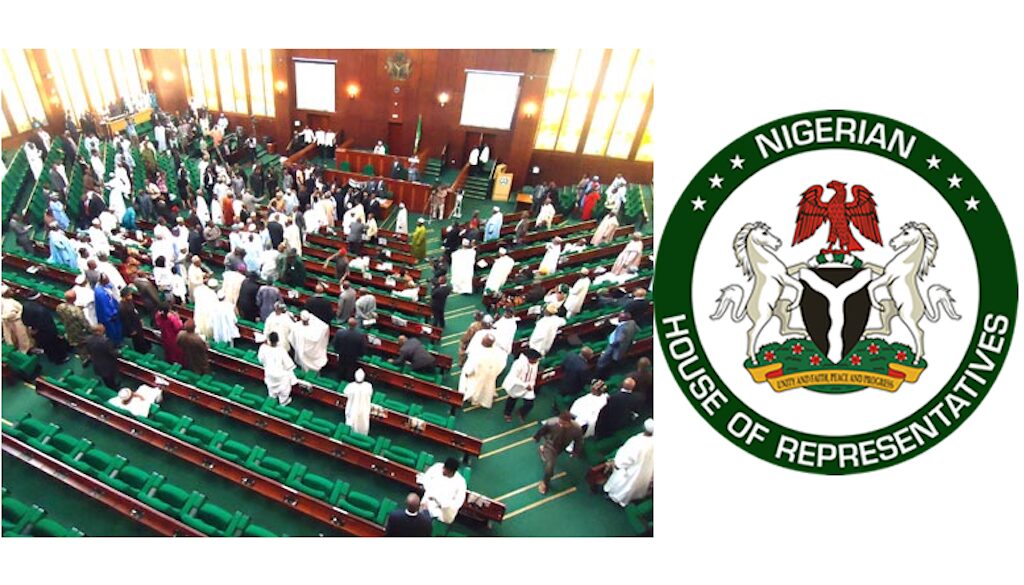
Separately, the Nigerian House of Representatives will also debate the state of security in the country on Wednesday (today).
The Congress session, led by House Appropriations Vice Chair and National Security Subcommittee Chairman Mario Díaz-Balart, brought together members of the House Appropriations and House Foreign Affairs Committees alongside religious freedom experts.
Participants included Reps Robert Aderholt, Riley Moore, Brian Mast, Chris Smith, US Commission on International Religious Freedom Chair Vicky Hartzler, Alliance Defending Freedom International’s Sean Nelson, and Dr Ebenezer Obadare of the Council on Foreign Relations.
Díaz-Balart began the briefing by describing global religious freedom as “both a moral obligation and an essential American interest.” He emphasised that “no one should have to fear for their safety because of how they choose to worship.”
He said he is “committed to advancing policies that protect the freedom to live according to one’s faith without fear of violence and retribution.”
Díaz-Balart noted that his FY26 funding bill addresses this commitment and added that he plans to reinforce these efforts by passing a full-year funding measure, which he noted is critical to advancing the America First agenda.
Aderholt echoed the same concerns, calling the situation in Nigeria “a crisis that can’t be ignored.”
He said, “We must stand firmly with Nigeria’s Christian communities and all persecuted believers worldwide, and I commend our collaborative efforts to provide the President with the information needed to confront this growing tragedy.”
Moore connected the briefing to the administration’s recent re-designation of Nigeria as a Country of Particular Concern.
The Congressman explained, “Our brothers and sisters in Christ are being persecuted and slaughtered in Nigeria simply for professing their faith in our Lord and Saviour Jesus Christ. ‘’The world will no longer turn a blind eye to the persecution of Christians in Nigeria.”
Foreign Affairs Committee Chairman Mast framed the violence as part of a broader campaign.
“This is a targeted campaign of religious cleansing,” he said, arguing that extremist groups aim to “drive Christians out of their ancestral lands in the Middle Belt.”
He urged the Nigerian government to “disarm these militias, return displaced families to their homes, and bring the perpetrators to justice.”
In his remarks, House Foreign Affairs Africa Subcommittee Chairman Smith described Nigeria as “the ground zero of religious violence,” saying Christians and moderate Muslims face “the constant threat of murder, rape, and torture.”
He criticised the Nigerian government for allowing perpetrators to act “with complete impunity,” adding, “We must act quickly and decisively to save more lives.”
Expert witnesses described an atmosphere of insecurity affecting multiple religious communities.
Hartzler cited recent attacks, including the November abduction of more than 300 children and 12 teachers from a Catholic school. “Religious freedom in Nigeria has been under siege in 2025 and, unfortunately, it seems to be getting worse,” she said.
The USCIRF chair called for improved accountability from the Nigerian authorities and better use of US security assistance and early warning systems. “Too many times, local villagers learn of an impending attack and reach out for protection, only to have their cries for help ignored,” she said.
Nelson detailed accounts from Christian communities, who described kidnappings, forced conversions, and deadly attacks.
“Our cases have involved Christians unjustly imprisoned by Sharia courts, false allegations of crimes merely for evangelism or protecting Christian converts; Christians kidnapped and tortured. I have visited villages directly attacked by Fulani militants and witnessed the aftermath of pastors beheaded, mass graves, widows and orphans,” he said.
He argued that authorities downplayed the role of religion in the attacks and highlighted Nigeria’s blasphemy laws, which in some states permit the death penalty.
Also, Obadare identified Boko Haram as the central driver of the violence. “The deadliest and most serious threat confronting the Nigerian state today is jihadist terror,” he insisted.
He noted recent Nigerian military actions following renewed US pressure, but urged Washington to maintain leverage.
“The policy goal should be two-fold: first, work with the Nigerian military to neutralise Boko Haram. Second, the United States should put pressure on President Tinubu to make Sharia law unconstitutional in the 12 Northern states where it has been adopted since 2000 and disband the various Hisbah groups.”
Committee officials said they are preparing a comprehensive report for President Trump with recommendations on how Congress can support the administration’s efforts to curb religious persecution in Nigeria and elsewhere.
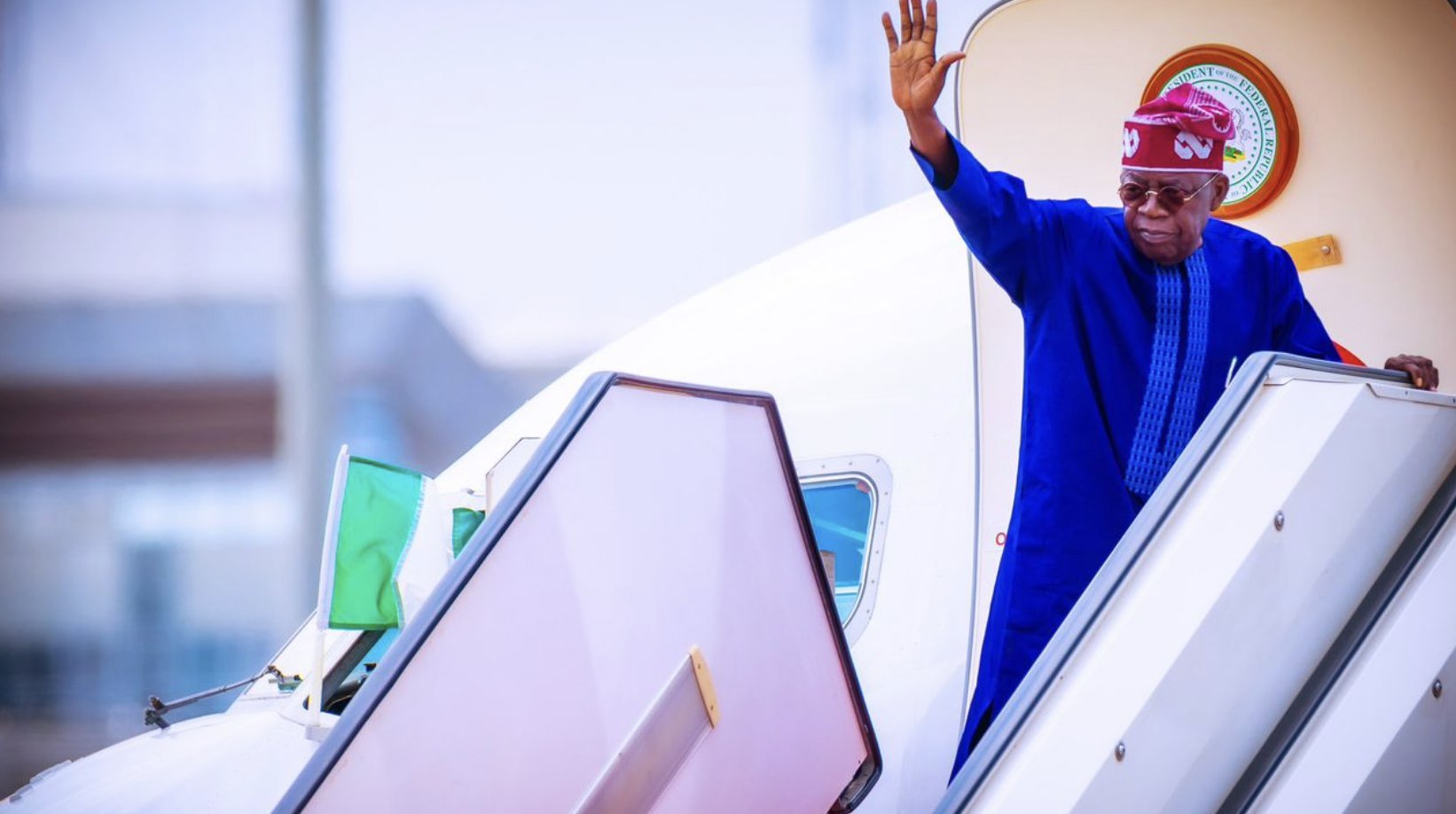
The briefing comes amid strengthened US–Nigeria security cooperation. President Bola Tinubu recently approved Nigeria’s delegation to the new US–Nigeria Joint Working Group, established to implement security agreements from high-level talks in Washington led by National Security Adviser Nuhu Ribadu.
The group, which includes senior ministers and security officials, aims to enhance counterterrorism efforts, intelligence sharing, border security, and coordination on humanitarian and civilian security issues.
The initiative followed rising concerns over terrorism, banditry, and targeted attacks on Christians in Nigeria, prompting increased US scrutiny and warnings about the protection of vulnerable faith communities.
On November 20, the US House Subcommittee on Africa opened a public hearing to review Trump’s recent redesignation of Nigeria as a Country of Particular Concern, a move that places the country under increased scrutiny for alleged religious-freedom violations.
Lawmakers gathered to assess the potential consequences of the designation, which, if affirmed by the Senate, could clear the way for sanctions against Nigerian officials found complicit in religious persecution.
Meanwhile, the House of Representatives is expected to begin debate on the state of security in the country on Wednesday (today).
The Deputy Speaker, Benjamin Kalu, disclosed this on Tuesday while presiding over the day’s plenary.
Also, the member representing Darazo/Ganjuwa Federal Constituency, Bauchi State, Mansur Soro, told The PUNCH that the report on the state police bill will be laid at a plenary session this month.
Soro, a member of the committee, stated this in an interview with our correspondent in Abuja.
The committee recently had its last meeting and tasked the 36 State Assemblies to make their input on the various items slated for constitutional amendments, including power devolution, state police, reserved seats for women, and fiscal federalism, among others.
Speaking with our correspondent, Soro said, “The reports are expected to be laid this month for voting at both the Senate and House of Representatives.
“Already, the state police bill has been adopted by the Joint Committees on Constitution Review of both chambers. After the voting, the bill will be transmitted to state Assemblies for ratification.”
He added that “If it’s passed by two-thirds of state assemblies, it will be transmitted to the President for his assent.”
In a separate interview with The PUNCH, the member representing Esan West/Esan Central/Igueben Federal Constituency, Edo State, Marcus Onobun, pledged his support for state police, citing the worsening insecurity across the country.
He said, “The call for state police has become not just a political conversation but a national necessity. The reality is that insecurity has evolved far beyond what a centrally controlled police structure can effectively manage. Criminality today is highly localised, and the response must equally be localised.”
According to Onobun, “State police will allow governors who are constitutionally the chief security officers of their states to take direct responsibility for security. They understand the unique security dynamics, terrain, culture, and challenges of their communities far better than a distant federal command can.
“With proper legal safeguards, clear accountability frameworks, and federal oversight to prevent abuse, state police can become a powerful instrument for rapid response, intelligence gathering, and community-driven policing.”
He added that “Countries with successful security models rely on decentralised policing. Nigeria cannot continue using a one-size-fits-all approach for a population of over 200 million people. Empowering states will strengthen, not weaken, the federation.”
While urging quick action on a legislative framework to birth a decentralised policing model, the Edo lawmaker said, “The question is no longer whether we should establish state police, but how quickly we can put the right structures in place to make it work.
“Nigerians deserve a policing system that is close to the people, responsive, adequately funded, and effective. State police is a critical step toward achieving that.”
Also supportive of state policing is the Chairman, Public Accounts Committee of the House of Representatives, Bamidele Salam.
Salam, who represents Ede North/Ede South/Ejigbo/Egbedore Federal Constituency, Osun State, said, “I have always been in support of having states and even local government police.”
Tinubu meets service chiefs
President Bola Tinubu on Tuesday held a closed-door meeting with Service Chiefs and heads of security agencies at the Aso Rock Presidential Villa, Abuja.
The security chiefs were spotted arriving at the forecourt of the Villa at about 04:30 pm.
Tuesday’s meeting was held barely three hours after Tinubu nominated the former Chief of Defence Staff, Gen. Christopher Musa (retd.), as Minister of Defence.
The Minister of Defence, Abubakar Badaru, had resigned his appointment on Monday night, hours after Musa was spotted at the Villa.
The security heads were led to the meeting by the Chief of Defence Staff, General Olufemi Oluyede.
Also present are the Chief of Army Staff, Lt. General W. Shaibu, Chief of Air Staff, Air Vice Marshal Sunday Aneke, and Chief of Naval Staff, Vice Admiral I. Abbas.
The Chief of Defence Intelligence, Lt. General Akomaye Undiandeye, the Director-General, Department of State Services, Oluwatosin Ajayi, and the Inspector-General of Police, Kayode Egbetokun, were also in attendance.
Last Wednesday, Tinubu declared a nationwide security emergency in the wake of a spate of abductions, announcing measures including the recruitment of 20,000 additional police officers, the deployment of forest guards, and tighter protection of schools, churches and mosques in vulnerable areas.
Our correspondent also sighted the Abia State governor, Dr Alex Otti, arriving at the President’s office complex.
Otti, dressed in a grey knee-length native attire, was carrying a file of documents.
The PUNCH could not confirm whether the governor was part of the security meeting or on a different visit.
punch.ng
FOLLOW US ON: