Connect with us

Politics

27 Reps dump PDP, others for APC, ADC in a defection tsunami

Published

on

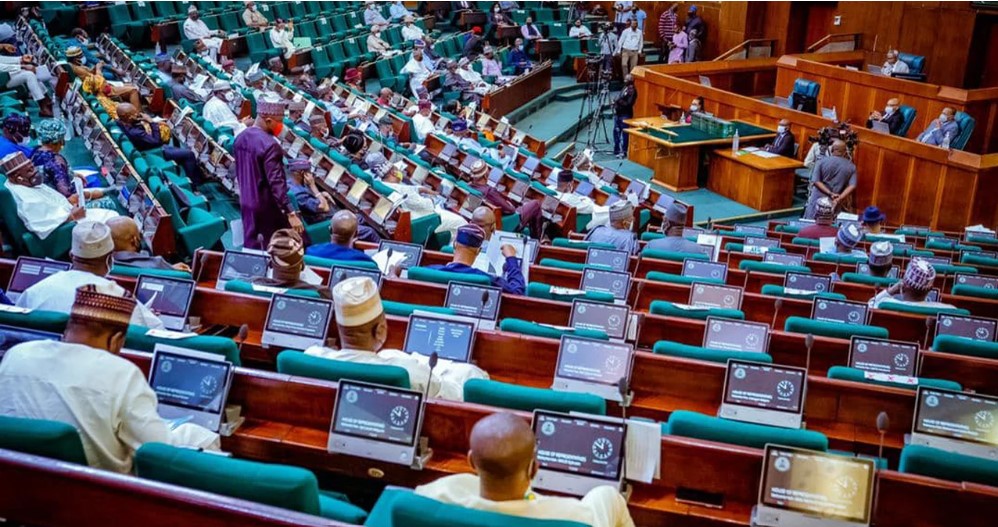
The wave of political alignments ahead of the 2027 general election continued on Tuesday as 27 members of the House of Representatives switched political platforms, with the All Progressives Congress gaining 14 new members and losing two.

Speaker of the House, Tajudeen Abbas, while presiding over Tuesday’s plenary, announced the defections, lamenting the decision of two of his colleagues to dump the APC for the opposition.

The defections strengthened the fortune of the ruling party in the Green Chamber as its membership rose to about 280 out of the 360-member parliament.

The Peoples Democratic Party, which has lost many of its members, comes a distant second with 38 members, the African Democratic Congress has 15 members, while the Labour Party and the New Nigeria People’s Party are left with 12 and five members respectively.

The Accord and the Action Peoples Party have two members each.

Recall that during the inauguration of the 10th House in June, 2023, the APC had 181 members, while the opposition parties had 179, with the PDP leading with 115 members.

Last week, The PUNCH exclusively reported the imminent defection of the House Deputy Spokesman, Philip Agbese.

On Tuesday, the Benue lawmaker left for the LP, anchoring his defection to the lingering political crisis between Governor Hyacinth Alia and Secretary to the Government of the Federation, Senator George Akume.

With his defection, Agbese, who represents Ogbadigbo/Okpokun Federal Constituency, became the first lawmaker elected on the platform of the APC to dump the party for the minority party.

Other defectors included Ademola Akani and Lanre Oladebo Omoleye (PDP to Accord), Ikenga Ugochinyere (PDP, Imo) and Anthony Nwogu (LP, Imo) to APP.

On his part, the House Deputy Minority Whip, George Ozodinobi, led the defectors from LP to the ADC.

“I am leaving LP due to the crisis in the party. The crisis has affected the collective pursuit of a common agenda, and we believe that the decision to join the ADC will enhance my contribution to national development,” he said.

Others who left for the ADC included Harris Uchenna (LP, Anambra), Yahaya Tongo (PDP, Gombe), Oluwaseyi Sowumi (LP, Lagos), Aliyu Mustapha Abdullahi (APC, Kaduna, who recently defected from PDP to APC), Mani Maishinko (PDP, Sokoto), Abdulsamad Dasuki (PDP, Sokoto) and Umar Yabo (PDP, Sokoto), all left their parties for the ADC.

See also  Dangote refinery slashes petrol gantry price by N75/litre; read details

Mustapha Tijani, Mohammed Shehu, Dankwa Idris, Hassan Shehu, Tanimu Yusuf, Mohammed Ciroma, Sani Madaki, and Tijani Jobe all swapped the NNPP for the APC.

The APC also gained Ja’afaru Yakubu (PDP, Taraba), Sadiq Tafida (PDP, Taraba), Ibrahim Mohammed (PDP, Kebbi) and Hassan Shinkafi (PDP, Zamfara)

Sani Madaki, who was until his defection the Deputy Minority leader of the House, said his decision to leave the NNPP was a result of the protracted crisis in the party, leading to a legion of court cases and what he discovered about the Kwankwasiyya movement.

He said the crisis in the party has divided its members along the line of supporters of the founders of the party and the former Kano State governor, Mr Rabiu Kwankwaso.

Governor Abba Yusuf of Kano State, Deputy Senate President, Barau Jibrin and former APC national chairman, Dr Abdullahi Ganduje, were at the session to welcome eight NNPP defectors from Kano State to the APC.

On Monday, the leader of the Kwankwassiya movement and NNPP chieftain, Dr Rabiu Kwankwaso, dumped the party for the ADC.

He was joined by supporters, including the former deputy governor of Kano State, Aminu Gwarzo and the 2023 governorship candidate in the state, Yusuf Gawuna.

Announcing his decision to join the APC in a statement on Tuesday, the lawmaker representing Birnin Kebbi, Kalgo and Bunza Federal Constituency of Kebbi State, Mohammed blamed protracted leadership crises and internal divisions within the opposition party.

He said the PDP had been “deeply enmeshed in unresolved leadership tussles and litigations” that had weakened its effectiveness as a political platform.

“The persistent leadership crisis and internal conflicts within the party have made it increasingly difficult for committed members like myself to contribute meaningfully to its growth and democratic responsibilities,” he said.

The lawmaker confirmed that he has formally communicated his resignation to his ward leadership in Nasarawa I Ward, Birnin Kebbi, and has also notified the Speaker of the House of Representatives.

See also  Trump hails Tinubu over anti- terror war

PDP senator joins APC

In a related development, the senator representing Niger South, Peter Jiya, on Tuesday defected from the PDP to the APC, citing deepening internal disputes within his former party.

The defection, which adds to the growing wave of political realignments ahead of the 2027 general elections, was formally conveyed in a letter addressed to the President of the Senate, Godswill Akpabio, and read during plenary on Tuesday.

In the letter, Jiya stated that he had resigned his membership of the PDP with effect from March 10.

“I wish to notify you and the Senate that I have resigned my membership of the Peoples Democratic Party effective today,” the letter read.

Explaining the reason for his decision, the lawmaker pointed to unresolved internal conflicts within the party.

“This action is premised on quarrels and irreconcilable divisions within the party,” he said.

Jiya further announced his decision to continue his political career under the APC.

He also expressed appreciation to the PDP for the opportunity to serve.

The development comes barely 24 hours after the Independent National Electoral Commission formally recognised a faction of the National Working Committee of the Peoples Democratic Party aligned with the Minister of the Federal Capital Territory, Nyesom Wike.

Agbese dismisses gov ambition

The Deputy Spokesperson of the House of Representatives, Mr Philip Agbese, said his defection was driven by the wishes of his constituents, as he dismissed speculation linking it to a governorship ambition in Benue State.

Speaking to journalists, he said, “Well, first and foremost, let me thank the people of Ado/Okpokwu/Ogbadibo Federal Constituency for the opportunity to be here.

“Secondly, we are about to kickstart another round of the tournament, and the people, of course, having critically examined the machinery that brought us here, and they realised some faults, have decided to board another plane, which is the Labour Party.

“So let me thank Her Excellency, Senator Nenadi Usman, the national chairman of the Labour Party, and the entire leadership, for accepting us to be part of the Labour family.”

He added, “I want to categorically put it on record that our defection is about service to our people. It is about making ourselves available again for service come 2027 and our people, the largest population of our people, have taken a very firm position, to say that the Labour Party is the only available vehicle that will take us to the expected destination, come 2027, and as a servant of the people, we have no choice than to be part of the Labour family. That is why we’re here today.”

See also  See what the court did to PDP convention plans

Agbese, who described himself as the new political leader of the party in Benue, pledged loyalty to the LP and ruled out importing internal wrangling from his former party.

“This is a new family. I’m just coming in, and as the new political leader of the party in Benue state, we also have our national leader, His Excellency, Dr Alex Otti. He is the national leader of this great party.

“So I think there is a need for us to step down our old behaviour from the APC, wear a new lens and see things differently.

“So, not until we do that, we don’t really know, but I believe that Senator Nenadi Usman has accepted me into this party and to lead the party to victory.”

Explaining why he did not join the ADC, Agbese said the decision reflected the preference of his constituents.

“The people of my federal constituency are completely different kinds of people. They respect multi-party democracy,” he said.

On rumours of a governorship bid, Agbese said, “I do not only believe in leadership. I also believe much more in servantship. And today we have also adopted the responsibility not to even be servants again, but to become labourers.

“There’s no governorship ambition in sight at the moment. We cannot rule that out in the near or far future, but at the moment, I think it is about the people.”

He also reaffirmed his loyalty to the Secretary to the Government of the Federation, George Akume.

punch.ng

FOLLOW US ON:

FACEBOOK

TWITTER

PINTEREST

TIKTOK

YOUTUBE

LINKEDIN

Continue Reading
Click to comment

Leave a Reply

Your email address will not be published. Required fields are marked *

Politics

Peter Obi says he won 2023 election but has ‘no evidence’ to prove claim, read details

Published

on

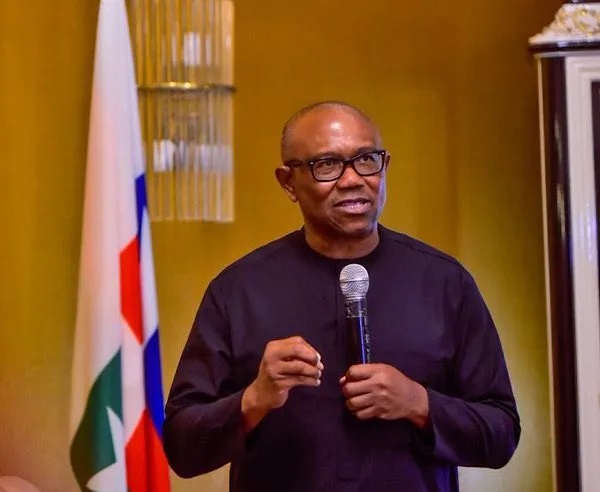
Presidential candidate of the Nigeria Democratic Congress (NDC), Peter Obi, has acknowledged that he has no evidence to substantiate his claim that he won the 2023 presidential election, while insisting that he remains convinced that he was the actual winner.

Obi made the remarks in a recent interview with BBC Africa while discussing his position on the disputed 2023 election and his plans to contest the 2027 presidential election.

Asked directly whether he had evidence to support his claim of victory in the 2023 election, Obi said, “There’s no evidence. Everything is not based on evidence.”

He nevertheless maintained that he won the election, adding, “I won the election and that’s where I will end. I don’t like going back to the past. I won the election (2023). Well, there’s no evidence but I won the election.”

Obi contested the February 25, 2023 presidential election under the Labour Party and was placed third in the results announced by the Independent National Electoral Commission (INEC).

The electoral commission declared Bola Tinubu of the All Progressives Congress (APC) the winner with 8,794,726 votes, while Peoples Democratic Party (PDP) candidate Atiku Abubakar came second with 6,984,520 votes. Obi recorded 6,101,533 votes.

Following the declaration, Obi and the Labour Party challenged the outcome at the Presidential Election Petitions Court, alleging electoral irregularities and non-compliance with electoral laws.

The five-member tribunal dismissed the petition on September 6, 2023, and upheld Tinubu’s victory.

Obi later took the case to the Supreme Court, but a seven-member panel of the apex court dismissed his appeal on October 26, 2023, ruling that it lacked merit and affirming the lower court’s decision.

See also  See what the court did to PDP convention plans

Despite the court decisions, Obi has continued to reject the 2023 election outcome as a true reflection of the votes cast by Nigerians.

Source: tribuneonlineng.com

Follow Politics

FOLLOW US ON:

FACEBOOK

TWITTER

PINTEREST

TIKTOK

YOUTUBE

LINKEDIN

INSTAGRAM

Continue Reading

Politics

Presidency reveals key factor that gives Tinubu edge over opposition ahead of the 2027 elections, read details

Published

on

The Presidency has said the growing number of governors backing President Bola Tinubu gives him a stronger political structure and an advantage over opposition candidates ahead of the 2027 presidential election.

The Special Adviser to the President on Policy Communication, Daniel Bwala, said this on Channels Television’s Politics Today, arguing that the political landscape had changed considerably since the 2023 election.

Bwala said the support of governors was significant because they control political structures in their respective states and could translate their backing for Tinubu into grassroots mobilisation ahead of the election.

“Since then, President Bola Tinubu has got how many governors on his side? The governors are the Chief Executive Officers of their respective states. They coordinate the structures of the state. These people say, ‘We are putting our goodwill, our resources, our structure, and our support to the President,’” he said.

He said the President’s political position had also been strengthened by people who had benefited from his administration’s policies, including beneficiaries of the Nigerian Education Loan Fund (NELFUND), agricultural programmes, manufacturing incentives, CrediCorp and infrastructure projects.

Bwala said the developments constituted “facts, verifiable data” which, in his view, showed that Tinubu had made progress since assuming office in 2023.

He also dismissed suggestions that the administration’s confidence ahead of 2027 was based solely on divisions within the opposition, saying its record in office would form an important part of its campaign.

His comments came amid renewed debate over Tinubu’s popularity and the ability of the opposition to challenge his bid for a second term.

See also  Dangote refinery slashes petrol gantry price by N75/litre; read details

Bwala dismissed an assessment by The Economist that Nigerians may re-elect Tinubu despite disapproval of his administration, arguing that claims about the President’s popularity should be backed by representative opinion surveys.

“When you make a claim that Nigerians don’t like him, without saying, also, that there are a lot of people… one million families that the children have benefited from NELFUND, you think they hate him?” he asked.

He similarly cited beneficiaries of agricultural interventions, support for manufacturers and CrediCorp, arguing that such groups should be considered when assessing public sentiment towards the administration.

On concerns over rising poverty and hunger, Bwala acknowledged that more Nigerians had fallen into poverty but attributed the hardship partly to the economic reforms undertaken by the Tinubu administration.

“More people went down to poverty, I acknowledge, I’m not doubting it. But there’s a but to it. Since when the reform started to today, we have made marked progress,” he said.

According to him, the reforms were necessary to address longstanding economic problems, despite the short-term discomfort experienced by Nigerians.

Bwala also defended Tinubu’s statement that Nigeria had moved from the “doldrums” towards prosperity, saying the President was not suggesting that Nigerians would suddenly begin experiencing prosperity from October 1.

He cited NELFUND beneficiaries, subsidised healthcare, infrastructure projects and support for small and medium-sized businesses as examples of what he described as prosperity already reaching Nigerians.

“One million families whose children have benefited from the NELFUND programme, what they are benefiting is called prosperity,” he said.

“If you go to an environment or a place where there have been no roads or any form of infrastructure, and we have established infrastructure there, what has come to them is prosperity.”

See also  PDP candidate rejects Kogi’s N5m campaign billboard levy

Bwala further claimed that the opposition had lost several influential political figures who played key roles in their 2023 campaigns.

He said former Vice President Atiku Abubakar no longer had the support of governors who worked for his 2023 campaign, while Peter Obi had also lost some critical political allies.

“In terms of the other candidates who say he will not win, Atiku Abubakar lost close to 25 per cent of key people that you know around him. All the governors that worked for him that time are no longer with him,” Bwala said.

“Peter Obi lost 55 per cent of the critical people that carried his campaign; they’ve all disappeared. And some of them went to Atiku, some of them went wherever they could go to.”

He consequently expressed confidence in Tinubu’s prospects in the 2027 contest, saying the political support around the President was considerably different from what existed before the 2023 election.

Source: tribuneonlineng.com

Follow Politics

FOLLOW US ON:

FACEBOOK

TWITTER

PINTEREST

TIKTOK

YOUTUBE

LINKEDIN

INSTAGRAM

Continue Reading

Politics

David Mark reveals ADC won’t accept rigging in 2027, read details

Published

on

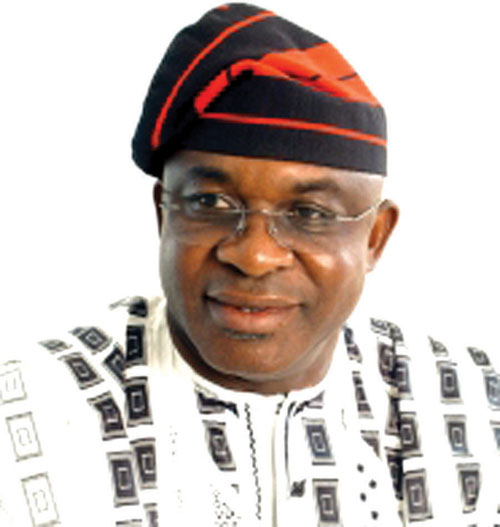
The National Chairman of the African Democratic Congress, David Mark, has warned that the party will comply with electoral rules but will resist any attempt to manipulate the 2027 general elections or rig it out of the contest.

Mark issued the warning on Wednesday in Abuja when he received the governing council of the Savannah Centre for Diplomacy, Democracy and Development, led by former Chief Justice of Nigeria, Justice Olukayode Ariwoola (retd.), at the ADC national headquarters.

Mark said the ADC was prepared to abide by the rules governing the elections and the party’s own code of conduct, but would not accept electoral manipulation.

“We hold ourselves to the highest standards of good conduct as a political party. We will play by the rules. But we will not accept rigging or allow ourselves to be rigged out.

“We are committed to playing politics in a manner that promotes public confidence in democracy,” he said.

He added that the party would comply with INEC’s guidelines as well as the provisions of its Orange Book, which sets out the party’s code of conduct and governance principles.

The former Senate President had previously warned against the use of state institutions to manipulate the 2027 elections, saying the credibility of the polls must be protected.

The Council of the Wise, as the governing council is known, was at the party secretariat as part of its ongoing engagement with political parties and other stakeholders ahead of the 2027 elections.

Speaking during the visit, Ariwoola said the centre was seeking the commitment of political parties and their candidates to peaceful, free, fair and credible elections.

See also  Igbos only have ears for Peter Obi not Soludo – Sam Amadi

He also urged the ADC leadership to ensure that its candidates and supporters complied with the rules of the Independent National Electoral Commission and avoided conduct capable of triggering political violence.

The latest warning came as the Savannah Centre intensifies consultations with political actors and other stakeholders ahead of the elections.

The Council of the Wise, chaired by Ariwoola, was reconstituted in June with a mandate to promote peaceful, free and credible elections and engage key institutions and political actors.

The council’s recent engagements have included meetings with presidential candidates and other political stakeholders, with repeated calls for adherence to electoral rules, issue-based campaigns and the prevention of violence and hate speech.

Ariwoola’s delegation to the ADC included members of the Council of the Wise, among them Professors Abdullahi Shehu and Azeez Dankano, Executive Director of the Centre, Amb Sani Bala, Mr Tunji Lardner and Amb Godswill Ighali.

The centre had earlier said the Council of the Wise would engage President Bola Tinubu, INEC leadership, political parties, security agencies, traditional and religious leaders, civil society groups and other stakeholders ahead of the elections.

Source: punchng.com

FOLLOW US ON:

FACEBOOK

TWITTER

PINTEREST

TIKTOK

YOUTUBE

LINKEDIN

INSTAGRAM

Continue Reading

Trending