The United States of America has been the world’s only superpower since the fall of the Berlin Wall, the end of the Cold War and the demise of the Soviet empire by the dawn of the 1990s. Also, the US is the largest economy in the world, notwithstanding the economic surge of China in recent decades. Most crucially, America boasts the strongest military in the world today. Like it or not, the US calls the shots in global governance!
Given its global preeminence, the US is respected, if not feared, all over the world, even by its fiercest adversaries. As a result, whatever foreign policy statement an American president issues is taken with utmost gravity by all rational countries and their leaders. It is even more serious when that American president is none other than President Donald J. Trump!
President Trump is known for being an effective leader who is not afraid of taking tough decisions, even if those decisions are controversial or seen to be so. In fact, Trump does not take decisions if they are not tough. His track records as a leader, whether in business or in politics (first and second term presidency), show him forth as a tough man. Coupled with his resolve to back his positions with capacity, the man who is hardly seen laughing in public, hardly bluffs. And anybody calling Trump’s bluff does so at his or her own peril.
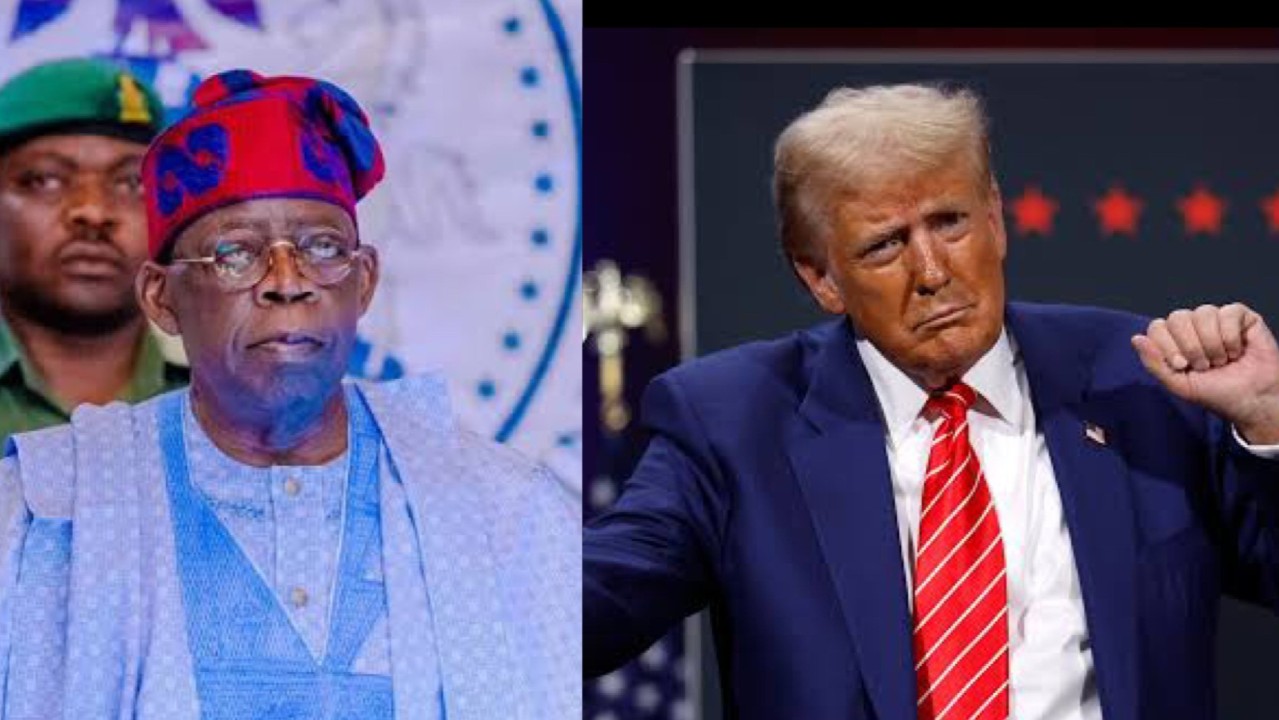
Its is precisely because of the forgoing that the Nigerian government has threaded cautiously in its official reaction to the recent designation of Nigeria as a Country of Particular Concern, primarily due to concerns over what America sees as the persecution of Christians and issues of religious freedom. The most concerning part of the American charge against Nigeria is that there is an ongoing Christian genocide in the country. And Trump has warned of impending US action against Nigeria to protect Christians, including imposing crippling sanctions and possibly taking military action against perpetrators of genocide in the country. Nigeria has done well by pushing back against the charge of Christian genocide and has decided to adopt diplomatic measures to work closely with the US toward improving domestic security.
Outside government circles, there appears to be a cacophony of voices over the US designation and threatened intervention in Nigeria. A combination of misunderstanding, anger, primordial suspicion along conflict fault lines and fear is fueling a heightened sense of disunity. For instance, the Muslim Rights Concern has blamed the Christian Association of Nigeria for the US listing of the country as a CPC, accusing the Christian leaders of “betraying President Bola Tinubu” by submitting petitions to US authorities on frivolous claims of targeted persecution. Also, the Nigerian Supreme Council for Islamic Affairs has pointed the finger at some “Islamophobic and unpatriotic Nigerians”, including evangelical groups and separatists, for selling the dummy of Christian genocide to the highest levels of the US government. On its part, CAN has pushed back on “a deliberate attempt to silence legitimate concerns about religious persecution”, insisting that raising its voice for justice was not betrayal, but “responsibility”.
Beyond the religious turf, various observers and commentators have taken antagonistic positions on this burning issue, some for, others against our political leaders, depending on where they find themselves across the political divide. However, this is a time when we need to be most sober to confront our lived experience of disgraceful national security and resolve to forge ahead as a united country where the life of every citizen matters. In doing so, we need to collectively ask ourselves some questions and find the answers. I have asked a few questions here:
US perception: Is Mr Trump correct on the issue? Is a Christian genocide going on in Nigeria? Are the killings genocidal? Is Trump’s view of the Nigerian State in relation to the decades of constant mass murder, correct?
The threat of US action: Is the threatened US action appropriate? Should the US directly attack terrorist groups in Nigeria? Should the US impose crippling sanctions against terrorist groups operating in Nigeria?
Nigeria’s only reasonable response: What should be Nigeria’s appropriate and effective response to the threat of US Action?
While these questions are relevant to the various manifestations of terrorism and mass murder across Nigeria, I have focused the responses below on the unique security predicaments faced by the people of North-Central Nigeria, with particular emphasis on Benue State.
There seems to be a national consensus on the American charge of a Christian genocide in Nigeria. We are all gratified to observe the reality that, while all the groups currently perpetrating large-scale violence and collective massacre in Nigeria profess Islam as their faith, the victims cut across all religions. Truly, an untold number of Muslims have been massacred by the terrorists operating in the North-East (Boko Haram and Islamic State in West Africa Province), North-West (the so-called bandits) and the North-Central (the Fulani herdsmen militias) states of Nigeria. Similarly, outrageous numbers of Christians and non-Christians have been murdered by these groups for more than a decade, particularly in the North-Central States of Plateau and Benue.
Consequently, we can say that the Islamist/Islamic terrorists do not massacre Nigerian Christians as an exclusive target group. Yet, because the preponderance of residents of Plateau and Benue States in Central Nigeria are Christians, it is valid to observe that Christians are being wiped out in those parts of the country by armed groups that profess Islam as their faith, even if not for religious reasons.
A look at the definition of the concept of genocide may help us here. The definition of the crime of genocide is contained in Article II of the United Nations Genocide Convention, and reads as:
“…any of the following acts committed with intent to destroy, in whole or in part, a national, ethnical, racial or religious group, as such:
Killing members of the group;
Causing serious bodily or mental harm to members of the group;
Deliberately inflicting on the group conditions of life calculated to bring about its physical destruction in whole or in part;
Imposing measures intended to prevent births within the group;
Forcibly transferring children of the group to another group.”
Given the above universally accepted definition, we can categorically accept that genocide has been and, is still, going on in Nigeria. The abduction of hundreds of schoolgirls from Chibok (North-East) in 2014 by Islamist Boko Haram and their subsequent rape and forcible marriage to terrorist commanders in the forest of Sambisa fall squarely within the definitions of genocide. In the same breath, the ongoing and non-stop killing of non-Fulani farmers in rural communities across Benue and Plateau states (North-Central) by Fulani herder militias eminently qualify as genocide. In the particular cases of Benue and Plateau killings, the perpetrators belong to a distinct ethnic group, religion and occupation, completely different from those of the victims. More particularly in the plains of Benue, the constant and ongoing unprovoked invasion, land grabbing, senseless killing, maiming, arson, looting, uprooting of whole communities and occupation of farmlands by Fulani herder militias are copiously documented and well known to Nigeria’s military and security authorities. In brazen defiance of the American warning, barely days after the Trump tweets, fighters from the same militia invaded Anwule community in Ohimini Local Government Area of Benue State and launched a deadly attack on the night of Tuesday, November 4, 2025, killing three residents, including a local pastor, Mr Simon, and leaving one person missing. This is just one of many instances.
The horrific massacre in Yelewata, Benue State, on June 13-14 only helped to bring the phenomenon to global consciousness. In that single overnight attack by Fulani herder militants, over 200 residents were killed, homes were burned while thousands were displaced. According to well documented reports:
“Victims were burned alive, shot, or hacked with machetes as they fled; entire families were trapped in their homes and set ablaze. Among the survivors, 98 vulnerable women and children now face starvation and trauma with no shelter, while threats of renewed attacks loom.”[i]
The Yelewata massacre made it to the global headlines; not so with other ongoing killings in Central Nigeria by the same Fulani herder militia. In the Apa and Agatu areas of Benue State, killings go on intermittently in rural communities. Some of the incidents make it to the local news, other do not. Some communities are completely displaced and evicted, while their residents live as refugees in larger, safer towns, driven from their only occupation of farming and surviving on handouts from their hosts. Vast farmlands are vacated indefinitely by owners for fear of being killed, raped and kidnapped in the farm by the roaming armed herders. Is this not genocide?
Is Trump’s view of the Nigerian State correct in relation to decades of mass murder?
In his explosive outburst against Nigeria, Trump charged that the country ‘continues to allow killing of Christians’. Popular US Senator Ted Cruz went further to accuse Nigerian officials of “ignoring and even facilitating the mass murder of Christians…” While Christians are not the only ones killed, we should all agree that nobody should be allowed to be killed, Christians or not. Between Trump and Cruz, the most active words are ‘allow’ and ‘ignore’. Does the Nigerian state allow and/or ignore mass murder by extremist groups? Does Nigeria treat life as sacrosanct? Does the government take effective and dissuasive actions against the perpetrators of mass killing? Do perpetrators kill with impunity, or do they face arrest, prosecution, conviction and deterrent punishment? Do security forces respond promptly to protect communities when they are subjected to mass murder? Do security forces have a durable presence in the hotspots of mass murder to forestall reoccurrence? Are survivors of mass murder catered for and rehabilitated?
We all know the answers. We know that massacre occurs with impunity in Nigeria, including what could qualify as genocide. We know that the decades of wanton killing in the plains og Benue and Plateau have never seen any perpetrator brought to justice. In particular, the Fulani herder militias have killed so many villagers in Apa and Agatu, and no single perpetrator has ever faced justice for those atrocities. Not even a Commission of Inquiry has been set up to investigate the senseless killings and mete out justice. We know that security forces occasionally undertake light deployment to major towns, but never conduct operations deep inside the bushes and forests where the militias have their bases.
Thus, apart from mere verbal condemnation by political authorities and official condolence visits to State capitals, the brutalized communities have only experienced inaction from the Nigerian central government during or after mass murder episodes. The overall understanding of the people of Benue is that the Federal Government of Nigeria is complacent in what appears to be their extermination by the militias. Now, this perceived complacency, is closely aligned with Ted Cruz’ accusation against Nigeria of ‘ignoring the mass murder. Benue residents see the Federal Government as not paying attention, thus ignoring the existential threat they face perennially. Consequentially, by ignoring these real threats, the Government is ‘allowing’ it to continue, inadvertently or knowingly. And if Government allowing the mass murder through complacency, it puts itself up for being accused of indirectly facilitating it by its sheer absence or inaction. Thus, the American position that Nigeria ignores, allows and facilitates mass murder may hold.
This position is even reinforced by the tactics used by security forces occasionally in the flashpoints in Benue: The deployments are very light on the ground compared to the scale of the attacks; the troops deployed remain only in the towns, but do not launch combat operations into the bushes to confront the militias and their bases; troops have a habit of acting tough against the communities and soft towards the militias. Community self-help youths who seek to defend their communities by confronting the invaders are constantly disarmed, arrested and sent to Abuja for permanent detention. In response to the Ohimini invasion of early November, troops responded by only arresting a few armed residents, while the invaders remained in the bush unengaged. Costly defeats suffered by troops in previous incidents may have deterred the security forces from confrontation with Fulani militias in the bush. In very recent confrontations, where few troops had been deployed in Apa and Agatu communities, they have been hopelessly outnumbered and outgunned, leading to loss of men and material, and eventual retreat, leaving the communities to evacuate.
There seems to be no deliberate humanitarian policy to address the aftermaths of mass murder in Benue State. There are no official camps for internally displaced persons across the entire land of Apa and Agatu, notwithstanding the high frequency of attacks and displacements, particularly during he dry season. In addition, there is no sufficient troop presence to deter recurrent aggression in the communities prone to such attacks. The troops that were deployed to those flashpoints have been too few to make a difference and have only stayed for short periods, allowing the militias to continue to plan and mount massacres from the bush. What appears to us in Benue is that the Nigerian state is either unwilling or unable to protect rural communities from constant massacre by the Fulani herder militia.
Is the threatened US action appropriate?
Protecting and providing for citizens are the fundamental objectives of the State, according to the Constitution of the Federal Republic of Nigeria. However, if it is evident that the same State is unwilling and/or unable to protect citizens from existential threat, a humanitarian intervention from outside, within the bounds of international law, and in collaboration with Nigeria, may become appropriate. If the people of Benue cannot live free as citizens without the fear of extermination and eviction from their ancestral land by the Fulani herder militia, they will gladly welcome such a measured intervention as divine emancipation. A combination of tools such as targeted sanctions (travels bans, asset freezes, etc.) and surgical strikes (without collateral damage), as being considered by Trump, would be in furtherance of Nigeria’s national security.
Should the US apply sanctions or directly attack armed groups in Nigeria?
This question appears to be the most contentious. We all seem to be comfortable with the non-lethal measure of sanctions. Sanctions usually take some time to take effect on targets, and the agents of mass murder in Nigeria may not immediately feel the pain of asset freeze and travel ban. They may not be frequent travelers through the airports and their assets many not easily be identifiable. They roam through forests and if they have to cross the border to neigbouring countries to raise money or import arms, they could easily do so through informal crossing routes and points that litter our highly porous borders. Further still, given the informality of our economic system and the dominance of cash in financial transactions, it could be extremely difficult to trace, locate and freeze the assets of these criminal targets. As stated above, precision strikes that limit collateral damage, with the approval and collaboration of the Government of Nigeria, would be the unavoidable necessity.
This is not an unpatriotic call for invasion or violation of the territorial integrity of Nigeria, as some fear or are misreading. It is a call for targeted strikes to permanently take out an existential threat in support of the fundamental objective of the Nigerian State to protect citizens and preserve their lives and properties. Such American strikes to disarm, disable and dislodge (D DD) the militias operating in the bushes and forests of Benue, in collaboration with Nigerian troops, would be conscientious, lawful (under international humanitarian law) and expedient in helping Nigeria achieve what it should but has not!
- J. Trump would be forever celebrated by the people of Benue as the Moses of our time!
What should be Nigeria’s appropriate and effective response to the threat of US Action?
The Americans do not trust us enough to transfer the highest-grade capabilities for counter-insurgency operations due to concerns about human rights and potential misuse of those weapons. But they are offering to enter into the theatre directly and deploy those capabilities against our own threats. This is a big opportunity that should be warmly welcomed!
To be honest, it is disgraceful that we have had to wait until Trump’s rage before realizing that we needed to take urgent action against the threats to our existence as a nation! Our national complacence allows threats to fester for too long, forcing us into knee-jerk reaction when they snowball into wildfires that are so costly and time consuming to put out. We treated Boko Haram with kids gloves when it started in 2009, and after 16 years of fighting we can count the cost – high number of military officers and men who have paid the ultimate price, and still counting; innumerable civilian deaths, financial cost of counterinsurgency; etc.
In the same vein, we treated the new terrorists in the northwest as mere bandits until they were allowed to build capacity into a full-fledged cluster of domestic terrorists that we are now struggling to contain. Just a few days after the Trump CPC listing of Nigeria, the heavily armed bandits, who had seized and occupied the Kainji National Park – a national asset in Niger State, North Central Nigeria – for the past two years unchallenged, ambushed a member of the Federal House of Representatives, killing six (6) soldiers in his convoy. What a national disgrace! Where were we when the terrorists were seizing such an important national asset; and what have we done to dislodge them from the park they have occupied over the last two years? Are we claiming ignorance of the seizure and occupation, or are we admitting that we have been too weak to dislodge them? And if combat-trained and armed soldiers could be so easily sacrificed, what is the value of civilian life in Nigeria? Why did we have to wait for the Trump accusations before being told that President Bola Tinubu was expected to receive the report of the House of Representatives ad hoc committee investigating the recurring killings in Plateau State – a committee set up since end of March 2025? With these questions begging for answers, Why shouldn’t President Trump call us a ‘disgraced country’?
Thus, instead of seeing the US threat of action as foreign interference, the Federal Government of Nigeria should be the one calling for help from Trump to support its military operations against the overwhelming array of domestic threats, chiefly terrorists, bandits and Fulani herder militias. We have lost so many military/security officers and men to terrorists since 2009 that we should pause the counter insurgency and ask: how many more commanders, officers and men do we have to lose before we succeed in effectively dislodging all armed groups from our country by ourselves? If it is looking like mission impossible, we should own up and call for external help!
The brazen abduction of another 25 schoolgirls in Kebbi on 17 November 2025 lends credence to the fear that we cannot do the job alone. This fear has forced even the Nigerian Senate to call for a massive expansion of our military manpower with the recruitment of 100,000 fresh personnel. How long do we have to wait before we own up? And how much more civilian and military casualty do we have to take before we admit that we are inching dangerously close to the edge of the precipice?
If I hear Trump correctly, he is not saying he wants to invade Nigeria. What I hear him say is ‘I want to help a helpless country’! What would the US invade Nigeria for? What would be in it for the US? We are a traditional ally of the US, which counts on us to advance its interests in Africa. Yet, we have serious problems that we do not wish to admit; we are in a strait and in dire need of help, but too proud to say so! That is not national pride; it is self-delusion!
And if we do not want America’s help, let us show capacity and effectiveness in addressing our security predicaments by doing the following:
- Immediately create, equip and deploy a massive and effective forest force. This force should enabled and empowered to deploy into the forests and bushes to destroy the terrorists, bandits and herdsmen militias. This force should work with, not against, community self-protection initiatives for intelligence gathering, terrain guidance and other essential support.
- Commence the use of unmanned aerial vehicles (UAVs) for effective 24-hour surveillance and interdiction. Drones are now relatively cheap to acquire and have become a potent feature of recent battlefields. The use of UAVs will drastically minimize the risk of losing our vital officers (including generals) and men, as is currently happening in Borno and Niger States. It will help detect predict enemy locations, track their movement and cripple their operations with preemptive strikes before they are able to launch attacks.
- Embed intelligence capabilities in flashpoint communities to gather real time intelligence on the activities of armed groups and act upon them in a timely manner. The Department of State Service (DSS) should transit from a reactive to a preventive approach to community security. Stop waiting until a major incident occurs and then we deploy after the perpetrators had exited from the scene – if it is a question of manpower, can our security forces work closely with vetted civilian youths as volunteers to bolster their capability?
- Maintain a long-term, visible military or security presence in attack-prone communities.
Dr Isima writes from Benue
punch.ng
FOLLOW US ON: