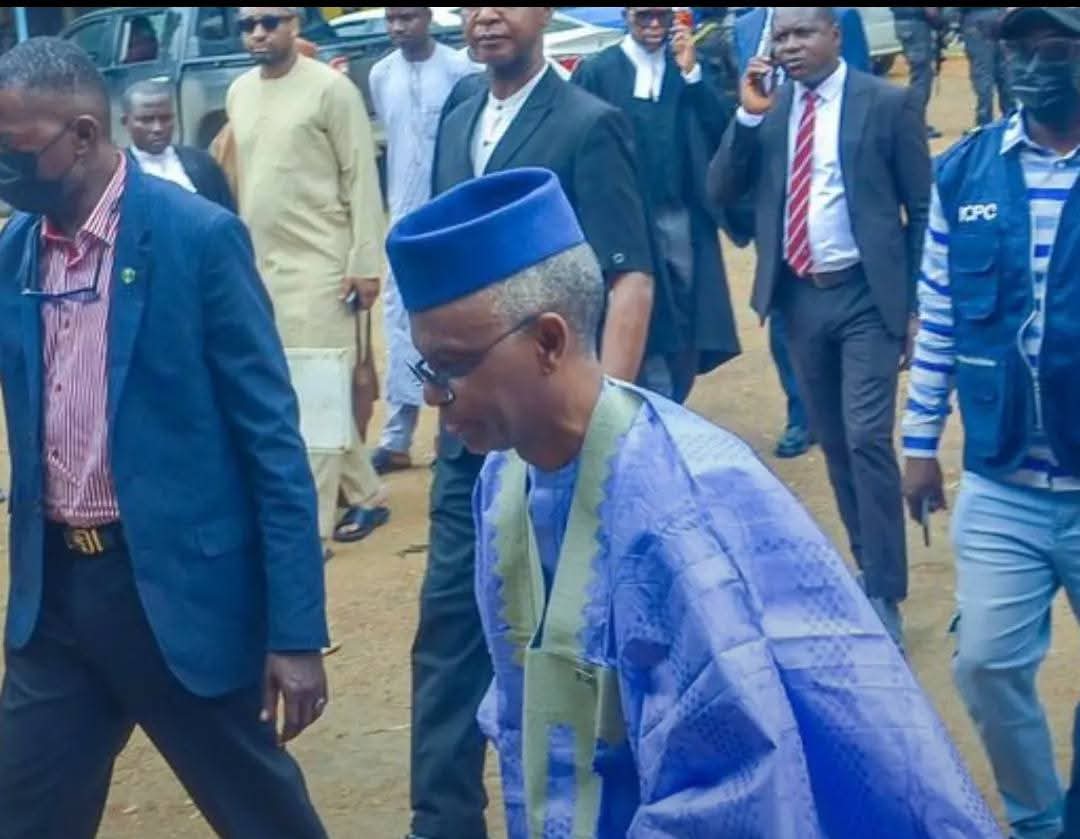
President Bola Tinubu on Wednesday postponed his scheduled trip to Iperu, Ogun State, to prioritise a condolence visit to Jos, Plateau State, over last Sunday’s attacks that left at least 27 people dead.
The decision comes shortly after President Tinubu met with Plateau State Governor Caleb Mutfwang at the Aso Rock Villa on Wednesday evening, where the governor briefed him on the security situation in the state.
Also, the Inspector General of Police, Olatunji Disu, has ordered the deployment of Police Mobile Force units and other tactical teams to Plateau State.
The Special Adviser to the President on Information and Strategy, Bayo Onanuga, revealed this in a statement he signed on Wednesday, titled “President Tinubu postpones Ogun trip, heads to Jos as he begins four-state visit.”
The President will now travel to Jos today to commiserate with the government and people of Plateau State over the recent attacks in the Angwan Rukuba district of Jos North.
Onanuga said from Plateau, the President will travel to Lagos to observe Good Friday and, on Saturday, April 4, he will proceed to Ogun State for the inauguration of the Gateway International Cargo Airport and the inauguration of two commercial aircraft for the export and import of goods.
The President will also inaugurate the new edifice of the Federal Operations Unit of the Nigerian Customs Service and its operational vehicles during the Ogun visit.
He will return to Lagos to continue the Easter holiday, during which he is expected to inaugurate infrastructure projects undertaken by the administration of Governor Babajide Sanwo-Olu.
These include the Ojota/Opebi Link Bridge, the Lagos State Geographic Information System Building, the Multi-Agency Complex named after the President, and a school complex.
The President Tinubu would also visit Bayelsa State on April 10 to inaugurate some completed projects of Governor Douye Diri, including the independent power plant.
Earlier, Mutfwang had told State House correspondents that the President was contemplating a personal visit to the state to commiserate with the people.
“The President commiserates with the entire state, and as a matter of fact, he’s contemplating coming to the state personally to commiserate with the people.
“It’s something that has touched him personally, and he wants to show the people his love and affection for them,” Mutfwang had told State House correspondents.
Tinubu had on Monday strongly condemned the attacks in Jos and in Kahir village, Kaduna State, describing them as “barbaric and cowardly” acts that will not go unpunished.
He also disclosed that he had invited the governor to brief him on the development alongside security chiefs to stop the killings.
Mutfwang arrived at the Villa at approximately 6:45pm on Wednesday.
Speaking with State House correspondents after meeting the President, he said security forces were yet to apprehend any of the attackers responsible for last Sunday’s killings in Angwan Rukuba district.
“Unfortunately, we’ve not been able to lay hands on the attackers yet to know their identities and their motive,” he said.
The governor said that without apprehending the perpetrators, authorities would not be able to determine the actual reasons behind the attack or establish their identities.
“In a crisis of this nature, you can’t reduce it to one reason. It is a mixture of multiple reasons, and sometimes you can only deduce the actual reasons when you are able to get two groups of people, first the victims and then the attackers.
“Unfortunately, we’ve not been able to lay hands on the attackers yet to know their identities and their motive,” he explained.
Mutfwang also revealed that looters attempted to disrupt the fragile peace in Jos on Wednesday morning, hours after the state government relaxed the curfew imposed following the attack.
“We relaxed the curfew this morning from 8am to 3pm, but unfortunately, this morning, there were some looters who tried to disrupt the peace again.
“But I’m glad that the security forces, working together, were able to calm the situation as of noon,” he said.
The governor disclosed that President Tinubu invited him to brief him first-hand on the attack and discuss the way forward.
He said the President had approved certain security measures to be implemented in conjunction with security forces, though he did not specify what these measures entail.
Mutfwang described the attack as an act of criminality, barbaric, and terrorism, insisting it could not be justified under any religion.
He said, “We are seeing this as an act of criminality. It is barbaric. We condemn it.
“It is an act of terrorism, because whatever religion you belong to, it does not give you any basis to come and do the kind of actions that were done on Sunday.”
The governor expressed optimism that the crisis would mark a decisive turning point for proactive security actions in the state.
“What I can assure you is that this has become a decisive turning point that I’m sure going forward we’re going to see more proactive actions,” he stated.
He added that corpses had been evacuated to the mortuary and some families had already buried their dead.
In a statement on Wednesday by the Force Public Relations Officer, Anthony Placid, the IGP ordered the deployment of Police Mobile Force units to the state.
Additional deployment, according to the statement, included tactical teams and intelligence operatives working in collaboration with other security agencies to prevent further breakdown of law and order across the state.
“In response to the situation, the Inspector-General of Police had earlier deployed the Deputy Inspector-General of Police in charge of Operations, DIG Umar Nadada, to Plateau State to assess the security situation, coordinate ongoing operations, and strengthen the existing security architecture,” the statement said.
It added that the IGP had further intensified operations through the deployment of additional mobile police units and other security assets to tackle the ongoing security challenges.
“The Inspector-General of Police states that these actions will continue until normal conditions return.
“He has instructed all operational commanders to ensure visible policing and actively engage with vulnerable communities,” the statement added.
The police boss also commiserated with the Plateau State Government, the people of the state, and the families of the victims affected by the attack in Angwan Rukuba.
He urged residents to remain calm and cooperate with security agencies, warning against taking the law into their own hands.
Earlier on Wednesday, tension remained high as security operatives struggled to restore calm, following the relaxation of the curfew.
Our correspondent reports that the curfew was initially imposed after gunmen attacked residents of Angwan Rukuba in Jos, leaving at least 28 people dead.
However, the state government eased the curfew earlier imposed on the Jos North Local Government Area following improved security in the area.
The Commissioner for Information, Joyce Ramnap, who disclosed this in a statement issued on Tuesday, explained that the curfew would run from 7 am to 3 pm daily, effective Wednesday, April 1, to allow residents to attend to their normal activities within the permitted hours.
But on Wednesday morning, hoodlums and an irate mob reportedly attacked many motorists and passersby in different parts of the city, raising fresh fear and panic among residents.
A video of a young man hacked to death by hoodlums on the road leading to the University of Jos permanent site raised tension across the town.
It was further learnt that motorists in the Terminus and Bauchi Road, Gangere areas, had their windscreens smashed by hoodlums.
Some of the most affected areas included the University of Jos axis, Bauchi Road, Farin Gada, Tina Junction, and Chobe, among others.
Banks and schools located in the affected areas were forced to close down operations.
“We are scared to open our shops, we don’t know what might happen. But there is no need for the current tension in Jos.
“The governor has done well by relaxing the curfew in the interest of the people, but it’s very unfortunate how some people can decide to take the law into their hands for no reason, and I think the government should not allow them to have their way.
“The government needs to do more to ensure our safety,” a resident, Joy Bature, who runs a provision shop at the Terminus Market, said
UNIJOS evacuates students
Our correspondent reports that following the disturbances, the University of Jos ordered the evacuation of students from its hostels, citing the worsening security situation.
The directive was contained in a statement issued on Wednesday by the institution’s Deputy Registrar, Information and Public Relations, Emmanuel Madugu.
The statement read, “In view of the general security situation in Jos, and particularly the near chaotic scenarios that unfolded today (Wednesday 1st April 2026), in areas near the university which heightened tensions and threatened the safety of students in the hostels, the Vice Chancellor, Prof Tanko Ishaya, has directed the immediate evacuation of students of the university from the hostels.
“The evacuation is facilitated by HE Barrister Caleb Manasseh Mutfwang, the Executive Governor of Plateau State, who has provided transport services, fully authorised to carry out the assignment even within the curfew hours.”
Students residing within Jos and its environs were directed to vacate the hostels from 3 pm on Wednesday, while those whose parents or guardians live outside the state are to be evacuated from 8 am on Thursday.
The management assured all that adequate security had been deployed to safeguard the hostels and the institution.
It also urged students and members of the university community to remain calm, adding that further updates would be communicated as necessary.
UNIJOS alumni worried
The University of Jos Alumni Association, in a statement on Wednesday, expressed concern over the recent rise in tension and reported threats affecting students, staff, and the broader university community within Jos North Local Government Area.
In a statement signed by its Global President, Gad Shamaki, the association urged the Plateau State Government and security agencies to deploy an enhanced security presence across all University of Jos campuses, student hostels, residential areas, and major access routes.
“We specifically request round-the-clock patrols, intelligence-led surveillance, and rapid response units to ensure that any potential threats are proactively addressed and swiftly neutralised,” Shamaki said.
The association also advised students to stay indoors, remain vigilant, and report any suspicious activity, prioritising their safety and well-being.
A cross-section of residents who also reacted to the situation called for increased security deployment, particularly around the University of Jos, where students are stranded.
“There’s an urgent need for security deployment to the University of Jos environment, precisely the students’ village hostel.
“We appeal to the security agencies to beam their searchlight around that axis,” said a resident.
Another resident, Ishaku Mark, who lamented the situation, noted, “The Plateau State Government has relaxed the curfew, allowing movement from 7 am to 3 pm daily, effective April 1, 2026, following relative calm in the area after a violent attack that claimed 28 lives.
“What needs to be done is for the residents to maintain peace and not escalate tensions. Those responsible for the renewed tension should be fished out and dealt with.”
When contacted, the spokesman for the Plateau State Police Command, Alabo Alfred, was not readily available to comment on the situation, but sources at the command headquarters in Jos assured all that security agencies had been deployed to the affected areas and were working to restore calm and maintain law and order”
Fresh curfew announced
In a bid to maintain peace, the chairman of Mangu Local Government Area, Emmanuel Mwolpun, imposed a fresh curfew in Mangu metropolis, effective from April 1, 2026, until further notice.
It was learned that the curfew will run from 8pm to 6am, effective on Wednesday, April 1.
The spokesman for the Mwaghavul Development Association in the council area, Friday Derwan, confirmed the development in an interview with The PUNCH in Jos on Wednesday.
Derwan said, “Yes, it’s true. There is a curfew in Mangu. It was imposed by the LG chairman in consultation with the security agencies and other stakeholders.
“It is not as if there is any crisis anywhere in the LGA. We felt there was a need to take proactive measures to protect the citizens, given what is happening in Jos and given the past experience of the Mangu LGA.”
A statement later issued on Wednesday by the LGA authority also confirmed the curfew, stating that the move was aimed at ensuring the safety and security of residents and property within the metropolis.
The statement signed by the Director of Press and Publicity to the Chairman, Mangu LGA, Jeremiah Dakahap, read, “Following a careful deliberation with heads of security operatives, the Chairman of Mangu Local Government, Emmanuel Bala Mwolpun, has imposed a curfew in Mangu metropolis, effective from April 1st, 2026, until further notice.
“The curfew hours have been set from 8pm (night) to 6 am daily. This measure is taken to ensure the safety and security of residents and property within the metropolis.”
“The Local Government Administration urges all residents to comply with the curfew directive. Members of the public are advised to stay indoors during the curfew hours and cooperate with security personnel on duty.
“The Executive Chairman appeals to residents to go about their daily activities peacefully and report any suspicious activities to the relevant authorities.
“This curfew is imposed in the interest of public safety and security.”
NYSC suspends clearance
The National Youth Service Corps on Wednesday suspended the ongoing biometric clearance across all local government areas in Plateau State.
The suspension, approved by the NYSC Director General, affected all the LGAs in the state.
According to a statement signed by the NYSC state coordinator, J. Yavala, the suspension was due to security concerns.
The statement assured that clearances done for April remained valid, adding that the exercise would resume as soon as normalcy returned to the state.
It advised corps members to stay indoors and stay safe.
Lawyers demand tougher action
The Plateau Lawyers Bar Forum called for stricter penalties against commercial motorcycle operators who violate the ban on their activities within the Jos-Bukuru Metropolis.
In a statement issued on Wednesday, the forum’s chairman, Ledak D. Dafer and Secretary, Dr D.N. Dashe, strongly condemned the killings and urged the state government to ensure that those responsible were brought to justice.
The lawyers called on the government to identify, arrest and prosecute the attackers and anyone found to have sponsored the assault.
They also demanded an investigation into what they described as a delayed response by the police, noting that security formations were located close to the scene of the incident.
“The Plateau Lawyers Bar Forum has found it imperative to unequivocally condemn the dastardly and mindless killings of defenceless residents of Angwan Rukuba in Jos, Plateau State, by armed criminals,” the statement said.
The forum urged the Plateau State Government to strictly enforce the existing ban on commercial motorcycles across the Jos-Bukuru metropolis without exception.
Police arrest fake soldier
Operatives of the Plateau State Police Command arrested a fake soldier in the state capital.
It was learnt that the suspect was immediately taken to the police headquarters in Jos to be paraded by the Commissioner of Police, Bassey Ewah.
In a statement confirming the arrest, the Police Public Relations Officer, Alabo Alfred, invited members of the press to cover the event, stating that the arrest was made in Angwan Rukuba, a community in Jos North LGA of the state, still reeling from a recent deadly attack that claimed 28 lives.
punch.ng
FOLLOW US ON:
FACEBOOK
TWITTER
PINTEREST
TIKTOK
YOUTUBE
LINKEDIN