Connect with us

Business

Nigeria, Africa urged to support Venezuelan energy stability

Published

on

The African Energy Chamber has called on Nigeria and other Global South nations to support Venezuela at a critical moment, stressing that political stability and institutional continuity are essential for the country’s oil-led economic recovery.

The call follows heightened uncertainty in Venezuela after the detention of the country’s president by the United States and the subsequent announcement by the Supreme Court that Delcy Rodríguez has assumed office as Acting President.

The development has renewed international attention on Venezuela’s governance framework and the future of its energy sector, which remains the backbone of the economy.

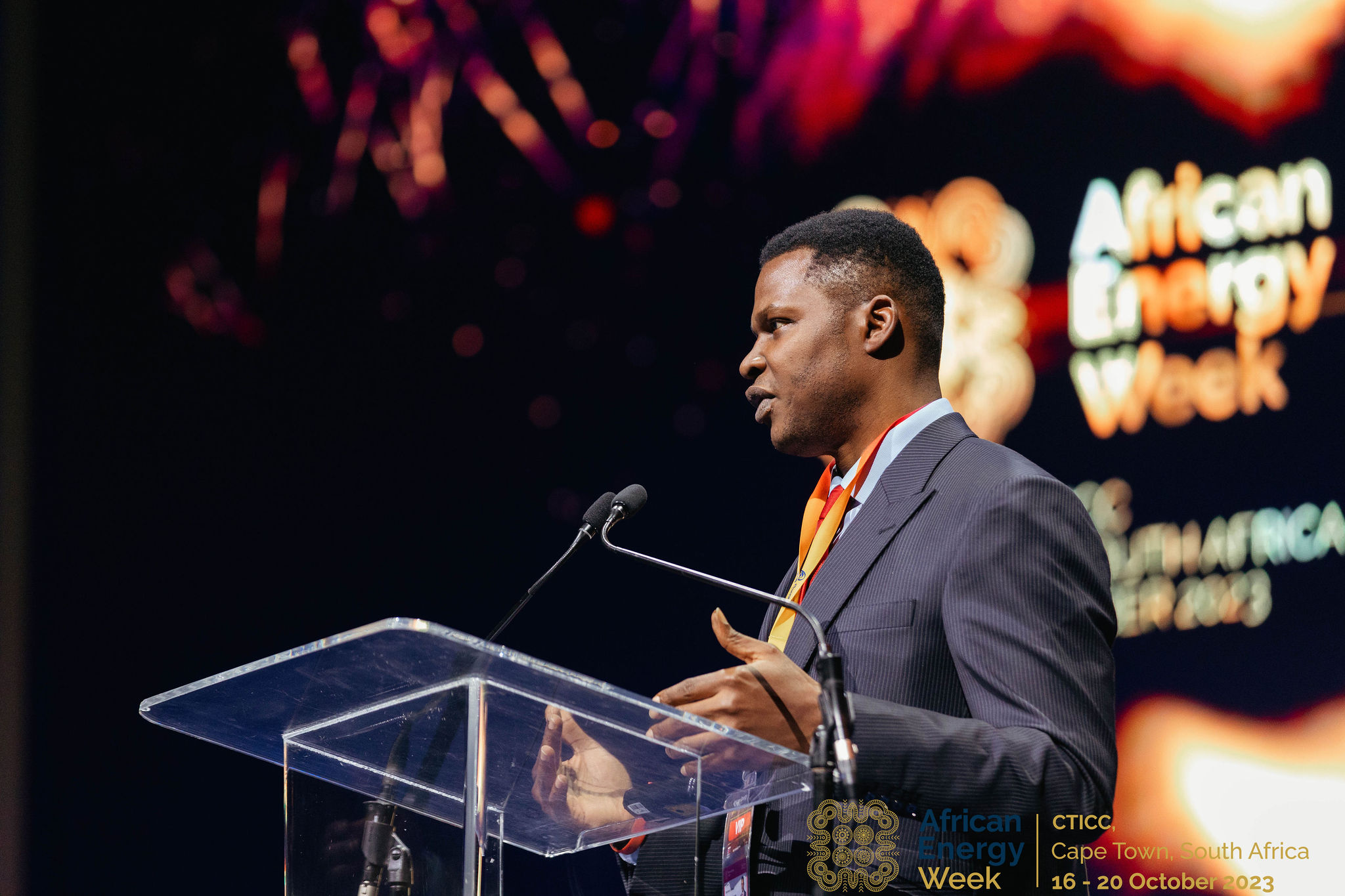
In a statement, the Executive Chairman of the AEC, NJ Ayuk, urged African leaders, including Nigeria, to stand in solidarity with Venezuela, noting the long-standing ties between the country and African oil producers.

“This is the time to continue encouraging everyone to invest in Venezuela. We call on African states and leaders, as well as the Global South, to give the Acting President and the Venezuelan people support as they determine their future, sovereignty and how they want to proceed,” Ayuk said.

Venezuela holds the world’s largest proven oil reserves, estimated at about 303 billion barrels, accounting for roughly 17 per cent of global reserves. Despite years of underinvestment and production decline, hydrocarbons still contribute close to 90 per cent of the country’s export earnings and more than half of government revenue.

Production, which collapsed to about 300,000 barrels per day in 2020, has recovered to between 900,000 and 1.1 million barrels per day as of early 2026. However, this remains far below the peak of 3.4 million barrels per day recorded in the late 1990s. According to the AEC, with predictable governance, regulatory clarity and sustained annual investment of around $10bn, Venezuela could raise output to 2.5 million barrels per day over the next decade.

The Chamber noted that the situation in Venezuela mirrors challenges faced by several oil-producing countries, including Nigeria, where stability, investor confidence and transparent resource management remain critical to maximising hydrocarbon wealth.

See also  Confiscated undeclared cash at airports hits $2.2m – Report

Venezuela’s relationship with Africa has been shaped by South-South cooperation, particularly within OPEC, where the country has historically supported the inclusion and interests of African producers. It is also an honorary member of the African Petroleum Producers’ Organisation and has played a role in capacity building by training African students and supporting partnerships with African energy companies.

Acting President Rodríguez, who also serves as Venezuela’s Oil Minister, has been a vocal supporter of Africa’s right to utilise its oil and gas resources to drive development, the AEC said. Under her leadership, Venezuela’s state oil company, PDVSA, has strengthened ties with African partners across the energy value chain.

The Chamber emphasised that oil remains Venezuela’s most powerful lever for economic recovery, particularly through the Orinoco Heavy Oil Belt, which holds nearly 90 per cent of the country’s reserves. However, decades of deferred maintenance have left refineries, pipelines and other infrastructure operating at a fraction of capacity, requiring tens of billions of dollars in rehabilitation investment.

The AEC also highlighted opportunities in offshore natural gas, which could help diversify Venezuela’s energy mix and reduce overreliance on crude oil exports.

“Venezuela sits atop extraordinary natural wealth, and the lesson from Africa is clear: when stability is prioritised, and the energy sector is allowed to function responsibly, hydrocarbons can drive recovery, unity and long-term development,” Ayuk said.

For Nigeria and other Global South nations, the Chamber said supporting Venezuela’s stability and reintegration into the global energy market aligns with broader efforts to strengthen producer cooperation, stabilise markets and promote development-driven energy policies.

Continue Reading
Click to comment

Leave a Reply

Your email address will not be published. Required fields are marked *

Business

Customs hand over seized N40.7m petrol to NMDPRA

Published

on

The Comptroller-General of Customs, Adewale Adeniyi, on Friday handed over 1,650 jerrycans of Premium Motor Spirit, worth N40.7 million, to the Nigerian Midstream and Downstream Petroleum Regulatory Authority for further investigation.

Addressing journalists at the handover ceremony held at the Customs Training College in Ikeja, Adeniyi said the seized fuel was intercepted at various locations, including Badagry, Owode, Seme, and other axes within Lagos State.

Represented by the National Coordinator of Operation Whirlwind, Deputy Comptroller-General Abubakar Aliyu, Adeniyi said the contraband was intercepted over the past nine weeks.

“In the space of nine weeks, our operatives intensified surveillance and enforcement across critical border communities. A total of 1,650 jerrycans of 25 litres each were seized along notorious smuggling routes, including Adodo, Seme, Owode Apa, Ajilete, Idjaun, Ilaro, Badagry, Idiroko, and Imeko. The total duty-paid value of the PMS is N40.7 million,” Adeniyi said.

He added that three tankers used to transport the fuel were carrying 60,000, 45,000, and 49,000 litres respectively, totalling 154,000 litres of PMS.

According to Adeniyi, the interception was the result of intelligence-driven operations and the vigilance of Operation Whirlwind in safeguarding Nigeria’s economy and energy security.

He explained that the transportation and movement of petroleum products are governed by regulatory frameworks and standard operating procedures designed to prevent diversion, smuggling, hoarding, and economic sabotage.

“These items contravened the established Standard Operating Procedures of Operation Whirlwind,” Adeniyi said, emphasising that such violations undermine government policy, distort market stability, and deprive the nation of critical revenue.

See also  Reps seek energy reform as Abbas declares petroleum week open

He warned that border corridors such as Owode, Seme, and Badagry remain sensitive economic arteries. “These routes have historically been exploited for illegal cross-border petroleum movement. Under our watch, there will be no safe haven for economic sabotage,” he said.

Adeniyi said the handover to NMDPRA reflects inter-agency collaboration. “While Customs enforces border control and anti-smuggling mandates, NMDPRA regulates distribution and ensures compliance with downstream laws. This collaboration ensures due process, transparency, and regulatory integrity,” he said.

Representing NMDPRA, Mrs. Grace Dauda said the agency ensures that petroleum products produced in Nigeria are consumed domestically. “It is unfortunate that some businessmen attempt to smuggle the product out of the country. The public must work together to stop economic sabotage,” she said.

Operation Whirlwind is a special tactical enforcement operation launched by the Nigeria Customs Service in 2024 to combat cross-border smuggling of petroleum products, particularly PMS, and other contraband that threaten Nigeria’s economic security. It was established in response to a surge in illegal fuel diversion across the country.

punch.ng

FOLLOW US ON:

FACEBOOK

TWITTER

PINTEREST

TIKTOK

YOUTUBE

LINKEDIN

TUMBLR

INSTAGRAM

Continue Reading

Business

Stocks drop, oil rises after Trump Iran threat

Published

on

Most Asia equities fell and oil prices rose on Friday after Donald Trump ratcheted up Middle East tensions by hinting at possible military strikes on Iran if it did not make a “meaningful deal” in nuclear talks.

The remarks fanned geopolitical concerns and cast a pall over a tentative rebound in markets following an AI-fuelled sell-off this month.

Traders are also looking ahead to the release of US data later in the day that will provide a fresh snapshot of the world’s top economy.

A slew of forecast-beating figures over the past few days have lifted optimism about the outlook but tempered expectations for more interest rate cuts.

The US president told the inaugural meeting of the “Board of Peace”, his initiative to secure stability in Gaza, that Tehran should make a deal.

“It’s proven to be over the years not easy to make a meaningful deal with Iran. We have to make a meaningful deal otherwise bad things happen,” he said, as he deployed warships, fighter jets and other military hardware to the region.

He warned that Washington “may have to take it a step further” without any agreement, adding: “You’re going to be finding out over the next probably 10 days.”

Israeli Prime Minister Benjamin Netanyahu earlier warned: “If the ayatollahs make a mistake and attack us, they will receive a response they cannot even imagine.”

The threats come days after the United States and Iran held a second round of Omani-mediated talks in Geneva as Washington looks to prevent the country from getting a nuclear bomb, which Tehran says it is not pursuing.

See also  No directive to suspend sachet alcohol ban, says NAFDAC

The prospect of a conflict in the crude-rich Middle East has sent oil prices surging this week, and they extended the gains Friday to sit at their highest levels since June.

Equity traders were also spooked.

Hong Kong fell as it reopened from a three-day break, while Tokyo, Sydney, Wellington and Bangkok were also down. However, Seoul continued to rally to a fresh record thanks to more tech buying, with Singapore, Manila and Mumbai also up.

City Index market analyst Matt Simpson said a strike was not certain.

“At its core, this looks like pressure and leverage rather than a prelude to invasion,” he wrote.

“The US is pairing military readiness with stalled nuclear negotiations, signalling it has credible strike options if talks fail. That doesn’t automatically translate into boots on the ground or a regime-change campaign.

“While military assets dominate headlines, diplomacy is still in motion. The fact talks are continuing at all suggests both sides are still probing for a diplomatic off-ramp before tensions harden further.”

Shares in Jakarta slipped even after Trump and Indonesian President Prabowo Subianto reached a trade deal after months of wrangling.

The accord sets a 19 percent tariff on Indonesian goods entering the United States. The Southeast Asian country had been threatened with a potential 32 percent levy before the pact.

Jakarta also agreed to $33 billion in purchases of US energy commodities, agricultural products and aviation-related goods, including Boeing aircraft.

– Key figures at around 0700 GMT –

Tokyo – Nikkei 225: DOWN 1.1 percent at 56,825.70 (close)

Hong Kong – Hang Seng Index: DOWN 0.7 percent at 26,508.98

See also  Confiscated undeclared cash at airports hits $2.2m – Report

Shanghai – Composite: Closed for holiday

West Texas Intermediate: UP 0.9 percent at $67.05 per barrel

Brent North Sea Crude: UP 0.9 percent at $72.27 per barrel

Euro/dollar: DOWN at $1.1756 from $1.1767 on Thursday

Pound/dollar: DOWN at $1.3448 from $1.3458

Euro/pound: DOWN at 87.42 pence from 87.43 pence

Dollar/yen: UP at 155.17 yen from 155.07 yen

New York – Dow: DOWN 0.5 percent at 49,395.16 (close)

London – FTSE 100: DOWN 0.6 percent at 10,627.04 (close)

AFP

punch.ng

FOLLOW US ON:

FACEBOOK

TWITTER

PINTEREST

TIKTOK

YOUTUBE

LINKEDIN

TUMBLR

INSTAGRAM

Continue Reading

Business

FG defers 70% of 2025 capital budget to 2026

Published

on

The Federal Government has said it will implement 30 per cent of the 2025 capital budget before the end of November, as part of measures to fast-track project execution and clear outstanding obligations.

It also stated that the remaining 70 per cent has been rolled over into the 2026 capital budget to ensure seamless implementation. The move follows a directive to Ministries, Departments, and Agencies to comply strictly with procurement rules in the execution and payment of capital projects under the extended 2025 budget cycle.

In a statement on Thursday by the Director of Press and Public Relations at the Office of the Accountant-General of the Federation, Bawa Mokwa, the government said MDAs had been instructed to align fully with the Public Procurement Act in implementing the 2025 and 2026 capital budgets.

The Minister of State for Finance, Mrs Doris Uzoka-Anite, gave the directive during a stakeholders’ meeting on the implementation of the extended 2025 Capital Budget held at the Federal Ministry of Finance in Abuja.

She stressed that capital disbursements must follow due process.

The statement read, “Mrs Uzoka-Anite emphasised that all capital payments must comply with the principles of the Procurement Act and that capital projects must be backed by cash before execution. She warned that no capital payment should be processed outside approved procurement procedures.”

She added that the country has sufficient funds to settle outstanding obligations and urged MDAs to update their documentation to enable quicker processing of payments.

The statement noted, “The Minister further stated that the nation has adequate funds to settle pending payments and urged MDAs to review and update their documentation to facilitate the timely processing of payments.”

See also  Sahara Group eyes 7,000MW in major power sector push

Providing further details, the Accountant-General of the Federation, Dr Shamseldeen Ogunjimi, disclosed that the Government Integrated Financial Management Information System had been fully restored.

Ogunjimi reiterated that warrants had already been issued to MDAs and announced that Treasury House would begin implementation of the 30 per cent component of the 2025 budget by the end of next week.

The statement read, “Dr Ogunjimi explained that 30 per cent of the 2025 Capital Budget will be implemented between now and 30 November 2026, while the remaining 70 per cent has been rolled over into the 2026 Capital Budget to ensure seamless implementation, in line with the directive of President Bola Tinubu.

“He reiterated that warrants have already been issued to MDAs and announced that Treasury House will commence implementation of the 30 per cent component of the 2025 Budget by the end of next week.”

The decision effectively means that a significant portion of last year’s capital allocations will now be executed within the current fiscal window, while the bulk has been carried forward into the 2026 capital framework to avoid disruption of ongoing projects.

Earlier in his welcome address, the Director of Funds, Mr Steve Ehikhamenor, cautioned MDAs against exceeding approved allocations. He urged them to avoid budget overruns and to adhere strictly to approved project items and their corresponding values.

He also advised agencies not to exceed the amounts specified in their warrants, to return any unutilised or excess funds to the Treasury, and to work closely with GIFMIS officials for technical support.

See also  Counterfeit empire: Lagos electronics market where fake products sustain luxury

The PUNCH earlier in December 2025 exclusively reported that the Federal Government ordered ministries, departments, and agencies to carry over 70 per cent of their 2025 capital budget into the 2026 fiscal year as the administration moved to prioritise the completion of existing projects and contain spending pressures in the face of weak revenues.

The directive was contained in the 2026 Abridged Budget Call Circular issued by the Federal Ministry of Budget and Economic Planning and circulated to ministers, service chiefs, heads of agencies, and other senior government officials in Abuja.

The circular stated that only 30 per cent of the 2025 capital budget would be released within the year, while the remaining 70 per cent would form the basis of the 2026 capital budget, replacing the traditional rollover approach.

However, the Federal Government did not release the 30 per cent earmarked for 2025, resulting in its deferral into 2026, as ministers raised concerns over the non-release of funds for capital projects.

The PUNCH earlier reported that ministers in charge of key infrastructure and service-delivery agencies are grappling with a severe funding squeeze, as figures showed that MDAs received less than N1tn for capital projects in the first seven months of 2025.

The data used for this report was the most up-to-date available from the Budget Office of the Federation, as the agency had yet to release comprehensive full-year implementation figures, despite the fiscal year being well advanced.

An analysis of data from the Budget Office of the Federation’s Medium-Term Expenditure Framework and Fiscal Strategy Paper (2026–2028) showed that while N18.53tn was appropriated for capital expenditure for “MDAs and others” in 2025, the January–July pro rata benchmark stood at N10.81tn.

See also  PHOTOS: Devastating Fire Still Raging At Kano Market As Traders Count Their Losses

However, actual capital releases to MDAs and related entities during the period amounted to just N834.80bn. That left a pro rata shortfall of about N9.98tn and a performance rate of only 7.72 per cent within the seven-month window.

punch.ng

FOLLOW US ON:

FACEBOOK

TWITTER

PINTEREST

TIKTOK

YOUTUBE

LINKEDIN

TUMBLR

INSTAGRAM

Continue Reading

Trending