Connect with us

News

FG votes N19bn for VP’s aircraft engine, others

Published

on

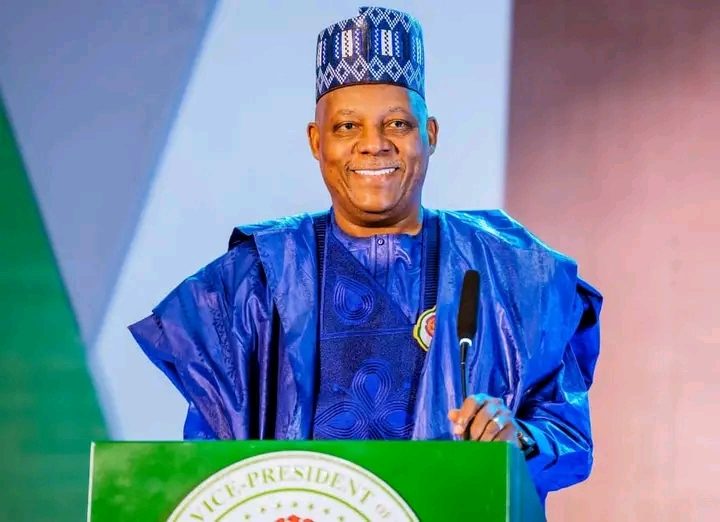
The Federal Government has allocated a cumulative N10.61bn for the overhaul of engines on the Gulfstream G550 aircraft assigned to Vice President Kashim Shettima over a three-year period, an analysis of appropriation bills from 2024 to 2026 has revealed.

The aircraft, registered as 5N-FGW, received the highest single allocation among all engine overhaul projects in the Presidential Air Fleet, accounting for 55 per cent of the N19.27bn total spent on engine maintenance across the fleet under the President Bola Tinubu administration.

Budget documents obtained and analysed by The PUNCH show that the allocation for overhauling the vice president’s aircraft engines jumped from N1.24bn in 2024 to N5.51bn in 2025—a 345 per cent increase—before settling at N3.86bn in 2026.

The 2024 Appropriation Bill listed the project under code ERGP31206170 as “Overhaul of 5N-FGW Engines” with a “NEW” status and an allocation of N1.24bn. By 2025, the project’s status changed to “ONGOING” with the allocation rising to N5.51bn, before declining to N3.86bn in 2026 while maintaining its “ONGOING” status.

The 13-year-old Gulfstream G550, which flies under the call sign “Nigerian Air Force 2” when carrying the vice president, has been plagued by technical faults that have led to cancellations of Shettima’s international trips in the past.

In May 2024, Shettima was forced to abort his trip to the United States for the 2024 US-Africa Business Summit in Dallas, Texas, after the aircraft developed a technical fault mid-flight.

The incident occurred less than a month after President Tinubu was compelled to charter a private jet to Saudi Arabia when the same Gulfstream jet, originally assigned to the vice president, developed an oxygen leak in the Netherlands. Four months later, in October 2024, the vice president again cancelled his trip to the Commonwealth Heads of Government Summit in Samoa after a foreign object hit the aircraft during a stopover at JFK Airport in New York.

See also  Osun LG Accounts: Court issues arrest warrants against bank

Presidency officials, who spoke on condition of anonymity to our correspondent, said the repeated technical failures may have prompted urgent maintenance, which in turn drove the escalating budget allocations.

Aside from the vice president’s aircraft, the FG also allocated funds for overhauling engines on two Falcon 7X jets (registered 5N-FGV and 5N-FGU), which received N1.66bn in 2024, N3.13bn in 2025, and N2.19bn in 2026, totalling N6.98bn over the three years. Additionally, a Gulfstream jet registered 5N-FGS received N1.68bn for engine overhaul in 2024, though no further allocations were made for it in subsequent years.

In total, engine overhaul projects across the Presidential Air Fleet consumed N4.58bn in 2024, N8.65bn in 2025, and N6.05bn in 2026, bringing the three-year aggregate to N19.27bn.

A close study of the allocation patterns revealed that engine maintenance costs peaked in 2025, a year after the Presidency took delivery of the N150bn Airbus A330, which the Spokesman to the President, Bayo Onanuga, argued would “save Nigeria huge maintenance and fuel costs, running into millions of dollars yearly.”

While engine overhaul spending for older aircraft declined by 30 per cent in 2026 compared to 2025, routine aircraft maintenance allocations under line item 22020407 increased by 10 per cent, from N4.12bn in 2025 to N4.54bn in 2026.

Aviation experts say aircraft age influences maintenance costs.

“These aircraft are not new. The older the aircraft, the higher the cost of maintenance and operation. So, the cost will increase over the years,” said General Secretary of the Aviation Round Table, Olumide Ohunayo. He argued that the Gulfstream G550, now 13 years old, requires increasingly frequent and expensive overhauls as critical components, such as engines, approach the end of their operational lifespan.

See also  Late Olubadan, Oba Olakulehin, laid to rest with military honours

“The figure likely includes far more than the direct cost of repairing the aircraft,” Chief Executive Officer of Centurion Security Limited, John Ojikutu, stated.

“Engine overhauls are mandatory at specified intervals, regardless of whether the aircraft has been flown extensively or not,” explained an aircraft maintenance engineer who requested anonymity. “For a jet like the G550, a complete engine overhaul can cost anywhere from $1.5m to $3m per engine, depending on the condition and the extent of work required. If you see the cost increase, it could mean they’re replacing major components, not just doing standard checks. It could also show that they deferred previous maintenance and have to do catch-up work.”

The Presidential Air Fleet, managed by the Nigerian Air Force and headquartered at the Presidential Wing of Nnamdi Azikiwe International Airport, Abuja, currently operates 10 aircraft, including six fixed-wing jets and four helicopters.

Critics have long argued that Nigeria’s presidential fleet is among the largest in Africa and disproportionately expensive for a country grappling with severe fiscal constraints.

The Executive Chairman of the Centre for Anti-Corruption and Open Leadership, Debo Adeniran, argued that the administration’s spending habits were opposite to Nigerians’ expectations of frugality.

“What we are getting from this administration is the opposite of our expectations. We thought we would have an administration that would be frugal in spending and very meticulous in implementing its budget. But what we are getting is an administration that has fallen in love with profligacy, that doesn’t see anything wrong in living big in the midst of a poverty-stricken nation,” said Adeniran.

See also  Nearly $3bn spent on Eurobond debt servicing under Tinubu

The House of Representatives Committee on National Security and Intelligence had in 2024 recommended the procurement of new aircraft for both the president and vice president, citing high maintenance costs and safety concerns with the ageing fleet. While the president received the Airbus A330, no similar replacement was announced for the vice president’s aircraft, which has received substantial maintenance allocations under Tinubu.

At the time of filing this report, the Presidency had not responded to inquiries about the specific nature of the engine work carried out on the aircraft.

The budget documents also indicate ongoing capital projects for PAF infrastructure, including N714.8m for the construction of a hangar for the Presidential Air Fleet in 2025, which fell to N500.36m in 2026.

The PAF’s total budget allocation declined from N17.32bn in 2025 to N14.70bn in 2026, mainly driven by decreased capital expenditure.

punch.ng

FOLLOW US ON:

FACEBOOK

TWITTER

PINTEREST

TIKTOK

YOUTUBE

LINKEDIN

TUMBLR

INSTAGRAM

Continue Reading
Click to comment

Leave a Reply

Your email address will not be published. Required fields are marked *

News

US says Nigerian students with valid F1, J1 visas safe from restrictions

Published

on

The United States Mission Nigeria says Nigerian students and exchange visitors holding valid visas will not be affected by the partial visa suspension under Presidential Proclamation 10998.

In a post on X on Monday, the mission disclosed this.

It stated, “Nigerian students and exchange participants with currently valid F1 and J1 visas are not affected by Presidential Proclamation 10998. Students and exchange participants with visas can continue to contribute to learning, research, and innovation at U.S. colleges and institutions.”

The clarification comes ahead of the January 1, 2026 implementation of Presidential Proclamation 10998, titled “Restricting and Limiting the Entry of Foreign Nationals to Protect the Security of the United States.”

What the proclamation does

Under the proclamation, the United States will partially suspend the issuance of certain visas to Nigerian nationals beginning at 12:01 a.m. Eastern Standard Time on January 1, 2026.

The suspension covers:

  • Nonimmigrant B-1/B-2 visitor visas
  • F, M and J student and exchange visitor visas
  • Immigrant visas, with limited exceptions

However, U.S. authorities have stressed that the measure applies only to foreign nationals who are outside the United States on the effective date and who do not hold a valid U.S. visa as of January 1, 2026.

Officials have also stated: “Foreign nationals, even those outside the United States, who hold valid visas as of the effective date are not subject to Presidential Proclamation 10998. No visas issued before January 1, 2026, at 12:01 a.m. EST, have been or will be revoked pursuant to the Proclamation,”

In December 2025, Nigeria is among 19 countries affected by the partial suspension said to come into effect January 1, 2026.

See also  Performance management system as game changer in Nigeria’s development progress

In recent months, the United States has introduced a series of immigration-related measures affecting Nigerians. Earlier this year, the validity of most non-immigrant visas issued to Nigerians was reduced to single-entry visas with a three-month duration.

In October, Washington also added Nigeria back to its list of countries accused of violating religious freedom. This was followed by Nigeria’s inclusion on a revised U.S. travel restriction list imposing partial entry restrictions.

PUNCH Online reports that this latest clarification from the U.S. Mission is expected to address concerns among Nigerian students and exchange participants about whether their existing F1 and J1 visas would remain valid after the proclamation takes effect.

For now, the mission has confirmed that holders of currently valid F1 and J1 visas can continue their studies and exchange programmes in the United States.

Earlier in February, the mission warned that visa overstays by Nigerian travellers could negatively affect opportunities for other citizens seeking to travel to the US.

F-1 visa: For international students enrolled full-time in academic programmes at U.S. schools or universities.

J-1 visa: For exchange visitors — including students, researchers, and interns — participating in approved educational or cultural exchange programmes in the U.S.

punch.ng

FOLLOW US ON:

FACEBOOK

TWITTER

PINTEREST

TIKTOK

YOUTUBE

LINKEDIN

TUMBLR

INSTAGRAM

Continue Reading

News

Wike cancels 485 Abuja land titles after failed verification

Published

on

The Minister of the Federal Capital Territory, Nyesom Wike, has approved the cancellation of 485 land documents in Abuja after they failed to meet verification standards set by the authorities.

The affected documents were nullified following an extensive review conducted by the Department of Land Administration in collaboration with the Abuja Geographic Information Systems.

Officials said that the documents did not pass authenticity checks, with many confirmed to be fake.

In a public notice issued by the Federal Capital Territory Administration on Monday and marked as Batch I, authorities confirmed that the invalid applications had been removed from the regularisation database. The notice specifically addressed applicants who had submitted Area Council land documents for validation.

“This is to inform the general public, particularly applicants who submitted Area Council land documents for regularisation, that the Minister of the Federal Capital Territory has approved the nullification or cancellation of applications that failed the necessary official checks for genuineness and have been confirmed to be fake,” the notice read.

The cancelled documents span several Area Councils and layouts. In the Bwari Area Council, the affected locations include Ushafa Village Expansion Scheme, Ushafa Extension and Dawaki Extension 1.

Within the Abuja Municipal Area Council, impacted districts include Kurudu-Jikwoyi Relocation, Kurudu Commercial, Karu Village Extension, Nyanya Phase IV Extension, Jikwoyi Residential, Sabon Lugbe and Lugbe I Extension.

Kuchiyako One layout in the Kuje Area Council was also listed among the affected areas.

Those affected include the Redeemed Christian Church of God, Ministry of Justice Staff Multi-purpose Cooperative Society among others.

See also  Nnamdi Kanu acted like Awolowo by disengaging lawyers — Consultant

Under Nigerian law, all land within the FCT is vested in the Federal Government. Certificates of Occupancy and other land titles must be processed through the office of the FCT Minister and formalised by AGIS.

The latest action comes amid ongoing land administration reforms initiated by the FCTA to address longstanding challenges, including forged documents, double allocations and irregular grants allegedly issued by some Area Councils.

The cancellations form part of a broader regularisation exercise that has been underway for months.

The background to the reforms dates back to last year, when the FCTA disclosed that only 8,287 out of 261,914 Area Council land documents submitted between 2006 and 2023 had been screened.

The 8,287 vetted land documents represented just 3.2 per cent of the total submissions, leaving 253,627 documents pending in the database.

FCDA officials acknowledged that progress had been slow over the years, noting that 96.8 per cent of submissions were still awaiting clearance.

Continue Reading

News

El-Rufai sues ICPC ₦1bn over unlawful Abuja home invasion

Published

on

A former Kaduna State Governor, Nasir El-Rufai, has filed a N1 billion fundamental rights enforcement suit against the Independent Corrupt Practices and Other Related Offences Commission over the alleged unlawful invasion and search of his Abuja residence.

In the suit marked FHC/ABJ/CS/345/2026 and filed at the Federal High Court in Abuja on February 20 by his counsel, Oluwole Iyamu (SAN), El-Rufai is challenging the validity of a search warrant issued on February 4 by a Chief Magistrate of the FCT Magistrates’ Court.

He is asking the court to declare the warrant authorising the search and seizure at his residence invalid, null and void.

According to the application, the former governor contended that the warrant was “null and void for lack of particularity, material drafting errors, ambiguity in execution parameters, overbreadth, and absence of probable cause, thereby constituting an unlawful and unreasonable search in violation of Section 37 of the Constitution.”

El-Rufai listed the ICPC as the first respondent, while the Chief Magistrate of the FCT Magistrates’ Court, Abuja Magisterial District, the Inspector-General of Police, and the Attorney-General of the Federation were named as second to fourth respondents, respectively.

He is seeking seven reliefs, including a declaration that the invasion and search of his residence at House 12, Mambilla Street, Aso Drive, Abuja, on February 19 at about 2 p.m., allegedly carried out by operatives of the ICPC and the Nigeria Police Force under the disputed warrant, violated his fundamental rights.

Specifically, he asked the court to declare that the search “amounts to a gross violation of the applicant’s fundamental rights to dignity of the human person, personal liberty, fair hearing, and privacy under Sections 34, 35, 36, and 37 of the Constitution.”

See also  Kebbi kidnap: Senate orders probe as Safe School Initiative gulps N144.7bn

He further urged the court to declare that “any evidence obtained pursuant to the aforesaid invalid warrant and unlawful search is inadmissible in any proceedings against the applicant, as it was procured in breach of constitutional safeguards.”

Among other prayers, El-Rufai is seeking an order restraining the respondents from relying on or tendering any items seized during the search in any investigation or prosecution involving him.

He also asked for “an order directing the 1st and 3rd respondents (ICPC and I-G) to forthwith return all items seized from the applicant’s premises during the unlawful search, together with a detailed inventory thereof.”

In addition, he is demanding “the sum of N1,000,000,000.00 (One Billion Naira) as general, exemplary, and aggravated damages against the respondents jointly and severally for the violations of the applicant’s fundamental rights, including trespass, unlawful seizure, and the resultant psychological trauma, humiliation, distress, infringement of privacy, and reputational harm.”

The former governor broke down the N1 billion claim into N300 million as compensatory damages for psychological trauma and emotional distress; N400 million as exemplary damages to deter future misconduct by law enforcement agencies; and N300 million as aggravated damages for what he described as the malicious and oppressive nature of the respondents’ actions.

He also sought N100 million as the cost of filing the suit, covering legal fees and associated expenses.

In his grounds of argument, Iyamu maintained that the warrant was fundamentally defective, citing lack of specificity in the description of items to be seized, material typographical errors, ambiguous execution terms, overbroad directives and absence of verifiable probable cause.

See also  Tinubu pledges to sustain Buhari’s legacy

He argued that the alleged defects contravened Sections 143 to 148 of the Administration of Criminal Justice Act (ACJA), 2015; Section 36 of the ICPC Act, 2000; and constitutional protections against arbitrary intrusion.

According to him, “Section 143 of the ACJA requires that an application for a search warrant be supported by information in writing and on oath, setting forth reasonable grounds for suspicion,” which he said was absent in the present case.

He added that Section 144 mandates specific descriptions of the place to be searched and the items sought to prevent general warrants, but the warrant in question vaguely referred to “the thing aforesaid” without detail.

He further submitted that “Section 146 stipulates that the warrant must be in the prescribed form, free from defects that could mislead, but the document is riddled with errors in the address, date, and district designation.

“Section 147 allows direction to specified persons, but the warrant’s indiscriminate addressing to ‘all officers’ is overbroad and unaccountable.

“Section 148 permits execution at reasonable times, but the contradictory language creates ambiguity, undermining procedural clarity.”

Iyamu argued that the execution of the warrant on February 19 resulted in an unlawful invasion of his client’s premises and violated his constitutional rights.

He cited decided cases, including C.O.P. v. Omoh (1969) NCLR 137 and Fawehinmi v. IGP (2000) 7 NWLR (Pt. 665) 481, to support his position that evidence obtained through improper means is inadmissible.

In an affidavit supporting the application, Mohammed Shaba, a Principal Secretary to the former governor, deposed that officers of the ICPC and the Nigeria Police Force stormed the residence on February 19 under what he described as a defective warrant issued on or about February 4.

See also  Late Olubadan, Oba Olakulehin, laid to rest with military honours

He averred that the “search warrant did not specify the properties or items being searched for,” and alleged that the officers failed to comply with procedural requirements before conducting the search.

Shaba further stated that during the operation, officers allegedly seized personal documents and electronic devices, causing “undue humiliation, psychological trauma, and distress.”

He added that none of the seized items had been returned and that the application was filed in good faith to enforce the applicant’s constitutional rights.

punch.ng

FOLLOW US ON:

FACEBOOK

TWITTER

PINTEREST

TIKTOK

YOUTUBE

LINKEDIN

TUMBLR

INSTAGRAM

Continue Reading

Trending