
Connect with us

Business

Kogi Targets N86.6bn Revenue From Cashew Production In 4 Months

Published

on

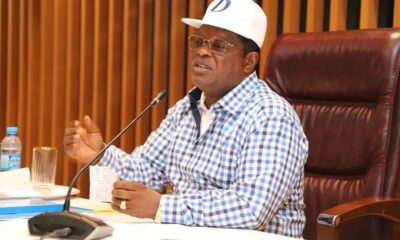
Governor Ahmed Ododo of Kogi on Friday said that the state is targeting N86.8 billion in four months from the production of Cashew alone.

The governor made the disclosure at the Inauguration of the 2026 Cashew Season and Unveiling of the Kogi Cashew Procurement and Trade Policy, 2025, held at the Government House, Lokoja.

Ododo revealed that from findings on the enormous values therein in Cashew and the demand thereof both locally and internationally, the state could generate about N86. 6 billion between the months of January and April alone if properly harnessed.

According to him, the true economic value does not lie in production alone but in processing, packaging, branding, and structured trade.

“This is why our administration is firmly committed to the establishment of cashew processing facilities within Kogi.

“Processing is where value is created, jobs are multiplied, and prosperity is retained and shared.

“By supporting investments in processing plants and encouraging the production of value-added products such as kernels, packaged nuts, and industrial by-products, we will reduce post-harvest losses, increase farmer earnings, and ensure that more wealth remains within our local economy.”

The governor also said that the initiative aligned seamlessly with the broader economic vision of diversification, youth empowerment, women inclusion, and shared prosperity.

“We see opportunities for our young people and women across every segment of the cashew value chain, from farming to processing, packaging, logistics, marketing, and export.

“As we officially flag off the 2026 cashew season today, we are planting five million cashew trees in anticipation of bumper harvest.

See also  FG grants Shell $11.5/barrel tax credit to unlock $20bn investment

“We are planting hope. We are planting prosperity. We are planting resilience. And we are planting the future of a stronger, more productive Kogi.

“The time to make Kogi resources work for Kogi people is now, and we must join hands as brothers and sisters to make this vision a lasting reality, ” he said.

Earlier in his welcome address, the Director General of Kogi State Commodity Exchange, Export Promotion and Market Development Agency (KOSCEPA), Mr Victor Omofaiye, described the inauguration as a “turning point in the history of Kogi.

Omofaiye said that the initiative was the Ododo’s administration’s deliberate drive to ensure that the state takes its rightful place among the leading cashew producing states in Nigeria.

He said that Nigeria currently ranked as the fourth largest cashew nut producer in the world, with an annual production of about 450,000 metric tonnes and export value exceeding 700 million dollars, with “Kogi as a major driver of this performance.” (NAN)

FOLLOW US ON:

FACEBOOK

TWITTER

PINTEREST

TIKTOK

YOUTUBE

LINKEDIN

TUMBLR

INSTAGRAM

Continue Reading
Click to comment

Leave a Reply

Your email address will not be published. Required fields are marked *

Business

TUC reveals how FG can raise workers’ salaries without new minimum wage, read details

Published

on

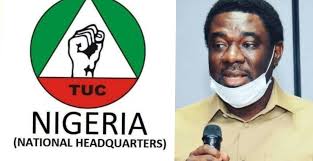
The Trade Union Congress of Nigeria (TUC) has told the Federal Government that it does not need to wait for the next review of the national minimum wage before improving the salaries of its workers.

TUC President, Comrade Festus Osifo, said the government could independently increase the salaries of federal workers or raise the pay of the least-paid employees without waiting for a new Minimum Wage Act.

Osifo made the position known Wednesday evening while speaking at a press briefing in Abuja after the National Administrative Council (NAC) meeting of the labour centre.

According to him, the minimum wage should be regarded as a statutory wage floor and not a ceiling that prevents government or employers from paying workers substantially above the prescribed minimum.

He said, “Government does not even need to wait for a new Minimum Wage Act to be signed before government will take care of its workers.

“Government can wake up today and say, ‘Okay, I want to pay the least-paid worker in the Federal Government payroll N200,000,’ for example. They could say, ‘Let the least-paid worker be N400,000,’ for example, and graduate it upwards.

“Is that only the minimum wage for government to do that? No. That is not really the function of a minimum wage.”

Osifo argued that employers in several sectors already pay considerably above the statutory minimum, noting that the salaries of university graduates employed by banks, food and beverage companies and oil and gas firms are generally determined by the value of the jobs rather than the national minimum wage.

See also  IMPORTANT NOTICE REGARDING MONEY TRANSFERS IN NIGERIA (2026)

“If you are a university graduate and you are to be employed in a bank, are they going to start you from the minimum wage? The answer is no. The pay you will earn is much above minimum wage,” he said.

He added that the same principle applied to major companies in the food and beverage sector.

“If you are a university graduate and you are to be employed in the food and beverage industry, if you are to be employed by Nestlé, if you are to be employed by Cadbury, they are not going to look at minimum wage,” he said.

The TUC president also cited the oil and gas sector, where he said companies such as Shell, Chevron and TotalEnergies would ordinarily negotiate remuneration based on the nature and value of the jobs rather than the statutory wage floor.

“They are going to be talking about living wage,” he said.

Osifo therefore urged the Federal Government to take immediate steps to improve workers’ incomes rather than leaving employees to wait for the next statutory minimum wage review.

He said TUC had already engaged government officials on the issue, including the Minister of Finance and the Secretary to the Government of the Federation, as part of efforts to push for measures that would improve workers’ welfare.

“For us, you don’t really need a new minimum wage to take care of your employees in several sectors. That is not how it is done,” he said.

The labour leader also maintained that allowances could be reviewed independently of the minimum wage, stressing that workers should not be left to bear the full weight of economic reforms until 2027.

See also  FG grants Shell $11.5/barrel tax credit to unlock $20bn investment

He said, “Allowances don’t need a minimum wage conversation, and even salaries, government on its own can actually push the salaries of workers up, even without minimum wage conversation.”

The current national minimum wage of N70,000 was signed into law in 2024 for a three-year period. Osifo said organised labour was already preparing for the next review, but stressed that government had options for improving workers’ welfare before then.

He further cited Ghana as an example of a country where government does not necessarily wait for a new minimum wage before taking measures to improve workers’ pay.

“Government can decide to pay whatever it takes to take care of its employees. Employers can decide to do way above what is there at the minimum threshold,” he said.

Source: tribuneonlineng.com

Follow Politics

FOLLOW US ON:

FACEBOOK

TWITTER

PINTEREST

TIKTOK

YOUTUBE

LINKEDIN

INSTAGRAM

Continue Reading

Business

Customs explains why shortlisted candidates await training invitations

Published

on

The Nigeria Customs Service has said candidates whose names appeared on its published recruitment list are not automatically guaranteed appointment, explaining that final screening is still ongoing before successful applicants are admitted for training.

The clarification followed complaints by some candidates who claimed they successfully completed the Computer-Based Test, physical examinations and initial screening, accepted their appointments through the official recruitment portal and saw their names published as successful candidates, but had yet to receive invitations for training scheduled to commence on Friday.

The affected candidates, according to a report by SaharaReporters, include more than 500 applicants who said they had been left uncertain about their status after invitations to the training reportedly stopped on Monday.

Some of the candidates claimed they had resigned from their previous jobs and incurred other expenses after believing that their appointments had been secured.

However, the Customs spokesman and Deputy Comptroller of Customs, Abdullahi Maiwada, told The PUNCH exclusively on Wednesday that the publication of a candidate’s name did not amount to a final appointment into the service.

Maiwada said candidates must pass the physical screening and other requirements before they can be admitted into the training college and eventually commissioned as officers.

“I will start my response first with a question. Did anyone who complained to you inform you that they have been issued an appointment letter? So that means the process is still ongoing. Secondly, the essence of screening is to have a physical examination of successful candidates.

“Let me explain so that you would have proper context. The essence of screening is either for candidates to be screened in or screened out, and they are just simple issues. It is either you have not met the criteria to be offered an appointment letter into Customs or to be ushered into training college. If anyone fails this, they will be dropped,” he said.

See also  NUPRC awards 37 oil blocks, warns against delays

The spokesman said age, academic credentials, medical fitness and drug use were among the requirements that could determine whether a candidate progressed to the next stage.

He explained, “Those criteria are simple. Age is very important. If your age is above the threshold, you will be disqualified. If there are inconsistencies in your credentials, you will be disqualified. If there are forgeries detected, you will be disqualified.

“If we see you with drugs, any element of drugs except tobacco and beer, you will be disqualified. If you have medical issues that wouldn’t warrant you to undergo that rigour, you would also be disqualified.”

Maiwada stressed that even admission into the training college would not make a candidate a Customs officer, saying applicants must successfully complete the training and satisfy academic, physical and character requirements before commissioning.

He said, “The fact that your name came out and you are invited for screening doesn’t qualify you to be a Customs officer. Even with that, you are going for training. And you will go for the training. It is when you pass the requirements that you will be commissioned as an officer. Anything before that, you are still not an officer.

“Someone can go to the Nigerian Defence Academy and still fail. It is not everyone who comes out who passes or is a flying lieutenant. And even if you find yourself in training college, you are still not a Customs officer. Until the day you pass out successfully and you are able to withstand all the rigours.

See also  14 banks have met CBN’s new capital requirement

“Academic exercises will be done, and you must come out well in character and learning. Exams will be conducted.”

The spokesman said the service could not justify spending public resources to train candidates who had already failed basic eligibility requirements. He said drug screening was particularly important because the Customs Service conducts annual drug tests for serving officers, regardless of rank.

“If someone is into drugs and he is disqualified, do we have to waste our resources taking him to training college before disqualifying him? No! These are criteria that are so simple. You have forgery and the like, and you want to be allowed into the system.

“If you see what we saw with medical records, you will be scared for this country. The rate at which boys are into drugs, you will be scared. Is this the future? The service runs drug tests for every officer every year, no matter your ranking. So if we can do that to persons in the system, what do you think we would do to persons outside it?” Maiwada said.

The ongoing controversy is linked to the Nigeria Customs Service’s 2024/2025 recruitment exercise, which began with an advertisement published on December 27, 2024.

The Service declared 3,927 vacancies across the Superintendent, Inspectorate and Customs Assistant cadres and received 573,680 applications.

After several stages of screening and verification, 3,852 candidates were selected, representing only 0.67 per cent of the applicants, or about one successful candidate for every 148 applicants.

The successful candidates comprised 1,275 Superintendents, 367 Inspectors and 2,210 Customs Assistants. The Service later conducted medical documentation and physical screening before inviting candidates who passed the subsequent stage for basic training scheduled to begin on October 9, 2026, at the Customs Training College.

See also  FG grants Shell $11.5/barrel tax credit to unlock $20bn investment

Maiwada’s explanation means that candidates whose names appeared in the published list may still be subject to further verification before they receive final appointment letters, proceed through training and are eventually commissioned as Customs officers.

Source: punchng.com

FOLLOW US ON:

FACEBOOK

TWITTER

PINTEREST

TIKTOK

YOUTUBE

LINKEDIN

INSTAGRAM

Continue Reading

Business

Police, military women join Dangote share grant beneficiaries

Published

on

The Aliko Dangote Foundation has commenced the implementation of its share subscription grant initiative for Nigerian women, with the programme extending to eligible policewomen and military women.

The Dangote Group confirmed to The PUNCH that eligible female personnel in the police and military are among the beneficiaries covered by the initiative, which targets up to two million Nigerian women through the ongoing Initial Public Offering of Dangote Petroleum Refinery and Petrochemicals FZE.

The initiative, which was announced by the foundation recently, is aimed at increasing women’s participation in Nigeria’s capital market, particularly among low- and middle-income earners and vulnerable women.

Under the programme, eligible women can access grants to acquire shares in the Dangote refinery, promoting equity ownership, savings and long-term investment, as well as creating opportunities for wealth creation through participation in the capital market.

In a statement on Wednesday, the foundation said the beneficiaries include independent applicants earning N100,000 or less per month, verified participants in designated ADF programmes such as CRoWN, ADFIN and Mu Shuka Iri, “eligible non-commissioned servicewomen and service spouses, as well as verified service widows”.

An official of the group confirmed to The PUNCH that the “eligible non-commissioned servicewomen” category covers policewomen and military women.

The foundation said eligible independent applicants who subscribe to a minimum of 10 shares would receive an ADF-funded application for an additional 10 shares in their names under the matching grant track.

Under the unconditional grant track, the foundation will fund applications for 20 shares on behalf of eligible beneficiaries who meet the programme’s eligibility, investor identification and Know Your Customer requirements.

See also  14 banks have met CBN’s new capital requirement

The foundation said the second category covered verified beneficiaries from designated ADF programmes and verified service widows.

It said grant funds would be applied directly through the designated issuing house, stressing that no cash would be paid to beneficiaries, government agencies or sponsors.

“Any shares successfully allotted will be credited solely to the beneficiary and held in her name,” the foundation stated.

To participate, applicants must be Nigerian women aged 18 years and above, reside in Nigeria, meet the eligibility requirements of their respective categories, and successfully complete the required identity verification and KYC processes.

The foundation said beneficiaries would receive no more than one ADF share grant across all its share grant schemes.

ADF is implementing the initiative in partnership with Vetiva Capital Management and the Nigerian Exchange Group through the Securities and Exchange Commission-approved IPO subscription infrastructure.

The foundation disclosed that it would neither receive nor hold applicants’ or sponsors’ subscription funds, adding that applications, payments, allotments and refunds would be handled in line with the IPO prospectus, regulatory requirements and approved basis of allotment.

It also said applicants did not need an existing Central Securities Clearing System account, as accounts would be created through Vetiva where necessary after completion of the IPO’s KYC requirements.

The foundation explained that eligible independent applicants could submit their applications exclusively through its official portal, while beneficiaries affiliated with ADF programmes and verified service widows would receive application guidance through approved Foundation channels.

As the offer closes on October 13, ADF urged prospective participants to remain vigilant against fraud, warning applicants against making payments to agents, individuals or personal bank accounts in exchange for grants or guaranteed allotment.

See also  Soludo closes Onitsha market for one week, see why

It also advised applicants not to share passwords, PINs or one-time passwords, and to verify unexpected payment requests or online links through official channels before taking action.

The foundation said the initiative was part of its commitment to inclusive economic empowerment and broadening access to investment opportunities for Nigerian women.

Source: punchng.com

FOLLOW US ON:

FACEBOOK

TWITTER

PINTEREST

TIKTOK

YOUTUBE

LINKEDIN

INSTAGRAM

Continue Reading

Trending