Connect with us

News

Venezuelan interim president announces proposal for mass amnesty

Published

on

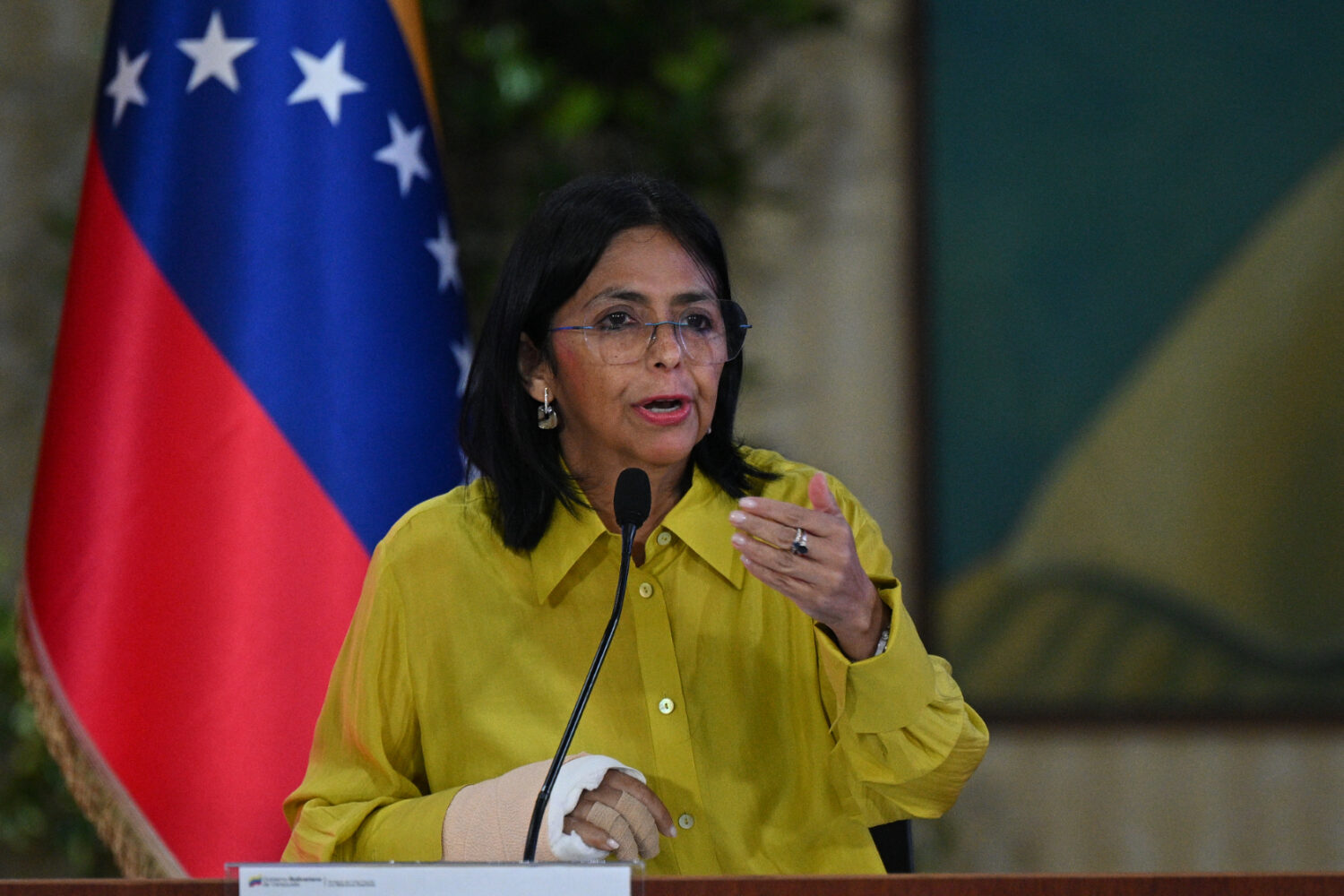
Venezuela’s acting president announced on Friday a proposal for mass amnesty in the country, in her latest major reform since the US toppling of Nicolas Maduro just weeks ago.

Delcy Rodriguez, in a speech at the Venezuelan Supreme Court attended by top government officials, said she will propose a “general amnesty law covering the entire period of political violence from 1999 to the present.”

Leftist revolutionary Hugo Chavez assumed the presidency in 1999, and was succeeded upon his death in 2013 by Maduro, who oversaw an increasingly authoritarian government and whose two re-elections were widely dismissed as fraudulent.

“This law will serve to heal the wounds left by political confrontation, fueled by violence and extremism. It will allow us to put justice back on track in our country,” Rodriguez said, also announcing a “major national consultation for a new judicial system.”

She also announced plans to close the notorious El Helicoide prison in Caracas, where rights groups say political prisoners were tortured by Maduro’s intelligence services.

The massive facility, originally built as a shopping mall, will be turned into a “sports, cultural and commercial center for police families and neighboring communities,” Rodriguez said.

A mother interviewed by AFP near El Helicoide was overjoyed that her son, imprisoned inside, may soon be released under the law.

“It’s wonderful! I haven’t heard from my son in six months, so, damn it, this is a huge joy, it’s an amnesty, my God, it’s total liberation,” said Betsy Orellana, 63.

– Wary opposition –

Formerly Maduro’s vice president, Rodriguez, 56, has quickly moved in less than four weeks in power to overhaul Venezuelan society in ways sought by the United States, earning high praise from US President Donald Trump.

See also  Dangote breaks ground on $17bn Kenya refinery

Along with her brother, National Assembly President Jorge Rodriguez, she has passed a new law opening up the country’s critical oil sector to private investments — a key demand of Trump.

The move on Thursday was almost immediately followed by a rollback on US sanctions targeting Venezuela’s oil industry.

The government also agreed on January 8, five days after Maduro was seized in a deadly US military operation, to free inmates considered political prisoners by rights groups.

Families — many of whom began camping outside the prisons — and rights groups have criticized the slow pace of the releases, with the Foro Penal NGO counting less than 300 in total released since January 8.

Opposition figures in Venezuela have voiced reserved optimism at the changes taking place, wary that Maduro’s closest allies still remain in power.

Nobel Peace Prize laureate Maria Corina Machado said Friday that Rodriguez’s amnesty proposal came only after she was pushed by Washington.

“This is not a voluntary gesture by the regime, but a response to pressure from the United States government. And I hope that the prisoners will soon be able to be with their families,” she posted on social media.

Opposition lawmaker Tomas Guanipa, whose two brothers are imprisoned, said he hope the amnesty would end “an era of repression.”

“May this be the beginning of a path that leads us to freedom and democracy, definitively and forever,” he told AFP in an interview at his home in Caracas.

– Americans freed –

US authorities on Friday announced that all Americans known to be held prisoner in Venezuela had been released.

See also  Nigeria records West Africa’s first telerobotic surgery across 500km

The announcement came hours after the release of Peruvian-American political prisoner Arturo Gallino Rullier, whom the Foro Penal group said was on his way to the United States.

For years, Venezuela has routinely arrested foreigners and domestic opposition actors on a range of charges from spying to plotting attacks — charges critics dismiss as fabricated.

In a sign of Trump’s satisfaction with the new Venezuelan authorities, his administration lifted a ban on US flights to the South American country.

And after years of the US embassy being shuttered, Washington is also preparing to re-establish its diplomatic presence in Caracas.

Seasoned diplomat Laura Dogu was recently named US charge d’affaires for Venezuela — the highest level representative below an ambassador.

Dogu is expected to arrive in Caracas on Saturday, diplomatic sources told AFP.

AFP

News

See full list of fake documents that could earn applicants five-year Canada ban

Published

on

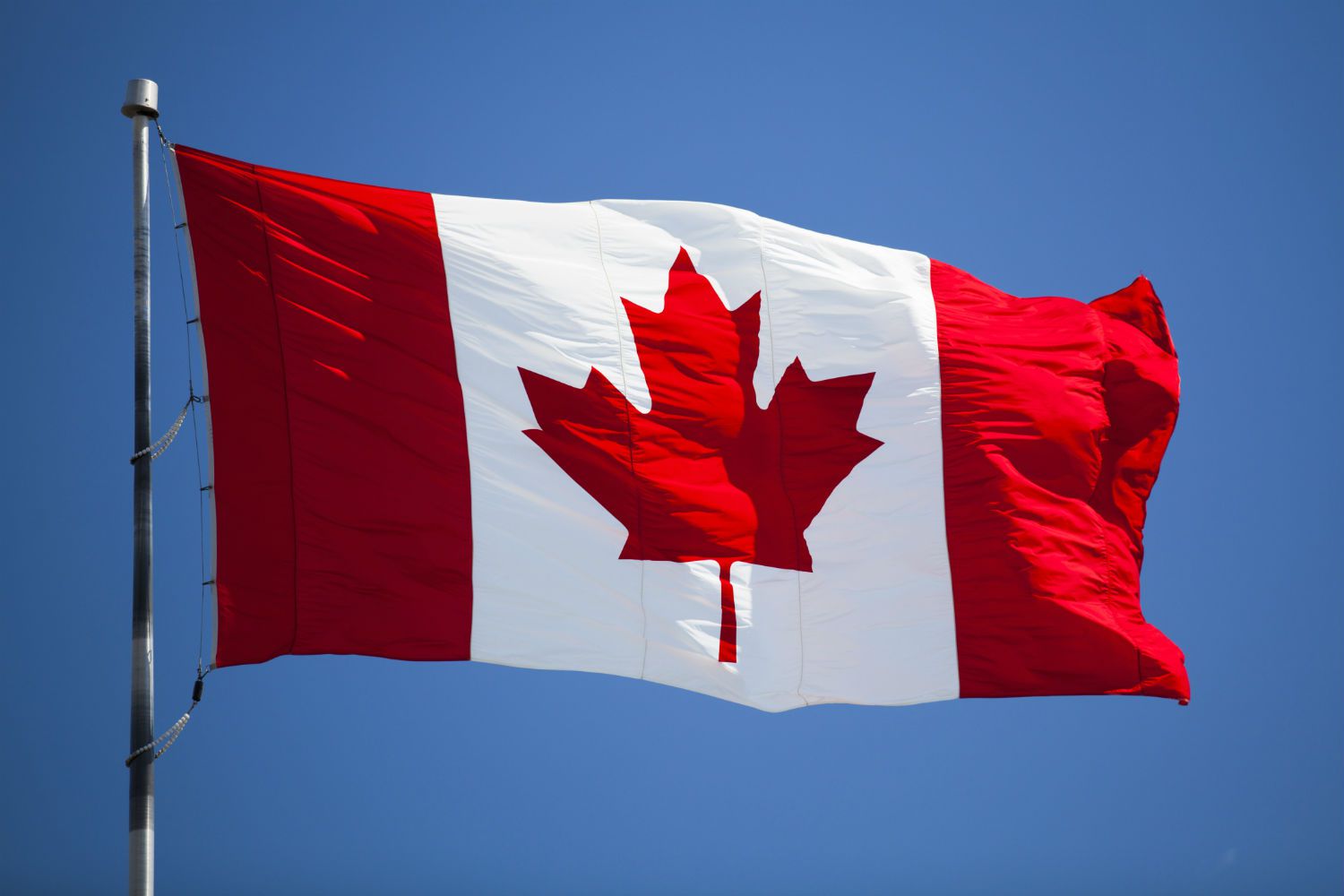
Canadian authorities have warned prospective visa applicants against the falsification of required documents to gain entry into the country.

According to a tweet via the X handle of the Immigration, Refugees and Citizenship Canada on Thursday, it noted that submitting falsified or altered documents during visa applications can stop an applicant from entering Canada for a minimum of five years.

Such documents range from marriage certificates to language results, entry and exit stamps, visas, transcripts and divorce documents, among others.

The IRCC also warned that one could face legal consequences in their home country if found guilty of any related criminal activity.

Information obtained from the IRCC website noted that providing false information about one’s medical conditions to the panel physician during a person’s medical exam is also considered fraud.

Below is the full list of documents whose falsification is considered fraud in Canada:

1. Passports and travel documents

2. Visas, exit and entry stamps

3. Language results

4. Proof of employment or job offers

5. Letters of acceptance from learning institutions, tuition receipts and transcripts

6. Diplomas, degrees and apprenticeship or trade papers

7. Proof of relationship, including certificates of birth, adoption, marriage, final divorce, annulment, separation, death or custodianship

8. Police certificates or court documents

9. DNA testing

The IRCC noted that while it’s not bent on punishing people affected by fraud, it’s determined to identify “those who are responsible for fraud.”

“Lying about how long you or someone else has been physically present in Canada while applying for a permanent residency (PR) renewal or citizenship is also considered fraud. Learn more about PR card residency obligations and physical presence,” the information added.

See also  Dangote breaks ground on $17bn Kenya refinery

It highlighted consequences of immigration and citizenship fraud to include application refusal, a minimum of a five-year ban from Canada, a permanent fraud record with the IRCC, and the removal of one’s temporary or permanent residency status, or Canadian citizenship.

Others include a five-year ban from citizenship application and an outright expulsion from Canada.

The IRCC further warned that Canadian citizens or permanent residents who are in a relationship of convenience for immigration reasons may be charged with a crime.

A relationship of convenience is a marriage, a common-law or conjugal relationship whose main goal is to immigrate to another country.

The IRCC warned that its officers are well-trained to detect false marriages and common-law or conjugal relationships, via document checks, visits to people’s homes, and interviews with both sponsors and applicants.

“Our officers are trained to recognise genuine immigration applications. They know how to detect false marriages and common-law or conjugal relationships.

“They have many ways to spot marriage fraud, including document checks, visits to people’s homes and interviews with both sponsors and applicants,” the information read partly.

Authorities also warned that in the case of credit card payment reversals, it could cause one’s visa application to be cancelled or delayed.

This, it said, could also attract a 10-year entry ban.

“If the fee paid with a credit card is reversed, your visa application could be cancelled or delayed. Your visa application could also be denied and you could potentially be banned from travelling to Canada for up to 10 years. Applications you submit in the future can also be impacted,” it added.

See also  Immigration hikes passport fees to N100,000, N200,000

Source: punchng.com

FOLLOW US ON:

FACEBOOK

WHATSAPP CHANNEL

TWITTER

PINTEREST

TIKTOK

YOUTUBE

LINKEDIN

INSTAGRAM

Continue Reading

News

I would rejoin British Army to fight Russia if needed – Prince Harry reveals

Published

on

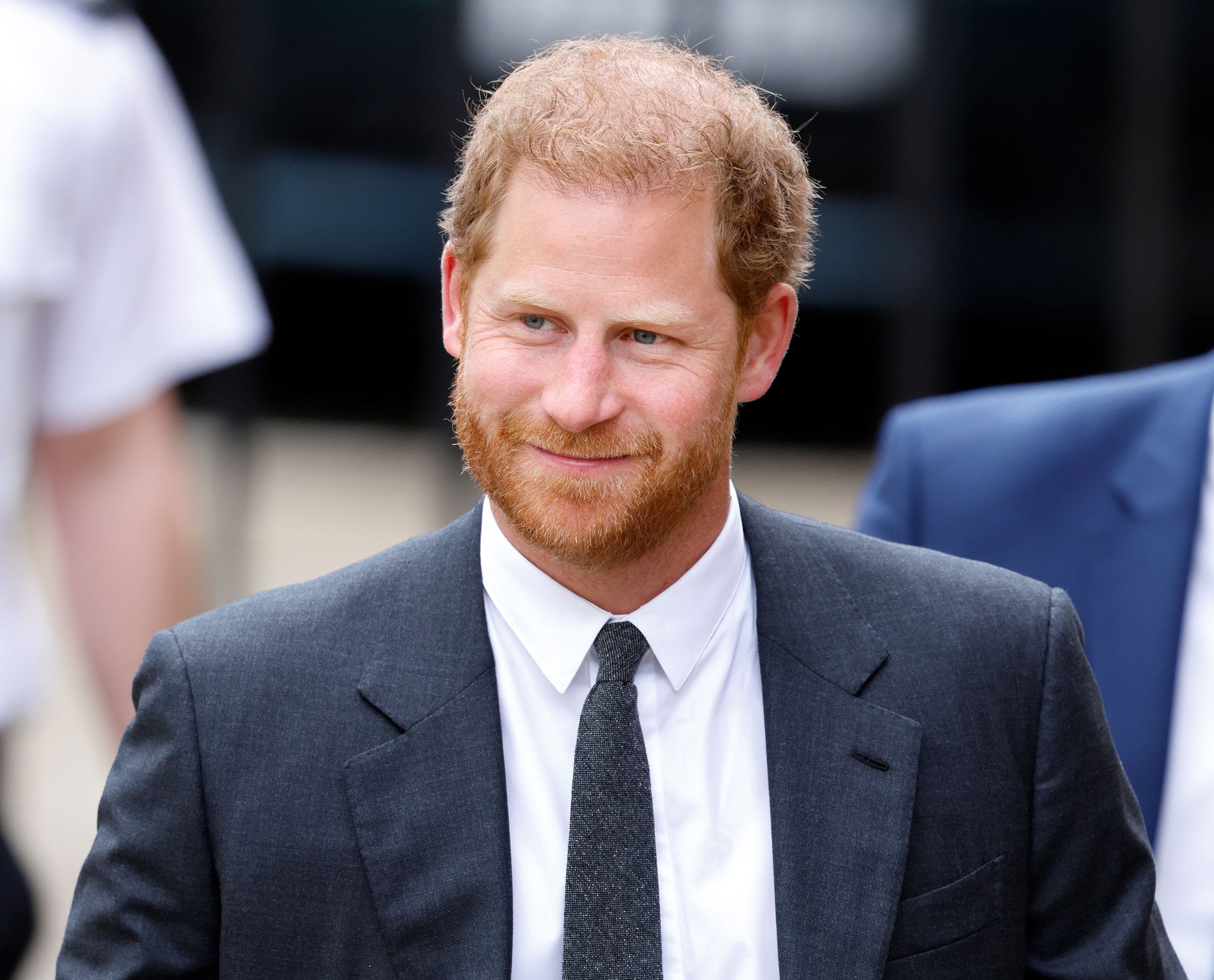
Prince Harry, the Duke of Sussex, has said he would return to the British Army to fight Russia if called upon, declaring his readiness to serve alongside other veterans and military personnel amid the ongoing war in Ukraine.

The former British Army officer made the remarks during a visit to Lviv, western Ukraine, where he said Europe had become more aware of the threat posed by Russian President Vladimir Putin. He also argued that the United Kingdom and Russia had effectively been in conflict for the past decade, despite the absence of direct military attacks on British soil.

“Just because there’s not drones, bullets and rockets flying at us, it doesn’t mean that we’re not at war,” he said.

Harry stressed that countries should draw lessons from Ukraine’s resistance to Russian aggression, saying the experience had valuable lessons for the international community.

“If asked to sign up again, if the need is there, then I will 100 per cent be there to serve my country alongside my fellow veterans and service personnel.”

“There is a lot that we can learn from Ukraine. I think there’s a lot that the whole world can learn from Ukraine,” he told The Telegraph.

He also expressed concern about the current international security situation, urging people who had previously served in the military to remain prepared for another call to duty.

“I think we should all be nervous, absolutely. And I think we should be prepared, and I think that those of us that have served should be ready to serve again.”

See also  16 escape death in Lagos-Abeokuta Expressway crash

The Duke’s comments come against the backdrop of his military background, having completed two operational tours in Afghanistan as an Apache helicopter pilot with the British Army. His first deployment lasted from December 2007 to February 2008, while the second ran from September 2012 to January 2013. He ended his military career in 2015.

During the visit, Harry also criticised the approach of US President Donald Trump’s administration towards the war, suggesting that its position did not reflect the level of support for Ukraine among Americans.

“I think there’s been a big separation between what American society feels regarding support for Ukraine, which I think is incredibly high and always has been, compared to a certain group – or in this case an administration that was perhaps thinking about it differently,” he told the podcast.

He expressed optimism about the expected political changes in the United States following the midterm elections, particularly the Democrats’ forthcoming takeover of the House of Representatives and the Senate.

“As of January, things are going to change, so I think we should all be looking forward to that.

“Europe has a united front, and it would be fantastic to have more American support for that as well.”

Harry, who has developed a professional relationship with Ukrainian President Volodymyr Zelensky, said he believed Ukraine was gaining ground against Russia. He based his assessment on four visits to the country and regular briefings from political and military officials.

However, he argued that the conflict would require a possible way out for Moscow, adding: “There needs to be some form of exit strategy for Russia.”

See also  Nigeria records West Africa’s first telerobotic surgery across 500km

He described the number of Russian soldiers being killed by Ukrainian forces as “insane” and warned against reducing military and humanitarian assistance to Kyiv at a critical stage of the conflict.

According to Harry, Ukraine’s battlefield position suggested that Russia was struggling to make further advances, while its continued attacks on civilian facilities reflected growing desperation.

“There is no version of where Russia is making any more advances.

“It’s quite the opposite. What I’m told is the more strikes from rockets from Russia and and drone strikes into civilian infrastructure is just a sign of desperation, a sign that they are losing.”

He further described the reported monthly losses of 30,000 or more Russian and North Korean soldiers as unsustainable, arguing that international support for Ukraine should increase rather than diminish.

Harry also condemned attacks on medical facilities and humanitarian centres, calling for stronger international action to protect civilians and uphold international law.

“I think it’s appalling that civilian infrastructure, especially hospitals and medical centres, are being targeted. Humanitarian aid centres are being targeted as well.

“International law must mean something. So I think the rest of the world could and should do more in that regard.”

He described the conflict as a psychological campaign aimed at exhausting Ukrainians through repeated overnight attacks and constant bombardment.

Drawing a connection between Ukraine’s resilience and his work supporting injured military personnel through the Invictus Games, Harry praised the determination of the people he had encountered during his visits.

“The Invictus spirit lives in every single Ukrainian person, not just veterans, that I’ve met.”

See also  Dangote breaks ground on $17bn Kenya refinery

Harry and his wife, Meghan, returned to the UK in August with their two children after spending six years in the United States. The couple stepped down as senior members of the British royal family in 2020.

(The Independent)

Source: tribuneonlineng.com

FOLLOW US ON:

FACEBOOK

WHATSAPP CHANNEL

TWITTER

PINTEREST

TIKTOK

YOUTUBE

LINKEDIN

INSTAGRAM

Continue Reading

News

IG urged to curb election-related violence, read details

Published

on

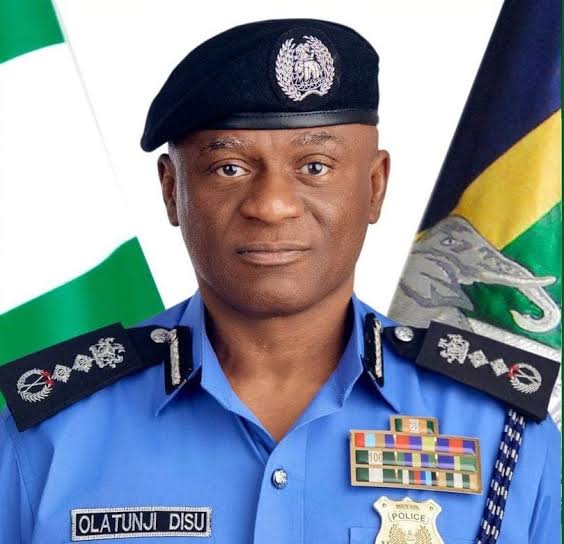
A Lagos-based lawyer, Emmanuel Umohinyang, has urged the Inspector-General of Police, Olatunji Disu, to strengthen security measures and prevent political violence ahead of the forthcoming general election.

Umohinyang, in a letter dated November 16, 2026, addressed to the IG at the Force Headquarters, Abuja, and obtained by The PUNCH on Wednesday, expressed concern over reported attacks on political campaign convoys, rallies, supporters and other legitimate political activities across the country.

He warned that the growing tendency for political disagreements to degenerate into physical attacks, intimidation and destruction of property posed a serious threat to Nigeria’s democratic process.

The lawyer urged the police not to wait until violence erupted before responding, but to identify potential flashpoints, assess security threats and take preventive measures.

He described the forthcoming election as an opportunity for Disu to demonstrate purposeful leadership and the capacity of the police to protect Nigerians irrespective of their political affiliations.

Umohinyang noted that it would be the first general election to be conducted under Disu’s leadership as IGP, adding that the police’s handling of election-related security would shape public confidence in the Force.

He said, “The security of lives and property and the protection of citizens’ constitutional rights must not be compromised by the desperation and intolerance that appears to accompany the struggle for political power.

“The responsibility of the police, therefore, is not merely to restore order after violence has occurred but, more importantly, to anticipate threats, identify potential flashpoints and prevent foreseeable violence.”

The lawyer called for professional reorientation, institutional sanitisation and operational mobilisation of police personnel across the country.

He also cautioned the police against allowing themselves to be used as instruments of political intimidation or manipulated into compromising citizens’ rights.

See also  US, Iran reach deal to end war, reopen Hormuz

Umohinyang stressed the need for equal protection for supporters of the ruling and opposition parties, insisting that police protection should not be determined by political affiliation, ethnicity, religion or other considerations.

He urged the IGP to issue clear directives to commissioners of police in the 36 states and the Federal Capital Territory to strengthen security arrangements and adopt intelligence-driven policing.

He said, “They must not adopt a complacent or reactive posture while political tensions build up around them. Rather, they must be proactive and intelligence-driven. They must identify emerging threats, monitor potential flashpoints, assess credible security information and take timely preventive measures.”

The lawyer further called for prompt investigation of attacks on political activities and the prosecution of perpetrators, sponsors and accomplices where credible evidence established their involvement.

He also urged the police chief to ensure that officers found guilty of negligence, dereliction of duty or complicity in political violence faced appropriate disciplinary and legal consequences.

Umohinyang said the President’s position against political violence should be reflected in police operations, stressing that those responsible for sponsoring or perpetrating attacks should not escape justice because of their political influence.

He said, “The forthcoming election should be an opportunity for Nigerians to exercise their democratic rights peacefully, not a period of apprehension in which citizens fear attending rallies, joining campaign processions or expressing their political preferences.

“The safety of Nigerians must never be negotiable, and no political ambition is worth the loss of a single innocent life.”

Source: punchng.com

FOLLOW US ON:

FACEBOOK

WHATSAPP CHANNEL

TWITTER

PINTEREST

TIKTOK

YOUTUBE

LINKEDIN

INSTAGRAM

Continue Reading

Trending