Connect with us

Business

Dangote breaks ground on $17bn Kenya refinery

Published

on

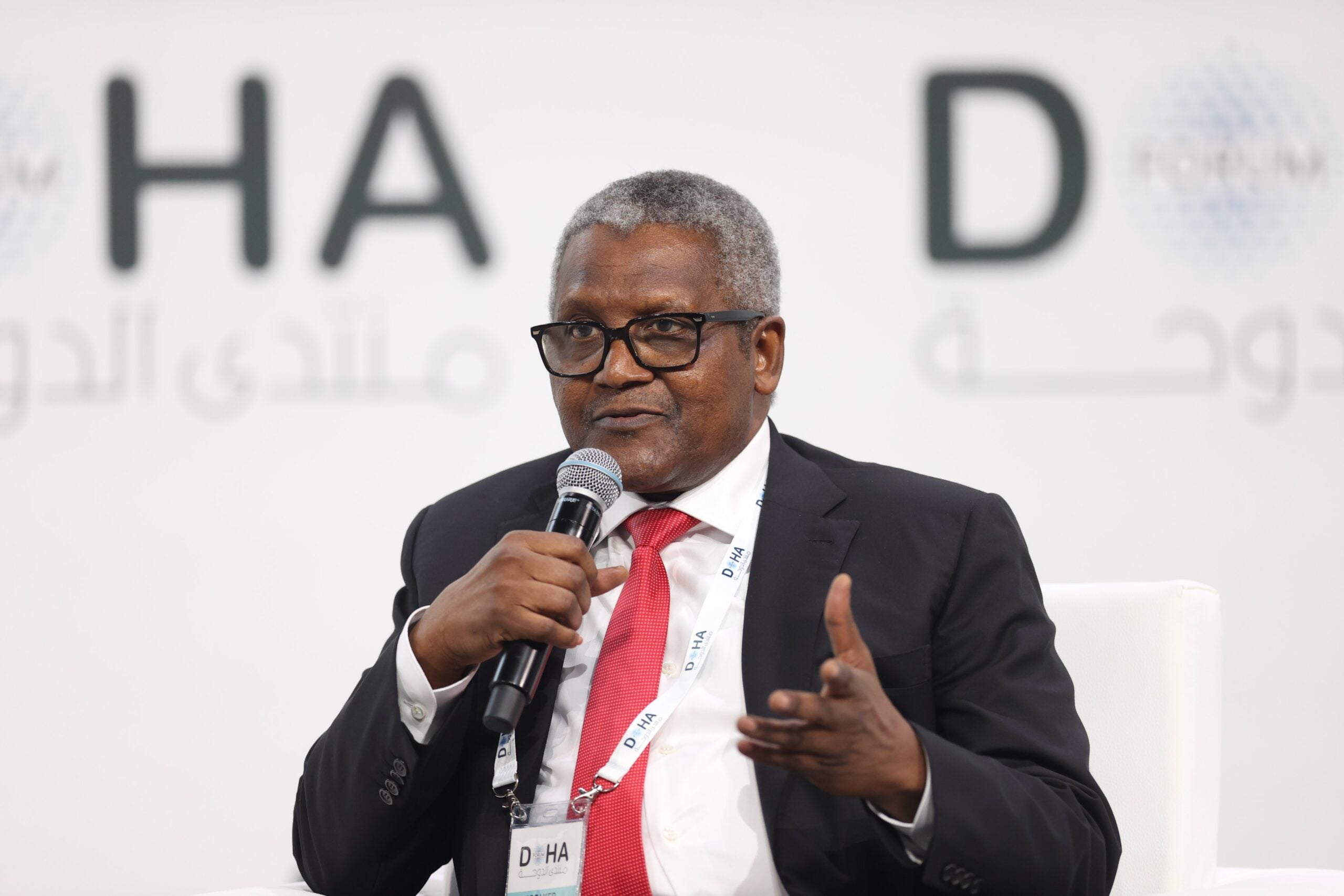
Dangote Industries Limited has commenced preliminary works on its proposed $17bn, 700,000-barrels-per-day refinery in Kenya, marking the first major step towards what is expected to become East Africa’s largest refining project.

The company said the project has advanced beyond the planning stage, with the site already selected, soil tests ongoing and engineering and design work underway ahead of construction.

According to Reuters, the refinery, which will be located on Lamu Island off the Kenyan coast, is expected to take about three years to complete and will supply refined petroleum products to Kenya and neighbouring countries, reducing East Africa’s dependence on imported fuels.

The development comes as Bloomberg reported on Tuesday that President of the Dangote Group, Aliko Dangote, plans to build the refinery at an estimated cost of up to $17bn as part of efforts to expand his refining empire into East Africa.

Citing a spokesman for Dangote Industries Ltd., Bloomberg reported that the proposed refinery would replicate the company’s refinery in Lagos and process about 700,000 barrels of crude oil per day when completed.

The report read, “A new mega-refinery to be built at the Kenyan coast by Africa’s richest person will cost as much as $17bn, a spokesman for Dangote Industries Ltd. has confirmed.

“Billionaire Aliko Dangote personally pledged to the leaders of Kenya and Uganda that he would set up a replica of his 700,000-barrel-a-day refinery outside Lagos in East Africa. The refinery would take about five years to build.”

According to the report, Dangote personally assured the Presidents of Kenya and Uganda that he would establish the refinery in East Africa. The report recalled that Kenyan President William Ruto announced in May that Dangote would commence construction of the refinery this year.

See also  Global markets surge on US rate hopes

Speaking to Reuters, Dangote Industries’ Vice President for Oil and Gas, Devakumar Edwin, said the company had made significant progress on the project. “The site has been selected, soil tests are underway, and design and engineering work has commenced. Kenya was the choice from the beginning,” he told Reuters.

According to Bloomberg, Dangote said the coastal town of Lamu in southeastern Kenya was selected as the preferred location “for commercial and technical reasons,” although he did not provide further details.

The report added that Tanzania had initially been considered as a possible location for the refinery before Kenya emerged as the preferred destination.

The project represents Dangote Group’s biggest refining investment outside Nigeria and forms part of the company’s ambition to expand refining capacity across Africa following the commencement of operations at its 650,000-barrels-per-day refinery in Lagos.

Devakumar disclosed that the refinery would be financed through a combination of internally generated cash, bonds, and proceeds from the company’s planned initial public offering.

He, however, declined to state the exact cost of the project, saying it would be comparable to that of the Lagos refinery. The Lagos refinery, built by Aliko Dangote, eventually cost more than $20bn before commencing operations in 2024.


Reuters reported that the project was initially estimated at about $9bn in 2013, but costs escalated following the relocation of the site, engineering challenges, currency weakness, the COVID-19 pandemic and global inflation.

The investment comes as Dangote is simultaneously pursuing another ambitious expansion programme in Nigeria, where the capacity of the Lagos refinery is being doubled from 700,000 barrels per day to 1.4 million barrels per day by 2028. Once completed, the Nigerian complex is expected to become one of the world’s largest refining facilities.

Dangote Industries Limited has also unveiled plans to increase its combined refining capacity to 2.1 million barrels per day across Nigeria and Kenya as part of its long-term strategy to expand its footprint across Africa.

See also  NASS extends 2025 fiscal year to March due to budget crisis

Edwin disclosed this during a recent visit by a delegation from the Republic of the Congo’s national oil company, Société Nationale des Pétroles du Congo, to the Dangote Petroleum Refinery in Lagos.

He said the expansion would raise the group’s total refining capacity to 2.1 million barrels per day, comprising 1.4 million barrels per day in Nigeria and the planned 700,000-barrels-per-day refining complex in Kenya to serve East African markets.

He also disclosed plans by the group to invest an additional $46bn between 2026 and 2028 across its refining, cement and fertiliser businesses as part of its drive to accelerate industrialisation across Africa.

The proposed Kenyan refinery reflects a growing recognition across Africa that local refining has become increasingly critical to energy security, foreign exchange conservation, and industrial development.

For decades, despite producing millions of barrels of crude oil daily, Africa has remained heavily dependent on imported refined petroleum products because of inadequate refining capacity.

Data show that while Africa contributes about seven per cent of global crude oil production, refining capacity across the continent declined by roughly one-third over the past two decades as ageing refineries suffered years of underinvestment, operational inefficiencies and poor maintenance.

The commissioning of the Dangote refinery has begun to reverse that trend. The refinery reached full operational capacity shortly before the recent Middle East tensions involving Iran, helping Nigeria significantly reduce its dependence on imported petrol and other refined products while improving domestic fuel availability.

Its success has renewed interest among African governments and private investors seeking to replicate the model in other parts of the continent. Beyond Kenya, several countries are now pursuing similar projects to strengthen their domestic refining industries.

See also  FG plans 500 CNG stations to cut petrol use

In Mozambique, Nigerian businessman Benedict Peters has indicated interest in developing a proposed 200,000-barrel-per-day refinery, while Uganda is advancing plans to construct a 60,000-barrel-per-day refinery to meet domestic demand and supply neighbouring markets in Kenya and Tanzania.

According to the African Petroleum Producers’ Organisation, Africa currently exports about three-quarters of the crude oil it produces while importing approximately 70 per cent of the refined petroleum products consumed across the continent.

This imbalance has continued to expose African economies to volatile international fuel prices, high transportation costs, and foreign exchange pressures.


The proposed Kenyan refinery is therefore expected not only to strengthen East Africa’s energy security but also to deepen regional trade in refined petroleum products, reduce import dependence and stimulate industrialisation across the region.

Africa possesses abundant crude oil reserves but has historically lacked sufficient refining infrastructure to process its production locally. As a result, many oil-producing countries export crude oil and import expensive refined petroleum products, exposing their economies to global supply disruptions and price volatility.

The commissioning of the 650,000-barrel-per-day Dangote Petroleum Refinery in Nigeria marked a major shift in the continent’s refining landscape, boosting local fuel production and encouraging governments across Africa to prioritise investments in domestic refining capacity.

The proposed Kenyan refinery represents one of the continent’s most ambitious downstream projects and could significantly reshape fuel supply dynamics in East Africa while advancing the African Union’s broader agenda of industrialisation and regional energy integration.

punch.ng

FOLLOW US ON:

FACEBOOK

TWITTER

PINTEREST

TIKTOK

YOUTUBE

LINKEDIN

Continue Reading
Click to comment

Leave a Reply

Your email address will not be published. Required fields are marked *

Business

CBN reveals that Banks shut 476 branches in three years, read details

Published

on

Deposit Money Banks in Nigeria closed a net 476 branches and cash centres between 2022 and 2025, reducing their physical footprint by 8.8 per cent in three years, according to data from the Central Bank of Nigeria.

Figures contained in the CBN’s 2025 Statistical Bulletin for the Financial Sector showed that the number of bank branches and cash centres across the country declined from 5,410 in 2022 to 4,934 in 2025.

The decline occurred despite an increase in the number of banks operating in the country over the period, pointing to a gradual contraction in physical banking locations.

An analysis by The PUNCH showed that the number of branches fell by 37 from 5,410 in 2022 to 5,373 in 2023. The pace of contraction accelerated in the following year, with 229 locations disappearing as the total dropped to 5,144 in 2024. Banks closed another net 210 locations in 2025, bringing the number down to 4,934.

Consequently, about 92 per cent of the 476 net reduction recorded over the three-year period occurred in 2024 and 2025. The CBN explained that the figures cover branches and cash centres operated by commercial, merchant and non-interest banks. The data were sourced from the apex bank and the Nigeria Deposit Insurance Corporation.

The reduction in physical banking locations came even as the number of banks increased from 32 in 2022 to 33 in 2023 and 35 in 2024, before declining slightly to 34 in 2025. The number of branches operated abroad remained unchanged at two throughout the period.

See also  Shettima pushes for proactive disaster preparedness over costly relief

A state-by-state analysis showed that Lagos recorded the largest decline in absolute terms. The country’s commercial hub had 1,602 branches and cash centres in 2022, but the figure fell to 1,532 in 2023 and 1,521 in 2024 before dropping further to 1,444 in 2025.

This meant banks closed a net 158 locations in Lagos within three years, representing a 9.9 per cent reduction. The state alone accounted for about one-third of the net decline recorded nationwide.

Despite the reduction, Lagos remained the dominant location for physical banking operations, accounting for about 29 per cent of the country’s 4,934 branches and cash centres in 2025.

The Federal Capital Territory also recorded a decline. The number of locations in Abuja stood at 400 in both 2022 and 2023 before falling to 391 in 2024 and 362 in 2025. This represented a net reduction of 38 branches and cash centres, or 9.5 per cent, over the three-year period.

Ekiti suffered one of the steepest contractions, with its branch network almost halving from 107 locations in 2022 to 57 in 2025, representing a decline of 50 locations or 46.7 per cent.

Enugu followed with a reduction of 44 locations from 162 to 118, while Oyo lost 41, declining from 237 to 196. Other states that recorded sizeable declines included Ondo, where the number fell from 127 to 105; Plateau, from 80 to 61; Osun, from 113 to 96; Cross River, from 83 to 67; and Rivers, from 290 to 275.

The decline was also evident in some of the major commercial centres in northern Nigeria. Kano increased its physical banking locations from 164 in 2022 to 175 in 2023 and 183 in 2024. However, the number fell sharply to 157 in 2025, leaving the state with seven fewer locations than it had three years earlier.

See also  Yuletide: Dangote assures Nigerians of stable fuel supply

Kaduna followed a similar pattern, rising from 148 locations in 2022 to 156 in 2023 and 164 in 2024 before dropping to 146 in 2025.

Some states, however, recorded an expansion in their banking networks. Delta added 23 locations, with its total increasing from 173 in 2022 to 196 in 2025. Edo also rose from 155 to 165, while Jigawa increased from 31 to 37 and Kogi from 63 to 68.

The data further showed wide disparities in the distribution of physical banking infrastructure across the country. While Lagos alone had 1,444 locations in 2025, Yobe had 23, Taraba 26 and Zamfara 28. Bayelsa and Gombe had 31 each, while Ebonyi recorded 32.

For instance, Lagos alone accounted for more than 29 per cent of all branches and cash centres nationwide in 2025, highlighting the concentration of physical banking infrastructure in the country’s major economic centre.

The latest figures indicate that the contraction in the industry’s physical footprint has accelerated in recent years, underscoring how rapidly banking is migrating from brick-and-mortar to electronic platforms.

The PUNCH recently reported that the Central Bank of Nigeria called for greater adoption of alternative payment channels to expand access to financial services and stimulate economic activity.

Acting Director, Corporate Communications and Investor Relations Department of the CBN, Hakama Sidi-Ali, made the call at the 2026 CBN Fair in Lokoja, Kogi State.

Represented by Zubairu Salihu, Branch Controller of the CBN Lokoja Branch, she said alternative payment channels were particularly important for farmers, traders, small businesses and informal-sector operators who may have limited access to conventional banking services.

Continue Reading

Business

Crude hits $107, fresh petrol price hike looms

Published

on

Petrol prices in Nigeria may rise further as international crude oil prices surged to $107 per barrel on Thursday from about $100 the previous day.

The latest rally has increased pressure on domestic petrol prices, which have already climbed from about N830 per litre before the Middle East crisis to N1,310 or more in some locations.

Before the crisis began on February 28, crude oil traded below $69 per barrel. However, the subsequent disruption to global oil supplies has pushed international prices sharply higher, prompting the Dangote Petroleum Refinery and fuel importers to adjust their pricing.

With Brent crude now above $107 per barrel and the US-Iran conflict continuing to disrupt tanker movements through the Strait of Hormuz, marketers and analysts warned that another petrol price increase could be imminent.

According to Oilprice.com, Brent crude surged to $107 per barrel on Thursday as the prolonged military confrontation between the United States and Iran continued to disrupt oil supplies through the Strait of Hormuz, raising concerns over a sustained reduction in global crude availability.

The international benchmark gained more than five per cent in early trading, extending the rally that pushed it above the $100 mark earlier in the week.

West Texas Intermediate also climbed above $100 per barrel, reflecting growing global concerns that the conflict may continue to constrain crude supplies.

The latest increase was driven largely by a sharp decline in oil flows through the Strait of Hormuz. Oilprice.com reported that volumes, which had recovered to between six million and nine million barrels per day in previous weeks, had fallen sharply, with recent estimates putting daily outflows below two million barrels.

Shipping trackers also reported that no very large crude carriers had exited the strait since early September, a significant decline from the higher tanker traffic recorded during the brief period of relative calm.

See also  FG plans 500 CNG stations to cut petrol use

The escalation of attacks on tankers and commercial vessels in the Persian Gulf and surrounding waters has further heightened uncertainty in the oil market.

Iran claimed to have struck several ships, while the United States confirmed the destruction of some Iranian oil tankers. Officials from both sides have given no indication of an imminent ceasefire, with their statements suggesting that the confrontation could continue for weeks or longer.

Analysts said the absence of a clear path towards de-escalation had forced traders to reassess global supply risks.

Physical crude benchmarks had already moved above $100 in recent sessions, while the futures market followed as inventories tightened and alternative export routes faced increased exposure to attacks.

For months, reports of recovering tanker traffic through the Strait of Hormuz had helped to limit upward pressure on crude prices. That outlook has now changed.

With oil flows sharply reduced and no clear diplomatic resolution in sight, global markets are increasingly pricing in the possibility of prolonged disruption to one of the world’s most important energy transit routes.

For Nigeria, sustained increases in international crude prices could continue to feed into the domestic petrol market, particularly as refiners and importers adjust their prices to reflect changes in global crude and related supply costs.

Source: punchng.com

FOLLOW US ON:

FACEBOOK

TWITTER

PINTEREST

TIKTOK

YOUTUBE

LINKEDIN

INSTAGRAM

Continue Reading

Business

How to buy fuel via app, serve yourself at NNPC stations

Published

on

The Nigerian National Petroleum Company Limited has begun introducing self-service fuel pumps at selected NNPC Retail stations, allowing motorists to dispense petrol themselves using a mobile application.

The development is part of NNPC’s plan to deploy between 50 and 70 smart, self-service stations across the country within the next six months.

Unlike the conventional system where an attendant dispenses fuel, the self-service model allows customers to select the amount of fuel they want, make payment through an app and use a code to activate the pump.

NNPC Retail shared a guide on its X handle on Friday showing motorists how to use the system.

Here is a step-by-step guide on how to buy and dispense fuel yourself at participating NNPC stations:

Step 1: Motorists who want to use the self-service facility should first download the NRL Fuel App. Get the download link from the NNPC X handle.

Step 2: Open the app, tap Fuel Purchase, and select your fuel type.

Step 3: Browse the station list and choose an NNPC Retail station offering the self-service option.

The facility is currently available only at selected stations as NNPC rolls out the new system. Look for the green Self-Serve badge next to the station name. Tap it to select.

Step 3: After selecting the station, enter the amount you wish to spend on fuel. Review the quantity and price, then tap Pay from Wallet. The system will process the transaction based on the amount entered.

Step 4: Once the payment is successful, the app will generate a digital receipt. It contains your Order ID, your Self-Service Code, and a QR Code.

See also  Global markets surge on US rate hopes

Step 5: At the pump, enter your 8-digit self-service code on the terminal and press the hash key. Once validated, pick up the nozzle and fuel up—exactly the amount you paid for.

NNPC Executive Vice President, Downstream, Mumuni Dagazau, said the new model was part of the company’s plan to transform conventional filling stations into broader energy and mobility hubs.

At the newly commissioned smart station on Bill Clinton Drive, Airport Road, Abuja, NNPC Retail Executive Director, Retail Operations and Mobility, Shettima Baba-Kukawa, said customers could complete transactions on their phones and dispense the exact amount of fuel purchased.

NNPC said the smart stations would combine conventional petrol sales with services such as electric vehicle charging, liquefied petroleum gas, compressed natural gas and other mobility services.

Source: punchng.com

FOLLOW US ON:

FACEBOOK

TWITTER

PINTEREST

TIKTOK

YOUTUBE

LINKEDIN

INSTAGRAM

Continue Reading

Trending