



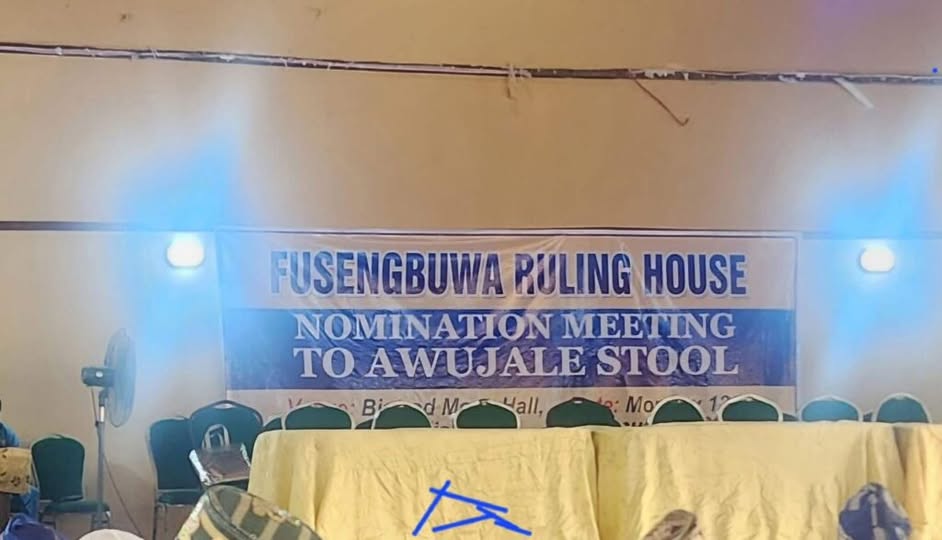
The Chairman of the Fusengbuwa Ruling House, Abdulateef Owoyemi; his deputy, Dokun Ajidagba; the Vice Chairman, Prof Fassy Yusuf; and the Secretary, Pastor Jeremiah Salami, have dragged 12 other members of the family before the Ogun State High Court sitting in Ijebu-Ode over their purported removal from office.
The claimants are also challenging allegations of financial inducement and manipulation in the selection process for the new Awujale of Ijebuland.
The four ruling house leaders, on behalf of themselves and the family, are asking the court to award N1bn in damages against the 12 defendants for allegedly making unfounded allegations of financial inducement and other infractions against them.
They are also seeking a perpetual injunction restraining the defendants from parading themselves as the leaders or representatives of the royal house.
This was contained in a writ of summons marked HCJ/167/2026, dated September 16, 2026, and made available to journalists on Sunday.
Those sued include Pa Olusegun Olusoga, also known as “AK Black,” Ridwan Oduneye, Muyiwa Adeleye, Alhaji Taiwo Ajumo, Sikiru Adegunwa Oluwole, Kehinde Lawal, Lukman Logunleko Oludare, Abdul Onalaja, Ashiru Mufutau, Osiyemi Johnson, Adeleke Adeyemi, also known as “Leke Adeyemi”, and Olukayode Otufale.
The claimants said that following a resolution reached at a meeting of the ruling house on November 7, 2025, after an earlier meeting convened by the Ogun State Government at the Governor’s Office, Oke-Mosan, Abeokuta, on November 6, 2025, the three separate units of the ruling house, headed respectively by Owoyemi, Ajidagba and Yusuf, were formally merged into one ruling house.
They said the meeting unanimously adopted the leadership structure led by the trio.
According to the claimants, the leadership of the ruling house, led by Owoyemi, a former National President of the Institute of Chartered Accountants of Nigeria, with the support of Ajidagba and Yusuf, had, on behalf of the Fusengbuwa Ruling House, been handling the nomination of the next Awujale from the family.
They said the leadership subsequently forwarded the list of nominated candidates to the Awujale Kingmakers, led by the Ogbeni Oja of Ijebuland, Chief Dr Sunny Kuku.
The claimants alleged that a breakaway unit of the family, including eight of the defendants, sometime in June, formed what they described as an illegal fact-finding committee to investigate allegations of financial inducement against the leadership of the ruling house.
They further stated that at another meeting held on August 9, which they said was not ratified by the ruling house, the breakaway unit announced the submission of its fact-finding committee report and, based on the report, purportedly removed Owoyemi, Ajidagba and Yusuf as leaders of the family.
The defendants were also alleged to have written a letter dated August 11, 2026, to Governor Dapo Abiodun; the Commissioner for Local Government and Chieftaincy Affairs, Ganiyu Hamzat; the Chairman of Ijebu-Ode Local Government, Dare Alebiosu; the kingmakers and others, notifying them of the purported removal of the ruling house leadership and urging them not to deal with the claimants on behalf of the Fusengbuwa Ruling House.
The breakaway faction was also said to have, in a letter dated September 2, 2026, addressed to Governor Abiodun, the kingmakers, the Commissioner for Local Government and Chieftaincy Affairs and others, announced the appointment of Olukayode Otufale as the “Single Unified Olori-Ebi” of the ruling house and directed that all future correspondence relating to the ruling house be channelled to him.
The claimants, however, averred that “the said representation is false in every material particular, that no ‘general meeting’ capable of binding the entire Fusengbuwa Ruling House has been convened by lawful authority; and no valid resolution of the Ruling House, duly and lawfully constituted, has at any time removed the claimants, or any of them, or appointed the 12th defendant or any other person in their stead.”
They further averred that unless restrained by the court, the defendants would continue to hold themselves out to the state government, the kingmakers, the Ijebu-Ode Local Government and the general public as the family head and principal officers of the Fusengbuwa Ruling House.
They said this would cause irreparable prejudice to the claimants and the entire membership of the ruling house, as well as “serious detriment” to the pending and time-sensitive process for the selection of the next Awujale of Ijebuland, in which the ruling house has a substantial interest.
The four leaders therefore urged the court to grant, among others, the following reliefs:
“A declaration that the 1st claimant is the duly recognised Olori-Ebi and Chairman, the 2nd claimant the Deputy Chairman, the 3rd claimant the Vice Chairman, and the 4th claimant the General Secretary, of the Fusengbuwa Ruling House, Ijebu-Ode, pursuant to the resolution of the Ruling House dated 7th November, 2025, and that they remain validly in their said respective offices.
“A declaration that neither the purported ‘Fact-Finding Committee’ constituted at the meetings of 7th and 25th June, 2026, nor the gathering(s) of 9th August, 2026 and 2nd September, 2026, nor any of the defendants, was or is competent, under the native law and custom, tradition, or extant governing Resolution of the Fusengbuwa Ruling House, to remove, suspend, query, discipline, or purport to replace any of the claimants from or in their respective offices.
“A declaration that the purported removal of the claimants, or any of them, from their respective offices as contained in and evidenced by the letter dated 11th August, 2026, titled ‘Notification of Removal from Office as Olori-Ebi and Chairman of Fusengbuwa Ruling House,’ and all resolutions, meetings and proceedings purportedly leading thereto are unconstitutional, unlawful, null, void and of no effect.
“A declaration that the purported appointment of the 12th defendant, Otunba Olukayode Otufale, or of any other person whomsoever, as ‘Single Unified Olori-Ebi’ or as holder of any principal office of the Fusengbuwa Ruling House, as contained in and evidenced by the letter dated 2nd September, 2026, is unlawful, null, void and of no effect whatsoever.”
They also asked the court for an order of perpetual injunction restraining the defendants, whether by themselves, their agents, servants, privies, associates or any person howsoever described claiming through or under them, from parading, describing or holding out themselves, the 12th defendant or any other person as the Olori-Ebi, chairman, deputy chairman, vice chairman, secretary or any principal officer of the Fusengbuwa Ruling House.
Among other reliefs, the claimants also asked the court to award N1bn in general damages against the defendants for the injury allegedly occasioned to the reputation, standing and offices of the claimants collectively by the acts pleaded above.
The claimants stated that the damages sought were “without prejudice to, and exclusive of, any personal claim for damages by the 3rd claimant in Suit No. HCJ/153/2026.”
Recall that the ruling house had dragged Governor Abiodun, the Awujale kingmakers and five others, including the Chairman of Ijebu-Ode Local Government, Dare Alebiosu, before the High Court sitting in Ijebu-Ode, seeking orders compelling the completion of the process for the selection of the next Awujale and Paramount Ruler of Ijebuland.
The suit, numbered HCJ/149/2026 and dated August 21, 2026, was filed by Owoyemi, Ajidagba and Prof Yusuf.
A vacation judge, Justice A.A. Omoniyi of Court 3, Ogun State High Court, sitting in Ijebu-Ode, had recently given an interim ruling returning the suit filed by the ruling house against Abiodun, the nine kingmakers and others to the administrative judge for reassignment.
Justice Omoniyi said he would be embarking on his annual vacation within the next week and might not return to duty until January 2027.
He said he was aware of the urgency of the suit, numbered HCJ/149/2026 and filed on August 21, 2026, but was constrained by time, having only one week left before embarking on his annual vacation.
Omoniyi subsequently adjourned the next hearing to Wednesday, September 23, 2026.
The Awujale stool became vacant in July 2025 following the death of Oba Sikiru Adetona at the age of 91, after 65 years on the throne.
The Ogun State Government had halted the selection process in January 2026, citing petitions from security agencies and stakeholders, following an earlier suspension over procedural concerns in December 2025.
A total of 95 aspirants — 94 princes and one princess — had emerged from the ruling house nomination process held in Ijebu-Ode in December before the government halted the selection process.
Source: punchng.com
FOLLOW US ON: