Connect with us

Business

Banditry crisis: FG rejects northern govs’ call to suspend mining

Published

on

The Federal Government has ruled out a blanket suspension of mining activities across Northern Nigeria, despite calls by northern governors and traditional leaders for a six-month halt as part of efforts to curb insecurity in the region.

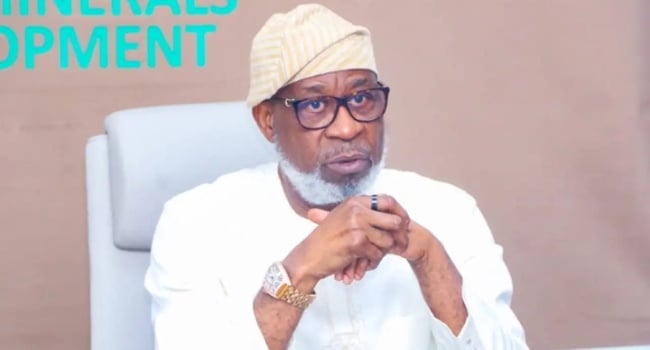
The Minister of Solid Minerals Development, Dele Alake, disclosed this in an exclusive interaction with The PUNCH on Monday in Abuja, stressing that a total shutdown of mining operations would have grave economic consequences for both the North and the country at large.

The minister’s position was conveyed through his Special Assistant on Media, Segun Tomori, who said the Federal Government had carefully weighed the security concerns against the economic realities of ongoing mining and mineral processing activities across the region.

He said, “The position of the Federal Government remains that there can’t be a blanket suspension of mining activities across the North because it will have far more adverse economic implications for the region and the nation.”

Alake added that several strategic industrial facilities rely directly on mining operations in the North.

“We have lithium plants that are operational in Nasarawa and the outskirts of Abuja; an iron processing plant in Kaduna, and a host of other mining activities that will be affected by a blanket ban. Even the cement factory in Ajaokuta, Kogi State, depends on mining of limestone,” Tomori said.

He added that following engagements with the Federal Government, northern governors had begun to reconsider their earlier advice on a total ban.

“So, based on these facts, I believe the northern governors have reconsidered their advisory on a blanket ban based on our engagement with them,” he said.

Instead of a wholesale suspension, the minister said the Federal Government was pursuing a targeted security approach aimed at flushing out criminal elements operating around mining sites.

According to him, this strategy is already being implemented through a multi-agency security operation coordinated by the Office of the National Security Adviser, covering parts of the North-West, North-East and North-Central.

“What can work is to map out areas that are severely affected by bandit activities and rout the non-state actors. That is already being done through a multi-agency security operation coordinated by the NSA across the North-west, North-east and parts of the North-Central,” he said.

Tomori stressed that legitimate mining activities should not be punished for the actions of illegal operators.

He noted that consultations with state governments were ongoing, revealing that the Governor of Nasarawa State, Abdullahi Sule, met with the minister in January as part of the engagement process.

“There is no consideration for blanket suspension of all mining activities in the north. However, we are engaging with the Governors on how best to tackle the menace of insecurity fueled by illegal mining in some areas. The Nasarawa state Governor, Abdullahi Sule, met with the minister sometime in January as part of the consultations,” he said.

See also  Nigerians Will Soon Be Able To Buy Dangote Refinery Shares Soon – Dangote Announces

Responding categorically to demands by northern governors for a comprehensive audit and revalidation of mining licences, the minister confirmed that such a process was already being planned.

“We announced sometime last year that an audit of the entire sector is in the offing. Details are being worked out and are being kept under wraps until we are ready to announce its implementation,” he said.

To strengthen enforcement, the minister disclosed that the Federal Government was fast-tracking the deployment of satellite surveillance to monitor mining sites nationwide.

“We are fast-tracking the process for the installation of satellite surveillance of mining sites, among other measures, to bolster the capacity of the mining marshals for more effectiveness,” Tomori said.

He added that the Federal Government was working with international partners to improve security outcomes.

“The Federal Government will continue to do its best alongside its allies to ensure the security of the North and indeed the entire country. We can see improved security operations in hotbeds and recent collaboration with the US military in that regard,” he said.

In December 2025, the Northern Governors’ Forum, alongside other influential leaders, urged the Federal Government to suspend mining activities in the region for six months, arguing that illegal mining had become a major source of funding for banditry and other criminal activities.

This was contained in a communiqué issued after a joint meeting of the Northern States Governors’ Forum and the Northern Traditional Rulers’ Council held at the Sir Kashim Ibrahim House, Kaduna.

The call followed multiple school raids, violent attacks and kidnappings across mining communities, particularly in parts of Zamfara, Niger, Kaduna and Katsina states.

On November 17, 2025, armed men attacked the Government Girls Comprehensive Secondary School in Maga, Kebbi State, abducting 24 schoolgirls. The school’s vice-principal was killed during the attack. The students were freed a few days later.

Four days later, on November 21, gunmen invaded St. Mary’s Catholic School in the Papiri community, Agwara LGA of Niger State, abducting hundreds of pupils and staff.

Church and local officials later confirmed that 303 students and 12 teachers were taken away.

The escalating attacks prompted several states to order the temporary closure of schools in Kebbi, Bauchi, Yobe, Adamawa, Taraba, Plateau, Niger, Katsina and Kwara states.

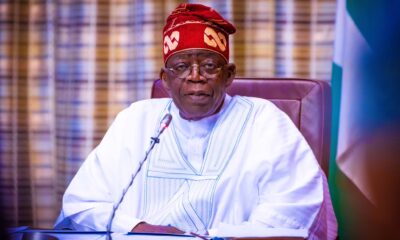
As a corrective measure, they asked President Tinubu to direct the Minister of Solid Minerals to suspend mining activities to allow for a full audit and revalidation of licences.

See also  Schools, markets open as IPOB ends Monday sit-at-home

Nigeria’s solid minerals sector, however, has been identified by the Federal Government as a key pillar of its economic diversification drive, with significant investments in lithium, iron ore, limestone and gold expected to generate jobs, boost exports and grow non-oil revenue.

The government’s refusal to impose a blanket ban reflects a balancing act between security imperatives and economic survival, as authorities seek to clamp down on illegal mining without shutting down legitimate operations critical to regional development.

Meanwhile, Jigawa State is still waiting for the Federal Government’s response to the Northern Governors’ Forum’s demand to suspend mining activities in the region for six months to tackle insecurity.

Chief Press Secretary to the Jigawa State Governor, Comrade Hamisu Gumel, in an exclusive interview with one of our correspondents, the state government is concerned about the security implications of illegal mining, but hasn’t received any official communication from the Federal Government on the suspension.

“We are aware of the Northern Governors’ Forum’s demand, but we are yet to receive any official response from the Federal Government,” Gumel told our Correspondent.

Gumel added that Jigawa State had no records of cases related to illegal mining and insecurity, but the state government is committed to supporting efforts to address the issue.

“The Northern Governors’ Forum had requested the suspension of mining activities to allow for an audit and revalidation of licenses, citing concerns over the role of illegal mining in fuelling insecurity in the region,” he remarked.

According to him, the forum has also announced plans to establish a Security Trust Fund, with each state contributing N1bn monthly, to support joint security operations and intelligence-driven interventions.

However, Gumel, who said he’s not authorised to speak on behalf of the Northwest governor’s forum, explained that it is unclear how many states have contributed to the fund so far.

Gumel said the Jigawa State government is committed to working with the Federal Government and other stakeholders to address insecurity and promote economic development.

“The state government has been working to strengthen security measures and promote community engagement to prevent the spread of insecurity,” he concluded.

Similarly, the call by the Northern States Governors’ Forum for a six-month suspension of mining activities across northern Nigeria as part of measures to curb insecurity is yet to be fully implemented in Kwara State.

Findings show that while the initiative has been discussed at the policy level, contributions from individual states and full operational rollout remain at early stages, with no confirmed participation reported in Kwara as of the latest state security briefings.

See also  Crude supply to domestic refineries hit 67.6m barrels – FG

Security analysts warn that the delay in implementing both the mining suspension and the regional trust fund may be prolonging vulnerabilities in mineral-rich rural communities, particularly in parts of North-Central Nigeria where illegal mining camps operate within remote forest corridors.

Coordinator of the Kwara Sustainable Development Advocacy Forum, Musa Idris Buko, said the group had raised concerns in 2024 about the possible security implications of unregulated mining activities in Kwara North.

“We raised the alarm and called on the Federal Government to prioritise the development of the mining sector in Kwara in line with global best practices,” he said.

“If illegal mining in Kwara North is allowed to thrive, it will affect food security and agricultural production. What we are witnessing today shows the dangers of ignoring early warnings.”

Some community stakeholders have also suggested that recurring attacks in remote areas may indirectly create conditions that force residents to abandon mineral-rich communities, allowing illegal mining networks to operate with limited resistance, a trend observers say has been recorded in several conflict-affected zones across northern Nigeria.

As security operations intensify across affected states, policy experts are urging the Federal Government and northern governors to clarify the status of the proposed mining suspension, accelerate the launch of the regional security trust fund and strengthen regulatory oversight of mining activities to prevent criminal groups from exploiting the sector.

However, the Bauchi State Government has confirmed suspension of mining activities in parts of the state as part of measures to address recurring insecurity.

Responding to enquiries from The PUNCH, the Special Assistant to the Governor, Khalifa Rishi, said the suspension was implemented in Alkaleri Local Government Area, which has witnessed repeated security challenges.

According to him, the decision was taken following incidents of insecurity linked to mining activities in the area.

“The suspension was implemented in the Alkaleri Local Government Area. It is because of the recurrent insecurity we recorded in the area,” Rishi said.

He noted that since the suspension of mining operations, there has been a significant improvement in the security situation in the affected communities.

Rishi, however, declined to comment on the status of the proposed security trust fund being planned by the Northern Governors’ Forum.

punch.ng

FOLLOW US ON:

FACEBOOK

TWITTER

PINTEREST

TIKTOK

YOUTUBE

LINKEDIN

TUMBLR

INSTAGRAM

Continue Reading
Click to comment

Leave a Reply

Your email address will not be published. Required fields are marked *

Business

Middle East war may force Nigerians to work from home – Dangote

Published

on

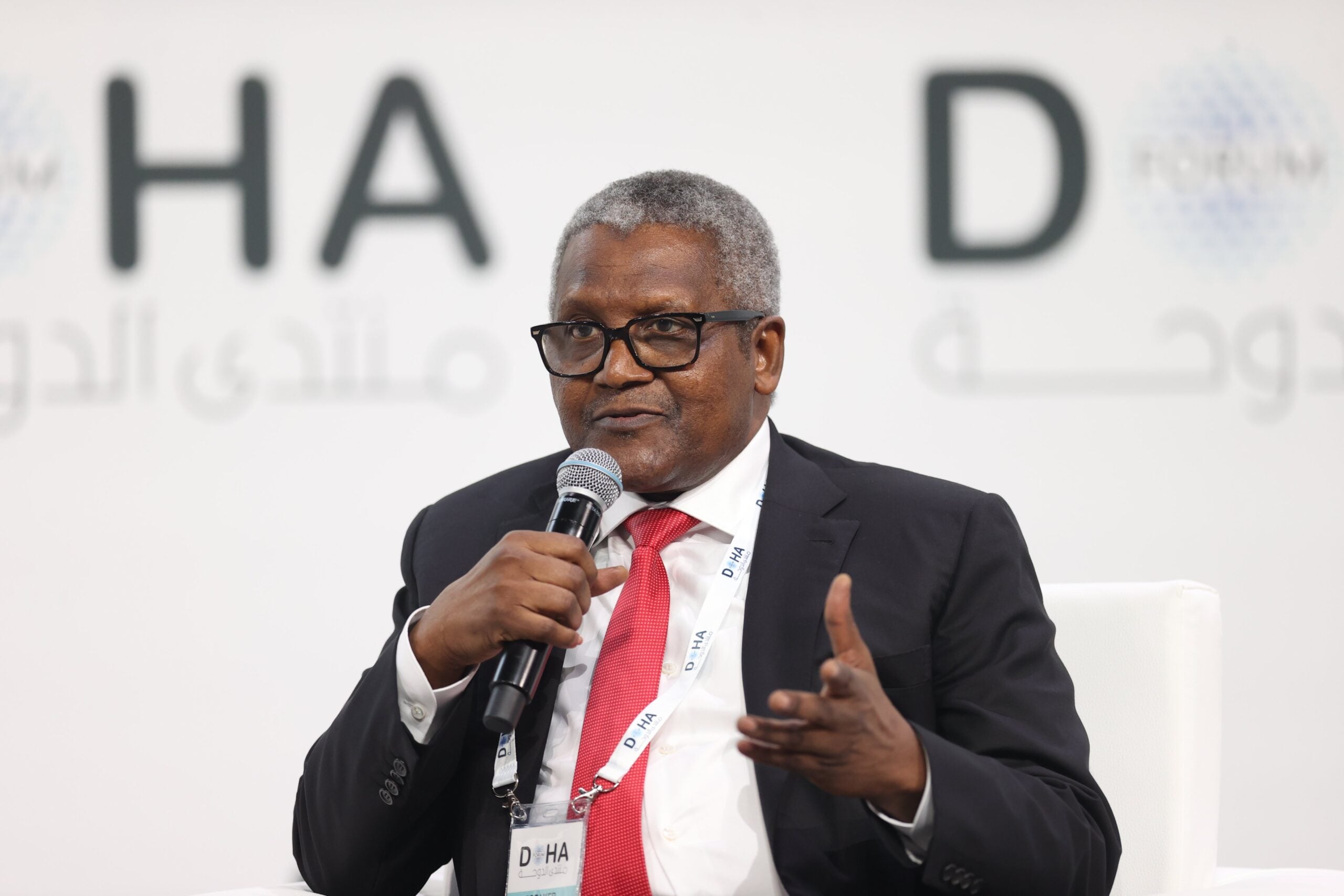
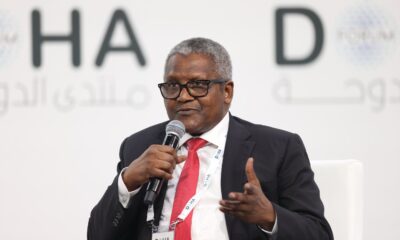
Chairman and CEO of Dangote Group, Aliko Dangote, has warned that the ongoing Middle East crisis could force Nigeria and other African countries to adopt COVID-era work-from-home restrictions if the conflict does not de-escalate.

Dangote gave the warning on Monday after meeting with President Bola Tinubu at his Ikoyi residence in Lagos, expressing deep concern about the economic impact of oil price volatility on the continent already burdened by debt.

The industrialist stated, “If this thing doesn’t de-escalate, you know, normally we in Africa, we don’t have any reserves in terms of savings.

“And so, people normally go out and look for money for the next day or for even the same day. Some of them, if they don’t work that day, they won’t eat.”

He cited Indonesia’s response to energy crisis pressures, where authorities asked workers to operate only four days a week and are considering full work-from-home arrangements similar to the COVID-19 pandemic.

“In some countries today what they’ve done, they asked everybody to work from home because they cannot afford it.

“I think Indonesians also only go to work four days a week. And they will look at the situation if it doesn’t improve, they will ask everybody not to go to work anymore.

“We will do like that time of COVID, where people will work from home,” Dangote stated.

The billionaire businessman warned that Africa would pay a disproportionate price for a crisis in which the continent has no involvement.

“It’s not only energy. Some people will try and take a chance and say, ‘Ah, this is an opportunity. So, let me make money.’

See also  Ex-UK PM Johnson in Nigeria, reassures foreign investors

“So, if this thing doesn’t de-escalate, it is going to keep going up and up and up, and governments cannot really and add to salaries.

“So, people will really, really feel the pinch,” he stated.

Dangote emphasised that the crisis would hit hardest at ordinary Africans operating small businesses, especially barbers, bread sellers, and industries dependent on generators for power.

“People who are barbers, people who make bread, people who have industries, who have to pay for their own generators, you know, I mean, you can see what is happening,” he said.

He called for urgent prayers and international intervention to end the conflict.

“We just need all hands-on deck to pray that this thing comes to an end,” the Dangote Group chairman stated.

Speaking on President Tinubu’s recent state visit to the United Kingdom, Dangote expressed optimism the trip will open doors for Nigerian business and investment.

He highlighted the £746m infrastructure agreement signed during the visit, describing it as significant beyond the monetary value.

“It has not been easy dealing with the British, getting this kind of money out of them. They too, they are struggling on their own. But I think this is to show confidence — it’s not about the money. It’s about the confidence in Nigeria,” Dangote said.

He predicted that the UK agreement would encourage other countries to follow suit.

“The moment that they do that, there will be other countries that will follow suit. Germany will come, others will line up and start coming up,” he stated.

See also  FULL LIST: Nigeria, 66 other countries hit with Trump tariffs

Dangote also revealed that Nigerian investors could now access the UK Export Finance agency, a credit resource that has remained largely untapped for years.

“For Nigerian investors, it has shown that we can also go to the same agency and tap the resources. It means that the agency now is open for business for Nigerians, and we will go as private people to look for them to give us support,” he explained.

The infrastructure agreement signed during Tinubu’s UK visit focuses on port development and other critical areas, with funding from UK Export Finance.

Dangote said he visited the President to extend Eid-el-Fitr greetings and pay his respects following Tinubu’s return from the two-day state visit to the United Kingdom.

The Middle East crisis has triggered concerns about oil price volatility globally, with potential impacts on inflation, transportation costs, and energy-dependent sectors across Africa.

Nigeria, despite being an oil-producing nation, remains vulnerable to global oil price fluctuations due to its dependence on imported refined petroleum products.

punch.ng

FOLLOW US ON:

FACEBOOK

TWITTER

PINTEREST

TIKTOK

YOUTUBE

LINKEDIN

Continue Reading

Business

One week to deadline, banks in last-minute rush for Recapitalisation

Published

on

Banks are in a last-minute push to meet the Central Bank of Nigeria’s recapitalisation deadline, with the apex bank expected to make a major announcement this week as the March 31, 2026, cut-off approaches.

Findings by The PUNCH indicate that most lenders have substantially met the new capital requirements, while a few institutions are resolving final regulatory and structural issues ahead of the deadline.

Top officials of the CBN said the regulator would provide an update on the exercise on Tuesday or Wednesday, amid expectations that the process will largely conclude within the stipulated timeline.

The recapitalisation exercise, introduced in March 2024, requires banks to meet new minimum capital thresholds of up to N500bn for international commercial banks, as well as lower thresholds for other licence categories.

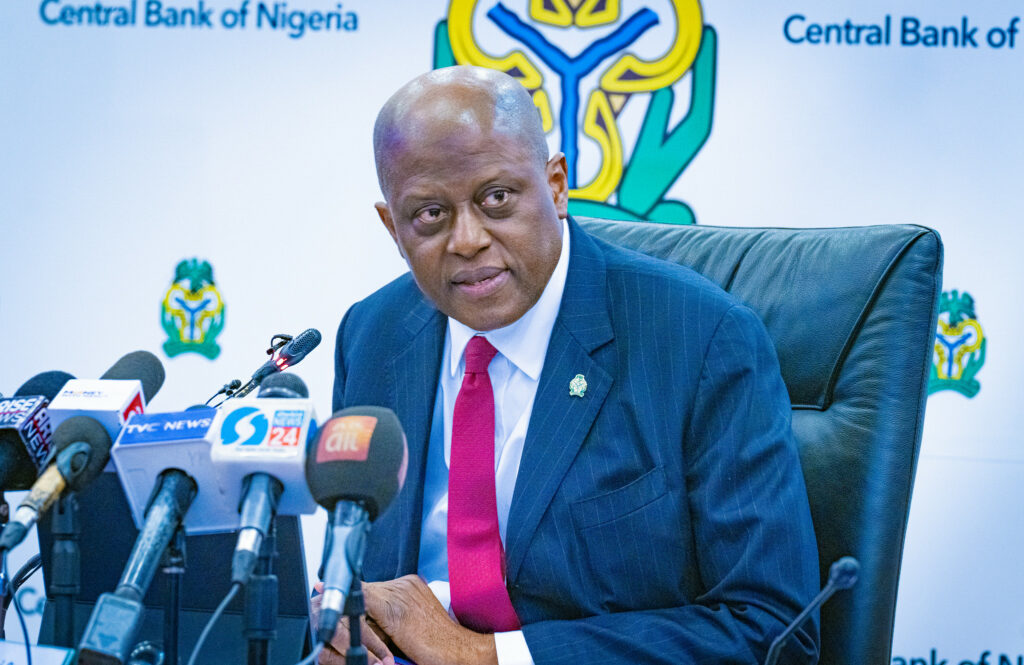
Speaking at the end of the 304th Monetary Policy Committee meeting in Abuja, the CBN Governor, Olayemi Cardoso, expressed confidence that the process would be completed within the deadline, while acknowledging that a few institutions were still finalising their plans.

“And quite frankly, I expected to conclude within that stipulated time. It is expected,” he said.

He added, “There are other institutions that are still finalising their plans and evaluating a range of strategic options. And there’s time, which, of course, includes consolidating where appropriate.”

Cardoso disclosed that the banking sector had already mobilised significant capital under the exercise. “As of February 19, 2026, total verified and approved capital raise stands at N4.05tn,” he said.

He further stated that, “Of this, N2.90tn, which is 71.6 per cent, has been mobilised domestically, with $706.84m, which is N1.15tn, representing 28.33 per cent foreign.”

See also  Ex-UK PM Johnson in Nigeria, reassures foreign investors

He said the mix of domestic and foreign participation reflected strong investor confidence in the sector. “This balance, in my view, represents a mix of domestic and foreign, which signals broad investor engagement and confidence in the sector,” he added.

Despite the progress recorded, investigations showed that a few banks are yet to complete the process, largely due to delays affecting the merger process of two institutions, though there are indications that the issues may be resolved within the week.

There are also uncertainties around three banks under regulatory intervention, with the final capital position dependent on ongoing supervisory actions and possible support arrangements.

The CBN had earlier clarified that three banks under regulatory intervention are being treated as special cases and are not expected to follow the same sequence as other institutions in the recapitalisation process.

Cardoso acknowledged this category of banks during his remarks, noting that “The other group that I think I would be remiss not to mention are the institutions which are currently undertaking regulatory intervention with certain legal and structural considerations that have naturally influenced the sequencing of their recapitalisation actions.

“In other words, it’s unreasonable to expect that they would follow the same sequence as those that really and truly two and a half years ago, when we made this announcement, have had ample time in which to do a lot of the things they are doing.

“We remain the Central Bank of Nigeria, actively engaged with all relevant stakeholders to ensure that they have an orderly and credible outcome while maintaining financial stability.”

See also  Crude supply to domestic refineries hit 67.6m barrels – FG

He also reassured depositors about the safety of funds in such institutions. “Depositor funds in these institutions remain secure, and operations continue under close supervisory and regulatory oversight of the central bank,” he said.

Financial analysts say the recapitalisation exercise has exceeded expectations, especially given initial concerns about the size of the capital gap.

The Head of Financial Institutions Ratings at Agusto & Co, Ayokunle Olubunmi, told The PUNCH on Sunday that the recapitalisation exercise had recorded strong progress across the banking sector.

“I think the recapitalisation exercise has been a success thus far,” he said. “When the exercise started, a lot of people were sceptical. Even those who were optimistic were scared because the gap seemed to be huge.”

He noted that domestic investors played a major role in the capital raise. “The bulk of the funds were actually from the domestic economy… that’s the interesting part,” he said.

Olubunmi added that most of the banks yet to be formally cleared had already raised the required funds and were only undergoing regulatory verification. “It’s not that they are still in the market looking for funds. The funds are with the CBN. They’re just providing documentation for the CBN to certify it,” he said.

He further explained that the three banks under regulatory intervention were being handled differently by the regulator. “Those ones… are special cases… we can’t really benchmark them with others,” he said.

According to officials, while about three banks are outstanding in terns of meeting the target, two of the bank are expected to complete their merger process this week.

See also  Nigerians most exploited by telecom, energy firms – FCCPC

The third bank is also expected to meet the recapitalisation threshold this week.

punch.ng

FOLLOW US ON:
FACEBOOK

TWITTER

PINTEREST

TIKTOK

YOUTUBE

LINKEDIN

Continue Reading

Business

Airlines under pressure after jet fuel surges 100%

Published

on

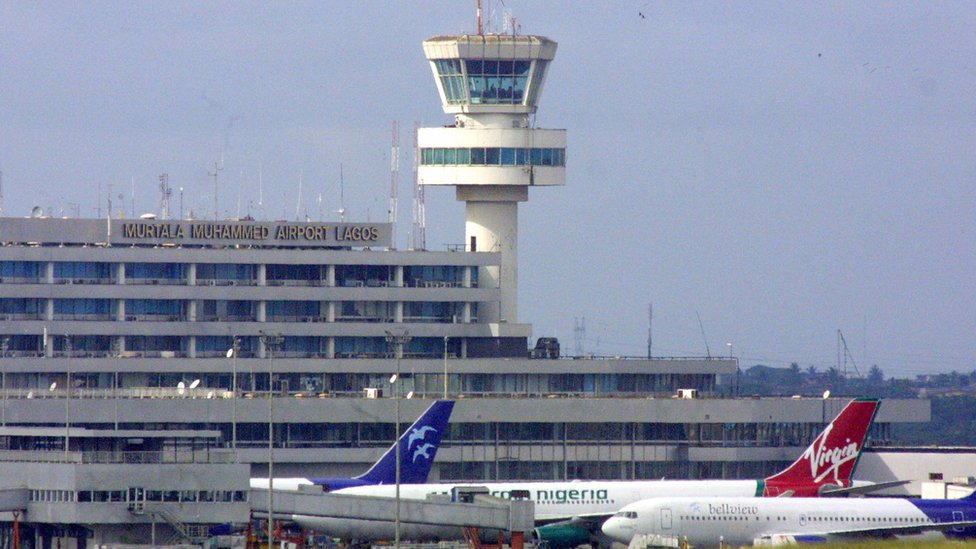
There are indications that airfares may jump in the coming weeks following the hike in the cost of aviation fuel, commonly referred to as Jet A1, a development that is already putting pressure on airline operations and signalling higher ticket costs for passengers.

The spike in JetA1 price is largely due to the crisis in the Middle East, which has slowed the production and movement of crude oil across countries, worsening the operational cost of domestic carriers.

Checks by our correspondent with airlines showed an astronomical increase in the operating cost of airlines, particularly caused by the spike in aviation fuel, which has become the dominant cost driver in recent weeks.

At the time of filing this report, aviation fuel, which was sold between N900 and N995 before the Middle East crisis commenced, has jumped to between N2,500 and N2,700, depending on the airport of delivery, sharply raising the cost burden for operators.

Operators said they were monitoring developments, stressing that an increase in airfares was imminent, with strong indications that the prices of air tickets might double if the current trend persists.

Aviation fuel remains the single highest component of airline operations, accounting for about 30 to 35 per cent of total operational costs, a figure that industry players say is rising rapidly under current market conditions.

Airline sources said the price of the product had remained unstable since February 28, 2026, when the war started in Iran, changing about five times since that time, further complicating planning and pricing decisions.

See also  Starmer pushes strategic UK-Nigeria alliance with N1.4tn fresh deal

The spokesperson for United Nigeria Airlines, Chibuike Uloka, challenged the Federal Competition and Consumer Protection Commission to urgently engage domestic airline operators over the sustainability of current ticket pricing amid rising operational costs.

The FCCPC recently accused airlines of price fixing, with special attention on five unnamed airlines. This was, however, dismissed by the airline operators.

Uloka noted that despite aviation fuel prices soaring beyond N2,000 per litre, many carriers had continued to maintain fares at around N195,000, raising concerns about how long such pricing could be sustained under prevailing economic conditions.

He, however, warned that the situation could deteriorate further if fuel prices get to N3,000 per litre, stressing that not all airlines would be able to remain in operation under such pressure, a development that could further shrink capacity and push fares even higher.

He said, “Honestly, this is a very good time for FCCPC to come out and ask operators how they have been able to sustain flight tickets at N195,000 despite the increase in aviation fuel crossing N2000 and above. They should please ask how operators have kept on with operations? These are hard times. But most definitely, the current prices can’t be sustained for long periods.

“If this continues the way it is, because the way we are now, the price is also getting to N3000 per litre, and if it eventually gets to N3000, not all operators will be able to fly. And the ones that will be able to fly will not be Father Christmas. What we are asking now is not even profit, but at least to be able to operate optimally. Aviation has become a daily necessity because people must be able to move from one place to another. But FCCPC must be able to come out now and ask operators how we are faring.”

See also  Nigerians most exploited by telecom, energy firms – FCCPC

The PUNCH understands that Nigeria has been unable to produce enough crude oil for the Dangote Petroleum Refinery, forcing the indigenous refining company to import crude.

Crude prices have jumped from $65–$69 to about $112 per barrel as of the time of filing this report, further worsening the cost of aviation fuel and pushing airlines closer to inevitable fare adjustments.

This effect has also upped gantry prices, with operators warning that sustained increases will ultimately be transferred to passengers through higher ticket fares.

Industry expert, Samuel Caulcrick, projected an imminent rise in airfares, attributing it to the growing burden of operational costs on airlines, which is increasingly being driven by the surge in aviation fuel prices.

He explained that current market conditions suggest that operating expenses have surged significantly, with aviation fuel now accounting for about 45 per cent of total airline costs, making it the single largest cost component in the sector and leaving operators with little choice but to adjust fares.

Caulcrick noted that the shift in cost structure marks a departure from previous years when maintenance expenses dominated airline spending. However, the persistent increase in the price of Jet A1 fuel has altered the dynamics, placing greater financial pressure on operators and inevitably influencing ticket pricing across the industry.

He stated, “Before now, the highest component of airline operation was maintenance, but that has changed with the continuous rise in the prices of Jet A1. In those days when aviation fuel was less costly, the maintenance cost was higher, but now fueling has taken over.

See also  PHOTOS: BitMARTe Launches In Nigeria

“If that component goes up, it will definitely affect the prices of every seat. But we should expect the airfares to go up by 20 to 25 per cent in the coming days.”

punch.ng

FOLLOW US ON:

FACEBOOK

TWITTER

PINTEREST

TIKTOK

YOUTUBE

LINKEDIN

Continue Reading

Trending