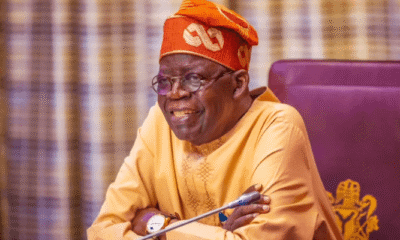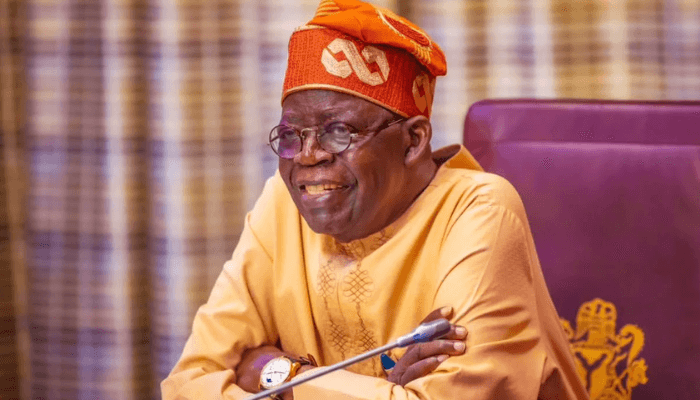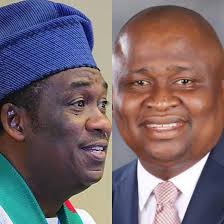
The All Progressives Congress is moving toward a consensus arrangement to settle on Deputy Governor of Lagos State, Obafemi Hamzat, as its governorship candidate for the 2027 election in Lagos State, The PUNCH reports.
Similarly, the party stakeholders are said to also favour the senator representing Ogun West and Chairman, Senate Appropriations Committee, Olamilekan Adeola, popularly known as Yayi, for Ogun State, and the senator representing Oyo South Senatorial District, Sharafadeen Alli, for Oyo State.
The purported decisions emerged from a meeting of APC stakeholders from the three states with President Bola Tinubu in Lagos on Sunday night.
Tinubu had hosted Vice President Kashim Shettima and 23 governors at his Lagos home for the Eid el-Fitr celebrations and sources with knowledge of the matter told The PUNCH that the President and party stakeholders from Lagos, Ogun and Oyo held another meeting to take critical decisions ahead of next year’s general elections.
The Independent National Electoral Commission has scheduled the Presidential and National Assembly elections for January 16, 2027, and the governorship and State Houses of Assembly elections for February 6, 2027.
In its released timetable, INEC stated that political parties were expected to conduct their primaries between April and May 2026, with candidates emerging by the end of May.
The Electoral Act 2026 (amended) provides that candidates of political parties may be selected either through a consensus arrangement or direct primaries.
For the APC, the party traditionally favours a consensus approach, highlighting the popularity of such candidates and their track record of winning elections.
President Tinubu returned to Lagos on Friday following a two-day state visit to the United Kingdom. He spent part of his Sallah break in the commercial city, attending to key political matters, including discussions on potential successors in the South-West states ahead of the 2027 elections.
In the South-West, only Lagos, Ogun, and Oyo states will hold governorship elections in 2027, and the President is prepared to lead the party to victory from his zone.
Multiple sources at the Lagos meeting of South-West APC stakeholders with Tinubu confirmed that the session was lengthy, involving detailed deliberations on party strategy and candidate selection.
One of the sources, who spoke on condition of anonymity, said, “The choices of Hamzat, Yayi, and Alli were arrived at after a prolonged discussion with the President, taking into account the collective opinions of those present and the popularity of the candidates in their respective states.”
Among those at the meeting were Chief of Staff to the President, Femi Gbajabiamila; Senate Leader, Opeyemi Bamidele; Governors Babajide Sanwo-Olu (Lagos), Dapo Abiodun (Ogun), and Biodun Oyebanji (Ekiti); and Executive Chairman of the Nigeria Revenue Service, Zaccheaus Adedeji, among other top stakeholders.
The source added that the report presented to the President had been prepared during an earlier meeting at the Senate Leader’s residence in Abuja about two weeks prior.
Consensus, compensations
The meeting reportedly acknowledged dissenting voices against the recommendations but agreed to work towards a consensus to provide a “soft landing” for aspirants who might be affected by the arrangement.
“In Lagos, the Minister of Education, Tunji Alausa, is still lobbying to emerge as the consensus candidate.
“Though some online reports suggested he will resign to pursue the governorship, he has insisted on remaining in office and focusing on delivering the Renewed Hope agenda,” another source privy to the meeting said.
Other serious aspirants for the Lagos governorship ticket on the APC platform include Gbajabiamila, former Governor Akinwunmi Ambode, Speaker of the State House of Assembly, Mudashiru Obasa, Chief of Staff to Governor Sanwo-Olu, Tayo Ayinde, Private Secretary to the President, Hakeem Muri-Okunola, Senator representing Lagos East, Tokunbo Abiru, Commissioner for the Environment, Tokunbo Wahab, Jide Adediran (Jandor), and Samuel Ajose (SMA).
In Ogun State, the selection of Yayi reportedly conflicts with Governor Abiodun’s preference.
“The governor seems to be backing Senator Shaibu Afolabi Salisu of Ogun Central, due to his role in Abiodun’s 2019 election.
“However, former governor and party leader, Chief Olusegun Osoba, does not support this choice,” a source said.
It is also understood that former Governor Senator Ibikunle Amosun is expected to contest for the Ogun Central senatorial seat in 2027, potentially displacing Salisu.
“The governor is reportedly seeking ways to compensate Salisu while paving the way for Amosun,” the source added.
Alli’s emergence
In Oyo State, the choice of Alli appears to have the backing of the majority of APC stakeholders in the state, as well as the Olubadan of Ibadan, Oba Rashidi Ladoja, a former Oyo State Governor.
Alli, a former Secretary to the Oyo State Government and Chief of Staff under Ladoja, later served as Chairman of Odu’a Investment before becoming senator for Oyo South.
The lagos meeting also reportedly considered Remi Oseni, a member representing Ido-Ibarapa East, as a strong candidate due to his grassroots popularity and performance in the House of Representatives.
The lawmaker was described as a grassroots mobiliser who enjoys popularity among the people. He is also seen as the most performing lawmaker in the House of Representatives from Oyo State.
The report also stated that the Remi Oseni Committee of Friends is relying on over 200,000 members in the state to boost the governorship ambition of the lawmaker.
The meeting, according to the sources, however, agreed to cede the Senate seat for Oyo South to Oseni, to compensate him for his popularity and goodwill.
“The committee agreed to offer Oseni the Oyo South Senate seat as compensation, acknowledging his support base of over 200,000 members,” the source said.
The discussions also reportedly noted that Alli might serve only one term as governor to allow for the emergence of a candidate from outside the Ibadan zone in 2031.
Other APC aspirants eyeing the Oyo governorship seat include the 2023 governorship candidate of the party, Teslim Folarin; senator representing Oyo North, Abdulfatai Buhari; Minister of Power, Bayo Adelabu; former Oyo Deputy Governor, Rauf Olaniyan; lawyer, Akeem Agbaje; former Minister of Communications, Adebayo Shittu; former Oyo Health Commissioner, Azeez Adeduntan; Saheed Oladele, Gbenga Adegbola, and Kunle Busari, the son of the late Ibadan strong politician in the First and Second Republic, Chief Busari Adelakun, popularly known as Eruobodo.
Concerns over Adelabu
Multiple sources at the meeting told The PUNCH that issues surrounding the Minister of Power, Bayo Adelabu, were also raised.
It was learnt that the minister does not enjoy the popularity that could make him win the Oyo governorship election against the candidate of the incumbent Governor Seyi Makinde.
It was gathered that one of the conclusions of Adelabu’s non-popularity in the state was the House of Representatives by-election midwifed by the minister, but which was lost to the Peoples Democratic Party.
The sources said those at the meeting told the President that the Oyo State chapter of the party was divided over the choice of the minister, as he does not enjoy a good relationship with party leaders and members in the state.
It was also gathered that the only candidate that would be acceptable to all divides in the party was Alli.
“Adelabu does not have the popularity to win the governorship against Governor Seyi Makinde’s anointed candidate,” a source said, citing his candidate’s loss in the House of Representatives by-election that he midwifed.
“The state chapter of the party is divided over his candidacy, and Alli is seen as the only aspirant acceptable to all factions,” the source added.
The PUNCH reported that Adelabu ran on the Accord platform for the 2023 governorship election in the state against Teslim Folarin of the APC.
Earlier in 2019, his choice and endorsement by the late former Governor Abiola Ajimobi polarised the party, leading to defections of major chieftains of the party at the time. Adelabu eventually lost the election to Makinde.
In the March 18, 2023, election, Adelabu came a distant third, polling 38,357 votes, again trailing far behind Makinde, who won with over 563,000 votes.
The minister had dumped the party after he lost the ticket to Folarin at a primary held at the Liberty Stadium, Ibadan.
While Adelabu has since returned to the party and was rewarded with a ministerial position, those in the Folarin camp had yet to really benefit from the Federal Government appointments.
The source also stated that the minister had been advised against resigning from the cabinet as his chances are not bright.
When asked why Adelabu has not resigned to pursue his governorship ambition, one of the sources present at the meeting told The PUNCH that none of the ministers and other appointees eyeing positions had been able to secure a buy-in from the President.
He said, “He cannot just resign like that without an assurance that he will be the consensus candidate of the party. He knows his position is not certain. Once he resigns, the President will appoint a replacement, and he may not have the chance to return to the cabinet.
“It is better for him to clear his chances first before jumping the gun. He won’t have a second chance at a ministerial appointment, at least for now.
“The power crisis in the country is not in his favour, and once he leaves and a replacement can solve some of the problems, Adelabu may not return.”
Next steps
Stakeholders from Oyo State are expected to meet in Abuja on Friday, March 27 to deliberate on compensations for other aspirants before Alli formally declares his governorship bid.
Multiple sources confirmed that the report to the President does not mark the conclusion of the process, as underground consultations are ongoing nationwide to secure buy-in from all aspirants.
“The APC believes in consensus over direct primaries,” a source said, adding that “Direct primary is a strenuous process, but all aspirants will be accommodated in the spirit of fairness and justice.”
APC consensus option
The APC has begun consultations with stakeholders and aspirants on the possibility of adopting consensus candidates for governorship and National Assembly elections ahead of its forthcoming national convention.
The move, party sources say, is aimed at fostering internal cohesion and reducing post-primary disputes, which have historically trailed candidate selection processes across major political parties.
Speaking in an exclusive interview with The PUNCH, the Deputy National Organising Secretary of the APC, Nze Chidi Duru, said while the party may lean towards consensus arrangements, it would not shut the door against aspirants seeking to test their popularity through primary elections.
He explained that the approach aligned with democratic principles and global political practice, particularly where incumbent officeholders were seeking re-election.
Duru said, “It is not that we are likely, we will have a consensus. That is an indication of the APC being a democratic party. But should it happen that there is a member of the party who would like to throw his hat in the ring? He is more than welcome.
“We do not think that in any place in the world where we have democracy we can glean from. If there is a sitting President, he will always be given the first right of refusal.
“And in this case, the rank and file of the party, the structures, organs have indicated a preference that Mr President should continue in the work that he is doing for Nigeria,” he added.
The APC chieftain noted that the “first right of refusal” principle is anchored on performance, party ideology and the need to present candidates capable of delivering on the party’s manifesto.
On whether the arrangement could be extended to governorship and other elective positions, Duru said he supports granting incumbents the opportunity to seek a second term.
“It is my personal view that executives who have done one term and have an opportunity for a second term should be granted the right of first refusal for the reasons I have espoused.
“It is on that basis that political parties are kept on their toes to ensure that those who occupy offices deliver on the mandate of the party knowing fully well that those occupying those offices, when it is time for re-election, will be offered the automatic tickets, first right of refusal, and be presented to the electorate in the given constituency.
“So, there are two things that go for it. One, the party is vigilant. The party holds those in positions accountable to deliver on the mandate that they have given them. And then of course, the motive that comes with the next election, of which they have a right to contest again at that election, is that if they do not perform, then they will lose the election. So, there is something that goes for that first right of refusal,” he stated.
Imposition or consensus?
Meanwhile, the Nigerian Political Science Association and the Coalition of United Political Parties have accused Nigerian politicians of prioritising imposed decisions over genuine consensus, warning that such practices undermined democratic processes and political fairness in the country.
In an exclusive interview with The PUNCH on Monday, NPSA president, Professor Hassan Saliu, emphasised that while consensus was positive when sincerely achieved, he expressed concern that Nigeria was currently witnessing the imposition of candidates rather than genuine agreements.
He stated, “If truly they achieve consensus, I don’t see anything bad in it. But once there is dissent, even from one person, the wall of consensus breaks down. Consensus freely reached and agreed to is what I support, not one that is forced or imposed.
“If all of them agree beforehand to support a candidate, that is acceptable. If there is no dissent, fine. But if there is even one dissenting voice, then the wall of consensus breaks down.
“The challenge is how to achieve a consensus that everyone genuinely agrees to. So, what I see happening, is imposition. Some leaders intimidate others to step down, withdraw, or even prevent their supporters from attending the congress or convention where candidates are to be elected. And this is not good for democracy.”
Also, the CUPP publicity secretary, Mark Adebayo, stated that consensus should remain an internal matter for political parties, noting that in Nigeria, the common practice was the imposition of candidates.
He stated, “Consensus, for me, should be an internal party matter. If a political party chooses to adopt a consensus approach in selecting its candidate for an election, nobody should begrudge the party. It should be the decision of each party.
“Consensus candidature can have both positive and negative outcomes. Sometimes it promotes peace within the party because, when genuinely achieved, it reflects the choice of a particular constituency, state, zone, or local government.
“However, what is defined as consensus in Nigeria is often different. Frequently, someone at the top simply declares, handpicks, announces and even imposes a candidate for a position.
“This practice generates internal conflicts and bad blood within political parties. The electoral act now allows for either consensual or direct primaries. Not all political parties will find this easy. I believe the framers of the act should have allowed parties the option of direct, indirect, or consensual methods, rather than removing indirect primaries entirely.”
However, Duru addressed concerns that automatic tickets for incumbents could trigger internal discontent, pointing to constitutional provisions that allowed elected executives to seek a second term.
He said, “It is not for nothing that the Constitution provides the possibility for elected executive governors and the President of the country to run for a second term. I believe that party members will always understand that once it’s a constitutional provision, you cannot deny or exclude the possibility of a re-election.”
Findings by The PUNCH indicate that the debate over consensus candidacy versus direct primaries has remained a recurring issue within Nigerian political parties, often pitting party leadership against grassroots aspirants seeking a level playing field.
Duru’s comments come ahead of the APC’s national convention scheduled to hold in Abuja from March 27 to March 28, 2026, where key decisions on party structure, strategy and preparations for future elections are expected to be taken.