Connect with us

Lifestyle

Speaker, govs preach unity, as police strengthen surveillance for Eid-el-Fitr celebration

Published

on

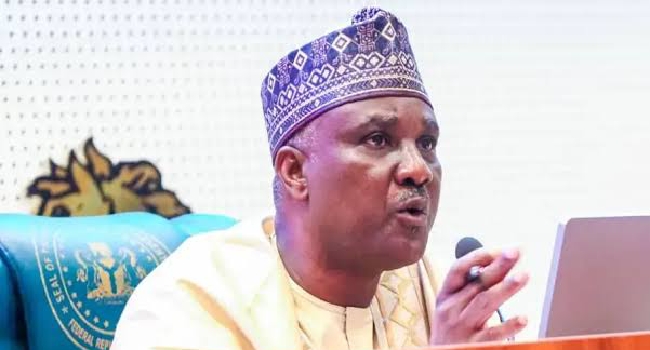
Eminent Nigerians, including the Speaker of the House of Representatives, Tajudeen Abbas, governors, Chairman of the All Progressives Congress, Prof Nentawe Yilwatda, and monarchs, have called for unity, peace, and sustained prayers for national development as Muslims celebrate Eid-el-Fitr, marking the end of the holy month of Ramadan.

The Sultan of Sokoto, Alhaji Sa’ad Abubakar, on Wednesday declared Friday as Eid and the first day of the new month.

As a mark of the end of the Holy Month, Muslims all over the world will troop to prayer grounds to celebrate Eid-el-Fitr.

Congratulating Muslims on the successful completion of the fast, Abbas expressed optimism that their sacrifices and prayers would usher in a brighter future for the country.

In a Sallah message signed by his Special Adviser on Media and Publicity, Musa Krishi, Abbas said, “Divine intervention, through prayers, remains a major reason for the country’s unity, peace, and stability.”

He added, “Incidentally, our Christian brothers and sisters are also observing the Lent period concurrently with their Muslim counterparts.

“This is a divine arrangement for us to redouble our efforts in prayers and dedication to our Creator. It is also a reminder that we are one people united by a common good.”

He urged Muslims to sustain the virtues of piety, charity, and selflessness imbibed during Ramadan, stressing that Nigerians must continue to pray for a better society.

In a goodwill message on Thursday, Gombe State Governor, Muhammadu Yahaya, called on Muslims and all citizens to sustain the spirit of devotion, sacrifice and supplication cultivated during the holy month of Ramadan.

The governor emphasised that Eid-el-Fitr is not only a time of celebration but also a moment for deep reflection, urging the faithful to translate the lessons of the sacred month into everyday conduct.

“As we celebrate the Eid-el-Fitr festival, I wish to admonish us to learn from the good lessons of Ramadan, which connote piety, obedience and selflessness.

We must all imbibe the tenets of Islam, which promote peace, tolerance, modesty and love,” the governor stated.

Similarly, Ogun State Governor Dapo Abiodun described Ramadan as a sacred period of reflection, discipline, and compassion, urging Muslims to uphold its lessons beyond the fasting period.

In a statement issued in Abeokuta on Thursday, Abiodun described Ramadan as a sacred period marked by deep reflection, devotion, self-discipline, and renewed commitment to the service of Almighty Allah and humanity.

“As our Muslim brothers and sisters celebrate Eid-el-Fitr, we join them in gratitude to Almighty Allah for granting the grace to witness the end of this blessed month,” he said.

In Oyo State, Governor Seyi Makinde urged the faithful to seek divine guidance and remain security-conscious during the festivities.

Makinde, in a statement released by his Special Adviser on Media, Sulaimon Olarenwaju, charged the Muslim faithful to use the opportunity presented by the Eid-el-Fitri to seek God’s face and guidance, and to pray for the leadership of the state and  Nigeria.

“Let me equally use this occasion to urge you (Muslim faithful) to be observant and cautious during the festivities, ensuring that you pay close attention to your environments and report any suspicious movement or activity to appropriate security agencies,” the governor urged.

Also, Governor Peter Mbah of Enugu State called on Nigerians to sustain the spirit of unity, sacrifice, and compassion demonstrated during Ramadan.

See also  VIDEO: He didn’t do the right thing – Tope Alabi finally speaks over alleged first marriage

“As we mark this special day, may the enduring lessons of brotherhood and shared humanity usher in a new season of unity and progress in our country,” he said.

Delta State Governor, Sheriff Oborevwori, emphasised peaceful coexistence and tolerance, noting that Ramadan promotes reflection and renewed faith.

Oborevwori, in a statement signed by his Chief Press Secretary, Sir Festus Ahon, in Asaba, lauded Muslims for their devotion, sacrifice, and commitment to the spiritual values of Islam, as demonstrated during the period of fasting and prayer.

The governor noted that Ramadan represents a period of deep reflection, self-discipline, compassion, and renewed faith, urging Muslims to sustain these virtues beyond the holy month for the overall good of society.

Bauchi State Governor, Bala Mohammed, called on residents of the state to embrace unity, compassion, and vigilance.

Mohammed, in a statement issued on Thursday by his Special Adviser on Media and Publicity, Mukhtar Gidado, extended warm felicitations to the Muslim Ummah in Bauchi State, across Nigeria, and around the world.

“True success lies not only in observing Ramadan but in embodying its teachings throughout the year,” the governor stated, encouraging continued support for the underprivileged and vulnerable members of society.

Katsina State Governor, Mallam Dikko Radda, called for continued unity and compassion as the Muslim Ummah celebrate 2026 Eid-el-Fitr.

“As we celebrate this joyous occasion, I urge all Muslims to uphold the virtues of patience, compassion, and self-discipline cultivated during Ramadan,” Radda said.

Similarly, the Plateau State Governor, Caleb Mutfwang, called for unity and peaceful coexistence, urging citizens to work collectively towards national development.

“I heartily rejoice with the Muslim Ummah on this special occasion, which reminds us of the virtues of sacrifice and total submission to the will of God Almighty.

“As you celebrate, I encourage everyone to reflect on the values of love, charity, and selflessness, and to work collectively towards building a more united, peaceful, and prosperous Plateau State,” he stated.

Ekiti State Governor, Biodun Oyebanji, appealed to Muslims to continue praying for Nigeria and for peaceful elections in the state.

Oyebanji admonished Muslims in the state and Nigeria as a whole to continue to pray for the success of President Bola Tinubu to realise the vision of a more prosperous Nigeria under the Renewed Hope Agenda and a country that Nigerians at home and in the Diaspora could be proud of.

Governor Nasir Idris of Kebbi State also congratulated Muslims on the successful completion of Ramadan and the celebration of Eid-el-Fitr, reaffirming his administration’s commitment to delivering impactful projects and strengthening security across the state.

In a statement issued by his Special Adviser on Communication and Strategy, Abdullahi Idris, the governor expressed gratitude for the opportunity to witness the holy month and lauded the dedication of the faithful to prayers and sacrifice.

The governor reassured citizens of sustained efforts to safeguard lives and property, revealing ongoing collaboration with security agencies.

Similarly, the Rivers State Governor, Siminalayi Fubara, called for tolerance and harmony among Nigerians, urging citizens to cherish diversity and promote peaceful coexistence.

In a goodwill message to commemorate the celebration, Fubara prayed that the occasion bring joy, peace and harmony to all Nigerians irrespective of creed, tribe or tongue.

A former Kaduna State Governor, Ahmed Makarfi, urged Nigerians to sustain the spiritual lessons of Ramadan and intensify prayers for peace and national growth.

See also  Men Have Proposed Marriage To Me Countless Times And I’ve Said No To Them – Bimbo Akintola

He said, “The lessons of Ramadan should lead us into empathy with one another and being our brother’s keeper.”

The All Progressives Congress also extended greetings to Muslims, urging them to carry forward the lessons of Ramadan in promoting unity, justice, and national development.

The party’s National Chairman, Prof Yilwatda, commended President Tinubu for his leadership, urging Nigerians to support ongoing efforts to reposition the country.

The Deputy Governor of Edo State, Dennis Idahosa, also called for unity and peace.

Idahosa noted that the Ramadan period provided an opportunity for deep reflection, renewed faith, and a strengthened commitment to the values of peace, tolerance, and unity.

He urged Muslims to sustain the lessons and spirit of the holy month by continuing to promote love, charity, and peaceful coexistence, stressing that these principles are critical to fostering harmony and driving the collective progress of Edo State and the nation.

A Federal House of Representatives aspirant for the Warri Federal Constituency in 2027, David Omatseye, urged Muslim faithful in Delta State to imbibe “the lessons of the Eid-el-Fitr, which include tolerance, discipline, undying faith, unity and love for the nation and humanity.”

Omatseye joined the Muslim community “in appreciation of Allah for His benevolence and shower of divine favour that issues forth from the cardinal religious observance.”

The Alaafin of Oyo, Oba Akeem Owoade, also felicitated Muslims, calling for prayers and moral rebirth in the country.

Alaafin, in his message through the Director of Media and Publicity, Bode Durojaiye, stated that he shuddered to think of a Nigeria of intellectual giants, astute economists and politicians without the relevant moral values as internalised through the socio-cultural orientation and espoused by religion.

Owoade noted that the problems which besiege the country are anchored on non-compliance with or total neglect of moral principles, adding that these have led to the doldrums Nigerians are experiencing in their private and public lives.

The Olukere of Odo Oja Ikere Ekiti, Oba Ayodele Obasoyin, emphasised unity and national progress.

He also sought prayers for a peaceful governorship election held in the state on 20 June.

The monarch called on Muslims and all Nigerians to pray for the peace, progress, and prosperity of the country, stressing the importance of unity in addressing the nation’s economic and security challenges.

Police deploy officers

Meanwhile, security agencies across states announced measures to ensure a peaceful celebration.

In Oyo State, the police said personnel had been deployed across the 33 local government areas, with intensified patrols and surveillance at strategic locations.

Similarly, the Borno State Police Command announced restrictions on tricycle movement during Eid prayers to enhance security, while advising residents to pray at locations close to their homes.

The Delta State Police Command also warned criminal elements to desist from unlawful activities, stating that adequate security arrangements had been put in place.

Senate warns religious leaders

The Senate has warned religious leaders against promoting extremist ideologies, urging them to preach tolerance and desist from actions capable of radicalising their followers, as part of broader efforts to curb terrorism in the country.

The call came from the Leader of the Senate and Chairman of the Senate Ad hoc Committee on National Security Summit, Opeyemi Bamidele, in his Eid-el-Fitr message issued on Thursday.

See also  PHOTOS: Louise Norton Little: The Grenadian Mother of Malcolm X and Her Ancestral Roots in Nigeria

His remarks followed renewed concerns over Nigeria’s security situation, particularly in the North-East, where a string of attacks had highlighted the persistent threat of violent extremism.

Osun bans political activities at Eid

In Osun State, the Osogbo community banned political activities at Eid prayer grounds to prevent disorder, warning that violators would be arrested.

The instruction was contained in a public service announcement aired on some radio stations in the state and circulated on social media platforms on Thursday.

The announcement was signed by the Asiwaju of Osogbo, Justice Moshood Adeigbe (retd).

The community also placed a ban on drummers within the premises of the praying ground or the display of political party posters.

The decision to ban political activities at the Eid, the community said, was arrived at during a meeting that had in attendance the Chief Imam of Osogbo, representatives of security agencies, representatives of political parties and other groups.

92 Jigawa, Sokoto inmates get pardon

In Jigawa State, Governor Umar Namadi granted pardon to 12 inmates as part of efforts to promote reconciliation and reintegration.

The governor’s pardon was announced in a statement signed by the state Attorney General and Commissioner for Justice, Bello Fanini, on Thursday.

According to the statement, the pardon followed the recommendation of the Jigawa State Advisory Council of Prerogative of Mercy, as outlined in Section 5(1) of the Advisory Council of Prerogative of Mercy Law, Cap A2, Laws of Jigawa State 2012.

A former Sokoto State Governor, Aliyu Wamakko, also facilitated the release of 80 inmates as part of a Ramadan intervention aimed at decongesting correctional centres.

Speaking on behalf of the former governor, a lawyer, Bashir Ma’azu, said the exercise reflected both compassion and religious obligation.

“This gesture is meant to decongest the correctional centres and also to earn reward from Allah. Assisting the less privileged, especially those in confinement, is highly encouraged in Islam,” he said.

Kano gov, Barau donate

Kano State Governor, Abba Kabir Yusuf, donated relief materials to inmates across the 13 custodial centres in the state as part of activities marking the Eid-el-Fitr celebration.

This was contained in a statement by the Public Relations Officer of the Kano State command of the Nigerian Correctional Service, Musbahu Nassarawa, on Thursday.

“Kano State Government under the leadership of Governor Abba Kabir Yusuf has donated relief materials to inmates in 13 custodian centres in the State to enable them celebrate the Eid-el-Fitr,” the statement said.

Also, the Deputy President of the Senate, Barau Jibrin, distributed no fewer than 47,280 bags of rice to his constituents in Kano North Senatorial District, as part of his support for the holy month of Ramadan and the forthcoming Sallah celebrations.

Barau flagged off the distribution of the commodity through his Chief of Staff, Prof Muhammad Ibn Abdallah, and other aides at Azman Rice Company in the Mariri area of Kano on Tuesday.

In the first phase of the distribution, 47,280 households across the 13 LGAs of the Kano North Senatorial District received a bag of rice each.

Across the country, leaders unanimously urged Nigerians to embrace peace, unity, and compassion, stressing that the values of Ramadan remain essential for national cohesion and development.

punch.ng

FOLLOW US ON:

FACEBOOK

TWITTER

PINTEREST

TIKTOK

YOUTUBE

LINKEDIN

Continue Reading
Click to comment

Leave a Reply

Your email address will not be published. Required fields are marked *

Lifestyle

Why Do Some People Hate Being Corrected?

Published

on

Some people can accept praise without a problem—but the moment you point out their mistake, everything changes.

You bring facts, they bring anger.

You try to explain, they become defensive.

You calmly point out that they may be wrong, and suddenly you become the problem.

But why?

For some people, being corrected feels like an attack on their intelligence, authority, or pride. Instead of seeing correction as an opportunity to learn, they see it as an attempt to embarrass them.

And let’s be honest: nobody knows everything.

Even intelligent and experienced people make mistakes. The ability to listen, reconsider your position, and admit when you are wrong is not weakness—it is a sign of maturity.

At the same time, correction should be done with respect. There is a big difference between helping someone understand their mistake and deliberately embarrassing them in front of others.

The real question is:

Do people hate being corrected because of pride, or because they genuinely believe they are right?

And another question:

How do you react when someone points out that you are wrong?

👇 Share your opinion in the comments. Let’s have an honest conversation.

FOLLOW US ON:

FACEBOOK

TWITTER

PINTEREST

TIKTOK

YOUTUBE

LINKEDIN

INSTAGRAM

See also  My husband worked for me for 11 months after losing his pilot job – Businesswoman reveales
Continue Reading

Lifestyle

Parental Trauma vs. Outside Trauma: Which Hurts Children More?

Published

on

A child can survive many difficult experiences—but what happens when the person causing the pain is the same person they expect to protect them?

This is a question many families may not want to discuss.

Trauma from outsiders can come from bullying, relatives, teachers, friends, or other people. It can damage a child’s confidence and leave emotional scars for years.

But parental trauma can feel different.

When a child repeatedly experiences humiliation, rejection, harsh insults, neglect, constant comparison, fear, or emotional abuse from a parent, the child may begin to question their own worth.

The painful irony is that the child may still desperately want the love and approval of the person hurting them.

But here is where the debate gets complicated:

Is parental trauma always worse than trauma from outsiders?

Or can an experience involving an outsider be just as devastating—or even worse—depending on what happened and how long it lasted?

🔥 THE NEWSBREAK365 QUESTION:

Which one do you think hurts children more?

🔴 PARENTAL TRAUMA
🔵 TRAUMA CAUSED BY OUTSIDERS

Don’t just choose one.

Tell us what you think and explain your reasons. 👇

Someone reading your comment may see their own childhood experience differently.

What do you think?

#NewsBreak365 #ChildhoodTrauma #Parenting #ParentingDebate #FamilyMatters #ChildProtection #MentalHealth #AfricanParents #NigerianParents #LetsTalk

FOLLOW US ON:

FACEBOOK

TWITTER

PINTEREST

TIKTOK

YOUTUBE

LINKEDIN

INSTAGRAM

See also  The Ark auditorium has 109,000 seats, 126 escalators, 29 elevators, says Oyedepo
Continue Reading

Lifestyle

Tunde Kelani reveals why he is still passionate about filmmaking

Published

on

Veteran filmmaker and cinematographer, Tunde Kelani, discusses with VERA ALKALI about his career and current trends in the industry

You have had an extraordinary journey in the film industry. Can you take us through the highest and lowest moments of your career?

You cannot just say the highest moments because that is a jump. I joined the industry at an early age. I had uncles who were already in the industry, but I also grew up in a community in Abeokuta (Ogun State) where I was exposed to different forms of culture and oral traditions.

As soon as I could read and write in Yoruba, I took off from there. Abeokuta is a meeting point of culture, and my experience started from there. I could read to my grandfather, and we learnt English alongside Yoruba. I was able to compare what I learnt from social studies with what I learnt through Yoruba culture.

That was how I started. Later, I went into photography and eventually moved into motion pictures. I was employed by Western United Television, where I was trained primarily as a film cameraman.

I later attended the London Film School for the artistic and technical aspects of filmmaking. When I returned, I worked in television for one or two years before becoming an independent filmmaker.

From that point, I began to see films by people such as Professor Wole Soyinka, Bandesola Oru, Rasheed Onikoyi and Hubert Ogunde. I had known some of these people and had seen their works on the big screen.

Before then, I was already a film enthusiast. I practically saw all the films that came into Lagos and were shown in some of the theatres at the time.

On the high side, I think I chose the medium of cinema particularly to promote, preserve and document the rich Yoruba culture.

I have benefited from global cinema, including Hollywood, Japanese, Indian, Italian and European cinema, but people often ask me, “What is your style?” I tell them my style is unique. Having benefited from global cinema, I am still impressed by the Yoruba acting tradition.

I have seen people such as Kola Ogunmola and Oyin Adejobi. Those were my coaches. I also had many mentors, and that became my take-off point.

You mentioned being influenced by Hollywood, Japanese, Italian and other cinemas. What cultural differences or shocks did you experience in filmmaking and cinematography?

I think global cinema is about identity. You just know it. When you see an Indian film, you know it is Indian. When you see a Japanese film, you know it is Japanese. When you see a South Korean film, you know it is South Korean.

When you see me as a Yoruba man with my abetiaja cap on, you know that is our signature.

You have worked as a cinematographer, director and producer. Which aspect of filmmaking would you say is your favourite?

I trained for two years at the London Film School. The course specialised in the Diploma of Art and Technical Filmmaking.

Primarily, I am a storyteller. I share my experiences, our culture and our history, but I use cinema as my vehicle for dissemination.

See also  How Igbo land’s powerful sisterhood silence women, terrify men - Umuada

You are a Yoruba man and have made films that strongly reflect Yoruba culture. What does it mean to you to convey your messages in Yoruba and preserve the culture through film?

That is my whole being. It is my essence. It is my culture and language.

I am an advocate for indigenous cultural expression, and I believe Nigeria should be united in diversity.

Our films are not displaying enough of that diversity. We have more than 300 languages, but we hardly see movies depicting these different cultures and languages in Nigeria.

As someone who is committed to indigenous storytelling, how do you decide which stories are worth telling?

My works are classified. Most of them are adaptations from literature. ‘Oleku’ and some of my works were written by authors such as Femi Osofisan and others.

Most of the films I make are adapted from texts. So, I work more from text to screen because of my background. I have read works by many of these authors.

Some are classified as ‘conscience drama’ because they are films that explore socio-political themes. ‘Saworoide’, ‘Arugba’ and ‘Campus Queen’ are examples of socio-political films.

What attracted you to bringing literature to the screen?

I was born in Lagos, but my father decided that I should be brought up in Abeokuta. I was taken to the family compound. I missed my mother, but I had a lot of people around me catering for me.

However, I felt lonely. As soon as I could read and write, I found reading to be a comfort, and a form of escape At that point, literature got stuck with me, and I learnt how to use it.

It is difficult for filmmakers to pick a favourite among their works, but if you had to choose one, which would it be?

All my works give me satisfaction and recognition. They also came with equal amounts of ups and downs because making a successful film is very challenging.

But my latest film, ‘Cordelia’, is my favourite.

Can you take us through the making of Cordelia?

‘Cordelia’ is adapted from Femi Osofisan’s novel of the same title, and I had kept the project for years.

In fact, I was going to make it before ‘Maami’ (which was released in 2012). When I got to Femi Osofisan and we discussed it, he wondered why I was interested in it. He went in and brought ‘Maami, but I insisted that I wanted ‘Cordelia’ at the time.

About three or four years ago, I received visitors from the University of Delaware in the United States. The music department wanted a sort of cultural fusion. They said that if we made the soundtrack for the film, they would orchestrate it in the United States.

I was interested. They were asking for an old film from me, but I said, ‘No, we would do a new film.’

I told them about ‘Cordelia’ and explained that it was the new film we wanted to make because the story could inspire a solid musical score. It is so dramatic that it can inspire a strong musical composition.

See also  PHOTOS: The Death of Alhaji Adegoke Adelabu The Peculiar Man of the Masses a.k.a Penkelemesi, 1958

When you compare filmmaking today with what obtained in your early days, which era do you feel more connected to?

It does not matter because I have worked with all the new technologies of making motion pictures.

Recently, I completed an experiment in a small studio which I call “Studio Lab”, where I combined all the known technologies of making motion pictures, including physical sets, green screen, traditional props and everything else.

I have also added digital cinema cameras and artificial intelligence. So, it combines all of them.

What is your view on artificial intelligence and its growing role in filmmaking?

Artificial intelligence is everything, but just like when computers came and they added sound cards and graphics cards, I knew it was going to come into motion picture production.

I started early. It is the same thing with any technology that comes along. I embrace it.

We should embrace technology, but it should not replace our culture or our language. We should be in control and not let it tell our stories for us.

How do you blend artificial intelligence with Yoruba culture and other indigenous cultures?

Artificial intelligence technology is already a tool. Most of the time, if we are making a movie, our script is written in English. Later, we indicate the dialogue in Yoruba.

Filmmaking is a collaborative medium. You can have 150 people working on a film, and most of them may not be Yoruba.

You document, organise the group and use everything that technology provides. The technology is the tool, but the product becomes whatever you want it to be.

There has been an emergence of more Nigerian movies in cinemas. Do you think contemporary directors and producers are doing enough to preserve Nigerian cultures?

We have gatekeepers; I mean those people who fund movies. They are not necessarily interested in cultural preservation. They want to invest in a business, recoup their money and make a profit.

So, it is business. You can make a movie that they do not think will sell well, and that becomes a challenge.

The world is rapidly changing, and people’s tastes are changing as well.

I consider myself a “techie”. Even with all my experience with technology, I am still surprised by how many things you can do with a smartphone. Today, I lectured with my smartphone.

That is what technology is all about. We have witnessed similar things with the advent of video games and mobile phones, and now we are talking about artificial intelligence. These are all tools.

You recently received an award from the Nigerian Academy of Letters. Did you expect this kind of recognition when you were starting out?

I never really set out with recognition in mind. I was simply passionate about what I was doing. From photography to cinematography, advertising, music and everything else I got involved in, I was driven by the desire to create and communicate.

See also  The Ark auditorium has 109,000 seats, 126 escalators, 29 elevators, says Oyedepo

I had stories I wanted to share with people, and that was what occupied my mind. I wanted to use whatever medium was available to me to tell those stories and connect with people. I was more concerned about the work itself and how best I could express what I had in mind than about whether anybody would recognise or reward me for it.

So, awards were never the motivation. They are certainly appreciated, and I am grateful whenever my work is recognised, but when I was starting out, I was not thinking about receiving awards many years later. I was simply following my passion, learning along the way and trying to tell stories that I believed were worth telling.

If you are passionate about what you do and remain committed to it, recognition may come, but it should not be the reason you do the work.

Many young filmmakers and creatives look up to you. What is your advice to them?

Number one, it is about passion.

You have to be passionate about what you are doing. If you are not passionate about it, it becomes very difficult to sustain yourself, especially in a creative field where you will face many challenges, disappointments and moments when things may not go the way you want.

In fact, my case is different. I am not supposed to be known because I am the person behind the camera. I am not a star. My job has always been to help tell the story and make sure that the story gets across to the audience in the best possible way. I have always been comfortable being behind the camera and allowing the work to speak for me.

For young filmmakers, I would say they should not be in a hurry to become famous. They should concentrate on learning their craft, understanding the medium and developing their own voice. You must be willing to learn continuously because filmmaking is changing all the time. The technology changes, the platforms change and the way people consume stories changes, but the fundamental need to tell good stories remains.

They should also understand that there are many different roles in filmmaking. You do not necessarily have to be the person in front of the camera. You can be a cinematographer, editor, writer, sound designer, production designer, director or work in any of the other areas that make filmmaking possible. What matters is that you find the area where your passion lies and develop yourself in it.

For me, the most important thing is to remain committed to the work. Fame and recognition may come, but they should be secondary. If you have passion, discipline and a story to tell, keep working at it. Eventually, the quality of your work will speak for you.

Source: punchng.com

FOLLOW US ON:

FACEBOOK

TWITTER

PINTEREST

TIKTOK

YOUTUBE

LINKEDIN

INSTAGRAM

Continue Reading

Trending