Connect with us

Business

States pay N455bn to service foreign loans

Published

on

States paid N455.38bn in foreign debt service in 2025, up from N362.08bn in 2024, according to Federation Accounts Allocation Committee figures released by the National Bureau of Statistics and obtained and analysed by The PUNCH.

The year-on-year comparison indicates that subnational governments’ foreign debt deductions rose by N93.30bn, representing a 25.77 per cent increase in 2025 over the prior year.

In plain terms, states collectively lost a larger share of their FAAC inflows to external loan repayments and related obligations in 2025 than in 2024, tightening the fiscal space available for salaries, capital projects, and routine governance.

The monthly pattern in 2025 also shows step-downs rather than a smooth curve. Total foreign debt service across the 36 states stood at N40.09bn in January, before easing to N39.10bn in February, a month-on-month drop of N994.96m, or 2.48 per cent.

From March through July, the national total held steady at N39.10bn each month, suggesting a stretch of largely fixed, predictable deductions. The next big shift came in August, when total deductions fell again to N36.14bn, down N2.95bn or 7.56 per cent from July.

The lower level then persisted through September, October, November, and December, each at N36.14bn. That step pattern contrasts with 2024, when the totals swung more sharply early in the year before settling into long flat runs.

States’ foreign debt service was N9.88bn in January 2024, then jumped to N24.53bn in February and peaked at N40.41bn in March. The total then dropped to N21.70bn in April and stayed flat at that level through May, June, and July.

A second step-up arrived in August 2024, when deductions rose to N40.09bn, and that figure held through the last five months of the year.

Against that backdrop, 2025 looked like a year of smaller but still significant recalibration, with two key reductions and long stretches of stable deductions.

Foreign debt service in the FAAC context refers to deductions made at source from allocations to meet states’ external loan repayment obligations. It is part of the “first line charge” culture that protects creditors and ensures repayments are prioritised, but it also means states have less discretionary cash to deploy, particularly in months where federation revenue is under pressure.

See also  PHOTOS: History of Money in Nigeria

A closer look at the states with the largest foreign debt service burdens in 2025 shows a strong concentration. The top 10 states alone accounted for about 68.57 per cent of total foreign debt service in the year, showing how external debt repayment exposure is heavily skewed toward a handful of large borrowers.

Lagos topped the table, with N92.80bn deducted in 2025, up from N72.32bn in 2024. That was an increase of N20.49bn or 28.33 per cent, meaning roughly one-fifth of the entire national total for 2025 came from Lagos alone, at 20.38 per cent of all state foreign debt service.

Rivers followed, recording N48.58bn in 2025 against N23.13bn in 2024. The year-on-year jump of N25.45bn represented a steep 110.02 per cent increase, making Rivers one of the most notable movers in the data.

Kaduna ranked third at N47.93bn in 2025, compared with N45.59bn in 2024. Its foreign debt service rose by N2.34bn, a more modest 5.13 per cent increase, but the absolute figure remained high enough to keep Kaduna among the biggest contributors nationally.

In fourth place was Ogun, with deductions totalling N25.20bn in 2025, up from N11.99bn in 2024. That translated into a N13.21bn increase or 110.22 per cent, effectively meaning Ogun’s foreign debt service more than doubled year-on-year.

Cross River ranked fifth with N21.01bn in 2025, up from N17.10bn in 2024. The N3.91bn increase represented 22.86 per cent, keeping Cross River among the higher external repayment states.

Oyo ranked sixth, posting N20.17bn in 2025, up from N17.85bn in 2024. Its foreign debt service rose by N2.32bn, a 12.98 per cent increase. Edo came seventh with N18.70bn in 2025, compared with N16.73bn in 2024. The state recorded a N1.97bn rise, translating to 11.78 per cent.

Bauchi ranked eighth at N16.85bn in 2025, up from N13.75bn in 2024. That is an increase of N3.10bn, representing 22.58 per cent. Kano placed ninth, with N10.63bn in 2025 compared with N8.53bn in 2024. The difference of N2.10bn represented 24.67 per cent growth.

Rounding out the top 10 was Ebonyi, where foreign debt service rose to N10.37bn in 2025 from N6.77bn in 2024. The increase of N3.60bn was 53.09 per cent, placing Ebonyi among the fastest growers in the top bracket.

See also  We want petroleum products at reasonable prices – DAPPMAN

Beyond the top 10, the pattern across the remaining states still points to broad-based pressure. Several states posted multi-billion-naira annual totals even outside the leading group, reflecting how external debt servicing has become a routine and material component of FAAC deductions for many governments.

When the figures are viewed through the geopolitical lens, the concentration remains clear. The South-West recorded the highest foreign debt service in 2025 at N162.77bn, accounting for 35.74 per cent of the national total. This zone’s dominance was driven largely by Lagos, alongside sizeable deductions in Ogun, Oyo, Osun, Ondo, and Ekiti.

The South-South ranked second, with N100.37bn, or 22.04 per cent of total foreign debt service, in 2025. The zone’s total was supported by significant deductions in Rivers, Edo, Cross River, Delta, Akwa Ibom, and Bayelsa, showing that the external debt repayment burden is not limited to one or two standout states.

The North-West came third at N81.97bn, representing 18.00 per cent of the national total. Kaduna’s high deductions played a major role, complemented by Kano, Katsina, Kebbi, Jigawa, Sokoto, and Zamfara.

Outside the top three, the North East recorded N42.42bn, or 9.32 per cent, reflecting sizable deductions in states such as Bauchi, Adamawa, Borno, Gombe, Taraba, and Yobe. The South-East posted N40.20bn, about 8.83 per cent, excluding Edo, but the region’s total was anchored by states such as Imo, Enugu, Abia, Anambra, and Ebonyi.

The North Central recorded the lowest among the six zones at N27.65bn or 6.07 per cent, covering Benue, Kogi, Kwara, Nasarawa, Niger, and Plateau.

In a recent statement, the acting Director of Communication and Stakeholders Management at the Nigeria Extractive Industries Transparency Initiative, Mrs Obiageli Onuorah, noted that states face financial strain due to debt repayments, despite record-high disbursements from the Federation Accounts Allocation Committee.

According to the statement, a NEITI report showed that several states with high debt burdens also ranked lower in FAAC allocations, raising concerns about their fiscal sustainability and their ability to fund critical projects.

“The report noted that many states with high debt ratios were in the lower half of the FAAC allocation rankings but ranked higher for debt deductions, raising concerns about their debt-to-revenue ratios and overall fiscal health,” the statement read.

See also  Over 4,600 tricycles, 100,000 vehicles run on CNG in Nigeria – Official

Also, economists have warned that without a significant increase in revenue generation, the rising debt service burden could crowd out spending on essential services and infrastructure.

The Director and Chief Economist at Proshare Nigeria LLC, Teslim Shitta-Bey, earlier warned that the rising debt burden on Nigeria’s subnational governments could challenge their fiscal stability in the coming years.

He stressed that most state governments, along with the Federal Government, had failed to manage their balance sheets effectively. Speaking to The PUNCH, Shitta-Bey said, “The challenge here is that most of the governments, including the Federal Government, are unable to manage their balance sheets properly. While borrowing might seem like an easy way to run operations, it is not necessarily the right approach.”

According to Shitta-Bey, borrowing should not be the default solution for governments. “Governments could consider longer-term debt structures that resemble equity, which might actually be more beneficial in the long run,” he explained.

He also called for a comprehensive register of national assets to help states raise capital. He used the example of the National Stadium, which had not been used for major activities for a while.

Shitta-Bey lamented the underuse of state revenue bonds, which were originally designed to generate revenue. “States need to focus on raising revenue bonds instead of general obligation bonds,” he said.

A macroeconomic analyst, Dayo Adenubi, also emphasised the need for states to take more targeted steps toward boosting internally generated revenue as they grapple with rising debt obligations and constrained federal transfers.

According to Adenubi, one key strategy is to raise consumption levels in order to increase Value Added Tax collections. He also stressed the importance of improving tax collection within state corridors, especially by enforcing taxes such as property taxes and transport-related levies, while ensuring that governments deliver on the social contract to maintain citizen trust and compliance.

punch.ng

FOLLOW US ON:

FACEBOOK

TWITTER

PINTEREST

TIKTOK

YOUTUBE

LINKEDIN

TUMBLR

INSTAGRAM

Continue Reading
Click to comment

Leave a Reply

Your email address will not be published. Required fields are marked *

Business

Tax law: VAT hits record N1tn as new sharing era begins

Published

on

Total Value Added Tax earnings rose to N1.08tn in January as a new sharing formula commenced, altering how the proceeds are split among the Federal Government, states, and Local Governments, findings by The PUNCH have shown.

Documents presented at the February meeting of the Federation Account Allocation Committee and obtained by The PUNCH on Tuesday showed that total VAT collections by the Nigeria Revenue Service stood at N1.08tn in January 2026, compared with N913.96bn in December 2025.

The increase of N169.20bn represents an 18.5 per cent rise month-on-month. However, the full N1.08tn was not available for sharing. VAT deductions at source amounted to N79.94bn in January, up from N67.45bn in December, leaving a net VAT of N1.00tn for distribution.

In December, the net VAT shared stood at N846.51bn. The month-on-month increase in the net distributable VAT was N156.72bn, also representing an 18.5 per cent increase.

January marked the first full month under the revised VAT sharing formula. Under the new structure, 10 per cent of net VAT goes to the Federal Government, 55 per cent to state governments, and 35 per cent to Local Governments.

Previously, the Federal Government received 15 per cent, states 50 per cent, and Local Governments 35 per cent. If the previous 15 per cent formula had been retained, the Federal Government would have received about N150.48bn from the N1.00tn net VAT shared in January, instead of the N100.32bn it got under the new 10 per cent structure, implying a shortfall of roughly N50.16bn.

Conversely, states, which now receive 55 per cent, shared about N551.77bn, meaning their allocation increased by approximately N50.16bn compared to the N501.61bn they would have received under the former 50 per cent formula.

Based on the new sharing formula, from the N1.00tn net VAT shared in January, the Federal Government received N100.32bn, states received N551.77bn, while Local Governments were allocated N351.13bn.

In December, under the old 15 per cent formula, the Federal Government’s VAT share stood at N126.98bn. The January allocation of N100.32bn, therefore, represents a decline of N26.65bn, or about 21 per cent, compared with what the Federal Government received in December.

For states, the impact of the new formula was positive. Their collective share rose to N551.77bn in January from N423.25bn in December, an increase of N128.52bn, equivalent to 30.4 per cent.

Local Governments received N351.13bn in January, up from N296.28bn in December, an increase of N54.85bn or 18.5 per cent.

The cost of collection rose alongside the higher VAT pool. The NRS VAT cost of collection, calculated at 4 per cent, increased to N43.33bn in January from N32.72bn in December, a rise of N10.61bn or 32.4 per cent.

The Nigeria Customs Service import VAT cost of collection, which stood at N3.84bn in December, was nil in January, which may be due to the tax reforms, which made NRS the main agency in charge of collecting government revenue.

See also  Stakeholders set agenda for new NUPRC, NMDPRA bosses

Other statutory deductions included 3 per cent to the North East Development Commission Project Account, which rose to N31.20bn from N26.32bn, an increase of N4.87bn. The 0.5 per cent deduction to the Revenue Mobilisation Allocation and Fiscal Commission increased to N5.42bn from N4.57bn, up by N846.02m.

Combined, the NEDC and RMAFC deductions totalled N36.61bn in January compared with N30.89bn in December, reflecting a month-on-month increase of N5.72bn. The broader FAAC summary showed that total funds available for distribution in January across revenue lines stood at N3.04tn.

Total deductions amounted to N1.14tn, leaving a total net distributable revenue of N1.90tn. Of this amount, N896.78bn came from statutory revenue, while N1.00tn was net VAT. When VAT and statutory revenue were combined, the Federal Government’s total allocation stood at N525.23bn.

State governments received N767.29bn, local governments got N517.28bn, while the 13 per cent derivation share amounted to N90.19bn.

A breakdown of VAT distribution among states showed that Lagos remained the dominant beneficiary. The state’s gross VAT allocation for January stood at N111.22bn. After a deduction of N9.89bn, Lagos retained N101.34bn as state net VAT. Its local governments collectively received N70.57bn.

Oyo ranked second with N24.04bn in gross VAT allocation, while Rivers followed with N23.57bn. Kano received N17.37bn, and the FCT-Abuja was allocated N15.76bn. Bayelsa received N15.07bn. Other top beneficiaries included Katsina with N13.82bn, Jigawa with N12.92bn, Delta with N12.89bn, and Kaduna with N12.73bn.

At the lower end of the allocation scale, Ebonyi received N9.45bn, Ekiti N9.83bn, Taraba N9.37bn, and Nasarawa N9.77bn.

Although the equality component accounts for 50 per cent of the states’ distribution formula, the 30 per cent population and 20 per cent derivation factors continue to create wide disparities between high-activity and lower-activity states.

The non-import local VAT collection table shows the concentration of VAT generation. Total non-import VAT collections for January stood at N913.47bn, compared with N721.83bn in December, representing an increase of N191.65bn or 26.5 per cent.

Lagos alone generated N533.40bn in non-import VAT in January, accounting for 58.39 per cent of the total. Oyo generated N67.18bn, Rivers N66.35bn, FCT-Abuja N39.73bn, and Bayelsa N34.62bn.

For local governments, Lagos councils received N70.57bn in net VAT, Oyo councils got N18.04bn, Kano councils received N16.29bn, Rivers councils got N15.47bn, and Katsina councils received N11.76bn.

A VAT income comparison sheet showed that against a benchmark of N625.13bn, the January VAT collection of N913.96bn exceeded the benchmark by N288.82bn.

The N1.08tn total VAT earnings figure exceeded the same benchmark by N458.03bn, producing a cumulative difference of N746.85bn over the period reflected.

The PUNCH earlier reported that the 36 states of the federation would likely receive an estimated N5.07tn as their share of Value Added Tax in 2026, following the commencement of a new VAT sharing formula introduced under the National Tax Acts.

This development was contained in the 2026–2028 Medium-Term Expenditure Framework and Fiscal Strategy Paper approved by the Federal Executive Council.

See also  Tinubu shifts 15% fuel import duty to Q1 2026

However, with VAT earnings exceeding projections in January and February, states may earn higher than N5.07tn if the current actual earning pattern persists throughout the year.

The PUNCH earlier reported that the Nigeria Economic Summit Group warned that the Federal Government could face revenue shortfalls if it does not increase the value-added tax rate as part of the ongoing tax reform process.

The Chief Executive Officer of NESG, Dr Tayo Aduloju, made this statement during an interactive media session in Abuja. He emphasised that while reforms to the VAT system are essential, maintaining the current VAT rate without an increase could result in a significant loss of revenue for the government.

Speaking on the issue, Aduloju said, “Without those rate hikes, it means that the government might lose some revenue.” Aduloju explained that the current tax reform process must strike a balance between simplifying the tax system and increasing the VAT rate to maintain revenue stability.

According to him, simply reducing the number of taxes without adjusting the VAT rate could weaken the government’s revenue base.

Also, in its most recent Article IV Consultation Report on Nigeria, the International Monetary Fund noted that although the recent tax reforms approved by the National Assembly and President Bola Tinubu represent a major step forward in modernising the VAT and Company Income Tax regimes, the choice to maintain the current VAT rate would lead to an immediate revenue shortfall.

It stated that the Federal Government may lose as much as 0.5 per cent of the country’s Gross Domestic Product in revenue following its decision not to raise the VAT rate.

“The decision not to raise the VAT rate now is reasonable, given high poverty and food insecurity, and with the cash transfer system to support the most vulnerable households not yet fully rolled out. However, this will reduce consolidated government revenue by up to ½ per cent of GDP in the authorities’ estimates,” the report noted.

According to the Fund, unless alternative financing options are found, subnational governments may be forced to either scale back spending or ramp up their own revenue efforts. The IMF, however, acknowledged the government’s justification for delaying a VAT hike, particularly at a time of worsening poverty and food insecurity.

Speaking recently at the launch of the BudgIT State of States 2025 Report in Abuja, where he delivered the keynote address, the Chairman of the Presidential Fiscal Policy and Tax Reforms Committee, Mr Taiwo Oyedele, projected that states could earn more than N4tn annually from 2026 when new Value Added Tax reforms take effect.

He said, “With VAT reforms kicking in from 2026, states’ share will rise to 55 per cent. That could amount to over N4tn in 2026. The question is: will this money be spent, or will it be invested?”

See also  Amazon to cut 16,000 jobs worldwide

States IGR boost

Economic analysts called on state governments to intensify efforts to unlock internal revenue as their allocations under the revised sharing formula increase. In separate interviews with The PUNCH, they noted that Value Added Tax has never been a major revenue pillar for the Federal Government.

A former Chairman of the Chartered Institute of Bankers of Nigeria, Prof Segun Ajibola, said the Federal Government had always focused on other revenue sources. “The federal government has never emphasised VAT as a major revenue source. When the law was amended, the government made it clear that it would benefit the state and the local government more,” Ajibola explained.

The economist added that the Federal Government was strengthening alternative revenue streams, stating, “There are so many revenue sources the federal government is looking at to beef up its own revenue, like capital gains tax and other federally collected revenue, excess duties, and so on. In fact, an increase in VAT is to benefit states and local governments. The pertinent question is what happens to it upon getting there.”

Ajibola expressed concern about living conditions across states. “The states are bleeding. And when I say the states are bleeding, I mean the masses. Schools are dilapidated, roads are bad, people are hungry, health care facilities are nowhere,” he lamented.

He called for transparency in the use of the increased allocations, adding, “If a state government wants to be accountable, each state government should set up a desk to account for the increase in the VAT allocation and make the report known to the public. There is so much to spend on agriculture and other public utilities.”

Also, the Chief Executive Officer of Economic Associates, Dr Ayo Teriba, said VAT historically replaced state sales tax and originally belonged to states. “The tax belonged to the states. It is for ease of collection that the federal government decides to collect on behalf of the states,” Teriba noted.

He, however, argued that the Federal Government could justifiably retain a stronger share. “There’s no reason why the federal government should collect cross-border VAT payments and surrender them to states. The Federal Government should retain it since it also has responsibilities,” Teriba said.

The analyst cautioned states against overdependence on statutory allocations, advising, “Not to make a mountain out of a molehill (as) these are smaller amounts for the states.”

He pointed to Enugu State as a model, noting, “States that can do better than just wait for VAT or FAAC, like Enugu State, will be better models. If they repeat what they have done, their internally generated revenue will be bigger than FAAC and VAT combined. Other states should emulate that. They are unlocking revenue not by taxing people,” Teriba remarked.

Continue Reading

Business

CBN bets on easing inflation, FX stability for rate cut

Published

on

The Central Bank of Nigeria reduced the Monetary Policy Rate by 50 basis points to 26.5 per cent on 24 February 2026, after the Monetary Policy Committee’s 304th meeting. SAMI TUNJI examines the disinflation trends, foreign exchange stability and banking sector reforms supporting the decision, alongside the fiscal risks that could challenge the outlook

When the Monetary Policy Committee met for its 304th session in Abuja, it delivered what several analysts had expected by cutting the Monetary Policy Rate by 50 basis points to 26.5 per cent. However, the committee kept other key settings unchanged, retaining the standing facilities corridor around the MPR at +50 and -450 basis points and leaving the Cash Reserve Requirement for deposit money banks at 45 per cent.

The CBN’s policy shift rests on one claim and one constraint. The claim is that disinflation is holding and is being supported by the delayed effect of earlier tightening, exchange rate stability and improving food supply. The constraint is that the same environment still carries risks, including fiscal releases and election-related spending that could push inflation up again.

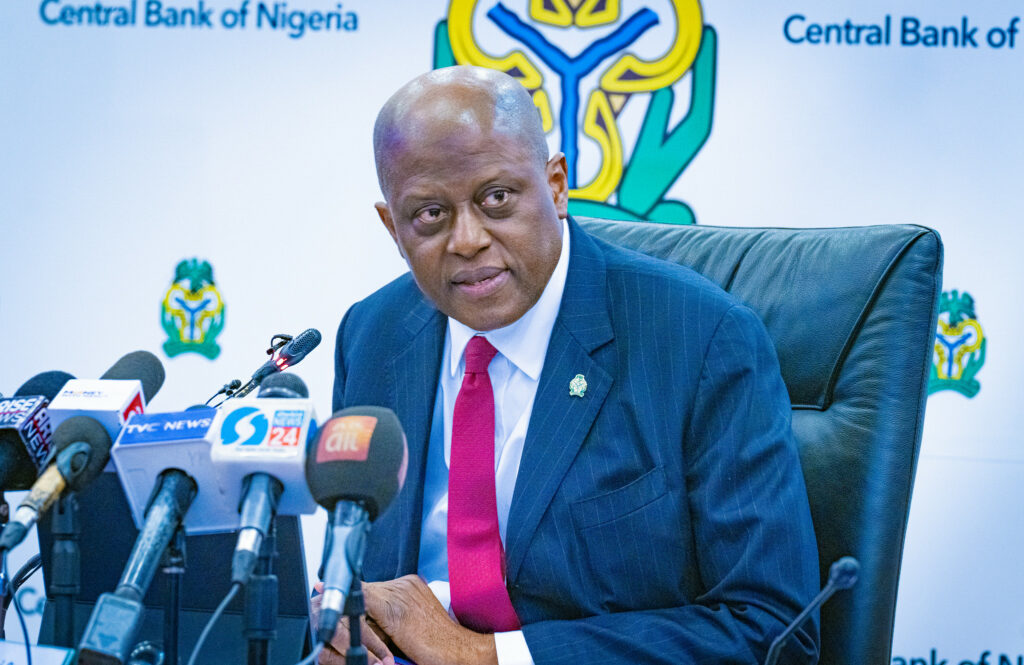
CBN Governor Olayemi Cardoso, speaking during a press briefing after the meeting, signalled that the rate cut was not a declaration that inflation risk had ended. When asked if Nigeria could now “go to sleep on inflation”, he said, “Caution is our watchword in the Central Bank.”

Disinflation as key trigger

Analysts at Afrinvest earlier noted that Nigeria’s “disinflation trend, alongside sustained accretion to external buffers (foreign exchange reserves up 2.4 per cent since November to $47.8 bn), continued naira appreciation (up approximately 6.7 per cent to N1,355.00/$1.00 in the official market), and stable energy goods prices (notably, PMS), provides the CBN with latitude for policy flexibility.”

Nigeria’s headline inflation rate declined marginally to 15.10 per cent in January 2026, down from 15.15 per cent recorded in December 2025, according to the Consumer Price Index report released by the National Bureau of Statistics. This decline came despite earlier projections by analysts that Nigeria’s inflation could climb to 19 per cent in January. The NBS report showed that the Consumer Price Index fell to 127.4 in January from 131.2 in December, representing a 3.8-point decrease. The NBS said the January headline inflation rate was 0.05 percentage points lower than the rate recorded in December. The inflation figure was the lowest in five years and two months, since November 2020, when inflation stood at 14.89 per cent. The MPC described January 2026 as the eleventh consecutive month of decline in year-on-year headline inflation.

The disinflation story is clearer when broken down. Food inflation declined 8.89 per cent in January 2026 from 10.84 per cent in December 2025, which the MPC linked to improved domestic food supply, sustained exchange rate stability and base effects. The food inflation figure marked the first single-digit reading in 128 months and the lowest since August 2011, when food inflation stood at 8.66 per cent.

See also  Over 4,600 tricycles, 100,000 vehicles run on CNG in Nigeria – Official

Core inflation eased 17.72 per cent from 18.63 per cent, driven largely by a moderation in Information and Communication services. The MPC also pointed to a short-run indicator. Month-on-month headline inflation fell to negative 2.88 per cent in January 2026 from 0.54 per cent in December 2025. A negative monthly reading suggests that the direction of prices in that month was not just slower growth but an outright decline, even if the durability of that pattern still needs to be tested across subsequent prints.

Speaking at the press briefing after the 304th MPC meeting, Cardoso said the continued deceleration in inflation was driven mainly by the “continued effects of the contractionary monetary policy”, foreign exchange market stability, robust capital inflows and improvement in the balance of payments. He added that these conditions suggested that prior tightening had helped anchor expectations. While the disinflation was central to why the committee saw room to reduce the benchmark rate, it did not loosen system liquidity aggressively as other parameters were retained.

The MPC flagged fiscal risk as releases from the federation account increase, which could pose upside risks to inflation. If fiscal expansion accelerates, it can increase liquidity and weaken the disinflation trend, particularly in an economy where supply constraints are common. In that scenario, the CBN would face a choice between defending disinflation with tighter policy or tolerating higher inflation to protect growth and credit conditions. This is why the cut looks like an incremental test rather than a clear start of a long easing cycle.

FX stability, reserves and recapitalisation

The MPC also linked its disinflation outlook to sustained stability in the foreign exchange market and stronger external buffers. Cardoso disclosed that gross external reserves rose to $50.45bn, providing import cover of 9.68 months for goods and services. The CBN tied reserve accretion to both real-economy flows and confidence. He pointed to higher export earnings and increased remittance inflows as drivers that contributed to foreign exchange stability and investor confidence. Cardoso also referenced favourable trade developments, a current account surplus, rising non-oil exports and increasing diaspora remittances.

The CBN further welcomed the newly issued Presidential Executive Order 09, which redirects oil and gas revenues into the Federation Account, and said the committee acknowledged its potential impact in improving fiscal revenue and reserve accretion. For monetary policy, the relevance is not the politics of the order but the mechanics. If more oil and gas revenue predictably flows through the federation account, fiscal planning can improve, and external buffers can strengthen, particularly if inflows support reserves and reduce pressure for deficit monetisation. However, the same story carries a risk. Higher inflows can also encourage higher spending if fiscal discipline is weak, and the MPC already warned that fiscal releases, including election-related spending, could push inflation up.

See also  Amazon to cut 16,000 jobs worldwide

Cardoso also laid out a list of risks that can disrupt the external stability underpinning the rate cut. He cited the possibility of global shocks, uncertainties around oil prices, and the effect of pre-election spending if not contained.

The CBN governor further noted that banking sector indicators remained within regulatory thresholds and described the sector as resilient. He noted progress in recapitalisation, stating that 20 banks had fully met the new minimum capital requirements and that a further 13 were at advanced stages of their capital raising processes, which he said were expected to conclude within the stipulated time. He also noted that banks raised N4.05tn in verified and approved capital ahead of the 31 March 2026, recapitalisation deadline set by the CBN. The PUNCH observed that this figure was nearly double the N2.4 tn reportedly raised as of April 2025. Cardoso said N2.90tn of the amount, representing 71.6 per cent, was mobilised domestically, while N1.15tn, equivalent to 28.33 per cent, came from foreign participation.

“In summary, 71.67 per cent is domestic mobilisation and 28.33 per cent is foreign participation. This balance, in my view, represents a mix of domestic and foreign, which signals broad investor engagement and confidence in the sector,” Cardoso said.

The CBN governor also had to address stability risks tied to institutions under intervention. Cardoso said depositor funds in those institutions remain secure and that operations continue under close supervisory and regulatory oversight. He said this to prevent recapitalisation anxieties from turning into deposit flight or market rumours, both of which can disrupt the transmission of monetary policy.

A further stability issue is the payments and fintech ecosystem. The governor said the CBN recognised the importance of innovation but would ensure that risks to financial stability were properly managed. “We are advancing work already on a very comprehensive framework for digital assets,” Cardoso said, noting that the process would involve consultation and scrutiny to ensure transparency and long-term resilience. He disclosed that there are over 430 licensed fintech operators in Nigeria and described the segment as systemically important, adding that the CBN was strengthening supervisory oversight to address cyber threats and other emerging risks.

Likely impact of rate cut on Nigeria’s economy

In a statement, the Minister of Finance and Coordinating Minister of the Economy, Mr Wale Edun, welcomed the CBN’s decision to cut the MPR by 50 basis points to 26.5 per cent, describing it as a signal of growing confidence in the nation’s economic stabilisation. He noted that the decision reflects “strong coordination between fiscal and monetary authorities as the country transitions from stabilisation to economic consolidation”.

See also  We want petroleum products at reasonable prices – DAPPMAN

Edun explained that the rate cut provides the government with “fiscal space to accelerate investment in infrastructure, energy, agriculture and social services”. He added, “For businesses, it improves access to credit, supports private sector investment, and strengthens job creation in the real economy.”

The Director-General of the Nigeria Employers’ Consultative Association, Adewale Oyerinde, earlier told The PUNCH that the marginal cut indicated that monetary authorities were responding to sustained pressures facing businesses.

“The marginal reduction in the benchmark interest rate represents a cautious but noteworthy signal that monetary authorities are beginning to respond to the sustained pressures facing businesses and the productive sector,” Oyerinde said. He added, “While the 50 basis point reduction may not immediately translate into significantly lower lending rates, it reflects a gradual shift toward supporting economic growth without undermining price stability.”

Oyerinde stressed that the overall policy stance remained tight due to the retention of the Cash Reserve Ratio at 45 per cent for commercial banks and other liquidity controls. “With a substantial portion of bank deposits still sterilised, the capacity of financial institutions to expand credit to the real sector may remain constrained in the near term,” he said.

In a policy brief shared with The PUNCH, the Director of the Centre for the Promotion of Private Enterprise, Dr Muda Yusuf, described the rate cut as growth-supportive but warned that weak policy transmission and fiscal vulnerabilities could blunt its impact. “This policy direction is appropriate and growth-supportive. It reflects improving macroeconomic fundamentals and reinforces confidence in the economy’s stabilisation trajectory,” Yusuf said. He cautioned that lending rates might remain elevated due to structural constraints, stressing, “Unless these structural rigidities are addressed, the benefits of monetary easing may not fully translate into lower borrowing costs for manufacturers, SMEs, agriculture, and other productive sectors.”

Yusuf added that fiscal consolidation remained the missing anchor. “Without fiscal consolidation, monetary easing could be undermined by continued fiscal pressures and crowding-out effects in the financial system,” he said.

Looking ahead, Cardoso said the outlook suggests that “the current momentum of domestic disinflation will continue in the near term”, supported by exchange rate stability and improved food supply. However, he warned that “increased fiscal releases, including election-related spending, could pose upside risk to the outlook.” He reaffirmed the MPC’s commitment to “an evidence-based policy framework, firmly anchored on the Bank’s core mandate of ensuring price stability, while safeguarding the soundness and resilience of the financial system.”

punch.ng

FOLLOW US ON:

FACEBOOK

TWITTER

PINTEREST

TIKTOK

YOUTUBE

LINKEDIN

TUMBLR

INSTAGRAM

Continue Reading

Business

Net reserves jump 772% to $34.8bn in two years

Published

on

The Governor of the Central Bank of Nigeria, Olayemi Cardoso, has said Nigeria’s net foreign exchange reserves rose sharply to $34.80bn at the end of 2025, representing a 772 per cent increase from $3.99bn recorded at the end of 2023, and signalling what he described as a significant strengthening in the country’s external buffers.

In a press statement issued by the CBN on Monday, the apex bank said the improvement in both gross and net reserves reflected “stronger external sector fundamentals and sustained policy reforms.”

Gross reserves refer to the total stock of foreign assets held by the Central Bank of Nigeria, including foreign currencies, gold, and other external assets. Net reserves, however, strip out short-term liabilities and obligations, providing a clearer picture of the portion of reserves that is readily available to defend the naira and meet external commitments.

Cardoso had earlier disclosed at the post-Monetary Policy Committee briefing on February 24, 2026, that Nigeria’s gross external reserves stood at $50.45bn as of February 16, 2026. Providing further clarity over the weekend, he said the net foreign exchange reserves as of the end of December 2025 rose to $34.80bn.

The press statement read, “The Governor of the Central Bank of Nigeria, Mr Olayemi Cardoso, has stated that Nigeria’s gross and net foreign reserves showed significant improvement at the end of 2025, reflecting stronger external sector fundamentals and sustained policy reforms.

“Following his disclosure at the post-Monetary Policy Committee press briefing on Tuesday, February 24, 2026, where he said the country’s gross external reserves stood at $50.45bn as of February 16, 2026, Mr Cardoso, at the weekend, said the net foreign exchange reserves, as of the end of December 2025, rose to $34.80bn.”

See also  Etisalat Nigeria’s “Correct Awoof” Campaign Featuring Eniola Badmus

According to the CBN governor, the figures “emphasised the benefits of increased transparency and credibility in foreign exchange management, boosting investor confidence, attracting stronger FX inflows, and improving reserve management practices aimed at preserving capital, ensuring liquidity, and supporting long-term sustainability.”

He noted in the statement that the improvement represents “a substantial strengthening in both the level and quality of Nigeria’s external buffers over the past three years.”

The statement disclosed that net reserves increased sharply from $3.99bn at the end of 2023 to $34.80bn at the close of 2025, which the governor described as a fundamental improvement in reserve quality. He added that the 2025 net reserve position alone exceeded the total gross reserves recorded at the end of 2023, which stood at $33.22bn.

Cardoso further stated that net reserves rose from $23.11bn at the end of 2024 to $34.80bn at the end of 2025. Over the same period, gross external reserves increased to $45.71bn from $40.19bn, representing a rise of $5.52bn.

He said the expansion highlighted Nigeria’s enhanced capacity “to meet external obligations, support exchange rate stability and reinforce overall macroeconomic resilience.”

Describing the end-2025 reserve position as a strong validation of the bank’s ongoing reforms and external sector adjustments, Cardoso reaffirmed the commitment of the Central Bank of Nigeria to maintaining adequate reserve buffers.

He stated that the apex bank would continue “supporting orderly foreign exchange market operations, enhancing confidence in Nigeria’s external position and sustaining macroeconomic stability in line with its statutory mandate.”

The PUNCH earlier reported that the CBN governor disclosed that Nigeria’s gross external reserves hit the highest level in 13 years by mid-February 2026.

See also  We want petroleum products at reasonable prices – DAPPMAN

Speaking during the Monetary Policy Committee briefing in Abuja last week, Cardoso said the reserve build-up was supported by favourable trade developments, a healthy current account surplus, rising non-oil exports, and increased diaspora remittances.

He attributed the gains to improved market confidence. “Underpinning all this, quite frankly, is market confidence. Without market confidence, no matter what you do, you’ll find you will significantly sub-optimise,” Cardoso said.

He added that the CBN had engaged widely with international investors, made commitments, and ensured policy consistency to engender positive market sentiment.

punch.ng

FOLLOW US ON:

FACEBOOK

TWITTER

PINTEREST

TIKTOK

YOUTUBE

LINKEDIN

TUMBLR

INSTAGRAM

Continue Reading

Trending