Connect with us

Business

Blackouts: N300bn electricity power lifeline for hospitals, varsities hits snag

Published

on

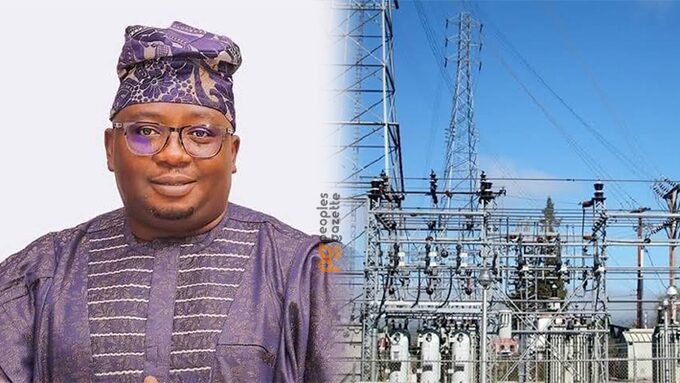
The Federal Government’s ambitious plan to provide stable electricity to federal universities and tertiary hospitals has suffered a major setback following the non-release of funds allocated in the 2025 budget, The PUNCH reports.

Although over N300bn was earmarked in the 2025 Appropriation Act for the special energy intervention, no funds have been released, resulting in zero implementation progress on the project announced last year.

Confirming the development, the Special Adviser on Media to the Minister of Power, Bolaji Tunji, said the initiative had stalled due to the absence of budgetary releases.

When asked about the status of the proposed special energy project for teaching hospitals and universities, Tunji said, “Zero funding has been released for the 2025 budget for the project, so there has been no progress on the project.”

The intervention was conceived to address persistent power shortages in critical public institutions, particularly teaching hospitals and universities, many of which depend heavily on diesel generators to sustain operations.

The PUNCH recalls that the Federal Government had set aside about N300bn in the 2025 budget to deliver stable and sustainable electricity to these institutions, largely through solar hybrid and renewable energy solutions.

The allocation was earlier announced by the Chairman, House Committee on Appropriation, and member representing Bichi Federal Constituency, Abubakar Bichi, during the inauguration of a solar hybrid intervention project at the Aminu Kano Teaching Hospital, Kano.

Bichi said the initiative formed part of the President Bola Tinubu administration’s efforts to end recurring power outages in critical sectors, especially healthcare and tertiary education.

According to him, “This intervention is designed to guarantee uninterrupted power for hospitals and universities so that doctors can save lives and students can study without disruption.”

He explained that the allocation would support the installation of renewable energy systems, with priority given to institutions delivering essential services to Nigerians.

See also  Marketers drop petrol prices below Dangote’s cost

Bichi added that beyond improving power stability, the projects were expected to cut high electricity costs, enhance operational efficiency, and promote clean and sustainable energy use in public institutions.

He also commended the Minister of Innovation, Science and Technology, Uche Nnaji, for what he described as leadership in translating the government’s vision into actionable projects, noting that the Energy Commission of Nigeria would work with relevant agencies to ensure timely delivery.

The lawmaker further praised President Tinubu for approving special budgetary provisions aimed at addressing long-standing electricity challenges in tertiary hospitals and universities nationwide.

Providing background, Bichi said the proposal gained momentum during deliberations on the 2025 appropriation bill after Chief Medical Directors of teaching hospitals across the country raised concerns.

He recalled that in November 2024, the CMD of the University of Maiduguri Teaching Hospital, among others, highlighted the crippling cost of electricity and diesel, with some facilities spending up to N200m monthly to power critical equipment.

“The issue was discussed with the leadership of the National Assembly and subsequently escalated to Mr President, who directed that funds for solar hybrid projects be included in the 2025 budget,” Bichi said.

He disclosed that about N300bn was eventually provided in the budget to support electricity supply in all federal universities and tertiary hospitals, listing Aminu Kano Teaching Hospital, Bayero University Kano, Murtala Muhammad Specialist Hospital, and Nasarawa Hospital among beneficiaries.

However, with no releases made so far, stakeholders fear the ambitious intervention may remain on paper, as hospitals and universities continue to struggle with unstable electricity supply and rising energy costs.

Budget implementation under the current administration has been constrained by funding shortfalls, delayed cash releases, and competing fiscal pressures, leading to four separate budgets running concurrently.

Although the Federal Government has consistently passed large budgets since 2023, including the 2025 Appropriation Act, execution has often trailed projections, largely due to weak revenue inflows, rising debt servicing obligations, and liquidity constraints.

See also  FG announces end of PENGASSAN, Dangote rift

Official data show that a significant share of annual budgets is consumed by debt servicing and recurrent expenditure, leaving limited fiscal space for capital releases. Consequently, many Ministries, Departments, and Agencies have recorded partial or zero releases for capital projects, even where funds were duly appropriated by the National Assembly.

In several cases, projects captured in the budget remain at the planning or announcement stage, with implementation dependent on subsequent cash backing by the Ministry of Finance and the Budget Office of the Federation.

Budget analysts note that while appropriation signals policy intent, actual execution depends on cash availability, making projects in sectors such as power, health, education, and infrastructure vulnerable to delays when revenues fall short.

The slow pace of implementation heightens the risk of rolling over unexecuted projects into subsequent fiscal years.

Beneficiaries await projects

One year after the N300bn allocation, the Federal Government’s solar mini-grid project for hospitals and tertiary institutions has yet to commence. Findings from listed beneficiaries reveal the absence of mini-grids at their facilities, showing a return to the status quo of paying high electricity bills.

In 2024, following the upgrade and movement of institutions and hospitals to Band A feeders, the removal of subsidies in areas under Band A feeders, and the consequent rise in electricity tariffs, bills for many health and academic institutions tripled, making it difficult for them to meet obligations.

The PUNCH reported that some tertiary hospitals paid as much as N300m per month to cover electricity bills, up from less than N100m before the tariff review. Following outcry from the management of teaching hospitals and universities grappling with high electricity costs, the Federal Government approved a 50 per cent subsidy in August 2024.

Yet, in 2025, public hospitals and educational institutions continued to face high electricity tariffs, with the promise of relief largely unfulfilled. While there appears to be silence on the implementation of the electricity subsidy, the government announced the solarisation of hospitals and tertiary institutions projects.

See also  FIRS - 411% revenue rise won’t stop FG borrowing

Listed beneficiaries of the solar mini-grids include University College Hospital, Ibadan, University of Ibadan, University of Lagos, Obafemi Awolowo University, Ile-Ife, University of Nigeria, Nsukka, and Ahmadu Bello University, Zaria.

According to the Chief Medical Director at the Lagos University Teaching Hospital, Idi-Araba, Mushin, Prof Wasiu Adeyemo, there are 84 Federal Tertiary Hospitals in the country.

Findings reveal that University College Hospital, Ibadan, a listed beneficiary, has yet to benefit from the project. The Public Relations Officer at the university, Funmi Adetuyibi, said, “We are on the list, but the mini grid is not yet on the ground.”

Also, LUTH’s CMD confirmed that the initiative was budgeted for in 2025 but has yet to begin at the hospital. “They came for some assessments, but up until now, nothing has…I guess the process is still on. That’s how far,” Adeyemo said.

It is unclear what the situation is at Obafemi Awolowo University, Ile-Ife, as calls to the Public Relations Officer were unanswered as of press time.

Responding to enquiries, the spokesperson of the Federal Ministry of Health and Social Welfare, Alaba Balogun, advised that queries be redirected to the Rural Electrification Agency, a parastatal under the Federal Ministry of Power. He noted that the ministry has neither initiated nor launched any power-related project.

With the delays, hospitals and universities continue to grapple with unstable electricity supply and rising operational costs, leaving many reliant on expensive diesel generators and exposed to recurring blackouts, underscoring the urgent need for the government to release the funds and fast-track the solar mini-grid initiative.

Continue Reading
Click to comment

Leave a Reply

Your email address will not be published. Required fields are marked *

Business

Court freezes N448m assets in Keystone Bank debt recovery suit

Published

on

The Federal High Court in Lagos has ordered the freezing of funds and assets valued at N448,263,172.41 in a debt recovery suit instituted by Keystone Bank Limited against five defendants.

The order was made on March 26, 2026, by Justice Chukwujekwu Aneke following an ex parte application moved by Keystone Bank’s counsel Mofesomo Tayo-Oyetibo (SAN), against Relic Resources, Olufunmilayo Emmanuella Alabi, Uwadiale Donald Agenmonmen, The Magnificent Multi Services Limited, and Raedial Farms Limited.

In his ruling, Justice Aneke granted a Mareva injunction restraining the defendants, whether by themselves, their agents, privies, or assigns, from withdrawing, transferring, dissipating, or otherwise dealing with funds, shares, dividends, and other financial instruments standing to their credit in any bank or financial institution in Nigeria, up to the sum in dispute.

The court further directed all banks and financial institutions within the jurisdiction to forthwith preserve any funds belonging to the defendants upon being served with the order.

The said institutions were also ordered to depose to affidavits within seven days of service, disclosing the balances in all accounts maintained by the defendants, together with the relevant statements of account.

In addition, the court granted a preservative order restraining the defendants from disposing of, alienating, or otherwise encumbering any movable or immovable property, including any future or contingent interests, up to the value of the alleged indebtedness.

The court also granted leave for substituted service of the originating and other court processes on the second and third defendants by courier delivery to their last known addresses.

See also  Lagos govt cracks down on illegal trading under bridges

The matter was adjourned to April 9, 2026, for mention.

According to the originating processes before the court, the suit arises from a N500 million overdraft facility granted by the claimant to the first defendant on March 28, 2023, for a tenure of 365 days at an interest rate of 32 per cent per annum.

The claimant averred that the facility, initially secured by a $200,000 cash collateral and subsequently by a mortgaged property located at Itunu City, Epe, Lagos, expired on March 27, 2024, leaving an outstanding indebtedness of N448,263,172.41 as at October 31, 2024.

In the affidavit in support of the application, the claimant alleged that the facility was diverted for personal use by the third defendant and channelled through the fourth and fifth defendant companies.

It further contended that the first defendant is no longer a going concern and has failed, refused, and neglected to liquidate the outstanding indebtedness despite several demands made between May and October 2025.

The claimant also expressed apprehension that the defendants may dissipate or conceal their assets, thereby rendering nugatory any judgment that may be obtained in the suit, and consequently urged the court to grant the reliefs sought in the interest of justice.

After considering the application and submissions of learned silk, Justice Aneke granted all the reliefs sought and adjourned the matter to April 9, 2026, for further proceedings.

punch.ng

FOLLOW US ON:

FACEBOOK

TWITTER

PINTEREST

TIKTOK

YOUTUBE

LINKEDIN

Continue Reading

Business

Sanwo-Olu unveils Lagos 2026 economic blueprint, vows inclusive growth

Published

on

The Lagos State Governor, Babajide Sanwo-Olu, on Tuesday unveiled the 2026 edition of the Lagos Economic Development Update, reaffirming his administration’s commitment to driving inclusive growth and ensuring that economic progress translates into tangible benefits for all residents of the state.

The unveiling of this year’s outlook, held in Ikeja, provides an in-depth analysis of the state’s economic trajectory, capturing global, national, and local developments shaping Lagos’ growth outlook.

Represented by his deputy, Obafemi Hamzat, the governor described the report as more than a policy document, noting that it serves as a strategic compass for guiding economic direction and strengthening decision-making.

He added that despite global economic headwinds — including post-pandemic recovery challenges, inflationary pressures, and exchange rate fluctuations — the state has remained resilient through deliberate policies, fiscal discipline, and sustained investment in critical infrastructure.

“It is with a deep sense of responsibility and optimism that I join you today to officially launch the third edition of the Lagos Economic Development Update — LEDU 2026.

“This platform has evolved beyond a mere policy document; it has become a compass guiding our economic direction, shaping decisions, and reinforcing our commitment to building a resilient, inclusive, and prosperous Lagos,” he said.

He noted that while the global economic environment has remained unpredictable, Lagos has stayed on course through “clarity, discipline, and foresight,” anchored on the T.H.E.M.E.S+ Agenda.

According to him, the state had strengthened its fiscal framework, improved revenue generation, and invested in infrastructure critical to long-term growth.

Sanwo-Olu further highlighted progress recorded since the inception of LEDU, including the expansion of the state’s economic base driven by innovation, entrepreneurship, and digitalisation; improved efficiency in revenue systems; and sustained infrastructure development spanning roads, ports, energy, and urban planning.

See also  Tinubu’s Executive Order: FG, states, LGs allocation may increase by N15tn

He added that continued investment in human capital remains central, as “people are the true engine of growth.”

Speaking on the theme of this year’s report, “Consolidating Resilience, Advancing Competitiveness, Delivering Shared Prosperity,” the governor said it reflects Lagos’ current economic priorities.

He explained that consolidating resilience involves strengthening institutions and fiscal discipline, while advancing competitiveness requires boosting productivity, innovation, and investment.

Delivering shared prosperity, he added, means ensuring growth translates into jobs, expanded opportunities, and improved livelihoods for residents.

Looking ahead, he reaffirmed the administration’s commitment to economic diversification, private sector-led growth, data-driven governance, sustainable urban development, and social inclusion.

He also stressed the importance of partnerships with the private sector, development institutions, civil society, and the international community in achieving the state’s development goals.

“As we launch this edition of LEDU, I urge all stakeholders to engage actively, strengthen collaboration, and align with our shared vision.

“We have built resilience; now we must translate it into sustained competitiveness and ensure that growth delivers tangible prosperity for every Lagosian,” he said.

Also speaking, the state Commissioner for Economic Planning and Budget, Ope George, said Lagos has demonstrated remarkable resilience in navigating both global and domestic economic challenges.

“Lagos is not just responding to economic shocks — we are building systems that make us stronger because of them,” he said, noting that deliberate policies, disciplined fiscal management, and strategic investments have reinforced the state’s position as a leading subnational economy in Africa.

He added that the state would continue to prioritise economic diversification, private sector growth, sustainable urban development, and social inclusion, stressing that growth must be measured not only by numbers but also by its impact on people’s lives.

See also  CBN announces new withdrawal limit, removes deposit cap

In his goodwill message, Chief Consultant at B. Adedipe Associates Limited, Biodun Adedipe, described the LEDU initiative as a credible framework for tracking economic performance and refining development strategies.

He noted that Lagos remains central to Nigeria’s economy, adding that its continued growth signals broader national progress.

“If Lagos works, a significant share of Nigeria’s commerce works,” he said, expressing optimism about the state’s economic future.

Meanwhile, the Chief Executive Officer of the Nigerian Economic Summit Group, Tayo Adeloju, urged the state government to prioritise affordable housing as a critical driver of shared prosperity.

He noted that high housing costs could limit upward mobility for low-income earners, stressing that making housing more accessible would enhance living standards and support inclusive growth.

Adeloju added that sustained fiscal discipline, improved service delivery, and a broader productive base would further strengthen Lagos’ position among Africa’s leading megacity economies.

punch.ng

FOLLOW US ON:

FACEBOOK

TWITTER

PINTEREST

TIKTOK

YOUTUBE

LINKEDIN

Continue Reading

Business

Airlines in pricing limbo amid 180% Jet A1 price surge

Published

on

Airfares have remained stagnant in Nigeria despite the rising cost of aviation fuel by 184 per cent in the last two months, occasioned by the ongoing crisis in the Middle East.

However, sources in different airlines who did not want their names in print, considering the sensitivity of the matter, told The PUNCH on Tuesday that the “pressure of competition” among local carriers kept the airfares low.

Aviation fuel, which was sold at N900 per litre in January, increased to N1,121 per litre as of 26 February 2026 and now sells for N2,557 per litre.

Aviation fuel is the highest consuming commodity of airlines’ finances, taking about 40 per cent of airlines’ resources. This is closely followed by aircraft maintenance.

Despite the spike in fuel prices and the financial burden on airlines, competition has been keeping the airlines in check against upping their ticket prices. Between January and March 30, the product has increased by 184 per cent; yet, airfares still sell for between N106,286 and N147,000 across major routes in the domestic market.

A search on the booking portal of Ibom Air, for instance, shows the Lagos-Abuja flight for April 4 goes for N114,600, while Uyo to Abuja on the same airline and date also sells for the same N114,500.

For United Nigeria Airlines’ portal, the Kano-Lagos flight from April 1 to April 7 sells for N142,500 for a one-way ticket, while the Lagos-Port Harcourt flight for the same date goes for the same N142,500 on the airline’s portal.

Besides, the Lagos-Abuja flight for April 4 on Aero Contractors goes for N106,286, while the Asaba-Abuja flight on the same airline sells for N102,179.

However, Air Peace is the most expensive on the local scene, with Lagos to Abuja air tickets for April 3 bookings selling for N147,000, while the return ticket – Abuja to Lagos – also goes for the same rate.

See also  Tax: ‘Give reprieve to people with low income’

The airline source said that instead of the fares going up, the operators had kept them at the same price as two months ago, yet they were struggling to remain in business.

The source also attributed the situation to the number of scheduled indigenous operators, in spite of low passenger traffic.

As of the time of filing this report, there are about 15 scheduled operators, while another two airlines in February and March, Enugu Air and Binani Airlines, respectively, secured Air Operators’ Certificates from the Nigeria Civil Aviation Authority, which would enable them to operate.

Nigeria’s passenger traffic has been on a steady decline in recent years. The industry recorded 15.6 million passenger movements on domestic and international routes in 2024, 15.8 million in 2023 and 16.2 million in 2022.

One of the sources said, “It’s the pressure of competition. Instead of going up, the pressure on pricing is downwards because of the number of players and the pricing they have entered the market with. It’s simply competitive pressure that keeps airfares stagnant.”

He, however, said that his airline was reviewing the current situation and would come up with a position in the coming weeks.

Data obtained from major fuel marketers in Nigeria indicated that aviation fuel currently goes for N2,557 per litre at Sokoto Airport, making it the airport with the most expensive sales of the product in Nigeria.

This is followed by Kano, which sells the product at N2,554 per litre, while both Port Harcourt and Asaba report rates of N2,543 per litre.

Besides, the product goes for N2,538 per litre at the Nnamdi Azikiwe International Airport, Abuja; Enugu airport, N2,535 per litre; and Warri airport, N2,530 per litre.

For Anambra airport, the product goes for N2,529 per litre; for Asaba airport, N2,528 per litre, with Lagos recording the cheapest rate of aviation fuel at N2,500 per litre.

See also  Marketers drop petrol prices below Dangote’s cost

While operators refused to comment on the development despite calls and text messages, industry experts expressed their views. Aviation analyst Olumide Ohunayo warned that even if airlines make fare adjustments, they may not be sufficient to offset the mounting losses triggered by the sharp rise in aviation fuel prices, describing the situation as unsustainable for operators.

Ohunayo, who spoke amid growing concerns over escalating ticket costs, said airlines are caught in a difficult position where even significant fare increases may still fall short of covering operational expenses.

He said, “No matter the increase that they can make now, they may not be able to recoup their losses as a result of the fuel increase. When you compare the prices with other nations, you will discover that the fuel price in Nigeria is on the high side.”

He highlighted the rapid spike in fuel prices within a short period, noting that the trend has placed enormous pressure on airline operations.

The industry expert expressed concern that, unlike other countries, Nigeria has yet to implement measures to ease the burden on both operators and consumers.

He said, “It was about N1,000 in January, N1,500 in February, and it has now moved to over N2,500 in March. And this is the same country where Dangote is exporting this same fuel to Europe, and you will then begin to imagine what incentives are given to cushion this development.

“Other countries are bringing in their reserves to reduce the effects on the citizenry, and they have also reduced their taxes, in some cases up to 50 per cent. An example of that is Australia.”

Ohunayo questioned the response of the Nigerian government, urging authorities to act swiftly to prevent further strain on the aviation sector.

See also  CBN announces new withdrawal limit, removes deposit cap

He called for targeted interventions, including temporary tax reliefs for airlines, to help cushion the impact of rising costs, saying, “What is the Nigerian government doing to reduce the effect of this on Nigerians? So, I feel that no matter the eventual increase from airline operators, it still cannot be enough.

“There must be a way to support operators during this period, maybe by reducing their taxes for three months. There must be a way for the government to come in. Why are the operators the ones bearing the highest cost?”

A retired pilot, Muhammad Badamosi, has said airlines may be reluctant to further increase airfares despite rising operational costs, citing fears of losing passengers to road transport amid the current economic realities.

He said, “Yes, I think it’s the fear of losing passengers because Nigerians currently do not have money, and many may have to resort to road travel. Yes, we understand that that is taking a toll on the operators, but it is what it is. That is the condition Nigeria currently finds itself in.”

Badamosi explained that while airlines are under pressure to adjust fares in response to rising aviation fuel costs, they are also constrained by the risk of pricing themselves out of the market.

According to him, the situation has created a difficult balance for operators, who must navigate between sustaining their businesses and retaining customer patronage.

“For instance, I used to visit Kaduna once every two months, but now I have cut it down to three times a year. My frequency used to be six times a year; now I go there three times a year.”

punch.ng

FOLLOW US ON:

FACEBOOK

TWITTER

PINTEREST

TIKTOK

YOUTUBE

LINKEDIN

Continue Reading

Trending