Connect with us

News

Kwara massacre: Survivors traumatised after deadly attack in Woro, soldiers occupy deserted community

Published

on

At about 5pm on a dark evening penultimate Tuesday, motorcycles began streaming into Woro. By nightfall, gunfire echoed through its narrow streets, homes were ablaze and residents were fleeing into surrounding forests. Today, soldiers patrol the empty settlement, but fear — not security — defines daily life in the agrarian community left shattered by one of the deadliest attacks in recent memory, DARE AKOGUN and TOHEEB OMOTAYO report

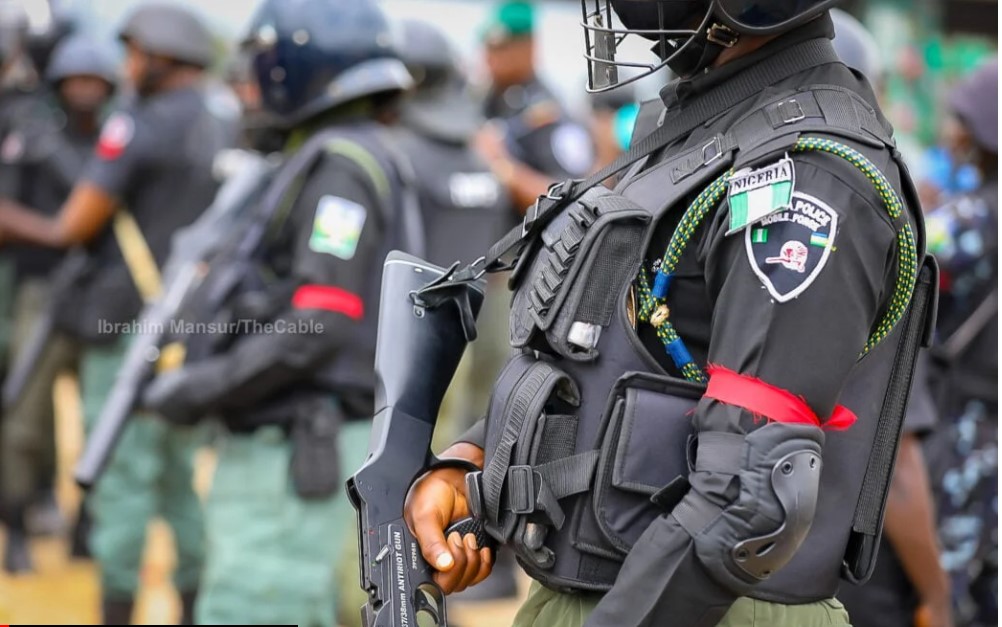
Armoured Personnel Carriers now stand where children once played at dusk. At the entrance to Woro in Kaiama Local Government Area of Kwara State, soldiers in combat gear stop the few vehicles daring enough to approach the once-bustling agrarian settlement.

Police officers man inner checkpoints, rifles slung across their shoulders, eyes fixed on the tree lines stretching into thick forests that link Kaiama, Baruten and the Benin Republic. Despite the heavy security presence, Woro remains deserted.

No smoke rises from cooking fires. No traders display grains and vegetables along the federal road that cuts through the settlement. Mud houses that survived the flames stand with doors ajar, abandoned in haste.

Many others have been reduced to blackened skeletons, their zinc roofs twisted by heat. Days after the February 3, 2026 attack that left more than 200 residents dead, fear has outweighed assurances provided by security patrols.

“The people are afraid to return to Woro after experiencing such a tragic incident,” Comrade ZulQharnain Shero Musa, Special Assistant to the Chairman of Kaiama Local Government Area, told The PUNCH. “Many of them feel the place is still not safe despite the military presence.”

Survivors are scattered across neighbouring communities — in Kaiama town, Baruten and parts of Niger State. At the Wawa Internally Displaced Persons camp in Borgu LGA of Niger State, families shelter under makeshift structures.

Relief materials have begun to arrive, including bags of rice and maize, mattresses, clothing and medical supplies. Officials were seen distributing food items to women and children, many still visibly shaken.

But relief supplies cannot silence the trauma of that evening.

“It was a dark Tuesday night for us in Kaiama,” Musa said. “What happened was painful and devastating. Around 5pm, the assailants came.”

He said the attack followed weeks of tension after unknown men reportedly visited Woro under the guise of religious outreach.

“They came to preach a strange doctrine that does not align with Islam or Christianity,” Musa said. “They tried to force it on the people, but the community rejected it. We told them they could practise their religion, but not impose it.”

See also  UNICEF Nigeria welcomes new country representative

According to him, a letter delivered in January to the village head had raised concerns.

“The Emir read it and forwarded it to the DSS and the palace of the Emir of Kaiama. We do not know how the attackers found out that the letter had been shared,” he added.

By Tuesday evening, survivors said the men returned in overwhelming numbers.

“They came two on each motorcycle — hundreds of them,” Musa recalled. “They were armed with sophisticated weapons. There was no security presence nearby.”

A 22-year-old survivor, Aliyu Abdul Hamid Jogodo, popularly known as Omo Salka, said the attackers moved through the town without resistance.

“The attackers stormed Woro and went straight to the Emir’s palace,” he said. “They began shooting indiscriminately, killing people and burning shops.

“They killed many of my friends. One of them was Malam Buhari, whose death I will never forget. They also kidnapped my friend’s mother and killed my boss’s brother, Dr Muhammad Yusuf, the officer in charge of the Woro Primary Health Care Centre. The pain is unbearable.”

Another resident, Abdulrasheed Taofiq, 30, gave a similar account.

“They came into the town on many motorcycles and headed directly to the village head’s house,” he said. “After that, they began gathering people and setting houses and shops on fire. Gunshots were everywhere. There was no way out.”

What followed, according to multiple accounts, was a coordinated assault.

“They cordoned off the village and moved from house to house,” Musa said. “They brought people out, tied their hands behind their backs and executed them.”

The Emir’s palace was also attacked.

“They went to the Emir’s house, brought out his children and one of his wives. They executed the children and kidnapped the second wife. By about 6pm, the house was set ablaze,” Musa said.

A 35-year-old resident identified simply as Tunde offered further clarification.

“The Emir has two wives,” Tunde said. “The first wife was not at home when the attackers stormed the palace. The second wife was kidnapped. They killed all his children and burnt his house.

“The Emir was not at the palace during the attack. He was outside Woro when the assailants arrived.”

Sources confirmed that the monarch survived and is currently in hiding in Kaiama town after his palace was razed. Efforts to speak with him were unsuccessful.

For residents attempting to flee, the federal road became another danger zone.

“Motorists on the busy road were stopped. People inside vehicles were attacked and killed,” Tunde said.

See also  PHOTOS: Fisherman shows off stingray caught in Bayelsa community

Our correspondent saw a burnt commercial truck conveying sacks of maize and guinea corn along the road.

Explaining the incident, Tunde said the vehicle stepped on a landmine while attempting to enter Woro.

“The bomb was buried on the road and was not noticeable. The explosion was massive and delayed the Army’s rescue efforts,” he said. “The soldiers had to retreat to a nearby village. The vehicle was burnt to ashes.”

As the attack unfolded, survivors reported seeing an aircraft overhead.

“A white helicopter flew over the village. It circled and left without intervening. After it left, the killings continued from about 6pm to 8pm,” Musa said.

He added that when another aircraft, believed to be military, later returned, the attackers retreated into the forest, only to re-emerge under cover of darkness.

“They came out again at night,” he said. “The killings continued until about 2am.”

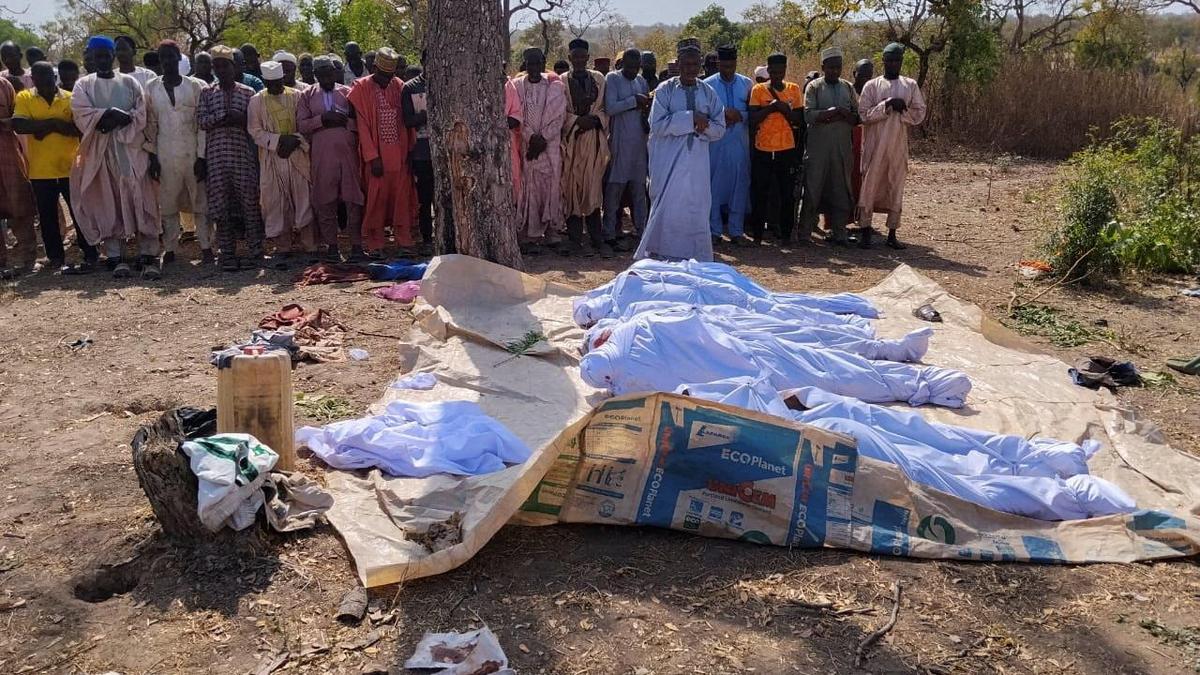
By dawn, the scale of the massacre began to emerge. As of Friday, more than 200 bodies had been buried in mass graves at different locations.

“First it was 30, then 68, then 75,” Musa said. “Later it rose to 162. Now the number recorded is over 200. Some bodies were recovered days later.”

Survivors believe the figure may be higher.

“From what we are seeing and hearing, the number could be more than 300,” Aliyu said.

Abdulrasheed gave an even higher estimate. “Between two days ago and now, we counted 321 bodies in the community,” he claimed.

Musa said more than 100 people were abducted during the attack.

“Over 100 people were kidnapped, and there have been no traces of them,” he said. “During search operations, more bodies have been found in the bush.”

Another survivor, who requested anonymity for security reasons, said the attackers disguised themselves.

“They dressed like soldiers and wore full armour. There was even a woman among them carrying ammunition,” she said. “We did not suspect anything at first.”

She recalled seeing them pass her shop along the Kaiama-Woro road.

“Minutes later, we heard gunshots. That was when we realised they were not soldiers. Everyone started running.”

Some of her relatives were abducted.

“My seven-year-old stepsister, who has a chronic illness, was taken during a family event in Woro. Another sister was also abducted. I do not know how the little one will survive in the forest,” she said.

She also recounted the ordeal of a trader popularly known as “Iya Bag.”

“They tried to break into her house but failed. They set it on fire, thinking everyone inside was dead. The family escaped through a back window, but she lost everything,” she said.

See also  Bloody ballot: Inside deadly battles for SUG leadership in varsities

The violence reportedly spread to neighbouring Nuku village. Even days later, residents said they heard distant gunshots in the early hours of Thursday, fuelling fears that more victims were killed in the surrounding forest.

Aliyu described how he survived.

“When the shooting started, I ran into the bush. I stayed there until morning before returning,” he said.

Abdulrasheed also recounted his escape. “I ran into a nearby house and hid,” he said.

Both men said nearly all residents had fled.

“Almost everyone has left,” Aliyu said. “People packed what they could carry and fled.”

Hospitals in Kaiama and New-Bussa have continued to treat injured survivors. A source familiar with the situation said many victims were in serious condition but responding to treatment.

The Inspector-General of Police, Kayode Egbetokun, has sent a delegation to the area as part of ongoing security and assessment operations. Security has since been reinforced across the Kaiama axis, with soldiers patrolling adjoining roads and border communities.

Yet the deserted homes reflect a deeper crisis — trust in safety has not returned.

“There is illegal mining in the forest,” a community member who requested anonymity said. “The group known locally as the Mahmuda terrorists have built houses there. Farmers can no longer go to their fields.”

Woro’s farmlands, once the backbone of its economy, now lie untended. Dry-season crops remain unharvested, and livestock have either strayed or been stolen.

For many families, returning would mean confronting both trauma and the destruction of their livelihoods.

At the IDP camps in Wawa and other host communities, displaced residents gather in prayer. Children cling to their mothers, while men speak quietly about relatives still missing.

“We have never seen anything like this,” Musa said.

Aliyu appealed for urgent intervention. “The government should assist our community with security and relief materials. We are pleading for help,” he said.

Abdulrasheed added, “Security agencies should remain in the community and support those whose homes and property were destroyed.”

In Woro, fresh graves dot the outskirts of the village. The scent of burnt timber lingers in the dry air as security operatives continue their patrols.

Until the abducted return and residents regain confidence to rebuild, Woro remains not only under guard, but in mourning.

Continue Reading
Click to comment

Leave a Reply

Your email address will not be published. Required fields are marked *

News

Tinubu signs ₦68.32trn 2026 budget, extends 2025 spending deadline

Published

on

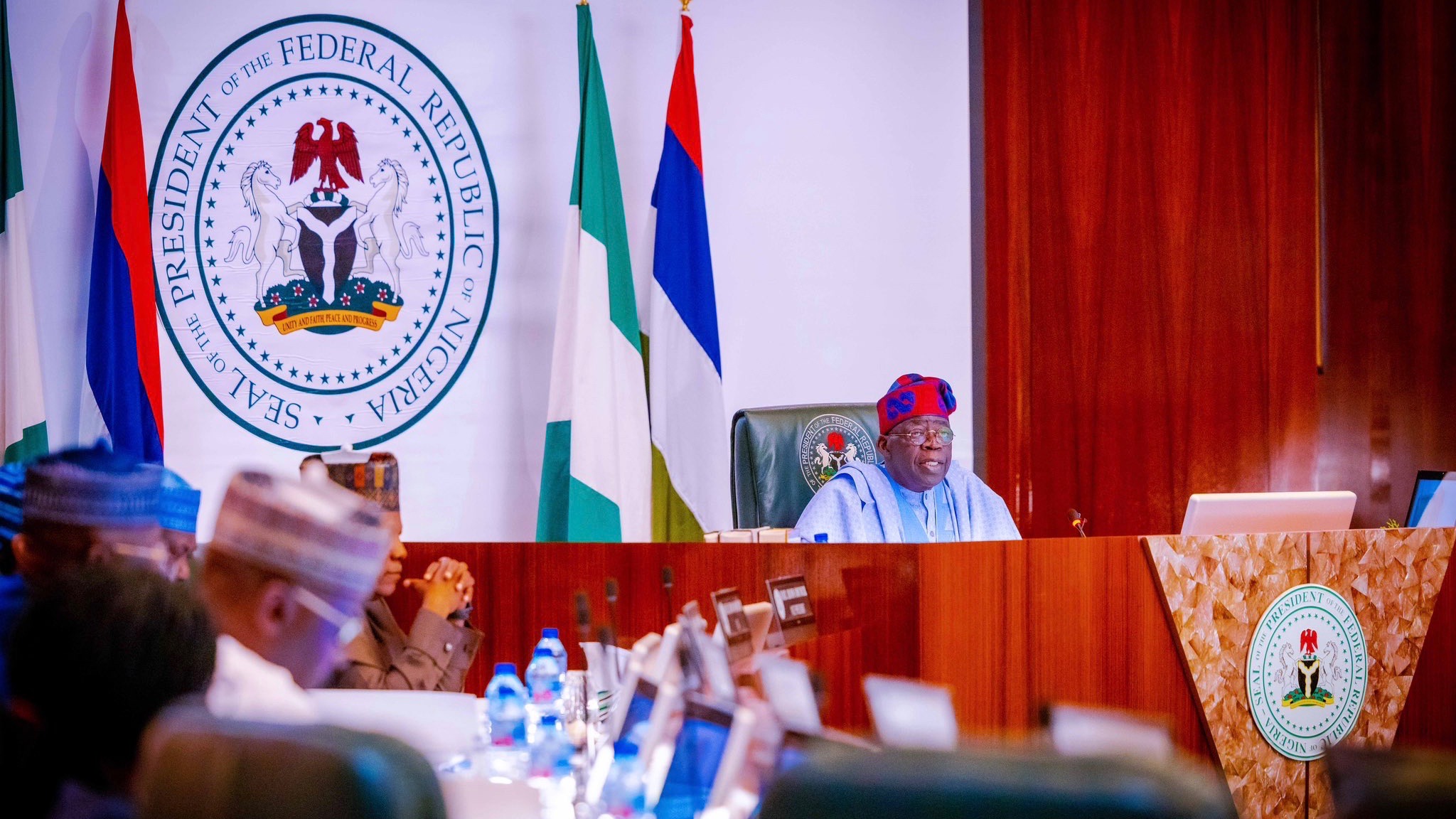
President Bola Tinubu has signed the 2026 Appropriation Bill into law, authorising an aggregate expenditure of ₦68.32 trillion for the current fiscal year.

He also signed a separate bill extending the implementation period of the 2025 budget from March 31 to June 30, 2026.

The budget allocates ₦4.799 trillion for statutory transfers and ₦15.8 trillion for debt service.

It further sets aside ₦15.4 trillion for recurrent expenditure and ₦32.2 trillion for capital expenditure through the Development Fund.

The presidency made the disclosure in a statement signed by Special Adviser on Information and Strategy, Bayo Onanuga on Friday.

The statement read, “President Bola Ahmed Tinubu has assented to the 2026 Appropriation Bill, which provides for an aggregate expenditure of ₦68.32 trillion. He has also signed the bill extending the implementation period for the 2025 budget from March 31, 2026, to June 30, 2026.

“The N68.32 trillion budget for this year earmarks N4.799 trillion for statutory transfers and N15.8 trillion for debt service. It allocates N15.4 trillion to recurrent expenditure and N32.2 trillion to the Development Fund for Capital Expenditure.

“With capital expenditure accounting for about 50 per cent, the 2026 budget underscores the administration’s continued commitment to economic stability, national security, infrastructure development, and inclusive growth.

“The allocations reflect a strategic balance between statutory obligations, debt servicing, recurrent expenditure, and capital investments critical to driving productivity and improving the quality of life for Nigerians,” it added.

The 2026 Appropriation Act took effect on April 1, with the Federal Government commencing full implementation in line with what the presidency describes as the Renewed Hope Agenda.

See also  UNICEF Nigeria welcomes new country representative

Tinubu also assented to the Appropriation (Repeal and Enactment) (Amendment) Bill, 2026, which extends the capital component of the 2025 Appropriation Act by three months to June 30.

The presidency said the extension would ensure the full utilisation of appropriated funds, particularly for critical infrastructure projects at advanced stages of implementation.

“The extension will ensure the full and effective utilisation of appropriated funds, particularly for critical infrastructure and development projects that are at advanced stages of implementation across the country.

“It will enable Ministries, Departments, and Agencies (MDAs) to consolidate ongoing works, enhance project completion rates, and maximise value for public expenditure,” the statement read.

Tinubu directed MDAs to ensure disciplined, transparent, and efficient utilisation of allocated resources, with strong emphasis on value for money and timely project delivery.

He commended the leadership and members of the National Assembly for what the presidency described as their “diligence, cooperation, and patriotism in expeditiously considering and passing the budget.”

“The President reaffirmed the importance of sustained collaboration between the Executive and Legislative arms of government in advancing national development objectives,” the statement noted.

Tinubu also assured Nigerians of his administration’s resolve to deepen fiscal reforms and boost revenue generation.

“He further assured Nigerians of his administration’s resolve to deepen fiscal reforms, enhance revenue generation, and prioritise investments that will stimulate economic growth, create jobs, and strengthen social protection mechanisms,” the statement read.

The budget, titled “The Budget of Consolidation, Renewed Resilience and Shared Prosperity,” was originally presented to a joint session of the National Assembly on December 19, 2025, at a proposed sum of ₦58.47 trillion.

See also  PHOTOS: Fisherman shows off stingray caught in Bayelsa community

It passed second reading in the House of Representatives on January 29, 2026, before going through further legislative scrutiny and emerging at ₦68.32 trillion at the point of assent.

During the second reading debate in January, House Leader Julius Ihonvbere had urged lawmakers to support the proposal, pointing to a projected 3.98 per cent economic growth rate for 2026, a projected drop in inflation to 14.45 per cent, improved revenues, and foreign direct investment growth.

He also cited a stabilisation of the naira at around ₦1,400 to the dollar and a rise in Nigeria’s external reserves to a seven-year high of approximately $47 billion.

When Tinubu presented the bill to lawmakers in December, he described it as a defining moment in Nigeria’s reform journey, acknowledging the pressures the process had placed on households and businesses while insisting the sacrifices were necessary.

“The path of reform is seldom smooth, but it is the surest route to lasting stability and shared prosperity,” he told the joint session.

He vowed that 2026 would mark a decisive shift to stronger budget execution discipline, announcing an end to the long-standing practice of running overlapping budgets and perpetual rollovers.

The budget’s four stated objectives are consolidating macroeconomic stability, improving the business and investment environment, promoting job-rich growth, and strengthening human capital development while protecting the vulnerable.

Key sectoral allocations include ₦5.41 trillion for defence and security, ₦3.56 trillion for infrastructure, ₦3.52 trillion for education, and ₦2.48 trillion for health.

Minister of Information Mohammed Idris, writing in a January op-ed, described the budget as a commitment to consolidate what was working in the administration’s reform programme and ensure that shared prosperity became “a lived reality for more Nigerians, faster.”

See also  Tinubu signs ₦68.32trn 2026 budget, extends 2025 spending deadline

He pointed to expanding business activity, improving investor confidence, easing inflation, and stronger external reserves as early indicators of progress, and highlighted ongoing infrastructure projects including the Coastal Highway, Sokoto–Badagry Expressway, and Ajaokuta–Kaduna–Kano Gas Pipeline as evidence of the administration’s delivery record.

punch.ng

FOLLOW US ON:

FACEBOOK

TWITTER

PINTEREST

TIKTOK

YOUTUBE

LINKEDIN

Continue Reading

News

Nigeria, 116 Nations Without US Ambassadors – Report

Published

on

Ambassadorial positions of the United States Department of State in Nigeria and 116 other countries are currently vacant, highlighting a widening diplomatic gap across multiple regions of the world.

Official records published on April 8, 2026, via the US Department of State’s website and titled “Ambassadorial Assignments Overseas” by the Office of Presidential Appointments, show that Nigeria is among 117 countries yet to have a Senate-confirmed US ambassador.

According to The PUNCH, the unfilled positions cut across Africa, Europe, Asia, the Americas and Oceania, affecting both key allies and strategic regions.

In Africa, the vacancies exist in countries including Algeria, Angola, Benin, Burundi, Cabo Verde, Cameroon, Central African Republic, Chad, Comoros, Democratic Republic of the Congo, Côte d’Ivoire, Egypt, Eritrea, Eswatini, Gabon, The Gambia, Ghana, Guinea, Guinea-Bissau, Kenya, Lesotho, Liberia, Libya, Madagascar, Malawi, Mauritania, Mauritius, Mozambique, Niger, Nigeria, Republic of the Congo, Rwanda, Sao Tome and Principe, Senegal, Seychelles, Sierra Leone, Somalia, Sudan, Tanzania, and Togo.

In Europe, the list includes countries such as Albania, Belarus, Bosnia and Herzegovina, Bulgaria, Germany, Hungary, Iceland, Kosovo, Moldova, Montenegro, North Macedonia, Norway, Russia, Serbia, the Slovak Republic, Slovenia and Ukraine.

In Asia and the Middle East, those affected include Afghanistan, Armenia, Azerbaijan, Burma, Cambodia, Indonesia, Iraq, the Republic of Korea, Kuwait, Laos, Malaysia, Maldives, Nepal, Pakistan, Philippines, Qatar, Saudi Arabia, Sri Lanka, Syria, Tajikistan, Timor-Leste, United Arab Emirates and Vietnam.

In the Americas, the vacancies extend to countries such as Antigua and Barbuda, Barbados, Belize, Bolivia, Brazil, Colombia, Cuba, Commonwealth of Dominica, Ecuador, El Salvador, Grenada, Guatemala, Haiti, Honduras, Jamaica, Nicaragua, Paraguay, Saint Kitts and Nevis, Saint Lucia, Saint Vincent and the Grenadines, Suriname, Trinidad and Tobago and Venezuela.

See also  BREAKING: Nollywood actress, producer Allwell Ademola is dead

Meanwhile, in Oceania, several island nations are also without confirmed US ambassadors, including Australia, the Cook Islands, Fiji, Kiribati, the Marshall Islands, Nauru, New Zealand, Niue, Papua New Guinea, Samoa, the Solomon Islands, Tonga, Tuvalu, and Vanuatu.

This development followed earlier diplomatic changes reported in December 2025, when the administration of President Donald Trump recalled nearly 30 career diplomats from ambassadorial and senior embassy positions worldwide.

According to a report published in The Guardian, attributing it to AP, the move affected mission chiefs in at least 29 countries, including 15 in Africa.

FOLLOW US ON:

FACEBOOK

TWITTER

PINTEREST

TIKTOK

YOUTUBE

LINKEDIN

Continue Reading

News

PHOTOS: Over 700 repentant terrorists set for reintegration into society

Published

on

Over 700 repentant terrorists are set to be reintegrated into their communities after they were deradicalised and rehabilitated.

The African Independent Television reports that the Coordinator of Operation Safe Corridor, Brigadier-General Yusuf Ali, disclosed this during a media tour of facilities at the Deradicalisation, Rehabilitation and Reintegration Centre in Gombe, North-East Nigeria.

Brigadier-General Ali stated that many Nigerians lack adequate understanding of the Federal Government’s structured counter-terrorism programme under Operation Safe Corridor.

He explained that the program is aimed at rebuilding peace in communities affected by terrorism across the country.

According to the report, some of the clients at the camp explained their involvement in the offences that led to their admission into Operation Safe Corridor.

The media tour of the facility is in preparation for the graduation ceremony of over 700 clients who have been deradicalised, rehabilitated, and are set to be reintegrated into their communities.

This comes as the Nigerian military denied claims that deradicalised clients of Operation Safe Corridor are being recruited into military institutions.

FOLLOW US ON:

FACEBOOK

TWITTER

PINTEREST

TIKTOK

YOUTUBE

LINKEDIN

See also  Pakistan PM begins diplomatic visit to Saudi, others for US-Iran dialogue
Continue Reading

Trending