Connect with us

Lifestyle

I won’t die anytime soon, Obasanjo declares at 89

Published

on

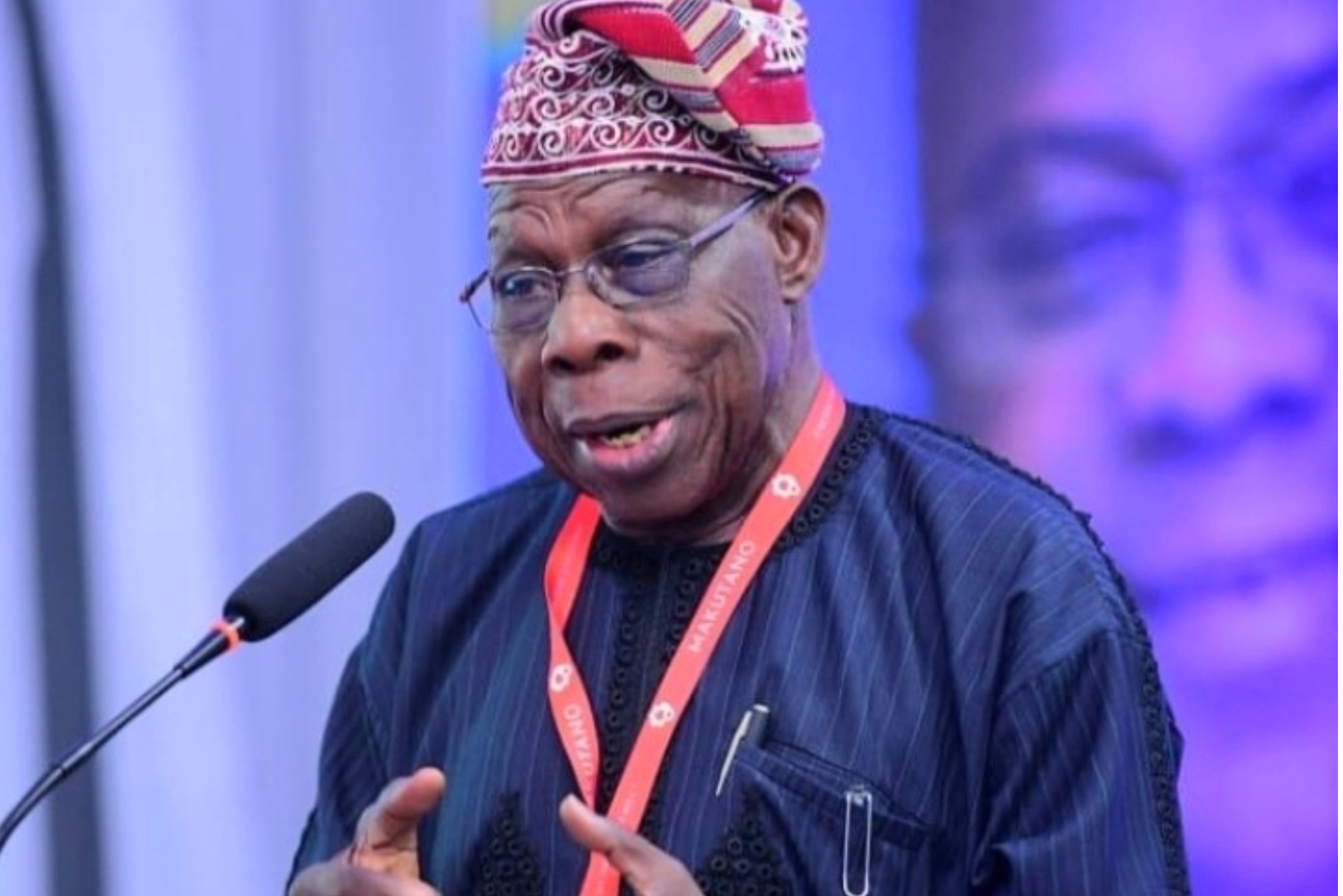
Former President, Chief Olusegun Obasanjo, has said that at 89 years, he won’t die anytime soon.

He condemned those circulating a fake letter in which he was purportedly speaking about his death, saying they were only wasting their time because “I dey Kampe.”

The former president disclosed this on Wednesday while delivering a colloquium titled “Burden and Blessing of Leadership: Reflections from Global Africa to the World” held as part of the ceremonies lined up to mark his 89th birthday in Abeokuta.

Obasanjo was born on March 6, 1937.

The former president said at 89 years he had no doubt that God did not make a mistake to keep him alive and reasonably healthy at his age.

He slammed those wishing him dead, saying he would remain on the earth surface agile and healthy for as long as his Creator wanted.

“For my final note in this address, I want to point your attention to the work of some never-do-well.

“They publish and circulate a fake paper credited to me that I am writing, giving notice of my death, pafuka.

“That is their wish and surely not God’s wish for me. God has assured me that He has more for me to do on earth, and He has given me the wherewithal to do it.

“And those who wish otherwise are going to be dealt with by God Himself. I dey kampe as usual,” the former President said.

Earlier, the former President had lamented the leadership crisis that he said had, for decades, stifled Africa’s development, growth, and economic prosperity.

“Africa is not a problem to be managed but a promise to be fulfilled through honest, courageous, selfless, incorruptible and transformational leadership,” he said.

See also  The People Are Suffering, But Their Pastors Are Living Large! Questions About Wealth, Faith and Accountability

He explained that genuine leadership carried immense burdens, citing his own incarceration and near execution under the military junta of the late Gen Sani Abacha as part of that burden.

Highlighting Africa’s unrealised potential, he said, “By every measure of natural endowment, Africa should be a continent of prosperity, stability, peace, security and global influence.

“Instead, a major part of the continent remains a theatre of preventable disease and suffering, starvation, conflict, insecurity and poverty.”

Obasanjo identified leadership failure, not geography or history, as the primary cause.

“The primary cause is the failure of those entrusted with power to lead for the people and serve them rather than against them; to build institutions rather than subvert them; to welcome accountability rather than flee from it, to ensure equity and justice rather than enthrone injustice, inequality and inequity.”

He warned that many leaders arrive with promises but soon govern for personal or familial gain, undermine democracy, and erode institutions.

“The same young reformer who promised accountability begins to silence the press, harass the judiciary, and intimidate civil society.

“All institutions become perverted only to serve the interest of the leader, his family, political accomplices and business interests,” he said.

To close the leadership gap, Obasanjo stressed the need for leadership formation, not just training.

“We must invest not only in teaching leaders what to do, but in forming leaders who are constituted and imbued with attributes and values to do the job the right way,” he said.

The former President urged young Africans to take democracy seriously and commit to governance that is accountable, transformational, transparent, and oriented toward the common good.

See also  US relaxes visa policy for World Cup travel; read details

“A continent that fails its youth does not merely waste a generation; it plants the seeds of instability that will haunt the next several generations,” he said.

Reflecting on personal leadership experiences, Obasanjo described the loneliness and moral weight of decision-making, from commanding troops in the Nigerian Civil War to serving as Nigeria’s President from 1999 to 2007.

“The loneliness I speak of is the loneliness of final decision… your decision will affect millions of lives. That weight settles on one pair of shoulders – the leader’s shoulders,” he explained.

“I remember a few days before the Nigerian Civil War ended in January 1970. I was commanding the Third Marine Commando Division.

“My troops were positioned for the final push. Hundreds of thousands of Igbo civilians were trapped, starving, dying. On one side was the imperative of ending the war quickly to stop further suffering.

“On the other was the risk that a military advance would deepen the humanitarian catastrophe. No textbook told me what to do. No senior officer was going to make that call. It was mine alone. I made it. We saved lives by not shelling Owerri.  History has rendered its verdict,” he said.

He stated that a leader also carried the burden of being the repository of other people’s hopes — hopes that are often larger than any human being can satisfy.

Obasanjo said that “When I was elected President in 1999, the Nigerian people had endured years of military dictatorship, economic stagnation, and institutional decay.

“They did not elect a president, some of them thought; they elected a miracle performer. And when the miracle did not arrive in full measure overnight — as it never can — I could hear the murmurs of some of them. This is the burden: to be elevated by hope and measured by time, often simultaneously.

See also  Lamido, Turaki, Makarfi lead PDP chairman race

The former President said that with leadership also comes the burden of principle, adding that “True leadership requires the willingness to hold a position when it is unpopular, to say no when yes would be more convenient, to name a truth that powerful interests wish suppressed.

“This costs friendships. It costs alliances. It sometimes costs your freedom — as I learned in the prison under Sani Abacha, where I was held for three and a half years, tried before a kangaroo tribunal, and very nearly executed.”

He also highlighted the blessings of leadership, citing achievements such as Paris Club debt relief and the establishment of the Economic and Financial Crimes Commission to recover stolen public funds.

“The blessing of having done the right thing when doing the wrong thing would have been easier. That is the first blessing of leadership: the opportunity for moral self-definition. Not who others say you are,” he said.

On his personal well-being, Obasanjo affirmed that he remained strong at 89 and condemned those spreading false news of his death.

“God has assured me He has more for me to do on earth, and He has given me the wherewithal to do it. I dey kampe as usual,” he added.

punch.ng

FOLLOW US ON:

FACEBOOK

TWITTER

PINTEREST

TIKTOK

YOUTUBE

LINKEDIN

TUMBLR

INSTAGRAM

Continue Reading
Click to comment

Leave a Reply

Your email address will not be published. Required fields are marked *

Lifestyle

Iyabo Ojo apologises after Ogun monarch snubs handshake, read details

Published

on

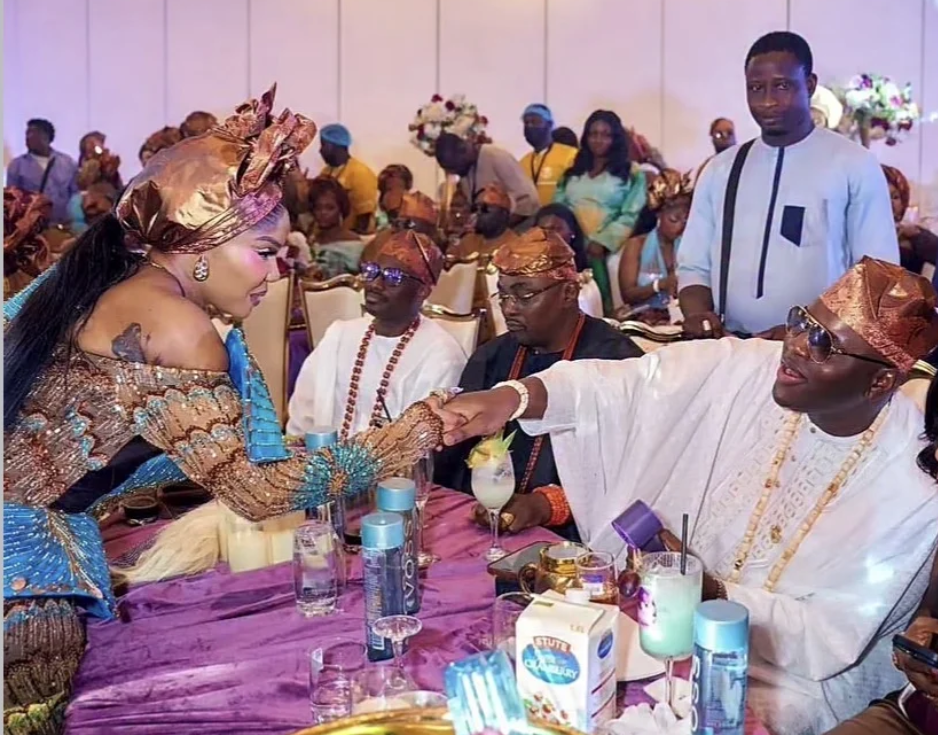
Nollywood actress, Iyabo Ojo, has apologised after a viral video showing a traditional ruler declining her handshake at an event went viral on social media.

Ojo, in a post shared on her Instagram page on Wednesday, said she did not know the individual was a monarch when she approached the table where he and other traditional rulers were seated.

The incident occurred at the 10th wedding anniversary celebration of socialite Mummy Glee and her husband, Mr Still, where Ojo was seen approaching a table occupied by traditional rulers and extending her hand in greeting.

The video showed the actress shaking hands with two of the monarchs, while the Olu of Orile Kemta, Oba Adetokunbo Tejuosho, did not accept her handshake. She then moved on to greet another monarch seated beside him.

Explaining the circumstances surrounding the encounter, Ojo said she had initially been seated when someone informed her that people at the table were sending their greetings.

She said she recognised HRM Oloto, whom she described as a brother, and approached the table to greet him, believing the people seated there were friends.

“I was sitting pretty when someone came to tell me they sent their greetings from that table. When I looked towards that direction and saw HRM Oloto, I said, ‘Ah, okay, that’s my brother, let me go greet him.’

“When I got there, I just greeted all of them because I thought they were friends. I never knew the said person was a king,” she said.

The actress apologised for any offence caused by her action, insisting that she had no intention of disrespecting the monarch or his culture.

See also  Birds of a Feather: Does Your Circle Reflect Who You Really Are?

“Honestly, I am very sorry if I caused any offence. I meant no disrespect to his throne and culture. Henceforth, I will be very mindful,” she said.

Ojo also explained that she was accustomed to greeting people with handshakes and hugs, adding that she would be more conscious of the practice going forward.

“I have a bad habit of shaking and hugging people. I am trying to reduce the hugging. I guess I will also reduce the handshakes.

“We learn every day. I meant no disrespect. It’s all love from this side,” she added.

Source: punchng.com

FOLLOW US ON:

FACEBOOK

WHATSAPP CHANNEL

TWITTER

PINTEREST

TIKTOK

YOUTUBE

LINKEDIN

INSTAGRAM

Continue Reading

Lifestyle

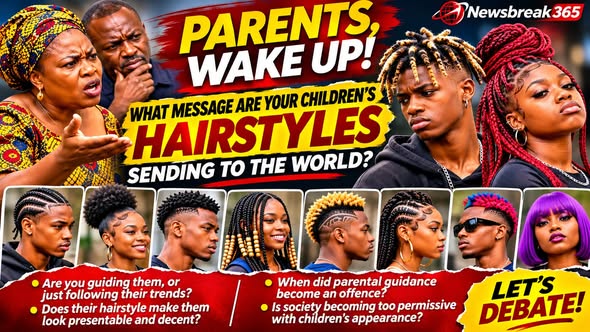
PARENTS, WAKE UP! WHAT MESSAGE ARE YOUR CHILDREN’S HAIRSTYLES SENDING TO THE WORLD

Published

on

Are today’s parents losing control over how their children dress, groom themselves and present their appearance? Or has society simply become too sensitive to correct young people?**

This is a conversation every responsible parent should be willing to have.

Walk through schools, shopping centres and public spaces today, and you will notice how dramatically youth hairstyles have changed. From brightly coloured dreadlocks and unusual haircuts to heavily styled braids, extreme designs, dramatic extensions and unconventional hairstyles, young people are increasingly embracing fashion trends that attract attention.

But here is the uncomfortable question: **Are parents paying attention to the kind of appearance their children are developing, or are they simply allowing social media and peer pressure to make those decisions?**

There is nothing wrong with looking fashionable, embracing creativity or expressing personal identity. However, there is a difference between looking fashionable and understanding how to maintain a neat, appropriate and presentable appearance.

Unfortunately, some parents are so afraid of disagreeing with their children that they have abandoned their responsibility to guide them.

When did parental guidance become an offence?

When did correcting a child’s appearance become an act of oppression?

And when did following every fashion trend become more important than learning self-discipline, personal grooming and appropriate presentation?

**PARENTS, YOUR RESPONSIBILITY DOES NOT END WITH PROVIDING FOOD, CLOTHING AND SCHOOL FEES.**

You must also teach your children how to make sensible decisions, respect themselves and understand that not every popular trend deserves to be followed.

Children need guidance, not unlimited permission. They need parents who can explain the importance of personal presentation without humiliating them or destroying their confidence.

See also  US relaxes visa policy for World Cup travel; read details

At the same time, parents must understand that a person’s character cannot be judged by hairstyle alone. Neatness, good behaviour, responsibility and respect matter far more than fashion choices.

The real issue is not whether children should look like their parents’ generation. It is whether parents are actively teaching them the importance of grooming, good judgement and responsibility.

**THE BIG QUESTION FOR PARENTS AND SOCIETY**

Should parents have the final say over the hairstyles of their teenage sons and daughters?

Should children be free to choose any hairstyle they want, even when their parents strongly disagree?

Or are some parents allowing modern fashion trends to replace proper parental guidance?

This debate deserves honest answers, not emotional arguments.

**What do you think? Are today’s parents becoming too permissive, or should children have complete freedom over their hairstyles?**

Share your opinion. Your answer might challenge another parent’s way of thinking.

FOLLOW US ON:

FACEBOOK

WHATSAPP CHANNEL

TWITTER

PINTEREST

TIKTOK

YOUTUBE

LINKEDIN

INSTAGRAM

Continue Reading

Lifestyle

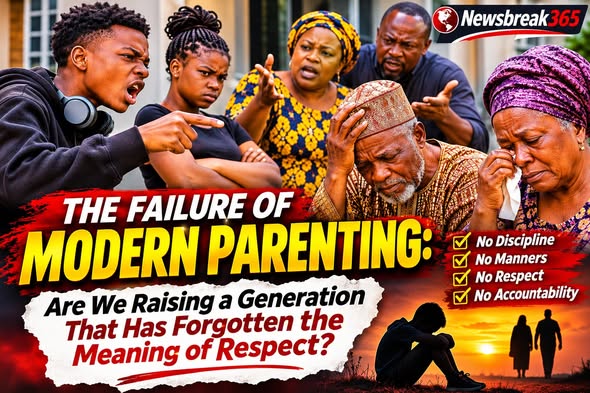
THE FAILURE OF MODERN PARENTING: ARE WE RAISING A GENERATION THAT HAS FORGOTTEN THE MEANING OF RESPECT

Published

on

When children lose their manners, disrespect their elders, reject discipline, and behave without accountability, parents must ask themselves a difficult question: Where did we go wrong?**

One of the most worrying developments in today’s society is the apparent decline in parental discipline, moral upbringing, and respect for elders among some young people.

Sadly, some parents are becoming more interested in defending their children’s unacceptable behaviour than correcting it. A child insults an elderly person, speaks rudely to adults, behaves arrogantly, or shows complete disregard for basic manners, and instead of receiving correction, the child receives protection from the very people responsible for teaching them right from wrong.

Is this the future we want for our society?

## Providing for children is not the same as raising them properly

Many parents believe that their responsibilities end with providing food, clothing, school fees, smartphones, expensive gadgets, and comfortable living conditions.

But parenting goes far beyond material provision.

A child needs more than an education to succeed in life. Children must also learn honesty, humility, self-control, patience, respect, responsibility, and consideration for other people.

You can send a child to the most expensive school in the world, but if that child has no respect for others, lacks discipline, and cannot behave properly in society, then something important is missing from their upbringing.

Academic qualifications cannot replace good character.

## When parents defend bad behaviour, they become part of the problem

Perhaps one of the biggest mistakes some parents make today is refusing to accept that their children can be wrong.

See also  20 NYSC kidnapped victims freed, police hunt abductors, read details

Instead of correcting disrespectful behaviour, they make excuses. Instead of teaching accountability, they blame teachers, neighbours, relatives, and society.

Some parents even become hostile towards anyone who attempts to correct their children.

What message does this send to the child?

It teaches them that they can behave however they want without consequences, provided their parents are willing to defend them.

A parent who constantly protects a child from correction may unknowingly be preparing that child for much bigger problems in adulthood.

Children need love, but love without guidance, boundaries, and accountability is not responsible parenting.

## Respecting elders should not become an outdated tradition

There was a time when children were taught to greet elders properly, speak politely, listen when adults were speaking, and understand the importance of good manners.

Today, these values appear to be receiving less attention in some homes.

Of course, respect must be mutual. Being older does not give anyone the right to abuse, intimidate, or mistreat younger people.

However, mutual respect should never become an excuse for children to insult, humiliate, or deliberately disrespect others.

Teaching children to respect people is not weakness. It is an essential part of preparing them for responsible adulthood.

## Society will eventually pay the price for irresponsible parenting

The children being raised today will become tomorrow’s parents, leaders, employers, professionals, and decision-makers.

If they grow up without discipline, accountability, compassion, and respect for others, what kind of society should we expect them to build?

We cannot continuously complain about disrespectful behaviour in society while ignoring the importance of moral education at home.

See also  My father’s death turned me to Lagos hawker – Gov. Umo Eno inspiring story

Parents must understand that raising children is not a competition to see who can provide the most expensive lifestyle. It is a responsibility to raise decent human beings who understand the difference between right and wrong.

## THE BIG QUESTION: ARE WE RAISING CHILDREN OR CREATING TOMORROW’S PROBLEMS?

Parents must stop confusing material provision with proper upbringing.

Buy your children the best clothes, give them quality education, provide comfortable homes, and support their dreams. But never forget to teach them discipline, humility, good manners, honesty, and respect.

A child who has everything materially but lacks good character has not received everything they need from their parents.

The uncomfortable truth is that society cannot successfully repair what irresponsible parenting continues to destroy.

The responsibility begins at home.

**WHAT IS YOUR OPINION?**

Are parents becoming too protective of their children, even when those children display unacceptable behaviour? Or is society itself contributing to the decline in discipline and respect among young people?

Let’s have an honest discussion.

*Newsbreak365 – Speaking Up on Issues That Matter.*

FOLLOW US ON:

FACEBOOK

WHATSAPP CHANNEL

TWITTER

PINTEREST

TIKTOK

YOUTUBE

LINKEDIN

INSTAGRAM

Continue Reading

Trending