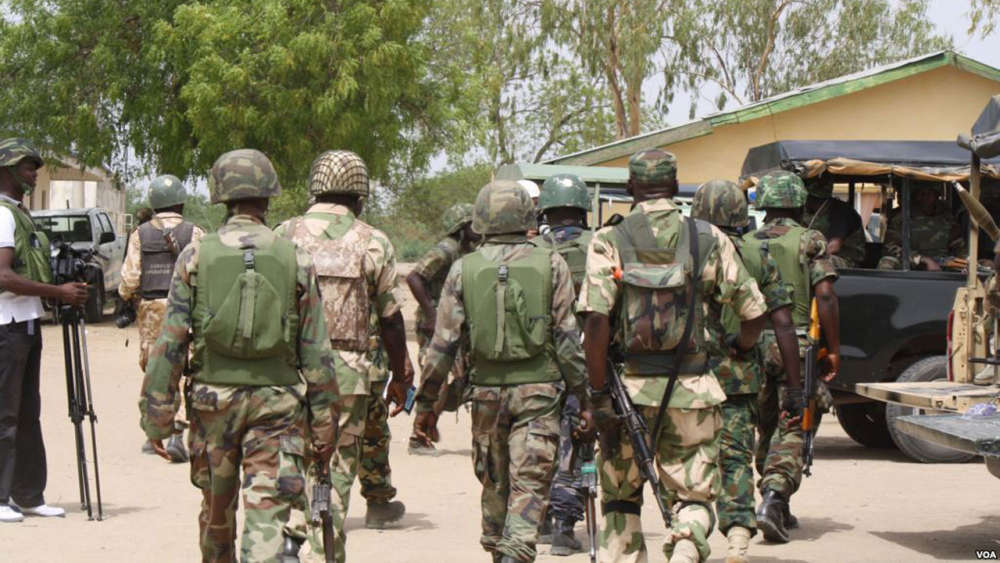
President Bola Tinubu on Sunday announced the donation of all his salaries since assuming office on May 29, 2023, to establish a dedicated welfare fund for wounded soldiers and families of fallen military personnel.
The President made the announcement on Sunday while commemorating his 74th birthday, directing the Accountant-General of the Federation to immediately establish a special account for the initiative.
“What I need to do on your behalf is to announce a special account to be created today from all the salaries that I’ve earned.
“The Accountant General should establish an account to fund those men and women who stand in harm’s way, who have lost husbands and wives,” Tinubu stated.
According to the most recent publicly available data by the Revenue Mobilisation Allocation and Fiscal Commission, the President’s monthly salary stands at N1,171,568.20, translating to an annual salary of N14,058,820.
Over the full four-year term from May 29, 2023, to May 29, 2027, this would amount to approximately N56.2m in basic salary.
However, presidential remuneration includes additional allowances such as hardship allowance (50 per cent of basic salary) and constituency allowance (250 per cent of basic salary), among others.
When statutory allowances are factored in, a rough estimate puts the total annual compensation at approximately N30,525,000, which would bring the four-year donation to approximately N122.1m.
Tinubu emphasised that the fund will provide targeted support separate from existing insurance or military welfare programmes.
“Create a special funding for them, regardless of what insurance or what military or the armed forces might have been doing,” the President said.
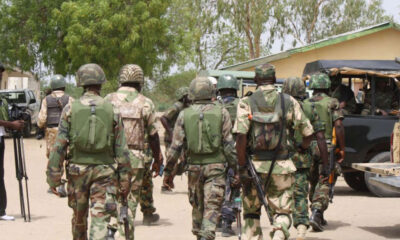
The initiative, described as rooted in “a solemn national obligation,” will support injured service members, widows, widowers, and children of military personnel who lost their lives in service to Nigeria.
The President specifically highlighted support for soldiers who suffered severe injuries in the line of duty.
“Those who might have lost limbs or arms, we will be able to give them hope and a better promise for the future. Nigeria will overcome this problem of insecurity,” he declared.
He called on state governors, members of the National Assembly, the private sector, his friends, and well-wishers to contribute to the fund.
“Let’s put our hands together to donate, especially to that account,” Tinubu urged governors and lawmakers present.
In a statement signed by Tinubu’s Special Adviser on Information and Strategy, Bayo Onanuga, the Presidency described the President’s donation of nearly three years of salaries as “seed funding” to reinforce his resolve that those who have borne the cost of Nigeria’s peace and security are not forgotten.
The statement emphasised that supporting members of the Armed Forces and their families “is not an act of charity, but a duty that all must fulfil.”
“President Tinubu emphasised that the initiative is rooted in a solemn national obligation to care for those who stand in harm’s way and the families who carry the burden of their sacrifice, irrespective of insurance programmes available to members of the armed forces,” the statement noted.
The Presidency stated that details of the fund would be made available in due course.
The President expressed confidence in Nigeria’s ability to defeat insurgency through continued investment in military equipment and national unity.
“We will invest in armament to defeat the insurgents. We will put it together with you, this type of unity, I’ve not imagined it myself. But I thank all of you,” Tinubu stated.
He reaffirmed his administration’s commitment to strengthening the welfare of military personnel and ensuring that their service to the nation “is matched with dignity, care, and sustained support.”
The announcement comes as the Armed Forces continue to battle multiple security challenges, including Boko Haram and Islamic State West Africa Province insurgencies in the North-East, banditry in the North-West and North-Central regions, and various forms of criminality across the country.
Thousands of military personnel have been killed or wounded in action over the past decade, with many families left without adequate support despite existing military welfare schemes.
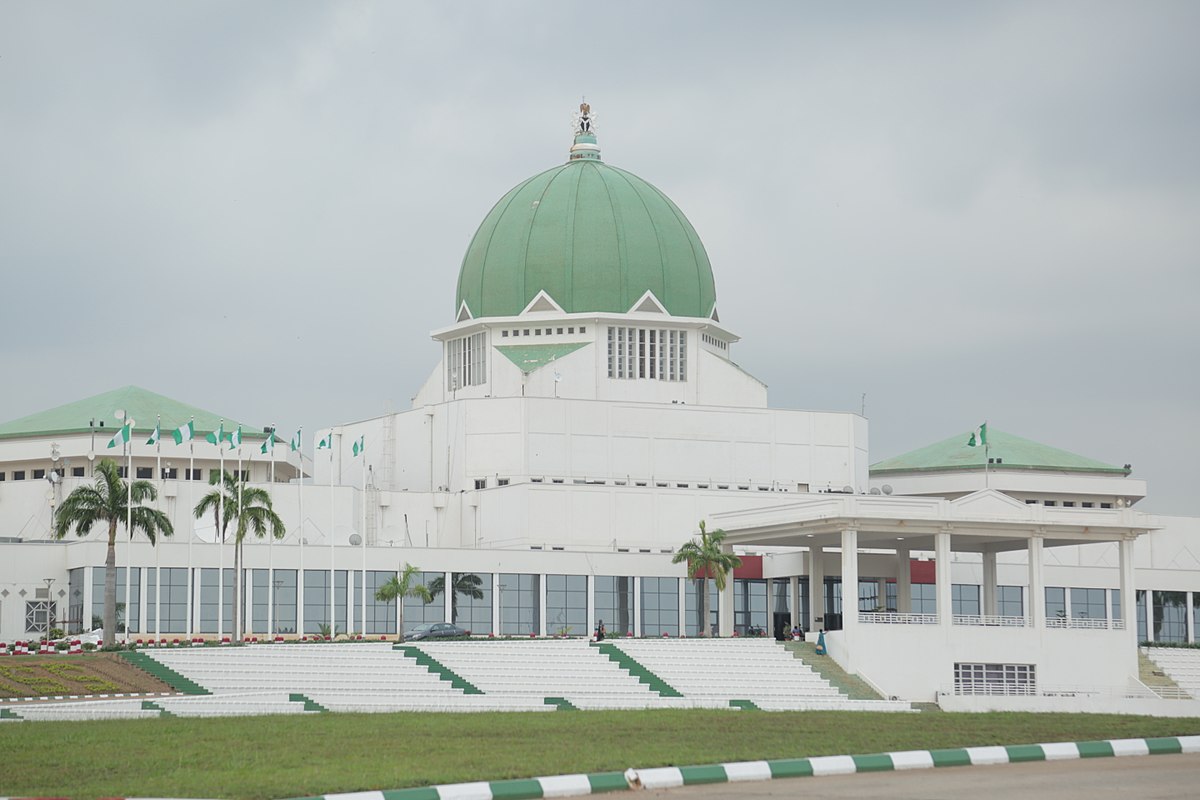
The President made his announcement after Islamic leaders led special prayers at the National Mosque, Abuja, to mark his 74th birthday.
Speaking with State House correspondents after the prayer at the National Mosque, Tinubu assured Nigerians that the country would overcome current challenges, including electricity supply, transportation cost hikes, and expected inflation.
He acknowledged the difficulties facing the nation while expressing confidence in Nigeria’s resilience.
“We are challenged. There is the problem of electricity, there’s a problem of transportation hike, and there’s a problem of expected inflation as a result of the war that we have no control over.
“But we will overcome it. We are a resilient nation that is very, very committed and resilient to the way of Almighty God; we will overcome all hardship,” Tinubu stated.
The President described his 74th birthday as “a solemn day, a day to give thanks to Almighty Allah, sparing our lives and making things easy for me, family and all the team members.”
He attributed the nation’s current difficulties to external factors beyond Nigeria’s control.
“We are going through a very difficult period, which is not our own making, as a result of the War in the Middle East.
“We pray to Almighty Allah to bring peace and stability to the rest of the world,” the President said.
Over 300 Islamic scholars from various sects across Nigeria participated in the prayers, which included the recitation of the complete Holy Quran 111 times.
The Sultan of Sokoto, represented by the Etsu Nupe, Yahaya Abubakar, alongside other prominent traditional rulers, led the special prayers focusing on seeking Allah’s guidance, wisdom, good health, and strength for the President.
The Sultan representative had earlier led prominent traditional rulers and Islamic scholars in special prayers for the President at the National Mosque.
The Etsu Nupe described the gathering as a solemn spiritual exercise rather than a celebration, emphasising the need for continuous prayers for national peace, unity, and development.
He appealed for government support towards the maintenance and welfare needs of the National Mosque.
The Emir of Keffi, Chindo Yamusa, commended the President’s efforts to address economic challenges and support states, noting that interventions in salary payments and infrastructure development were already yielding benefits, particularly in Nasarawa State.
Islamic scholars from various sects across Nigeria offered prayers for the President’s well-being and for the country’s stability.
The birthday prayers drew governors, ministers, politicians, and worshippers from across the country to the National Mosque.
Earlier, in a message, Tinubu expressed hope for a better Nigeria on his 74th birthday, declaring that he sees “a glimmer of light at the end of the tunnel.”
He asserted that the sacrifices faced by Nigerians as a result of reforms by his administration would not be in vain.
Tinubu has consistently maintained that his administration’s reform agenda is yielding results, citing achievements including infrastructure development, tax reforms, declining inflation, and improved investor confidence.
He pledged that his administration is determined to confront current challenges, expressing confidence that, with continued support from Nigerians, the country will overcome.
He said, “We are determined to confront some of the challenges we face today, and with your continued support, we shall overcome.
“As I mark this special day, I am reminded of the challenges we’ve faced since we initiated our reforms. I’m glad that our sacrifices have not been in vain, as we can see a glimmer of light at the end of the tunnel, despite the temporary setback caused by the ongoing Middle East crisis.”
The President said he was convinced that reforms are aimed at building a brighter future for citizens and generations to come.
“As we march towards the third anniversary of our administration, it is my deepest conviction that we shall succeed in building a brighter future for our citizens and future generations,” Tinubu declared.
He emphasised that credit for positive outcomes achieved by his administration belongs to the collective effort of Nigerians.
“The credit for the positive outcomes we have achieved does not belong solely to me, our Renewed Hope team, or our government. We achieved the gains together,” he stated.
He called for continued collaboration to build a stronger, prosperous, and more resilient nation.
“Let us continue to work together to build a stronger, prosperous and more resilient nation that will make Nigeria the pride of Africa,” he noted.
Tinubu particularly thanked Nigerians for the plethora of birthday messages showing love and solidarity.
Vice President Kashim Shettima, who attended the prayers, described the occasion as “a celebration of service to humanity, a celebration of rigidity, of resilience, of commitment to the common good.”
He said, “We are wishing him, on behalf of a grateful nation, many more years of military service to humanity.”
Speaker of the House of Representatives, Tajudeen Abbas, described it as “a day of history, a day of joy” for the National Assembly.
“If you look at the mortality rate, the average in Nigeria, you will know that Mr President is an exceptionally lucky person to reach the age and to reach the age at the time when the country needs him the most,” Abbas said.
The Speaker prayed that “the best of him is yet to come, that the future, his future, and the future of our motherland will continue to be better and more fulfilling.”
Chairman of the Nigeria Governors Forum and Kwara State Governor, AbdulRahman AbdulRazaq, declared that in the last three years of the administration, Nigeria has “surpassed what has been done in the last 10 years before that, because of investment and infrastructure.”
He said, “Policies are working. Farmers are even complaining that the price of food is going down in the market, and that was due to the investments in agriculture, inputs, seedlings, and irrigation.”
Governor Hope Uzodimma of Imo State praised the President’s leadership, stating that “our country has gradually changed for the better” due to economic reforms and political direction.
He disclosed that the party received the governors of Adamawa and Zamfara states into the APC fold last week.
“This new appeal for our party is a result of the achievements and the leadership style of President Bola Ahmed Tinubu.
“Now is the party to beat, not only in Nigeria, anywhere. So it’s so formidable that we are all happy and excited,” Uzodimma stated.
Conveying the President’s appreciation, Deputy Senate President Barau Jibrin thanked religious leaders, government officials, and attendees for their prayers and support.
He said President Tinubu remained committed to national unity and development, stressing the importance of continued prayers for the success of his administration.
The event concluded with Professor Imam Ibrahim Maqari offering a prayer for lasting peace, prosperity, and stability in Nigeria.
A separate prayer session, organised by the Arewa Think Tank, was held in Kaduna in honour of the President.
In attendance were former Kaduna State Governor, Alhaji Muktar Ramalan Yero, and Senator Tijjani Kaura Tafida, who represented Senator Abdulaziz Yari.
Also present were the Emir of Wase, Alhaji Mohammed Haruna; representatives of Kaduna State Governor Uba Sani; Governor Idris Nasir of Kebbi State; and Comrade Issa Aremu, Director-General of the Michael Imoudu National Institute for Labour Studies.
Govs, others felicitate
Ekiti State Governor, Biodun Oyebanji, described Tinubu as a genuine lover of the people, a pathfinder, and a selfless leader committed to sustainable development.
In a statement by his Special Adviser on Media, Yinka Oyebode, on Sunday, Oyebanji hailed the President for dedicating his life to the defence of democracy and service of his fatherland, noting the sacrifices he had made.
The governor said, “President Tinubu is a man of history with many golden chapters as a professional in the corporate world, a boardroom guru, astute politician, pro-democracy activist, and the arrowhead of a movement that fought for the restoration of democratic rule in the country.”
Oyebanji described the President as an uncommon gift and a national treasure, adding, “Tinubu’s footprints remain bold at the subnational and national levels—as a senator in the Third Republic, two-term governor of Lagos State, and currently the President and Commander-in-Chief, who continues to lead and inspire citizens with courage and impactful policies and reforms.”
Also, Kano State Governor, Abba Yusuf, in a statement by his spokesperson, Sunusi Dawakin-Tofa, described the President’s birthday as an opportunity to celebrate his leadership, commitment, and dedication to the nation.
The governor commended Tinubu for his vision and efforts toward strengthening Nigeria’s unity, stability, and socio-economic development.
He noted that the Renewed Hope Agenda of the administration continues to inspire confidence among Nigerians.
Governor Dapo Abiodun of Ogun State also eulogised Tinubu as a courageous and focused leader whose selfless commitment to democracy is helping lay a solid foundation for a greater Nigeria.
The governor described Tinubu as a transformational leader guiding Nigeria toward progress and stability.
In a statement by his Special Adviser on Information and Strategy, Kayode Akinmade, Abiodun said the President’s extensive experience in both business and politics is evident in his administration’s policies and direction.
“President Tinubu remains at the forefront of efforts to consolidate democracy in our country,” Abiodun said, adding that his leadership continues to inspire confidence across the nation.
The governor further commended the administration’s economic reforms, particularly the removal of fuel and foreign exchange subsidies, describing them as “hard but necessary decisions” aimed at repositioning Nigeria’s economy.
He said these measures have contributed to more stable petrol pricing, a predictable foreign exchange environment, and improved national reserves.
Governor Nasir Idris of Kebbi State described Tinubu’s years in office as “well-spent” and marked by purposeful leadership.
In a statement on Sunday, the governor lauded Tinubu’s leadership style and expressed optimism about the country’s direction under his administration.
“Mr President is a man of integrity and honesty. May Almighty Allah grant him more wisdom in piloting the affairs of this country,” Idris said.
He commended the administration’s Renewed Hope Agenda, noting that it has begun to yield tangible results across the country.
The leader of the pan-Yoruba socio-political organisation, Afenifere, Pa Reuben Fasoranti, congratulated the President, saying that he had demonstrated “uncommon courage and wisdom in governance.”
Fasoranti, according to the statement issued by the group’s National Publicity Secretary, Jare Ajayi, in Ibadan, the Oyo State capital, said, “It’s a thing of joy that our President is 74 today. Formerly as governor of Lagos State and now as President of Nigeria, he has exhibited uncommon wisdom, remarkable courage, profound vision and exemplary leadership.
“Given the situation of things in life these days, it takes the grace of God to be 70, which is the Biblical age. At 74, it means that our President has even added four years to the Biblical age of 70.
“By the good grace of the Almighty God, he will live for many more decades in sound health, robust stamina and enhanced wisdom and courage to continue to steer the affairs of our dear country in the right course, amen. Happy birthday.”
The Chairman, Senate Appropriations Committee, Solomon Adeola, in a statement released by his media aide, Kayode Odunaro, described Tinubu as his “father, mentor, leader and benefactor.”
He described the President as an uncommon leader whose life has been defined by courage, vision, unparalleled wisdom, and an unwavering commitment to the progress of the country.
“You remain a pillar of progressive politics and a source of inspiration to generations. In the annals of Nigeria’s history, you occupy copious pages of positive and historic development,” he stated.
The senator representing Oyo South, Sharafadeen Alli, described Tinubu as a visionary leader whose resilience continues to shape Nigeria’s democratic journey.
Alli lauded the President’s lifelong commitment to public service, noting that his sacrifices and strategic leadership have been instrumental in Nigeria’s political and economic development over the decades.
He said Tinubu’s role in strengthening democratic institutions, especially during critical periods, earned him widespread respect within and outside the country.
He commended the President’s reform-driven agenda, expressing confidence that his policies would ultimately reposition Nigeria for sustainable growth, stability, and prosperity.
Senator Iyabo Obasanjo, a governorship aspirant on the All Progressives Congress platform in Ogun State, praised Tinubu’s leadership and commitment to national development.
In a statement on Sunday, Obasanjo described Tinubu as “a courageous and visionary leader whose dedication to repositioning Nigeria’s economy and infrastructure is beginning to yield visible results across the country.”
She particularly commended the administration for the ongoing construction, rehabilitation, and expansion of federal road networks, noting that Ogun State had witnessed significant improvements under the President’s focused leadership.
Obasanjo said, “The renewed attention to critical road infrastructure under President Bola Tinubu has enhanced connectivity, boosted economic activities, and eased the daily movement of people and goods within the state and beyond.
“Your administration’s focus on infrastructure development, especially ongoing federal road projects in Ogun State, is commendable and impactful.”
A member of the House of Representatives representing Yewa North/Imeko-Afon Federal Constituency, Gboyega Isiaka, described Tinubu as a “colossus of Nigerian democracy.”
He described Tinubu as a detribalised leader who has consistently demonstrated vision, courage, and resilience.
“From your formative years as a mobiliser of democratic forces during our nation’s darkest hours, through your tenure as governor of Lagos State where you reimagined what subnational governance could achieve, to your current service as our Commander-in-Chief, you have demonstrated an uncommon capacity to build institutions and nurture men and women of substance who continue to serve our nation with distinction,” Isiaka said.
The Oyo State APC said Tinubu’s performance in the last 34 months shows he is the right person to lead Nigeria beyond 2027.
The APC, in a congratulatory message, said Tinubu had demonstrated the capacity, competence, and character required to fix the country and set it on the path of greatness, stability, and prosperity.
In a statement by the party’s Publicity Secretary, Olawale Sadare, Oyo APC reiterated its commitment to the second-term project and full realisation of Tinubu’s Renewed Hope Agenda.
The Alaafin of Oyo, Oba Akeem Owoade, and APC chieftain in Oyo State, Rilwan Akanbi, also felicitated Tinubu on his birthday.
The Alaafin, through his Director of Media and Publicity, Bode Durojaiye, described Tinubu as a defining figure and mentor of a new generation of leaders.
Owoade said, “Tinubu is not flawless, and he might not be universally loved. But his political story is a phenomenon worth studying.
“In a democracy where many fade after one term, he has remained relevant for a quarter of a century. That endurance is no accident. It is proof that leadership, when matched with vision and structure, can outlast storms.
“In contemporary Nigerian history, the President is recognised for his resilience, political acumen, and efforts toward national transformation.
“President Tinubu’s story is not just political history; it is a study in structure, loyalty, and resilience. In the Fourth Republic, where many political ‘giants’ rose and fell quickly, Tinubu has been the constant, more like the builder whose network has outlived terms, quarrels, and federal pressure.”
Owoade hailed the President’s bold reforms aimed at economic stability, including efforts to improve fiscal discipline, reduce debt servicing, and increase government revenue.
He also commended road rehabilitation designed to stimulate commerce.
Senator Akanbi, who represented Oyo South Senatorial District between 2015 and 2019, urged Nigerians to pray for the administration to rid the nation of criminality.
The Senior Special Assistant to the President on National Assembly Matters, Ibrahim Olarewaju, said Tinubu was laying a foundation for future success.
Olarewaju said the administration had successfully transitioned Nigeria from a phase of stabilisation to rapid economic acceleration.
He said, “The President’s vision, anchored by the ambitious N58.18tn 2026 ‘Budget of Acceleration,’ is already yielding tangible dividends across critical sectors, including the ‘Renewed Hope Cities and Estates’ programme, the Ward Development initiative, and the Nigeria Education Loan Fund that has empowered millions of students.
“Working under President Tinubu’s tutelage as a legislative aide has been a masterclass in governance and resilience. His ability to make tough, necessary decisions today to secure the prosperity of tomorrow is a testament to his status as a world-class statesman.
“My time serving in this administration has deeply impacted my approach to public service, teaching me that true leadership is about courage, consistency, and a relentless focus on the common man.”
The Nigeria Union of Pensioners also congratulated Tinubu on reforms in the pension sector, while urging further action to improve retirees’ welfare across the country.
In a statement on Sunday, the National President of the union, Godwin Abumisi, noted that recent policy interventions under Tinubu’s administration had helped address long-standing challenges in Nigeria’s pension system, particularly delays in payments and accumulated arrears.
He described the approval of a N32,000 monthly pension increase as a “bold and compassionate decision” providing relief to retirees struggling with rising inflation and cost-of-living pressures.
The NUP president also highlighted the Federal Government’s approval of about N700bn to clear outstanding liabilities under the Contributory Pension Scheme, alongside N57bn for retirees under the Defined Benefit Scheme, describing it as a “landmark intervention.”
“These interventions are addressing the backlog of accrued rights owed to CPS retirees, many of whom endured years of uncertainty and hardship after meritorious service,” Abumisi said.
“Nigeria operates a dual pension structure, with the CPS introduced in 2004 to replace the older DBS in a bid to ensure sustainability and reduce government liabilities. However, implementation challenges, funding gaps, and delays in remittances have continued to affect retirees, leading to repeated calls for reform,” he added.
Abumisi further commended the government for clearing arrears owed to pensioners, particularly those in government parastatals, and for maintaining more consistent monthly payments.
“We acknowledge the sustained prompt payment of pensions and your timely interventions in resolving delays, which demonstrate responsive and people-centred leadership,” he added.
The union also welcomed the President’s approval for the payment of gratuities to retired workers, noting that many retirees had waited years to receive their entitlements.
However, the NUP urged the President to ensure that state governments implement approved pension increases to extend benefits to retirees at the subnational level.
“While we commend your efforts, we respectfully urge Your Excellency to prevail on state governors to fully implement all approved pension increases, so that pensioners at the state level can equally benefit,” Abumisi stated.
The management of DICON-D7G, in a statement by CEO Osman Chennar, said the President’s leadership continues to inspire confidence and renewed hope among Nigerians.
Chennar particularly acknowledged Tinubu’s role in revitalising the Defence Industries Corporation of Nigeria and supporting the establishment of the company’s joint venture, which is already boosting local capacity in defence manufacturing.
According to him, the administration’s policies are driving production, maintenance, and repair of military equipment within the country, reducing dependence on foreign imports.
He noted that the renewed focus on indigenous capability is gradually repositioning Nigeria’s defence architecture for technological advancement and strategic independence.
Chennar added, “Your commitment to indigenous capability is reshaping Nigeria’s defence sector and positioning our nation for technological advancement and strategic independence.”
Additional reports: Deborah Tolu-Kolawole, Israel Bulus, Animasahun Salman