Connect with us

Politics

Opposition parties weigh election boycott ahead of 2027

Published

on

Opposition parties have started pushing for boycott of the 2027 general elections over alleged bias by the Independent National Electoral Commission and purported moves to make President Bola Tinubu the sole contender at the polls.

The Taminu Turaki-led faction of the Peoples Democratic Party and the National Chairman of the African Action Congress, Omoyele Sowore, urged political parties to boycott the elections.

The spokesperson for the African Democratic Congress, Bolaji Abdullahi, said the option would be considered by the party leadership.

In an interview with Sunday PUNCH, the National Publicity Secretary of the Turaki faction, Ini Ememobong, said the boycott was necessary to prevent opposition parties from legitimising a “compromised and predetermined” process.

He accused INEC and the All Progressives Congress of deliberately undermining opposition parties to pave the way for an uncontested victory.

INEC had derecognised the Senator David Mark-led National Working Committee of the ADC, a development that intensified leadership disputes and deepened divisions within opposition ranks.

Ememobong questioned the timing of INEC’s planned activities, including the clean-up of the voter register and monitoring of party records, warning that such measures could be used to deregister opposition parties.

He said, “All opposition parties are in a precarious situation. It is either we find a platform or collectively pull out and allow them to have their fun.

“The only thing that can be gleaned from INEC’s disposition is that it wants to foist a coronation, an uncontested election in 2027. The opposition must think outside the box. This regime is determined to impose itself on Nigerians whether they want it or not. We must adopt unconventional but legal strategies to apply pressure. If they don’t yield, we boycott early to save the nation unnecessary costs.

“Let us not allow them to embezzle over N800bn in the name of an election. If the President does not want to stand, we don’t need to spend the money. Let them organise a coronation, but we will not legitimise an illegitimate process. The faster we decide our course, the better. If PDP, ADC, and all critical politicians boycott, the President may rethink, or the election will proceed and the international community will respond.”

See also  Dapo Abiodun reveals that Nigeria needs 554,353 personnel for state police, read details

Speaking on the boycott, Sowore said participation in an election lacking fairness would be pointless.

“Political parties met with INEC, and the position of every political party is that these guys are not planning an election. They are doing things so there is no room for any other party to compete,” he said.

He noted that opposition parties should start discussing a collective withdrawal if the situation did not improve.

“If we can’t have an atmosphere for a free, fair and credible election, why are we wasting time participating? If all the political parties are serious, we should be discussing a boycott now,” Sowore said.

Speaking with Sunday PUNCH, the ADC National Publicity Secretary, Abdullahi, said the party understood the reasons for the call.

“Boycotting the election is a position that will have to be considered by our party leadership, but we understand why they (Turaki faction) are making that demand. We are going to vacate the space for APC, but we are convinced that we will win this election regardless of what they (APC) do,” Abdullahi said.

Opposition in crisis

Major opposition parties are battling internal crises that critics say could weaken them ahead of the 2027 elections.

The PDP crisis, rooted in unresolved disputes from the 2023 presidential elections, has left the party split into two factions: one led by Taminu Turaki, backed by governors Seyi Makinde (Oyo) and Bala Mohammed (Bauchi), and another led by Abdulrahman Mohammed, who is loyal to the Minister of the Federal Capital Territory, Nyesom Wike.

The ADC has also been embroiled in a leadership dispute since 2025, after Senator David Mark assumed leadership of a new National Working Committee in July that year.

The conflict stems from disagreements over the tenure of former National Chairman Ralph Nwosu, which ended in August 2022.

While Nwosu participated in the 2025 transition, his deputy, Nafiu Gombe, insisted he should serve as acting National Chairman.

Rival factions subsequently laid claim to the party’s leadership, triggering multiple court cases before the Appeal Court and the Supreme Court, raising doubts about the party’s readiness for 2027.

The Labour Party is also caught in a protracted leadership crisis, marked by conflicting court rulings and rival petitions.

The situation reached a turning point when a Federal High Court in Abuja ordered INEC to recognise the Nenadi Usman-led caretaker committee as the legitimate leadership.

See also  Ekiti Decides: Security forces mobilise as INEC moves sensitive materials today

Justice Peter Lifu, delivering the judgment, ruled that the tenure of the Julius Abure-led National Working Committee had expired, declaring the Usman-led committee “the only valid authority” pending a national convention.

While the Usman-led committee anchored its legitimacy on the ruling and prior judicial pronouncements, the Abure faction rejected the decision and has filed an appeal, arguing that “no court has the power to appoint leadership for any political party.”

The internal crisis in the NNPP has also deepened, with rival factions at the national and Kano State levels trading accusations of external interference.

At the federal level, the party is split between supporters of former presidential candidate and ex-Kano governor, Senator Rabiu Kwankwaso, and a faction led by founding member Boniface Aniebonam.

APC slams opposition parties

Reacting, the National Secretary of the APC, Senator Basiru Ajibola, questioned the credibility of the opposition.

He said, “Which opposition? Is it people who cannot even organise their party affairs creditably and within the law and acceptable democratic ethos? It is part of the democratic rights of any political party to participate or boycott elections. APC and our president cannot be gaslighted by baseless and mischievous allegations.”

Ajibola further described allegations against INEC as unfounded, saying they reflected lack of seriousness and preparedness for democratic contest within the ambit of existing laws.

He took a swipe at the opposition’s electoral performance, and noted that they had fared poorly in elections conducted since 2023, including the FCT election and recent bye-elections in Kano and Rivers.

NNPP rejects boycott, CSOs worry over calls

Meanwhile, the New Nigeria Peoples Party and civil society organisations have warned that a move to boycott elections could undermine the democratic process and push the country towards a one-party system.

The NNPP Publicity Secretary, Dipo Johnson, said despite growing concerns over INEC’s recent decisions, the party would not support withdrawing from the polls.

“The NNPP shares stronger views because it is becoming clear that what was whispered is now beginning to look like the truth—that INEC is trying to ensure that only the APC will stand for the elections. But we will advise them to try to win through democratic means. Already, a non-democratic method has started.

See also  PCC inauguration: APC banks on Tinubu’s record for re-election, read details

“I don’t subscribe to boycotting the election, but I support something much harder than that because Tinubu and his party don’t even care if you boycott the election,” Johnson added.

A board member of Yiaga Africa, Professor Nnamdi Aduba, said concerns over the electoral process should be addressed, but the threat of a boycott may be exaggerated.

He criticised what he described as excessive judicial interference in political party affairs, noting that parties were voluntary organisations that should be allowed to operate independently.

“While the threat should be taken seriously and the government should keep its hands off, I think there is some grandstanding. It would be unhealthy if we begin to have a system dominated by a single candidate, and I don’t think that will happen.

He added, “The judiciary is handling issues in a way that risks giving the impression that the government is trying to weaken opposition parties. Political parties are voluntary organisations and the courts should only intervene in rare cases.”

Also speaking, the National President of the Centre for Anti-Corruption and Open Leadership, Debo Adeniran, said it was inaccurate to place the blame solely on the ruling party for the challenges facing opposition groups.

Adeniran noted that while a one-party state would be detrimental to Nigeria, there is no clear evidence that the country is heading in that direction.

“It is fashionable to say that the ruling party wants to frustrate the opposition, but even within parties like ADC, they know they made fundamental mistakes. It is not healthy for a country like Nigeria to gravitate towards a one-party state, but there is no sign that this is actually happening,” he said.

Adeniran attributed current difficulties largely to internal weaknesses within opposition parties and rejected calls for an election boycott.

“I don’t think anybody is undermining our democratic experiment, and there is no justification for any party to boycott the election,” he added.

punch.ng

FOLLOW US ON:

FACEBOOK

TWITTER

PINTEREST

TIKTOK

YOUTUBE

LINKEDIN

Continue Reading
Click to comment

Leave a Reply

Your email address will not be published. Required fields are marked *

Politics

SEE FULL LIST: Lagos, Rivers, 10 other states Tinubu may join APC rallies

Published

on

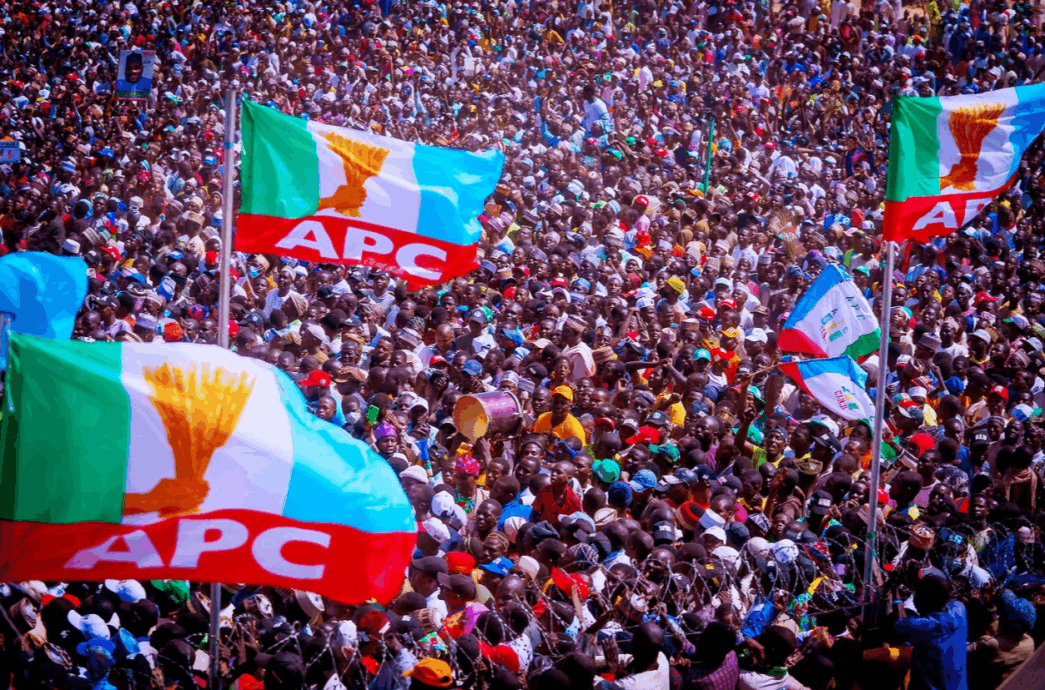
The All Progressives Congress has outlined a proposed nationwide campaign rally schedule covering the 36 states of the federation and the Federal Capital Territory ahead of the 2027 general elections.

The proposed campaign is scheduled to kick off in Kaduna on October 24, 2026, and conclude with a grand rally in Lagos on January 9, 2027.

The itinerary identifies 12 strategic locations where President Bola Tinubu is expected to join the party’s presidential campaign activities, with rallies planned across the country’s six geopolitical zones.

Here is the full list of the 12 states proposed for Tinubu’s presidential campaign appearances.

According to the proposed schedule, the 12 locations and dates are as follows:

1. Kaduna, Kaduna State — October 24, 2026 (Saturday)
2. Port Harcourt, Rivers State — November 7, 2026 (Saturday)
3. Jos, Plateau State — November 14, 2026 (Saturday)
4. Ibadan, Oyo State — November 21, 2026 (Saturday)
5. Maiduguri, Borno State — November 25, 2026 (Wednesday)
6. Enugu, Enugu State — November 28, 2026 (Saturday)
7. Bauchi, Bauchi State — November 29, 2026 (Sunday)
8. Sokoto, Sokoto State — December 4, 2026 (Friday)
9. Asaba, Delta State — December 12, 2026 (Saturday)
10. Kano, Kano State — December 17, 2026 (Thursday)
11. Yola, Adamawa State — January 4, 2027 (Monday)
12. Lagos, Lagos State — January 9, 2027 (Saturday)

Kaduna to Host Opening Rally

Kaduna is listed as the starting point of the proposed nationwide campaign tour, with the opening rally scheduled for October 24, 2026.

See also  Atiku Considers Makinde, Ihedioha, Akobundu As Running Mates

From Kaduna, the campaign is expected to move to Port Harcourt in Rivers State on November 7, followed by Jos in Plateau State on November 14 and Ibadan in Oyo State on November 21.

The itinerary then lists Maiduguri, Borno State, for November 25, before moving to Enugu on November 28 and Bauchi on November 29.

December Rallies Across Four States

The proposed schedule continues into December with rallies in Sokoto on December 4, Asaba in Delta State on December 12 and Kano on December 17.

The campaign is then scheduled to resume in January 2027, with Yola in Adamawa State listed for January 4.

Lagos to Host Grand Finale

Lagos State is designated as the venue for the proposed grand finale on January 9, 2027.

The rally would mark the scheduled conclusion of the nationwide campaign itinerary, following the opening event in Kaduna in October 2026.

The proposed schedule covers 12 locations across different regions of the country as the APC prepares for the 2027 general elections.

Continue Reading

Politics

Dave Umahi inaugurates APC infrastructure campaign team ahead of 2027 elections

Published

on

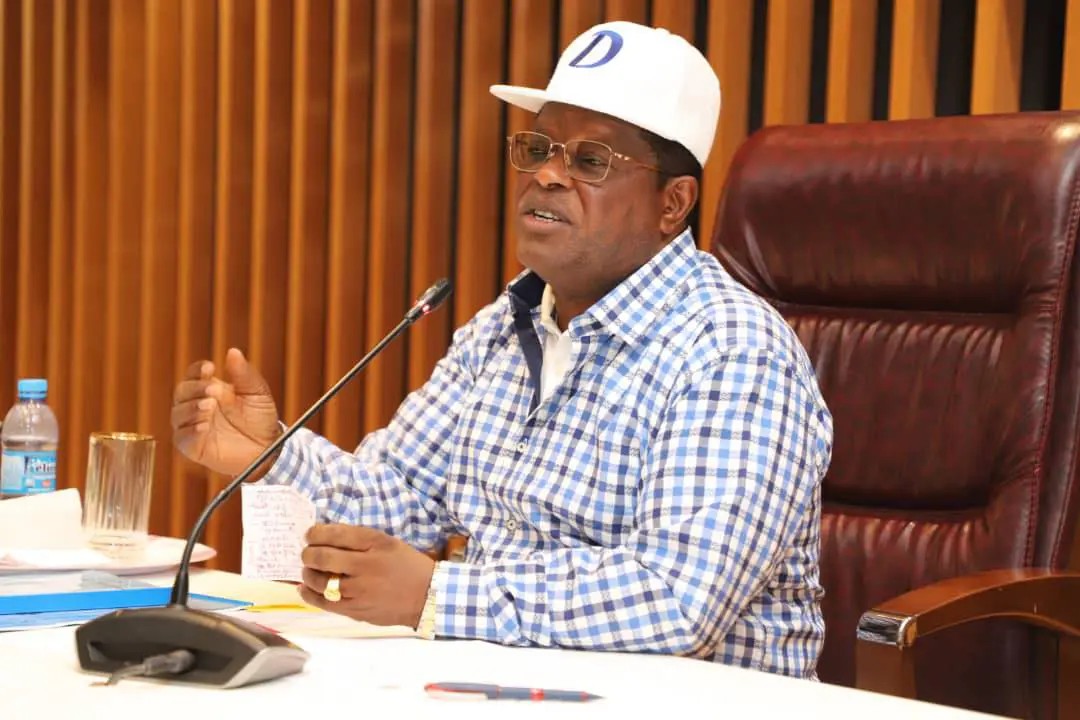
The Minister of Works, Dave Umahi, has inaugurated members of the Office of the Deputy Director-General, Infrastructure, Mobilisation and Sensitisation, of the All Progressives Congress (APC) Presidential Campaign Council for the 2027 elections.

Umahi, who serves as DDG, Infrastructure, Mobilisation and Sensitisation for the council, said the team would identify, document and publicise infrastructure projects being executed by the Federal Government across the country.

Speaking at the inaugural meeting in Abuja on Thursday, he said the initiative was aimed at strengthening coordination, infrastructure communication, mobilisation and public sensitisation ahead of the 2027 presidential election.

“The team’s primary responsibility is to identify, document, compile, and publicise infrastructure projects the Federal Government is executing across Ministries, Departments, and Agencies (MDAs).

“Although the Federal Ministry of Works accounts for a significant proportion of the Federal Government’s infrastructure investments, the team’s coverage should extend to other MDAs.

“This is to ensure a comprehensive account of infrastructure development across the six geopolitical zones of the country.”

Umahi said the Senior Special Assistants to the President (SSA-P) on Community Engagement for the six geopolitical zones who also appointed as Zonal Coordinators, other members of the ODDG, alongside the Secretary, should work collaboratively.

This, he said, was to identify and document relevant infrastructure projects within their respective zones.

He emphasised that the compilation should cover projects executed by the Federal Ministry of Works, as well as infrastructure initiatives undertaken by other MDAs.

He said this was to provide a comprehensive overview of infrastructure investments and the developmental strides of the Renewed Hope Administration of President Bola Tinubu, across the length and breadth of the country.

The minister clarified that existing publicity activities between the Ministry of Works and the senior special assistants would continue.

See also  Convention venue row: Wike dares ADC to prove application

He added that the new office would provide a broader framework for coordinating information on infrastructure projects undertaken by other MDAs at zonal, sub-national and national levels.

According to him, accurate documentation and effective communication will make information on government infrastructure investments more accessible to Nigerians.

Umahi described infrastructure development as a key driver of economic growth, national development and community integration.

“Infrastructure investment stimulates economic activities, connects communities, creates opportunities and supports the growth of other sectors of the economy,” he said.

He also highlighted the Federal Government’s adoption of continuous reinforced concrete pavement (CRCP) technology in road construction, saying it would reduce dependence on imported bitumen and promote the use of local resources and expertise.

The minister said the technology would support local economic activities, reduce foreign exchange demand associated with imported road construction material and promote more durable infrastructure delivery.

He urged members of the office to ensure that information on infrastructure projects was accurately compiled and effectively disseminated to the public.

NAN

Source: punchng.com

FOLLOW US ON:

FACEBOOK

WHATSAPP CHANNEL

TWITTER

PINTEREST

TIKTOK

YOUTUBE

LINKEDIN

INSTAGRAM

Continue Reading

Politics

INEC begins early logistics planning for 2027 elections

Published

on

The Independent National Electoral Commission has inaugurated a multi-agency electoral logistics committee for the 2027 general elections, warning that no Nigerian should be disenfranchised because of delays in the arrival of election materials.

The commission also charged the National Orientation Agency to intensify grassroots mobilisation against voter apathy, vote buying and electoral violence ahead of the elections scheduled for January 16 and February 6, 2027.

The INEC Chairman, Prof. Joash Amupitan (SAN), gave the charge on Thursday in Abuja during the inauguration of the committee and the flag-off of the NOA’s nationwide grassroots mobilisation campaign.

Amupitan said the logistics committee would strengthen the commission’s operational capacity and ensure the timely deployment of personnel and election materials across the country.

He said the decision to adopt a multi-agency approach was informed by the complexities of transporting election materials across Nigeria’s diverse geographical terrain.

“Today’s inauguration of the Electoral Logistics Committee marks a proactive step in ensuring that the 2027 General Election is defined by seamless execution and operational excellence,” the INEC chairman said.

He named a National Commissioner, Rear Admiral Jamila Malafa (retd.), as chairperson of the committee, which comprises representatives of security agencies, transport unions and relevant government institutions.

Amupitan said the credibility of an election depended significantly on whether voters found their polling units open, equipped and ready at the appointed time.

“Election logistics involve the intricate movement of both sensitive and non-sensitive materials by land, sea and air. It requires precision, security and timeliness. This is why we are starting early,” he said.

The committee is expected to assess the commission’s logistics requirements, develop a comprehensive plan for storing, distributing, deploying and retrieving election materials, and audit the readiness of warehouses, vehicles, airports and seaports.

See also  Tinubu returns, says ‘I’m healthy, ready to go’ ahead of 2027 elections, read details

It will also identify operational gaps, recommend corrective measures, monitor compliance with approved logistics schedules and develop strategies to address transportation bottlenecks, shortages and security threats.

Other responsibilities include coordinating the secure movement of materials through road, air and maritime channels, liaising with government agencies and transport unions, and submitting periodic reports to the commission.

Amupitan said Nigeria’s geographical diversity required a flexible and resilient logistics framework capable of addressing weather conditions, difficult terrain and security challenges.

“We must anticipate the weather, the terrain and the security environment to ensure that no Nigerian is disenfranchised due to late arrival of materials,” he said.

He described preparations for the 2027 elections as “a marathon, not a sprint,” adding that early planning was necessary to deliver a transparent, efficient and credible electoral process.

Speaking on behalf of the committee, Malafa said its mandate included reviewing previous elections, identifying operational weaknesses and developing strategies to ensure the timely deployment of personnel and materials.

She said the committee would focus on airlift operations, cargo handling, land and maritime transportation, storage facilities and security arrangements.

According to her, the committee would also map difficult terrain, security-challenged areas and crisis-prone locations to enable the development of customised transportation and security arrangements.

Malafa said the committee could establish specialised subcommittees to handle airlift, land transportation, maritime transportation, storage and security operations.

She stressed that effective coordination among participating agencies would be essential to achieving the committee’s objectives.

Meanwhile, at the flag-off of the NOA’s nationwide grassroots mobilisation campaign, Amupitan charged the agency’s leadership and field officers to take voter education messages to communities across the country.

He urged the officials to extend the campaign to traditional palaces, markets, places of worship, campuses and village squares in all 774 local government areas.

See also  APC chair condemns Niger killings, commends Tinubu’s directives

The INEC chairman identified voter apathy, vote buying and electoral violence as major threats to the credibility of the 2027 elections.

On voter apathy, he said citizens who failed to vote surrendered their democratic power to others, urging Nigerians to verify their registration status, collect their Permanent Voter Cards and participate peacefully in the elections.

“Do not wait until election week to get involved. Check your registration status, collect your PVCs now, stay informed, come out on Election Day, vote peacefully according to your conscience, and protect your community from violence,” he said.

Amupitan assured voters that their ballots would be accurately counted and reflected in the final results, citing the commission’s use of the Bimodal Voter Accreditation System and the INEC Result Viewing portal.

He also condemned vote buying, describing it as an attack on constitutional democracy.

The chairman said INEC had reconfigured polling unit layouts to protect ballot secrecy and prevent voters from displaying their marked ballots to party agents or individuals attempting to influence their choices with money.

He added that the commission was working with the Economic and Financial Crimes Commission, the Independent Corrupt Practices and Other Related Offences Commission and other security agencies through the Inter-Agency Consultative Committee on Election Security to monitor financial activities around polling units and apprehend those involved in vote buying.

On electoral violence, Amupitan warned political actors against resorting to violence, hate speech and other actions capable of undermining peaceful participation.

“No political ambition justifies the shedding of blood or the destruction of property,” he said.

He also raised concerns about the use of artificial intelligence-generated deepfakes to incite ethnic and religious conflict, urging political parties, candidates and youth groups to embrace peace and resolve electoral disputes through lawful channels.

See also  Abure, Otti LP factions at war over Obi-ADC pact ahead of 2027

The INEC chairman further called on political parties to campaign on issues rather than resort to hate speech or vote buying, while urging civil society organisations and the media to fact-check viral claims and promote accurate electoral information.

In his remarks, the Director-General of the NOA, Lanre Issa-Onilu, said the campaign would be implemented through the agency’s directorates in the 36 states and the Federal Capital Territory, alongside Community Orientation and Mobilisation Officers in the 774 local government areas.

He said the campaign would be non-partisan and would use community dialogues, local-language communication, radio discussions, drama, audio messages and digital platforms to reach Nigerians.

Issa-Onilu said voter apathy reduced public participation, vote buying undermined freedom of choice, while electoral violence threatened lives and damaged relationships within communities.

“No political ambition should cost a Nigerian life. No disagreement should destroy the bonds between neighbours. No temporary inducement should determine a citizen’s choice about our collective future,” he said.

The NOA director-general called for continued technical collaboration with INEC, including timely access to verified voter education materials and coordination across national, state and local structures.

He said the campaign, themed “Your Vote, Your Voice, Our Future: Say No to Apathy, Vote Buying and Violence. Let’s Build a United Nigeria in 2027”, was designed to encourage greater citizen participation and peaceful elections.

The event was attended by INEC national commissioners, representatives of security agencies, political parties, civil society organisations, traditional and religious leaders, and representatives of youth, women and persons with disabilities.

Source: punchng.com

FOLLOW US ON:

FACEBOOK

WHATSAPP CHANNEL

TWITTER

PINTEREST

TIKTOK

YOUTUBE

LINKEDIN

INSTAGRAM

Continue Reading

Trending