Connect with us

Business

Electricity Power subsidy hits N418bn, losses exceed N300bn

Published

on

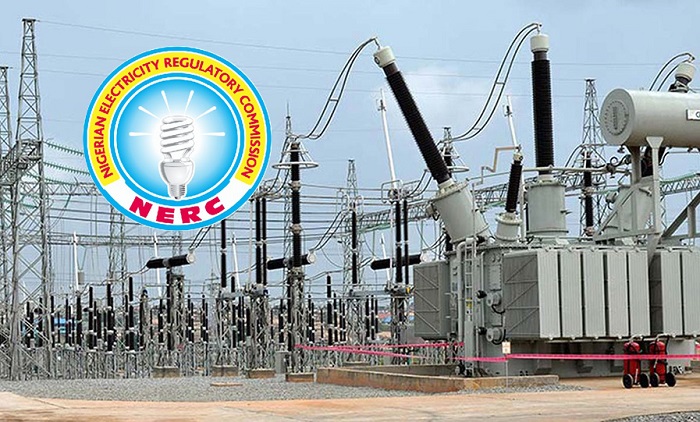
The Nigerian Electricity Regulatory Commission has disclosed that the Federal Government incurred a subsidy obligation of N418.79bn in the fourth quarter of 2025, even as inefficiencies across the electricity value chain led to losses exceeding N300bn during the period.

This was contained in the commission’s 2025 fourth-quarter report, which also highlighted declining remittances, high distribution losses, grid instability, and a marginal drop in available generation capacity.

According to the report, total invoices issued by generation companies for electricity produced in the quarter amounted to N804.93bn. However, due to non-cost-reflective tariffs, the government absorbed 52.30 per cent of the cost.

The commission stated, “It is important to note that due to the absence of cost-reflective tariffs across all DisCos, the government incurred a subsidy obligation of N418.79bn; this represents a N39.96bn (-8.71 per cent) reduction in FGN subsidy compared to 2025/Q3.”

The report added that the subsidy covered more than half of generation costs, leaving distribution companies to pay only N386.13bn. “The government subsidy accounted for 52.30 per cent of the total GenCo invoice, which is a 6.60pp decrease compared to 2025/Q3,” the commission noted.

Despite the intervention, the sector recorded significant commercial losses. While the total value of electricity supplied to distribution companies stood at N969.19bn, only N795.06bn was billed to customers.

“The naira value of the total energy offtake by all DisCos in 2025/Q4 was N969.19bn, and the total energy billed was N795.06bn, which translates to a billing efficiency of 82.03 per cent.

The billing efficiency of 82.03 per cent recorded during the quarter represents a decrease of 0.66pp compared to 2025/Q3 (82.69 per cent). At an aggregate level, DisCos cumulatively recorded billing losses of N174.12bn in 2025/Q4,” the report said.

See also  NNPC confirms successful new oil well discovery

In addition, high aggregate technical, commercial, and collection losses further weakened sector finances. “The weighted average ATC&C loss across all DisCos in 2025/Q4 was 34.9 per cent, translating to a cumulative revenue loss of N139.19bn across all DisCos,” the report noted.

Combined, the billing losses of N174.12bn and ATC&C revenue losses of N139.19bn indicate inefficiency-driven losses of over N300bn during the quarter. The report also showed that distribution companies received 7,991.22GWh of electricity but billed customers for only 6,614.57GWh, indicating persistent energy accounting inefficiencies.

“Although the total energy received by all DisCos in 2025/Q4 was 7,991.22GWh, the energy billed to end-use customers was only 6,614.57GWh,” it stated.

Collection performance also declined compared to the previous quarter. Market remittances to upstream participants also weakened. DisCos were required to remit N471.66bn but paid only N437.27bn, leaving an outstanding balance of N34.39bn.

This translates to a remittance performance of 92.71 per cent in 2025/Q4 compared to the 95.21 per cent recorded in 2025/Q3.

On operational performance, the commission said available generation capacity averaged 5,400.38 megawatts, representing a slight decline from the third quarter, with several plants recording reduced output.

Seventeen power plants recorded decreases in available generation capacities in 2025/Q4 relative to 2025/Q3, it said.

However, energy generation improved during the quarter. Average hourly generation increased to 4,452.71MWh/h, resulting in total generation of 9,831.58GWh. “The average hourly generation of the grid-connected power plants increased by 273.56MWh/h (+6.55 per cent),” the report stated.

Grid stability concerns also persisted. System frequency and voltage levels fell outside prescribed operating limits. “In 2025/Q4, the average lower daily (49.38Hz) and average upper daily (50.65Hz) system frequencies were outside the normal operating limits,” the commission said.

See also  Petrol Landing Cost Drops To ₦840/Litre, But Pump Prices Remain High

The report stated that there was one incident of system disturbance on the national grid in 2025/Q4. A partial collapse of the grid occurred on December 29. The commission warned that the current subsidy regime exposes government finances to uncertainty.

“The current open-ended subsidy regime leaves the FGN exposed to indeterminate subsidy obligation,” it stated, citing generation cost variations and supply mix as key drivers.

The report added that the Q4 subsidy declined partly due to increased energy allocation to premium customers on Band A feeders. “The key driver of this reduction is the increase in energy allocated to Band A customers from 40 per cent to 45 per cent,” the commission said.

punch.ng

FOLLOW US ON:

FACEBOOK

TWITTER

PINTEREST

TIKTOK

YOUTUBE

LINKEDIN

Continue Reading
Click to comment

Leave a Reply

Your email address will not be published. Required fields are marked *

Business

Oil nears $110 as Trump threatens strike in Iran

Published

on

Oil prices rose to $109.3 on Sunday amid the unending tension in the Middle East, data by Oilprice.com has shown.

This was as the United States President, Donald Trump, warned Iran that the “clock is ticking” after talks to bring the war to an end continued to stall.

From about $107 a barrel last week, oil prices continue to go higher, impacting the cost of refined petroleum products at the pump.

Recall that Trump had last week rejected the proposal by Iran to end the crisis and reopen the all-important Strait of Hormuz. Iran has remained in control of the strait since the war started in February, making oil transportation impossible.

On Sunday, Trump warned Iran to act fast or lose everything. “They better get moving FAST, or there won’t be anything left of them. TIME IS OF THE ESSENCE!” he wrote on his Truth Social platform.

The BBC reports that the message came as the president was due to speak with Israeli Prime Minister Benjamin Netanyahu on Sunday.

Trump warned earlier that the ceasefire agreed with Iran was on “massive life support” after rejecting Tehran’s demands to end the war.

Trump had labelled the Iranian response to US proposals “totally unacceptable”.

An Iranian foreign ministry spokesperson, Esmail Baghaei, insisted the response was “responsible” and “generous”.

According to Iran’s semi-official Tasnim news agency, it includes an immediate end to the war on all fronts, a reference to the continued Israeli attacks against Iran-supported Hezbollah in Lebanon, a halt to the US naval blockade of Iranian ports, and guarantees of no further attacks on Iran.

See also  Petrol Landing Cost Drops To ₦840/Litre, But Pump Prices Remain High

It also reportedly includes a demand for compensation for war damage and an emphasis on Iranian sovereignty over the Strait of Hormuz.

Trump said Chinese President Xi Jinping had agreed Tehran must reopen the Strait of Hormuz, though China gave no indication it would weigh in.

Iranian Foreign Minister Seyyed Abbas Araghchi stated that the Strait of Hormuz remains open to commercial traffic, but ships must cooperate with the Iranian Navy and the authorities while navigating the region.

About 30 Chinese vessels transited the strait on Wednesday.

Continue Reading

Business

Lagos bans petroleum tankers from transporting edible oil

Published

on

The Lagos State Government has banned the use of petroleum tankers in the transportation and distribution of edible oil as part of efforts to strengthen food safety, hygiene, and compliance standards across the sector.

The restriction forms part of a broader regulatory framework introduced through a Memorandum of Understanding (MoU) signed between the Lagos State Consumer Protection Agency (LASCOPA) and major stakeholders in the edible oil transportation chain.

The agreement involves the Marketers and Sellers of Edible Oil Association of Nigeria (MASEON), the Nigerian Association of Road Transport Owners (NARTO), and the Association of Edible Oil Tanker Drivers of Nigeria under the National Union of Edible Oil Tanker Drivers of Nigeria (ETD/NUEOTDN).

In a statement issued on Friday, LASCOPA said the move was aimed at stopping the use of tankers previously deployed for petroleum and hazardous substances in the transportation of edible oil.

The agency warned that the practice exposes consumers to serious health risks caused by possible contamination from chemical residues left in fuel tankers.

“The key objectives of the agreement include ensuring that tankers designated for edible oil transportation are used exclusively for that purpose; preventing the use of edible oil tankers for petroleum products and hazardous substances,” the statement read.

According to the agency, the MoU introduces a strict compliance framework mandating the exclusive use of food-grade certified tankers for edible oil transportation.

LASCOPA said the framework would also strengthen hygiene standards, improve traceability, and enhance operational monitoring within the edible oil distribution chain.

The agency added that stakeholders have committed to implementing tanker registration and identification systems, periodic inspections, random spot checks, laboratory testing of edible oil samples, and joint enforcement operations to ensure full compliance.

See also  Forum dismisses claims of N210tn missing in NNPC accounts

It further stated that enforcement activities would be intensified under the Lagos State Consumer Protection Agency Law, 2025.

“Stakeholders are committed to tanker registration, identification systems, periodic inspections, random spot checks, laboratory testing of edible oil samples, and joint enforcement operations to ensure compliance,” the statement added.

LASCOPA also said it would step up monitoring activities and investigate consumer complaints as part of efforts to protect public health and improve consumer confidence in food transportation standards across Lagos State.

punch.ng

FOLLOW US ON:

FACEBOOK

TWITTER

PINTEREST

TIKTOK

YOUTUBE

LINKEDIN

INSTAGRAM

Continue Reading

Business

NNPC urged to revive refineries after Dangote snub

Published

on

The National Publicity Secretary of the Independent Petroleum Marketers Association of Nigeria, Chinedu Ukadike, has tackled the Nigerian National Petroleum Company Limited (NNPC) over its attempt to increase its stake in the Dangote Petroleum Refinery despite the poor state of government-owned refineries.

Ukadike stated this while reacting to comments by the President of the Dangote Group, Aliko Dangote, that the refinery rejected requests by the NNPC to increase its 7.25 per cent stake in the $20bn facility.

Dangote had disclosed this during an interview with the Chief Executive Officer of the Norwegian Sovereign Wealth Fund, Nicolai Tangen, monitored by our correspondents on Wednesday.

Reacting to the development, Ukadike questioned why the national oil company was seeking to invest more funds in the privately-owned refinery when the Port Harcourt, Warri, and Kaduna refineries under its control had remained largely inactive despite billions of dollars spent on rehabilitation.

“Why is NNPC trying to invest money in the Dangote refinery when it has three refineries that are not working? Why is NNPC not investing that money in those ones?” Ukadike asked.

He added, “The NNPC did not revive our refineries, but they want to look for where the refinery is already working to put money into it. Does that make sense?”

The IPMAN spokesman said Dangote had the right to reject the offer from the NNPC if he considered it unsuitable for his business interests.

“If Dangote refused to sell more stakes to NNPC, he must have his reasons. Dangote is a businessman. He doesn’t want issues, unnecessary crises, and nepotism. He knows what he wants, and I also think he has enough cash to fund his business,” he stated.

See also  FG defers 70% of 2025 capital budget to 2026

Ukadike further urged the national oil company to focus on reviving critical oil infrastructure across the country instead of pursuing additional ownership of the refinery. “The NNPC should repair the pipelines and revive the refineries instead of eyeing the Dangote refinery,” he said.

Dangote had stated during the interview that the NNPC was interested in acquiring more shares in the refinery after previously purchasing a 7.25 per cent stake for $1bn in 2021. According to him, the request was rejected because the company planned to list the refinery publicly and allow more Nigerians to own shares in the project.

“The other biggest risk is government inconsistencies in policies, and we are addressing that one because if you look at our refinery, the national oil company already owns 7.25 per cent, and they are trying to buy more. We are the ones that said no; we want to now spread it and have everybody be part of it,” Dangote said.

The NNPC had initially planned to acquire a 20 per cent stake in the refinery, but later reduced its ownership to 7.25 per cent after failing to pay the balance before the June 2024 deadline.

Dangote had explained this in 2024, saying, “The agreement was actually 20 per cent, which we had with NNPC, and they did not pay the balance of the money up until last year; then we gave them another extension up until June (2024), and they said that they would remain where they had already paid, which is 7.2 per cent. So NNPC owns only 7.2 per cent, not 20 per cent.”

See also  FX inflows, reserves boost naira to N1,497 per dollar

However, a stakeholder in the petroleum sector who pleaded for anonymity because of the sensitivity of the matter held that the interest of the nation is well served by NNPC having a 20 per cent stake in the Dangote refinery.

“I think Nigeria is better served by NNPC being a shareholder. If NNPC could have taken 20 per cent of that refinery, Nigeria as a country would be better served,” the stakeholder said.

According to him, the fact that the NNPC failed to get the 20 per cent take before does not mean it could not get it again. He said Dangote refused NNPC’s offer because he wants to remain in control.

“You know Dangote is planning to value his company at $50bn. I think he’s going to sell 10 per cent only, so he remains in control, making a lot of money for himself. Selling only 10 per cent means he has 90 per cent. If NNPC were there with 20 per cent, then NNPC would have two directors. These two directors would have some say,” he said.

The stakeholder added that such an important asset cannot exist in a country without the government’s involvement.

“You can’t have such a big asset in the country, and then the government or the government’s agent has no say in the decisions of that company. It can’t happen. It’s wrong. I’m not saying the government must have a say in all the big companies, but in a company that is so big that it can influence whether the sun rises or falls in that country, the government must have a say.

See also  NDIC seeks stronger CIBN collaboration on emerging risks

“The refinery is big. In any case, NNPC is also the supplier of last resort. It’s the national oil company. That has some meaning. I think that in the best interest of the country, if we all agree that Dangote is too big to fail, then it means that Nigerians as a people need to be inside the Dangote refinery to make sure it does not fail,” the operator said.

Meanwhile, a senior official of the NNPC said the NNPC is proud of its current stake in the Dangote refinery.

“The NNPC is proud and happy that we own a 7.2 per cent stake in Dangote. And whatever we own as a stake in Dangote as a national oil company is on behalf of the entire Nigeria. So, when the opportunity presents itself in the long term, yes.

“But right now, we are proud of the 7.2 per cent stake we own in the Dangote refinery. Apart from that, the quality and level of collaboration that is currently going on between NNPC and Dangote is in the interest of the entire Nigeria,” the official said, begging not to be mentioned because he was not authorised to speak on the matter.

punch.ng

FOLLOW US ON:

FACEBOOK

TWITTER

PINTEREST

TIKTOK

YOUTUBE

LINKEDIN

INSTAGRAM

Continue Reading

Trending