Connect with us

Business

CBN blacklists top loan defaulters

Published

on

The Central Bank of Nigeria (CBN) has officially restricted banking services for “chronic defaulters” and large-ticket obligors with non-performing loans.

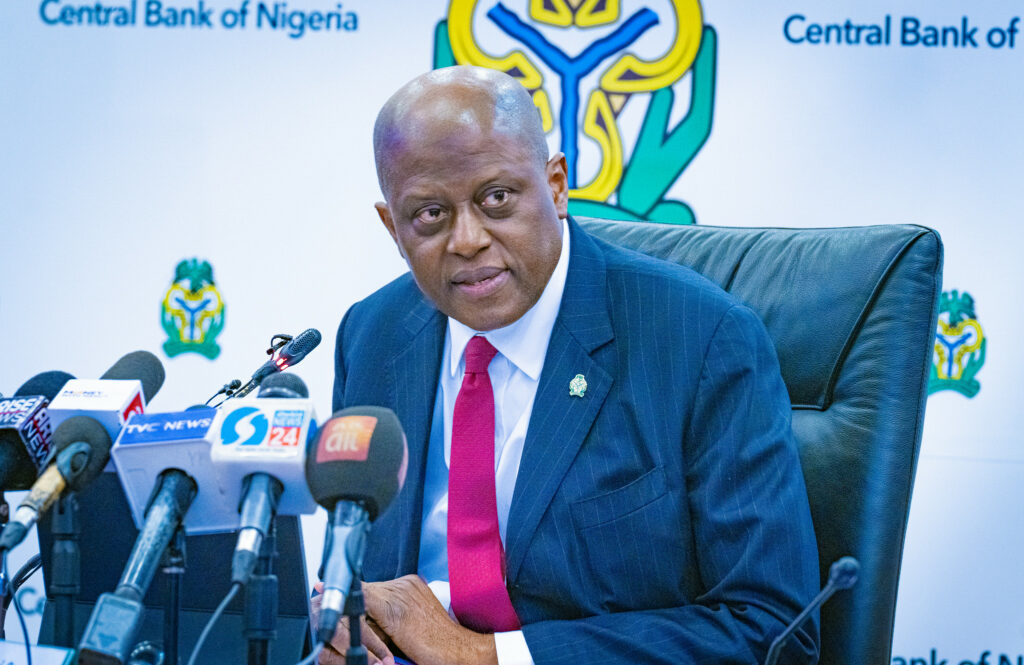
In a sweeping move to enforce credit discipline and safeguard the nation’s financial system, the apex bank issued a policy statement on Wednesday following remarks by CBN Governor Olayemi Cardoso at the 4th Annual IMF/AFRITAC West 2 High-Level Executive Forum in Abuja.

The Governor made it clear that the era of regulatory forbearance for delinquent borrowers is over.

He emphasised that the bank is shifting toward a more aggressive stance on corporate governance to ensure that the N4.61tn in new capital recently attracted by the banking sector is protected from systemic abuse.

“Our stance on corporate governance is unequivocal: zero tolerance for violations. By ending years of regulatory forbearance, we have reinforced accountability, tightened supervision, and elevated compliance standards across the sector,” the Governor stated.

The new directive specifically targets “large-ticket obligors”, individuals or entities with significant outstanding debts classified as non-performing in the Credit Risk Management System. Under the new rules, these defaulters will be barred from accessing not only fresh credit but also essential contingent liabilities and trade instruments.

“We have implemented a restriction of banking services to non-performing large-ticket obligors. This decisive step underscores our commitment to credit discipline, financial integrity, and accountability,” the statement read.

According to the CBN, the move is designed to instil a “culture of repayment” that has historically been lacking among high-profile borrowers. By cutting off access to instruments such as letters of credit and performance bonds, the regulator aims to prevent “credit jumping”, a practice where defaulters migrate between banks to accumulate more debt.

See also  Nigerians battle shortage of cooking gas as price of 12.5kg cylinder of gas rises to N25,000

“By curbing access to banking services for chronic defaulters, we are reinforcing the culture of repayment, protecting depositors, and safeguarding the stability of the financial system,” the apex bank added.

Beyond the crackdown on debtors, Cardoso reaffirmed that the CBN remains firmly committed to orthodox monetary policy. This approach prioritises price stability and the use of traditional tools to anchor inflation expectations, moving away from unconventional interventions to restore confidence in the naira.

“The CBN remains firmly anchored in orthodox monetary policy, focused on restoring price stability, strengthening policy credibility, and anchoring expectations through discipline and consistency,” the statement concluded.

For years, the Nigerian banking sector has struggled with “chronic defaulters”, wealthy individuals or massive corporations that borrow billions and fail to repay.

These are often referred to as “large-ticket obligors”. When these loans go bad, they threaten the liquidity of banks and the safety of ordinary citizens’ deposits.

Under the leadership of Cardoso, the CBN is pivoting toward “Orthodox Monetary Policy”. This means moving away from the era of massive development interventions and direct lending to sectors like agriculture and focusing instead on its core mandate: price stability and financial system regulation.


punch.ng

FOLLOW US ON:

FACEBOOK

TWITTER

PINTEREST

TIKTOK

YOUTUBE

LINKEDIN

Continue Reading
Click to comment

Leave a Reply

Your email address will not be published. Required fields are marked *

Business

N1.8tn debt: Reps signal imminent contractor payments

Published

on

There are fresh indications that contractors owed by the Federal Government for capital projects executed in the 2024 fiscal year may soon receive part payment, as members of the House of Representatives say funds could be released this week.

The Federal Government had earmarked N1.8tn in the 2026 Appropriation Bill to settle outstanding liabilities to contractors, comprising a N1.7tn allocation for 2024 capital projects and N100bn for other local contractor debts.

The lawmakers, who spoke separately, declined to state the amount likely to be disbursed but expressed cautious optimism that the long-awaited payments would finally begin.

The development comes amid mounting pressure on the Federal Government over the failure to clear verified debts owed to indigenous contractors, many of whom have complained of severe financial strain after delivering projects across the country.

Leader of the North-West caucus in the House, Sada Soli, confirmed awareness of imminent payments but said details remained unclear.

“I am aware of it (likely payment), but I don’t know how much they’re talking and committing to the implementation of the budget,” Soli, who represents Jibia/Kaita Federal Constituency of Katsina State, said.

Also speaking, the lawmaker representing Ideato North/Ideato South Federal Constituency of Imo State, Ikenga Ugochinyere, lamented the impact of the delayed payments on constituency projects and lawmakers’ credibility before their constituents.

“Lawmakers have suffered from delays in paying contractors working to execute constituency projects, but I have been told certain payments will likely be made this week. I hope it comes to light to help complete development projects across the constituencies,” Ugochinyere told The PUNCH.

See also  Ending over-the-counter antibiotics sales to tackle antimicrobial resistance

Similarly, Terseer Ugbor, who represents Kwande/Ushongo Federal Constituency in Benue State, expressed frustration over repeated assurances by government officials which have yet to materialise.

“It’s been failed promises, but we hope contractors will start receiving payments soon. So far, I can’t confirm any payments yet,” he said.

Also contributing, a lawmaker who declined to be named said, “Some amounts of money may be released on Friday, but no one knows how much it is, for now.”

He called on the Federal Government to do the needful by paying all outstanding debt to contractors so that new projects can begin.

The payment crisis dates back to the 2024 budget cycle, during which hundreds of contractors executed capital and constituency-based projects, many tied to zonal intervention projects facilitated by federal lawmakers.

Despite completing and, in several cases, delivering these projects, contractors have struggled to receive payment, triggering widespread dissatisfaction across the country.

The situation worsened throughout 2025, as repeated assurances from the Ministry of Finance and the Office of the Accountant-General failed to translate into actual disbursements.

The Minister of Finance, Wale Edun, and the Accountant-General of the Federation, Shamseldeen Ogunjimi, had at various times indicated that arrangements were underway to clear the backlog, but payments did not materialise as expected.

The delays not only stalled ongoing and planned projects but also placed lawmakers under intense pressure from their constituents, many of whom blamed them for the non-completion of projects already awarded and executed.

Frustration over the unpaid debts eventually spilt onto the streets of the National Assembly Complex, where aggrieved contractors staged protests in December 2025 and January 2026.

See also  Oil Price Hits $120 As OPEC+ Raises Output By 206,000 Bpd

Carrying placards and chanting slogans, the protesters accused the government of neglecting indigenous contractors and jeopardising local businesses that had taken loans to finance public projects.

punch.ng

FOLLOW US ON:

FACEBOOK

TWITTER

PINTEREST

TIKTOK

YOUTUBE

LINKEDIN

Continue Reading

Business

Read Tinubu’s unveiled plan to turn flood Threat into economic goldmine

Published

on

President Bola Ahmed Tinubu has declared Nigeria’s intention to transform its perennial flood crisis into a driver of economic growth, unveiling a bold vision to shift from an oil-dependent economy to one powered by water resources.

Speaking at the 2026 Annual Flood Outlook (AFO) presentation by the Nigeria Hydrological Services Agency in Abuja, the president , represented by the Minister of Environment, Balarabe Abbas Lawal said flood management is now central to national development and food security.

Describing the event as a “significant milestone,” Tinubu linked his administration’s flood control strategy to its broader 8-point agenda, particularly the goal of achieving food security through strengthened water resource management.

Nigeria has grappled with devastating floods since 2012, a crisis the president said his administration is confronting through targeted policies and nationwide flood control projects.

He noted that high-risk states including Adamawa, Benue, Kogi, Bayelsa and Rivers have received focused intervention.

Tinubu highlighted what he described as measurable progress in agriculture, attributing improved yields to sustained efforts in managing water resources and mitigating flood risks.

A major turning point, according to him, was the 2024 Maiduguri flood disaster, which forced a shift from reactive to proactive flood management.

This has led to the adoption of “anticipatory action” , a coordinated early-warning and response system spearheaded by the Office of the Vice-President, in collaboration with security agencies, development partners and disaster management stakeholders.

The president explained that the  Annual Flood Outlook issued by NIHSA, is  a critical tool for early preparedness, mitigation and coordinated response across all 36 states, the Federal Capital Territory and the 774 local government areas.

See also  Hardship: Nigerian-used car market booms as more owners sell off private vehicles

Tinubu challenged key ministries, including Water Resources and Marine and Blue Economy, to develop actionable frameworks that will unlock Nigeria’s vast water potential for economic diversification.

He stressed that with effective management of waterways and natural resources, Nigeria can gradually reduce its dependence on oil and build a resilient, water-based economy.

The president also called on citizens, institutions and communities to take collective responsibility in flood preparedness, environmental protection and climate resilience.

“Let us join hands to make Nigeria a flood-safe nation,” he said, urging proactive measures to protect vulnerable populations and strengthen national resilience against climate-induced disasters.

The 2026 AFO, themed, “Smart Water Resources Management: Moving from Oil to Water-Based Economy,” provides nationwide flood forecasts and risk insights aimed at guiding early action ahead of the rainy season.

punch.ng

FOLLOW US ON:

FACEBOOK

TWITTER

PINTEREST

TIKTOK

YOUTUBE

LINKEDIN

Continue Reading

Business

NEPC, trade centre partner stakeholders on sesame, cowpea export compliance

Published

on

The Nigerian Export Promotion Council (NEPC), in collaboration with the International Trade Centre, has commenced a two-day needs assessment and validation workshop aimed at strengthening communication strategies on sanitary and phytosanitary compliance for sesame and cowpea exports.

The workshop, which began on Tuesday in Kano, brought together farmers, exporters, associations, and development partners to address challenges affecting export quality and reduce the rejection of Nigerian agricultural produce in international markets.

Speaking at the opening, the Executive Director/Chief Executive Officer of NEPC, Nonye Ayeni, said the initiative was designed to identify gaps and improve coordination in addressing sanitary and phytosanitary issues within the sesame and cowpea value chains.

“This two-day event aims to identify gaps, overlaps, and areas for synergy in addressing SPS issues in the sesame and cowpea value chains.

“We will also identify the most effective communication and information framework for raising awareness on SPS compliance issues as they relate to these value chains”, she said.

She noted that effective communication was critical to improving compliance and ensuring that stakeholders are properly informed about local and global standards.

“The importance of effective communication and dissemination of information to sesame and cowpea value chain actors cannot be overemphasised. At the end of the sessions, we expect to have an efficient, impactful, and all-inclusive communication awareness strategy,” Ayeni added.

The NEPC boss highlighted the council’s role in promoting non-oil exports, stating that Nigeria recorded a non-oil export value of $6.1bn in 2025, the highest in its history.

See also  Nigerian billionaire Tonlagha hires lobbyists to push Nigeria-US ties

“Export volume also reached a record 8.02 million metric tonnes. We exported 281 products to 120 countries, including 11 ECOWAS countries and 32 African countries,” she said.

She added that the council had expanded its operations nationwide to support exporters and had facilitated international certifications for over 210 exporters in areas such as Halal, FDA, and ISO standards.

Ayeni explained that the workshop was part of the STDF 845 initiative launched in 2024 to address compliance challenges in sesame and cowpea exports, with NEPC serving as the implementing agency.

“Working with agencies such as SON, NAFDAC, and NAQS, we have seen a drastic reduction in export rejection. The lessons learned from this project will be extended to other value chains,” she said.

She also commended the International Trade Centre for its continued partnership and support across various projects.

Briefing journalists, the Director of Product Development at NEPC, Macpherson Fred, said the programme was structured as a two-in-one engagement targeting both upstream and downstream actors in the sesame and cowpea value chains.

“This programme is a two-in-one engagement. The communication and awareness workshop, which started on April 14 and will end on April 15, is focused on farmers and primary producers.

“From April 16 to 17, we will also conduct export quality management training for exporters, aggregators, and other downstream actors to strengthen their capacity to meet international standards,” he said.

He said the initiative became necessary due to persistent challenges affecting Nigeria’s agricultural exports, including past export bans and quality compliance issues.

“You will recall that in 2015, there was a ban on cowpea exports to the European Union, while in the sesame value chain, issues relating to pesticide residue levels have led to export rejections at international borders,” he said.

See also  Nigerians languish in prisons as Ethiopia stalls repatriation MoU

Fred added that the partnership between NEPC and ITC was aimed at improving compliance and boosting Nigeria’s competitiveness in the global market.

“Our goal is to improve sanitary and phytosanitary compliance to ensure Nigerian exports meet destination market requirements and achieve zero rejection at international borders,” he added.

punch.ng

FOLLOW US ON:

FACEBOOK

TWITTER

PINTEREST

TIKTOK

YOUTUBE

LINKEDIN

Continue Reading

Trending