Connect with us

Business

Oshiomhole seeks ban on MTN, DSTV, read why

Published

on

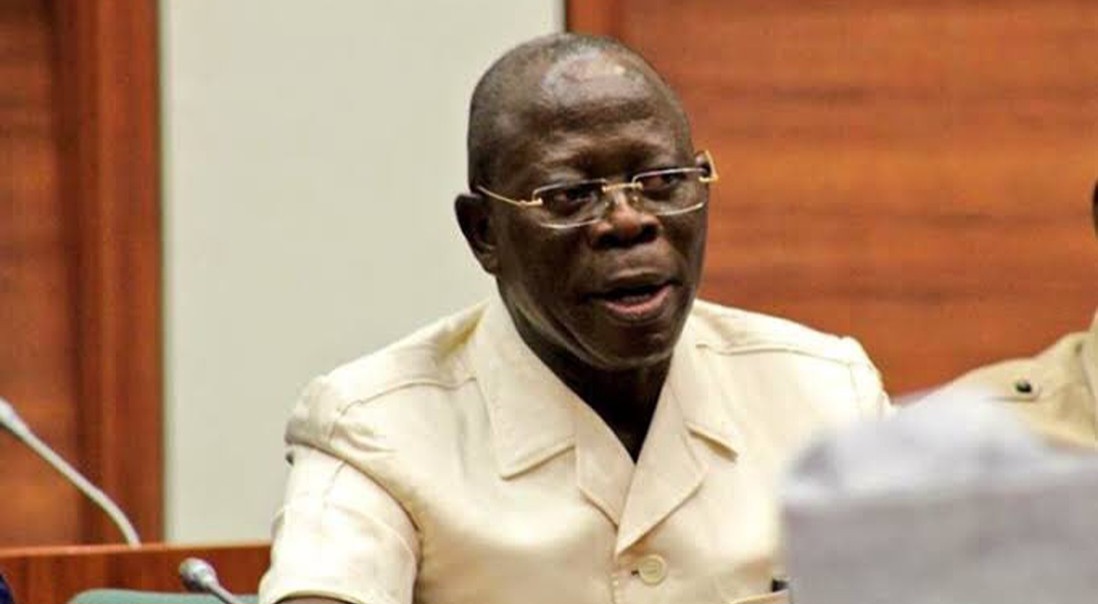
The senator representing Edo North, Adams Oshiomhole, on Tuesday called for the revocation of licences of South African companies operating in Nigeria, including MTN and MultiChoice, owners of DSTV, following renewed xenophobic attacks against Nigerians in South Africa.

The call came as the National Assembly condemned the latest wave of attacks, urging the Federal Government to take immediate diplomatic and protective measures to safeguard Nigerian citizens abroad.

Speaking during plenary, Oshiomhole said Nigeria must respond firmly, invoking the principle of reciprocity in international relations.

He said, “I don’t want this Senate to be shedding tears, to sympathise with those who have died. We didn’t come here to share tears.

“If you hit me, I’ll hit you. I think it is appropriate in diplomacy. It’s an economic struggle.”

The former Edo State governor proposed that Nigeria should nationalise MTN and withdraw its operating licence, arguing that the company repatriates significant revenue while Nigerians face hostility in South Africa.

“This Senate should adopt a position that MTN, a South African company that is cutting away millions of dollars from Nigeria every day, should have Nigeria nationalise it and withdraw its licence,” he said.

According to him, such action would not only serve as a deterrent but also create opportunities for indigenous firms, amid what he described as economic and social targeting of Nigerians abroad.

He extended the call to MultiChoice, urging the Federal Government to revoke DSTV’s licence over alleged exploitative practices.

“I call on the Federal Government to revoke DSTV, which is also a South African company that is cutting away millions of dollars,” he said.

See also  N15bn Benue brewery set for inauguration in October

Oshiomhole linked the recurring tensions to domestic political dynamics in South Africa, noting that anti-immigrant rhetoric had become a feature of its politics and was shaping public attitudes toward foreign nationals, including Nigerians.

“When we hit back, the president of South Africa will go on his knees to recognise that Nigerians cannot be intimidated,” he said.

The senator made the remarks while contributing to a motion sponsored by Osita Izunaso, which was read on the floor by Aniekan Bassey under Senate rules on matters of urgent public importance.

Titled “A call for urgent national diplomatic and humanitarian action to defend the dignity, safety and honour of Nigerian citizens,” the motion highlighted growing concerns over the safety of Nigerians in South Africa.

Also speaking, Senator Victor Umeh described the situation as alarming, warning that Nigerians were living in fear.

“It is worrisome. They are hiding for their lives. They can’t move freely. This is a situation where people are paying good with evil,” he said, referencing Nigeria’s historical support for the anti-apartheid struggle.

Umeh called on the African Union to intervene and impose sanctions, warning that Nigeria could no longer tolerate attacks on its citizens.

“The AU, of which South Africa is a member, should rise now and impose necessary sanctions,” he said, adding that “we cannot allow this to continue.”

Oshiomhole, however, doubled down on calls for economic retaliation, arguing that Nigeria must move beyond rhetoric.

“I don’t want this Senate to be shedding tears to sympathise with those who have died. We didn’t come here to shed tears. I am not going to shed tears. If you hit me, I hit you. I think it is appropriate in diplomacy. It is an economic struggle,” Oshiomhole said.

See also  Dangote official revealed that Nigeria’s petrol, diesel are subsidised

He further argued that Nigerians should take advantage of opportunities in the local economy, currently dominated by foreign firms.

Senator Abdul Ningi warned South Africans over recent attacks on Nigerians, threatening that the country would take the fight to their territory.

“If a crime has been committed under the South African law, they have the right to bring any such person to justice, but to kill our people as if we are helpless, we will not allow that.

“If these things continue, we have alternatives, we have options, and therefore, these words should be sent across South Africa. We know where South Africans are, not only in Nigeria but all over Africa, and we can take this fight to their territory,” he said.

Speaking, the Senate President, Godswill Akpabio, decried the attack, adding that the National Assembly would send a joint team to meet with the South-African parliament on the matter.

“This is just not acceptable, this is barbaric, this is cruel, this is unheard of, this is strange behaviour, and we’re not seeing action from the government of South Africa. These are aspects that annoy me,” Akpabio said.

The development underscores mounting pressure on the Federal Government to adopt a tougher stance, as recurring xenophobic violence in South Africa continues to strain diplomatic relations and provoke calls for both economic countermeasures and stronger protections for Nigerians abroad.

Continue Reading
Click to comment

Leave a Reply

Your email address will not be published. Required fields are marked *

Business

Remi Tinubu defends her akara/roasted corn business idea, says petty traders given N50, 000 empowerment appreciate it

Published

on

The First Lady of Nigeria, Senator Oluremi Tinubu, has defended her recent remarks urging low-income citizens to engage in micro-businesses, such as frying akara, roasting corn, or producing kuli-kuli.

The initial comments, delivered to journalists in Abuja on Thursday, June 25, sparked widespread public backlash. Critics argued that promoting low-yield, traditional petty trading is regressive at a time when global economies are transitioning toward technology-driven industries.

Addressing the controversy during an official event in Jigawa State on Monday, June 29, the First Lady dismissed the criticisms, emphasizing that the federal government remains committed to supporting grassroots commerce. She noted that national empowerment initiatives regularly target small-scale vendors, including those selling tomatoes, pepper, vegetables, and roasted plantains.

To support her stance, Tinubu disclosed that the government has distributed ₦100 million in financial grants so far. Under this scheme, approximately 2,000 petty traders have received ₦50,000 each to recapitalize and expand their businesses.

“ I’ve told Her Excellency that we’ve already given, donated about 100 million to her to use to empower 2,000 petty traders. And I know they’ve been talking that I said akara. It’s not only akara, we also have tomato sellers. We have boole, and those also selling pepper, selling vegetables for us in the market.

We will continue to empower them and add to their resources so that their trade can really be sustainable. So that is what we are doing,” she said.

She maintained that the criticism trailing her earlier remarks would not deter the government from its empowerment programmes.

See also  Crude supply to domestic refineries hit 67.6m barrels – FG

“I know all those people who are affected; they do appreciate it. And we are not intimidated by all those wrong reports. But we are forging ahead and making sure that our people, you know, are well cared for” she said

Mrs Tinubu prayed that Nigerian youths explore other opportunities around them to empower themselves economically.

“Nigeria is a really blessed country. I’ve been travelling, and I pray that our young people will see the resources we have in this nation. We have not even gone to explore yet because we are thinking it’s oil. But there are so many things” she said

FOLLOW US ON:

FACEBOOK

TWITTER

PINTEREST

TIKTOK

YOUTUBE

LINKEDIN

INSTAGRAM

Continue Reading

Business

‘It’s not only akara,’ Remi Tinubu defends comments, says FG also supports tomato, pepper sellers

Published

on

The First Lady, Senator Oluremi Tinubu, has defended her earlier comments on small-scale businesses, saying the Federal Government’s empowerment programmes extend beyond akara sellers to include traders in tomatoes, pepper, vegetables and roasted plantain.

Tinubu spoke on Monday during the inauguration of the newly constructed Abubakar Maje Haruna Hall at the Emir of Hadejia’s Palace in Jigawa State, according to a video aired by TVC News.

Her remarks come days after comments she made about akara, roasted corn and kuli-kuli businesses sparked widespread backlash on social media, with many Nigerians accusing her of trivialising the country’s economic hardship.

Addressing the criticism directly, the First Lady said the Federal Government had donated N100m to the Jigawa State Government to empower 2,000 petty traders in the state.

“Because of the atmosphere, what is going on, I’ve told Her Excellency that we’ve already given, donated about 100 million to her to use to empower 2,000 petty traders.

“And I know they’ve been talking that I said akara. It’s not only akara, we also have tomato sellers. We have boole, and those also selling pepper, selling vegetables for us in the market.

“We will continue to empower them and add to their resources so that their trade can really be sustainable. So that is what we are doing,” she said.

Tinubu said the beneficiaries would each receive N50,000 to recapitalise their businesses.

“We continue to carry the capacity. We have the amount of 2,000 women who are already in small businesses. They will recapitalise their businesses with the N50,000 each. We’ve already given the N100 million,” she added.

See also  Ending over-the-counter antibiotics sales to tackle antimicrobial resistance

She maintained that the criticism trailing her earlier remarks would not deter the government from its empowerment programmes.

“I know all those people who are affected, they do appreciate it. And we are not intimidated by all those wrong reports. But we are forging ahead and making sure that our people, you know, are well cared for,” Mrs Tinubu said.

The First Lady also spoke about Nigeria’s untapped resources, citing an orange orchard she visited in Benue State, and expressed hope that young Nigerians would explore opportunities beyond oil.

“Nigeria is a really blessed country. I’ve been travelling, and I pray that our young people will see the resources we have in this nation. We have not even gone to explore yet because we are thinking it’s oil. But there are so many things,” she said.

punch.ng

FOLLOW US ON:

FACEBOOK

TWITTER

PINTEREST

TIKTOK

YOUTUBE

LINKEDIN

Continue Reading

Business

Local refineries import 2m barrels Libyan crude oil amid domestic shortage

Published

on

Nigeria imported an average of two million barrels of crude oil from Libya, the first of such imports from the North African country ever. Dangote Petroleum Refinery is the major importer of crude into Nigeria.

The import comes amid the high export of crude locally produced in Nigeria to other countries, leaving local refineries with no option but to seek feedstock elsewhere.

Libya Review, a local media outlet in the country, reports that Libya’s crude oil exports reached a new milestone after Nigeria imported Libyan oil for the first time on record, highlighting the growing role of Libyan supplies in regional energy markets amid ongoing disruptions to global trade flows.

According to data published by the Energy Research Unit, Nigeria imported around 64,500 barrels per day of Libyan crude in May 2026, equivalent to approximately two million barrels for the month.  “The shipment marks the first recorded Nigerian import of Libyan crude in available historical data dating back to 2013,” the report said.

Recall that there were reports in 2024 that the Dangote Petroleum Refinery was in talks with Libya for the purchase of crude oil. However, the Libyan oil corporation denied negotiating or entering into talks regarding the crude oil supply to any Nigerian refinery.

The statement, written in Arabic in 2024, translates, “The National Oil Corporation denies that it has negotiated or entered into any talks regarding the supply of crude oil to an oil refinery in Nigeria.”

The National Oil Corporation also confirmed then that it was committed to its contracts with its international partners and committed to the legal mechanism for selling Libyan oil raw materials and that it did not work with an immediate sales mechanism.

See also  Crude supply to domestic refineries hit 67.6m barrels – FG

“In addition, the process of determining raw material prices is carried out through a committee of experts and is approved by the corporation and the Ministry of Oil and Gas,” Libya said in July 2024.

But it appears the agreement has finally been concluded with the supply of 2 million barrels to the Dangote refinery in just one month. By ramping up capacity to 700,000 barrels per day and eyeing 1.4 million barrels per day in 2028, the Dangote refinery is increasingly in need of feedstock from multiple sources.

In 2026, the refinery has already imported cargoes of Angola’s Cabinda and Saxi Batuque crudes, Ghana’s Jubilee crude and, for the first time, Libyan and Guyanese supplies, all of the light sweet or medium sweet variety, according to S&P Global Energy data.

In Nigeria, local refiners have consistently complained of insufficient crude supply due to higher exports. Nigeria exported an estimated 148.9 million barrels of crude oil valued at about N20.22tn in the first five months of 2026, showcasing the scale of the country’s oil export despite persistent concerns over the domestic crude supply obligation.

The crude barrels were exported by both international and indigenous oil companies, including the Nigerian National Petroleum Company Limited.

The figures obtained from the Central Bank of Nigeria indicate that the total volume of crude oil produced by the country during the five-month review period in 2026 was 216.85 million barrels, out of which about 149 million barrels were exported.

Overall, Nigeria exported about 68.7 per cent of the crude oil it produced during the five months, leaving roughly 67.95 million barrels available for domestic refining, storage, operational use, and inventory adjustments.

See also  Electricity subsidy nears N2tn yearly

The import of crude from Libya is coming as international oil markets continue to adjust to supply disruptions linked to the US-Iran conflict and the resulting challenges affecting energy shipments through the Gulf region. These conditions, it was learnt, have allowed Libyan crude to expand its presence in both African and European markets.

Libya is also strengthening energy ties with neighbouring countries while also competing with Nigeria for major oil investors.

It was gathered that Egypt imported approximately 33,000 barrels per day of Libyan crude in April 2026, following imports of 57,000 barrels per day in February. The purchases marked Egypt’s first imports of Libyan crude since 2019 and form part of efforts to secure alternative supplies following agreements to import more than one million barrels per month from Libya.

Tunisia also increased purchases of Libyan crude during 2026, importing around 19,000 barrels per day in March and 10,000 barrels per day in May, despite only occasionally buying Libyan oil in previous years.

Italy remained Libya’s largest customer, importing 348,000 barrels per day in May, accounting for roughly one-third of total Libyan crude exports. Greece, Spain and Turkey followed among the leading buyers of Libyan oil.

The Dangote refinery recently purchased two cargoes of crude oil from the United Arab Emirates, marking its first-ever procurement of Middle Eastern crude as it expands its feedstock sources amid persistent domestic supply constraints.

According to a report by S&P Global Commodity Insights, the two cargoes will be the first sourced by the refinery from any Middle Eastern supplier, signalling a shift from its traditional reliance on Nigerian, African, and United States crude grades.

punch.ng

FOLLOW US ON:

FACEBOOK

TWITTER

PINTEREST

TIKTOK

YOUTUBE

LINKEDIN

Continue Reading

Trending