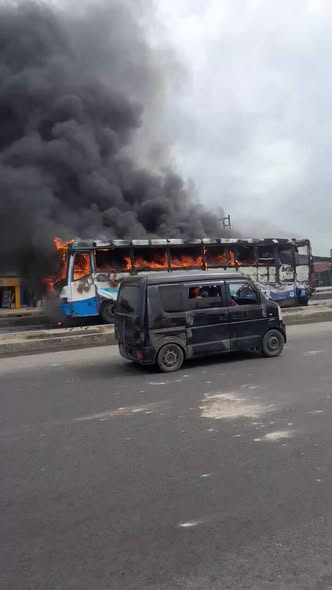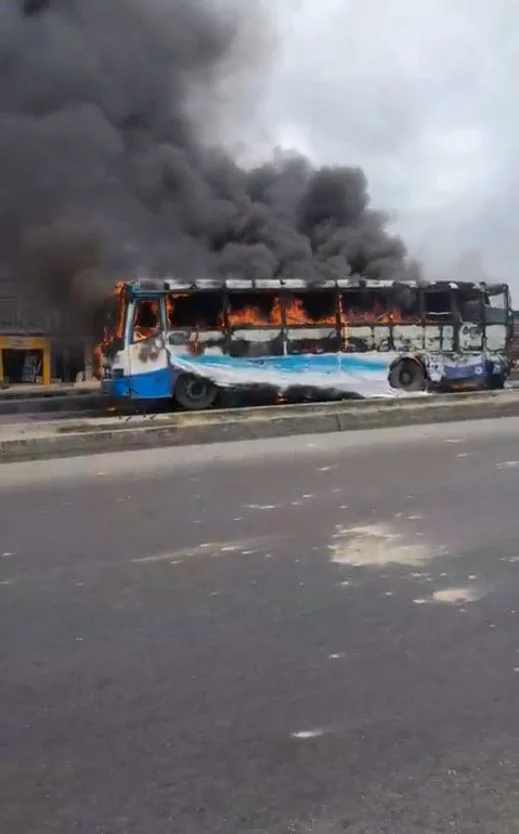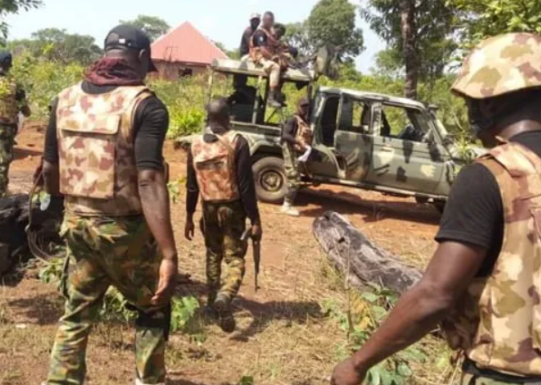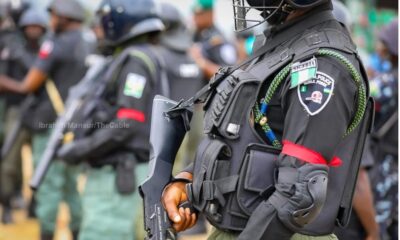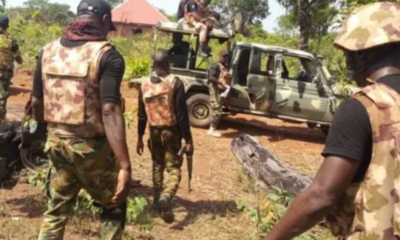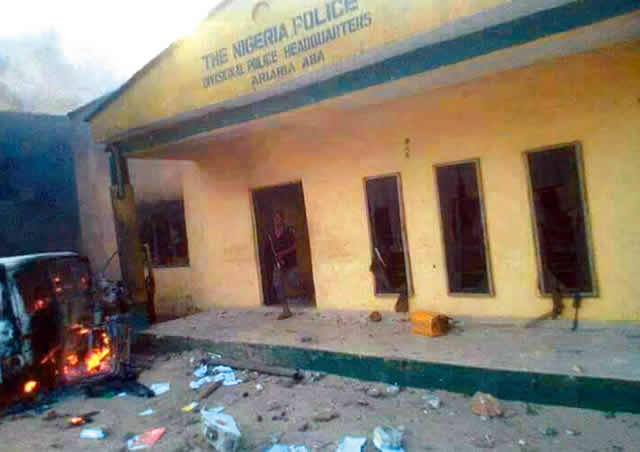
Thousands of communities across Nigeria have been left without police presence after terrorists, bandits and armed groups forced the abandonment of police stations, Saturday PUNCH investigations have revealed.
The security vacuum, uncovered in at least seven states, has left millions of residents exposed to kidnappings and violent attacks, while forcing communities to depend on vigilantes, hunters and informal security structures for survival.
Findings by our correspondents showed that in states such as Sokoto, Anambra, Niger, Kaduna, Plateau, Zamfara, Kwara and Imo, many police facilities have either been destroyed, abandoned or left grossly understaffed after repeated assaults by armed groups.
In many affected areas, residents now travel several kilometres before reaching the nearest police station, worsening response times to emergencies and deepening concerns over access to justice and the collapse of grassroots policing.
Zamfara
Saturday PUNCH gathered that over 1,000 communities in Zamfara State lack security presence, including police stations and outposts.
A community leader in Bindin Village, Maru Local Government Area of the state, Garba Sani, told Saturday PUNCH that many villagers had relocated to Gusau, the state capital, and other places due to persistent attacks by bandits and the absence of security personnel in the area.
He stated that community leaders had on several occasions requested the establishment of a police station or the redeployment of security personnel to the area, but all efforts had yielded no result.
“There are currently over one thousand communities in the state living without police stations. The bandits operate even in broad daylight in my village because there is no security presence. We have on several occasions written to the state government, seeking the deployment of security personnel or the construction of a police station in the village, but up till today, nothing has been done,” he said.
Similarly, a community leader in Jangeme Village, Samaila Musa, told Saturday PUNCH that the village had no nearby security presence despite rampant bandit attacks.
He disclosed that most residents usually slept in the bush and returned to their homes the following morning due to the absence of security personnel.
A senior police officer in the state, who spoke with one of our correspondents on condition of anonymity for fear of victimisation, admitted that security personnel in the state were overwhelmed.
“Our number is grossly inadequate compared to the bandits, who usually move in hundreds. Our weapons are outdated, and there is no way we can squarely confront these criminals.
“Most times when they attack, officers are forced to retreat because survival becomes the priority,” the officer said.
Some police stations in Zamfara have come under attack, with many personnel killed by bandits.
In March 2023, bandits attacked the Maru Police Station and killed the Divisional Police Officer, Kazeem Raheem, alongside another officer, Inspector Rabiu Umar.
Again, in February 2024, gunmen stormed the Zurmi Police Station, killed the Divisional Crime Officer and burnt down the facility.
However, the police authorities stated that no station had been officially shut down despite years of attacks.
The spokesman for the Zamfara State Police Command, Yazid Abubakar, told Saturday PUNCH that all 20 police stations across the state’s 14 LGAs remained operational.
“I know there were several cases of attacks by bandits on police stations, especially within dangerous zones like Dansadau, Zurmi and Maru, but up till today, we have not closed any of them,” he said.
The spokesman added that the command was considering establishing additional police stations due to increasing requests from communities.
Sokoto
In Sokoto State, findings by our correspondents revealed that nearly 100 communities currently lack any form of police presence.
Several police outposts in vulnerable communities were reportedly shut down or merged with divisional headquarters after repeated attacks by armed groups.
A senior police officer, who spoke on condition of anonymity, admitted that isolated outposts had become difficult to defend.
“You can only protect yourself first before protecting others. We had situations where small outposts became easy targets for attackers looking to steal weapons,” he said.
Community leaders listed affected areas to include Mure, Chacho, Bado, Kasarawa and several settlements around the Sokoto metropolis.
A resident of Mure, Alhaji Musa Ibrahim, warned that more communities could become vulnerable if the security gap persisted.
“When criminals know there is no nearby police station, they become more confident,” he said.
Anambra
Findings revealed that many police facilities attacked by gunmen in Anambra State have remained non-functional, thereby exposing residents to increased vulnerability.
Our correspondents gathered that some of the affected facilities are located in Ihiala, Orumba South, Nnewi South and Ogbaru LGAs.
Some community members, who spoke with Saturday PUNCH, lamented that residents now rely on local vigilantes and Agunechemba operatives, a state-owned security outfit created in 2025, for security.
A community leader in Lilu, Ihiala LGA, one of the worst-hit areas, who identified himself simply as Mazi Uzodike, said residents now travel to urban areas whenever they need police intervention.
“Our sons and daughters now have to go to the cities whenever they need police attention or intervention, an attention they don’t always get because policemen are afraid of entering rural communities for fear of being attacked.
“We are facing a lot of policing challenges in Lilu due to the absence of a police station after gunmen burnt down the one we had three years ago. The facility has not been rebuilt, and that is why you can’t see any police presence in the community.
“Today, in Lilu, comprising 20 communities, we have resorted to depending on local vigilantes and Agunechemba operatives for protection. We contribute security levies, which are used to maintain these vigilantes on a monthly basis,” he said.
Also speaking, a woman leader in Ajali community, Orumba North LGA, Catherine Uzor, said the community’s police station remained non-functional after it was burnt during attacks by armed agitators.
“Our police station is not functional in Ajali as it was burnt down during attacks by some agitators, and it has not been rebuilt. We have to travel to the city whenever we need police intervention on certain issues.
“And when disputes are reported at police stations in the city, they refer us to local vigilantes. We learnt that police officers are afraid of entering rural areas for fear of attack. It is only local vigilantes and sometimes Agunechemba operatives that operate in the communities,” she said.
Findings by Saturday PUNCH across the 21 LGAs of the state showed that police formations in eight LGAs — Aguata, Ihiala, Ekwusigo, Nnewi North, Nnewi South, Ogbaru, Orumba North and Orumba South — came under severe attacks and were destroyed by secessionist groups between 2021 and 2024.
Key affected locations include the Nnewi Police Area Command; Ajali Police Station; Atani Police Station; Lilu Police Station; the Police Divisional Headquarters in Ekwulobia; Ihiala Police Division; Amichi Divisional Police Headquarters, Nnewi South; Umunze Police Station; and Neni Police Station.
Findings showed that some police facilities in commercial areas such as Onitsha, Awada, Inland Town and B Divisions, Okpoko, CPS Awka and Oraifite, which were also attacked by gunmen, have since been rebuilt by the authorities concerned.
The spokesman for the Anambra State Police Command, SP Tochukwu Ikenga, said the police stations and facilities attacked in some communities had been rebuilt.
Ikenga mentioned police formations in Owerre-Ezukala in Orumba South LGA, Otollo in Nnewi North, and Area Command in Nnewi, Uli Police Station in Ihiala LGA, as some of the facilities already rebuilt.
According to him, Anambra residents are not allowing only the police to take charge of security alone, they are also involved in policing their communities, adding that the residents are now witnessing improved security asdevelopment experiencing the improved security across the state.
“The only police station that is not functioning in Ihiala is Orsumorgu Police Station and this is because the structure is not yet rebuilt as a result of the security concerns that we have there; but every other security point in Ihiala is working. And we also have a joint security team to ensure they offer protection in that area,” he added.
Kano
In Kano State, residents of Tsanyawa, Shanono and Bagwai LGAs also lamented the absence of police formations.
A police officer, who spoke on condition of anonymity, said many villages had no police stations or even outposts despite repeated attacks in recent years.
“Communities like Faruruwa, Bakaji, Unguwar Garma and Goron Dutse experienced serious bandit attacks last year.
“Even though there are divisions at local government headquarters, they are not enough to cover all the vulnerable communities,” the officer disclosed.
According to him, residents in several communities now depend largely on military deployments for protection.
“Once there is an attack in remote communities, residents are usually left on their own before security personnel can arrive,” he said.
Plateau
In Plateau State, several communities continue to struggle with inadequate policing following years of attacks on security facilities.
Some residents of Agingi community in Bassa LGA told Saturday PUNCH that the absence of a nearby police station had left them vulnerable to kidnappers and armed gangs.
A community leader in the village, John Goje, said attacks had become a recurring nightmare.
“When kidnappers attack, we wait for the police to come from Jos or Miango. By the time they arrive, the attackers are gone, and people have already been killed or abducted.
“Just two weeks ago, terrorists attacked the nearby Kampala community and killed the daughter of a former commissioner. That is the kind of fear we live with,” he said.
Another community leader, Caleb Tarka, said repeated appeals for security infrastructure had yielded little result.
“The Angwan Rukuba Police Station in Jos North Local Government Area was burnt during communal unrest in 2016. It left the community without a formal police presence for nearly two years before residents, with support from some NGOs, rebuilt the station,” he said.
A police officer serving in Mangu LGA of the state, who identified himself simply as John for security reasons, described the challenges confronting officers operating in volatile communities.
“One division sometimes covers three or four districts. We don’t have enough patrol vehicles or even fuel in some cases. When there is a distress call, you first calculate whether you can even get there before the attackers disappear,” the officer lamented.
Another officer added, “Our men are exposed. Some colleagues have died in ambushes. Morale is low, but we continue because these communities still depend on us.”
Plateau currently hosts thousands of internally displaced persons following repeated attacks in Bokkos, Mangu, Riyom, Barkin Ladi and Bassa LGAs.
Niger
In Niger State, police stations have become symbolic targets for terrorists during attacks on communities.
A Superintendent of Police, who spoke with one of our correspondents on condition of anonymity, said terrorists deliberately attack police stations to cripple local security operations.
“The strategy is simple: they attack police stations, steal weapons, kill officers and weaken the community’s ability to resist future attacks,” he stated.
In February 2026, terrorists attacked the Agwara Police Station, overpowered tactical teams and used explosives to destroy the facility.
Another attack on Konkoso District left 26 persons dead, while nearby police posts were burnt.
In 2022, bandits attacked the Nasko Divisional Police Headquarters in Magama LGA, killing the Divisional Police Officer and other personnel.
The spokesman for the Niger State Police Command, Wasiu Abiodun, however, insisted that security operations were ongoing in affected areas.
“There is no absence of police in Agwara. Tactical teams have been deployed there, and joint clearance operations are ongoing,” he stated.
But residents said the reality on the ground remained frightening.
A community leader in Borgu LGA told Saturday PUNCH that villagers now sleep in shifts.
“People no longer trust that help will come quickly during attacks. We rely more on hunters and vigilantes than the police,” he said.
Kwara
In Kwara State, attacks on rural police formations and joint security posts have intensified fears of a deeper insurgency.
Saturday PUNCH gathered that communities in Kaiama and Patigi LGAs are now without security presence, making them vulnerable to attacks by armed groups operating around the Kainji National Park axis.
A community leader in Woro, Alhaji Ahmed Hassan, said security posts had become targets of attacks by terrorists.
“They first targeted security posts. The Mobile Police in Woro have since departed. In Nuku, there are no police officers again. The communities have been left exposed,” he said.
The attacks have claimed the lives of security personnel and vigilantes.
On May 2, 2026, gunmen attacked a Police Mobile Force camp in Tenebo community, killing three police officers.
Earlier attacks in Kemanji and Nuku communities also left soldiers, forest guards and vigilantes dead.
Kaduna
In Kaduna State, residents of Birnin Gwari, Giwa, Kajuru and Chikun LGAs said repeated attacks had weakened police presence in many communities.
The youth leader of Awon community in Kachia LGA, Manasseh Andrew, also stated that police left the village three years ago.
“The police left three years ago, and they are yet to return as I speak with you. When we have issues with bandits, we call the soldiers, who are also not close to us. The distance between them and us is 25 kilometres.
“To compound our situation, we don’t have a strong network here. We are not finding it easy at all. We have more than 10 communities like Idebin, Ariko, Iriyo, Ankuro, Kuturmi, Tsanin Dodo, Koron, Tsohon, Anguwa Toka, among others,” he said.
A resident of Birnin Gwari, who spoke on condition of anonymity, said communities increasingly depended on vigilance groups.
“Our people now rely mostly on vigilantes because the police station is far away. When attacks happen, it can take hours before security personnel arrive,” he said.
In October 2025, gunmen attacked a police station in Zonkwa, Zangon Kataf LGA, killing officers during the assault.
Imo
In the South-East, Imo State presents a mixed picture of recovery and lingering security gaps following years of attacks on police formations linked to insurgency and armed violence.
Between 2021 and 2024, many police facilities across the state came under attack, forcing temporary shutdowns and abandonment of some formations.
Findings by Saturday PUNCH showed that while many of the affected stations have since been refurbished and returned to operation, some remain non-functional.
In Isiala Mbano LGA, three of the four police stations in the council — Anara, Umuelemai and Isiebu — are currently operational, while the Amaraku Police Post remains shut.
A security source also disclosed that the Onuimo Police Station had yet to resume operations.
“Authorities are still working to get the station back to full operation,” the source said.
700 policemen killed
Based on available reports, the number of policemen killed in Nigeria over the last six years is estimated at well above 700, though there is no centralised national database from the Nigeria Police Force.
Figures vary across media and research organisations.
For instance, the International Centre for Investigative Reporting reported that at least 21 police stations were attacked in the South-East between October 2020 and April 2021 alone.
During the #EndSARS unrest in 2020, hoodlums destroyed 12 police stations in Anambra State. In Borno State, the police said Boko Haram insurgents razed over 30 police stations and formations between 2011 and 2022.
Many other attacks on police formations, checkpoints and divisional headquarters have been recorded across states such as Imo, Ebonyi, Abia, Anambra and Kwara in recent years.
Overall, documented reports suggest that the number of police stations attacked or overrun in Nigeria in the last six years runs into dozens, with conservative estimates exceeding 60 stations and formations nationwide.
A Lagos-based intelligence platform, SBM Intelligence, in a report covering January 2015 to March 2021, recorded that at least 497 police officers were killed in 554 violent incidents across the country.
The report relied on verified media accounts across all geopolitical zones.
Regionally, the South-South recorded the highest fatalities, with 174 policemen killed in 163 incidents, including 51 deaths in Delta State alone.
The North-Central followed with 85 deaths, driven largely by violence in Benue and Kogi states.
The South-West recorded 72 deaths in 112 incidents, with Lagos accounting for 21.
The North-West and South-East recorded 59 and 58 deaths respectively, while the North-East recorded 49 deaths in 45 incidents, reflecting the impact of insurgency in Borno, Yobe and Adamawa states.
A separate Daily Trust report showed that at least 229 police personnel were killed between January 2023 and October 2024. Of this figure, 118 were killed in 2023 and 111 within the first 10 months of 2024.
The killings resulted from attacks by bandits, Boko Haram insurgents, gunmen, cultists and armed robbers.
In 2025 and into 2026, violence persisted, with at least 45 additional officers reportedly killed in attacks across several states.
These included assaults on police stations in Borno, Zamfara, Kwara, Enugu, Kaduna, Kano and Ondo states.
Officers were also killed at checkpoints in Kogi, Taraba, Kebbi and Zamfara, while mob attacks and jailbreak attempts further contributed to casualties.
Security experts raise concerns
Some security analysts, who spoke with Saturday PUNCH, warned that the collapse of police presence in rural communities could worsen insecurity nationwide.
A former Assistant Inspector-General of Police, Ambrose Jonathan, who spoke with one of our correspondents on Thursday, stressed the need for urgent reforms.
“The police are overstretched. Many officers are operating under dangerous conditions with poor logistics. You cannot expect effective policing when officers lack mobility, communication equipment and operational support,” he said.
Jonathan called for increased recruitment, decentralised policing and stronger collaboration with local communities.
Similarly, security expert Kabiru Adamu said repeated attacks on police formations reflected broader structural weaknesses within the country’s policing system.
He said, “When you weaken grassroots policing, you create ungoverned spaces, and once criminal groups dominate those spaces, rebuilding state authority becomes far more difficult.”
Adamu argued that the shortage of manpower, poor welfare, inadequate weapons and weak intelligence systems were worsening the crisis.
Vigilantes, hunters take charge
Saturday PUNCH gathered that in many affected communities, vigilance groups and hunters have become the first line of defence.
But experts warned that while these informal arrangements may provide temporary relief, they also carry risks.
In parts of Sokoto, Zamfara and Kaduna, vigilantes now settle disputes, enforce local rules and conduct patrols with little oversight.
A resident of Barkin Ladi in Plateau State, Philip Joshua, said communities had little choice.
“If there was a police station nearby, maybe attackers would think twice. But when there is no security presence, people naturally organise to protect themselves,” he said.
Security expert Adamu warned that weak grassroots policing was worsening the humanitarian crisis.
“Prolonged dependence on informal security systems could encourage abuses and further weaken trust in formal institutions. And when this trust is eroded, especially in rural areas, that is another crisis waiting to happen in a few years’ time,” he said.
punch.ng
FOLLOW US ON: