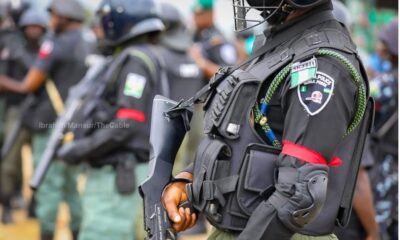
Reactions have trailed the disclosure by the Minister of Defence, Christopher Musa, that Nigerian soldiers now earn a minimum monthly salary of N100,000.
Veterans and serving personnel described the amount as grossly inadequate.
This is as they accused President Bola Tinubu of failing to implement a salary increment he promised nearly four months ago.
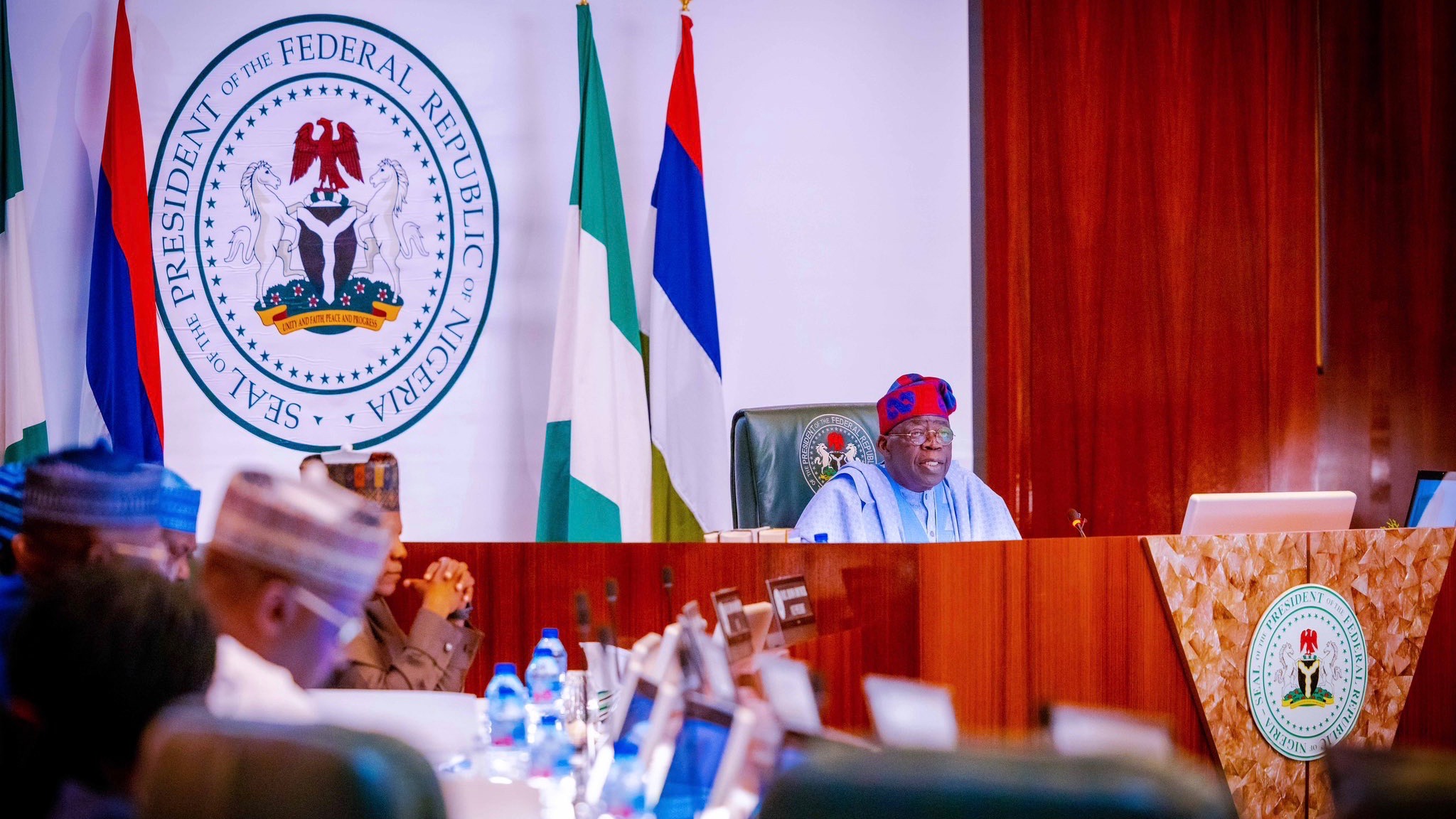
This comes as President Tinubu on Thursday evening convened a security meeting at the Presidential Villa, Abuja, comprising the entire military command, intelligence leadership and top security advisers, including his Special Adviser on Homeland Security, Major General Adeyinka Famadewa (retd.), whom he appointed in May.
A retired soldier, Abdul Isiak, said the current pay could not meet the cost of living.
He added that better pay would translate to better performance from troops.
“It is not enough at all. What is N100, 000 with the current situation of the country. It can’t get to anywhere. They should do better. If they pay more, they would put more effort into what they are doing, “ he said.
A retired sergeant, Zaki Williams, went further, questioning whether the figure disclosed by the minister was even accurate.
“I doubt if they are paying up to that amount now, it is a lie,” he said.
He described any government paying soldiers N100,000 as “not a serious one” given the hardships troops face.
“Even at that, that money is too ridiculous. Any government paying a soldier N100, 000 is not a serious one. If you know what they are passing through, you would not offer them such a money. We have been crying but no help. The government has tried, but they can do better, “he said.
The coordinator of the Coalition for Concerned Veterans, Abiodun Herbert-Durowaye, said the sum was far from sufficient for personnel who risk their lives for the country.
“How can that be ok. How can that be sufficient for someone who’s putting his life on the line for the country? We know the cost of living in this country today. That’s not sufficient for any man who is ensuring the peaceful coexistence of the country. It is far from it. My brother, how much is a bag of rice today? We are not talking about children school fees, shelter and what have you,” he said.
The Minister of Defence, Christopher Musa, had said Nigerian soldiers now earn a minimum monthly salary of N100,000 following a recent review of their welfare by the Federal Government.
Musa disclosed this during an interview on News Central on Wednesday, ahead of its broadcast on the NC Exclusive programme on Friday.
The former Chief of Defence Staff also said that the military remained underfunded despite the improvement in personnel welfare.
Responding to a question on whether the current defence budget was adequate, the minister replied, “It’s not enough.”
He, however, said the Federal Government had significantly improved soldiers’ salaries.
“When they started, a soldier was collecting N49,000 monthly. We tried so hard, now he’s collecting N100,000,” he said.
The minister also advocated the introduction of the death penalty for kidnappers, saying stiffer punishment was needed to curb the growing wave of abductions across the country.
“I think we should do that. There must be deterrence. The laws are soft, and that’s why people take advantage. If they know once you commit an offence, there must be punishment,” Musa said.
Commenting on the recent abduction of pupils in Oyo State, the minister described the incident as unfortunate, alleging that the kidnappers were attempting to force the military to release some of their detained commanders.
“You know, it’s a very sad event. Unfortunately, bad things do happen. For whatever reason, they are looking for leverage because we have some of their commanders with us, and they feel taking these kids and holding them to ransom will make us release their commander,” he said.
According to him, the abductors also threatened to kill the children if security forces intensified rescue operations.
“They are now threatening that if we come any closer, they’re going to kill all the kids,” he added.
Musa also dismissed allegations of poor feeding in the military, insisting that claims circulating in the public space were misleading.
Referring to an incident involving a military officer identified as Justice Crack, he claimed that the officer deliberately created a false impression about the quality of meals served to soldiers.
“The soldier’s food was okay. There was meat; there was all this. But he told them to pull out those things and make it look as if those things were not there,” the minister said.
Personnel lament situation
Serving personnel who spoke on condition of anonymity, citing lack of authorisation to speak publicly, also pressed the Federal Government to urgently implement the salary increase Tinubu announced in March.
One of the personnel said the Federal Government should fulfil its commitment if it was serious about improving the welfare of troops and strengthening the military.
“The Federal Government should immediately implement the new salary structure it promised members of the Armed Forces of Nigeria if it is serious about restoring morale and strengthening the nation’s military. Today, many personnel are living in conditions that do not reflect the enormous sacrifices they make in defence of the country,” the officer said.
According to the personnel, members of the Armed Forces put their lives on the line daily to defend the country’s territorial integrity but are inadequately compensated for the risks associated with their duties.
“Members of the Armed Forces risk their lives to safeguard Nigeria’s sovereignty and protect its citizens. Yet, their current remuneration falls far short of compensating for the dangers, hardships, and sacrifices inherent in military service.
“This disparity has contributed to declining morale and an increasing number of personnel going AWOL, as many struggle to cope with the harsh economic realities facing them and their families,” the personnel added.
Another serving personnel said inadequate welfare was also affecting recruitment, noting that fewer Nigerians now consider military service attractive because of the prevailing economic realities.
“The impact is also evident in recruitment. Increasingly, many Nigerians are reluctant to enlist because military service is no longer seen as financially rewarding.
“When those who dedicate their lives to defending the nation continue to face the same economic hardships as the lowest-paid segments of society despite the extraordinary risks they bear, it becomes difficult to attract and retain the calibre of personnel the country needs,” the source said.
The personnel called on the government to implement the salary review without further delay, arguing that the country’s security depends on a motivated and adequately compensated military.
“The time for decisive action is now. The Federal Government must honour its commitment by implementing the promised salary review without further delay.
“The nation’s security depends on a motivated, well-remunerated, and professional Armed Forces. Failure to act promptly risks worsening attrition and undermining Nigeria’s ability to meet its security challenges effectively,” the source added.
Another personnel appealed directly to President Tinubu to translate the promise into action, saying many military families were struggling to cope with the rising cost of living.
“During Iftar, the President raised our hopes and we were very happy. He should please make it a reality so that everybody will be happy.
“Things are quite expensive, which has made our current salaries not enough. I personally need the increment as I speak. I have children and dependents to cater for,” the personnel said.
President Bola Tinubu had on March 7, 2026, announced the approval of a salary increment for military personnel during an interfaith breaking of fast with Service Chiefs at the Presidential Villa, Abuja.
At the event, the President assured members of the Armed Forces that his administration would prioritise their welfare, accommodation and other benefits.
Tinubu said,”I have listened to the Chief of Army Staff, and recent approvals given to the Army are well placed. My duty is to thank all of you on behalf of a grateful nation, knowing fully well that many times you are without your families, some are facing attacks from banditry and terrorists.
“This nation will always be grateful to you and your sufferings will not be in vain, I can assure you.
“I assure you that we will do everything possible and collectively to ensure that you have no regrets. Your welfare, accommodation and many other opportunities that should be extended to your families will take first priority in our decisions.”
Efforts to get the Defence Headquarters’ comment on the matter proved abortive, as calls to the Director of Defence Information, Maj. Gen. Samaila Uba, were not answered.
He had also yet to respond to a message sent to him as of the time of filing this report.
Tinubu summons meeting
Meanwhile, officials with knowledge of the President’s meeting agenda with security and intelligence chiefs, as well as top security advisers, said Thursday’s gathering was a comprehensive review of the security situation in the country as well as across several theatres of operation.
The closed-door engagement, which lasted for over two hours, was announced by the State House in a photograph released Thursday.
Present were the National Security Adviser, Nuhu Ribadu; Minister of Defence, General Christopher Musa (retd.); Chief of Defence Staff, General Olufemi Oluyede; Chief of Army Staff, Lieutenant General Waidi Isa; and the Chief of Defence Intelligence, Lieutenant General Emmanuel Undiandeye.
Also present were the Director-General of the Department of State Services, Adeola Ajayi; Director-General of the National Intelligence Agency, Mohammed Mohammed; Special Adviser to the President on Homeland Security, Major General Adeyinka Famadewa (retd.); and the Inspector-General of Police, Kayode Egbetokun, along with other representatives of the security agencies.
The meeting comes two days after troops of Operation FANSAN YAMMA, supported by the Air Component of the Joint Task Force (North West), disrupted what the military had described as a major planned terrorist offensive in Zamfara and Katsina States.
In a July 7 operation, three Nigerian Air Force aircraft tracked a convoy of approximately 300 heavily armed terrorists on motorcycles moving from the Sunke-Kumbo axis toward Gummi and conducted precision airstrikes on the formation.
In a separate engagement, troops neutralised Alhaji Tukur, identified by the military as a notorious bandit commander and the younger brother of wanted kingpin Alhaji Shehu Bagiwaye, in Dogon Kade.
In the North-East, troops of Operation Hadin Kai repelled a fresh assault on the Mairari military base on July 1, following coordinated attacks on military formations some security analysts describe as a deliberate campaign by ISWAP to overrun forward operating bases and degrade the operational capacity of troops.
At least 13 attacks on military bases have been recorded in 2026 alone, predominantly across Borno State.
At the time of this report, the Presidency had not issued a statement on the details of the meeting.
At a previous security meeting in March, Defence Minister Musa told State House correspondents that the armed forces had come to brief the President on a series of attacks, adding that security forces had risen to the occasion.
“Contrary to what you may read or hear, the terrorists and bandits are taking more casualties. Their commanders are being killed every day. We are confident of victory,” Musa had said.
punch.ng
FOLLOW US ON: