Connect with us

Politics

Kwankwaso reveals why the north settled for Peter Obi as most capable ally

Published

on

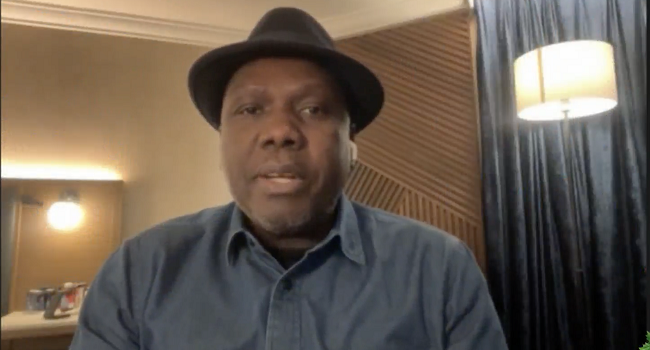
A former Kano State Governor and leader of the Kwankwasiyya Movement, Rabiu Kwankwaso, says northern political leaders conducted a deliberate assessment of potential allies before settling on Peter Obi as the most capable partner to prosecute the 2027 presidential campaign.

He dismissed concerns about a hidden power struggle between his camp and Obi’s.

Kwankwaso made the disclosure in an interview on Arise TV on Monday, offering one of his most detailed accounts yet of how the North-Southeast political alliance within the NDC was formed.

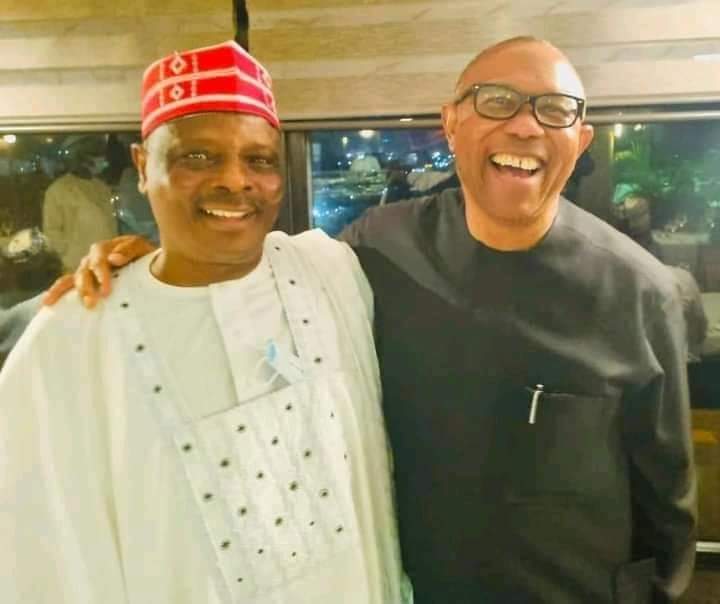
“I looked around together with our leadership in the north to say, okay, who do we think is capable? Who can come and work together with us honestly so that we can move this country? Along the line, we realised that Peter Obi is at the forefront of it. That’s why we all accepted to work together,” he said.

Kwankwaso, a two-term former governor of Kano State and the presidential candidate of the New Nigeria Peoples Party in 2023, leads the Kwankwasiyya movement, a grassroots political force with deep loyalty across Kano and parts of northern Nigeria.

He left the NNPP amid internal disputes before joining the NDC alongside Obi earlier this month.

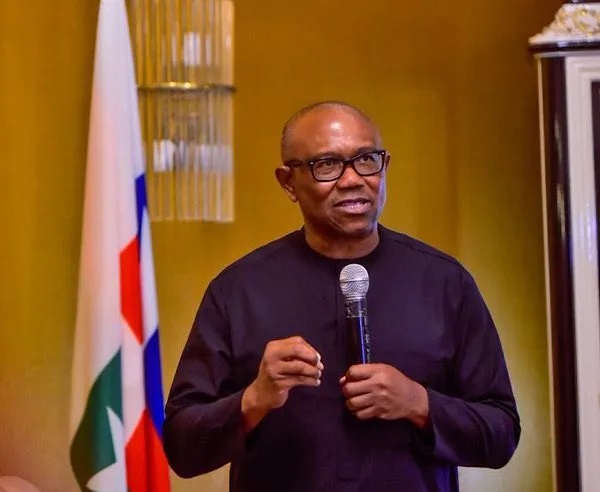
Obi, a former governor of Anambra State, ran on the Labour Party platform in 2023 and drew massive youth-driven support across the South and urban centres, though he did not win.

Both men formally joined the NDC on Sunday, May 3, defecting from the crisis-hit African Democratic Congress.

At the party’s national convention on Saturday in Abuja, Kwankwaso backed the NDC’s decision to zone its 2027 presidential ticket to the South, describing it as a step toward fairness, healing and national cohesion.

See also  APC consensus push faces resistance in states ahead of primary elections

Responding to a question about whether the alliance concealed a quiet rivalry between both camps, Kwankwaso argued that friction between principals and their deputies was a product of greed, not structural tension.

“The problem people are having, especially leaders, is that they are too greedy to the extent that they begin to have issues. There is so much to do. You don’t have to fight your deputy,” he said.

He said his record as a former deputy speaker of the House of Representatives, and later as governor of Kano State, showed that political partnerships could hold under pressure.

“I had an opportunity to work with my speaker and we worked very well. I was in Kano for eight years despite the difficulty of my then deputy governor. We were able to work for eight years amicably to the extent that I handed over to him,” he said.

Kwankwaso extended the argument beyond his personal experience, saying the same principle applied at the federal level.

“In the Senate and other places, in the NDDC, we worked amicably with people. There is so much to be done and that’s why you have even ministers, other executives, advisors and so on. I don’t see from my experiences of the past why deputies or vice would fight with the president or governor,” he said.

He grounded the alliance in Nigerian political history, tracing a lineage of productive North-Southeast partnerships from the first republic to the present.

“Right from the beginning, this sort of alliance has been in existence. Now we are going back to what Tafawa Balewa did during their time,” he said.

See also  Abure vows appeal after A’Court affirms Usman Labour Party chair

He also referenced the collaboration between former Prime Minister Tafawa Balewa and leaders of the NCNC, as well as that of former President Shehu Shagari and his vice president, Alex Ekwueme, in the second republic.

“So also in the second republic, immediately after the war, our leaders, Shagari and others, worked very closely with the southeast, with Alex Ekwueme as his vice president. They are our friends. We want to work together with them,” he said.

Kwankwaso also noted that subsequent administrations had shifted power-sharing away from the South-East, a pattern he suggested the current alliance was correcting.

“There was a change during the third republic where for many obvious reasons an election was annulled and the government under the military decided to bring in Shonekan from the South-West.

“Even after that, the military and other leaders worked together and brought in Chief Olusegun Obasanjo from the South-West again. Even Bola Tinubu probably is a beneficiary of all that,” he said.

He was emphatic that the choice of Obi was not driven by regional sentiment alone.

“It wasn’t just because we are going to the South-West just because of the South-West. No. We realised that Peter Obi is at the forefront of it and that’s why we all accepted to work together,” he said.

The movement of both men into the NDC has triggered a wave of defections, with senators, House of Representatives members and political blocs aligned with their former coalition gravitating toward the new party, rapidly reshaping calculations ahead of the 2027 elections.

See also  Tinubu retains Shettima as running mate as parties race to meet INEC deadline

The alliance pairs Kwankwaso’s northern grassroots structure and disciplined voter mobilisation with Obi’s national youth engagement and urban electoral momentum, positioning the NDC as one of the main opposition platforms set to challenge President Bola Tinubu and the ruling All Progressives Congress in 2027.

Continue Reading
Click to comment

Leave a Reply

Your email address will not be published. Required fields are marked *

Politics

2027: PDP, APC upload gov candidates on INEC portal

Published

on

The Peoples Democratic Party and the ruling All Progressives Congress have commenced the upload of names of their governorship and state Houses of Assembly candidates for the 2027 general elections.

Speaking exclusively with The PUNCH, the PDP National Organising Secretary, Umar Bature, disclosed that the party commenced the upload process on Saturday.

Also, a senior APC official, who spoke on condition of anonymity because he was not authorised to comment publicly, told our correspondent that the party would upload only the governorship and state Houses of Assembly candidates whose nominations had been cleared by the primary election appeal panel and the National Working Committee.

Earlier, in line with the Independent National Electoral Commission’s timetable, political parties submitted the nomination lists of their presidential and National Assembly candidates between June 27 and July 11, 2026.

The process also included the submission of Forms EC9 and EC9A to EC9E, as required under Section 29(1) of the Electoral Act, 2026.

INEC also fixed the submission of nomination forms for governorship and state Houses of Assembly candidates to run from 9:00 a.m. on July 18 to 6:00 p.m. on August 8, 2026.

The timetable further indicates that the personal particulars of presidential and National Assembly candidates will be published on August 8, while those of governorship and State House of Assembly candidates will be displayed on August 29.

It also sets August 22 as the deadline for the withdrawal or substitution of presidential and National Assembly candidates, while governorship and state House of Assembly candidates have until September 19 to withdraw or be substituted.

See also  We’ll reject any electoral fraud in 2027, says Makinde

When contacted, Bature disclosed that the PDP began uploading its candidates’ details on Saturday, adding that the exercise is ongoing and will be concluded before August 8.

He stated, “The Peoples Democratic Party commenced the upload of its governorship and state Houses of Assembly candidates’ details to INEC’s nomination portal on Saturday.

“The exercise has been progressing smoothly without any technical issues, and we are confident that the upload process will be completed well ahead of the deadline.”

Also, the APC source said the party has commenced the upload of its candidates on the INEC portal, with priority given to the 16 incumbent governors seeking re-election.

The 16 incumbent governors expected on the APC list are Umo Eno of Akwa Ibom, Hyacinth Alia of Benue, Uba Sani of Kaduna, Abba Yusuf of Kano, Dikko Radda of Katsina, Nasir Idris of Kebbi, Umaru Bago of Niger, Caleb Mutfwang of Plateau, Ahmed Aliyu of Sokoto, Agbu Kefas of Taraba and Dauda Lawal of Zamfara.

The source also said the party’s governorship list would feature 12 first-time flagbearers, including Obafemi Hamzat (Lagos), Solomon Adeola (Ogun), Kingsley Chinda (Rivers), Eric Opah (Abia), Mohammed Abubakar (Bauchi), Mustapha Gubio (Borno), Jamilu Gwamna (Gombe), Ahmed Wadada (Nasarawa) and Baba Malam Wali (Yobe).

He stated, “I can confirm that the party commenced the upload process yesterday (Saturday), with priority given to the 16 governors seeking re-election.

“The party has also established a committee headed by Jibrin Bancir, the Principal Private Secretary to the APC National Chairman, to coordinate the smooth transmission of documents and materials required for upload to the INEC portal.

See also  Abure vows appeal after A’Court affirms Usman Labour Party chair

“The committee is responsible for receiving documents from state chairmen, verifying the details, ensuring all requirements are met, and forwarding them to the ICT department for upload.

“The arrangement is aimed at making the process seamless, efficient and timely.

“There could be slight changes to the initial list of candidates, as the primary election appeal committee had reviewed some petitions and submitted its recommendations to the National Working Committee.

“So, only candidates who passed the appeal committee’s review and received the approval of the NWC were uploaded to the INEC portal.

“We are confident that the exercise will be completed before the deadline.”

The PDP, APC and other political parties are expected to upload a total of 28 governorship candidates and 993 state Houses of Assembly candidates nationwide.

Governorship elections will not take place in the eight states of Anambra, Bayelsa, Edo, Ekiti, Imo, Kogi, Ondo and Osun due to off-cycle election schedules.

Earlier, political parties participating in the presidential and National Assembly elections had submitted and uploaded their candidates’ lists on the INEC portal.

punch.ng

FOLLOW US ON:

FACEBOOK

TWITTER

PINTEREST

TIKTOK

YOUTUBE

LINKEDIN

Continue Reading

Politics

2027: ‘Nobody Can Decide If Amupitan Will Do The Right Or Wrong Thing’ – Peter Obi

Published

on

Nigeria Democratic Congress (ADC) 2027 presidential candidate, Peter Obi, has stated that the decision on whether to do the right or wrong thing rests with the Chairman of the Independent National Electoral Commission (INEC), Joash Amupitan, ahead of the 2027 election.

It was reports that Peter Obi, during an interview in Germany, linked Ampupitan to a referee, noting that he has yet to have any personal encounter with him.

He said, “I have not met him yet and for me he’s a referee and you can’t decide if a referee will do the right thing or the wrong thing.

“We are telling the youths that it’s about their future, we want a better future because they have a right to a better future and that’s what I’m doing everyday.

“You cannot allow this process to continue, it’s a great country that can be turned around, a country that has the resources to be better.

“Again, if Nigeria is doing well today, it’s not only beneficial to Nigerians, it’s beneficial to Europe because you are the closest people to us . If Nigeria today is booming, then German companies will do more business in Nigeria.”

Peter Obi also noted that Nigerians can choose not to do the wrong thing during the 2027 elections.

He added, “In whatever role they play, the people can decide otherwise, If the people decide that they won’t do the wrong thing, they won’t do the wrong thing; it’s about the people.

“I have seen systems change from the time I became governor till today, I have seen people say that we can’t have this.”

See also  ADC constitution review targets women, youth inclusion

FOLLOW US ON:

FACEBOOK

TWITTER

PINTEREST

TIKTOK

YOUTUBE

LINKEDIN

INSTAGRAM

Continue Reading

Politics

Three Governors Told Me Not To Come To Their State – Peter Obi

Published

on

Presidential candidate of the Nigeria Democratic Congress (NDC), Peter Obi, has claimed that three state governors recently prevented him from visiting their states.

It was reports that the NDC flag bearer made the allegation while answering questions concerning an alleged threat to his life during an interview with The Sun, but failed to name the states.

He lamented that his freedom of movement is being violated by some state governors over his political ambition.

The NDC flag bearer questioned why anyone would stop him from visiting a state.

He said, “I have tried to go to about three states, but the governors would say that I shouldn’t come.

“The question is: don’t we have freedom of movement in Nigeria? Why would anybody tell me not to come to a state?

“I have been told that if I come, my life is in danger. What else do you want me to say? What I am saying is there for everybody to see”.

It was recalls that Edo State Governor, Monday Okpebholo, in 2025, warned the former governor of Anambra State against coming to the state without security clearance.

Obi also raised an alarm in a recent podcast, alleging that every move he makes is being frustrated by those in authority.

FOLLOW US ON:

FACEBOOK

TWITTER

PINTEREST

TIKTOK

YOUTUBE

LINKEDIN

INSTAGRAM

See also  Wike bloc petitions NJC, Oyo judge adjourns suit on PDP Convention
Continue Reading

Trending