Connect with us

Politics

Kwankwaso reveals why the north settled for Peter Obi as most capable ally

Published

on

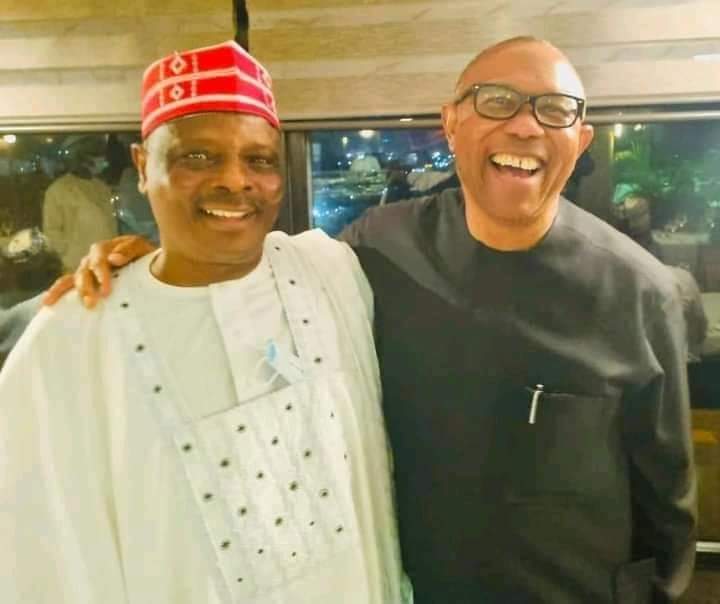
A former Kano State Governor and leader of the Kwankwasiyya Movement, Rabiu Kwankwaso, says northern political leaders conducted a deliberate assessment of potential allies before settling on Peter Obi as the most capable partner to prosecute the 2027 presidential campaign.

He dismissed concerns about a hidden power struggle between his camp and Obi’s.

Kwankwaso made the disclosure in an interview on Arise TV on Monday, offering one of his most detailed accounts yet of how the North-Southeast political alliance within the NDC was formed.

“I looked around together with our leadership in the north to say, okay, who do we think is capable? Who can come and work together with us honestly so that we can move this country? Along the line, we realised that Peter Obi is at the forefront of it. That’s why we all accepted to work together,” he said.

Kwankwaso, a two-term former governor of Kano State and the presidential candidate of the New Nigeria Peoples Party in 2023, leads the Kwankwasiyya movement, a grassroots political force with deep loyalty across Kano and parts of northern Nigeria.

He left the NNPP amid internal disputes before joining the NDC alongside Obi earlier this month.

Obi, a former governor of Anambra State, ran on the Labour Party platform in 2023 and drew massive youth-driven support across the South and urban centres, though he did not win.

Both men formally joined the NDC on Sunday, May 3, defecting from the crisis-hit African Democratic Congress.

At the party’s national convention on Saturday in Abuja, Kwankwaso backed the NDC’s decision to zone its 2027 presidential ticket to the South, describing it as a step toward fairness, healing and national cohesion.

See also  2027: Declare your intentions, Makinde tells appointees eyeing elective offices

Responding to a question about whether the alliance concealed a quiet rivalry between both camps, Kwankwaso argued that friction between principals and their deputies was a product of greed, not structural tension.

“The problem people are having, especially leaders, is that they are too greedy to the extent that they begin to have issues. There is so much to do. You don’t have to fight your deputy,” he said.

He said his record as a former deputy speaker of the House of Representatives, and later as governor of Kano State, showed that political partnerships could hold under pressure.

“I had an opportunity to work with my speaker and we worked very well. I was in Kano for eight years despite the difficulty of my then deputy governor. We were able to work for eight years amicably to the extent that I handed over to him,” he said.

Kwankwaso extended the argument beyond his personal experience, saying the same principle applied at the federal level.

“In the Senate and other places, in the NDDC, we worked amicably with people. There is so much to be done and that’s why you have even ministers, other executives, advisors and so on. I don’t see from my experiences of the past why deputies or vice would fight with the president or governor,” he said.

He grounded the alliance in Nigerian political history, tracing a lineage of productive North-Southeast partnerships from the first republic to the present.

“Right from the beginning, this sort of alliance has been in existence. Now we are going back to what Tafawa Balewa did during their time,” he said.

See also  PDP crisis - 3,000 delegates set for high-stakes convention

He also referenced the collaboration between former Prime Minister Tafawa Balewa and leaders of the NCNC, as well as that of former President Shehu Shagari and his vice president, Alex Ekwueme, in the second republic.

“So also in the second republic, immediately after the war, our leaders, Shagari and others, worked very closely with the southeast, with Alex Ekwueme as his vice president. They are our friends. We want to work together with them,” he said.

Kwankwaso also noted that subsequent administrations had shifted power-sharing away from the South-East, a pattern he suggested the current alliance was correcting.

“There was a change during the third republic where for many obvious reasons an election was annulled and the government under the military decided to bring in Shonekan from the South-West.

“Even after that, the military and other leaders worked together and brought in Chief Olusegun Obasanjo from the South-West again. Even Bola Tinubu probably is a beneficiary of all that,” he said.

He was emphatic that the choice of Obi was not driven by regional sentiment alone.

“It wasn’t just because we are going to the South-West just because of the South-West. No. We realised that Peter Obi is at the forefront of it and that’s why we all accepted to work together,” he said.

The movement of both men into the NDC has triggered a wave of defections, with senators, House of Representatives members and political blocs aligned with their former coalition gravitating toward the new party, rapidly reshaping calculations ahead of the 2027 elections.

See also  Peter Obi says he won 2023 election but has ‘no evidence’ to prove claim, read details

The alliance pairs Kwankwaso’s northern grassroots structure and disciplined voter mobilisation with Obi’s national youth engagement and urban electoral momentum, positioning the NDC as one of the main opposition platforms set to challenge President Bola Tinubu and the ruling All Progressives Congress in 2027.

Continue Reading
Click to comment

Leave a Reply

Your email address will not be published. Required fields are marked *

Politics

Wike, lawmakers meet Fubara in Rivers ahead of 2027 elections

Published

on

The Minister of the Federal Capital Territory, Nyesom Wike, members of the Rivers State House of Assembly and local government chairmen in the state on Sunday met with Governor Siminalayi Fubara at his private residence in Port Harcourt.

The meeting comes about a fortnight after Wike led members of the Rainbow Coalition in the state, including the All Progressives Congress candidate for the 2027 general elections, Kingsley Chinda, to meet with the governor.

Sunday’s visit marked the first time the FCT minister had visited Fubara at his residence in Port Harcourt.

The meeting is seen as a continuation of talks between the two camps aimed at consolidating reconciliation efforts following the return of relative peace to the state.

Wike led a delegation comprising mainly members of the state legislature, including the Speaker, Martin Amaewhule, and the chairmen of the state’s 23 local government areas, to meet Fubara and his supporters.

The APC standard-bearer for the 2027 election in the state, Kingsley Chinda, was also part of the delegation.

Although details of the private meeting were not immediately available, sources said the engagement was aimed at building on previous discussions, strengthening reconciliation efforts and exploring ways to accommodate Fubara’s loyalists in the state’s evolving political arrangement.

Fubara and the Amaewhule-led House of Assembly had been at loggerheads for more than two years following a protracted disagreement between the governor and his predecessor, Wike.

At the height of the crisis, lawmakers made two attempts to impeach the governor before President Bola Tinubu intervened.

See also  Kwankwaso opens reconciliation door to estranged Kano gov

In October 2023, amid rising tensions between the two political camps, a section of the state House of Assembly complex along Moscow Road was bombed.

The disagreement further polarised the state, with suspected militant groups threatening to attack oil installations.

The crisis drew renewed attention from Tinubu, who declared a state of emergency in Rivers State in March 2025 for an initial period of six months.

The move led to the suspension of the governor, his deputy and members of the state House of Assembly.

Tinubu appointed Ibok-Ete Ibas as administrator of the state during the period. The elected officials later returned to office.

Sunday’s meeting is significant as it brings together key political figures involved in the crisis, including the governor, the state’s legislative leadership and local government chairmen aligned with Wike.

The participation of the Speaker, lawmakers and the 23 council chairmen also broadens the representation of political structures associated with the FCT minister in the reconciliation process.

The renewed engagement between the executive and legislative camps could help stabilise the state’s political environment ahead of the 2027 general elections.

However, whether the talks will produce a lasting resolution remains uncertain, particularly amid concerns about the influence of Wike’s camp over local government leadership and the selection of candidates for the forthcoming elections.

The extent to which Fubara’s loyalists will be accommodated in the emerging political arrangement also remains unclear.

Source: punchng.com

FOLLOW US ON:

FACEBOOK

WHATSAPP CHANNEL

TWITTER

PINTEREST

TIKTOK

YOUTUBE

LINKEDIN

INSTAGRAM

Continue Reading

Politics

Otedola makes shocking revelation about Kadiri Obafemi Hamzat, read details

Published

on

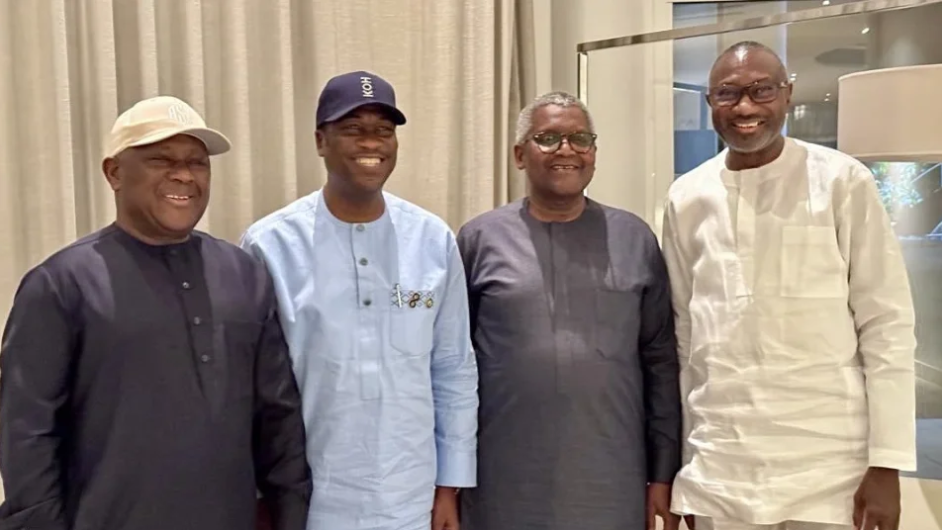
Billionaire businessman Femi Otedola has recalled sharing a bunk bed with Lagos State Deputy Governor, Obafemi Hamzat, during their boarding school days 49 years ago.

Otedola disclosed this in a post on his X account on Monday, following a dinner he hosted in honour of Hamzat, the All Progressives Congress governorship candidate for the 2027 Lagos State election.

“Yesterday, I hosted dinner in honour of @DrObafemiHamzat, the incoming Governor of Lagos State. A man of the highest integrity, with whom I shared a bunk bed at boarding school 49 years ago,” Otedola wrote.

He praised Hamzat’s character, saying his experience of the deputy governor over the years had been defined by honesty, sincerity, fairness and strong moral principles.

“My experience of his character over the years has been defined by his honesty, sincerity, fairness and strong moral principles,” he added.

The dinner was attended by prominent Nigerian businessmen, including Aliko Dangote and Abdul Samad Rabiu.

Hamzat emerged as the APC’s governorship candidate in May after winning the party’s Lagos State primary ahead of the 2027 election. He polled 657,917 votes to defeat his challenger, Olanrewaju Jim-Kamal, who secured one vote, according to the announced results.

Hamzat has served as Lagos State deputy governor since 2019 and is seeking to succeed Governor Babajide Sanwo-Olu, whose second term ends in 2027.

Source: punchng.com

FOLLOW US ON:

FACEBOOK

WHATSAPP CHANNEL

TWITTER

PINTEREST

TIKTOK

YOUTUBE

LINKEDIN

INSTAGRAM

See also  Kwankwaso opens reconciliation door to estranged Kano gov
Continue Reading

Politics

N250bn NLNG row: Presidency faults Makinde, gov demands answers

Published

on

The Presidency on Sunday described as false the claim by the Oyo State Governor, Seyi Makinde, that the Federal Government is withholding N250bn in Nigeria LNG Limited dividends for each state until after the 2027 elections.

It said the sum, as Makinde claimed, would exceed the company’s entire lifetime payout to the Federation.

In a statement signed on Sunday by the Special Adviser to the President on Information and Strategy, Bayo Onanuga, the Presidency asked Nigerians to disregard the claim.

It also said it expected Makinde “to be more measured in his public conduct and utterances.”

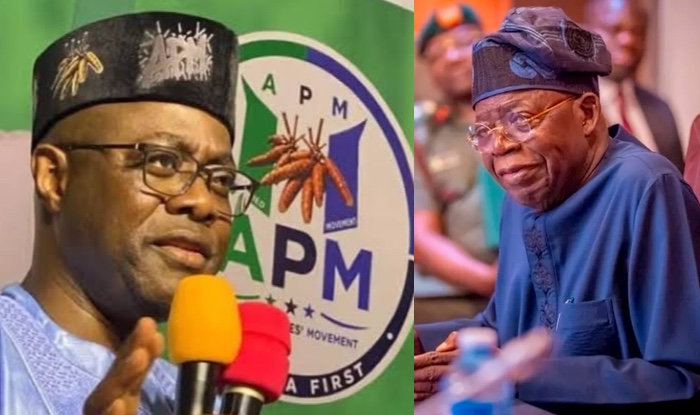
Makinde, the presidential candidate of the Allied People’s Movement, had at the 2027 Budget Stakeholders’ Consultative Engagement at the Olola Ogunlana Hall, International Conference Centre, University of Ibadan, on Friday, claimed that “Each state was supposed to get N250bn. We had already identified projects that would expand Oyo State’s economy.

“But they have now said the money will not be paid until after the election. Is the election more important than the people of Nigeria?”

The governor had reportedly also said the dividends had gone into the Federation Account and that “the Federal Government spent it alone.”

He said President Bola Tinubu assured governors the money would be paid after the elections.

Onanuga, however, argued that N250bn for each of the 36 states would come to N9.0trn, excluding the Federal Government, the Federal Capital Territory and the 774 local councils.

States receive 26.72 per cent of distributable revenue under the Federation Account Allocation Committee formula.

See also  Folarin meets Tinubu as APC mobilises for Alli’s gov bid

For their share alone to reach N9tn, Onanuga argued, NLNG dividends paid into the Federation Account “would have to exceed N33.68tn (about $25bn) in a single declaration.

“NLNG has never paid $25bn in dividends to the Federation Account in a single payout.”

The statement said NLNG has paid about $21.5bn in dividends to the federation over 25 years, with less than $3bn realised since Tinubu took office.

“Therefore, any claim that a single payout exceeds the company’s entire lifetime distribution to the federation, and is being withheld, defies basic logic and economic reality,” the Presidency affirmed.

It said that since Makinde began his presidential bid, “he has chosen to play politics by making misleading claims rather than presenting verifiable facts.”

It added that the Oyo State governor “had turned false, unguarded statements and claims into an art form.”

It recalled that Makinde once described the huge flow of funds from the Federation Account to states, including Oyo, as voodoo.

“Under Nigerian law, Governor Makinde is free to pursue his presidential ambition.

“He should desist from making falsehoods and disinformation the hallmarks of his campaign,” the statement added.

The Presidency urged the public to disregard the claims, which it said “serve only to mislead citizens and stoke needless disaffection against the Federal authorities.”

In a reply on Sunday, Makinde, in a statement by his

Special Adviser (Media), Dr Sulaimon Olanrewaju, said the Presidency response sidestepped the central issue, adding that the Nigeria Governors’ Forum, with the Federal Government’s support, engaged a consultant to reconcile NLNG dividend payments.

See also  2027: Declare your intentions, Makinde tells appointees eyeing elective offices

He claimed that the exercise identified a shortfall of about N9tn due to states and local governments, adding that the Federal Government accepted the findings.

“The report remains in the custody of both the Federal Government and the NGF. We trust the Presidency will not deny its existence,” the statement said.

It described Makinde as the NGF’s incumbent vice-chairman.

It asked: “The Presidency stated that NLNG had paid $21.5bn in dividends into the Federation Account since inception, including $3bn received under the current administration. But it did not explain how these funds were disbursed.

“Have states and local governments received their shares? How much did they receive, and how were those amounts calculated? What happened to the $3bn received under this administration?

“Governor Makinde conducts public discourse with decorum and does not make unfounded claims or quote figures without a basis. We remain ready to provide further clarification while we urge the Presidency to address the substance of the matter.”

The Federal Government holds 49 per cent of NLNG.

In July, Chief Executive Officer of the NLNG, Adeleye Falade, said the company had paid $47.2bn in dividends to all shareholders, including the Federal Government, from revenue of $149.6bn since it began operations.

Annual payments to NNPC, its government shareholder, were $1.39bn in 2014, $722.44m in 2021 and $1.10bn in 2022, according to NLNG’s Facts and Figures report.

The 36 states reportedly received N4.83tn from the Federation Account between January and June, with Oyo getting N147.32bn.

The Oyo governor declared his presidential ambition on May 14 at a rally in Ibadan, under the APM, after the party signed an alliance with a faction of the Peoples Democratic Party led by Kabiru Turaki.

See also  2027: Kwankwaso supporters propose Obi-Kwankwaso presidential ticket

Source: punchng.com

FOLLOW US ON:

FACEBOOK

WHATSAPP CHANNEL

TWITTER

PINTEREST

TIKTOK

YOUTUBE

LINKEDIN

INSTAGRAM

Continue Reading

Trending