Connect with us

Business

Petrol price soars 643% in three years

Published

on

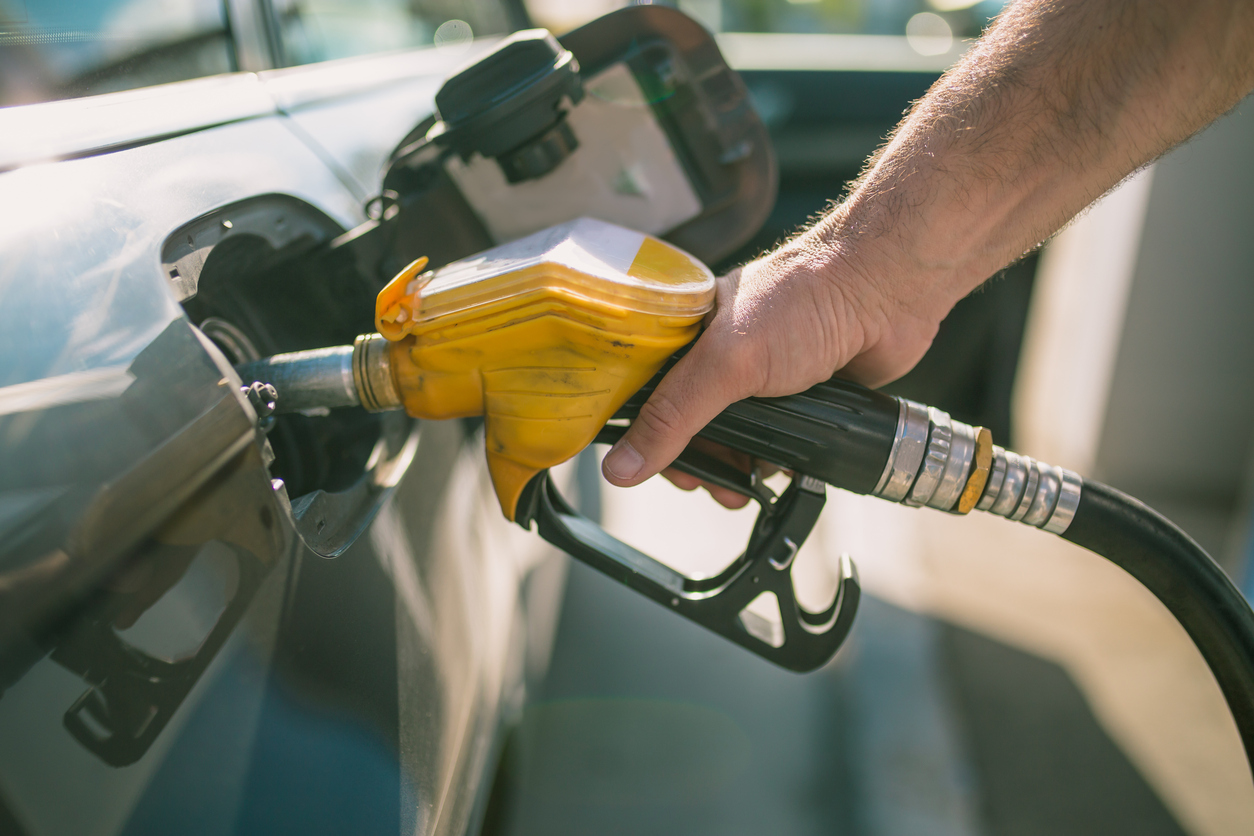
The price of Premium Motor Spirit (petrol) jumped from N175 to N1,300 between May 2023 and May 2026, representing approximately a 643 per cent price increase in three years, The PUNCH reports.

Findings showed that the surge in petrol prices was triggered by the removal of subsidies by President Bola Tinubu immediately after he was sworn in on May 29, 2023.

Also, the devaluation of the naira compounded the situation, causing the then-imported product to rise beyond the reach of many Nigerians.

Three years later, the cost of a litre of petrol jumped at filling stations, ranging between N1,300 and N1,400, depending on the location.

The current price surge from about N800 some months ago to N1,300 was occasioned by Middle East tensions, which led to global oil disruptions due to the closure of the Strait of Hormuz.

Recall that immediately after Tinubu took the oath of office, he quickly announced that “the fuel subsidy is gone.”

This led to an immediate rise in petrol prices from N175 or N200 to over N500 per litre. The Nigerian National Petroleum Company Limited, which was the sole importer of petrol, led the charge by raising its pump prices.

Remarkably, Tinubu had hiked the fuel price without recourse to the promise he made in Abeokuta during his campaign that he would bring down the price of petrol.

With the removal of fuel subsidies, the price went up, and this led to a rise in inflation across the country. But Nigerians were persuaded by the President that there would be no gain without pain.

Also, recall that when the government floated the exchange rate in June 2023, the cost of petrol rose above N1,000.

See also  Duke likens pro-Tinubu opposition parties to Abacha-era ‘leprous fingers’

However, the NNPC quickly introduced what the International Monetary Fund tagged an “implicit subsidy” payment through the back door. While the landing cost of petrol was around N1,200, the NNPC sold it at half the price based on the promise of the Federal Government to pay the shortfall, or what was tagged “under-recovery.”

For close to a year, the NNPC sold the product at about N600 per litre, denying claims that it was paying subsidies. However, in 2024, the state oil firm admitted to selling below the cost price.

The former Chief Financial Officer of the NNPC, Umar Ajiya, stated, “In the last eight to nine years… what has been happening is that we have been importing PMS, which has been landing at a specific cost price, and the government tells us to sell it at half price. So, the difference between the landing price and that half price is a shortfall…”

Following the admission, fuel prices rose to as high as N1,080. This coincided with the unveiling of the Dangote Petroleum Refinery’s PMS. The Dangote refinery triggered a price war in the petroleum market towards the end of 2024 when it started reducing petrol prices.

With the Dangote refinery in the sector, petrol was selling for N800 to N900 until the US-Iran conflict began on February 28, 2026. Since the US-Iran war started, the Dangote refinery has raised the gantry price of petrol repeatedly, while filling stations sell to customers at N1,300 and above.

The current rise in petrol prices has caused another increase in inflation, leading to higher transportation costs and rising prices of other commodities.

See also  Tinubu shifts 15% fuel import duty to Q1 2026

Our correspondent reports that efforts were made by the Federal Government to reduce transportation costs. The government introduced the Presidential Initiative on Compressed Natural Gas to hasten the adoption of CNG as an alternative to petrol and diesel.

Nonetheless, it was observed that CNG adoption has yet to show any reasonable effect on the cost of living. Since petrol prices recently jumped from N800 to N1,300, the Federal Government has been urged to introduce measures that could cushion the effect on the masses.

Energy economists called for targeted cash transfers to ameliorate the impact of the rising fuel prices on vulnerable Nigerians. A former president of the Association of Energy Economists, Prof Adeola Adenikinju, said the current situation presents a “two-edged sword” for Nigeria, with potential revenue gains from higher oil prices on one hand and worsening economic hardship for citizens on the other.

According to him, rising petrol costs have triggered increases in transportation fares and inflation, placing additional pressure on low-income households. “This is the time that Nigeria should say, ‘Look, we are sending some cash to those poor people who are vulnerable,’” he said, stressing the need for direct intervention to support the most affected.

Adenikinju said while recent moves to increase allowances for civil servants may provide limited relief, such measures would exclude a large segment of Nigerians working in the private and informal sectors. He therefore urged both federal and state governments to collaborate in designing broader support mechanisms.

The National President of the Petroleum Products Retail Outlet Owners Association of Nigeria, Billy Gillis-Harry, said he regretted that the Federal Government was not taking steps to support the masses despite making more gains from high oil prices.

See also  EU Provides N320.5B Credit Line to Boost Nigeria’s Agricultural Sector

He said, “The government is not making any statements about the rising petrol prices, so it’s worrisome. At least, the government could come up with some measures. We are making some gains now on the price of crude oil. The government can give some back to reduce the cost of transportation so that food will not be expensive, along with a few other things. That’s what we have advised.”

The PETROAN boss said the price of petrol could rise above N1,500 per litre if the Middle East crisis is not de-escalated.

An economist, Bismarck Rewane, had earlier advised, “One of the options that can be explored is that the Federal Government of Nigeria agrees to sell crude at a particular price to the Dangote refinery with the assurance that the price of refined products does not increase.”

But the Federal Government has ruled out the introduction of price controls and a return to fuel subsidies. The Minister of Finance and Coordinating Minister of the Economy, Taiwo Oyedele, during recent engagements with global investors in Paris, said Nigeria would maintain its market-driven approach, stressing that subsidy removal remains irreversible to prevent distortions in the economy.

“We will not bring back the fuel subsidy because it creates distortions for the economy, and we won’t introduce price control because we believe in the market,” Oyedele said.

punch.ng

FOLLOW US ON:

FACEBOOK

TWITTER

PINTEREST

TIKTOK

YOUTUBE

LINKEDIN

INSTAGRAM

Business

NDIC laments debtors’ refusal to repay failed bank loans

Published

on

The Nigeria Deposit Insurance Corporation has expressed concern over the refusal of some debtors of failed banks to repay outstanding loans, accusing them of deliberately frustrating recovery efforts through asset concealment, legal delays and intimidation.

The corporation warned that such practices undermine efforts to recover funds belonging to depositors and delay the payment of outstanding claims to customers of liquidated financial institutions.

The Director of the Asset Management Department of the NDIC, Ogungbemi Theophilus, raised the concerns on Monday during the Stakeholders’ Seminar and Public Relations Workshop held at Exclusive Serene Hotels and Suites, Wuye, Abuja.

Speaking on the challenges confronting the corporation in recovering assets of failed banks, Theophilus said, “Some debtors of failed banks believe that because a bank’s licence is revoked, he is not obliged to fulfil his responsibilities anymore. They hide assets. They frustrate service. Employ delay tactics in court. Sometimes, they try to intimidate. But we have to always do our job and professionally too.”

He explained that recovering outstanding loans remained one of the most difficult aspects of bank liquidation, particularly when borrowers failed to honour their obligations before the affected institutions lost their operating licences.

“A loan that was not repaid when the bank was alive does not become easier to recover when the bank is dead,” he noted.

The director noted that delays in recovering loans and disposing of physical assets could significantly reduce their value, ultimately affecting the amount available for distribution to depositors.

According to him, buildings left unoccupied for extended periods depreciate, while equipment deteriorates and outstanding loans become increasingly difficult to recover.

See also  Jigawa sacks 22 over Ramadan feeding scam

“Every delay slows payment to depositors,” he warned.

Theophilus explained that the Asset Management Department was responsible for managing the loans, physical assets and investments of closed deposit money banks, primary mortgage banks and microfinance banks.

He said the department was mandated to recover outstanding loans, dispose of properties and investments, and convert recovered assets into cash to settle uninsured depositors.

He stressed that the corporation’s ability to compensate depositors whose balances exceeded the insured limits depended largely on the success of these recovery efforts.

The director explained that depositors of deposit money banks, non-interest banks and mobile money operators were insured up to N5m per depositor per bank, while those of microfinance banks, primary mortgage banks and payment service banks were covered up to N2m.

He said the existing coverage fully protected approximately 99 per cent of depositors, but customers with balances above the insured limits depended on liquidation dividends for the recovery of their outstanding funds.

“For them, the insured payment is only the first instalment. The balance — the uninsured deposit — can only be paid as liquidation dividend, from the proceeds of the assets we are able to realise and the loans we are able to recover,” he explained.

Theophilus disclosed that the corporation conducted public auctions through competitive sealed bidding on November 3 and 4, 2026, to dispose of physical assets belonging to three banks in liquidation.

He identified the institutions as Union Homes Savings and Loans, Heritage Bank, and Resort Savings and Loans, adding that the auctions took place in Lagos, Taraba and Adamawa states.

See also  Read how vote buyers breached EFCC, ICPC, INEC defences during Osun poll

He said the exercises were coordinated by the Asset Management Department and executed by appointed auctioneers.

The director also cautioned against excessive recovery costs, stressing that expenses incurred in recovering debts must not outweigh the value of recovered assets.

“If it costs us N10m to recover N8m, the depositor has lost. We must be disciplined about costs, timelines and reporting,” he said.

He further warned professionals engaged in asset recovery against insider dealing, deliberate undervaluation, collusion with buyers and diversion of proceeds.

“The Corporation has zero tolerance for insider dealing, under-valuation, collusion with buyers, diversion of proceeds, or any conduct that short-changes depositors,” he declared.

Theophilus announced that the NDIC was developing a comprehensive Asset Management Policy to strengthen asset identification, documentation, valuation, disposal procedures and accountability in recoveries.

He said the corporation would also deepen collaboration with auctioneers, valuers, sales agents, surveyors and other professionals to improve loan recoveries and accelerate the settlement of depositors’ claims.

The director explained that the Abuja workshop formed part of three stakeholder seminars scheduled for Abuja, Enugu and Lagos, aimed at identifying operational challenges, strengthening professional relationships and improving asset recovery outcomes.

He maintained that successful collaboration would ultimately benefit depositors awaiting payment following the collapse of their banks.

Source: punchng.com

FOLLOW US ON:
FACEBOOK

WHATSAPP CHANNEL

TWITTER

PINTEREST

TIKTOK

YOUTUBE

LINKEDIN

INSTAGRAM

Continue Reading

Business

Debt servicing may swallow 72% of FG revenue by 2030

Published

on

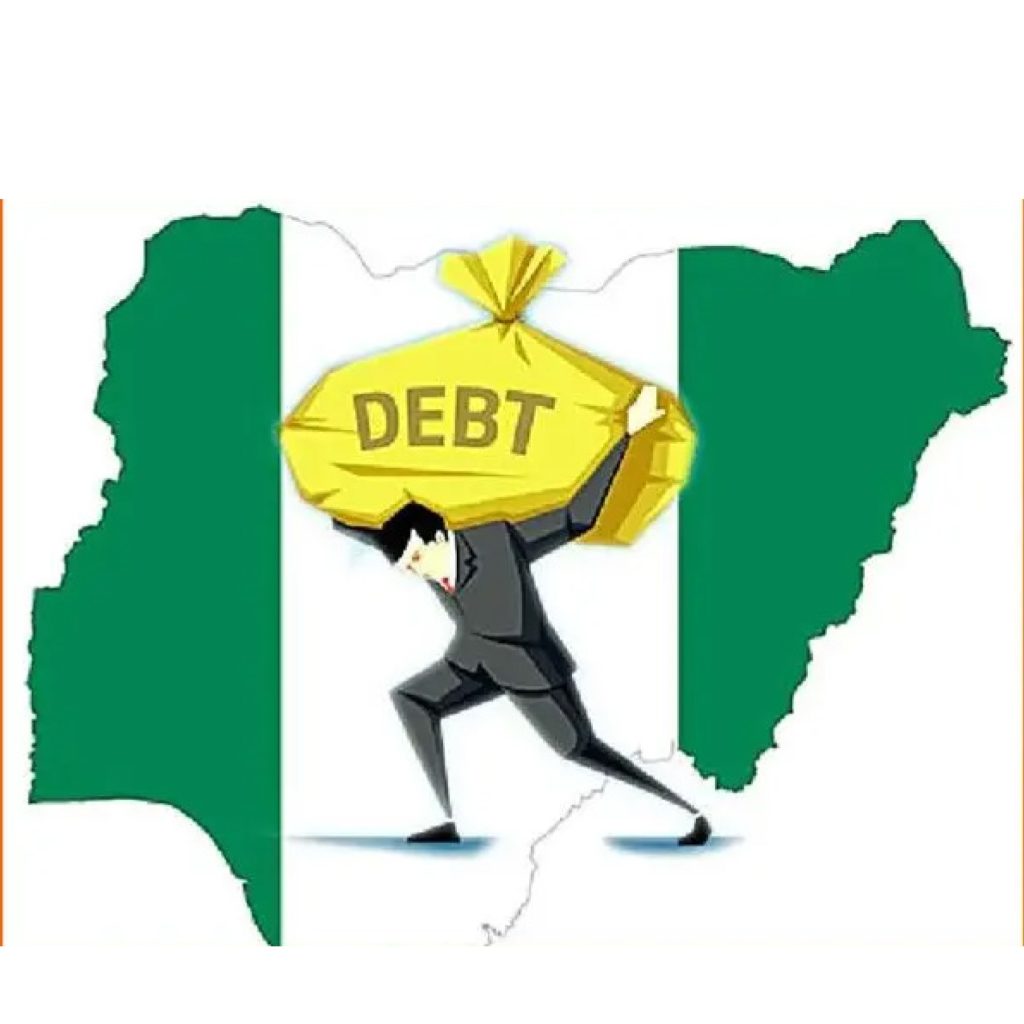
Nigeria could spend nearly three-quarters of its Federal Government revenue servicing debt by 2030, raising concerns about the funds available for infrastructure, healthcare, education and other public services.

The Debt Management Office projects that debt service will consume 71.7 per cent of Federal Government revenue by 2030 under its baseline scenario, significantly exceeding its recommended threshold of 50 per cent.

The projection, contained in the agency’s 2024 Debt Sustainability Analysis report released on Monday, highlights the growing fiscal pressure associated with servicing Nigeria’s debt, even as the country’s debt-to-GDP ratio is expected to decline.

The development points to a fiscal challenge in which the government could improve its debt position relative to the size of the economy while struggling to generate sufficient revenue to meet its obligations.

The DMO’s projections show that the debt service-to-revenue ratio will decline from 60.6 per cent in 2024 to 44.9 per cent in 2025 before rising above the recommended threshold in 2026.

The ratio is expected to climb to 51 per cent in 2026 and 57.1 per cent in 2027, before reaching 57.4 per cent in 2028 and 67.3 per cent in 2029.

By 2030, debt servicing is projected to consume 71.7 per cent of Federal Government revenue.

The implications extend beyond debt management, as a rising share of revenue committed to interest and other debt obligations could leave the government with fewer resources to finance public services and capital projects.

The pressure could also constrain the government’s ability to respond to economic shocks without resorting to additional borrowing.

See also  Firm unveils first phase of 100MW data centre

The DMO projects that Nigeria’s public debt-to-GDP ratio will decline from 53.7 per cent in 2024 to 27.3 per cent by 2030 under the baseline scenario.

However, the projected improvement in the debt-to-GDP ratio does not necessarily translate into greater fiscal flexibility.

The debt service-to-revenue ratio measures the government’s capacity to meet debt obligations from its income, while debt-to-GDP compares the debt stock with the size of the economy.

For Nigeria, the distinction is particularly important because government revenue remains relatively weak compared with the size of its economic activities.

A country can therefore have a declining debt-to-GDP ratio while facing difficulties servicing its obligations if revenue growth fails to keep pace with debt payments.

Under the DMO’s shock scenario, the debt service-to-revenue ratio is projected to rise to 97.3 per cent by 2030, suggesting that almost all Federal Government revenue could be absorbed by debt servicing under adverse economic conditions.

The scenario assumes a 30 per cent exchange rate depreciation, a two per cent decline in real GDP and a 2.5 per cent reduction in revenue.

The debt-to-GDP ratio under this scenario is projected at 34.6 per cent by 2030.

The DMO identified weak revenue mobilisation, exchange rate depreciation and global economic uncertainties as major threats to Nigeria’s debt sustainability.

The agency also highlighted elevated financing, refinancing and foreign exchange risks.

Nigeria’s average Eurobond spread stood at 975.58 basis points between 2 October and 31 December, 2024, above the DMO’s 600-basis-point threshold.

The report also showed that the annual change in the share of short-term debt in total public debt stood at 1.8 per cent, exceeding the 1 per cent threshold.

See also  N1.8tn debt: Reps signal imminent contractor payments

The DMO attributed the increase partly to greater Nigerian Treasury bills issuance, which could expose the government to refinancing pressures as short-term obligations mature.

Nigeria spent $1.82bn servicing external debt in the first half of 2026, while domestic debt servicing amounted to N5.28tn during the same period.

To address the projected risks, the DMO recommended sustained revenue reforms, including improved tax compliance, expansion of the tax base, technology adoption and more efficient public expenditure.

The agency also called for maintaining a unified and flexible exchange rate regime and sustaining the removal of the petrol subsidy.

Source: punchng.com

FOLLOW US ON:

FACEBOOK

WHATSAPP CHANNEL

TWITTER

PINTEREST

TIKTOK

YOUTUBE

LINKEDIN

INSTAGRAM

Continue Reading

Business

Pipeline outages delay 42.6m barrels of oil

Published

on

Nigeria’s oil and gas industry deferred approximately 42.55 million barrels of crude oil and condensate in 2025, with the affected production carrying an estimated market value of $2.97bn.

This was mainly caused by pipeline failures, terminal disruptions, equipment breakdowns and maintenance activities continued to constrain output.

The Nigerian Upstream Petroleum Regulatory Commission disclosed this in its 2025 annual report, which showed that an average of 116,563 barrels per day was deferred during the year, representing crude oil and condensate that operators could not produce as scheduled owing to operational and infrastructure challenges.

Deferred production is crude that could not be produced or evacuated at the planned time because of operational problems, pipeline outages, maintenance, terminal limitations and other disruptions. Some of the barrels may be recovered later, but prolonged deferment can reduce immediate export earnings and government revenue.

An analysis of the monthly figures showed that October recorded the highest daily deferment of 172,761 barrels, followed by December with 169,786 barrels and March with 169,856 barrels per day.

July recorded the lowest deferment at 25,780 barrels per day.

The October figure was 146,981 barrels, or 570.1 per cent, higher than July’s, indicating a significant deterioration in production performance during the period.

The estimated $2.97bn value was calculated by applying the monthly average prices of Nigeria’s Bonny Light crude grade to the corresponding deferred production volumes.

United Capital’s 2025 Economic Review and 2026 Outlook put the average Bonny Light price at $70.88 per barrel in 2025, down from $82.40 in 2024, representing a 14 per cent decline.

See also  Adeleke’s defection attracting more members to Accord – Chair

The estimate represents the indicative gross market value of the deferred barrels and not confirmed revenue lost by the Federal Government or oil companies, as some deferred production could be recovered later.

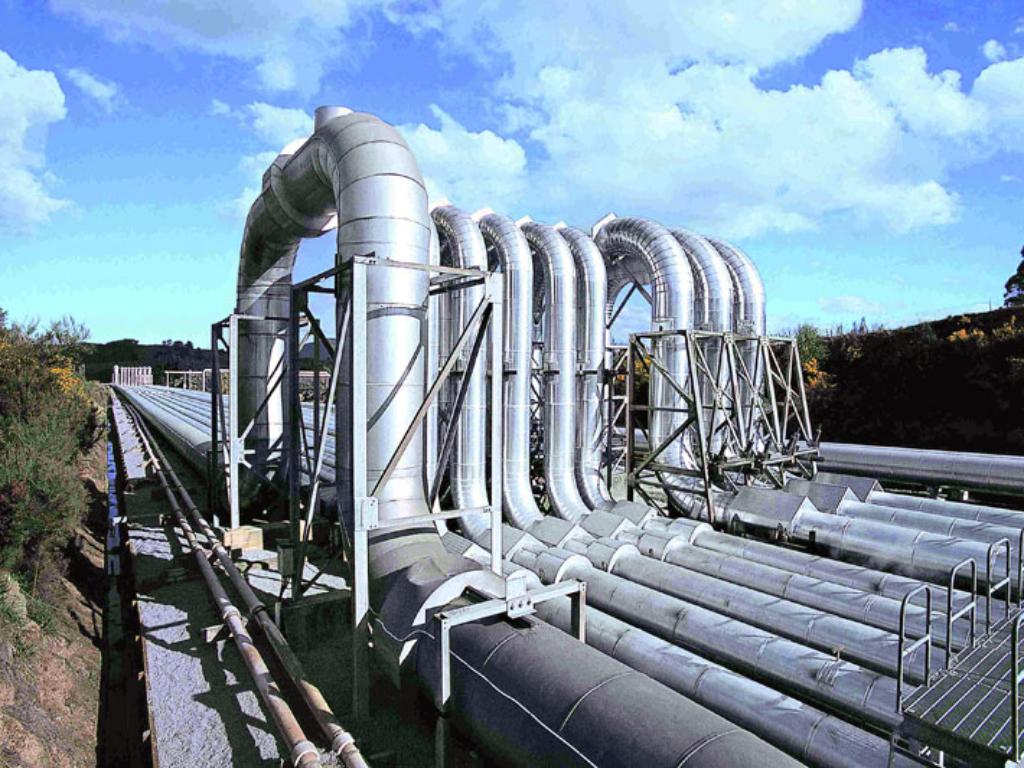
The NUPRC report identified pipeline outages, particularly on the Trans Niger Pipeline, Nembe Creek Trunk Line and Trans Forcados Pipeline, as the most prevalent causes of production deferment during the year.

It stated, “The most prevalent reason for deferment during the year was outage of key pipelines (TNP, NCTL & TFP), technical and operational challenges such as planned maintenance, vessel/tanker loading delay at terminal leading to shut-in of wells also contributed greatly to deferment.”

The report’s findings highlight how Nigeria’s efforts to increase crude oil production and maximise earnings from its petroleum resources continue to face challenges beyond oil theft and pipeline vandalism.

Production deferment occurs when an oil company is unable to produce or evacuate crude oil at the planned rate because of problems affecting wells, production facilities, pipelines, storage terminals or export infrastructure.

Unlike oil theft, which involves the illegal taking of crude, deferment refers to production that is delayed or temporarily shut in. Although some of the affected barrels may be produced later, prolonged disruptions can reduce immediate export volumes, foreign exchange inflows and government receipts.

The January figures showed that the industry deferred 76,002 barrels per day, valued at approximately $190.37m for the month, using the average Bonny Light price of $80.80 per barrel.

The situation worsened in February, when daily deferment increased to 134,793 barrels, representing a 77.4 per cent rise from January. The affected volume was valued at about $290.99m.

See also  32 governors, 8,450 delegates arrive Abuja for APC convention

In March, deferment climbed further to 169,856 barrels per day, a 26 per cent increase from February, with the estimated value reaching $391.76m, the highest monthly amount recorded during the year.

Although the figure declined to 113,132 barrels per day in April and 102,480 barrels in May, production disruptions persisted.

June recorded 55,445 barrels per day, while July dropped to 25,780 barrels before rising to 95,639 barrels in August and 115,081 barrels in September.

The October deferment of 172,761 barrels per day translated to approximately 5.36 million barrels for the month, with an estimated market value of $354.54m.

November and December also recorded elevated deferment levels of 169,340 and 169,786 barrels per day, respectively.

The December figure represented a 123.4 per cent increase over January’s 76,002 barrels per day, underscoring the persistence of production constraints towards the end of the year.

Pipeline and terminal problems featured prominently among the disruptions recorded by the commission.

Source: punchng.com

FOLLOW US ON:

FACEBOOK

WHATSAPP CHANNEL

TWITTER

PINTEREST

TIKTOK

YOUTUBE

LINKEDIN

INSTAGRAM

Continue Reading

Trending