Connect with us

News

FG releases barely 5% of N54.93tn three-year roads budget

Published

on

The Federal Government has released about N2.68tn for the construction, rehabilitation and maintenance of roads and bridges across the country between 2023 and April 2026, findings by The PUNCH from the Open Treasury Portal have shown.

The analysis, however, revealed a significant disparity between approved budgets and actual releases, with the government making provisions totalling N54.93tn for road-related projects within the period under review.

The figures highlight both the growing emphasis on infrastructure development and the persistent financing constraints that continue to affect capital project execution in the country.

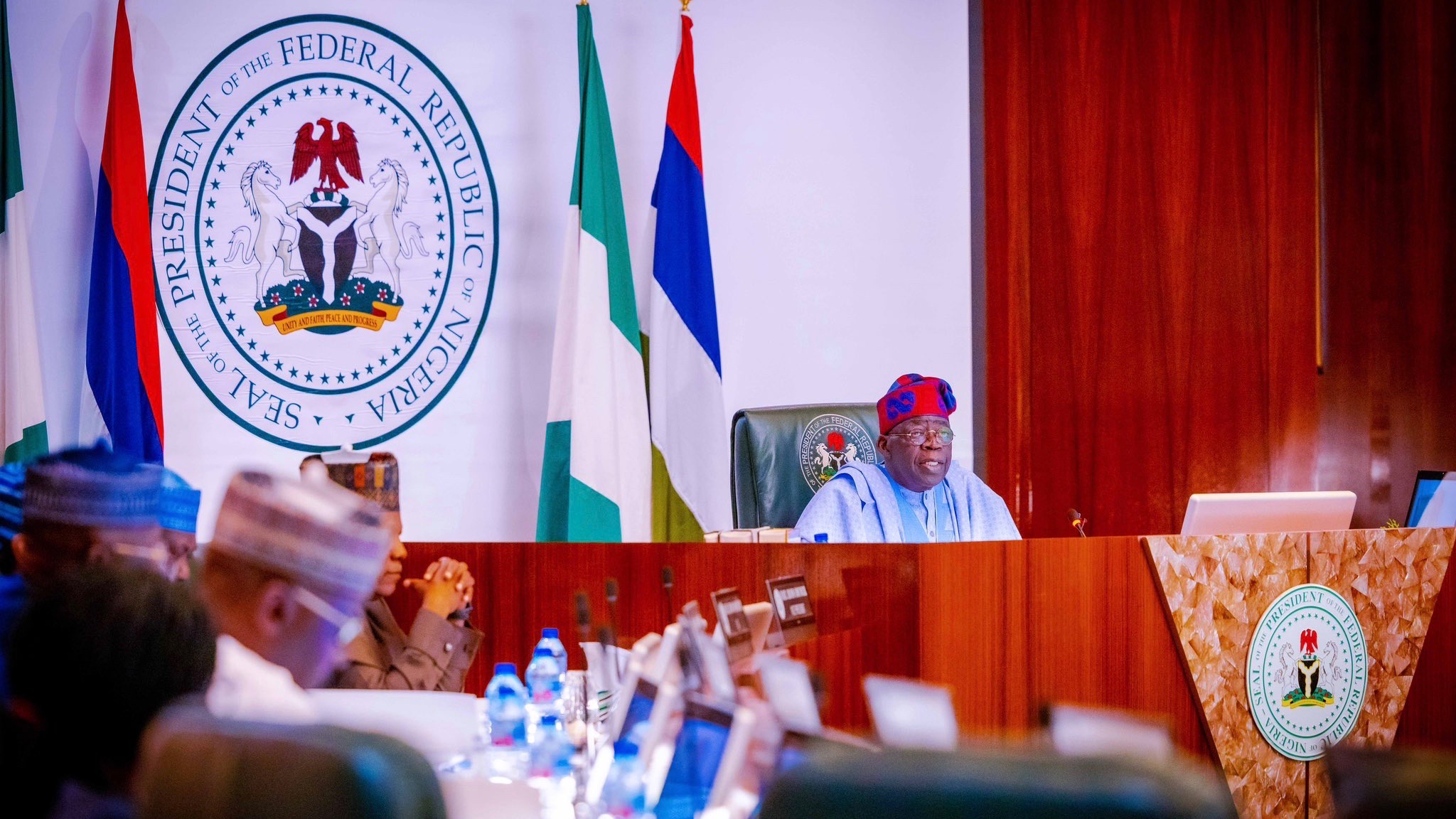
The development also comes amid the ongoing Renewed Hope Media Tour organised by the Presidential Communications Team, designed to showcase projects being implemented under President Bola Tinubu’s Renewed Hope Agenda.

Data obtained from the Open Treasury Portal on Tuesday showed that road projects attracted a combined budgetary allocation of N2.53tn in 2023, out of which N631.51bn was released, representing an implementation rate of 24.95 per cent.

The Treasury data, however, did not specify the road projects to which the funds were released and did not indicate whether the government’s four legacy highway projects formed part of the expenditure.

A year-by-year breakdown showed that road construction projects received N280.14bn from a budget of N1.09tn during the year, while rehabilitation and repair works attracted N345.93bn from an allocation of N1.42tn. Road and bridge maintenance projects also received N5.44bn out of a total provision of N14.68bn.

In 2024, the Federal Government increased its budgetary commitment to the sector, making provisions amounting to N9.39tn for road-related projects. However, actual releases stood at N784.60bn, representing 8.36 per cent of the approved amount.

See also  PHOTOS & VIDEO: Fire razes part of Ogun free trade zone, Igbesa

Road construction projects accounted for N383.74bn of the spending from an allocation of N5.05tn, while rehabilitation projects received N384.49bn from a budget of N4.32tn. The government also released N16.37bn for the maintenance of roads and bridges out of a total provision of N18.18bn.

The trend continued in 2025, with the government budgeting N7.22tn for road construction and rehabilitation projects. Treasury records showed that N670.68bn had been released during the period, translating to an implementation rate of 9.29 per cent.

Of the amount released, road construction projects received N269.75bn from an allocation of N3.42tn, while rehabilitation and repair projects attracted N400.94bn from a budget of N3.80tn.

The 2026 figures indicate a sharp rise in budgetary provisions. As of April 2026, the government had earmarked N35.79tn for road construction, rehabilitation and maintenance projects, the highest within the four-year period.

However, only N597.08bn had been released, representing 1.67 per cent of the approved budget. Specifically, road construction projects had a budgetary provision of N23.61tn, with releases amounting to N293.06bn.

Similarly, rehabilitation and repair projects received N300.80bn from a total allocation of N12.03tn. Road and bridge maintenance projects had an allocation of N144.64bn, but only N3.22bn had been released as of the end of April. Treasury records show that N26.54bn was released in April alone, leaving an outstanding budget balance of N23.32tn yet to be funded.

The data indicate that although substantial sums have been earmarked for road projects over the years, actual cash releases remain significantly lower than approved allocations, reflecting the financing constraints that often affect capital project implementation.

See also  PHOTOS: President Tinubu receives Anambra state gov, Charles Soludo, in Abuja

Further analysis showed that road construction consistently attracted the largest allocations. Budgetary provisions rose from N1.09tn in 2023 to N23.61tn in 2026, reflecting the Federal Government’s increasing focus on large-scale highway projects.

Road rehabilitation spending remained substantial throughout the period. Allocations increased from N1.42tn in 2023 to N12.03tn in 2026, suggesting a parallel effort to repair existing infrastructure.

Maintenance received the smallest allocations but recorded the highest execution rate. In 2024, road and bridge maintenance achieved a 90.05 per cent implementation rate, compared to less than 10 per cent for construction and rehabilitation.

Overall, the Federal Government budgeted N54.93tn for road-related projects between 2023 and April 2026 but released N2.68tn during the same period.

The data also showed that while budgetary provisions expanded significantly over the years, the percentage of funds released declined. In 2023, about 25 per cent of the approved budget was released. This fell to 8.36 per cent in 2024 and 9.29 per cent in 2025.

As of April 2026, only 1.67 per cent of the total budgetary provision had been released. The development comes amid the Federal Government’s renewed focus on infrastructure as a catalyst for economic growth.

Several major road projects are currently underway across the country, including the Lagos-Calabar Coastal Highway, the Abuja-Kaduna-Zaria-Kano Road, the Sokoto-Badagry Super Highway and other strategic federal highways aimed at improving connectivity across Nigeria’s six geopolitical zones and stimulating economic activities.

The Minister of Works, David Umahi, recently disclosed that the Federal Ministry of Works would prioritise the completion of major highways and the execution of four presidential legacy projects in its 2026 capital plan.

See also  PHOTOS: Tinubu to unveil N2.4tn Abuja City Walk project Thursday

According to the minister, the ministry inherited over 2,000 ongoing projects in 2023, many of which have been rolled over into subsequent budgets due to funding constraints.

Umahi also told lawmakers during the defence of the ministry’s 2026 budget proposal that the Federal Government owed contractors about N2.2tn for certified works executed between 2024 and 2025, underscoring the financing challenges facing the road sector despite rising budgetary allocations.

He added that only a fraction of expected capital releases had been made, forcing the ministry to re-scope and prioritise projects.

The Open Treasury Portal, which tracks government revenues and expenditures, provides a snapshot of how much of the approved budgets for capital projects has translated into actual spending.

Although the latest figures point to an unprecedented expansion in planned spending on road infrastructure, the challenge, analysts say, will be ensuring that budgetary commitments are backed by timely releases to deliver the intended benefits to Nigerians.

punch.ng

FOLLOW US ON:

FACEBOOK

TWITTER

PINTEREST

TIKTOK

YOUTUBE

LINKEDIN

INSTAGRAM

Continue Reading
Click to comment

Leave a Reply

Your email address will not be published. Required fields are marked *

News

Germany deports 137 Nigerians in five chartered flights

Published

on

Germany deported at least 137 Nigerian citizens in five documented chartered operations between February and June 2026, according to reports sighted by The PUNCH.

The documented arrivals comprised 27 Nigerians deported in February, 37 deported directly by Germany as part of a 50-person joint European Union operation in March, and 24, 23 and 26 Nigerians deported in April, May and June, respectively, according to figures contained in reports monitored by the DERS Team and Refugees4refugees.org.

The figures indicate an increase in the use of chartered flights to return Nigerians from Germany and other European countries, with several of the operations involving cooperation among European states.

On February 18, 2026, a batch of 27 Nigerians arrived at the Lagos Cargo Airport following a deportation operation from Germany.

According to Refugees4refugees.org, the flight was operated by World2fly and departed Stuttgart before arriving in Lagos shortly before 2 pm.

The report said the operation was primarily enforced by Germany, although one person, described as severely ill and mentally unfit, was transferred from Slovakia to join the 26 people deported from Germany.

It also identified Baden-Württemberg as a major participant in the operation and said Stuttgart had hosted both the December 2025 and February 2026 deportation operations to Nigeria.

The report further alleged that while some of those deported had serious health conditions, others had lived and worked in Germany for several years.

It cited the case of a single mother and her three children who were deported from the Sindelfingen district in Stuttgart despite reportedly having documentation relating to their residence status.

See also  Lucky soul. He d!ed in Jihad - Sheikh Gumi reacts to Iran’s Supreme leader Khamenei’s d3ath

According to the report, the family subsequently returned to Germany after intervention by a volunteer and confirmation from local foreign authorities that the deportation had been made in error.

Furthermore, the February deportation also coincided with Nigeria’s participation in preparations for the Voluntary National Review of the Global Compact for Migration ahead of the 2026 International Migration Review Forum in New York.

The DERS Team said that Nigerian government agencies did not send representatives to receive the deportees at the airport, adding that the returning Nigerians were subsequently transported away from the airport without adequate assistance.

On March 10, another 50 people were deported to Nigeria in a joint EU operation hosted by Germany in cooperation with Spain, Austria and Belgium.

Germany accounted directly for 37 of the deportations, according to the figures provided.

The operation was described as the largest single deportation involving Nigerians in the three years referenced in the report.

A further 24 Nigerians, including women and a minor, were deported on April 9 on a chartered flight from Frankfurt organised through Frontex and German authorities, according to the supplied data.

In May 2026, another batch of 23 deportees was returned to Nigeria, while 26 Nigerians arrived in Lagos on June 17 following another routine chartered deportation flight.

Taken together, the five documented batches amounted to 137 Nigerians returned to the country between February and June 2026.

The figures highlight the continued use of organised charter flights in the enforcement of migration decisions involving Nigerians in Europe.

Migration rights advocates have, however, continued to argue that deportation policies should be accompanied by adequate safeguards for vulnerable people and proper procedures to prevent wrongful removal.

See also  AU extends Nigeria, Cameroon, others joint military action on Insurgency

While migration is as old as time itself, identified underlying factors driving irregular migration include conflict, exploitation, climate-related pressures and economic inequality.

Migration is the permanent or temporary movement of people from one place to another, changing their home. It can happen within a country or across borders, shaping populations, cultures, and job markets.

Source: punchng.com

FOLLOW US ON:

FACEBOOK

TWITTER

PINTEREST

TIKTOK

YOUTUBE

LINKEDIN

INSTAGRAM

Continue Reading

News

Adeyemi demands media, lawyers’ presence before Reps probe on PFIPC scandal

Published

on

The House of Representatives Ad Hoc Committee investigating the controversy surrounding the Presidential Foreign Investment Promotion Council is yet to decide where it will question the council’s self-appointed Director-General, Adeniyi Adeyemi, a source familiar with the committee’s proceedings has disclosed.

The development comes as Adeyemi insisted that his lawyers and journalists must be present before he submits to questioning by the House committee.

The committee, chaired by the lawmaker representing Kanke/Kanam/Pankshin Federal Constituency of Plateau State, Yusuf Gagdi, is probing how the PFIPC secured official office accommodation within the Federal Secretariat Complex in Abuja and received a budgetary allocation of more than N1.32bn in the 2026 Appropriation Act despite allegedly having no legal existence.

The investigation has attracted significant public attention following allegations that the council operated within government structures despite lacking legal recognition, raising concerns about possible lapses in public financial management and institutional oversight.

Adeyemi, who has been in police custody over the controversy surrounding the council, is expected to appear before the committee this week, following testimonies from several senior government officials.

However, as of Sunday, the venue for the much-anticipated session remained unsettled.

The source, who spoke on condition of anonymity because he was not authorised to discuss the committee’s proceedings with the media, confirmed the development in response to an inquiry by The PUNCH.

Asked whether the committee had chosen a venue for Adeyemi’s appearance, the source simply replied, “No decision yet.”

The development followed the committee’s hearings with key government officials, including the Head of the Civil Service of the Federation, Didi Walson-Jack; the Director-General of the Budget Office of the Federation, Tanimu Yakubu; the Director of Banking Services at the Central Bank of Nigeria, Hamisu Abdullahi; and representatives of the Inspector-General of Police.

The officials’ testimonies reportedly raised questions about how Adeyemi allegedly presented himself as the head of the PFIPC and secured recognition and access within government circles.

Adeyemi had, through his lawyers, indicated his willingness to appear before the committee publicly and respond to questions concerning the allegations.

However, Gagdi said the committee would determine the venue for the session at a later date.

Meanwhile, the Coalition of United Political Parties has rejected the findings of the Independent Corrupt Practices and Other Related Offences Commission on the PFIPC controversy, describing the investigation as inadequate and calling for a broader and transparent inquiry.

In an interview with our correspondent, CUPP spokesperson, Agu Bryan, said the ICPC’s report, which reportedly cleared the Presidency of wrongdoing while indicting Adeniyi Adeyemi, failed to answer critical questions about how an allegedly non-existent government agency was able to operate at such a high level.

“The ICPC probe of the Presidential Foreign Investment Promotion Council which exonerated the Presidency and indicted Adeniyi Adeyemi is nothing short of a charade,” Bryan said.

He argued that the report appeared to portray Adeyemi as having operated almost entirely alone, despite the scale of activities attributed to him.

See also  FG raises health insurance payout, targets 44m Nigerians by 2030

According to Bryan, such an operation could not have continued without assistance or enabling actions by officials within government institutions.

“As Nigerians, we know that someone could not have operated an alleged high-profile agency of such magnitude without enablers, either within the Presidency or across the government agencies involved,” he said.

Bryan called for a broader examination of the roles allegedly played by government institutions referenced in Adeyemi’s correspondence, including the Office of the Secretary to the Government of the Federation, the Central Bank of Nigeria and the Office of the Head of the Civil Service of the Federation.

He particularly cited the testimony of the Head of the Civil Service of the Federation, Didi Walson-Jack, that her office failed to conduct due diligence on some of the documents associated with the controversial council.

The coalition also questioned how the PFIPC allegedly found its way into the national budget if, as reported by the ICPC, it had no legal foundation.

CUPP said the National Assembly and relevant government ministries owed Nigerians an explanation over how funds were appropriated to an organisation whose legal status had allegedly not been established.

“The National Assembly, particularly the House of Representatives, which appropriated funds to an agency that, according to the investigation, never existed as a creation of law, also owes Nigerians an explanation,” Bryan said.

He asked who within the Ministry of Budget and National Planning processed the budget line attributed to the PFIPC and what verification mechanisms were applied before public funds were appropriated.

CUPP also raised questions about the alleged recruitment of hundreds of staff and the extent to which Adeyemi was granted access to official government activities.

Bryan said the issues went beyond determining whether Adeyemi forged documents, arguing that investigators should establish how he allegedly gained access to government processes and institutions.

The controversy escalated after investigators reportedly established that a signature attributed to the Chief of Staff to the President, Femi Gbajabiamila, was forged.

CUPP said the finding should prompt investigators to examine other official documents and correspondence allegedly used by Adeyemi.

“It is commendable that the House and the Police have established that the signature of the Chief of Staff to the President was allegedly forged. But that raises another critical question: how many other documents, official correspondences and signatures allegedly used by Adeyemi were also forged?” Bryan asked.

He said Nigerians deserved to know the full extent of the alleged deception and whether officials responsible for verifying the credentials of individuals dealing with public institutions failed in their duties.

The coalition further questioned how the PFIPC allegedly acquired sufficient official recognition to participate in government processes and appear in the national budget.

“How did a supposedly non-existent agency attain such a level of official recognition and attention that it found its way into the national budget?” he asked.

CUPP also called for Adeyemi to be given a fair opportunity to defend himself before the House committee, arguing that a transparent confrontation with the evidence could help determine whether other individuals or institutions were involved.

See also  At 65, many Nigerians still live in fear, says ex-presidential candidate

“Was Adeyemi given fair hearing thus far? Has he been given the privilege to appear before the Yusuf Gagdi-led Ad hoc Committee of the House of Representatives probing the matter to be interrogated and directly answer questions?” Bryan said.

He invoked the legal principle nemo judex in causa sua—that no person should be a judge in his own cause—in arguing that the investigation should be conducted independently and transparently.

Bryan said anything short of an open and impartial investigation would fail to satisfy public expectations.

He also criticised the ICPC’s handling of the matter and called for independent professional bodies to be considered if the Federal Government was genuinely interested in establishing the facts.

“If President Tinubu is determined to unravel the truth, independent organisations or bodies like the NBA, West African Bar Association or international or private investigators should be allowed to come in and take over the investigation,” Bryan said.

He accused federal security and anti-corruption agencies of lacking sufficient independence to investigate the controversy objectively, a claim the agencies have not accepted.

The House committee’s inquiry follows mounting concerns over how Adeyemi allegedly operated the PFIPC, secured government recognition and participated in official engagements despite questions over the organisation’s legal status.

The controversy has also drawn attention to the roles of several government institutions whose officials allegedly interacted with Adeyemi or processed documents connected to the council.

The committee is expected to hear directly from Adeyemi as it seeks to establish how the PFIPC was created, how it operated, who recognised it and whether public funds were allocated or expended in connection with its activities.


His appearance before the committee could therefore prove significant in determining whether the alleged scheme was the work of an individual or involved officials and institutions within government.

Adeyemi demands media

Adeyemi, through his lawyer, Ademola Oyedokun, had on Wednesday rejected the House committee’s decision to question him at an undisclosed location while he remains in police custody.

The committee subsequently attempted to question him on Thursday, but Adeyemi declined to respond to its questions, prompting the lawmakers to reschedule the interrogation for Monday.

However, a family source said Adeyemi had informed the committee that he would only submit to questioning if journalists and his legal representatives were allowed to be present.

“They eventually rescheduled to Monday and my brother told them that when they are coming, they should come with the media, otherwise he will not grant them audience.

“Initially, they agreed to come with the media, but later they said they would not be coming with any media. They said if he refuses to grant them audience, they will go ahead and conclude their investigation and it will be said that he was the one who failed to grant them audience,” the source said.

The development came a day after Adeyemi’s family raised concerns over an attempt by members of the House committee to question him in police custody without his lawyers present.

Adeyemi’s brother, Peter, alleged that the detained promoter declined to answer questions because his legal representatives were absent.

“The Reps committee came and wanted to interrogate him, but he refused. They are still there trying to make him talk without any of his lawyers being present. We are crying out loud so that the right thing would be done.

“He has stated that he wants to be quizzed the same way others who have accused him have spoken. It’s not that he is not willing to state his side of the story,” he said.

When contacted on whether the police were aware of the committee’s proposed visit and whether the lawmakers would be granted access to Adeyemi, the police spokesperson, Ani Ineidu, said visitors would be allowed provided they met the necessary requirements.

“Yes, if they have necessary documents. I’m not aware if they have relevant documents or authorisation, but if they fulfil the conditions, everybody who is under police custody has a right to visitors.

“So, in a case like this, if they have that right, they will be granted access,” Ineidu said.

In a statement issued on Wednesday, Oyedokun said his client welcomed the House investigation into the alleged establishment and operations of the PFIPC but opposed what he described as a closed-door interrogation.

“We have read that the committee intends to interview our client at an undisclosed date and place. We ask it, respectfully, to think again.

“Everyone else in this matter has been heard in public, and what has been said about our client was said in public. He should be allowed to answer in the same place it was said,” the lawyer stated.

The committee had on Tuesday announced that it would question Adeyemi at an undisclosed location while he remains in police custody.

The Chairman of the committee, Yusuf Gagdi, said the arrangement was necessary to avoid interfering with ongoing investigations by the Nigeria Police Force, the Economic and Financial Crimes Commission and the Independent Corrupt Practices and Other Related Offences Commission.

Gagdi said the committee had invited Adeyemi but was informed by the police that he remained in custody pursuant to a court order.

He added that the National Assembly would not act in a manner that undermined the judiciary or violated the principle of separation of powers, stressing that lawmakers lacked the authority to override an existing court order directing Adeyemi’s detention.


The committee is investigating allegations surrounding the creation and operations of the PFIPC, including claims of impersonation, forgery, financial impropriety and the unlawful use of government facilities and official insignia.

Source: punchng.com

FOLLOW US ON:

FACEBOOK

TWITTER

PINTEREST

TIKTOK

YOUTUBE

LINKEDIN

INSTAGRAM

Continue Reading

News

PHOTOS: Osun-Osogbo: Priestess defends 10-year-old Arugba, dismisses child abuse claims

Published

on

The Araba of Osogbo, Ifáyemí Elébuibón, has defended the tradition of selecting a young maiden as the Arugba of the Osun-Osogbo Festival, describing the role as a privilege rather than child abuse.

This is as a priestess and custodian of Osun Osogbo also defended the practice, saying the Arugba was selected through Ifa divination from the royal lineage.


Osun-Osogbo: Priestess

Elébuibón spoke in a video interview posted on Sunday by Yoruba cultural content creator, Wàá Ṣeré, amid discussions surrounding the age and responsibilities of the 10-year-old Arugba, Princess Alimot Osunbunmi.

Arugba is the young maiden chosen to carry the sacred calabash during the annual Osun-Osogbo Festival procession to the Osun Sacred Grove.

Alimot, a member of the royal family of the Ataoja of Osogbo, was selected through traditional Ifa divination in March 2025.

She carried the sacred calabash for the first time during this year’s procession to the Osun Sacred Grove on Friday, after she was unable to do so during the 2025 festival because of her young age.


10-year-old Arugba of the Osun-Osogbo Festival, Princess Alimot Osunbunmi carries the sacred calabash at Osun Osogbo festival…Photo Credit: Dewunmi Lagos

Explaining the role and its benefit, Elébuibón said the Arugba served as a spiritual intermediary between the Osun deity and the people.

He added that the responsibility was not determined by biological age.

“You see those people saying all that? They lack understanding. They don’t know. Whoever says the Arugba is too young—this one is ten years old, but some started at five!

See also  TikToker denies recording sacred Oyo deity, dismisses claims she is de@d

“The role the Arugba plays is a role of spiritual maturity, not about physical age. What the Arugba does for the town and the community is what the white man calls a ‘medium’—an intermediary between the Orisa and the people,” he said.

Elébuibón said the young maiden could communicate the wishes of the deity to the people because of the spiritual significance attached to the position.

“As young as she is, provided she remains pure and undefiled by any man, she can wake up one morning and say, ‘Mother Osun said this and that, do this, do that, don’t do this.’”

He added that the Arugba’s spiritual development was not necessarily tied to her physical age.

“Very soon, she will mature spiritually far beyond her biological age because the Orisa themselves nourish and care for them. Her role is not about age; what she does is not about age.”


FILE: Ifayemi Elebuibon

A female priestess and culture custodian, in another video posted by culture content creator Olamide Oseyifunmii, also defended the practice, saying the Arugba was selected through Ifa divination from the royal lineage.

According to her, the chosen maiden must be a virgin and is expected to observe certain taboos associated with the role.

“Whomever Ifa chooses becomes the Arugba. The Arugba must be a girl who remains untouched, pure, and a virgin. That is strictly what the Arugba must be,” she said.

She rejected the description of the practice as child abuse, saying the young girls selected for the role were traditionally protected and treated with care.

See also  PHOTOS: Tinubu to unveil N2.4tn Abuja City Walk project Thursday

“Being selected as the Arugba carries taboos and honours; it is not what Westerners label as ‘child abuse’.”

The priestess said the Arugba was not expected to carry heavy loads apart from the sacred calabash during the annual procession.

She also explained the spiritual significance attached to the young maiden, saying devotees who bow before the Arugba were not worshipping the child but honouring the Osun deity believed to be represented through her.

“They were bowing to the divine spirit of Osun Ewuji inside her and upon her head,” she said.

The 2026 Osun-Osogbo Festival, which began on August 7, is being held at the Osun Sacred Grove in Osogbo, Osun State, and will run until August 19.

The annual festival, centred on the Osun deity, is one of Nigeria’s major traditional and cultural festivals and attracts worshippers, tourists and cultural enthusiasts from Nigeria and beyond.

Source: punchng.com

FOLLOW US ON:

FACEBOOK

TWITTER

PINTEREST

TIKTOK

YOUTUBE

LINKEDIN

INSTAGRAM

Continue Reading

Trending